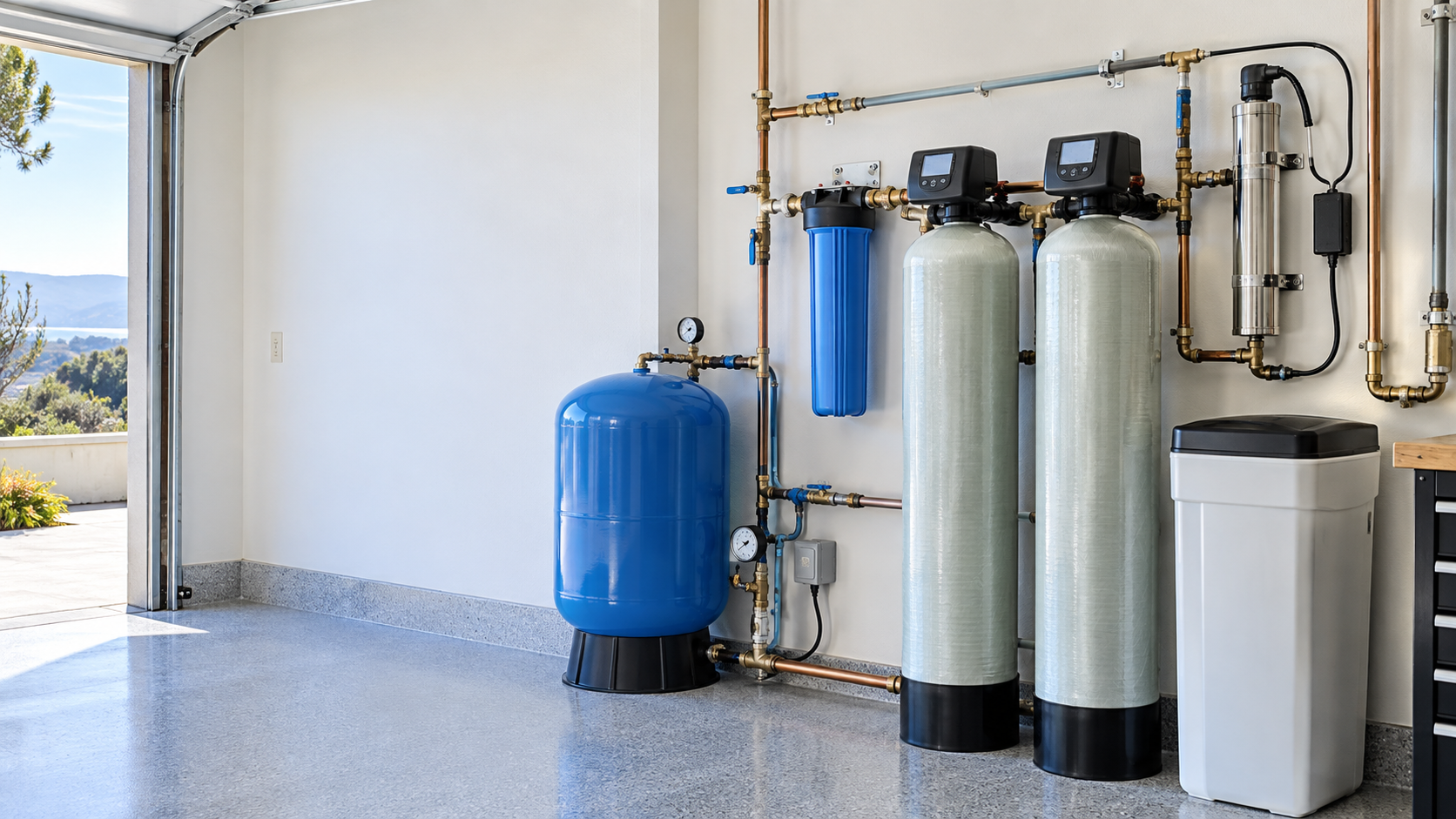
Well-water filtration is the equipment layer of a larger treatment plan. Sediment filtration, oxidation media, carbon, softening, neutralization, UV and point-of-use reverse osmosis are not interchangeable.
The right combination depends on the measured water, household goals, peak flow and the requirements of the specific equipment.
38+ Years on the Central Coast • Plumbing + Filtration • California License #719792
Clear-looking water does not prove safety, and a stain, taste or odor does not identify a contaminant. Start with the information you actually have and move to the correct next step.
Testing comes before equipment selection. Use the result to separate a visible symptom from the actual treatment target.
Use the treatment-strategy page when you need to turn measured chemistry, flow and household goals into a treatment plan.
Use the technology overview below to compare what each category can and cannot reasonably address.
Start with the well-water problems and services router for staining, odor, sediment, pressure and other symptoms.
The test result decides which jobs the water needs—and in what order. A system may use one stage or several, but no single technology belongs in every private-well installation.
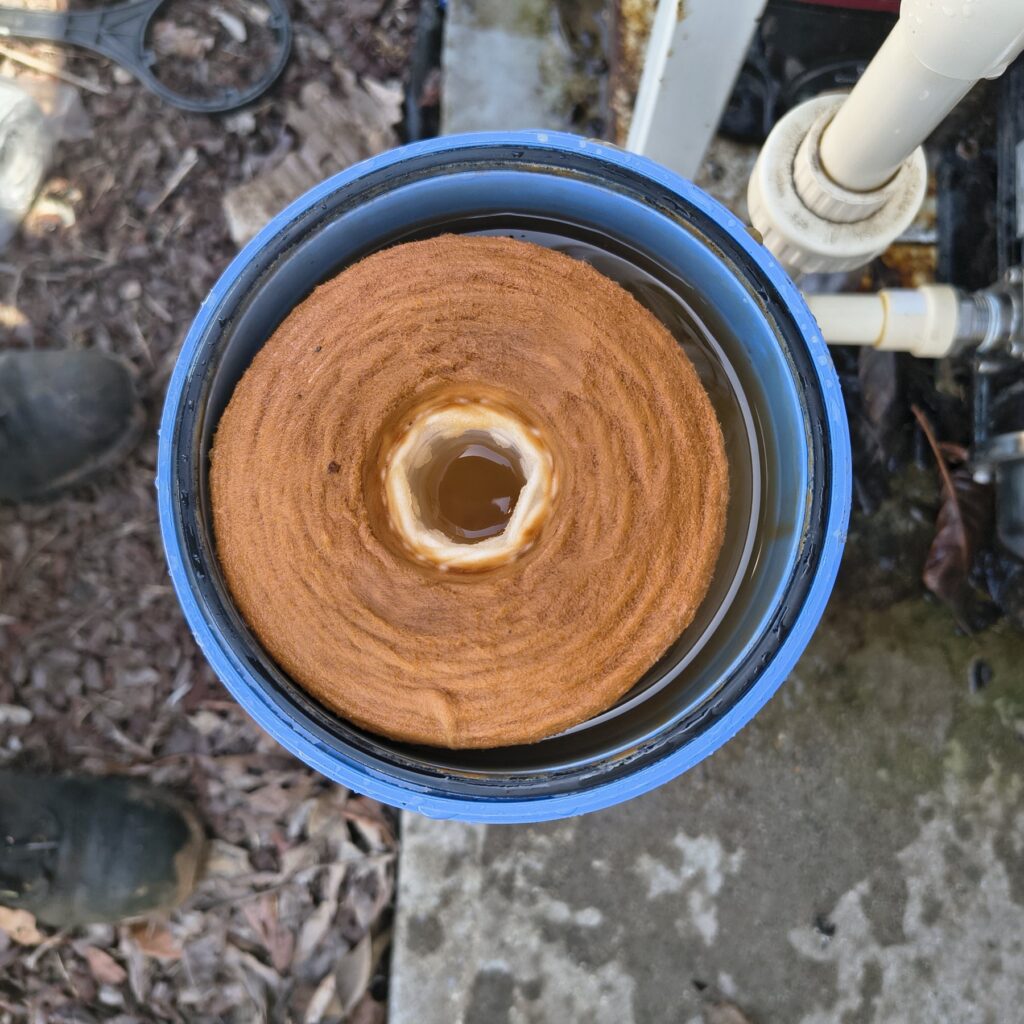
Job: capture selected particles such as sand, silt and rust above the filter’s rated size.
Sediment filtration is commonly placed early in a treatment train because it can protect media beds, membranes and UV sleeves downstream.
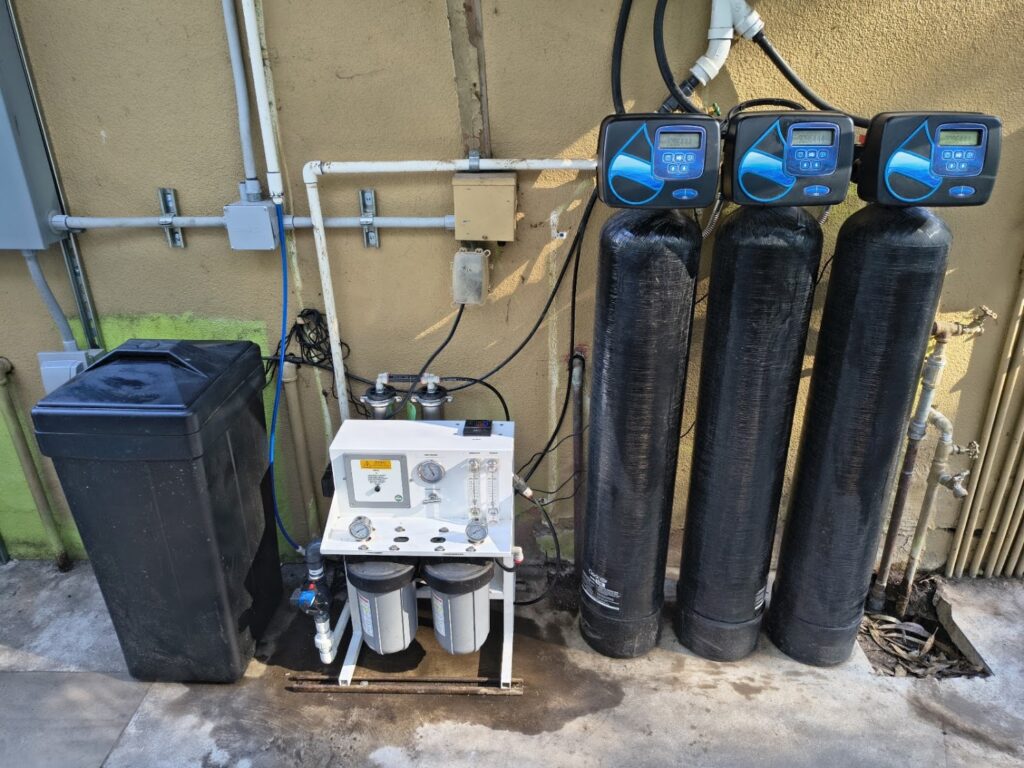
Activated carbon can support specific taste, odor and disinfectant goals when the media or cartridge is rated for the job. It is not a universal metals, nitrate, arsenic or bacteria treatment.
On private wells, carbon is often one stage in a larger system rather than the whole answer. Sediment protection, flow rate and the actual cause of the taste or odor still matter.
Iron, manganese and hydrogen sulfide may require oxidation followed by filtration when the measured chemistry is within the selected media’s operating range.
pH, dissolved oxygen, concentration and competing constituents can change which media works and how it must be sized. That is why appearance alone is not enough.
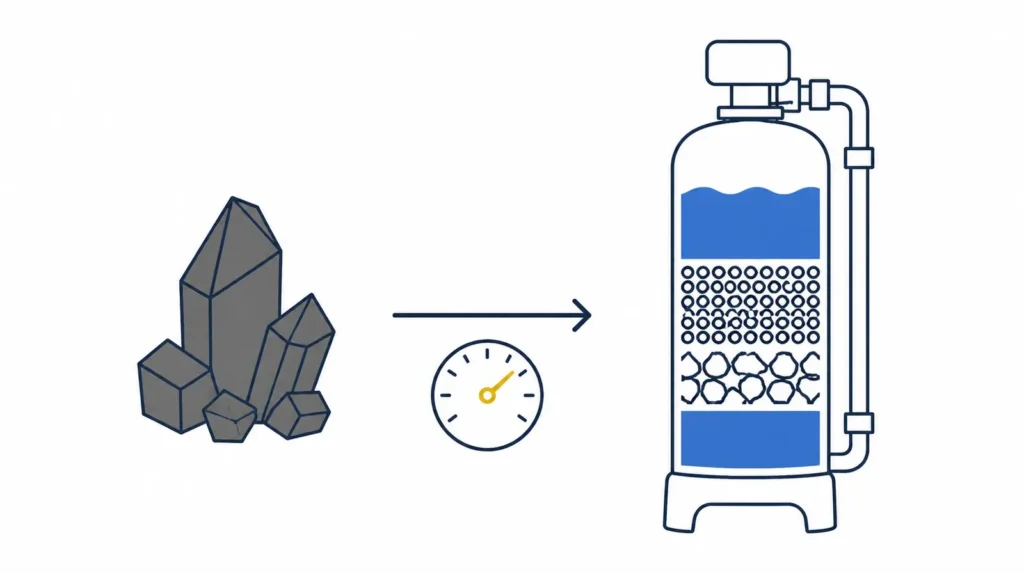
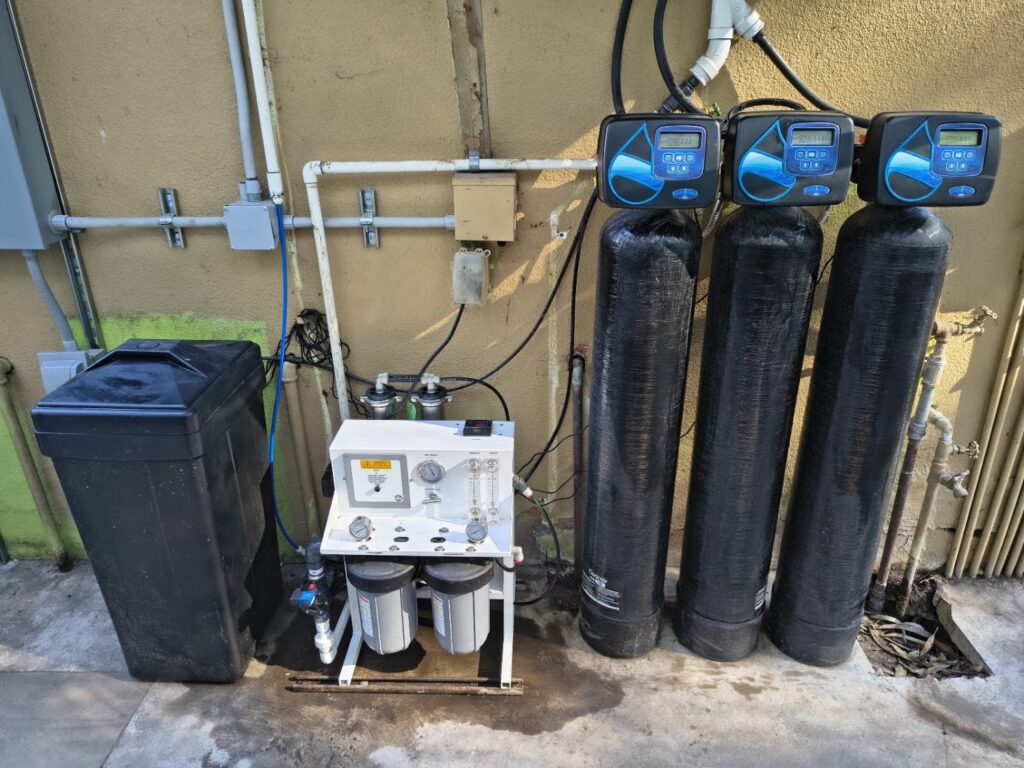
Ion exchange is the primary household technology for measured hardness. It exchanges calcium and magnesium on a resin bed and can help protect water heaters, fixtures and appliances from scale.
A softener is not disinfection and does not automatically solve iron, odor, nitrate, arsenic or sediment. Where iron or manganese would foul the resin, another stage may belong ahead of the softener.
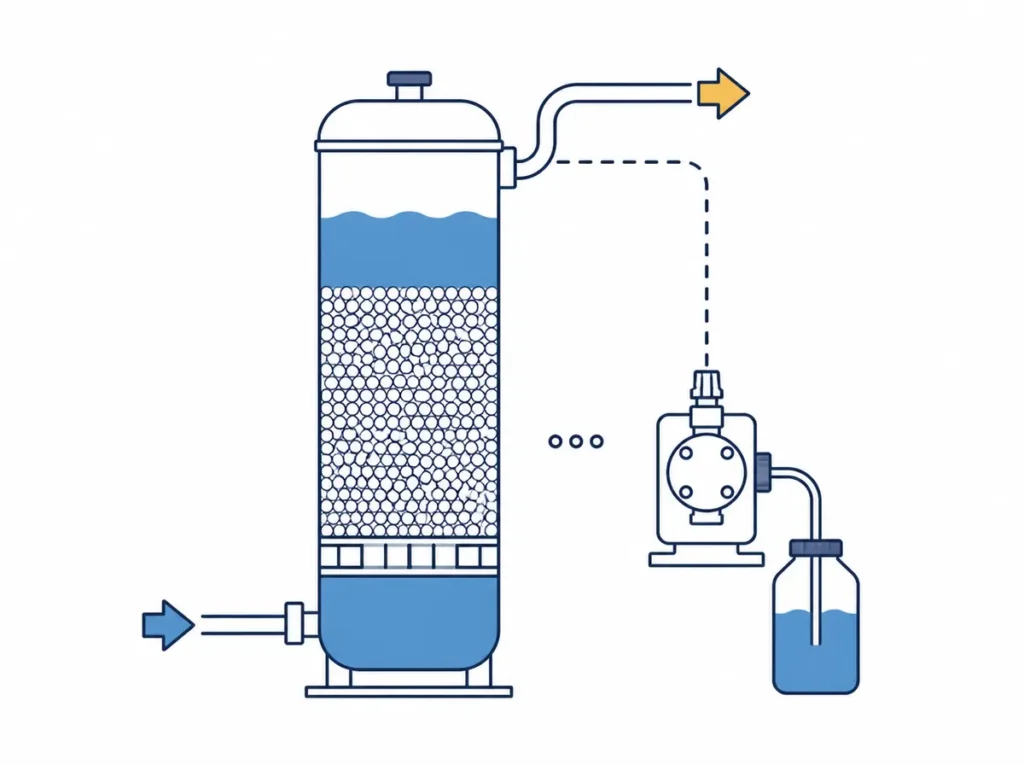
Low-pH water can be corrosive to copper and brass. A properly sized neutralizing-media tank or controlled feed system raises pH before the water reaches household plumbing.
Testing needs: pH, alkalinity, hardness and system flow.
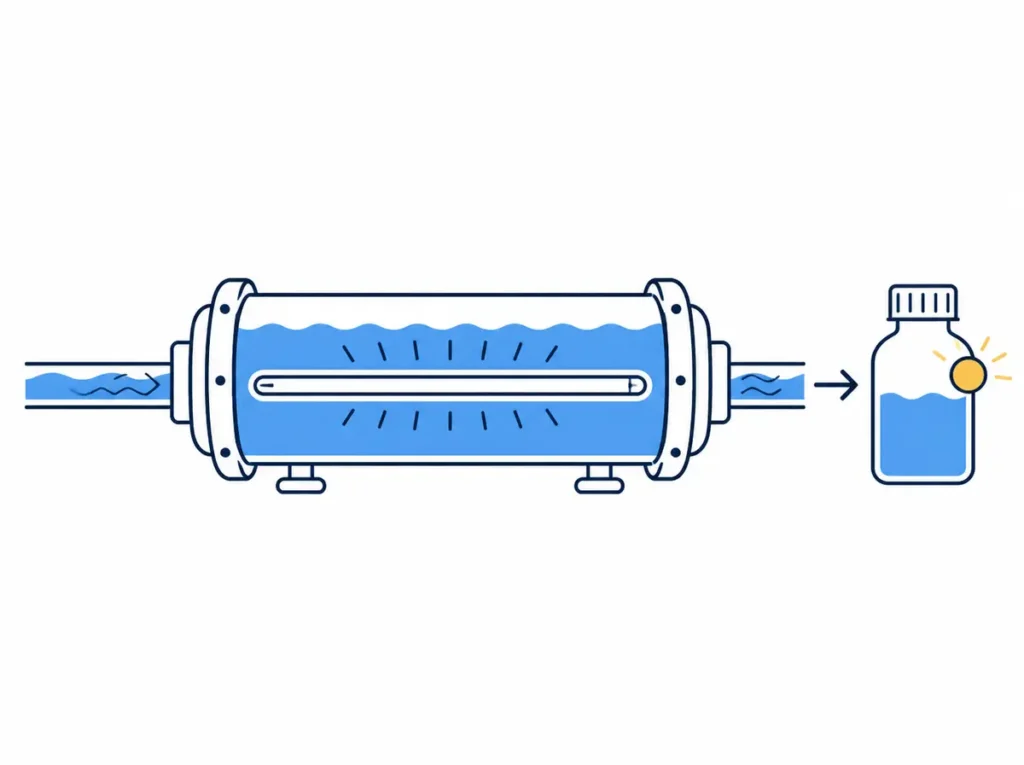
UV can be part of a bacteriological safety plan after the well source is addressed. It depends on correct dose, flow, clear pretreated water, lamp and sleeve maintenance—and confirmation through retesting.
It does not address: chemicals, metals, hardness or sediment.
Flow, pH, hardness, turbidity, contaminant form and competing constituents can all change system design and performance. Equipment should be selected for the measured job rather than the label on the tank.
Primary job: Sand, silt and selected particles
Important limit: Does not treat dissolved contaminants or bacteria.
Primary job: Rated taste, odor and disinfectant goals
Important limit: Not a universal metals, nitrate, arsenic or bacteria treatment.
Primary job: Measured iron, manganese or H₂S when chemistry fits
Important limit: Performance depends on pH, oxygen, concentration and competing constituents.
Primary job: Measured hardness
Important limit: Not disinfection and not a substitute for contaminant-specific treatment.
Primary job: Measured low pH
Important limit: Does not solve every staining or contaminant concern.
Primary job: Selected dissolved constituents when the exact device is rated
Important limit: Drinking/cooking water only; not whole-house treatment or a bacteriological safety plan.
Primary job: Microbiological control after source correction
Important limit: Needs clear water, proper sizing, maintenance and retesting.
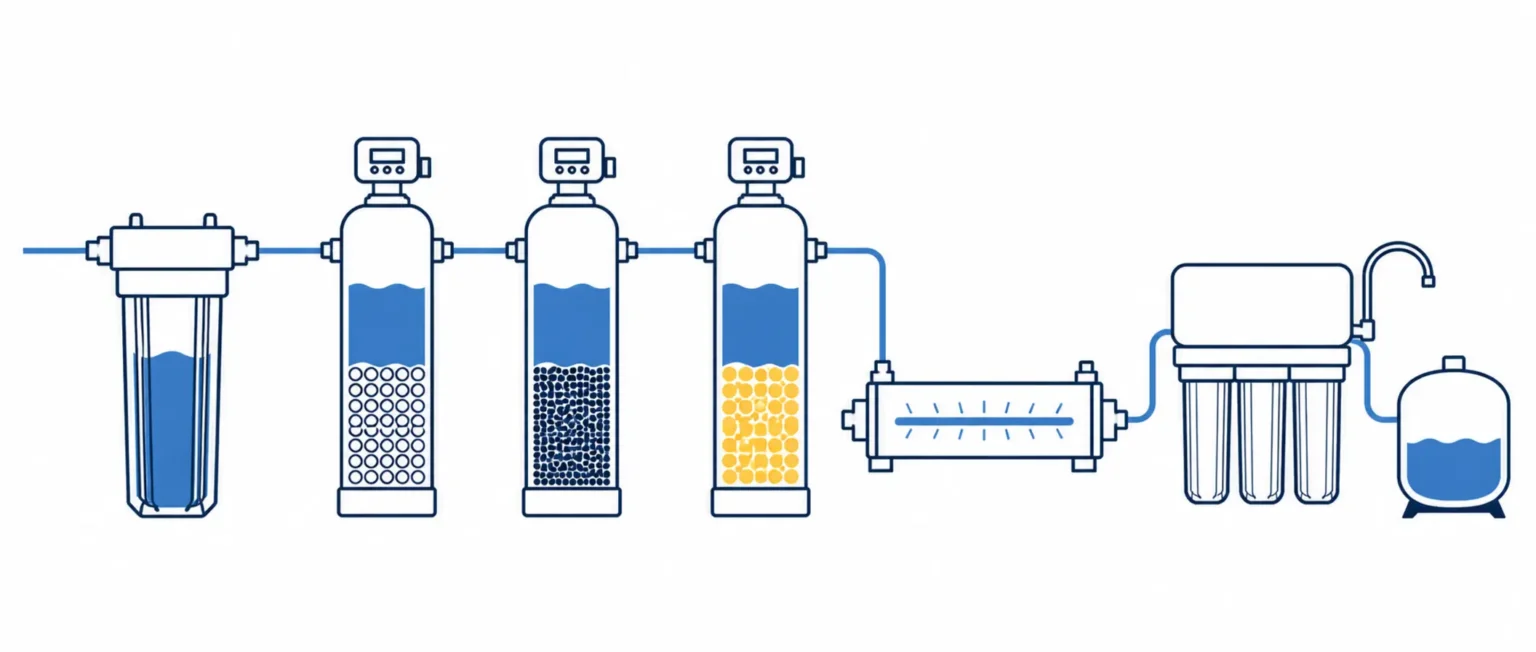
A private-well system is often a train of two or more stages. Order matters because one stage may protect the equipment after it.
Which stages belong in the train is a treatment-strategy question, not a one-filter shopping decision.
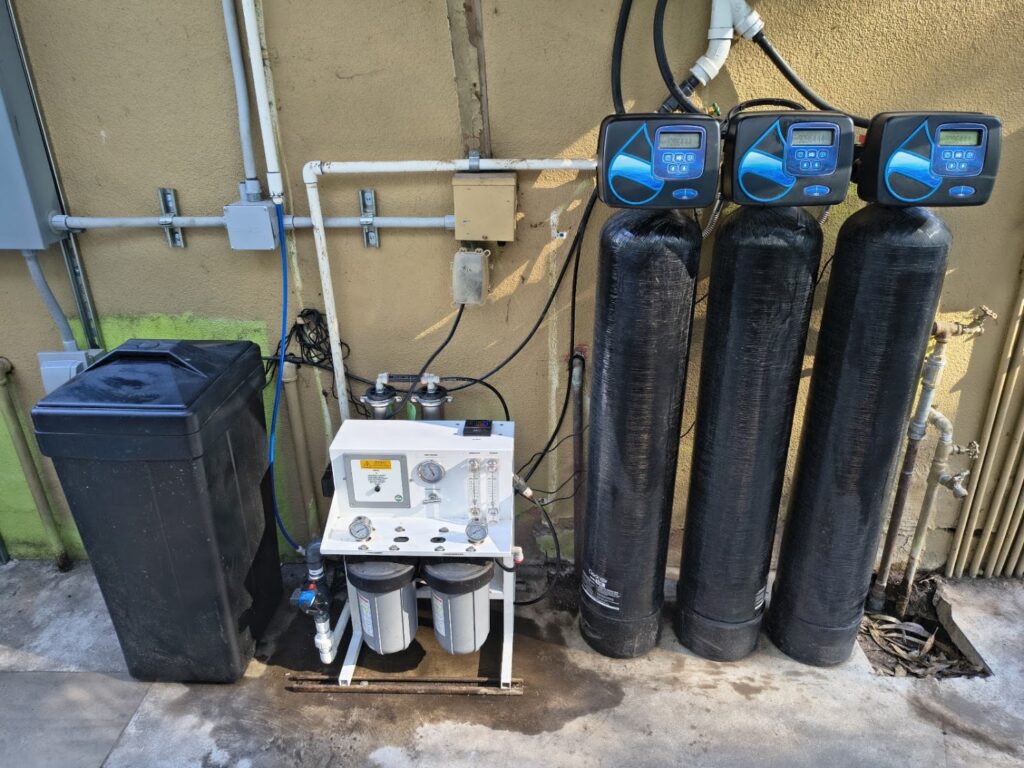
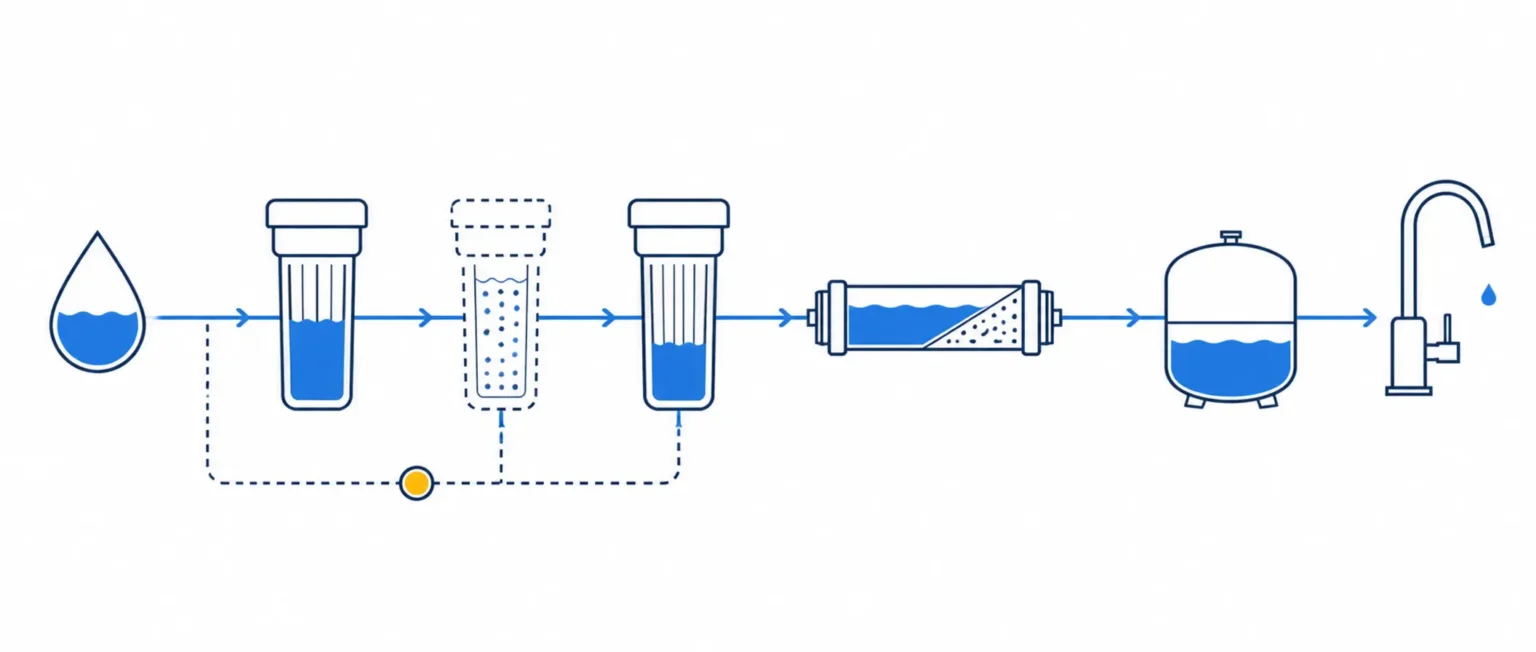
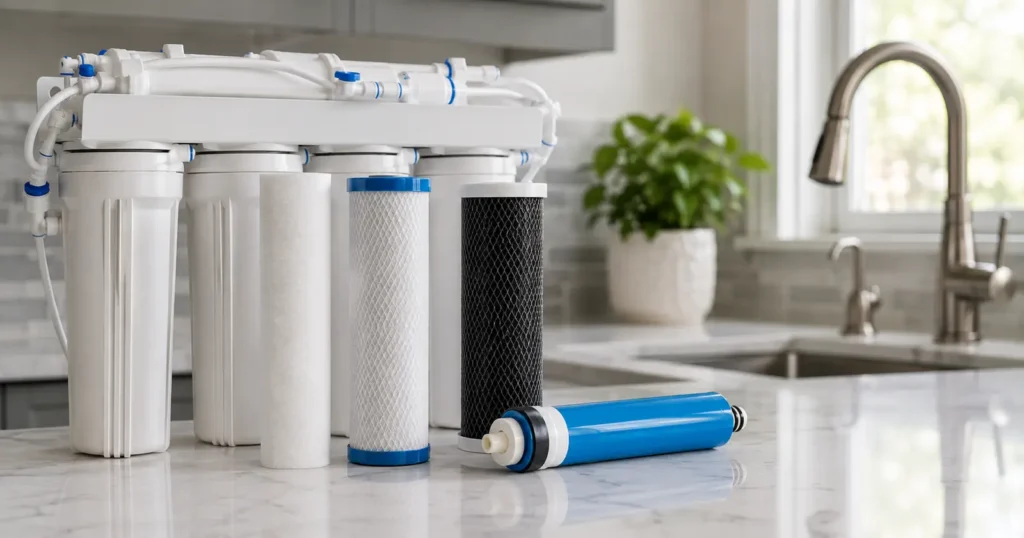
An under-sink reverse-osmosis system is a point-of-use drinking-water technology, not the default answer for the whole house. It uses a membrane and supporting cartridges, and any contaminant-reduction claim belongs to the exact rated device.
Feed-water chemistry and pretreatment matter because sediment, hardness and other conditions can affect membrane performance and service life. Ordinary RO should not be treated as a bacteriological safety solution.
The most expensive mistake is selecting equipment before the water is understood.
Each technology category has a defined job. None covers every private-well condition.
Peak flow, media loading and service requirements matter when equipment is sized.
Filters load, media changes, lamps age and well conditions can change. Service should follow the actual system and water.
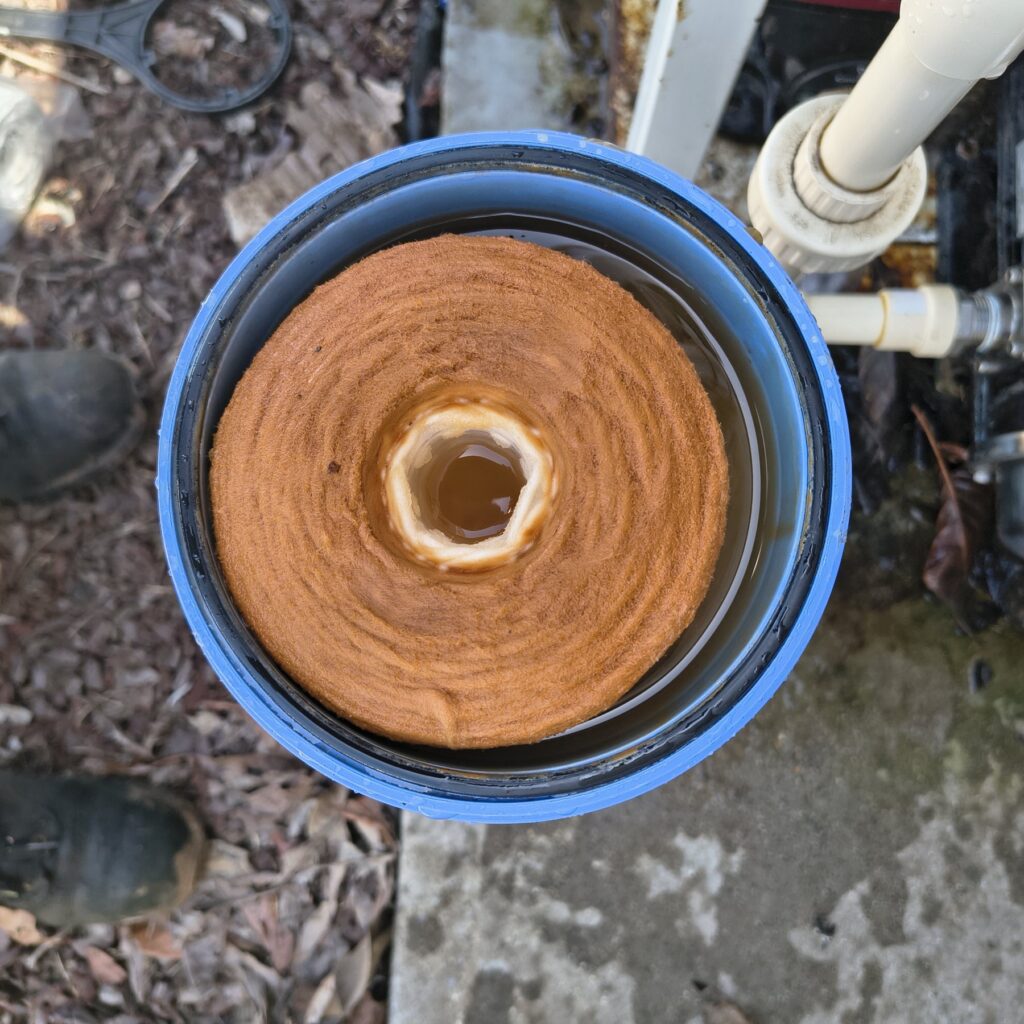
Sediment cartridges can load quickly on one well and slowly on another. Media beds may require backwash or regeneration. RO prefilters and membranes depend on feed-water quality. UV lamps and sleeves have equipment-specific maintenance requirements.
There is no useful universal filter-change interval for every private well. Follow the manufacturer, monitor pressure and flow, keep service records and retest after meaningful changes in the water or system.
Return to the top-level private-well hub for testing, problems, treatment, filtration and regional information.
Use the strategy page to turn measured chemistry, flow and household goals into a treatment sequence.
Start here when the concern is a symptom such as staining, odor, sediment, low pressure or an unexplained change.
For installation, service and replacement of whole-house filtration equipment.
Contaminant guides: hard water · iron · manganese · hydrogen sulfide · acidic water · bacteria · nitrates · arsenic.
No. A sediment filter captures selected particles. It is not disinfection and it is not a universal treatment for dissolved contaminants.
No. The equipment and order should follow testing, chemistry, peak flow, household goals and the specifications of the selected equipment.
It depends on the goal. Whole-house concerns and point-of-use drinking-water concerns are different jobs, and some homes may use both when testing supports it.
Carbon is used for specific rated taste, odor and disinfectant goals. It should not be treated as a universal solution for iron, nitrate, arsenic or bacteria.
UV needs proper sizing, clear pretreated water, maintenance and source correction where contamination entered the well. Retesting is important to confirm the result.
Sizing depends on measured peak flow, household demand, water chemistry, treatment loading and the equipment manufacturer’s operating requirements.
There is no single interval that fits every private well. Follow the equipment requirements and actual conditions such as water quality, usage, pressure drop and service history.
Water Fixers can help with testing, filtration selection, sizing, installation and service for private-well water on the Central Coast. The goal is to use the stages the water actually needs—and skip the ones it does not.
Water Fixers Plumbing & Filtration • Santa Maria, CA • Central Coast service • California License #719792
CALL NOW! Se Habla Español!