
KENMORE / SEARS WATER SOFTENER REPAIR
Kenmore Water Softener Repair & Troubleshooting
Diagnose the Problem Before You Replace the System.
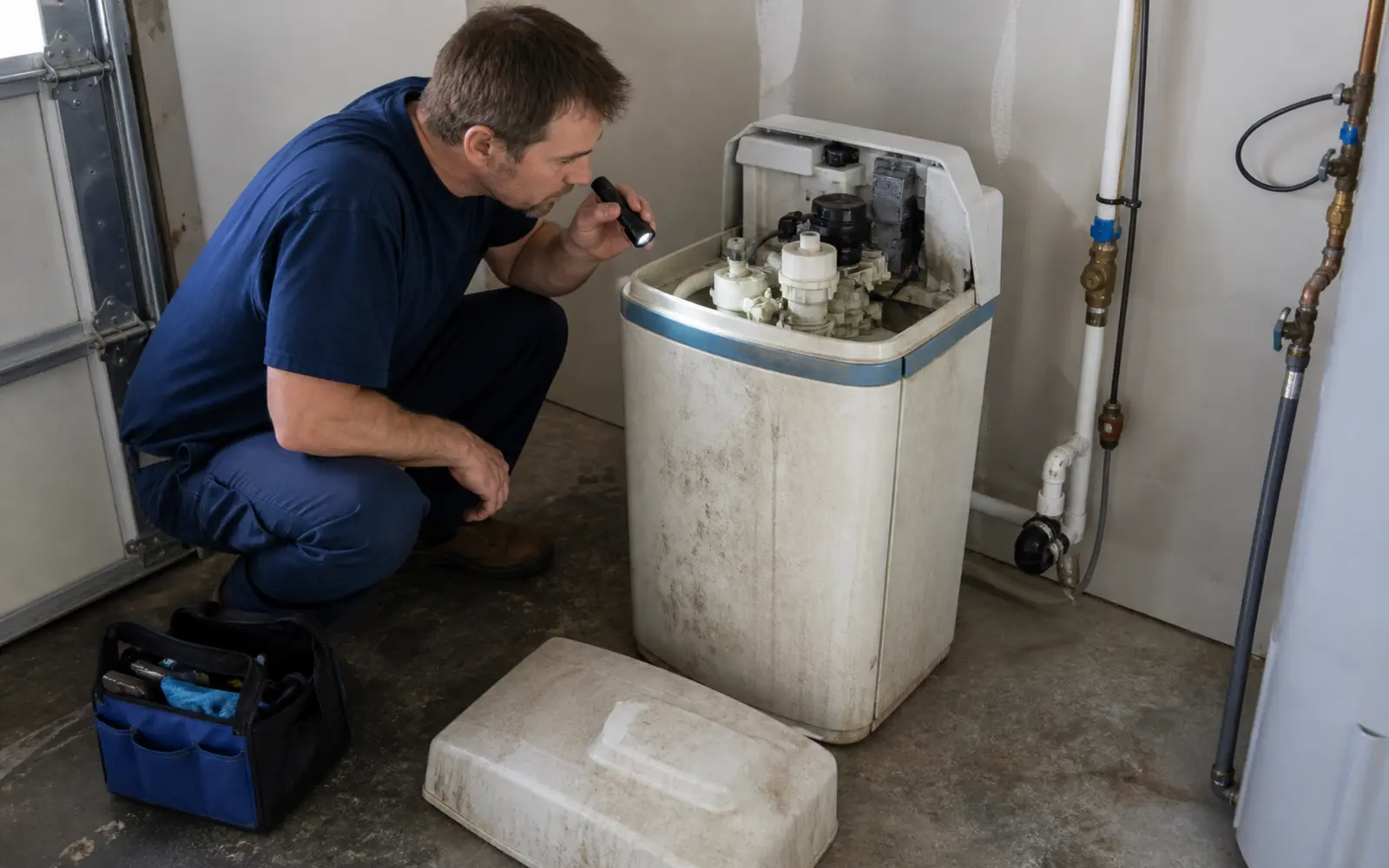
Water Fixers evaluates many existing Kenmore and Sears water softeners that have stopped softening, stopped using salt, are leaking, are stuck in regeneration, or keep sending water to the drain. We check the softener and the surrounding plumbing, identify the exact model when possible, and explain whether a practical repair, maintenance step, resin service, or replacement makes sense.
START WITH WHAT THE SOFTENER IS ACTUALLY DOING
Symptoms First. Then a Real Diagnosis.
Use the symptom—not a guessed part—to choose the starting point. The same homeowner symptom can come from settings, brine draw, bypass position, valve movement, resin condition, plumbing, or more than one issue at the same time.
Hard Water Has Returned
Scale, spotting, or poor soap performance after the softener used to work can point to settings, brine draw, bypass leakage, valve operation, resin condition, or an incomplete regeneration.
Softener Is Not Using Salt
Salt that never seems to go down can be associated with a salt bridge, restricted brine draw, a float or line problem, or a regeneration cycle that is not completing correctly.
System Will Not Regenerate
A cycle that never starts, never finishes, or stalls partway can involve programming, controls, drive components, valve movement, or another mechanical problem.
Water in the Brine Tank
An unusually high or rising brine-tank level can involve refill, float, injector, drain-line, or valve operation. The water level is a clue, not a diagnosis by itself.
Unit Is Leaking
Water around the cabinet, bypass, fittings, valve, or drain connection should be checked promptly so an equipment leak does not become a floor or plumbing problem.
Error, Control or Motor Problem
Blank or blinking displays, error codes, clicking, humming, or a valve that will not advance call for model-specific control and valve diagnosis.
THE EXACT MODEL MATTERS
Find the Kenmore Model Number Before Ordering Parts
Kenmore softeners were sold in many versions, and motors, seals, injectors, brine components, controls, and valve parts are not automatically interchangeable. Many older Kenmore manuals place the model or rating decal under the salt cover or around the upper rim; other units may have a label around the control head or cabinet. A clear photo of the model/serial label helps confirm the correct parts path before money is spent.
Helpful information for the service call
- Photo of the model and serial label, if safely accessible
- Photo of the control panel and any displayed error
- What changed: hard water, no salt use, leak, constant drain, stuck cycle, or unusual brine level
- Approximate age or service history, if known
REPAIR BEFORE REPLACEMENT
What Water Fixers Checks Before Recommending Replacement
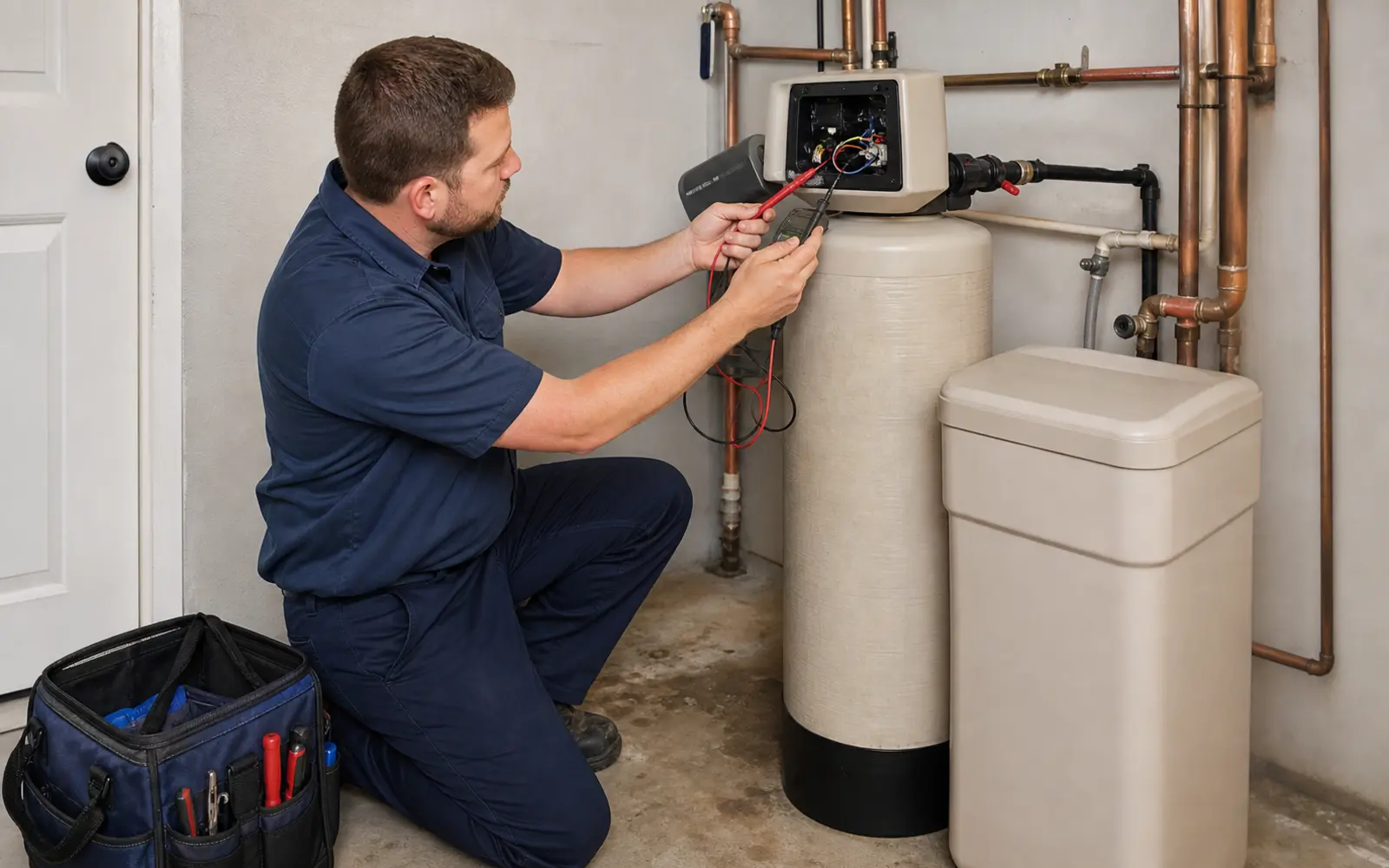
Replacing the first visible part can miss the real failure. A useful diagnosis checks the regeneration path, verifies whether the home is actually receiving soft water, and considers the condition of the rest of the equipment before recommending a larger repair or replacement.
Settings & Programming
Hardness, time of day, capacity and regeneration settings are compared with the home’s actual water and demand.
Bypass Position
A bypass left partly or fully open can send untreated water around the softener and make a working unit look like it failed.
Salt & Brine Condition
Salt bridging, mushing, abnormal water level and brine-well condition can interfere with a proper regeneration.
Injector & Brine Components
Injector, brine line, float and refill components are checked for restrictions, wear or incorrect movement.
Valve, Seals & Motor
Valve travel, seals, spacers and drive behavior are evaluated to see whether the unit can complete its cycle.
Resin Condition
Resin performance is considered alongside age, regeneration behavior and actual hardness results—not age alone.
Plumbing & Drain
Inlet/outlet orientation, shutoffs, pressure, bypass connections and drain routing can all affect how the softener behaves.
Age, History & Parts Path
Repeated failures, tank condition, repair history, and parts availability for the exact model are weighed before a major repair or replacement is recommended.
REPAIR OR REPLACE?
Repair It When the Repair Still Makes Sense
A Kenmore softener should not be replaced simply because it is older or because of the brand name on the cabinet. The decision should come from the exact failure, tank and valve condition, resin condition, realistic parts availability, repeat service history, and the cost of getting the system back onto a dependable service path.
Repair May Make Sense When
- The tank and cabinet are in usable condition.
- The failure can be isolated to a serviceable component.
- Parts for the exact model are practical to obtain.
- Resin and valve condition still support useful service.
- The repair cost is reasonable for the unit’s overall condition.
Replacement May Make More Sense When
- Several major components need work at the same time.
- The tank or cabinet has serious leakage or damage.
- Core parts for the exact model are unavailable or impractical.
- Major valve work and resin work stack together.
- Failures keep repeating or repair costs keep accumulating.
- The existing unit no longer fits the household’s water demand.
NEXT STEPS
Related Water Softener Help
Water Softener Service & Repair
General diagnosis and repair for softeners of many brands, including the plumbing around the unit.
Water Softener Maintenance
Salt, settings, brine-tank condition, regeneration, and preventive checks for a softener that is still in service.
Water Testing
Confirm hardness and other water conditions when the symptom or replacement decision depends on actual water results.
Kenmore Replacement
If repair no longer makes sense, review plumbing, bypass, drain, sizing, and replacement planning for the existing Kenmore location.
Kenmore Water Softener Repair FAQs
Direct answers for Kenmore and Sears softener owners deciding whether the next step is diagnosis, repair, maintenance, or replacement.
Need Help With a Kenmore or Sears Water Softener?
Tell Water Fixers what the softener is doing. If you have it, send a photo of the model/serial label or control panel. We can inspect the existing equipment, confirm what is actually failing, and explain whether a practical repair or replacement makes more sense.
Water Fixers Plumbing & Filtration • California’s Central Coast • License #719792