
HARD WATER • TESTING • TREATMENT
Hard Water Solutions in Santa Maria & the Central Coast
Test the Water Before You Choose the Equipment
White scale, cloudy glassware, soap residue and water-heater buildup may point to hard water. Water Fixers helps homeowners measure the hardness, understand the result and choose a practical treatment plan for the property.
38+ years local • California License #719792 • Se Habla Español
Quick Answer
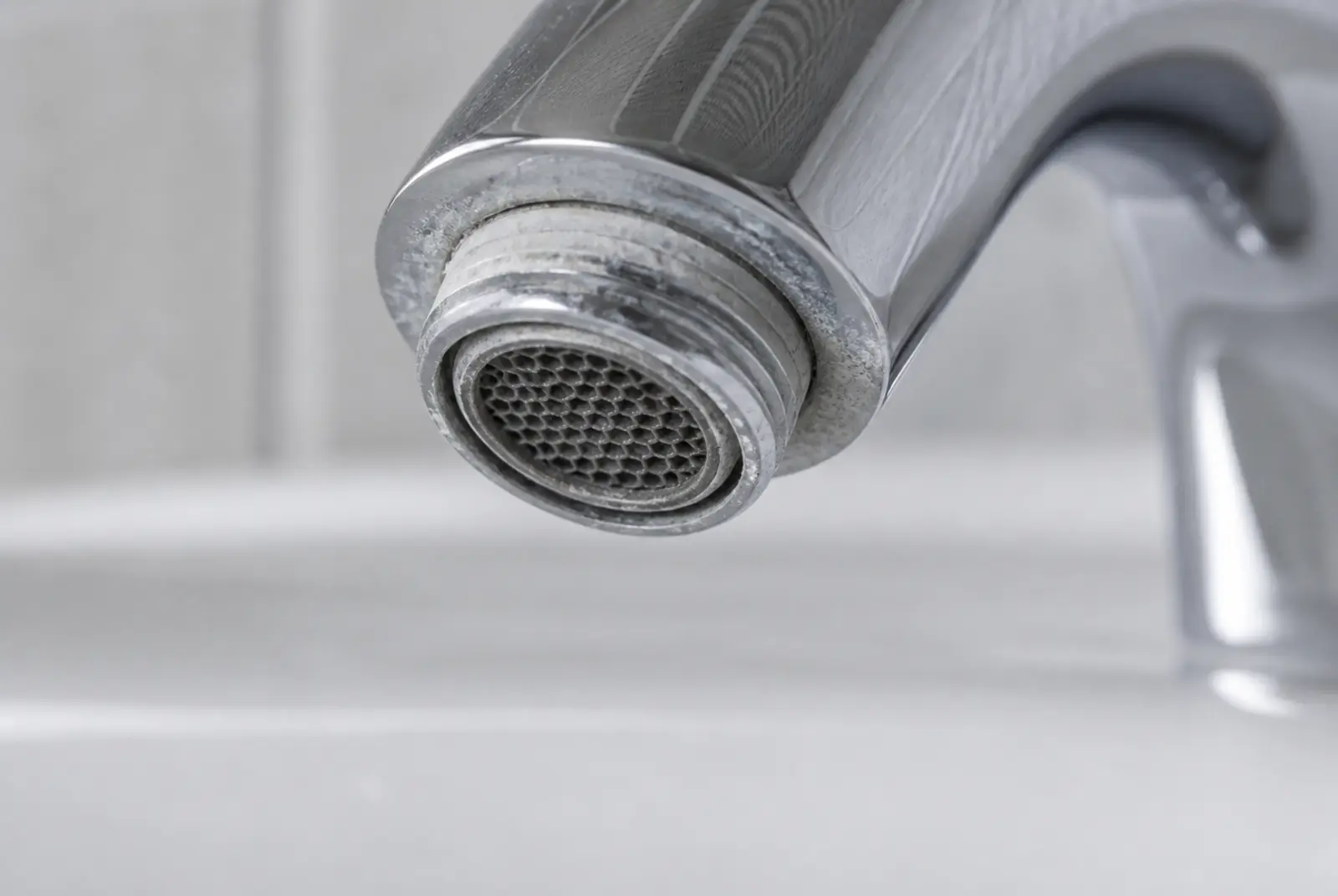
Hard water contains elevated dissolved calcium and magnesium. Scale, spotting and poor lather are useful clues, but they do not measure the hardness at your tap. Test first. Ion-exchange softening is the primary whole-home treatment for hardness; sediment and carbon filters address different concerns, and reverse osmosis is generally a point-of-use drinking-water treatment.
SANTA MARIA WATER CONTEXT
Santa Maria's 2025 Reported Water Is Very Hard
The City of Santa Maria uses two supply sources: local groundwater wells near the Santa Maria Airport and purchased State Water treated at the Polonio Pass Water Treatment Plant. In 2025, the City reported that about 44% of its supply came from the State Water Project. The same report lists total hardness at an average of 315 parts per million as calcium carbonate, with a reported range of 100-430 ppm.
USGS classifies water above 180 mg/L as very hard. The City’s reported 2025 average is about 18.4 grains per gallon. That is useful local context, not a substitute for measuring the water at a specific property. Supplier, source blend, private wells, plumbing and sampling point can all change the result used for equipment sizing.
315 ppm
Average total hardness reported by the City of Santa Maria for 2025.
100-430 ppm
Reported range. Water conditions can vary enough that a property-level test still matters.
ONE NUMBER DOES NOT FIT THE CENTRAL COAST
Santa Maria's Report Is Local — Your Water May Be Different
The City of Santa Maria’s 315 ppm average is useful for customers on that municipal system. It should not be used as the hardness value for every Central Coast address. Other public systems, shared systems and private wells can have different source water and mineral levels. Use the current report for your actual supplier as background, then use a property-level hardness test for treatment and softener sizing.
On the City of Santa Maria System
On Another Public Water System
On a Private Well or Shared System
WHAT HOMEOWNERS OFTEN NOTICE
Signs That Make a Hardness Test Worthwhile
These symptoms can point toward hard water, but they are not a substitute for measuring the water.
White Mineral Scale
Chalky buildup on faucets, shower glass, dishes or heating surfaces can be consistent with hardness.
Cloudy Glassware & Spots
Film and spotting after washing are common clues, although they do not prove the exact hardness level.
Soap & Cleaning Residue
Hardness minerals can reduce lather and leave residue, increasing the work needed for cleaning and laundry.
Dry-Feeling Skin or Hair
Some people notice a different feel after washing, but symptoms alone cannot identify the water condition.
Water-Heater Scale
Mineral deposits can collect on heated surfaces and contribute to efficiency and maintenance concerns.
Fixture & Appliance Buildup
Deposits can accumulate around aerators, valves and appliances that use hot water.
DIAGNOSIS BEFORE EQUIPMENT
Test First, Then Size the Solution
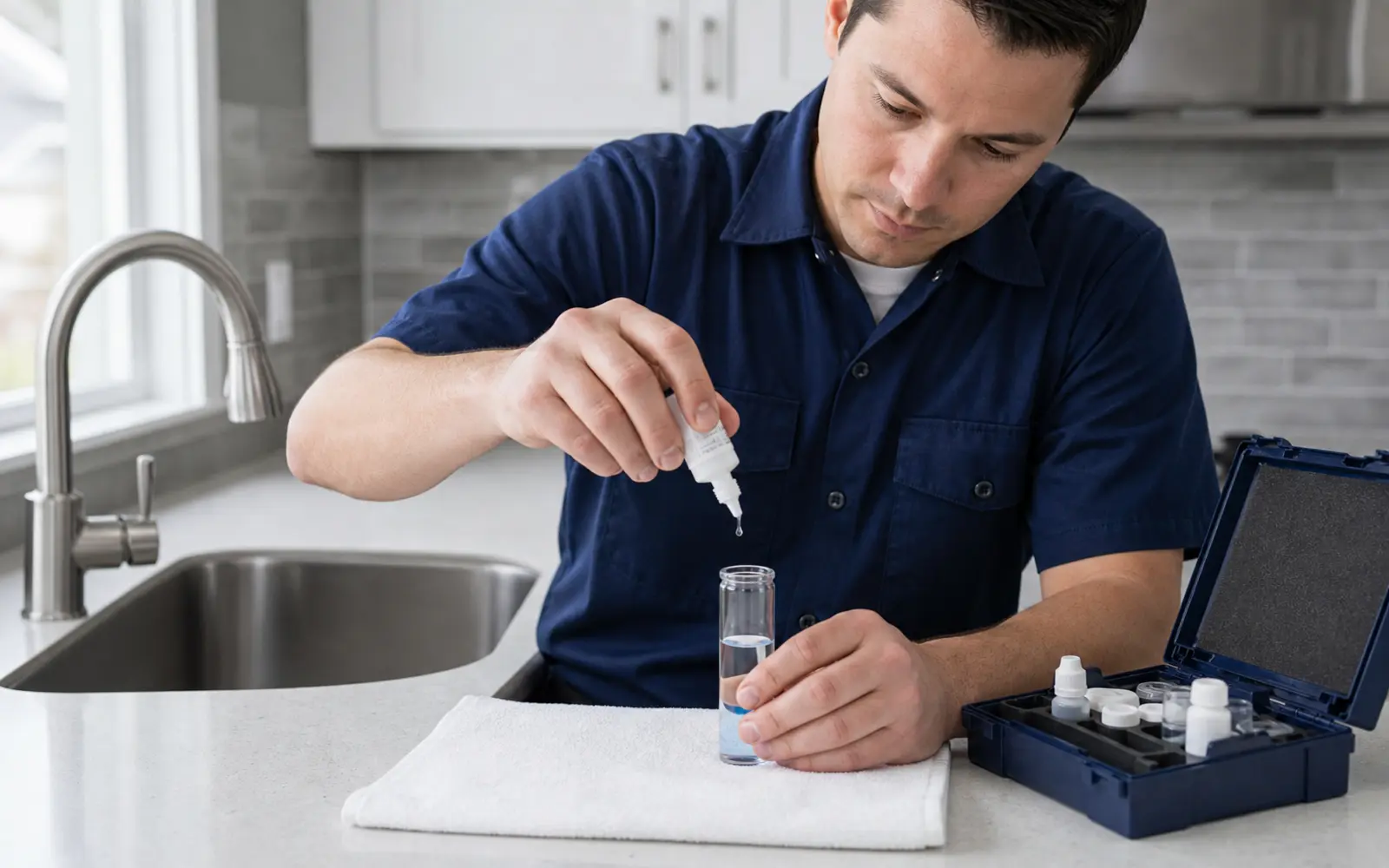
A hardness result is commonly reported in milligrams per liter as calcium carbonate or grains per gallon. Water use, household size, peak flow, plumbing layout and other measured water conditions affect equipment selection and settings.
Confirm the Source
Identify City water, another public supplier, a shared system or a private well.
Measure Hardness
Test at the location the proposed treatment will actually serve.
Review the Home
Account for water use, peak flow, plumbing condition and existing equipment.
Match the Treatment
Choose equipment and settings that address the measured result and service needs.
HARDNESS IS ONLY ONE PART OF WATER QUALITY
Separate Hardness From Other Water Problems
Scale or staining can overlap with silica, iron, manganese, corrosion products, sediment and other conditions. Depending on the water source and treatment goals, a broader testing plan may also consider chlorine or chloramine, sulfur or hydrogen sulfide, nitrate, arsenic, pH, bacteria and other water-quality concerns.
Water Fixers starts with the symptoms and source, then helps determine which testing and treatment path makes sense rather than recommending equipment blindly.
CHOOSE THE RIGHT TECHNOLOGY
What Treats Hardness — and What Does Not
Softening, filtration and reverse osmosis solve different problems. Match the equipment to the measured water and the part of the property you want to treat.
Water Softening
Ion-exchange softening is the primary household technology used to reduce calcium and magnesium hardness throughout a home. Sizing and programming should follow measured hardness and water use.
Whole-House Filtration
Sediment and ordinary carbon filters can address particles, chlorine-related taste or odor and other identified concerns, but they do not soften water or remove dissolved hardness minerals.
Reverse Osmosis
RO can reduce dissolved minerals at one drinking-water faucet. It is not the same as a whole-house water softener.
WHEN A WATER SOFTENER FITS
The Right System Depends on More Than a Grain Number
A softener may be appropriate when testing confirms hardness and whole-home scale is the main problem. Equipment selection should account for measured hardness, household demand, peak flow, plumbing layout, pressure, drain and bypass access, existing treatment and future service needs.
An existing softener may need settings, maintenance or repair rather than automatic replacement. Water Fixers can help compare those paths.
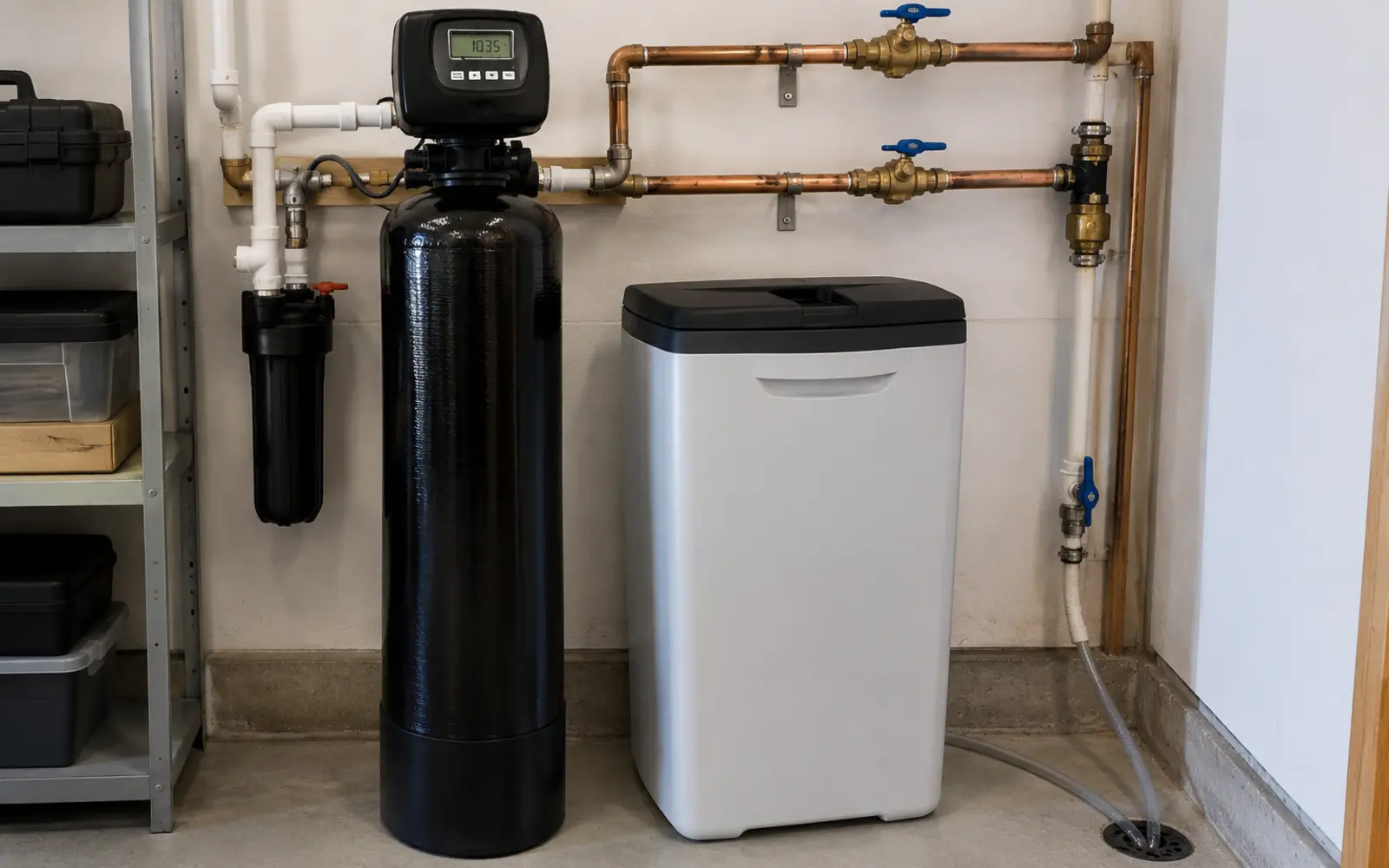
Professional installation should preserve service access to the bypass, controls, drain and surrounding plumbing.
WHY SCALE FORMS
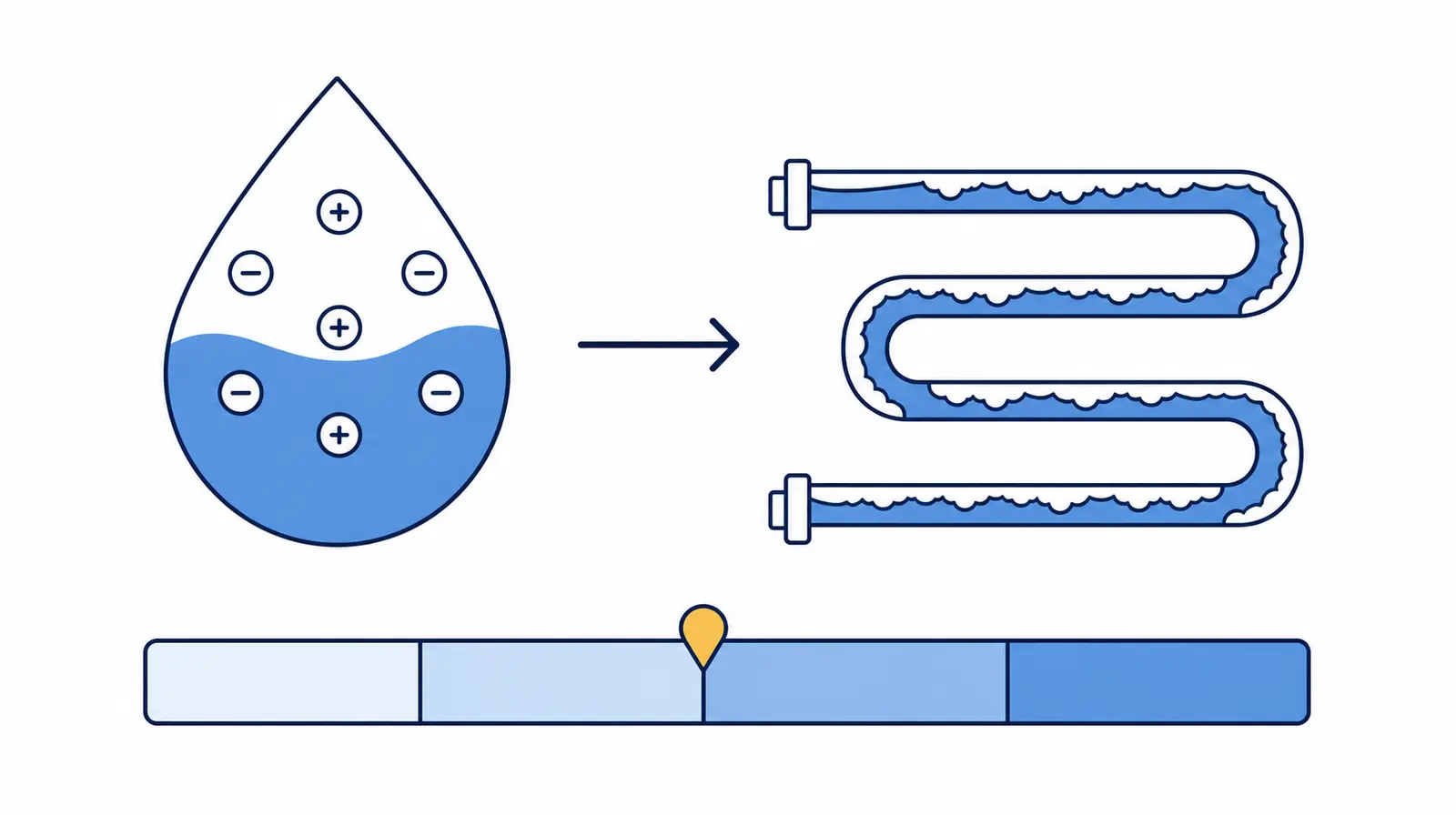
Calcium and Magnesium Can Form Scale When Water Is Heated
Hardness is primarily dissolved calcium and magnesium. When hard water is heated, calcium carbonate deposits can form on heating surfaces, fixtures and appliances.
Hard water is generally an aesthetic and equipment concern, not a regulated health contaminant. The goal is to measure it accurately and address the effect it is having on the property.
WHERE TO GO NEXT
Related Water Fixers Resources
Use the page that matches the question you are trying to answer: testing, broader water-quality guidance, a specific concern or a private-well treatment path.
Water Quality Guide
Use symptoms, source and testing to understand what the water may be telling you.
Water Contaminants
Compare hardness with iron, sediment, chlorine, odor and other water-quality concerns.
Well Water Services
Private wells need a source-specific testing and treatment path.
Hard-Water Questions From Central Coast Homeowners
Direct answers about symptoms, testing, softening and the difference between hardness treatment and other water-quality solutions.
Ready to Stop Guessing About Hard Water?
Schedule testing or talk with Water Fixers about scale, spotting, an existing softener or a new whole-home solution.
Water Fixers Plumbing & Filtration • Santa Maria, California • License #719792