
WATER PRESSURE CONTROL • PRV TESTING • CENTRAL COAST
A pressure-reducing valve—often called a PRV or water pressure regulator—reduces excessive incoming water pressure before it reaches the home’s piping, fixtures, water heater and connected equipment. Water Fixers can test residential pressure, inspect the regulator and surrounding plumbing, and recommend adjustment, service, installation or replacement only when the evidence supports it.
38+ years serving California’s Central Coast • Se Habla Español • CA License #719792
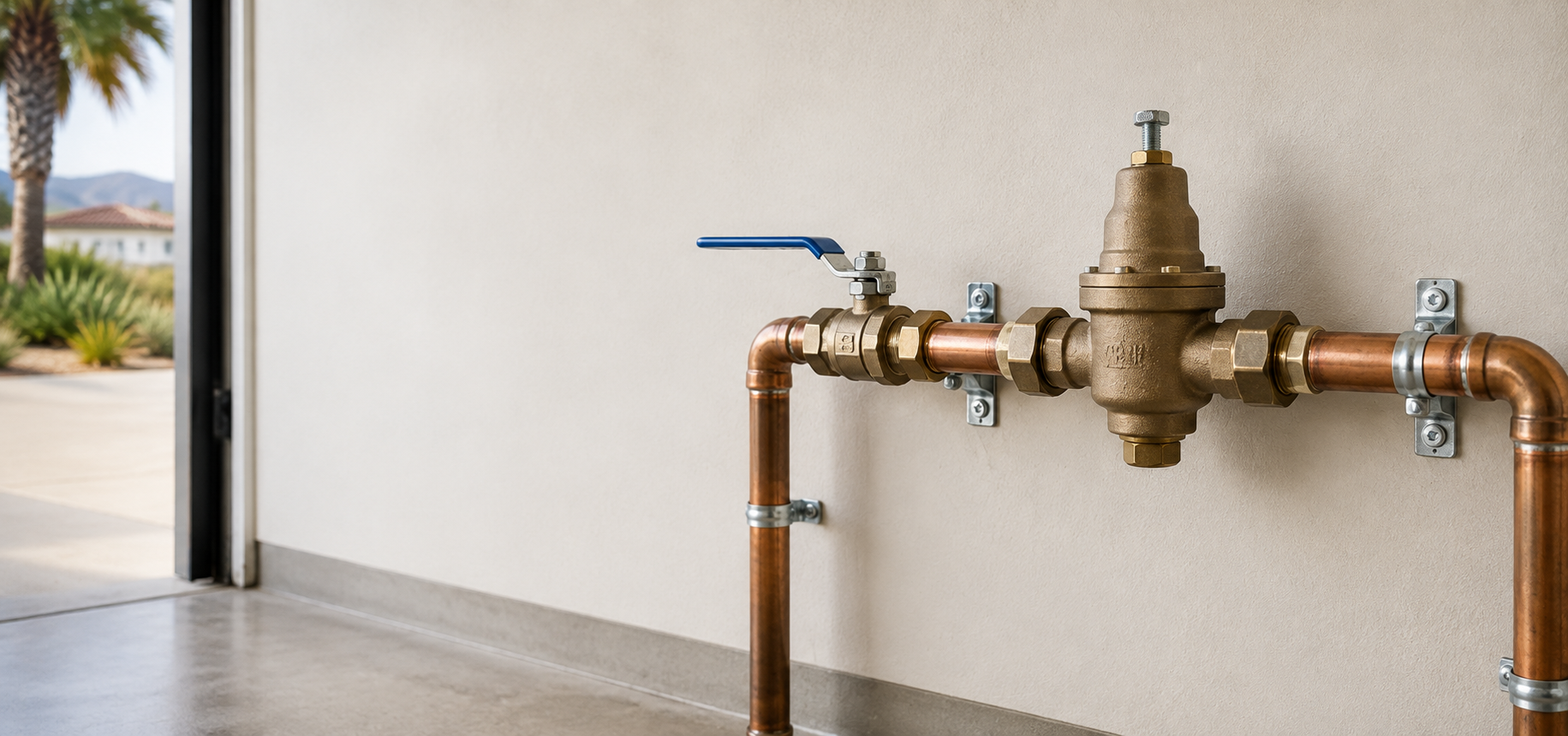
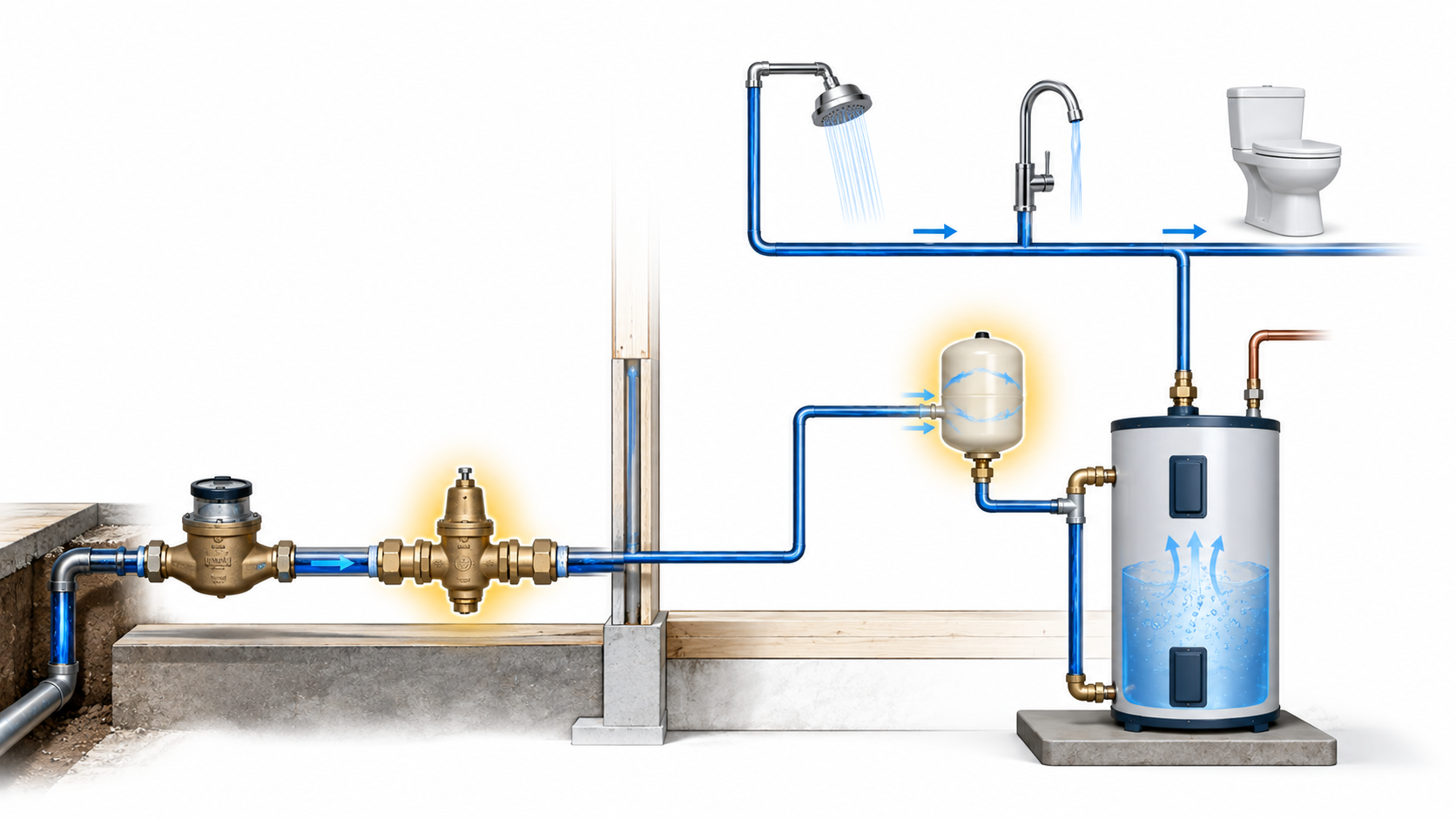
A PRV is a mechanical valve on the incoming water service that reduces downstream pressure to a controlled level. It can protect plumbing components from unnecessary pressure stress, but it is not a leak detector, backflow preventer, smart water monitor or automatic emergency shutoff. If the property also needs leak alerts, usage monitoring or automatic shutoff protection, those are separate functions.
A properly functioning regulator limits excessive incoming pressure before it reaches valves, fixtures, supply lines and appliances.
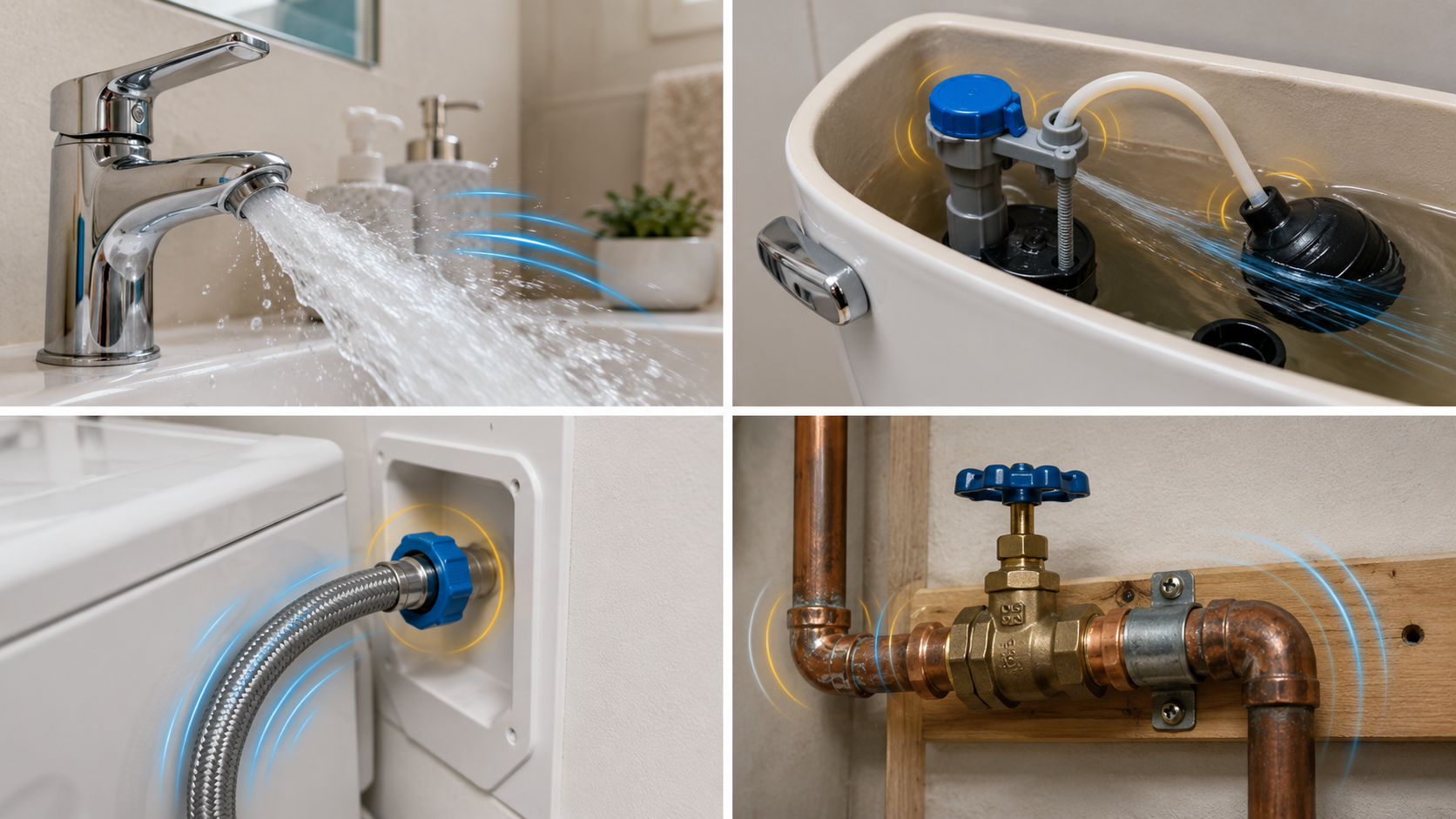
Water heaters, toilet fill valves, faucets, washing-machine hoses and other connected components all operate downstream of the home’s pressure control.
Appropriate pressure can reduce overly forceful flow, splashing and some pressure-related noise while supporting normal household use.
A PRV cannot prevent every leak, but controlling excessive pressure removes one avoidable source of stress on vulnerable plumbing components.
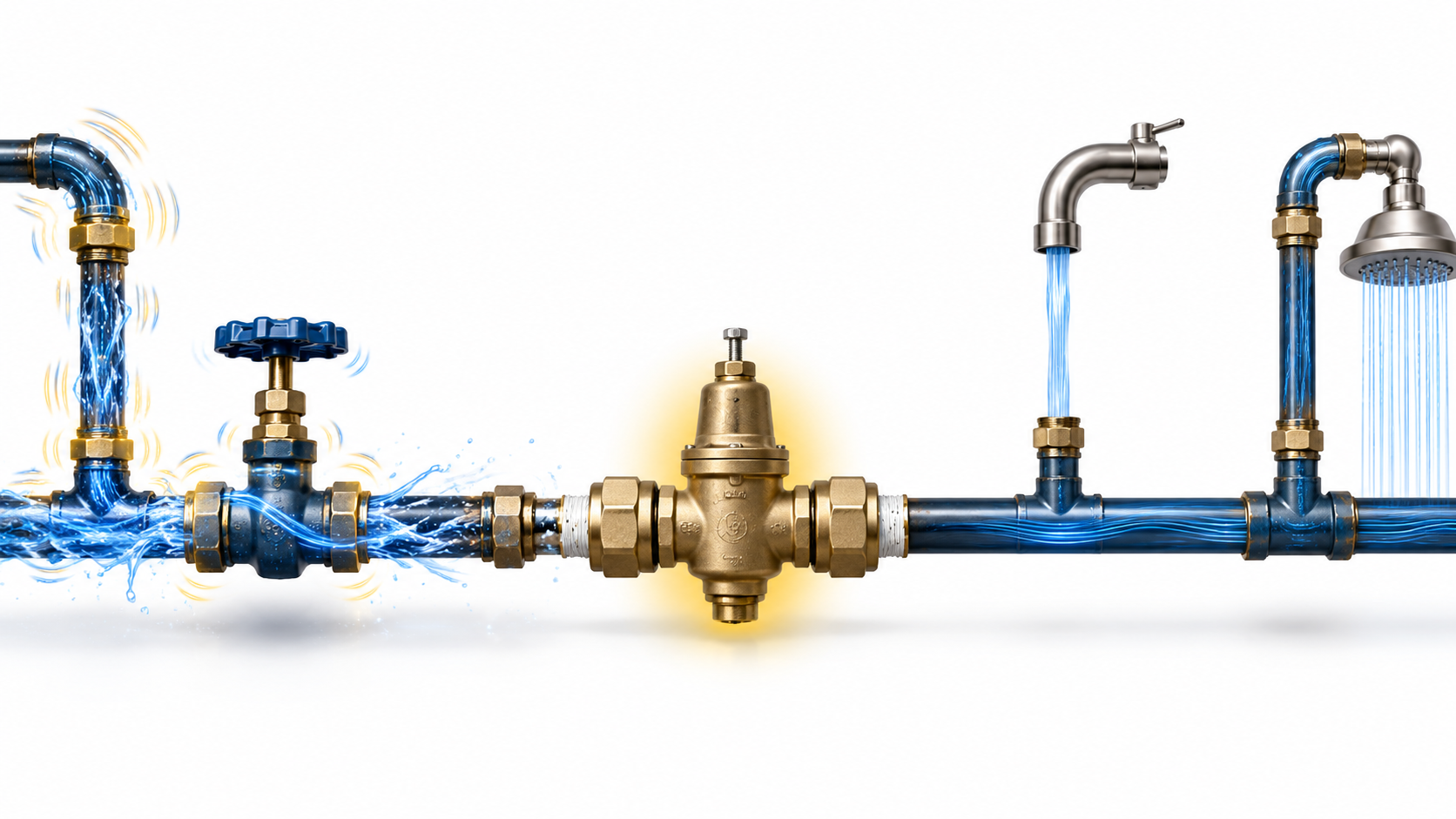
HOW A PRESSURE REGULATOR WORKS
1. Incoming supply reaches the property. Supply pressure can vary with the utility system, elevation, demand and site conditions.
2. The PRV reduces downstream pressure. The regulator modulates the valve opening so household piping receives lower controlled pressure.
3. The house receives regulated pressure. A PRV reduces excessive pressure; it does not boost low pressure and it does not shut off the water when a leak occurs.
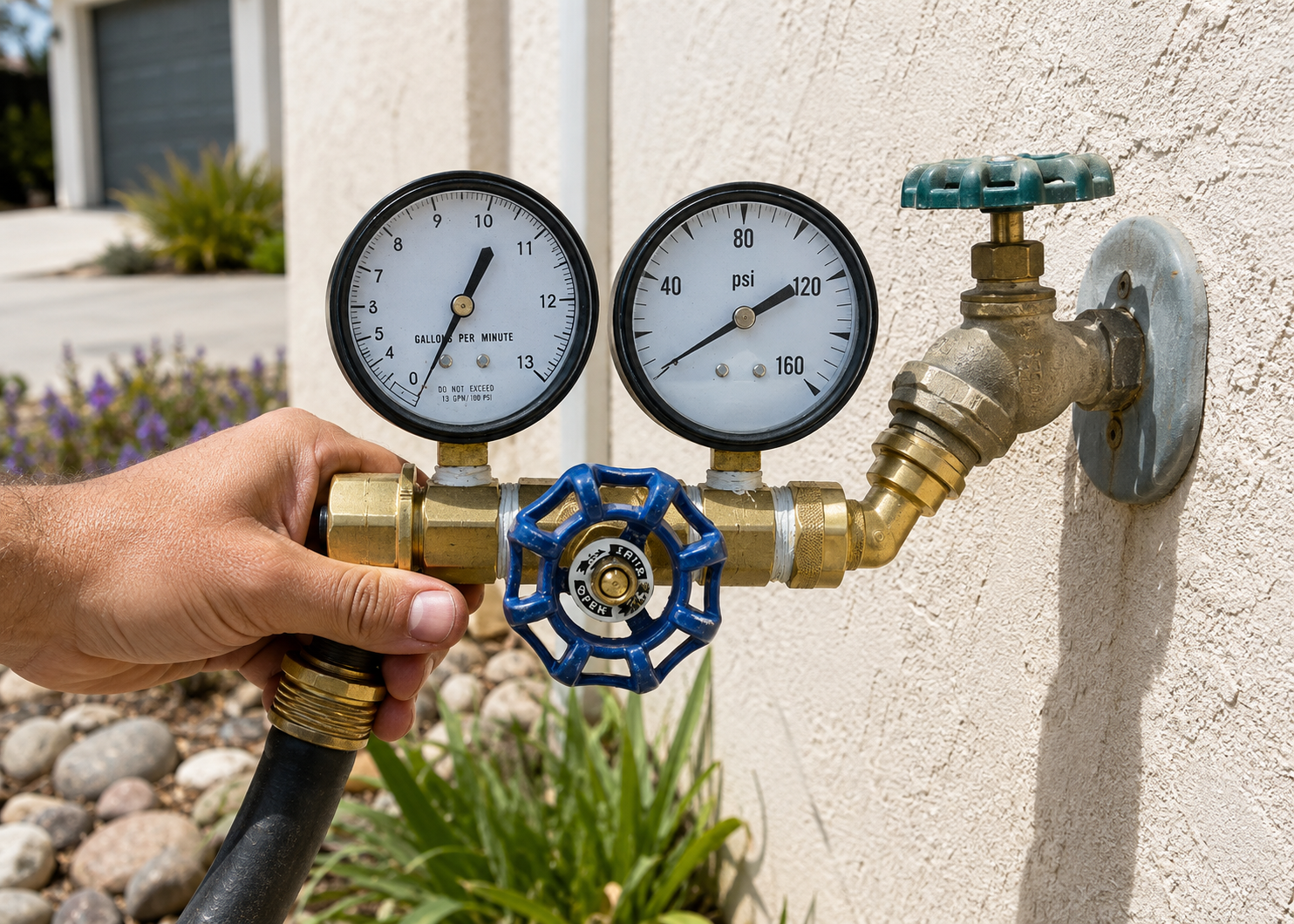
4. A gauge verifies performance. The correct pressure setting depends on the regulator, plumbing system and property conditions rather than one universal target.
Symptoms can point toward pressure problems, but they do not prove that the PRV has failed. Water Fixers can measure pressure and inspect how the system behaves before recommending adjustment, service, installation or replacement.
Check static pressure and, when useful, pressure behavior while fixtures are operating.
Identify the regulator, shutoff, pipe size, installation condition, accessibility and signs that pressure is not staying controlled.
Depending on the evidence, the right path may be adjustment, PRV service or replacement, thermal-expansion control, leak diagnosis, fixture service or investigation of another pressure-system issue.
2025 CALIFORNIA PLUMBING CODE • SECTION 608.2
Current 2025 California Plumbing Code Section 608.2 addresses excessive water pressure. When static pressure in the water-supply piping exceeds 80 psi, the section calls for an approved pressure regulator and reduction to 80 psi or less. The same section also addresses downstream thermal-expansion control for such regulated systems.
That does not mean every home should be set to the same pressure. The correct operating range still depends on the regulator, plumbing system, property conditions, manufacturer requirements and any local amendments or Authority Having Jurisdiction requirements.
SIGNS WORTH CHECKING
Possible pressure-related clues include:
These symptoms can have other causes. A pressure measurement is more useful than assuming the regulator is bad.
ADJUST, REPAIR OR REPLACE?
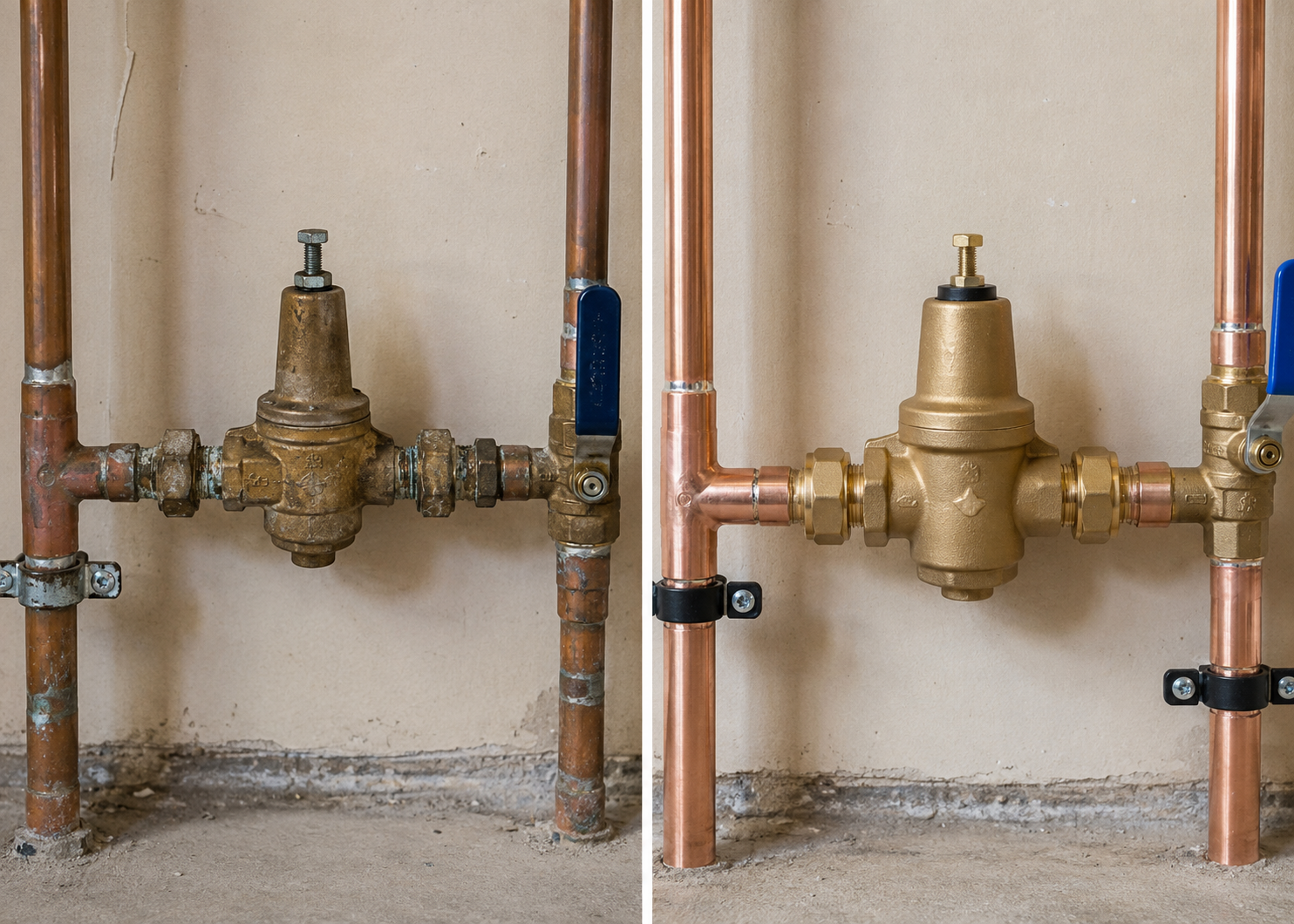
A pressure problem does not automatically mean a new PRV is required. Valve condition, model, serviceability, installation quality, accessibility and actual pressure behavior all matter.
If the regulator is functioning properly and the system simply needs a different approved setting, adjustment may be appropriate after pressure testing.
Some regulator models have serviceable components. Whether service makes sense depends on the exact valve, manufacturer guidance and its condition.
A worn, damaged, inaccessible or unreliable regulator may be better replaced—especially when pressure will not remain controlled or the surrounding plumbing also needs correction.
PRVs + THERMAL EXPANSION
Pressure regulation and thermal expansion should be considered together. Under current 2025 California Plumbing Code Section 608.2, a system requiring a regulator because static pressure exceeds 80 psi also requires downstream expansion control so thermal expansion does not drive pressure back above that limit.
Section 608.3 separately addresses systems where a check valve, backflow preventer or other normally closed device prevents pressure from dissipating back toward the main. In those closed-system conditions, an approved expansion tank or other approved device is required to control thermal expansion.
Water Fixers can evaluate the regulator, water heater and expansion-control components as one pressure-system picture. See Water Heater Services →
WHOLE-HOME LEAK PROTECTION
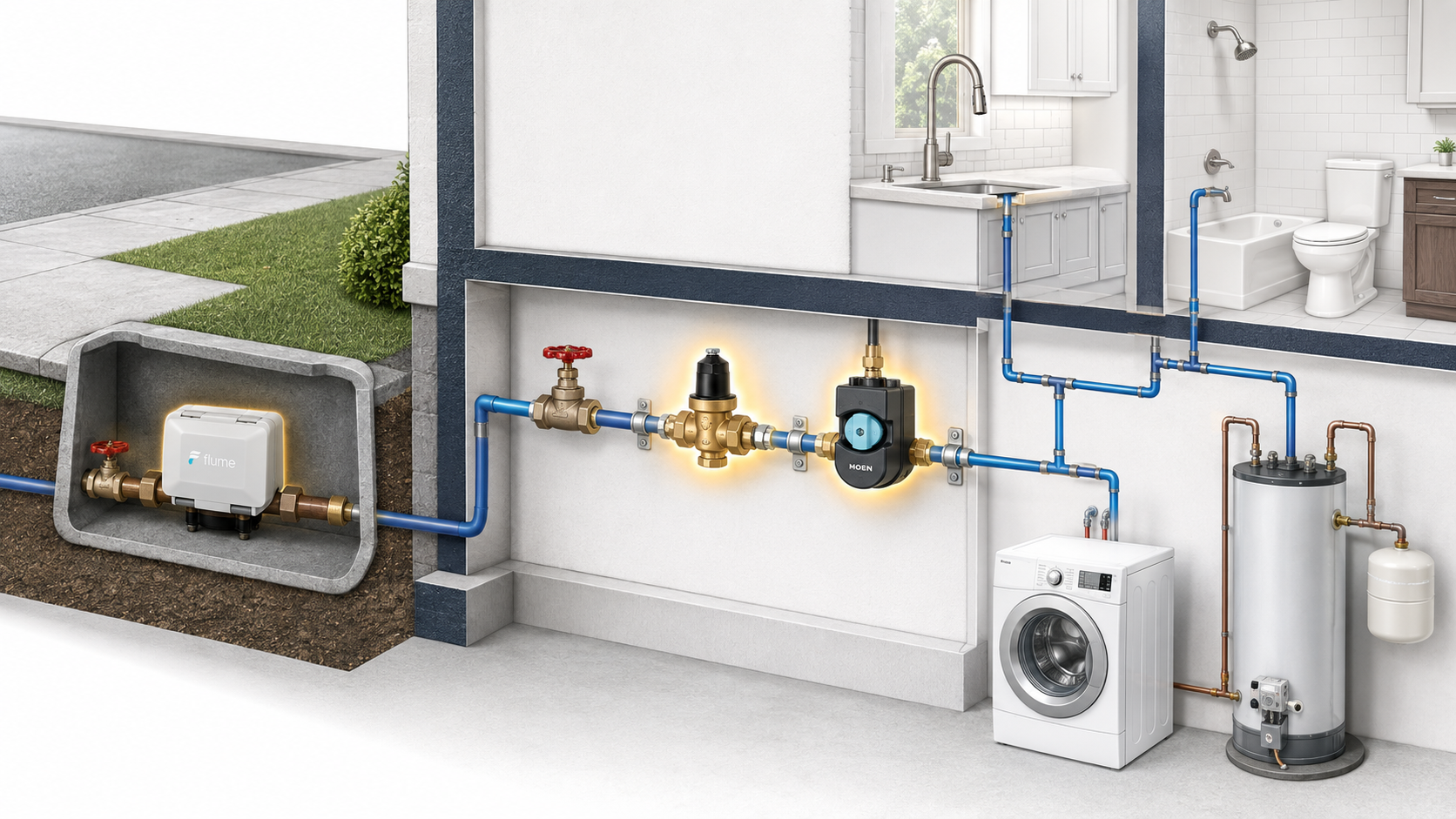
Pressure control, water-use monitoring and automatic shutoff can complement one another, but they solve different problems. None replaces the other two.
A mechanical valve that reduces excessive incoming pressure before it reaches downstream household plumbing. It does not send alerts or automatically close because a leak is detected.
A meter-mounted monitor that reads water use from a compatible water meter and can alert the homeowner to unusual usage patterns. It does not regulate household pressure or automatically close the main valve.
An inline smart shutoff that monitors flow, pressure and temperature, provides alerts, and can automatically close during qualifying events. It can measure pressure, but it is not a pressure-reducing valve.
A PRV is commonly used where incoming public-water pressure needs to be reduced. A private-well property can have a different pressure system. Low or unstable pressure, rapid cycling or unusual pressure behavior may involve the pump, pressure switch, pressure tank or related equipment rather than a street-side regulator.
If the property uses a private well, identify that water source before service so the diagnostic path starts in the right place.
Choose the local Water Fixers pressure-system page for the property. Those pages help separate PRV/high-pressure concerns from leaks, private-well pressure problems and other plumbing issues without creating a second PRV authority page for every city.
Santa Maria Valley: Santa Maria · Orcutt · Guadalupe
Five Cities & Coast: Nipomo · Arroyo Grande · Grover Beach · Pismo Beach · Avila Beach
San Luis Obispo Area: San Luis Obispo · Morro Bay · Los Osos
Santa Ynez Valley: Santa Ynez · Solvang · Buellton · Los Alamos
North County: Paso Robles · Atascadero · Templeton
Lompoc & Vandenberg: Lompoc · Vandenberg Village
Direct answers about residential water pressure, PRV testing, replacement, thermal expansion and smart leak-protection devices.
Water Fixers can test the home’s pressure, inspect the regulator and surrounding plumbing, and separate a pressure-control problem from a hidden leak, private-well pressure issue, fixture problem or thermal-expansion concern. The goal is to correct the actual cause—not replace parts by guesswork.
Water Fixers Plumbing & Filtration • Santa Maria & California Central Coast • CA License #719792
CALL NOW! Se Habla Español!