
HIGH-PURITY & PROCESS WATER • CALIFORNIA CENTRAL COAST
Quick answer: “High-purity water” is not one universal grade. A useful process-water plan starts with the actual feed water, a written finished-water requirement, production and peak demand, storage and delivery needs, and the way the water will be verified after treatment.
Water Fixers Plumbing & Filtration • Santa Maria, CA • Serving California’s Central Coast • CA License #719792
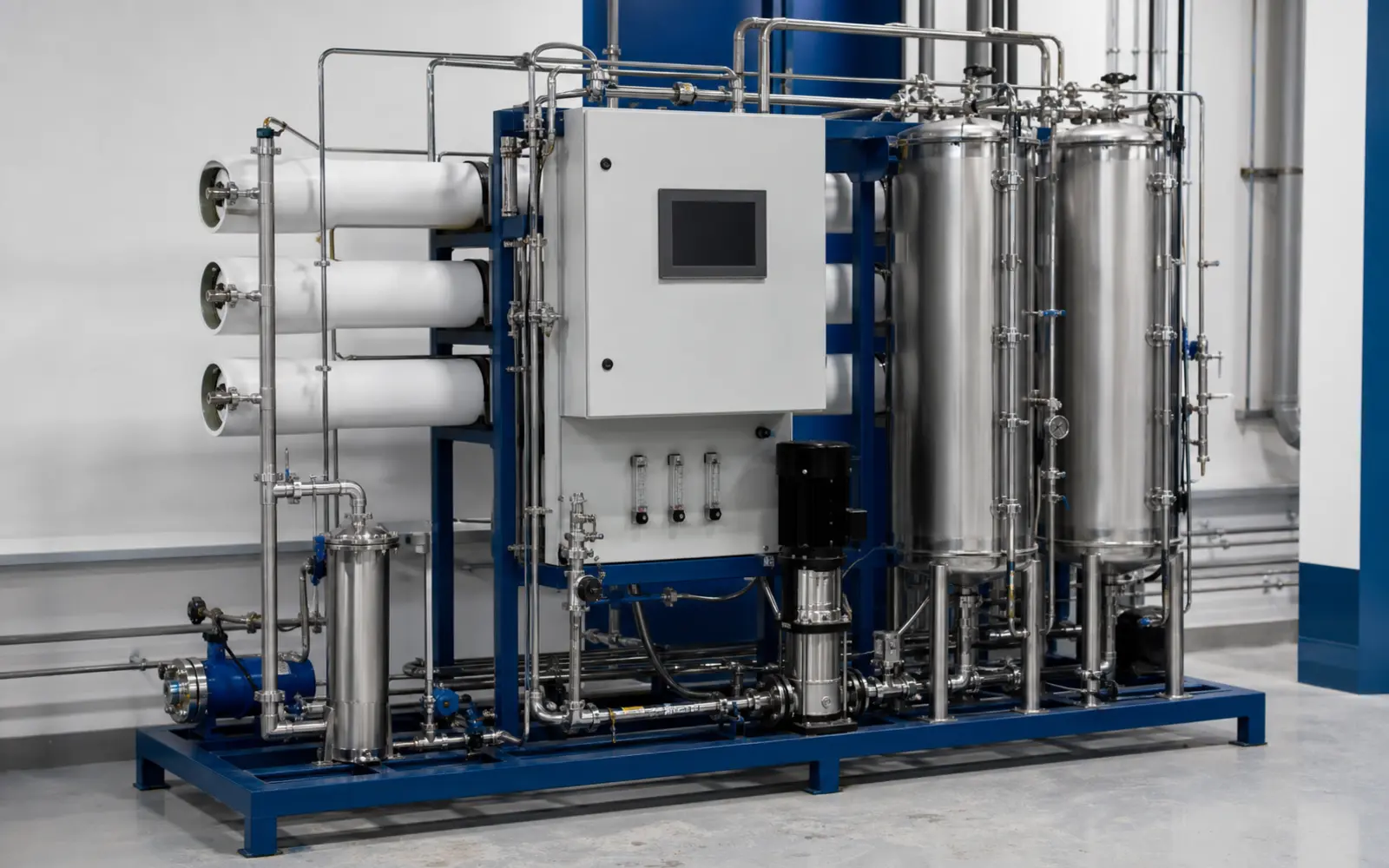
START WITH A WRITTEN WATER REQUIREMENT
Process-water projects become easier to design and troubleshoot when the requirement is written down first. The treatment train can then be evaluated against measurable feed-water conditions and the result the application actually needs.
Identify the source, available water tests, pretreatment already in place and any conditions that can affect downstream equipment.
Define the required water characteristics from the equipment, process, customer specification or applicable standard rather than using the word “pure” by itself.
Document required production rate, daily volume, operating schedule, storage needs and what happens during the busiest operating period.
Define how finished water will be checked and how storage, pumps, piping and point-of-use delivery must support the required result.
STANDARDS-AWARE PROJECTS
Some applications reference a formal water specification. ASTM D1193-24, for example, defines multiple reagent-water types and grades and uses several measured characteristics rather than one generic “high purity” number. USP Purified Water is also a defined compendial article with its own current requirements.
If a project names ASTM, USP or another specification, the current standard, customer documents and validation/testing plan should control the target. This page does not claim that an RO, DI or process-water system automatically meets a regulated or compendial standard.
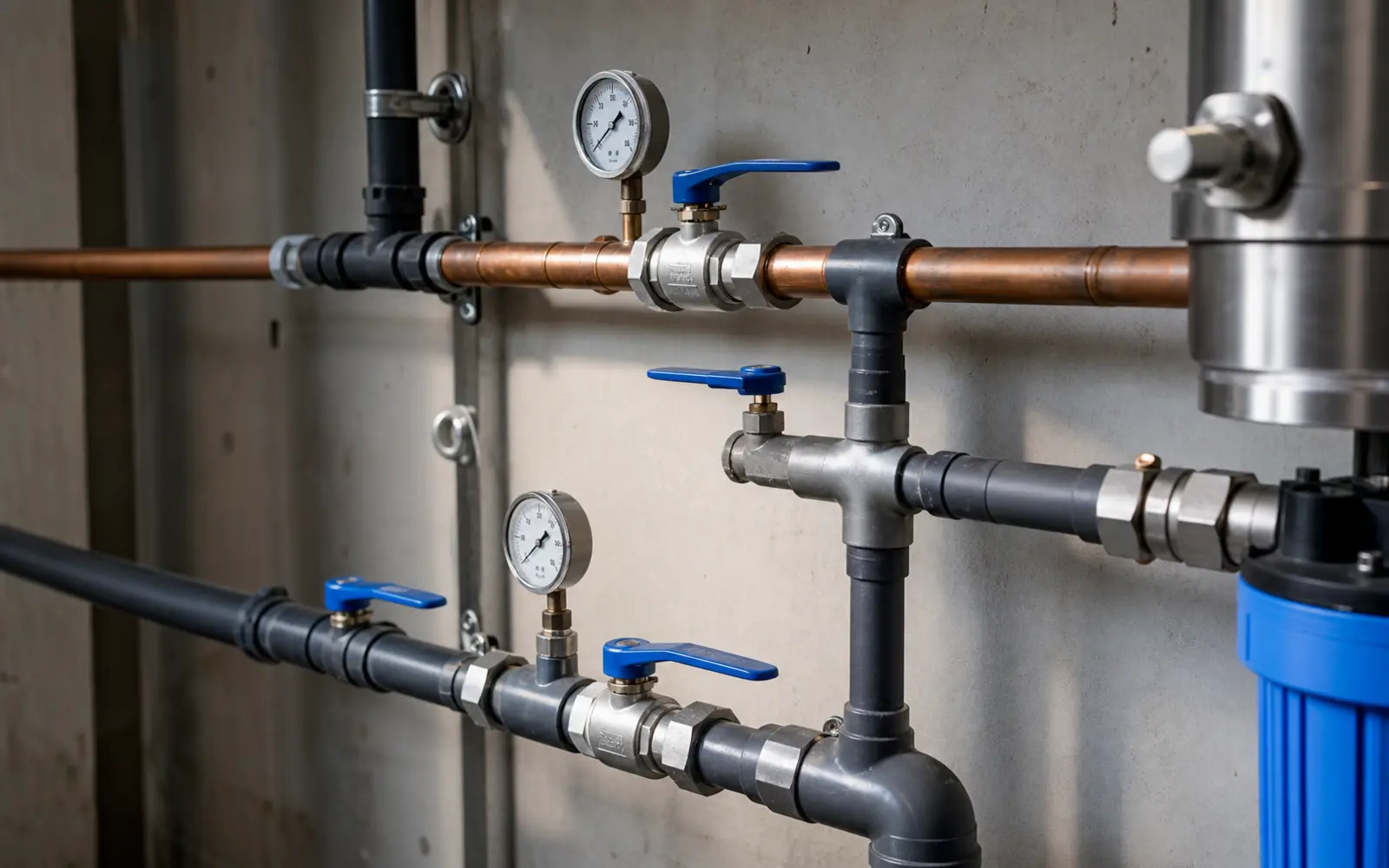
TREATMENT TRAIN
Not every high-purity project needs every stage. The sequence should follow the feed water and the finished-water requirement, with each component protecting or supporting the stage that follows it.
Use source-water information and appropriate testing to understand the conditions entering the system.
Sediment filtration, carbon, softening or other conditioning may be used when verified feed-water conditions make it useful.
Reverse osmosis may provide dissolved-solids reduction and purified-water production when membrane treatment matches the requirement.
Deionization or other polishing may be added when the finished-water target calls for additional ionic or application-specific treatment.
Storage volume, pumps and delivery pressure must support production, peak demand and the way treated water is consumed.
Final delivery should protect the required water quality through the actual piping, equipment connection and operating conditions.
VERIFY THE FINISHED WATER
A process-water system is not verified simply because an RO membrane or DI vessel is installed. The useful measurements depend on the written target. Depending on the project or named standard, verification may involve one or more of the following categories.
Useful for ionic-purity monitoring when the project specification defines a conductivity or resistivity requirement.
Total organic carbon may be part of a named specification or process-control plan. It should be measured only when the requirement calls for it.
Some applications include microbiological or endotoxin requirements. Those are separate specifications and are not proven by conductivity alone.
Silica, sodium, chloride or other application-specific constituents may matter when the equipment, customer specification or standard identifies them.
Important: Water Fixers can use available test and project information to help plan the treatment path. Laboratory methods, sampling plans, validation and compliance documentation should follow the project’s actual specification and responsible authority.
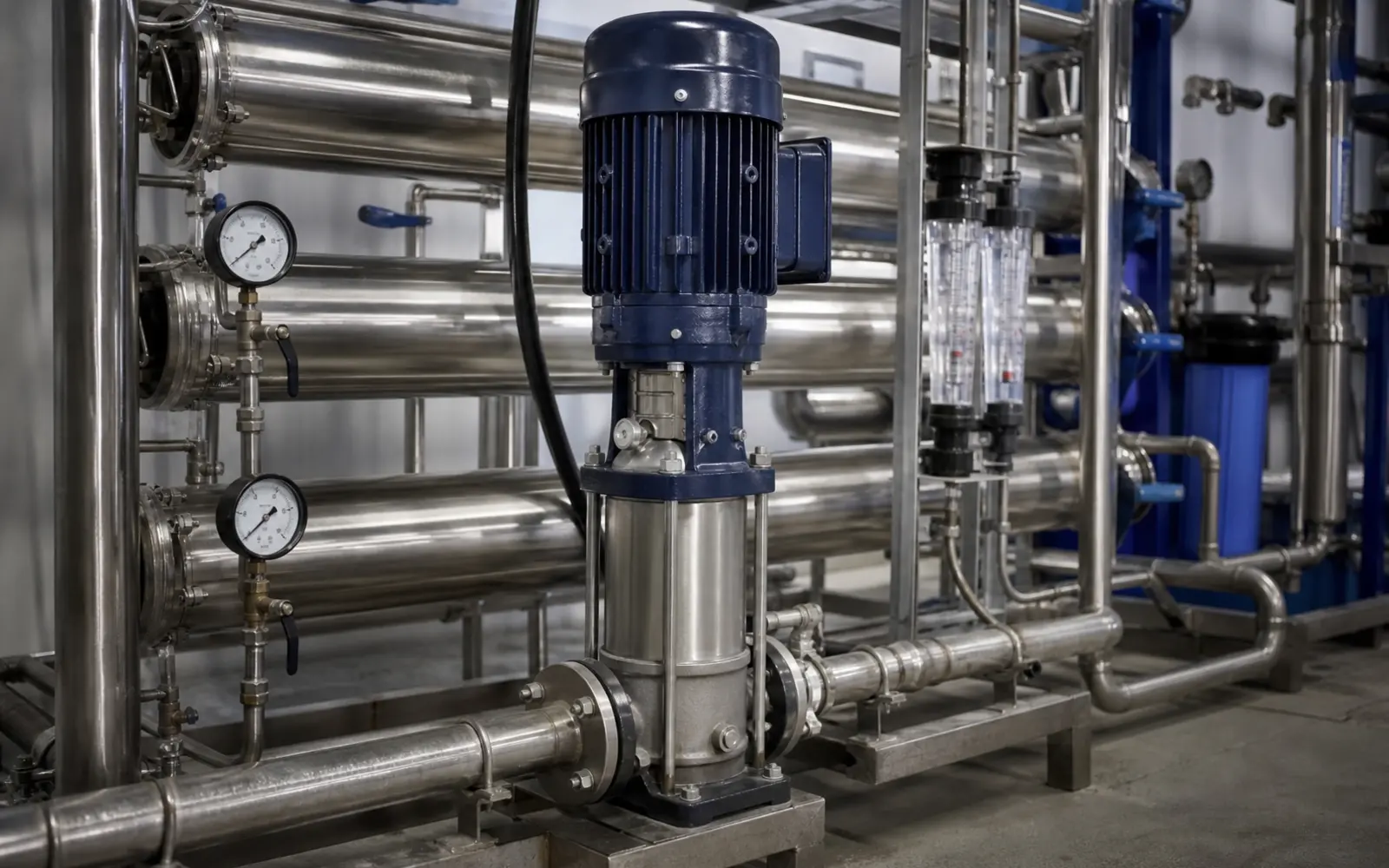
RO, DI AND POLISHING ARE NOT INTERCHANGEABLE
Reverse osmosis is a membrane process commonly used to reduce dissolved solids and produce purified water. Deionization removes ions through ion-exchange media and may be used as a polishing step or as part of a different treatment sequence. Other polishing stages may address requirements that neither RO nor DI alone is intended to solve.
The correct sequence depends on feed-water quality, product-water target, production rate, storage, operating schedule and maintenance plan. DI does not automatically replace RO, and RO does not automatically eliminate the need for polishing.
STORAGE + DISTRIBUTION
Storage and delivery are part of the process-water system. Tank volume, turnover, pressure, pump selection, piping materials, dead legs, service access and the cleanliness or sanitization requirements of the application can all affect what happens between the treatment equipment and the point of use.
That does not mean every project needs a recirculating or sanitized distribution loop. It means the downstream plumbing and storage should be evaluated against the actual water-quality target instead of treated as an afterthought.
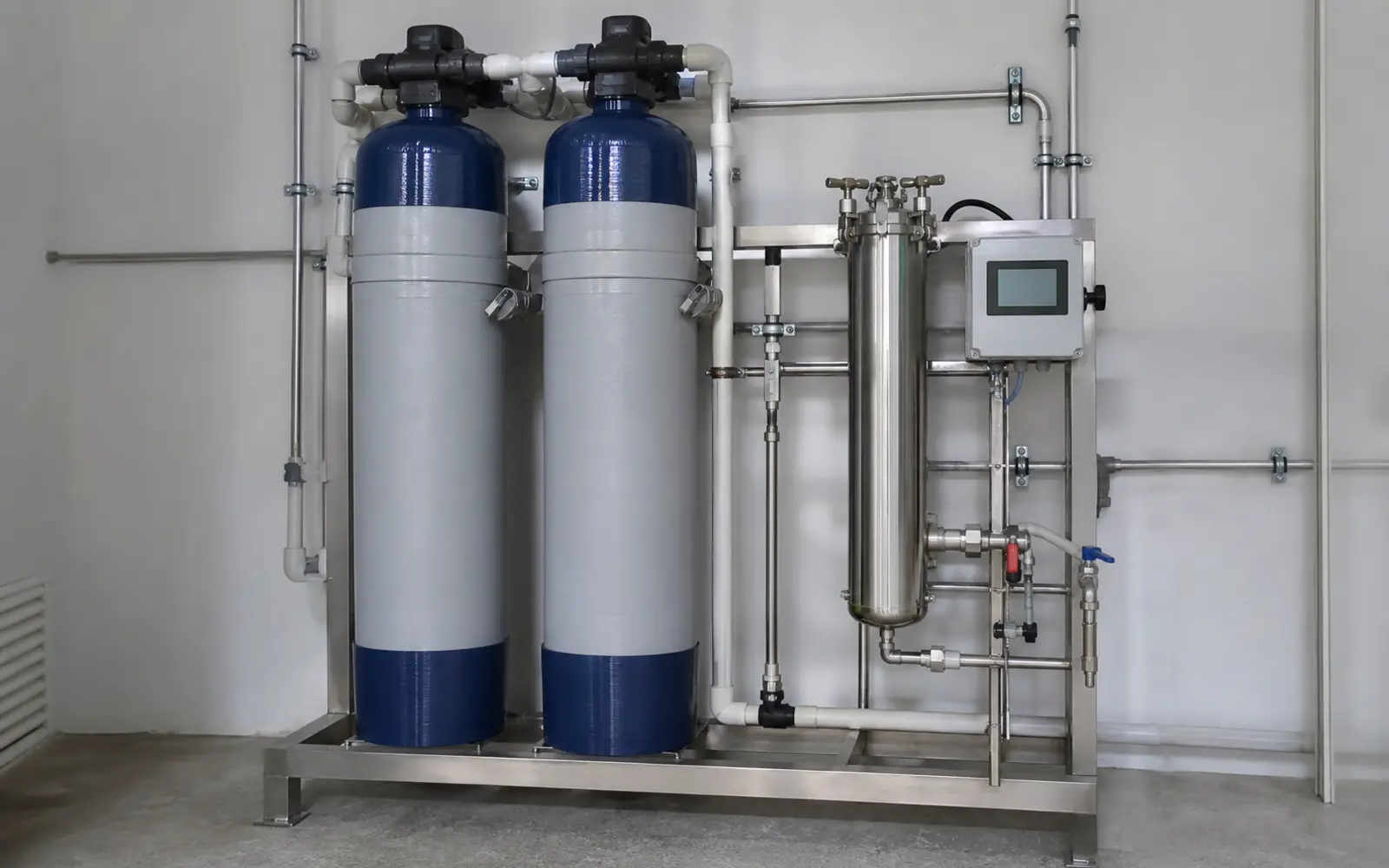
LONG-TERM OWNERSHIP
Process-water systems need a maintenance plan that matches operating importance. Serviceability should be designed in from the beginning rather than added after the installation is complete.
Valves and isolation points should make planned service practical while respecting the process and water-quality requirements.
Pressure, conductivity or other instruments should be located where they can support meaningful performance checks and troubleshooting.
Filters, membranes, resin and other consumables should have realistic service access, replacement plans and documentation.
For operating-critical applications, the project should define what happens during maintenance, regeneration, sanitization, failure or restart.
EXISTING SYSTEM REVIEW
For an existing system, useful starting information includes equipment photos, model and membrane information, resin or DI configuration, available feed- and product-water data, storage and pump details, pressure readings, current alarms or symptoms, service history, and the written finished-water target.
The next step may be testing, pretreatment correction, filter or membrane service, DI/resin service, a plumbing or controls correction, storage/delivery changes, or a broader redesign. Replacement should follow the evidence.
CHOOSE THE RIGHT COMMERCIAL PATH
Use this page when the project is defined by a finished-water requirement or multi-stage process-water need. Use the dedicated pages below when the primary job is narrower or broader.
Broader process, higher-flow or operating-critical treatment planning where water is tied directly to equipment or operations.
Commercial RO system planning for membrane treatment, production, pretreatment, storage and delivery.
DI-specific treatment and service when additional ionic polishing or deionized water is part of the defined requirement.
Testing and treatment planning when feed-water conditions or the required finished-water attributes need to be better defined.
Sediment, carbon and other targeted filtration for business applications when filtration is the primary treatment job.
Hardness and scale-control systems for commercial demand, plumbing and equipment-protection needs.
HIGH-PURITY & PROCESS WATER FAQS
These answers are intentionally requirement-first. Exact equipment, testing and documentation depend on the application and any named standard or customer specification.
It means the project has a defined finished-water requirement beyond ordinary household use. The exact requirement can come from equipment specifications, process needs, a customer specification or a named standard, so “high purity” should be translated into measurable targets before equipment is selected.
Not necessarily. Drinking-water requirements and process-water requirements answer different questions. A process may require tighter control of dissolved ions, organics, microbiological conditions or other attributes even when the source water is already potable.
No. Installing RO does not by itself establish compliance with ASTM, USP or another specification. The current standard or customer requirement, complete treatment train, sampling, testing, documentation and any required validation determine whether a finished-water target is met.
Not automatically. RO and DI perform different functions and can be used separately or together. The correct sequence depends on feed-water quality, required product-water quality, production rate, operating conditions and maintenance needs.
No. DI should be included only when the required finished-water quality and treatment design call for additional ionic removal or polishing.
The written requirement should decide the testing. Depending on the project or named standard, relevant measurements can include conductivity or resistivity, TOC, microbiological criteria, silica, specific ions or other application-specific constituents.
Finished water can change after treatment. Storage volume, turnover, pressure, piping, materials and cleanliness requirements should be evaluated against the application so the delivered water still supports the intended process.
Yes. Water Fixers can review existing treatment equipment, available water data, operating symptoms, service history, storage and delivery conditions, and the written water-quality requirement to help identify a practical next step.
The answer depends on how critical the water is to operations. A project should define what happens during normal maintenance, filter or membrane service, DI changeout, cleaning or sanitization, alarms and unexpected equipment downtime.
Useful information includes the water source, available feed- and product-water tests, the written finished-water target, required production and peak demand, operating hours, storage and pressure requirements, existing equipment photos and model information, and any project or customer specifications.
COMMERCIAL & INDUSTRIAL PROJECT
Water Fixers can help connect feed-water conditions, pretreatment, commercial RO, DI, storage, pressure and serviceability into a practical treatment plan. Start with the requirement the finished water actually has to meet.
Water Fixers Plumbing & Filtration • Santa Maria, CA • Serving California’s Central Coast • California License #719792
CALL NOW! Se Habla Español!