REVERSE OSMOSIS • MAINTENANCE

Reverse Osmosis Maintenance

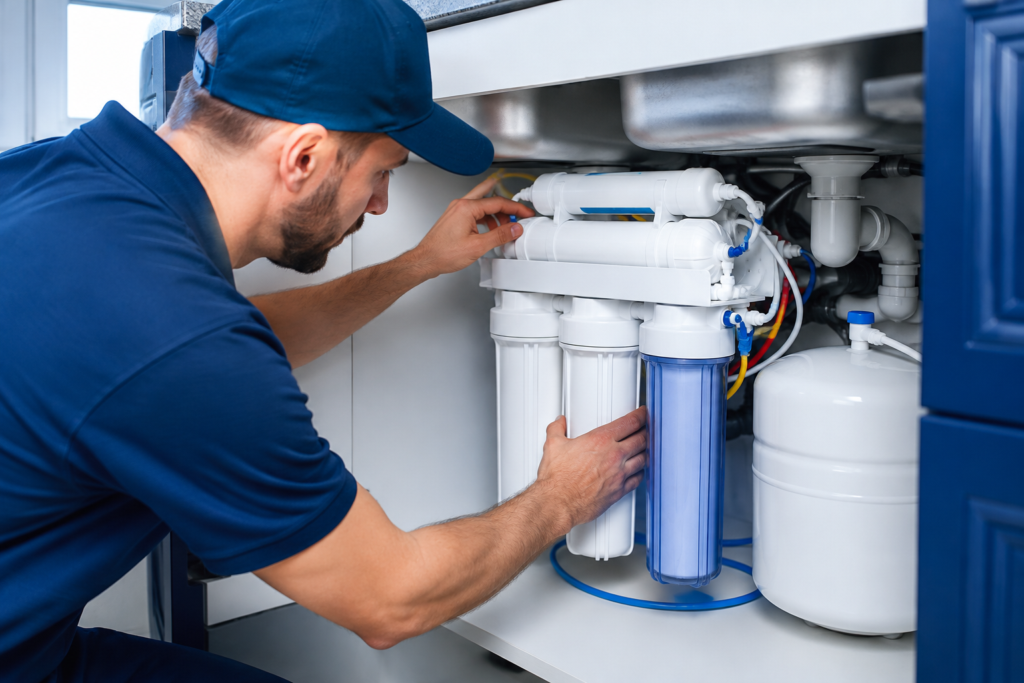
Keep an under-sink RO system from becoming slow, stale, leaky or forgotten. Water Fixers identifies what is installed, services the cartridges that are due, inspects the whole assembly and tells you plainly when something has moved from maintenance into repair.

Filter service • sanitation • leak inspection • tank and pressure checks • membrane evaluation • License #719792

Used brown water filter cartridge in a blue housing

How often does an RO system need maintenance?

There is no single interval that fits every system. Timing depends on the installed cartridges, your source water, how much water the household uses and the manufacturer’s guidance — so Water Fixers identifies the actual system before assigning a schedule. Routine maintenance means servicing the cartridges that are due, inspecting housings, fittings, tubing, tank and faucet, sanitizing when the system design or history calls for it, and checking membrane performance when symptoms point there. It is not “replace everything every year.”

Key facts

What maintenance covers:
Cartridges due, inspection, sanitation when appropriate, tank and pressure, leak check

Timing:
Set by the installed system, water and use — not a calendar promise

Not maintenance:
Active leaks, cracked housings, tank that won’t fill, repeated failures — see repair

Membrane:
Evaluated on performance, on its own service path

Serving:
Santa Maria and the Central Coast

What routine RO maintenance actually includes

Identify the system

Confirm the model or installed layout and which cartridges it actually uses before anything is ordered.

Service the cartridges that are due

Replace the prefilters and post-filter that are due for this system; the membrane follows its own path.

Inspect the assembly

Housings, caps, O-rings, tubing, fittings, feed and drain connections, tank valve and faucet — for wear, stress and seepage.

Tank and pressure

Check usable delivery and the tank’s air charge correctly, and confirm fill, drain and automatic-shutoff behavior.

Sanitize when appropriate

For the system design, its service history, or after a period of inactivity — not on every visit by default.

Leak check and record

Repressurize, flush new cartridges, inspect for leaks, and record the service date and what was installed.

Signs your system may need attention

Slower flow or long recovery

Usually cartridges or tank; membrane if it persists.

Taste or odor returning

Post-filter, stagnation or sanitation.

Moisture under the sink

Stop: repair, not maintenance.

No memory of the last service

Start with an identification visit.

A symptom does not name the failed part. Water Fixers checks the whole path from feed valve to faucet before replacing anything.

Maintenance or repair?

It’s maintenance when

The system works normally and cartridges are due • taste or flow has drifted gradually • the system sat unused and needs sanitation and a flush • you want the tank, fittings and faucet checked.

It’s repair when

There is water in the cabinet or at the air gap • a housing is cracked or won’t seal • the tank never fills or empties in seconds • the faucet drips or the system runs constantly • problems persist after a proper service.

Filters, membrane and sanitation — what each means

Prefilters and post-filter

Condition incoming water and polish stored water. Serviced on the installed system’s schedule.

The membrane

The separation stage. Evaluated from production and treated-water performance, never from age alone.

Sanitation

Cleaning the serviceable parts of the system when design, history or disuse calls for it. Part of a maintenance visit when appropriate.

Water Fixers RO Filter Guide

Reverse Osmosis Filters & Membranes

See the filters Water Fixers uses and services, what each stage is designed to do, and when it may be time for replacement. Every filter below links directly to our RO filter replacement service.

CORE RO FILTERS

These are the most familiar RO service cartridges. Keeping them current helps protect the membrane and maintain taste and flow.

PRE-FILTER

sediment filter cartridge

Sediment Filter

Fine particle pre-filtration

  • Available sediment cartridges vary by system and application.
  • Finer sediment options may be used where the installed system and water conditions call for them.
  • Helps reduce particles before later RO stages.

CARBON STAGE

carbon block filter cartridge

Carbon Block Filter

Taste, odor & chlorine stage

  • Carbon-block construction and media vary by cartridge.
  • Helps address chlorine, taste and odor where the selected cartridge is designed for those conditions.
  • Water Fixers can match the cartridge to the installed system.

POST-FILTER

inline carbon filter cartridge

Inline Carbon Block

Final polishing filter

  • Compact inline format for RO and drinking-water applications
  • Used as a polishing stage depending on system configuration
  • Replace when service interval or water quality indicates it is due

SPECIALTY & INLINE

Some systems add combination, inline, or finishing stages. Water Fixers can match the correct replacement to the system already under your sink.

COMBINATION STAGE

dual-purpose water filter cartridge

Dual-Purpose Filter

Combined sediment + carbon treatment

  • Combination designs can provide sediment and carbon functions in one cartridge.
  • Construction and performance vary by the selected cartridge.
  • Used only where the RO system is designed for combination media.

OPTIONAL STAGE

alkaline post-filter cartridge

Alkaline Post Filter

Optional finishing stage

  • Used on systems configured with an alkaline finishing stage
  • Installed after primary RO treatment when appropriate
  • Water Fixers can verify compatibility and replacement timing

INLINE FILTER

Inline Granular Carbon

Compact carbon polishing

  • Inline carbon formats are used on many RO drinking-water systems
  • Provides a final carbon stage depending on system design
  • Service interval depends on cartridge type, use and water conditions

THE RO SEPARATION STAGE

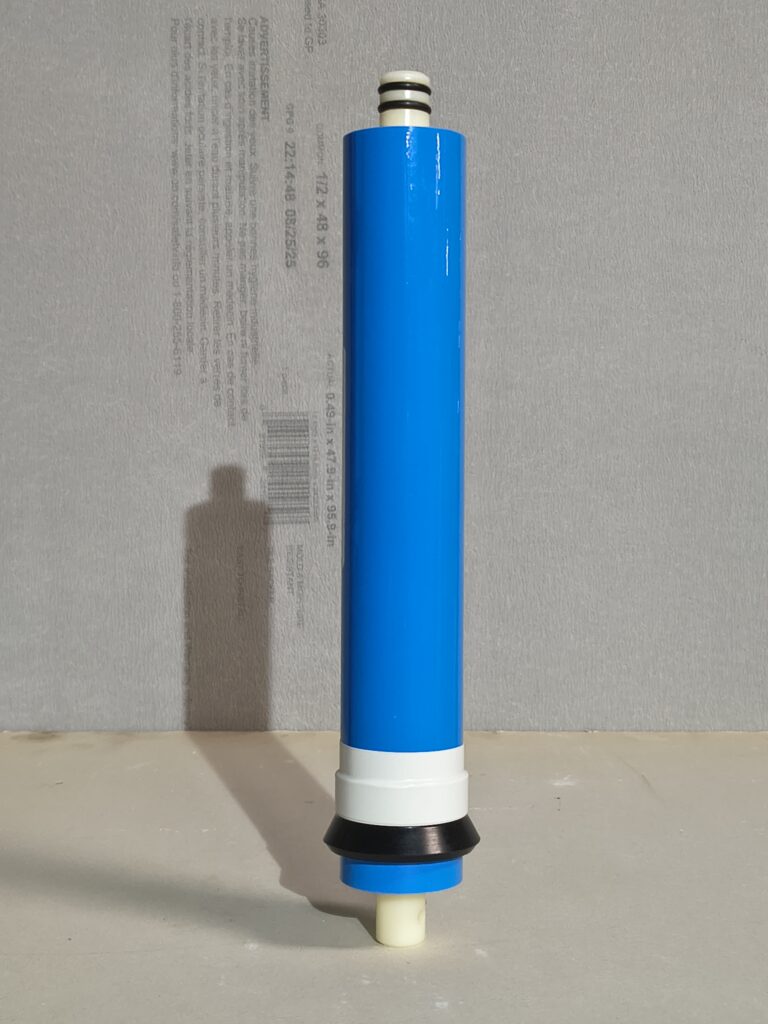
The membrane is different from routine pre-filters and post-filters. If new filters do not restore performance, the membrane, pressure, tank, flow restrictor or another system component may need to be checked.

Reverse osmosis membrane filter cartridge

MEMBRANE

TFC Reverse Osmosis Membrane

Thin-film-composite membranes are available in different sizes and configurations. Actual performance and replacement timing depend on the membrane, system design, feed-water conditions, pressure, use and maintenance. Water Fixers can identify the compatible membrane and evaluate system operation before replacement.

Reverse osmosis membrane filter cartridge

HIGH-EFFICIENCY OPTION

1-to-1 RO Membrane

A 1-to-1 membrane is used on compatible RO systems designed around that membrane configuration. Because membrane size, flow and plumbing arrangement matter, Water Fixers can confirm the correct replacement before installation.

Use this as a quick orientation—not as a substitute for matching the cartridge to the exact RO system.

Sediment

Particles, silt and pre-filtration

Often the first protection stage

Carbon

Chlorine, taste and odor support

Protects water quality and may protect the membrane

Dual-Purpose

Combined particle + carbon treatment

Useful where a system is designed for combination media

Membrane

Dissolved-solids separation

Checked when filters alone do not restore RO performance

IMPORTANT DURING FILTER CHANGES

Cracked or leaking RO housing?

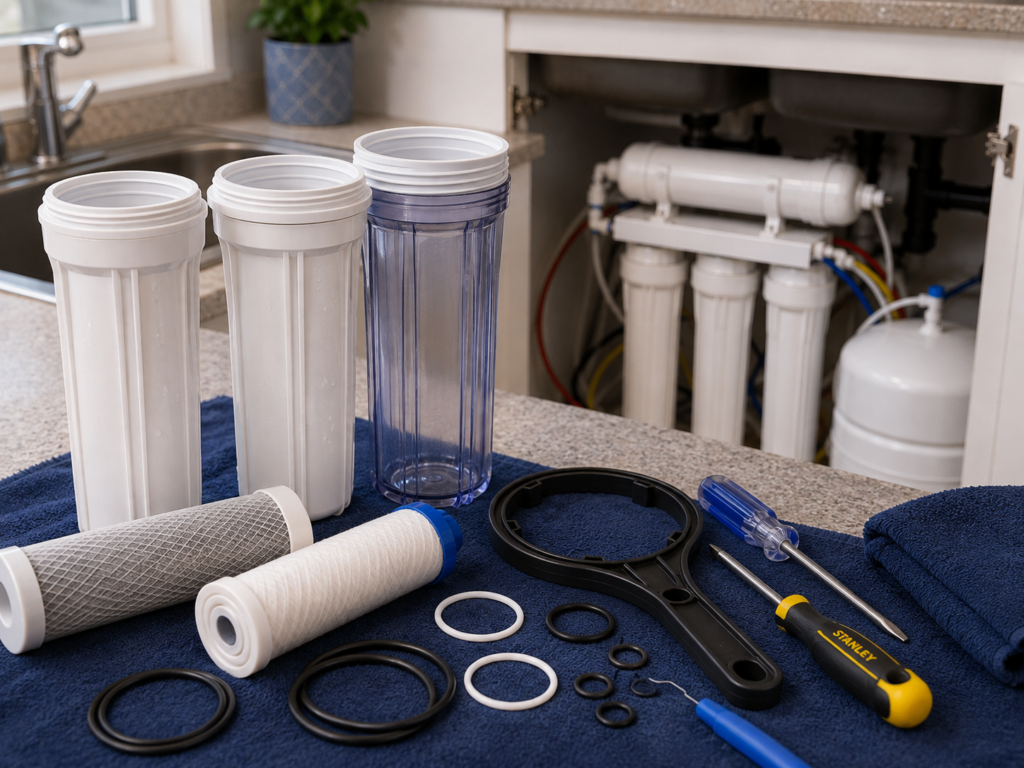
Filter replacement can reveal brittle housings, damaged threads, shifted O-rings or cracks that were not obvious before service. If a housing does not line up or seal normally, do not keep tightening it. Shut off the RO water supply and have the system checked.

Watch for

  • Hairline cracks
  • Broken caps or threads
  • Leaks after a filter change
  • O-rings that will not seat
  • A membrane that will not slide in smoothly

Not sure which filter you need? Water Fixers can inspect the system, identify the cartridge or membrane, check the housing and O-rings, and replace the correct components.

Ownership checklist (between visits)

  • Look under the sink for moisture
  • Notice changes in flow, recovery, taste, odor or drain sound
  • Keep the cabinet from pressing on tubing
  • Keep the model and last service date with the system
  • If a leak is active, shut off the RO feed and call
  • Don’t open pressurized housings or guess at tank pressure
  • Use water testing when a treatment decision depends on the source water

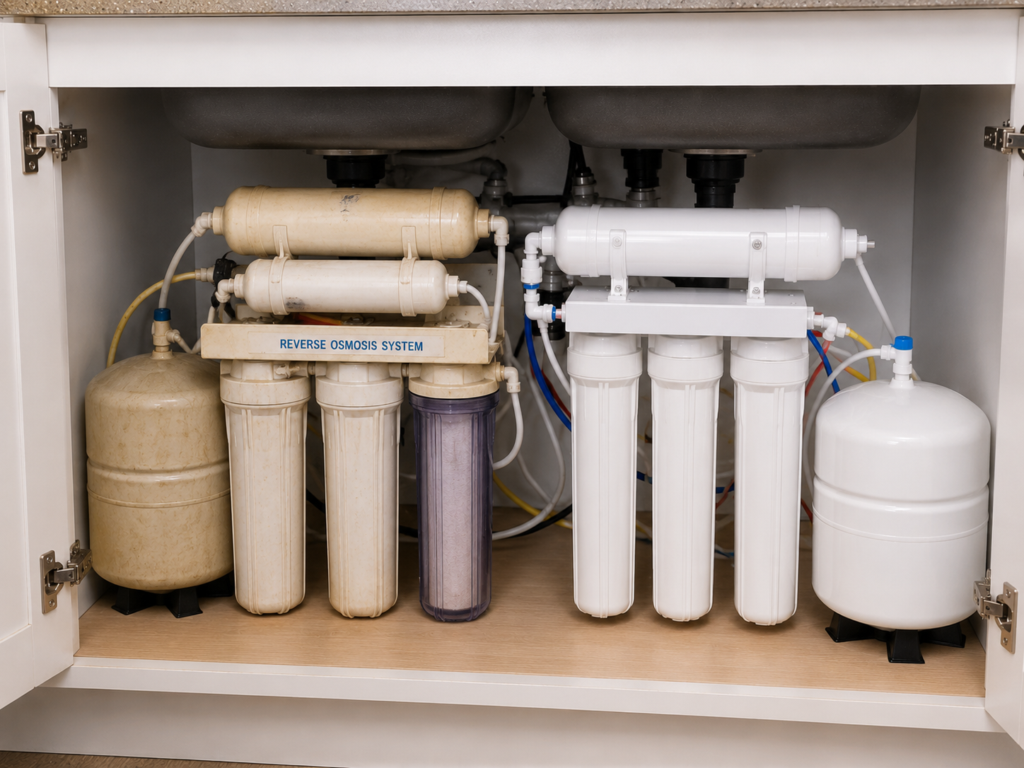
Older systems. Age alone doesn’t require replacement. Water Fixers weighs housing and fitting condition, tank age, tubing, sanitation history, membrane performance, parts availability and the combined cost of needed work. A sound, supported unit is worth maintaining; a system with several failing components may be better replaced. Compare RO systems.

Reverse osmosis maintenance questions

It depends on the installed cartridges, source water, use and manufacturer guidance. Water Fixers identifies the actual system before assigning an interval; there is no universal schedule.

Identifying the system, replacing the cartridges that are due, inspecting housings, O-rings, tubing, fittings, tank and faucet, checking pressure and tank delivery, sanitizing when appropriate, and a leak check after repressurizing.

When the system design, service history or a period of inactivity calls for it. It is not automatic on every visit.

Active leaks, cracked housings, a tank that won’t fill, constant running or problems that survive a proper service are repair — see RO service & repair.

Keep your RO system working — on its schedule, not a calendar’s.

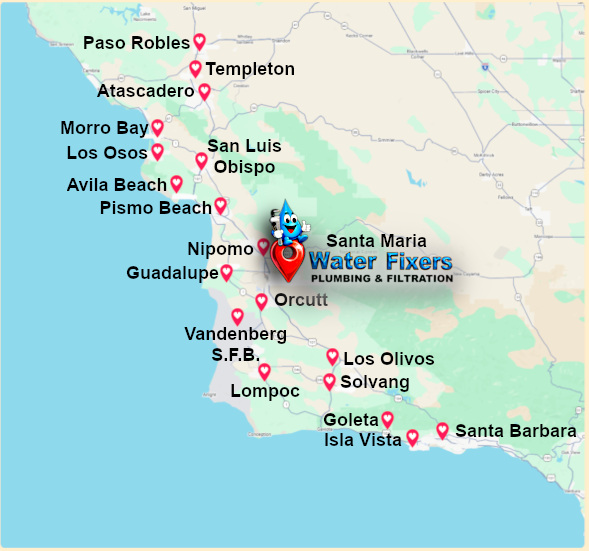
Water Fixers services, inspects and repairs under-sink reverse osmosis systems across Santa Maria and the Central Coast. License #719792.

CALL NOW! Se Habla Español!