COMMERCIAL & INDUSTRIAL • CALIFORNIA CENTRAL COAST
Water Fixers helps businesses evaluate industrial and process-water systems when feed-water quality, production demand, equipment protection, finished-water requirements or service continuity matter to operations. The treatment plan should start with measured water conditions, a defined finished-water requirement and realistic operating demand—not a residential package scaled up.
38+ Years on the Central Coast • California License #719792
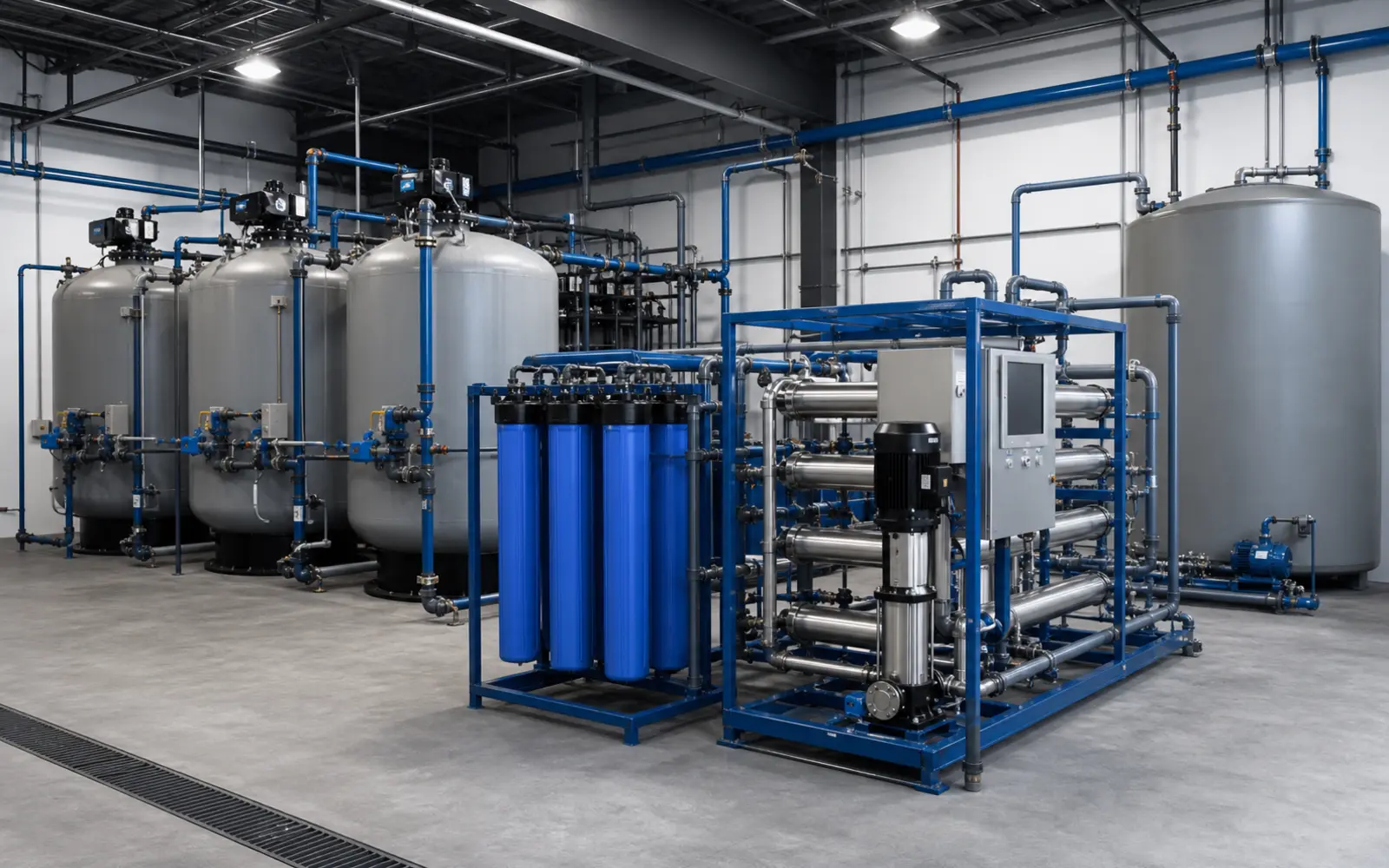
Before choosing softening, filtration, reverse osmosis, deionization or another treatment stage, define what water is coming in, what the finished water must accomplish, how much is needed, how the system will operate, and how it can be maintained. The target should come from the application, equipment requirement or project documentation—not from a generic treatment package.
Start with the water source, available test data, current symptoms and any treatment already in place. Testing should answer the decision the project actually needs to make.
Define the finished-water quality the equipment, operation or process actually needs. A specific purity or compliance target should be supported by the application requirements and project documentation.
Peak flow, daily volume, operating schedule, storage, delivery pressure and available utilities can change what treatment is practical and how the system should be staged.
For an existing system, equipment photos, model information, maintenance history, service access and performance symptoms help define whether the next step is maintenance, diagnosis, repair, reconfiguration or replacement planning.
INDUSTRIAL SYSTEM PLANNING
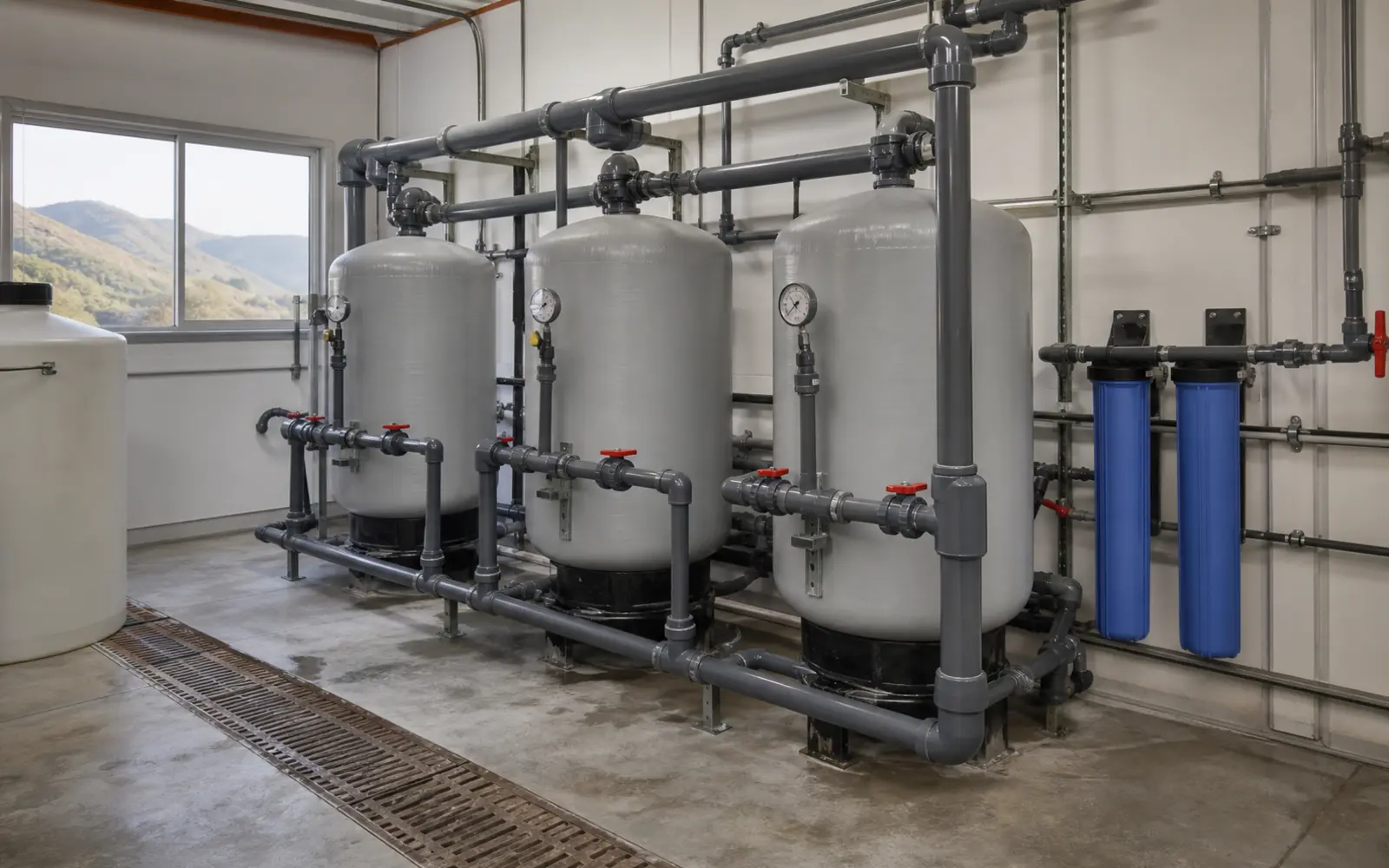
Industrial and process-water planning should account for feed-water quality, required finished-water quality, peak flow, daily volume, operating hours, storage, delivery pressure, utilities, drain or reject handling where applicable, maintenance access, and what happens if the system is unavailable.
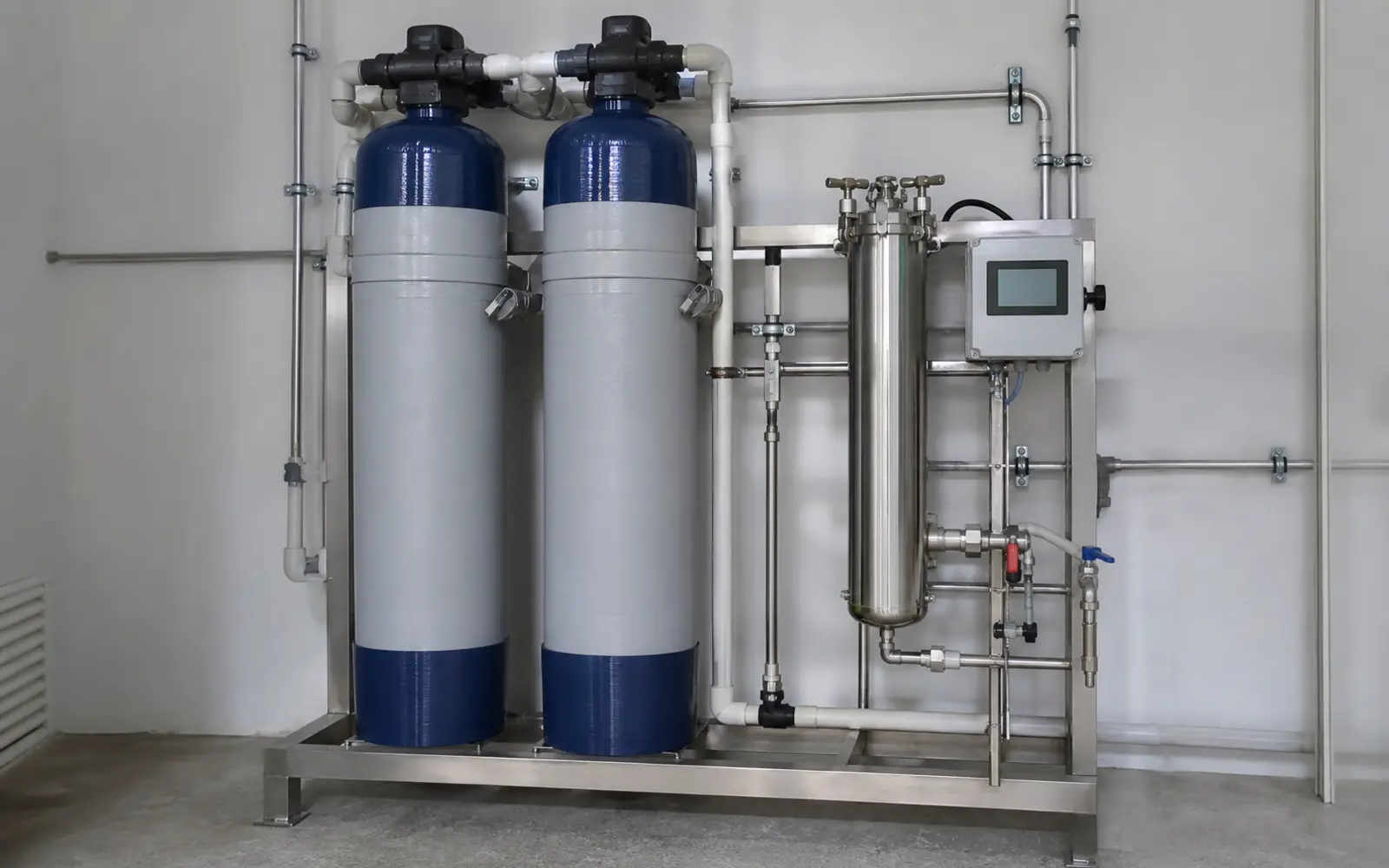
Water Fixers can help connect testing, plumbing conditions, pretreatment, membrane treatment, polishing, storage and delivery so each part of the system has a defined job. If a design uses regeneration, backwashing or membrane reject, the associated drain and waste stream must be planned around the actual equipment and site.
Each stage should solve a specific problem or support the stage that follows it. A useful treatment train is based on measured feed water, a defined finished-water requirement and operating demand.
Sediment filtration, carbon, softening or other feed-water conditioning may be used when measured feed-water conditions and downstream equipment call for it. Pretreatment should protect the next stage rather than add unnecessary equipment.
Commercial filtration or reverse osmosis may perform the primary treatment step when its capabilities match the required result and production demand. RO performance is influenced by feed-water composition, pressure, temperature, recovery and overall system design, so a headline production number should not be treated as a complete design.
Deionization, UV, storage, pressure and final delivery components may be added when the application and documented water-quality target require them. The finished-water requirement determines whether polishing is needed at all.
TREATMENT TRAIN ROUTER
Industrial systems can combine pretreatment, commercial RO, DI and other stages, but the sequence depends on feed-water data, required finished water, production demand, pressure, storage, service access and operating risk.
Unknown or changing water conditions: start with commercial water testing. Dissolved-solids reduction or purified-water production: evaluate commercial RO. Higher-purity polishing or multi-stage process water: use the high-purity process-water path. Building-side piping, valves, drains or supply issues: use commercial plumbing.
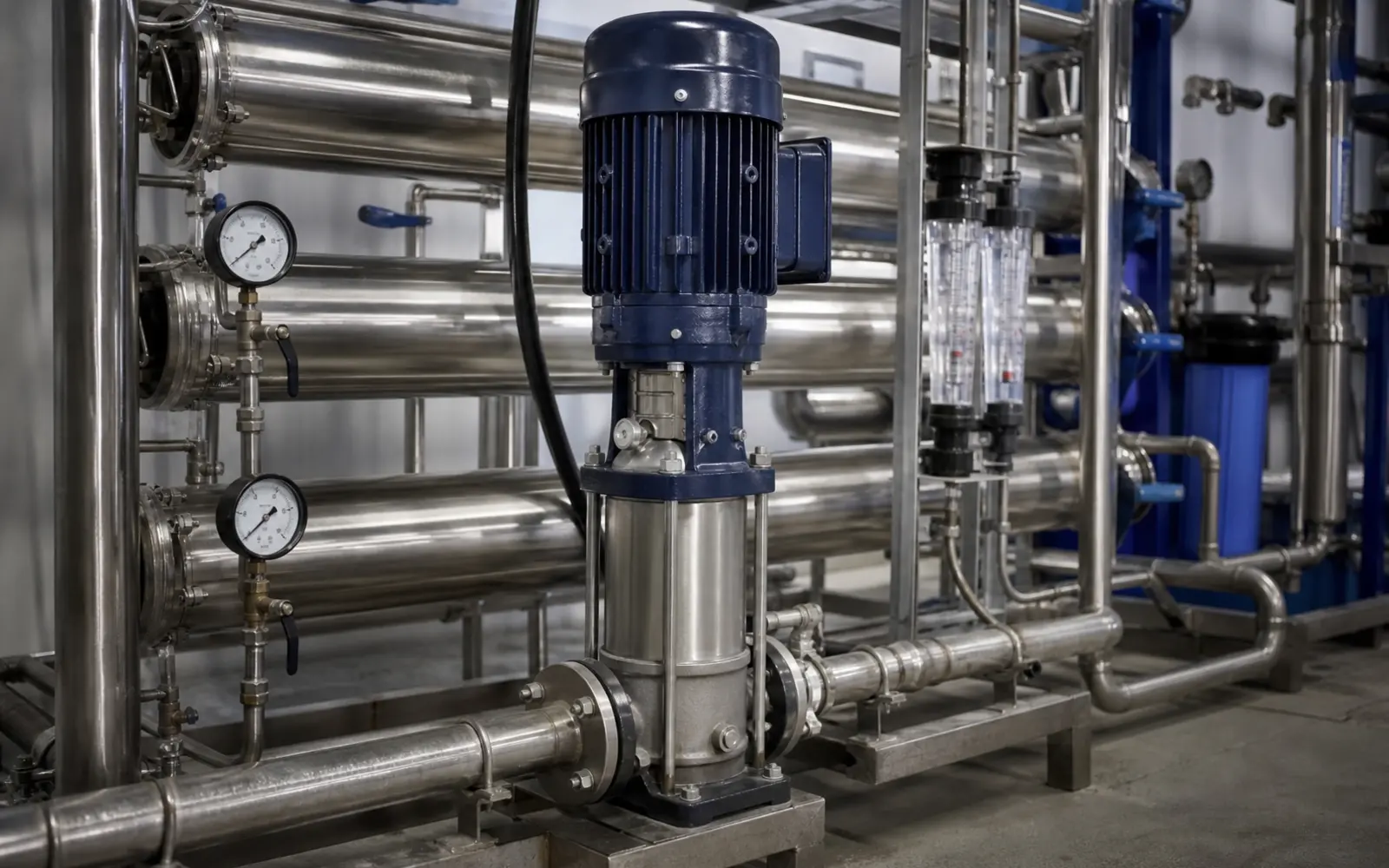
Membrane treatment for dissolved-solids reduction and purified-water production when RO matches the required finished-water result.
DI and polishing service for higher-purity applications where deionization is supported by the water-quality target and operating requirement.
Sediment, carbon and other filtration stages selected around verified feed-water conditions, flow and the equipment being protected.
Multi-stage planning for applications that may combine pretreatment, RO, DI, storage, pressure and other treatment components.
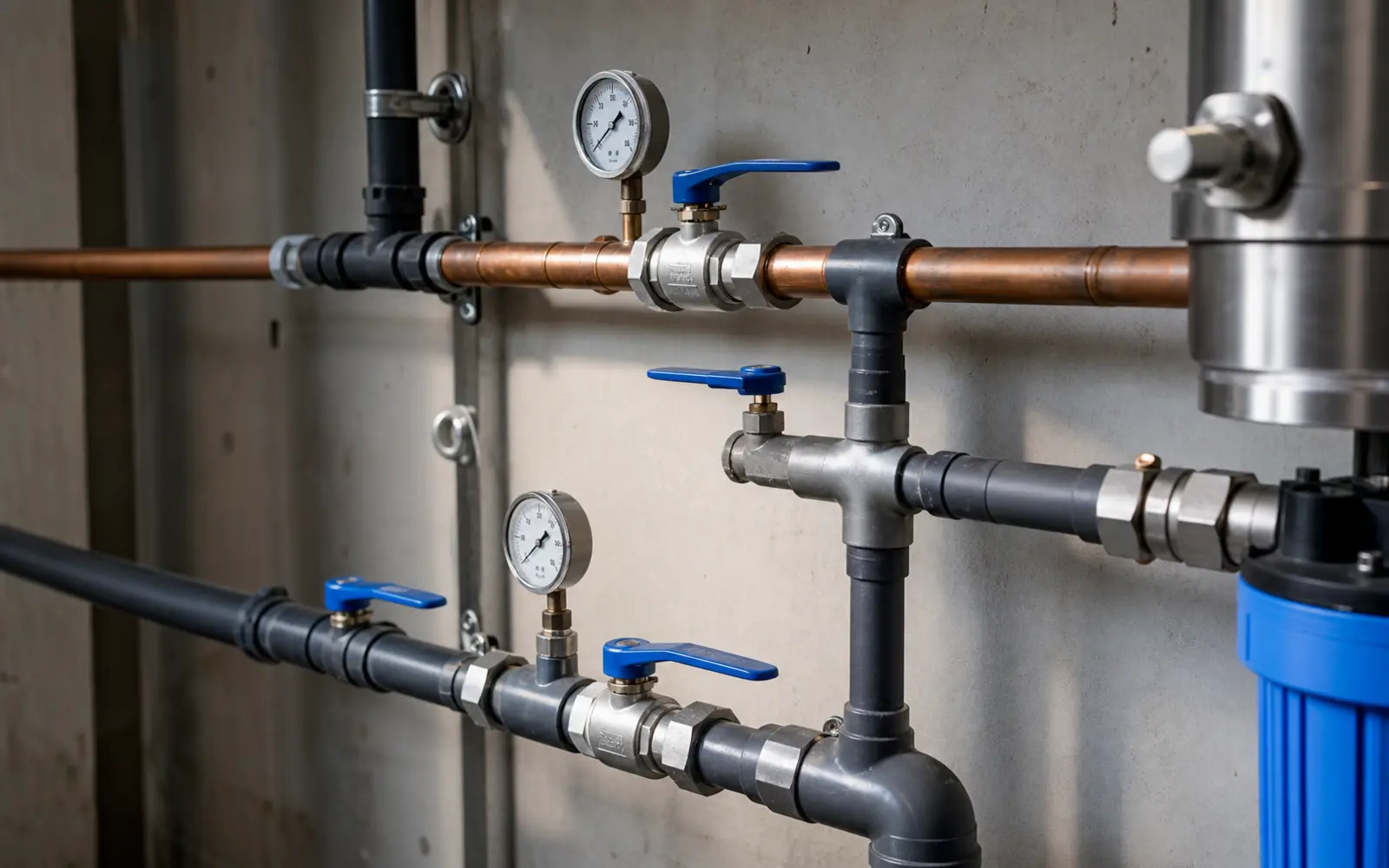
SERVICEABILITY + MAINTENANCE
Valves, gauges, isolation points, supported piping, filter and membrane access, drains, storage, controls and service clearance all affect long-term maintenance. Consumables, routine service and practical component replacement should be considered while the treatment train is being planned—not after installation.
If treated water is operationally important, the project should also define what happens during maintenance or an equipment outage. Depending on the application, that may involve storage, bypass planning, staged service or another continuity strategy rather than assuming one configuration fits every facility.
CHOOSE THE RIGHT COMMERCIAL PATH
This page is for process, higher-flow and operating-critical treatment requirements. Broader business water treatment, diagnostic testing, specialty filtration/softening/RO and building plumbing each have their own service path so the project can start in the right place without duplicating those pages.
Use the commercial treatment hub for broader business filtration, softening, RO and water-quality needs that are not primarily process-water projects.
Use testing when the water condition, treatment target or cause of a performance problem needs to be defined before equipment is selected.
Use commercial plumbing for supply, valves, piping, water heaters, drains or building-side plumbing that is separate from the treatment process itself.
EXISTING SYSTEM REVIEW
For an existing system, useful starting information includes equipment photos, model numbers, current symptoms, recent service history, available water tests, current setpoints and any performance data you already track. That helps separate a maintenance or repair problem from a design or capacity problem.
For a new project, provide the water source, required finished-water quality, peak flow, daily volume, operating schedule, storage, pressure, available utilities and drains, and what the treated water is used for. That information helps narrow the next technical step and identify what testing or documentation may be needed to support a specific purity, equipment or compliance target.
Direct answers about planning, testing, treatment trains, existing systems, commercial RO, deionization and realistic water-quality requirements.
Contact Water Fixers with equipment photos, model information, symptoms, maintenance history, current setpoints and any available water-quality or performance data. The next step can then be evaluated from the actual system and condition rather than assuming replacement.
Treatment equipment must support the required production and peak demand without creating an impractical operating or service burden. Peak flow, daily volume, operating schedule, storage and delivery pressure should be considered together.
A specific purity, contaminant-reduction or compliance target should come from the application or governing project requirement and be supported by selected equipment, appropriate testing and project documentation. Water Fixers does not rely on unsupported blanket performance promises.
Tell Water Fixers the water source, available test data, required finished-water quality, peak flow and daily volume, operating schedule, storage and pressure, existing equipment, utilities and drains, and what the treated water is used for. We can help define the practical next step without forcing a generic treatment train onto the application.
Water Fixers Plumbing & Filtration • California Central Coast • License #719792
CALL NOW! Se Habla Español!