
COMMERCIAL & INDUSTRIAL • CALIFORNIA CENTRAL COAST
Water Fixers plans commercial reverse osmosis around the water entering the property, the amount of product water the operation needs, the quality target, available pressure, pretreatment, storage, delivery and the maintenance path after installation.
The right commercial RO system is not selected from a single gallon-per-day label. Feed-water conditions, temperature, pressure, recovery, operating schedule and downstream demand all affect the practical design.
38+ Years on the Central Coast • California License #719792
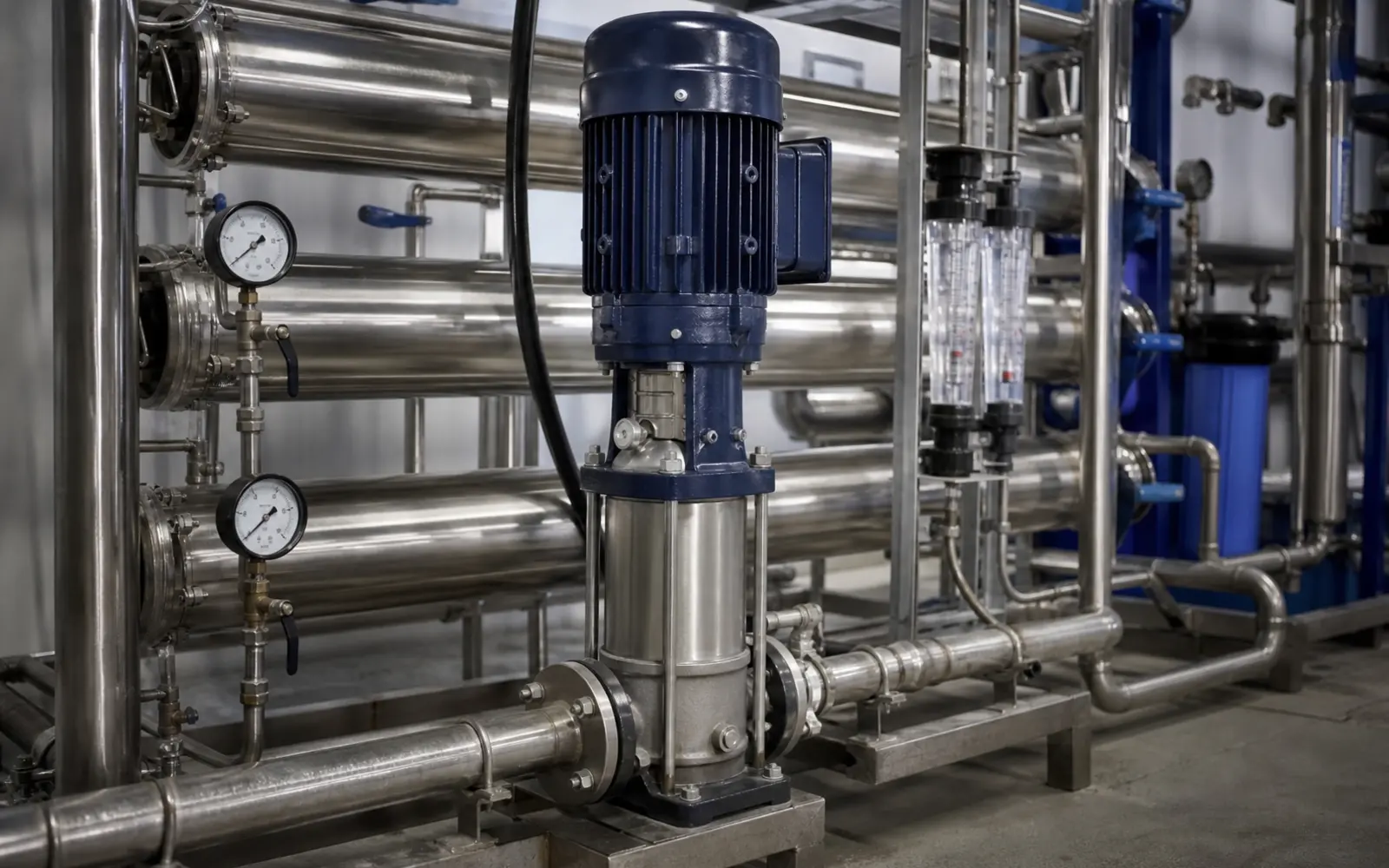
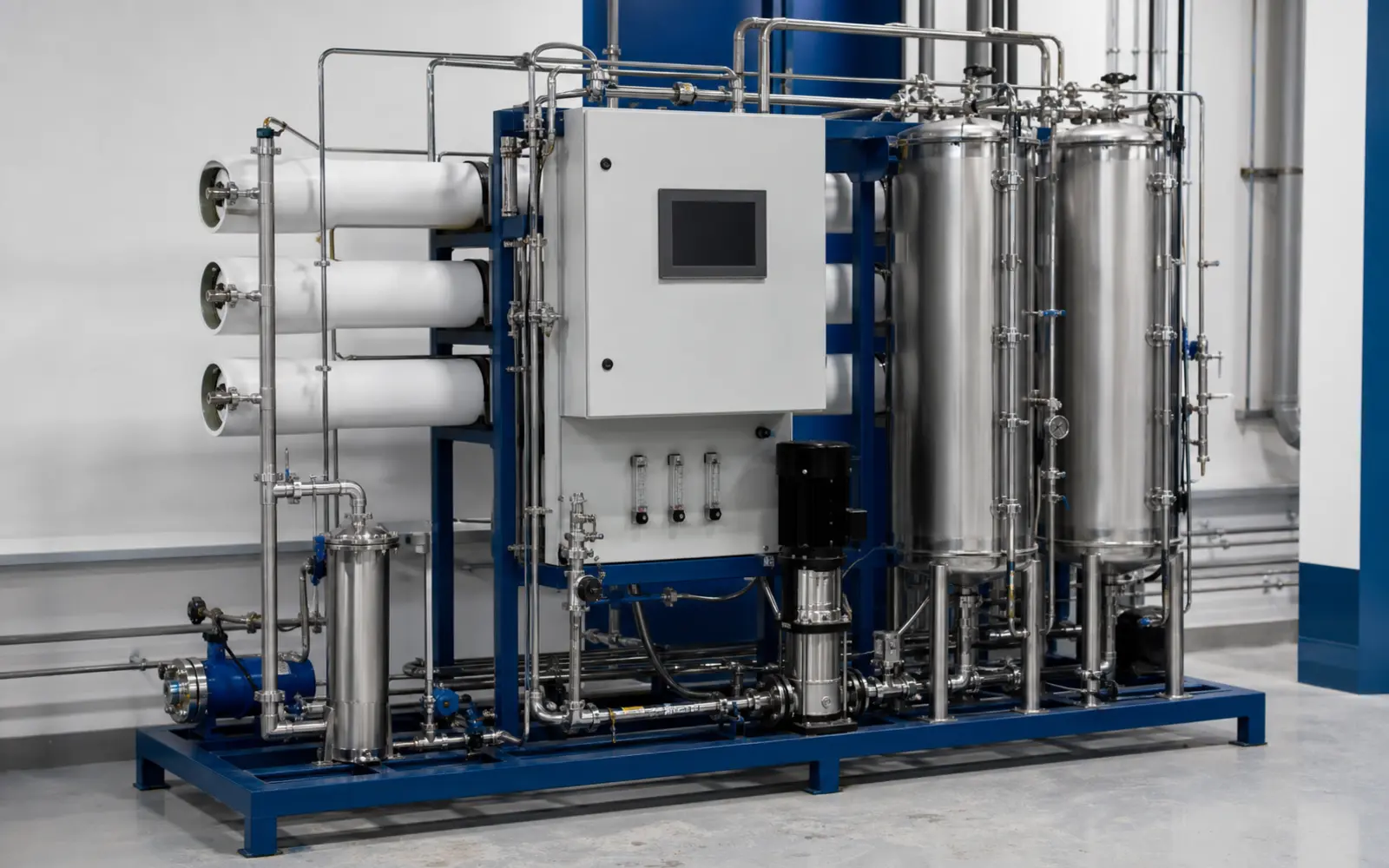
Commercial reverse osmosis works as part of a complete treatment train. Pretreatment protects the membranes, pumps and controls provide the operating conditions, the membrane array separates product water from concentrate, and storage plus delivery equipment make the finished water usable when the business needs it.
That is why commercial RO should be planned around the complete operating requirement rather than treated as a larger version of an under-sink residential system.
Start with the water source, testing, hardness, sediment, disinfectant chemistry, dissolved-solids level, pressure and any treatment already in place. Pretreatment should solve a defined feed-water problem or protect the RO system.
Define how much permeate the operation needs over an hour, a shift and a full day. Peak demand, operating schedule, recovery time and storage can be as important as the RO skid production rate itself.
Define what the product water needs to accomplish and how it will be delivered. Product-water quality, storage volume, delivery pressure, point-of-use demand and any later polishing stage should be planned together.
For an existing system, equipment photos, membrane and filter history, available pressure/flow readings, water-quality data and current symptoms help separate maintenance, pretreatment, membrane, pump, storage and capacity problems.
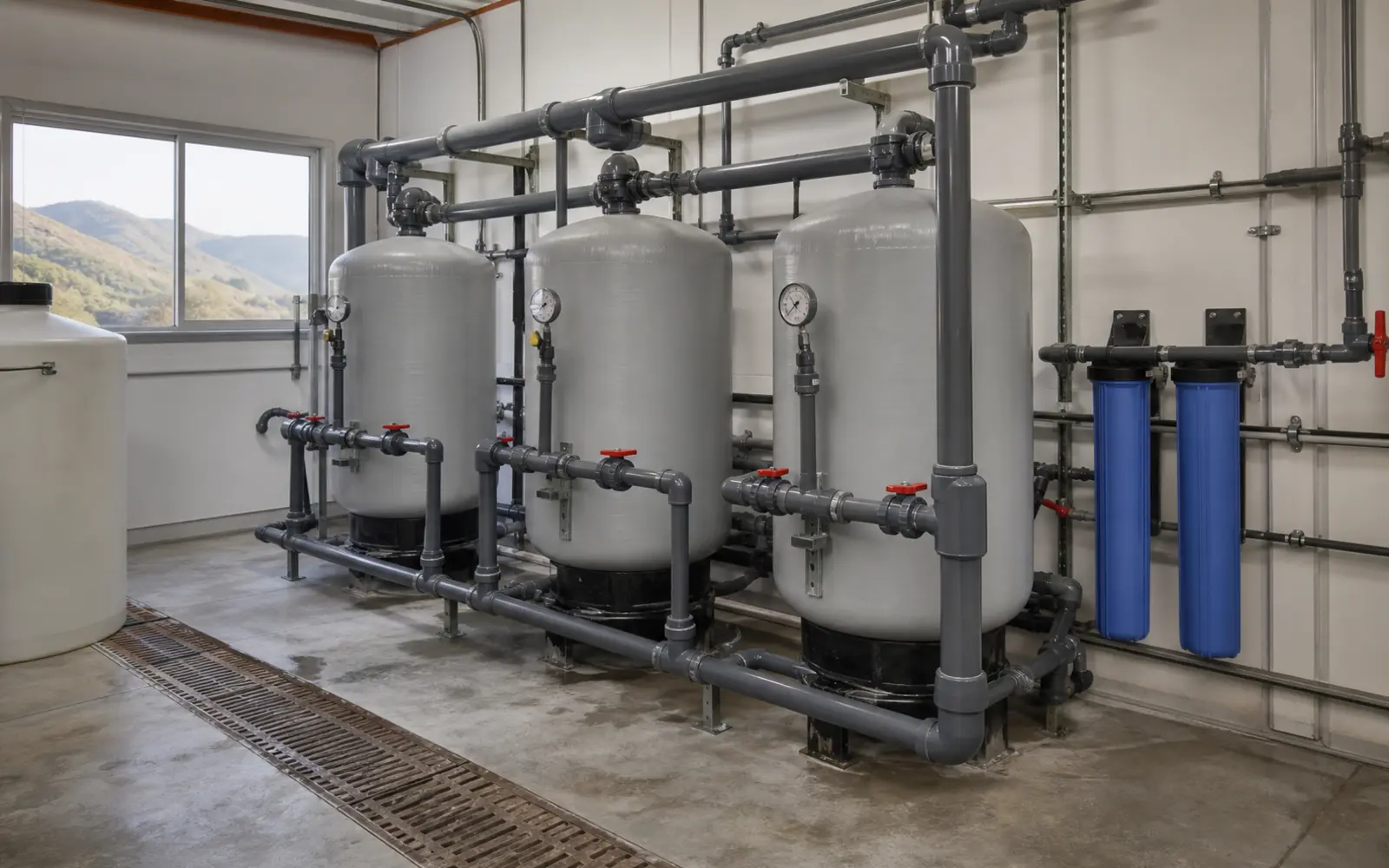
COMMERCIAL RO SYSTEM PLANNING
Commercial RO design should account for source-water quality, required product-water quality, pressure, temperature, production rate, recovery, concentrate handling, storage, delivery pressure, available utilities and service access.
Water Fixers can help connect testing, pretreatment, RO, storage and plumbing so each part of the system has a defined job. If the application needs additional ionic polishing or a tightly documented finished-water specification, the project should move into the high-purity/process-water path rather than loading those requirements onto a general commercial RO page.
Membranes are only one part of a reliable commercial RO installation. Feed-water conditioning, pumps, valves, instrumentation, concentrate flow, storage and delivery all influence what the system can produce and how easy it is to operate and maintain.
Sediment filtration, carbon, softening or other pretreatment may be appropriate when verified feed-water conditions call for it. The purpose is to protect downstream equipment and support the RO design—not to stack treatment stages without a reason.
The membrane array, pump, pressure and flow controls, recovery setting and feed-water conditions work together. Product-water output and quality can change with pressure, temperature, feed composition, fouling and recovery, so one published performance number should not be treated as a universal field result.
Storage tanks, repressurization or delivery pumps, level controls, isolation valves and distribution piping should be sized around actual demand. The RO can produce water correctly and still fail the operation if storage or delivery cannot support peak use.
COMMERCIAL RO TREATMENT ROUTER
Commercial RO projects often touch more than one treatment category, but each stage should have a clear purpose. Testing defines the feed water; filtration or softening may protect the RO when conditions justify it; RO handles membrane separation; DI or other polishing belongs only where the required finished water calls for it.
Unknown or changing feed water: start with commercial testing. Hardness/scale risk: evaluate commercial softening or other scale-control strategy. Sediment, carbon or targeted pretreatment: use the commercial filtration path. Additional polishing or a defined high-purity target: use the high-purity process-water path.
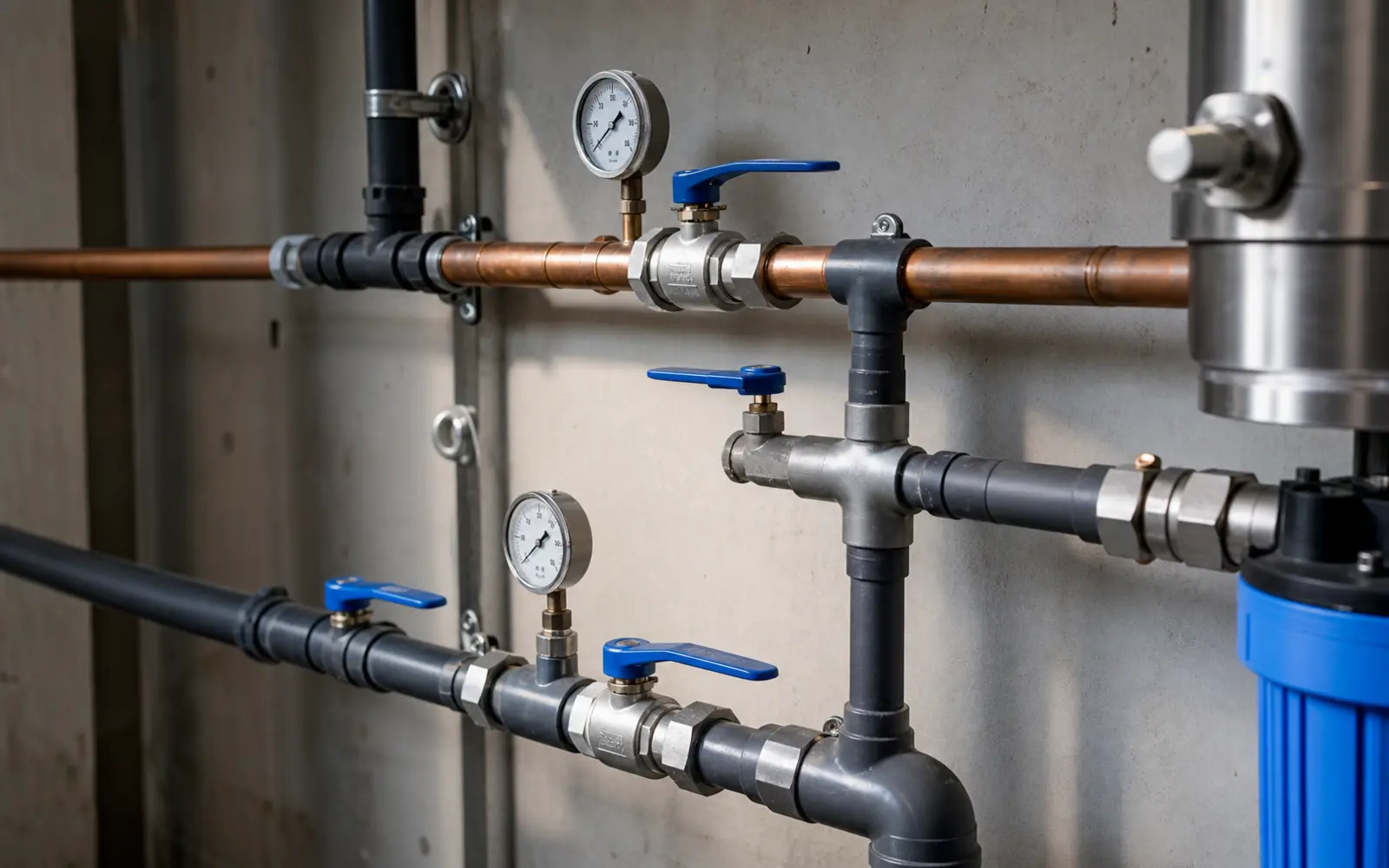
Use testing to define feed-water conditions and establish what the RO and pretreatment actually need to handle before equipment is sized.
Use commercial filtration for sediment, carbon or other targeted pretreatment when those stages are supported by the feed water and equipment requirements.
Use the maintenance path for planned filters, membrane evaluation, pressure/flow review, leaks, storage and performance checks on an existing commercial RO system.
Use the high-purity path when the project needs additional polishing, DI, a documented finished-water target or a multi-stage process-water treatment train beyond general commercial RO.
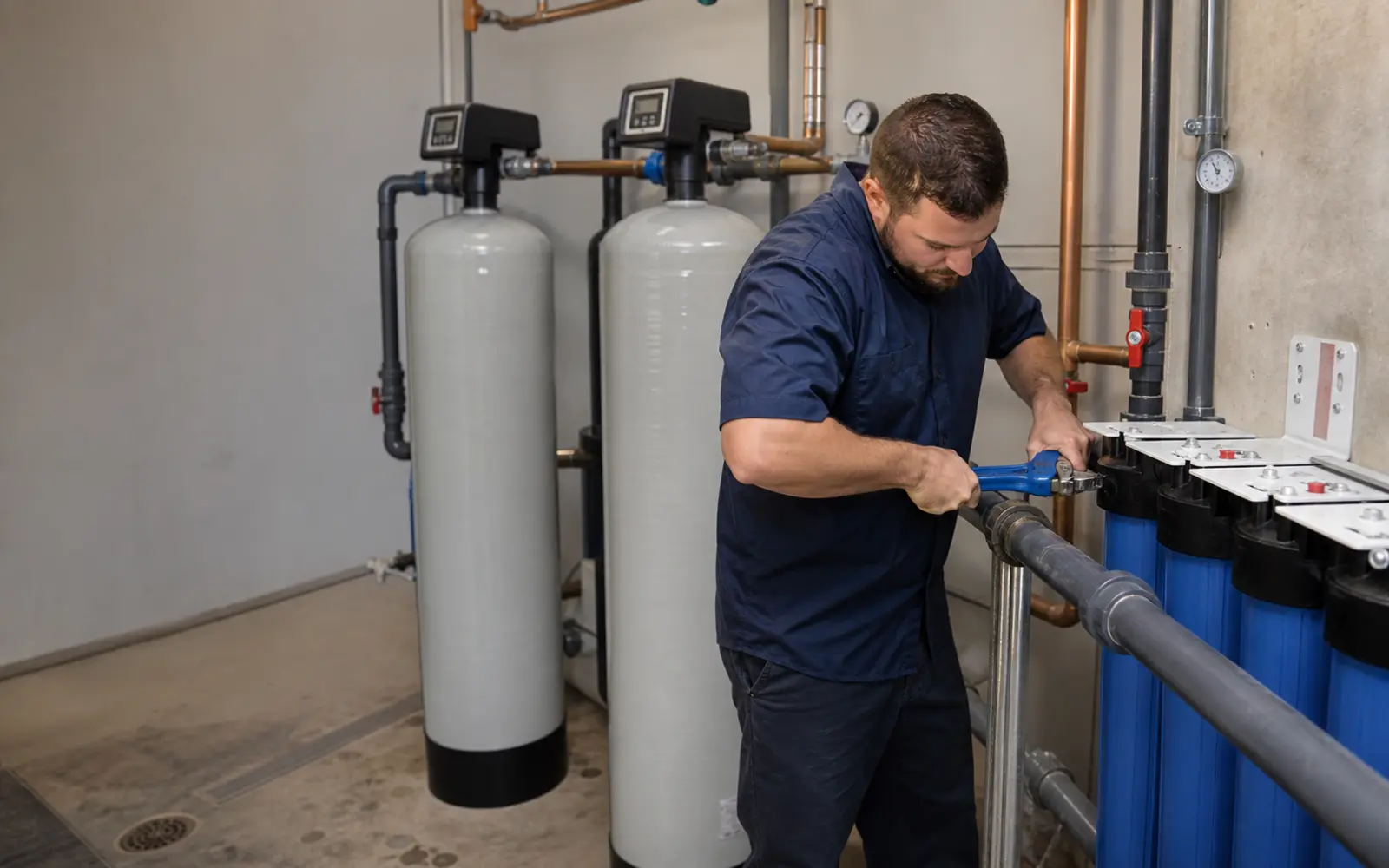
SERVICEABILITY + PERFORMANCE MONITORING
Commercial RO ownership should include practical access to prefilters, membrane housings, pumps, gauges, valves, sample points, storage, controls and drains. A system that is difficult to isolate or service can turn routine maintenance into unnecessary disruption.
Useful operating records may include feed and product-water quality, feed/permeate/concentrate flows, pressure, differential pressure, recovery, storage behavior and maintenance history when the system design supports those measurements. Trending performance is more useful than replacing membranes or filters by guesswork alone.
CHOOSE THE RIGHT COMMERCIAL PATH
Commercial RO owns membrane-system planning, installation and service. Broader water-treatment planning, operating-critical industrial projects and building-side plumbing each have a separate owner so the project can start in the right place.
Use the commercial treatment hub when the business is still deciding among testing, filtration, softening, RO or another treatment path rather than starting with a defined RO requirement.
Use industrial water treatment when the project is primarily process-driven, higher-flow or operating-critical and needs broader treatment-train, utility, storage or continuity planning.
Use commercial plumbing for supply piping, valves, pressure regulation, drains, water heaters or other building-side plumbing that is separate from the RO treatment design itself.
EXISTING COMMERCIAL RO REVIEW
Useful starting information includes system photos, model and membrane information, filter history, feed-water tests, current product-water quality, pressure and flow readings, storage behavior, alarms, leaks, pump behavior and the way the operation has changed since the system last performed normally.
A drop in output or product-water quality does not automatically mean the membranes have failed. Pretreatment problems, feed pressure, temperature, recovery, scaling/fouling, pump or valve issues, storage/delivery limitations and changed demand can all affect performance. Diagnose the system as a whole before deciding between maintenance, repair, redesign, expansion or replacement.
Direct answers about commercial RO sizing, pretreatment, recovery, storage, maintenance, existing systems and when a project belongs on the high-purity or industrial path.
Commercial RO is planned around production demand, feed-water quality, pressure, temperature, recovery, pretreatment, storage, delivery pressure and ongoing service requirements. A residential under-sink system is usually centered on a much smaller point-of-use drinking-water demand.
Useful inputs include the water source and testing, required product-water quality, peak and daily demand, operating schedule, feed pressure and temperature, pretreatment, storage, delivery pressure, utilities, drain/concentrate handling and service access.
The pretreatment need depends on the feed water and selected RO equipment. Sediment, hardness, disinfectant chemistry and other conditions can affect membranes and operating performance, so pretreatment should be selected for a verified reason rather than added automatically.
No. Recovery affects concentrate strength, scaling/fouling risk and operating conditions. The appropriate recovery is a system-design decision based on the feed water, membrane configuration, pretreatment, product-water requirement and operating goals.
RO production and business demand do not always occur at the same rate. Storage and delivery equipment can bridge that difference, but they must be sized so the operation has enough usable water and pressure during peak demand without masking an undersized RO system.
Depending on the equipment, useful operating data can include feed and product-water quality, pressures, differential pressure, feed/permeate/concentrate flows, recovery, storage behavior and maintenance history. The exact monitoring plan should match the system design.
Yes. Water Fixers can review the water, filters, membranes, pumps, valves, controls, storage, pressure/flow behavior and service history to help determine whether maintenance, repair, pretreatment correction, capacity changes or replacement is the more practical next step.
DI or another polishing step belongs in the design only when the required finished-water quality calls for it. Projects with a documented higher-purity target should use the High-Purity Process Water path so RO, DI, storage, monitoring and validation requirements are planned together.
There is no one interval for every system. Feed-water quality, operating hours, pressure drop, product-water performance, recovery, pretreatment and manufacturer guidance all affect service timing. Routine filters and membrane performance should be evaluated separately.
No generic page should promise a site-specific purity, flow, recovery or compliance result. Those requirements have to be defined for the project and supported by the selected equipment, operating conditions, testing and any documentation or validation the application requires.
Tell Water Fixers the property location, water source, available test data, required product-water quality, peak and daily demand, operating schedule, storage and pressure needs, existing equipment and any maintenance or downtime concerns. We can help define the practical RO, pretreatment and service path.
Water Fixers Plumbing & Filtration • California Central Coast • License #719792
CALL NOW! Se Habla Español!