COMMERCIAL WATER TESTING • CALIFORNIA CENTRAL COAST
Quick answer: Commercial water testing is most useful when the question is defined first: diagnose a water-quality problem, size or protect treatment equipment, verify an existing system, investigate a specific constituent, or document a finished-water requirement. Water Fixers helps businesses connect available test information with flow, demand, plumbing and operating conditions before treatment is selected.
Water Fixers Plumbing & Filtration • Santa Maria, CA • Serving California’s Central Coast • CA License #719792
START WITH THE QUESTION
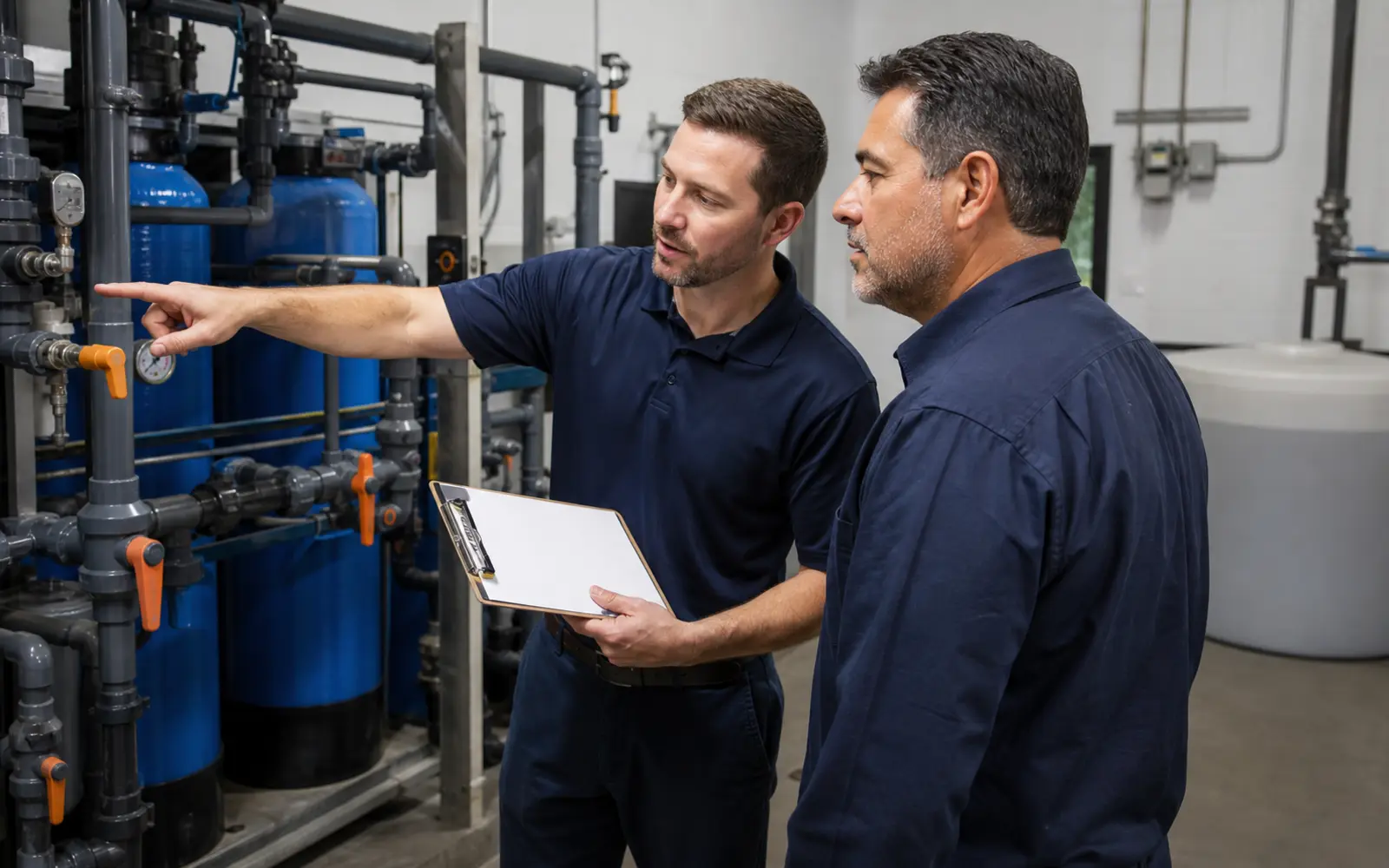
The same water sample can be asked to answer very different questions. A hardness/scale problem, RO feed-water evaluation, taste or odor complaint, suspected contaminant, process-water specification and existing-system performance problem do not automatically call for the same analytes or sampling approach.
Define the decision first. Then select the observations, field checks, laboratory analyses and operating data that can actually support that decision.
BEFORE SAMPLING
Are you diagnosing a symptom, selecting treatment, checking an existing system, evaluating RO feed water, investigating a named constituent or documenting a specific finished-water target?
Municipal supply, private well, blended water, treated water, process water and water sampled before or after existing equipment can produce very different interpretations.
A source sample, pre-treatment sample, post-treatment sample or point-of-use sample answers a different question. The sample point should match the decision.
If testing is for a permit, regulatory program, customer specification or other formal requirement, confirm the required method, sample handling, laboratory accreditation and reporting before collecting the sample.
SCREENING VS. LABORATORY ANALYSIS
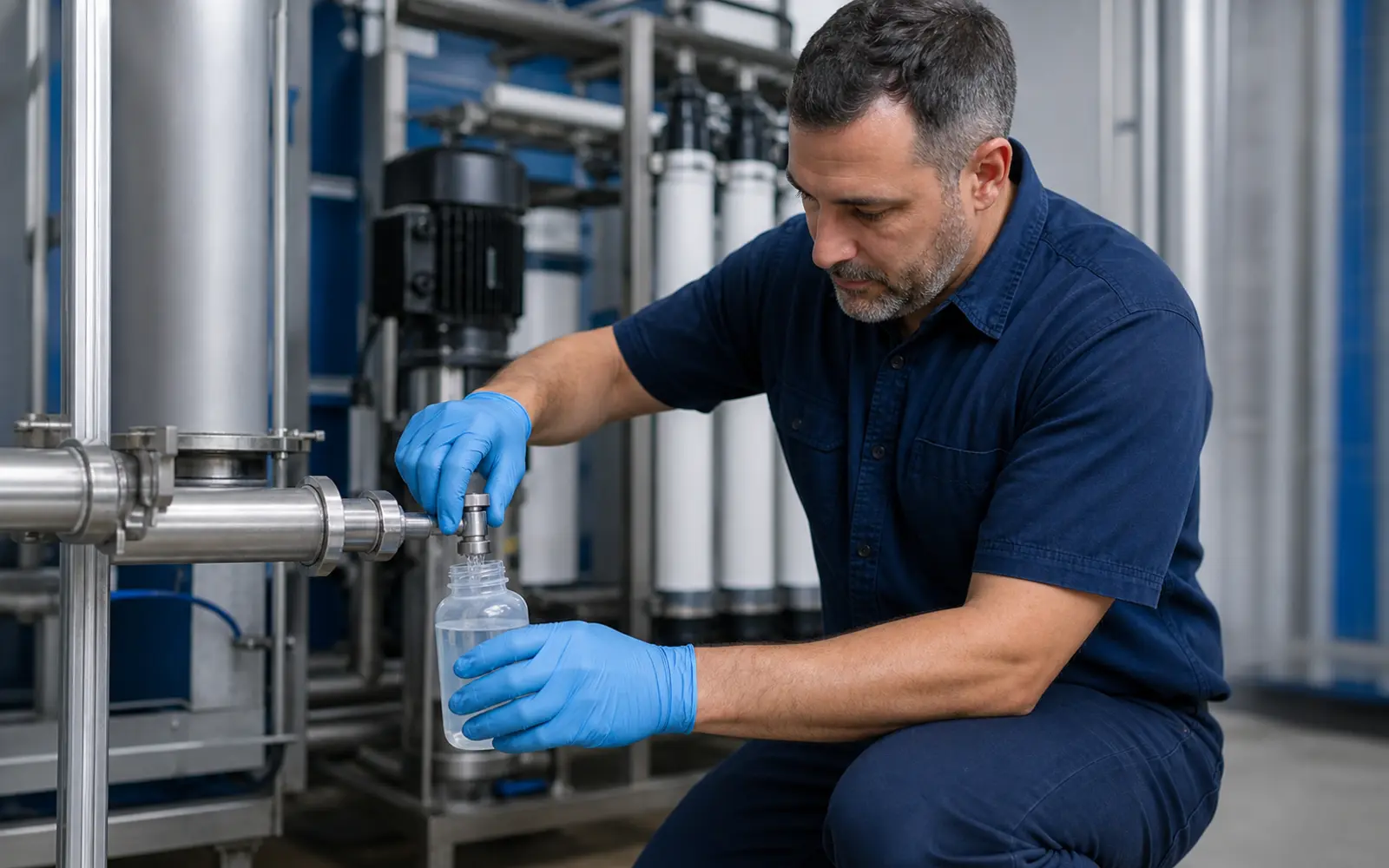
Field observations and onsite measurements can be useful for operating checks, troubleshooting direction and parameters such as pressure, temperature, pH, disinfectant residual or other measurements when the equipment and method are appropriate.
Laboratory analysis is the better path when a specific contaminant, low-level concentration, microbiological question, regulated reporting requirement or defined process specification must be measured with an appropriate analytical method.
Water Fixers does not treat a basic field reading as proof of regulatory compliance. When formal reporting matters, confirm the required analyte, method, sampling protocol and laboratory requirement before the sample is taken.
COMMON COMMERCIAL TESTING PATHS
These are examples of decision paths—not a universal commercial test panel. The actual scope should be chosen from the source water, symptoms, equipment and required result.
Use measured hardness and related operating information when scale, commercial softener sizing or equipment protection is the concern.
Commercial RO planning may require feed-water data plus pressure, temperature, pretreatment and production information so membrane-system decisions are not based on TDS alone.
Turbidity, visible solids, cartridge loading, pressure loss and source-water conditions can help define whether filtration is the right treatment path and how it should be serviced.
When a named contaminant or finished-water specification is driving the project, choose testing and treatment around that exact target rather than relying on a broad screening result.
SAMPLE LOCATION & TIMING
Commercial systems may have source water, pretreatment, primary treatment, storage and multiple downstream points of use. A result taken after treatment cannot automatically describe the incoming water, and a source sample cannot prove what the finished water is doing at the point where it is used.
Timing matters too. If the concern changes by operating cycle, source blend, seasonal condition, production shift, regeneration/backwash event or equipment state, a single sample may not describe the full problem. The sampling plan should match the question being investigated.
Use when treatment selection or pretreatment design depends on the water entering the system.
Useful when the question is whether an installed filter, softener, RO stage or other equipment is changing the water as intended.
Use when the requirement applies to the actual water delivered to equipment, a process, drinking-water point or another defined endpoint.
CHEMISTRY + OPERATING DATA
Laboratory or field results describe water conditions, but commercial treatment also has to support the building or process. Equipment selection may require peak flow, daily volume, operating schedule, incoming pressure, acceptable pressure loss, available space, drains, power, storage, service access and downtime tolerance.
That is why Water Fixers uses test information as one input in treatment planning rather than treating a report as an automatic equipment prescription.
EXISTING EQUIPMENT DIAGNOSIS
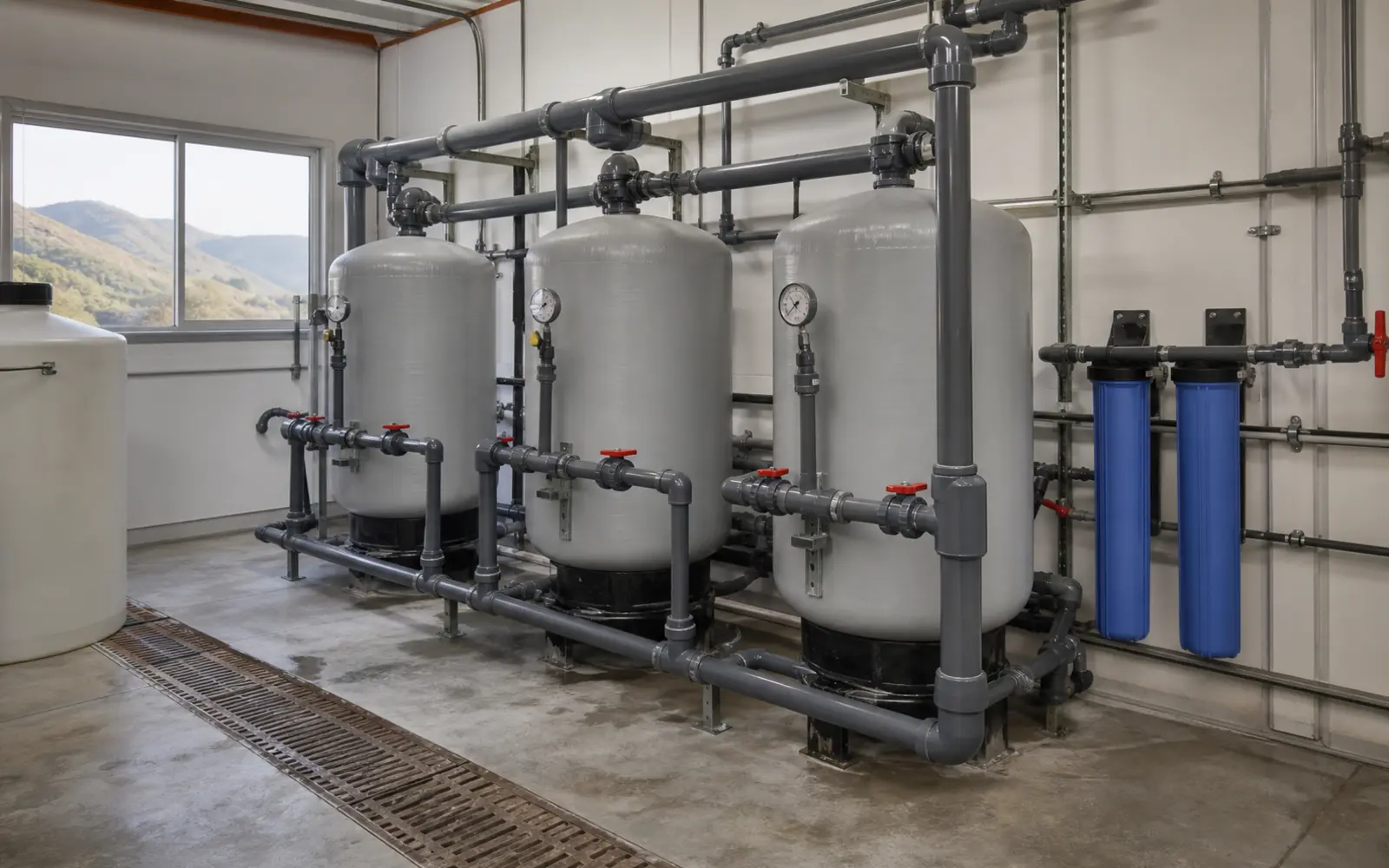
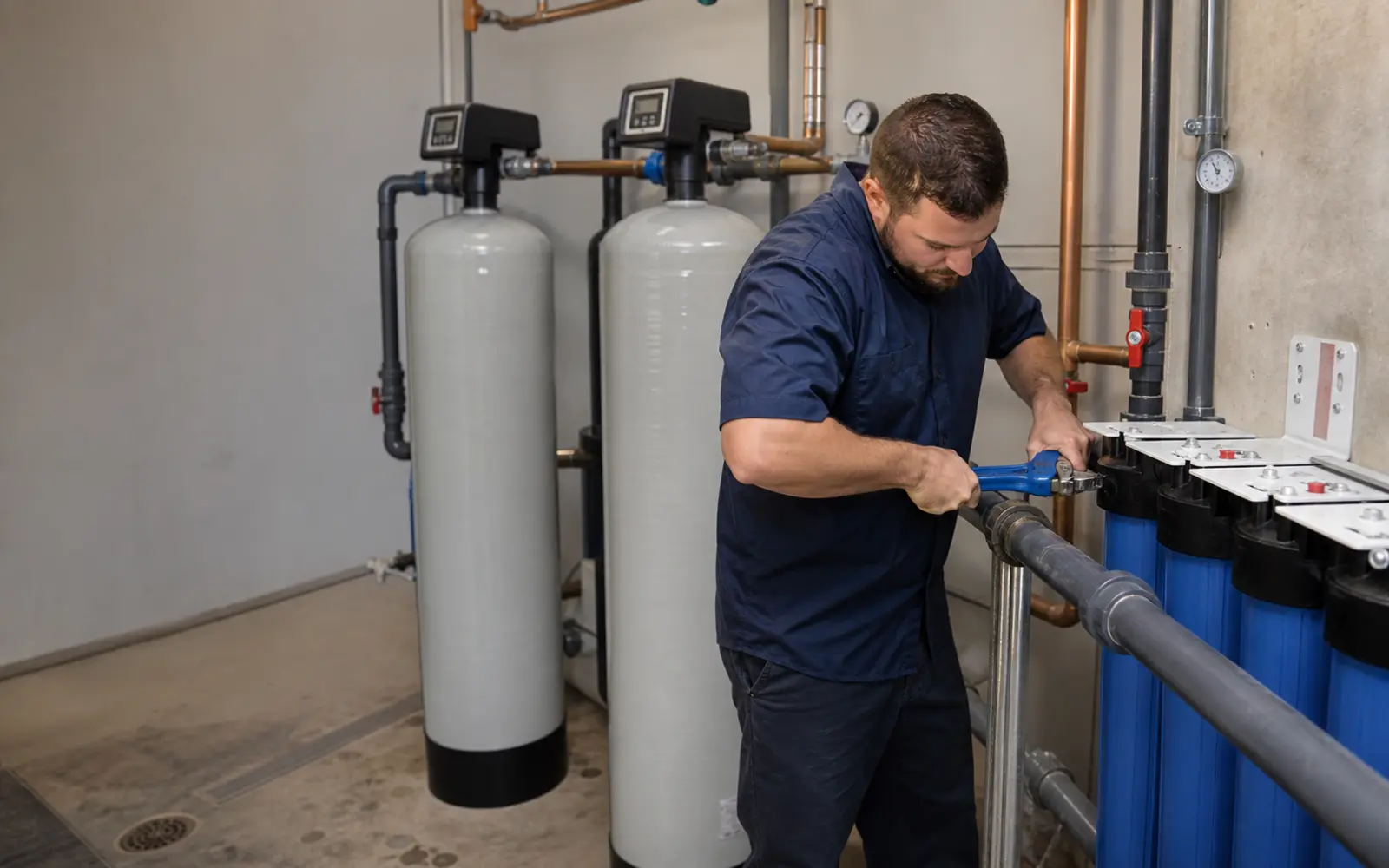
When treatment equipment is already installed, useful diagnosis often combines water before and after the unit with pressure/flow information, service history, consumable age, controls, regeneration or backwash behavior, membrane or filter condition and the facility’s current demand.
Bring equipment photos, model numbers, recent test reports, service records and a description of when the problem appears. The next step may be maintenance, targeted testing, plumbing correction, component service, system expansion or redesign—not automatically replacement.
TURN RESULTS INTO THE RIGHT NEXT STEP
Once the water problem is defined, move to the page that owns the treatment or system decision. This keeps testing focused on diagnosis and keeps equipment selection tied to the correct specialty.
Sediment, carbon and other targeted filtration where the verified water condition and operating demand call for filtration.
Hardness and scale-control projects where measured hardness, flow and daily water use support softening.
Membrane treatment where dissolved-solids reduction or purified-water production is the defined job.
Defined higher-purity or multi-stage applications where RO, DI, polishing, storage, delivery and verification may need to work together.
Use the broad commercial treatment hub when more than one technology may be involved and the overall treatment train is still being defined.
Use the industrial path for higher-flow, process-related or operating-critical projects where treatment performance is tied directly to operations.
WHEN FORMAL REPORTING MATTERS
If a result will be used for a regulatory program, permit, public-water compliance requirement, contractual specification or another formal purpose, the sampling and analytical requirements should be confirmed before collection. The required method, preservative, container, holding time, chain-of-custody process and laboratory accreditation can depend on the analyte and program.
For California regulatory environmental analyses, laboratory accreditation requirements may apply; California ELAP distinguishes regulatory-purpose analyses from internal process-control work. Water Fixers can help route the water-treatment question, but the governing program or qualified laboratory should define the formal analytical requirements.
COMMON COMMERCIAL WATER-TESTING QUESTIONS
These answers are planning guidance. The final test scope should match the exact water source, decision, analyte and reporting requirement.
No. Testing should match the water source, problem and decision being made. A hardness/scale question, RO feed-water evaluation, named contaminant, microbiological concern and process-water specification can require different sampling and analyses.
Testing provides important evidence, but commercial treatment selection also depends on peak flow, daily volume, pressure, operating schedule, plumbing, storage, service access and the required finished-water result.
Field observations and appropriate onsite measurements can be useful for screening, operating checks and troubleshooting direction. They should not be presented as a substitute for laboratory analysis when a specific analyte, low concentration or formal reporting requirement needs an approved analytical method.
Use laboratory analysis when a specific constituent, microbiological question, low-level concentration, regulated report or defined process specification must be measured with an appropriate method. Confirm the exact requirement before sampling.
Water testing is available on request. Confirm the specific analyte, sampling need and laboratory requirement with the office for each project. When formal accreditation or regulatory reporting is required, that requirement should be identified before the sample is collected.
The sample point depends on the question. Feed water, pre-treatment water, post-treatment water, storage and final point-of-use samples answer different questions. Choose the location that represents the water condition being evaluated.
Sometimes a before-and-after comparison is useful, but one sample may not explain pressure, flow, intermittent operation, source-water changes, service history or cycling behavior. Existing-system diagnosis often needs both water data and operating information.
Useful information can include feed-water chemistry, pressure, temperature, pretreatment, product-water quality, production demand, storage and any available operating history. The exact test scope depends on the RO design question.
Send the property or facility location, water source, the problem or decision you are trying to address, existing treatment equipment, recent test reports, equipment photos, operating symptoms and any known flow, pressure or demand information.
Not automatically. Treatment-planning tests and regulatory compliance tests can have different sampling, analytical, laboratory and reporting requirements. If the result must satisfy a permit, regulation or formal specification, confirm those requirements with the governing program or qualified laboratory first.
COMMERCIAL & INDUSTRIAL WATER PROJECT
Tell Water Fixers what the water is used for, what problem you are seeing, what treatment equipment is already installed and what decision the testing needs to support. If you already have laboratory reports or operating data, include them so the next step can be based on evidence instead of guesswork.
Water Fixers Plumbing & Filtration • 2893 Industrial Pkwy, Santa Maria, CA 93455 • CA License #719792
CALL NOW! Se Habla Español!