COMMERCIAL & INDUSTRIAL • CALIFORNIA CENTRAL COAST
Commercial water-treatment equipment should be selected around the water source, required finished-water result, peak demand, operating schedule, pressure and service needs—not simply around the largest tank or filter housing that fits the room.
This guide explains the main equipment families and helps businesses identify the right next technical conversation.
38+ Years on the Central Coast • California License #719792
EQUIPMENT SELECTION
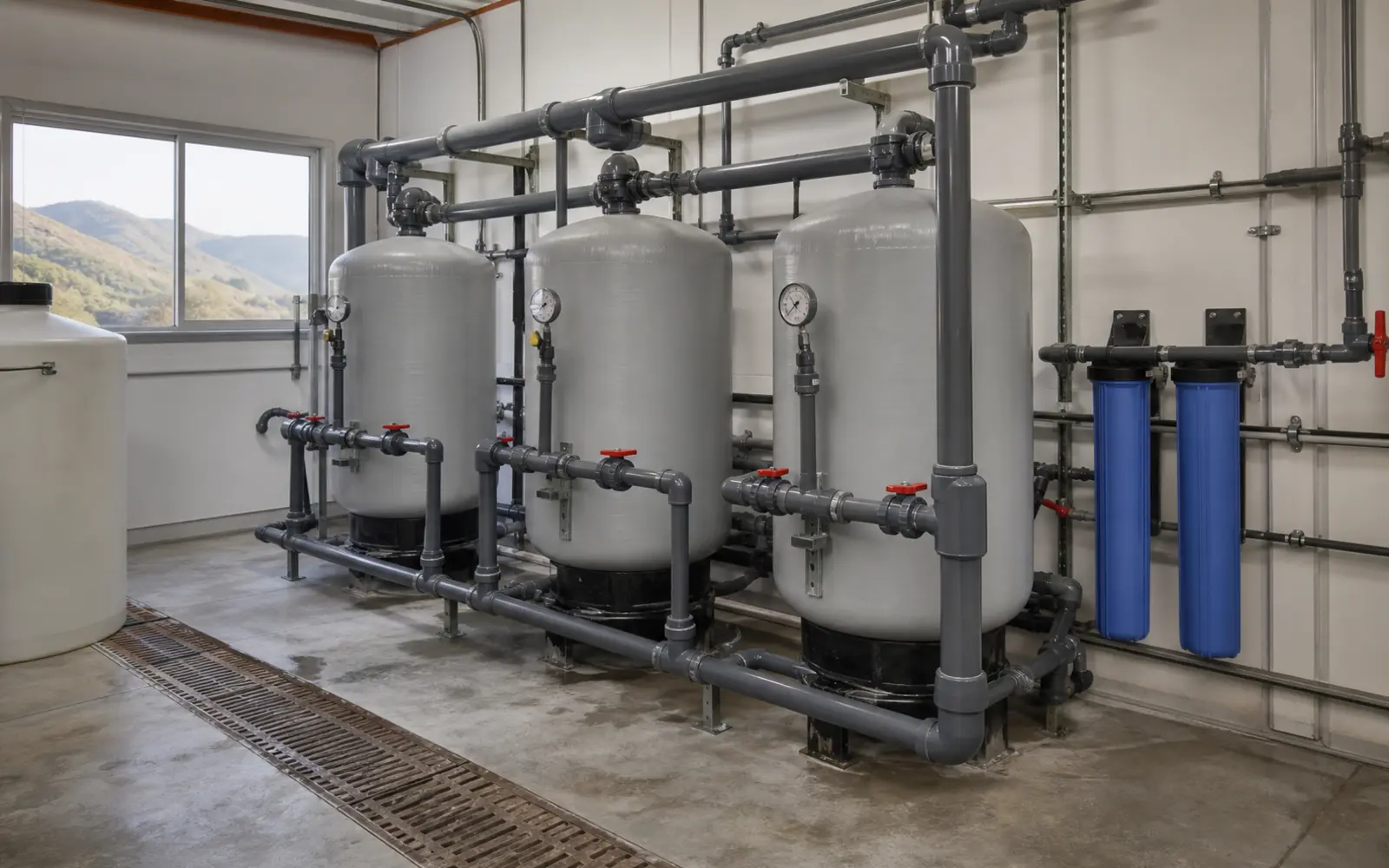
A cartridge housing, media tank, softener, reverse-osmosis skid and deionization stage solve different problems. Some projects need one stage; others need a treatment train. The equipment decision starts with what must change between the incoming water and the water your operation actually needs.
PARTICLE / MEDIA
Sediment, carbon and other targeted filtration can protect downstream equipment or address identified water-quality concerns.
HARDNESS
Ion-exchange softening is a hardness-control path when scale and hardness load are part of the business problem.
RO / PROCESS
Reverse osmosis and higher-purity treatment belong to applications that require more controlled dissolved-solids or process-water results.
BEFORE THE EQUIPMENT LIST
Two businesses can have the same incoming water and still need different equipment because their flow, schedule, finished-water target and service requirements are different.
Source water, current test data and the specific problem the equipment is expected to address.
Fixture protection, scale control, taste/odor improvement, equipment feed, rinse water, ingredient water or higher-purity process use.
The system has to support the demand that occurs when the facility is using the most water—not only an average daily number.
Operating hours, batch cycles, occupancy and regeneration or service windows can affect equipment configuration.
Pipe size, available pressure, drains, electrical access, bypass needs and the condition of surrounding plumbing all matter.
Filter changes, media service, membranes, valves, gauges and isolation points need enough room to be reached later.
COMMON COMMERCIAL EQUIPMENT FAMILIES
These categories can be used alone or combined. A complete system recommendation should be based on actual water conditions and operating requirements.
Replaceable cartridges can be useful for particulate control, polishing or specific treatment duties when the housing, micron rating, chemistry and maintenance interval fit the application.
Backwashing or serviceable media vessels can be selected for higher-flow or longer-run filtration duties when the media and control strategy match the water problem.
Softening targets hardness and scale. Commercial design also has to consider flow, capacity, regeneration timing and continuity of service.
RO is a membrane-treatment path for applications that need lower dissolved-solids or purified-water production. Pretreatment and recovery requirements depend on feed water and use.
Deionization can be part of a higher-purity treatment train when the application requires it. It is not a substitute for defining the required finished-water quality.
Process-driven systems may combine pretreatment, filtration, softening, RO, DI or other stages around the actual process and operating risk.
EQUIPMENT FORMAT
Both formats can be useful. The practical choice depends on the contaminant or treatment objective, flow, loading, maintenance frequency, drain/backwash availability and how much downtime the facility can tolerate.
Often considered when:
Housing size and cartridge type should be matched to the application rather than chosen by pipe size alone.
Often considered when:
The media, tank size and control strategy must match the actual water and operating conditions.
MULTI-STAGE DESIGN
Commercial systems sometimes combine pretreatment, filtration, softening, RO and polishing. More stages are not automatically better. Each stage should protect the next process or move the water toward a defined finished-water target.
Before adding equipment, ask what the stage removes or changes, how it will be monitored, what maintenance it requires and what happens if it is bypassed or out of service.
APPLICATION MATTERS
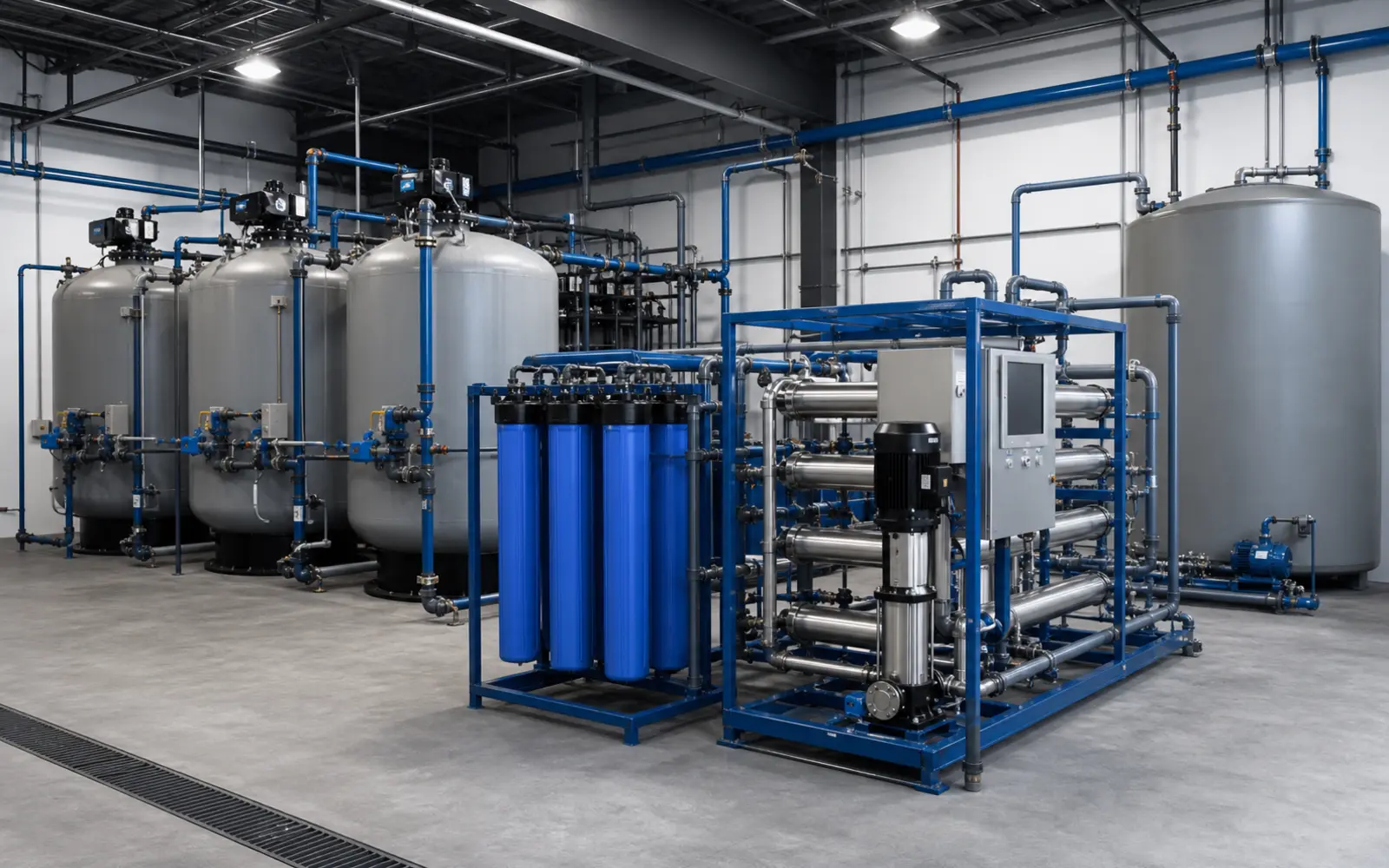
The dividing line is not the building type. It is the water requirement and operating consequence. When treatment has to serve a production process, higher-purity specification, larger continuous demand or operating-critical equipment, the project may need an industrial/process-water approach.
Business and facility filtration for identified water-quality, equipment-protection and whole-building treatment needs.
Process-driven treatment where flow, reliability, pretreatment, controls or finished-water requirements become more specialized.
RO/DI and related treatment paths for applications that require more controlled finished-water quality.
EXISTING SYSTEMS
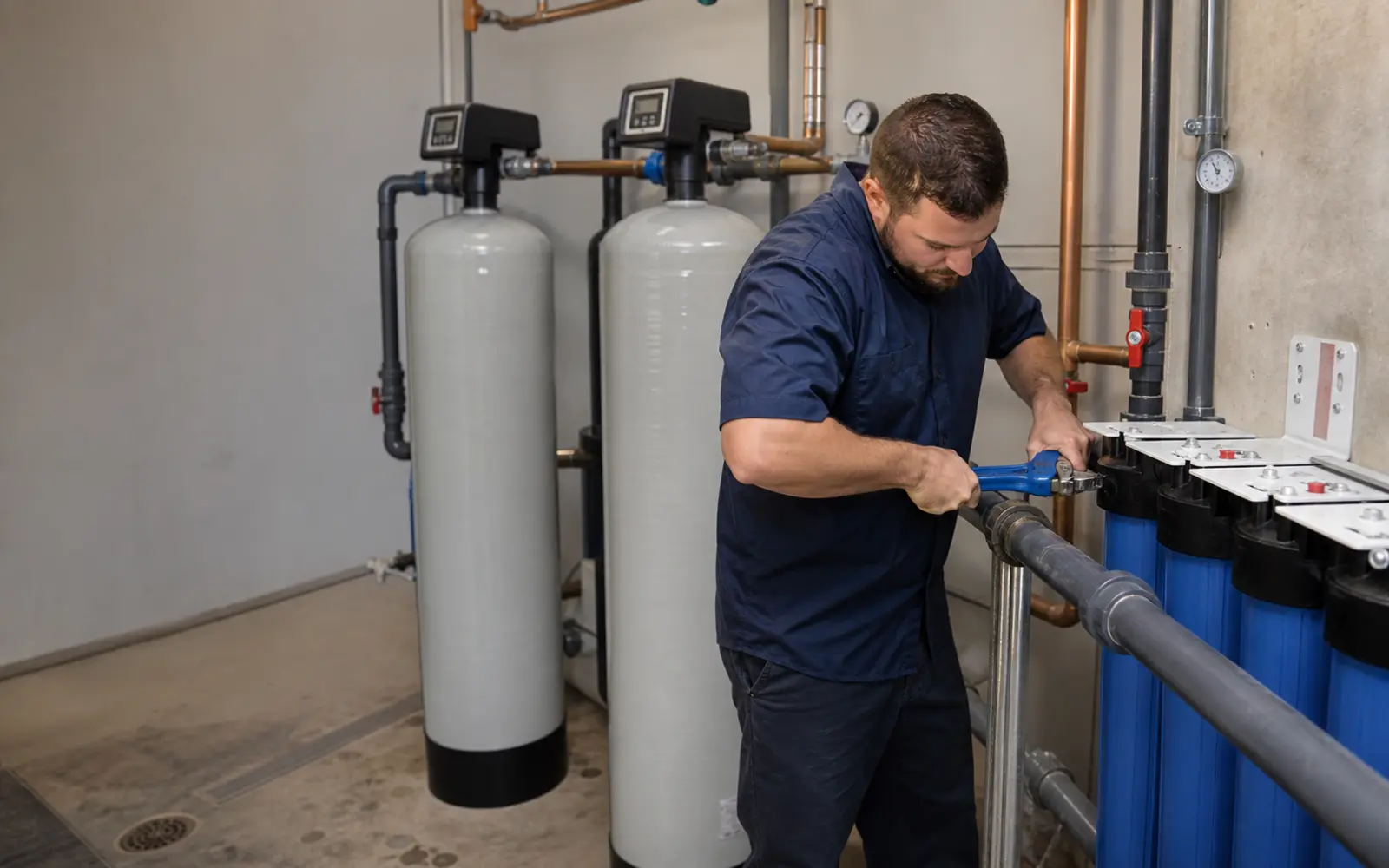
An older commercial system may need maintenance, media or cartridge service, control work, membrane service, plumbing correction or a full redesign. Replacement should not be the automatic first answer.
Useful starting information includes equipment labels, model numbers, control-valve information, filter sizes, membrane data, recent water tests, pressure readings, service history and photos of the entire treatment area.
LONG-TERM OWNERSHIP
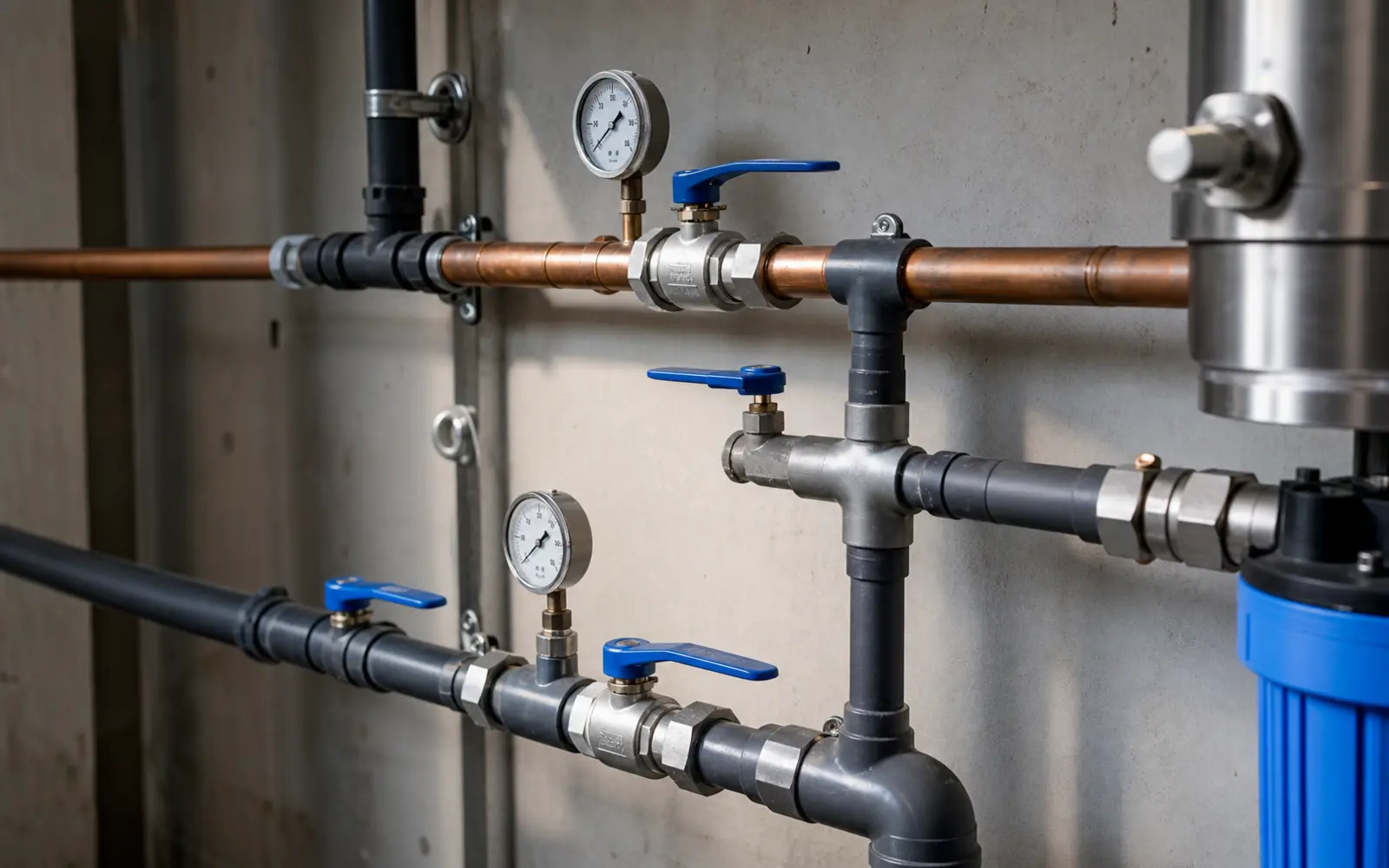
Valves, bypasses, gauges, drains, electrical controls, filter housings and treatment vessels should be arranged so a technician can inspect and service them without dismantling unrelated plumbing.
For commercial work, serviceability can be as important as the equipment itself because maintenance affects operating continuity, labor and future repair decisions.
Plan for: isolation and bypass • pressure and gauges • drain/backwash requirements • cartridge/media access • membrane access • control accessibility • safe clearance around equipment.
WHERE TO GO NEXT
Use the equipment guide to understand the treatment categories, then move to the service page that owns the actual problem or project.
Broad business/facility treatment planning across softening, filtration, RO and process water.
Diagnostic and testing path when the water condition or treatment target needs to be established first.
Sediment, carbon and other targeted filtration service and system planning.
Hardness control, scale reduction and commercial softener planning.
Membrane treatment for purified-water and higher-volume RO applications.
FREQUENTLY ASKED QUESTIONS
The right answer depends on the actual water and application, but these questions can help define the next step.
COMMERCIAL & INDUSTRIAL WATER TREATMENT
Tell Water Fixers what the water is used for, what is wrong with it now, the required result, known flow or demand, and what equipment is already installed. We can help determine the practical next step.
Water Fixers Plumbing & Filtration • Santa Maria, California • Serving the Central Coast • California License #719792
CALL NOW! Se Habla Español!