COMMERCIAL WATER TREATMENT • CALIFORNIA CENTRAL COAST

Commercial Water Treatment for Central Coast Businesses

Commercial water treatment should be built around the water coming in, the result the business needs, peak demand, existing plumbing and long-term service requirements. Water Fixers helps businesses plan filtration, softening, reverse osmosis and higher-purity treatment without forcing a residential package onto a commercial application.

38+ years serving the Central Coast • California License #719792
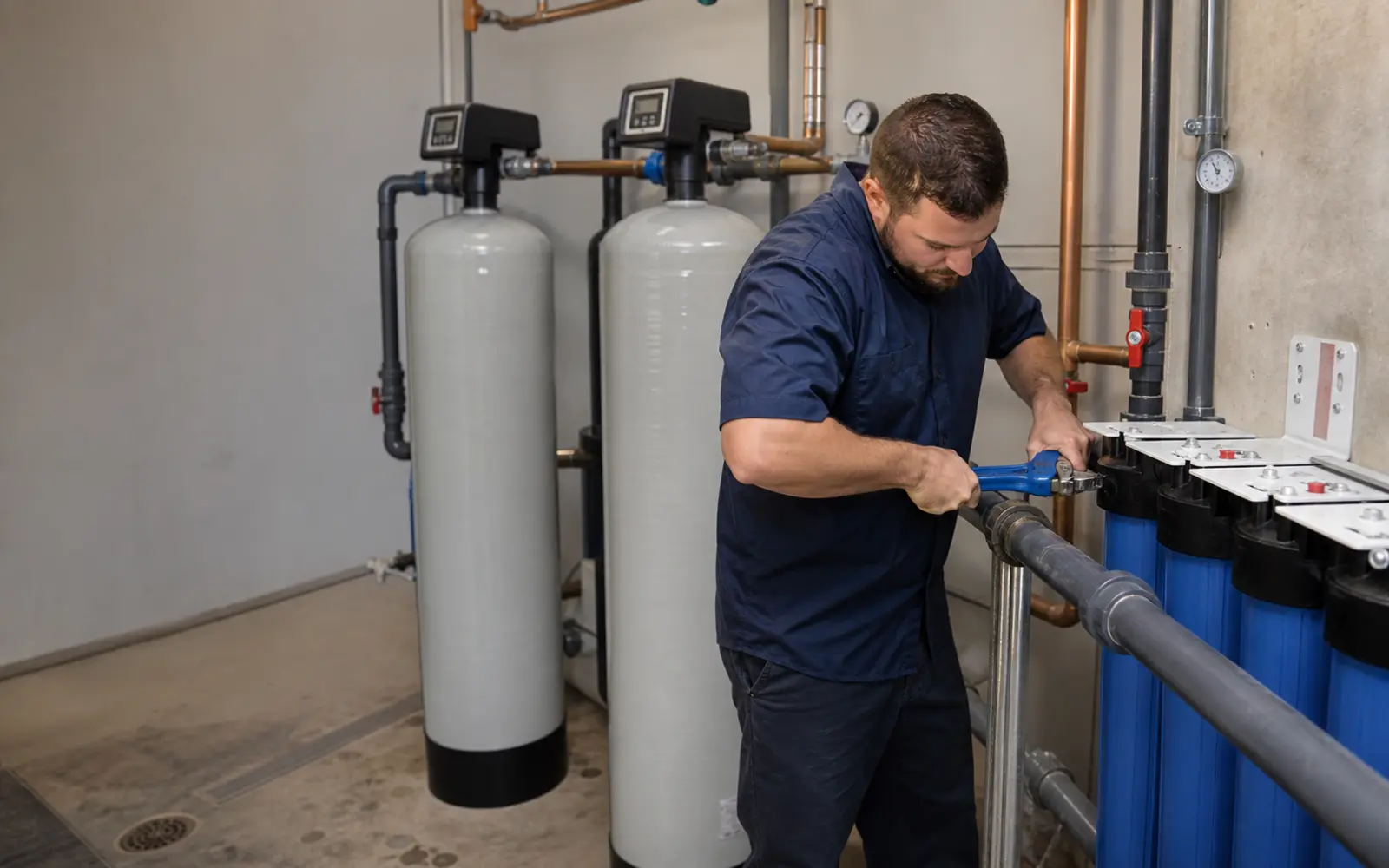
Commercial water treatment technician servicing filtration equipment on the California Central Coast

START WITH THE OPERATING REQUIREMENT

Commercial Water Treatment Is More Than a Larger Residential System

Equipment selection comes after the operating conditions are understood. A system that looks adequate on paper can still be a poor fit if peak flow, water quality, pressure loss, maintenance access or downtime were not considered.

WATER

Incoming Water Quality

Use current water information, testing and observed conditions to define what the system actually needs to address.

DEMAND

Peak Flow & Daily Volume

Size around how much treated water is needed, when demand occurs and whether storage or redundancy changes the design.

RESULT

Required Finished Water

Protecting heaters from scale, improving ingredient water and feeding higher-purity equipment are different treatment goals.

OWNERSHIP

Service & Maintenance

Valves, bypasses, gauges, drains, consumables and equipment access should be practical for the people who will own and service the system.

CHOOSE THE COMMERCIAL PATH THAT MATCHES THE PROBLEM

Four Core Treatment Paths

The commercial hub should route each project to the service that best matches the water problem and required result. Testing is the right starting point when the cause or treatment target is not yet clear.

HARDNESS

Commercial Water Softening

For scale control where hardness affects water heaters, fixtures, valves, dishwashing, laundry or other water-using equipment.

PARTICULATE / TASTE / ODOR

Commercial Water Filtration

For sediment, carbon and other targeted filtration selected around verified water conditions and flow requirements.

PURIFIED WATER

Commercial Reverse Osmosis

For applications that need purified water with production, pretreatment, storage, pressure and reject-water requirements considered together.

DEFINE THE PROBLEM

Commercial Water Testing

For projects where the source water, contaminant concern or treatment target needs to be identified before equipment is chosen.

BUILD A SERVICEABLE TREATMENT TRAIN

Each Treatment Stage Should Have a Defined Job

Commercial systems may use one treatment step or several. The goal is not to stack equipment; it is to make each stage solve a documented problem or support the equipment that follows it.
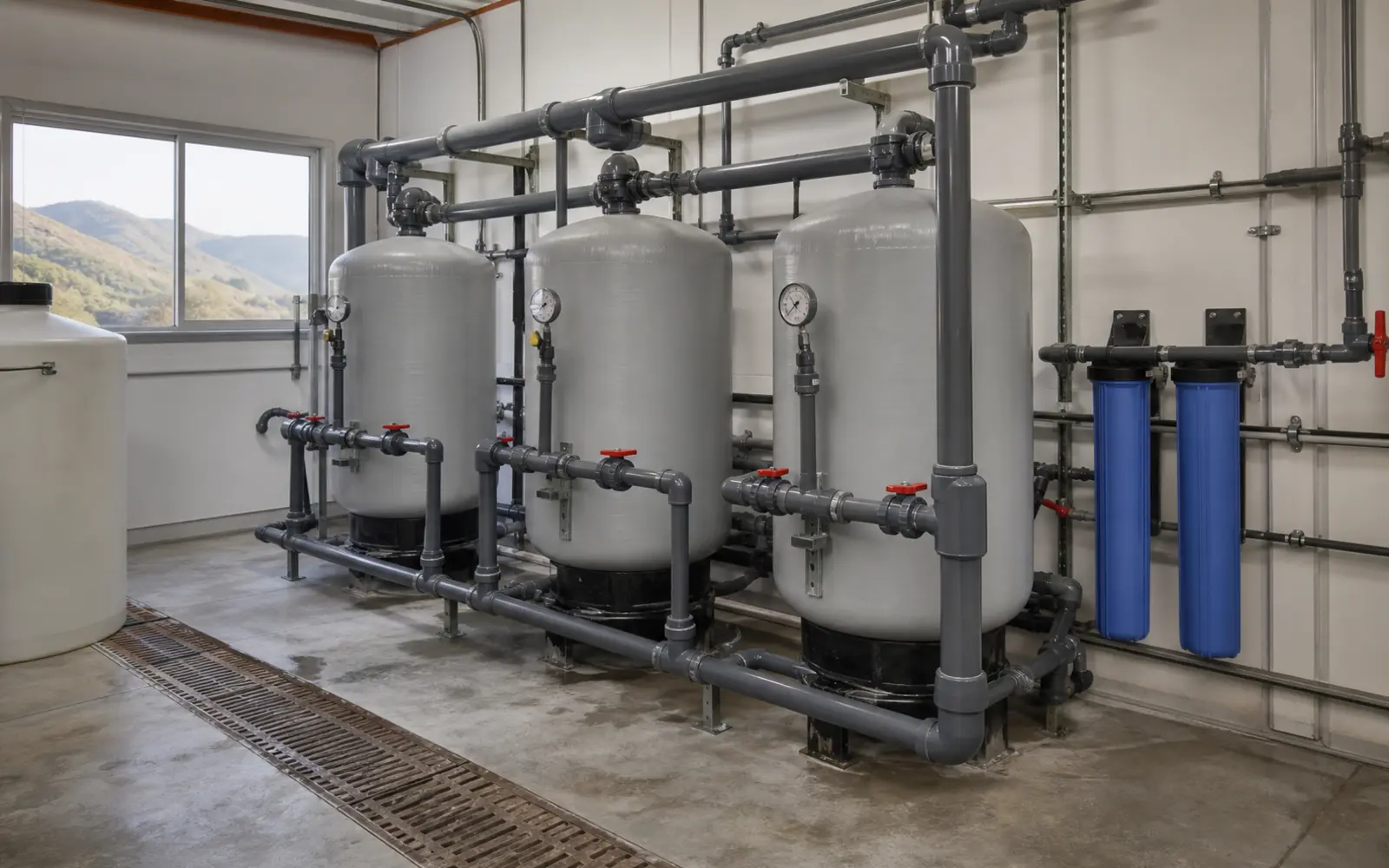
  • Pretreatment: sediment, carbon, softening or other conditioning when feed-water conditions require it.
  • Core treatment: filtration or reverse osmosis sized for the required flow and finished-water result.
  • Storage and delivery: tanks, pumps and pressure controls when production rate and point-of-use demand do not occur at the same time.
  • Polishing: additional treatment such as DI or UV only when the application and water target justify it.
Commercial water treatment system with media tanks, filter housings, gauges and serviceable plumbing

MATCH THE SYMPTOM TO THE NEXT DECISION

A Better Starting Point Than Guessing at Equipment

SCALE

Scale on Fixtures or Equipment

Hardness testing and demand data help determine whether commercial softening belongs in the treatment plan.

SEDIMENT / ODOR

Visible Particles, Taste or Odor

The next step is to identify the condition and choose filtration with a defined purpose rather than adding filters by default.

PURITY

A Defined Higher-Purity Requirement

When equipment, production or a process requires higher-purity water, move into RO or process-water planning with a documented finished-water target.

UNKNOWN

The Cause Is Not Clear

Commercial water testing can help separate a water-quality problem from an equipment, plumbing or maintenance problem.

EXISTING SYSTEM

Treatment Performance Has Changed

Bring model information, photos, maintenance history, current symptoms and available water data so the existing system can be evaluated before replacement is assumed.

BUILDING PLUMBING

The Problem Is Piping, Valves or Pressure

Treatment cannot correct an unrelated building-plumbing problem. Route leaks, valves, pressure, fixtures, drains and piping to commercial plumbing.
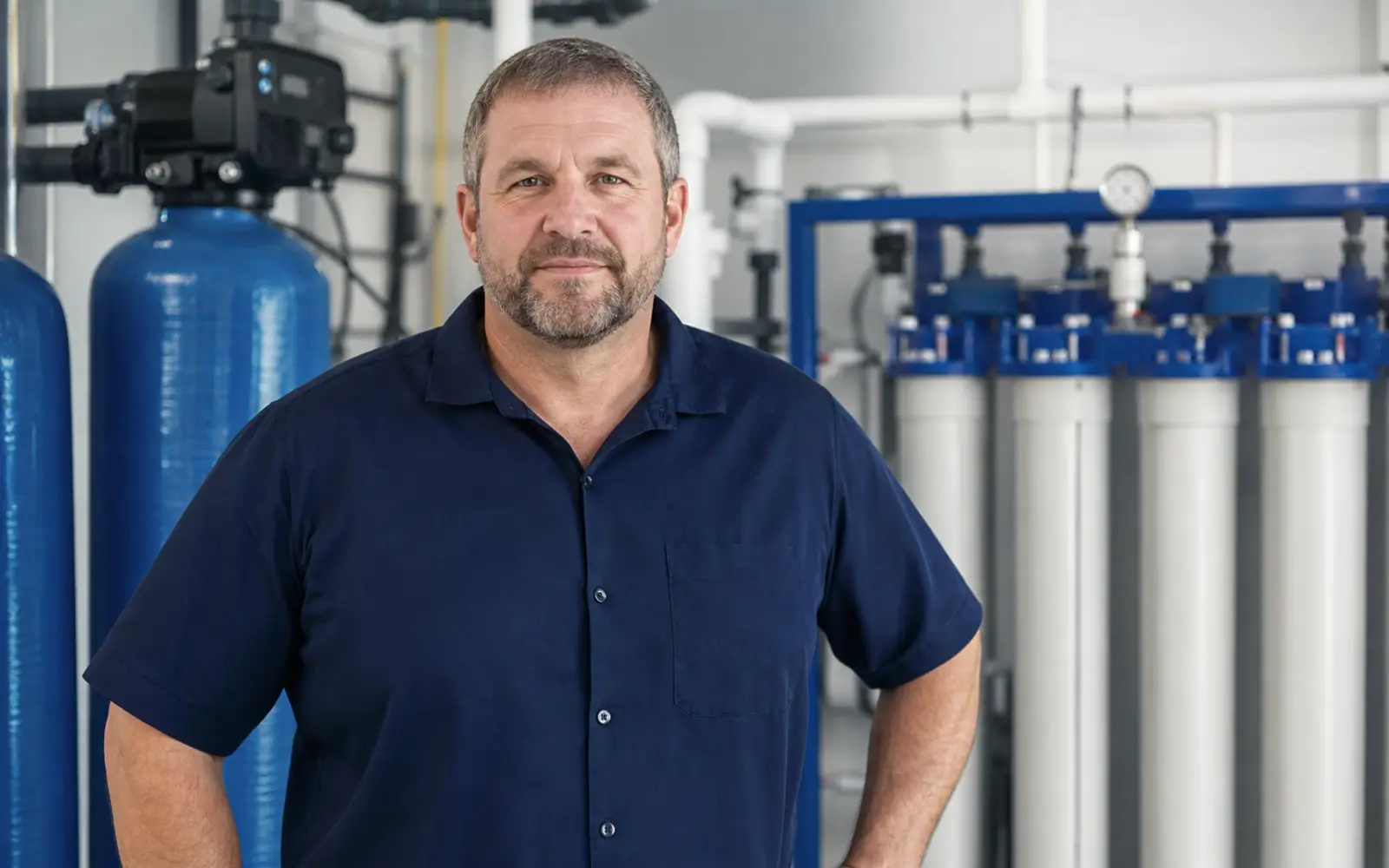
Water treatment professional standing with commercial filtration and treatment equipment

DESIGN FOR THE YEARS AFTER INSTALLATION

Serviceability Is Part of System Design

Filters, media, membranes, softeners, pumps and controls all have maintenance requirements. A commercial installation should leave practical access for inspection, isolation, cartridge or media service, membrane maintenance, flushing and repair.

For an existing system, Water Fixers can review the equipment and plumbing conditions before recommending a service, maintenance or replacement path. Commercial RO systems also have a dedicated maintenance route when the issue is ongoing membrane, filter or operating service.

COMMERCIAL OR INDUSTRIAL?

Use the Broader Commercial Hub Until the Process Requirements Take Over

This page is the broad treatment hub for businesses, commercial properties and facilities. Projects should move into the industrial/process-water path when finished-water specifications, production demand, redundancy, storage, instrumentation or process uptime become the primary design drivers.

COMMERCIAL

Commercial Water Treatment

Filtration, softening, RO, testing and service for business water-quality and equipment-protection needs.

PROCESS

Industrial Water Treatment

For higher-flow, process-driven and operating-critical treatment trains that need a more detailed engineering conversation.

HIGH PURITY

High-Purity & DI

For applications with defined purity requirements that may use RO, deionization, storage, delivery and polishing stages.

PLUMBING + TREATMENT HAVE TO WORK TOGETHER

Plan the Connections, Drainage and Protection Around the Equipment

Treatment equipment becomes part of the building water system. The final installation may need coordination around shutoffs, bypasses, drains, pressure, power, floor space, service clearance, backflow or cross-connection protection, and permits or inspections where applicable.

Those requirements vary by the equipment, water source, utility and authority having jurisdiction. Water Fixers reviews the project conditions instead of treating one commercial layout as universal.

COMMON COMMERCIAL WATER TREATMENT QUESTIONS

Commercial Water Treatment FAQs

Use these answers to identify the right starting point, then move into the service page that matches the project.

Water Fixers supports commercial filtration, water softening, reverse osmosis, water testing and higher-purity treatment planning. Industrial and process-driven projects have a separate path when flow, purity or operating requirements become the main design drivers.
Sizing depends on the incoming water, required finished water, peak flow, daily volume, operating hours, plumbing size, pressure, storage needs and service expectations. Residential sizing shortcuts are not a substitute for those project conditions.
Testing is especially useful when the water problem, contaminant concern or treatment target is not already defined. Existing utility data, laboratory results, onsite observations and equipment history can all help determine what additional testing is useful.
Yes. Existing systems can be evaluated using equipment photos, model information, maintenance history, current symptoms, available water data and an onsite review. The next step may be maintenance, repair, plumbing correction or replacement depending on what is found.
No. RO is appropriate when the required water quality and application justify membrane treatment. Hardness control, sediment removal, carbon filtration or another treatment path may be more appropriate for other problems.
Commercial treatment commonly addresses building water quality, equipment protection and business-use needs. Industrial or process-water projects are more likely to be driven by defined finished-water specifications, higher production demands, storage, instrumentation, redundancy or process uptime.
Yes. Maintenance depends on the installed equipment and water conditions. Filters, membranes, media, brine systems, pumps, gauges, controls and other components may all have inspection or service requirements.
They can, depending on the equipment, plumbing configuration, water source, utility and local authority. The project should be reviewed against the requirements that apply to that specific installation rather than assuming one rule applies to every business.

COMMERCIAL WATER PROJECT?

Start With the Water, Demand and Required Result

Tell Water Fixers about the property, water source, current problem, peak demand, existing treatment equipment and the water quality the business needs. We can help define the practical next step before equipment is selected.

Water Fixers Plumbing & Filtration
Santa Maria, California
Serving California’s Central Coast
CA License #719792
Se Habla Español

CALL NOW! Se Habla Español!