TANKLESS WATER HEATER SERVICES • CENTRAL COAST
Tankless Water Heaters: Installation, Repair & Maintenance
On-demand hot water still depends on correct sizing, utilities, venting and routine service.
Quick answer: Tankless can be a strong fit when the home, equipment and installation are matched correctly. It is not automatically the right answer for every property—and “tankless” does not mean unlimited output or maintenance-free ownership.
Water Fixers helps homeowners plan new tankless systems, diagnose existing units and maintain them over time.
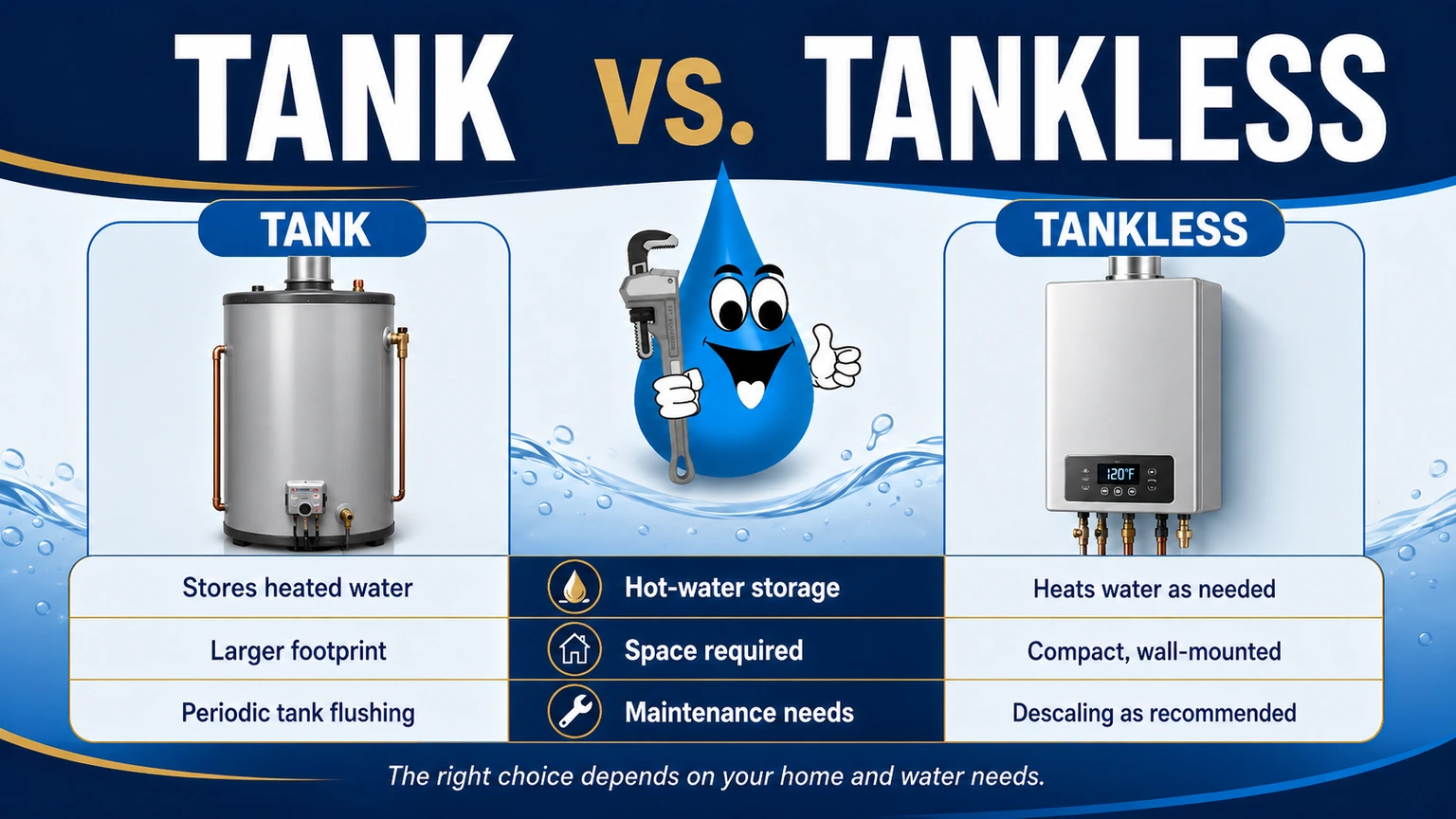
THREE THINGS TO KNOW FIRST
Tankless works differently—and should be planned differently
Output is not unlimited
A tankless unit can keep heating while demand continues, but every model has a maximum output at a given temperature rise. Simultaneous fixtures still matter.
A conversion is not always a simple swap
Gas or electrical capacity, venting, water piping, condensate handling, service clearances and recirculation may all affect the project.
Tankless still needs maintenance
Inlet screens, scale, venting/air paths and condensate components on applicable units need manufacturer-appropriate attention. Water quality influences the service interval.
HOW TANKLESS IS SIZED
Flow rate + temperature rise drive the sizing conversation
A tankless heater senses hot-water demand and heats water as it passes through the unit. The useful sizing question is not simply home square footage or number of bathrooms. It is the expected simultaneous hot-water flow and how much the incoming water must be heated to reach the desired outlet temperature.
That is why a shower, kitchen faucet and laundry running together can matter more than a single headline “GPM” number.
Peak demand
List the fixtures that could reasonably use hot water at the same time. That gives the system a real household-demand target.
Temperature rise
The colder the incoming water, the more heating work the unit must do to deliver the same outlet temperature. Manufacturer performance tables should be used for the exact model.
BEFORE A TANK-TO-TANKLESS CONVERSION
Evaluate the house before choosing the box
A conversion can change more than the heater. The actual scope depends on the selected equipment and the existing property.
Fuel / electrical capacity
Gas-fired units may need a verified gas-supply design and electrical power for controls. Electric tankless units can have substantial electrical requirements.
Venting / combustion
Gas-fired units have model-specific venting, combustion-air and termination requirements. Do not assume existing tank-heater venting can be reused.
Condensate
Condensing equipment produces condensate that must be handled according to the selected equipment and applicable installation requirements.
Water + recirculation
Piping size, service valves, hot-water distribution and any recirculation strategy should be considered during planning—not after the unit is installed.
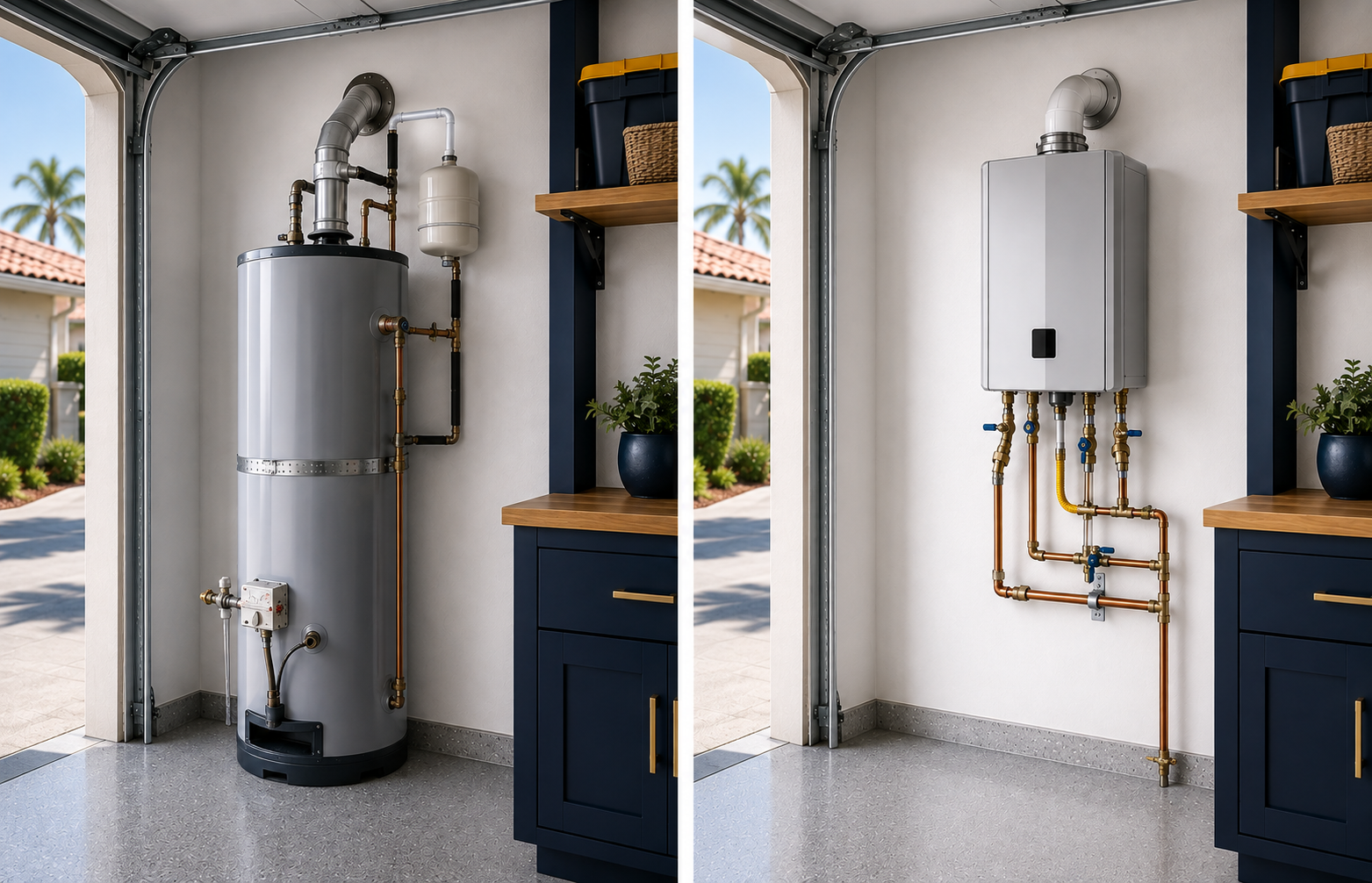
TANK VS. TANKLESS
Different strengths, different ownership tradeoffs
Storage-tank water heater
Keeps a stored reserve of hot water ready. Replacement can be straightforward when a similar unit fits existing utilities and venting. It also has a finite stored volume and tank-related standby losses.
Tankless water heater
Heats water on demand and can save floor space. It still has maximum output, can require more involved utility/venting planning, and needs periodic maintenance appropriate to the model and water conditions.
The better choice depends on the property, hot-water demand, installation conditions, maintenance expectations and budget. Water Fixers does not need to force every home into one equipment type.
TANKLESS SERVICE ROUTER
Use the page that matches what you need now
Installation & Replacement
Planning a new tankless system, replacing an existing unit or converting from a storage tank? Start with home and utility evaluation before equipment selection.
Repair & Diagnosis
No hot water, error codes, temperature swings, low flow, leaks or shutdowns should be diagnosed from the actual unit and installation.
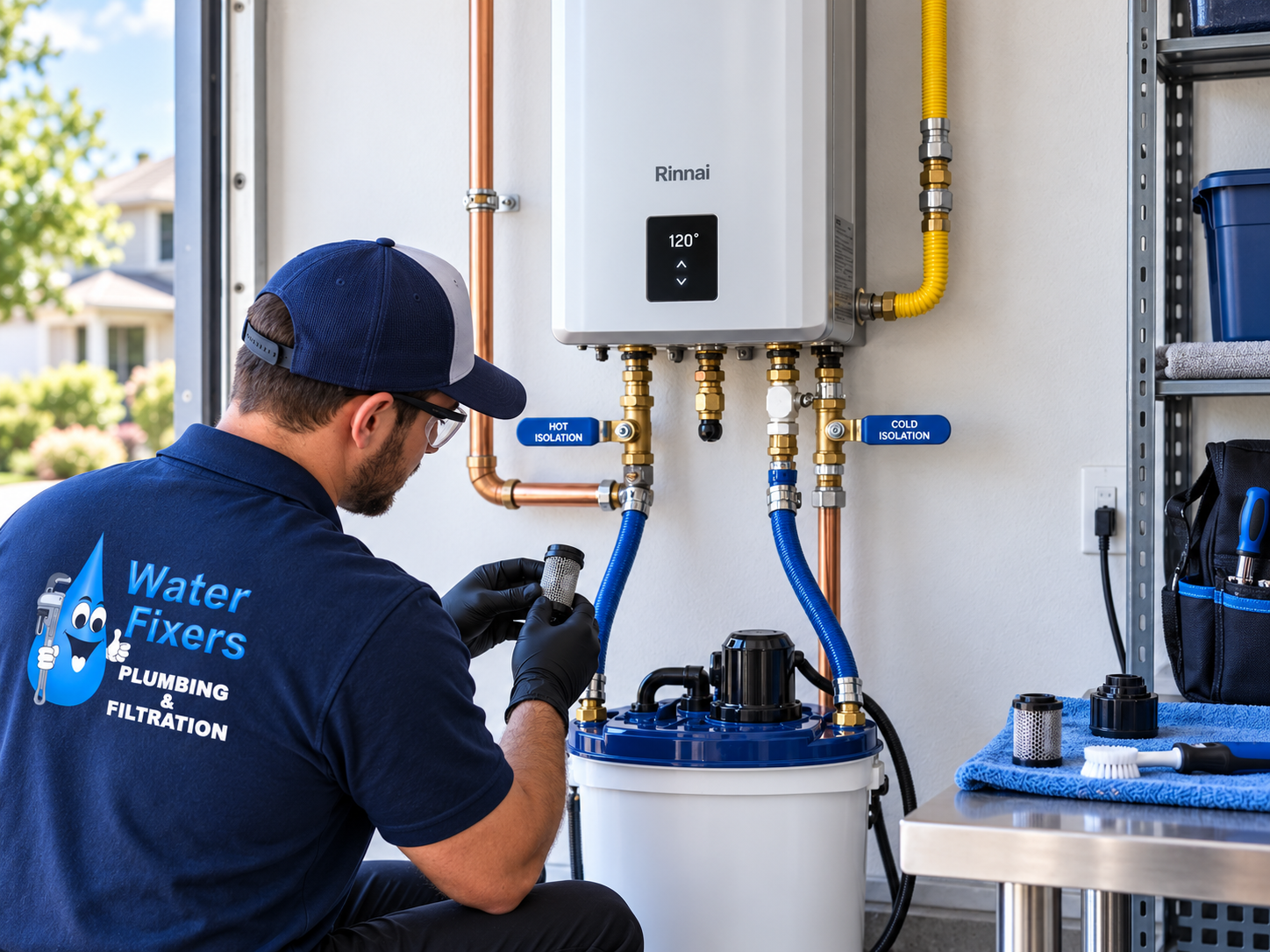
Maintenance & Descaling
Routine flushing/descaling, inlet-screen cleaning and model-appropriate inspection belong on the maintenance path—not every operating fault.
WATER QUALITY + MAINTENANCE
Scale is a real tankless issue—but it is not the explanation for every problem
Manufacturers such as Rinnai and Noritz publish regular filter/screen checks and periodic flushing guidance, with maintenance frequency influenced by water quality. Hardness can accelerate mineral scale inside the water side of the unit.
A flush addresses scale. It does not repair unrelated ignition, sensor, control, valve, venting or electrical faults. If scale keeps returning quickly, it can be useful to evaluate the water feeding the heater instead of only shortening the flush interval.
SAFETY FIRST
Some symptoms should not be treated as a DIY troubleshooting exercise
Gas odor or suspected combustion issue
Leave unsafe troubleshooting to qualified professionals and follow the appropriate gas-emergency guidance for your utility/jurisdiction. Do not repeatedly reset or disassemble the unit.
Carbon-monoxide alarm
Treat a CO alarm as a safety event, not a heater performance issue. Follow the alarm/manufacturer and emergency guidance for the property.
Active leaking water
Shut water off only if it can be done safely and without entering a hazardous area. Active or spreading water may also need urgent plumbing response.
MAKE THE SERVICE CALL MORE USEFUL
Have the model and symptom ready if you can
Model / serial label
A clear photo of the data label helps identify the exact manufacturer, model, fuel type and documentation path.
Exact symptom or code
Note whether the issue is no hot water, fluctuating temperature, low flow, leak, noise, shutdown or a recurring displayed code.
Recent changes
Mention recent plumbing work, utility interruptions, new recirculation settings, maintenance or anything else that changed before the symptom started.
Water Fixers provides tankless planning, repair and maintenance across supported Central Coast communities. City-specific water-heater pages remain the local owner; this page stays the site-wide tankless authority.
Water Fixers Services Many Water Heater Brands
Already have a water heater from another manufacturer? Water Fixers can diagnose and repair many conventional tank, tankless and heat-pump water-heater systems across California’s Central Coast—even when we did not install the equipment.
We start with the actual symptom, model and system condition, then explain the practical repair, maintenance or replacement path based on what we find.
DIRECT ANSWERS
Tankless Water Heater FAQs
Need help with a tankless water heater?
Tell Water Fixers whether you are planning a new system, dealing with a problem, or trying to keep an existing unit maintained. We can route you to the right next step.
Water Fixers Plumbing & Filtration • California Central Coast • CA License #719792