
COMMERCIAL WATER QUALITY • CALIFORNIA CENTRAL COAST
Quick answer: Commercial contaminant treatment starts by defining what is in the feed water, what finished water the business or equipment requires, how much water must be treated, and how the system will be operated and serviced. A contaminant name alone does not determine one universal piece of equipment.
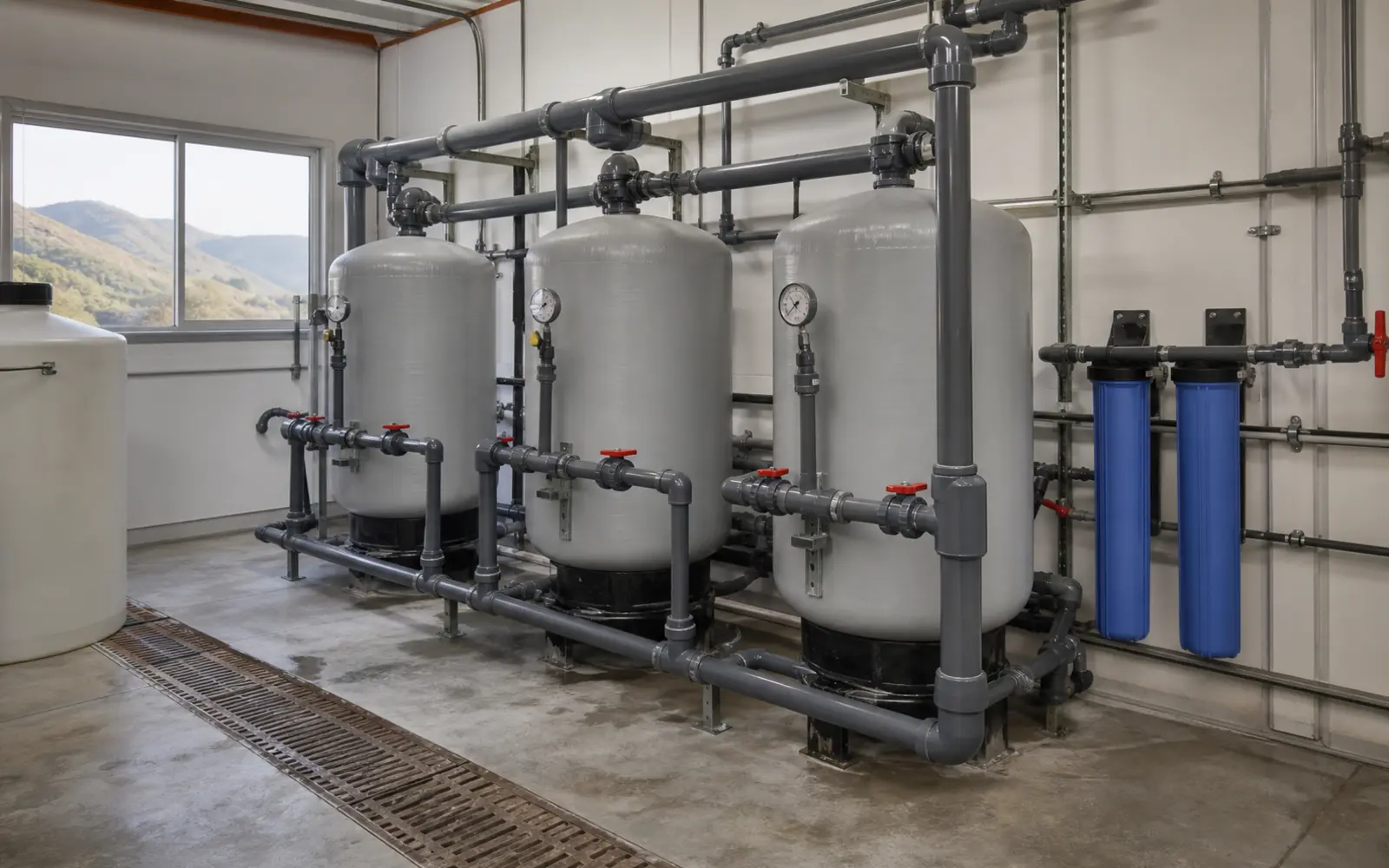
START WITH THE WATER AND THE USE
The same constituent can require different treatment depending on concentration, other water chemistry, peak flow, daily volume, the intended use of the treated water and the facility’s operating schedule. Commercial work should begin with a defined problem and a measurable target.
Municipal, private-well, blended or process feed water can create different testing and pretreatment questions. Use current results rather than appearance, odor or a regional average alone.
Define whether the goal is equipment protection, drinking water, ingredient water, rinse quality, boiler or steam support, membrane feed, cleaning performance or another documented use.
Peak flow, daily volume and operating hours affect vessel size, pressure loss, storage, regeneration or backwash windows, and whether redundancy should be considered.
COMMON COMMERCIAL WATER-CONDITION PATHS
These are planning categories, not remote diagnoses. Test the actual water and match equipment to the measured condition, the concentration, the water chemistry and the required finished-water result.
Hardness is driven mainly by dissolved calcium and magnesium. Commercial softening may be appropriate when measured hardness contributes to scale, cleaning problems or pretreatment requirements.
Sand, silt, rust and other suspended material may call for cartridge or media filtration selected around particle load, flow, pressure loss and service frequency.
Carbon or other targeted media may be considered for selected disinfectant, taste, odor or organic-compound concerns. The exact media, contact time and capacity have to match the target constituent.
Iron and manganese can occur in different forms. Concentration, pH, oxidation state, competing water chemistry and flow all affect whether oxidation, filtration, softening or another treatment stage is practical.
When the goal involves dissolved salts, conductivity or a defined purified-water requirement, reverse osmosis or another membrane process may be considered. Pretreatment, recovery, storage and delivery pressure matter to the design.
Microbiological concerns require appropriate sampling and laboratory analysis. Any disinfection approach should address the source, treatment objective, equipment design and confirmation testing; regulated applications must follow the applicable authority and test method.
TREATMENT-TRAIN PLANNING
A commercial system should be planned as one operating train. Pretreatment, pressure drop, backwash or drain requirements, membrane protection, storage, delivery pressure, polishing and maintenance access can all affect what the next treatment stage sees. Adding equipment without a defined job can create cost and service problems without improving the required result.
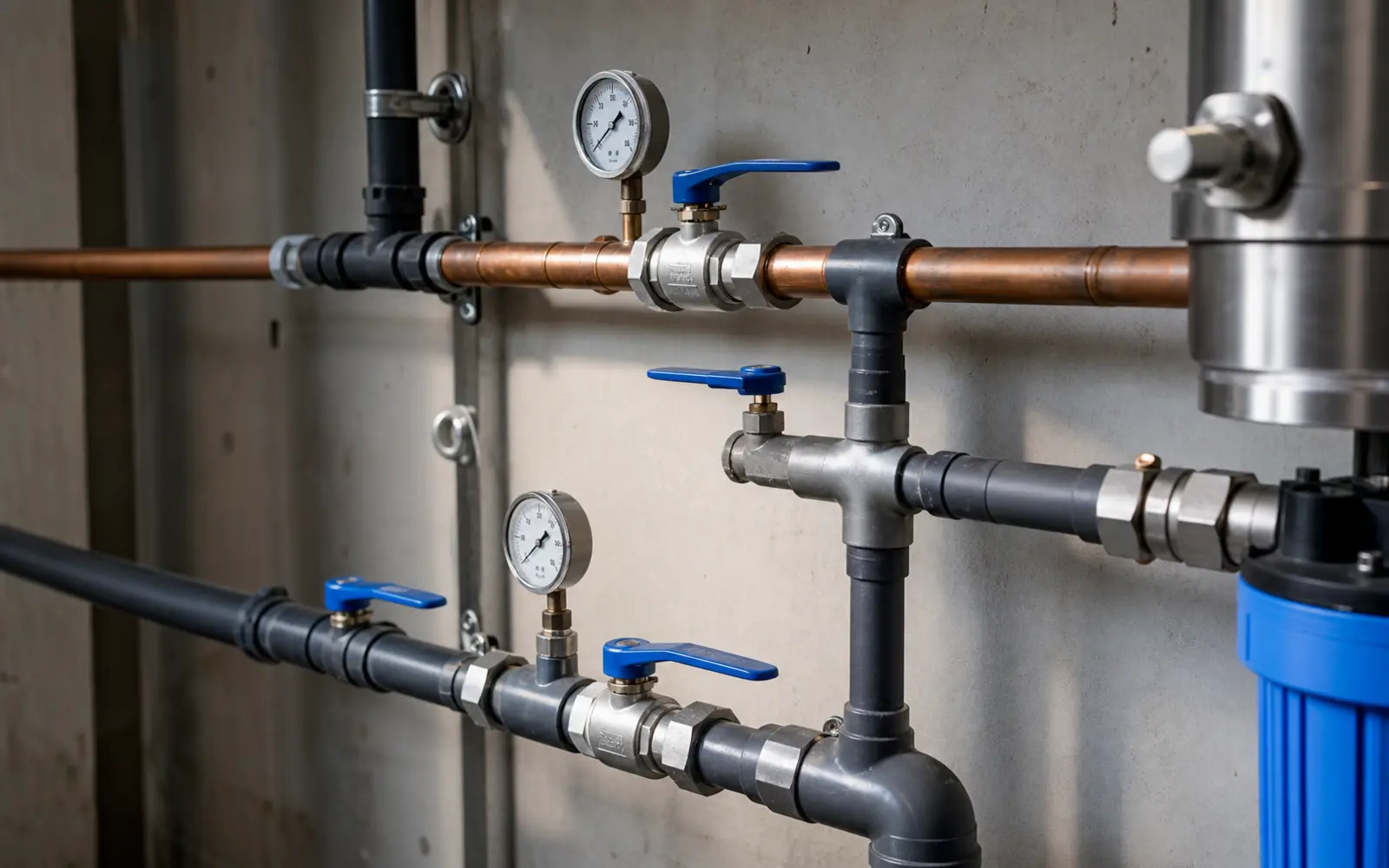
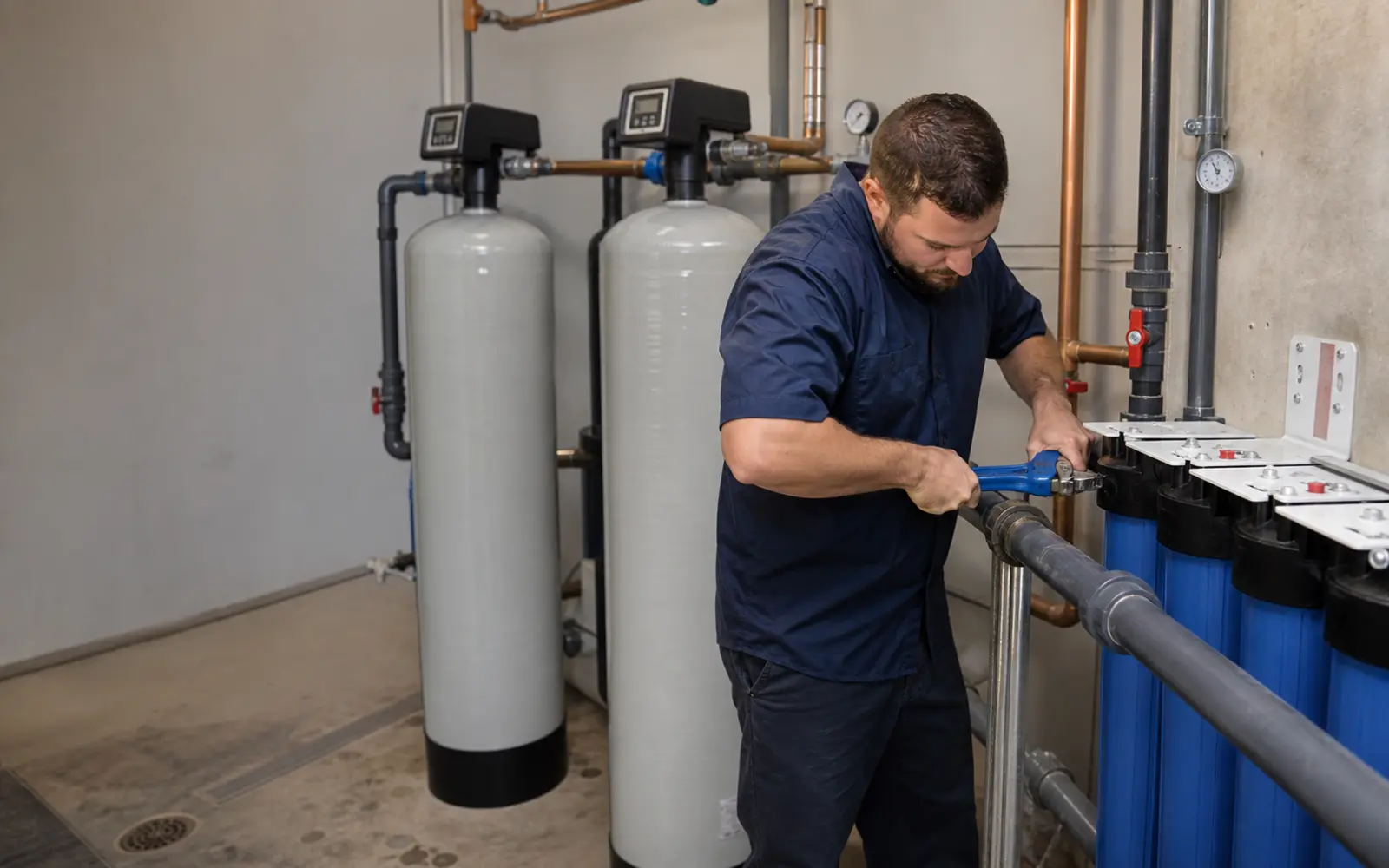
EXISTING SYSTEM REVIEW
If treated-water quality, pressure or production has changed, compare current performance with the job each stage is supposed to do. Replacing the entire treatment train before identifying the failed stage can repeat the same underlying problem.
Compare useful feed-water and treated-water measurements so the failing treatment stage is not guessed from symptoms alone.
Check pressure loss, available flow, bypass position and whether the current equipment still matches the facility’s peak demand.
Review cartridges, media, resin, membranes, chemical feed or other service items that apply to the installed equipment and its maintenance history.
Inspect valves, pumps, meters, controls, storage, drains, leaks and surrounding plumbing so a treatment problem is not confused with a building-side mechanical problem.
USE THE SERVICE THAT OWNS THE JOB
Use testing when the contaminant, concentration or treatment target needs to be defined before equipment is selected.
Use filtration for appropriate sediment, carbon or media-specific treatment where the job is filtration rather than hardness removal or membrane purification.
Use softening when measured hardness control is the treatment job and system capacity, peak flow and regeneration planning need to be sized for the business.
Use commercial RO when the project needs membrane treatment for dissolved constituents or a defined purified-water use case. Feed-water quality and pretreatment remain part of the design.
COMMERCIAL DESIGN QUESTIONS
The treatment system has to pass the facility’s busiest realistic flow condition without creating unacceptable pressure loss or losing treatment performance.
Daily volume and operating hours influence media loading, membrane production, regeneration or backwash frequency, storage and maintenance scheduling.
Pressure available at the equipment and pressure loss across each stage affect valves, pumps, membrane systems and downstream fixtures or process equipment.
Isolation, bypass, gauges, sample points and room to service tanks, housings and membranes can determine whether a technically capable system is practical to own.
Some systems need drains, power, pumps, storage or discharge planning. These requirements should be resolved before equipment is placed.
When the operation cannot tolerate untreated water or shutdown, redundancy, storage, alternate treatment paths or maintenance windows may need to be evaluated.
BEFORE EQUIPMENT IS SELECTED
Bring current results for the parameters that matter to the project. If the needed analyte or method is unclear, start with commercial water testing.
Define the actual target: equipment protection, a process specification, drinking water, ingredient water, rinse quality, membrane feed or another required outcome.
Provide peak flow, typical daily volume and any operating schedule that could affect storage, regeneration, backwash or service windows.
Photos, model numbers, treatment order, maintenance history and recent performance changes help evaluate an existing system without assuming replacement.
Pipe size, pressure, drains, power, floor or wall space, storage and access all affect what can be installed and serviced safely.
Explain how much downtime is acceptable, who maintains the equipment and whether the operation needs bypass, redundancy or documented monitoring.
RELATED COMMERCIAL SERVICES
Use the broad commercial hub when the correct treatment train is not yet clear or several treatment stages may need to work together.
Dedicated filtration planning for sediment, carbon and other media-specific treatment jobs.
Dedicated hardness-control planning for commercial softening, capacity, flow and regeneration requirements.
Dedicated membrane-treatment planning for purified-water production, pretreatment, storage and delivery.
Use the industrial path for process-critical, higher-flow or operating requirements that extend beyond ordinary commercial treatment.
Use commercial plumbing for building-side piping, valves, pressure, water heaters, drains and fixtures that are separate from the treatment chemistry itself.
CENTRAL COAST COMMERCIAL SERVICE
This page stays focused on business, facility and higher-flow contaminant-treatment planning. For homeowner education about hard water, iron, manganese, sulfur odor, nitrate, arsenic, acidic water or bacteria, use the separate residential water-quality contaminant library.
Testing, plumbing, pretreatment, filtration, softening, RO and process-water stages can interact. Use the focused service page for the stage that needs attention, or start with Commercial Water Treatment when the path is not yet clear.
DIRECT ANSWERS
The water chemistry may be similar, but commercial design has to account for peak flow, daily volume, operating hours, finished-water requirements, service access and the consequences of downtime. A residential-size package should not simply be scaled up without those inputs.
No. Test results are essential, but final treatment also depends on the required finished water, peak flow, daily volume, pressure, plumbing, operating schedule, storage and maintenance requirements.
Ordinary sediment or carbon filtration is not a substitute for ion-exchange softening when hardness reduction is the goal. Filtration and softening perform different jobs and may appear in the same treatment train when the water conditions justify both.
No. Commercial RO performance depends on feed-water quality and may require pretreatment for hardness, sediment, disinfectants or other conditions. The required pretreatment depends on the membrane system and the actual water.
Start by measuring the concentrations and relevant water chemistry. The practical treatment path can depend on pH, oxidation state, flow, competing constituents and the required result; one universal iron-or-manganese filter is not appropriate for every application.
Define the exact specification, sampling method and responsible authority before treatment is selected. A generic website claim or basic field test does not prove compliance with a process, health or regulatory requirement.
Yes. Useful starting information includes equipment photos and model numbers, treatment order, service history, current symptoms, pressure or flow concerns, and available feed-water and treated-water test results.
Water Fixers serves supported communities across California’s Central Coast. Use the Service Areas page or contact the office with the property location, water source and project details to confirm the correct service path.
Bring the property location, water source, available test results, peak flow or usage information, the intended use of the treated water, existing equipment and any current performance symptoms. Water Fixers can help define the practical testing and treatment path without forcing a residential solution onto a commercial application.
Water Fixers Plumbing & Filtration • California Central Coast • CA License #719792
CALL NOW! Se Habla Español!