INSPECTION • MAINTENANCE • EJECTOR SYSTEM CARE
Sewage ejector pump maintenance is for an existing system that is generally operating but needs its condition, controls, alarm, check valve, discharge piping and accessible basin components evaluated. Water Fixers can identify concerns that may warrant repair without promising that maintenance prevents every future failure.
California Plumbing License #719792 • Central Coast • Se Habla Español
START WITH THE SYSTEM’S CURRENT CONDITION
Maintenance and repair solve different problems. Start with whether the system is generally operating or already malfunctioning.
Preventive inspection is the right path when the ejector is generally operating and you want its condition and operation evaluated.
A current malfunction belongs on the repair/diagnosis path rather than routine maintenance.
This is an active operating problem and should be diagnosed as repair, discharge or broader drainage issue.
If wastewater is entering occupied areas or creating an immediate sanitation/property concern, use the emergency route.
A larger shared sewer/main-drain problem may be a better fit than ejector maintenance.
If condition or repeated failures make continued service impractical, use the installation/replacement path after evaluation.
AN OPERATING SYSTEM STILL HAS MOVING PARTS
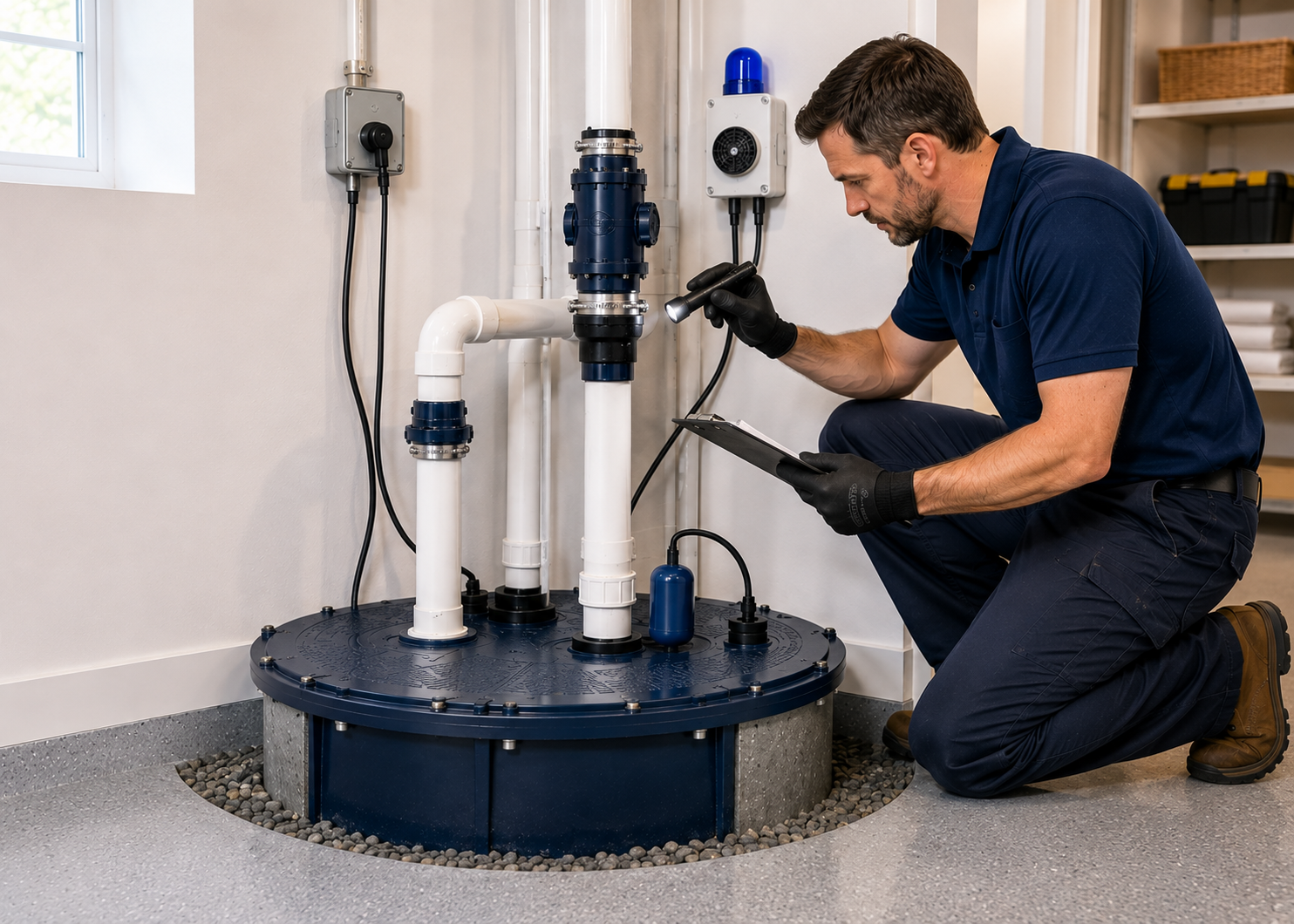
An ejector system may still be operating while showing early changes in cycling, control movement, check-valve behavior, leakage or general condition. Preventive inspection provides a chance to evaluate those visible and operating conditions before the system is already in an active backup or alarm state.
Inspection can identify concerns, but it cannot guarantee that a mechanical or electrical component will never fail later.
SYSTEM INSPECTION
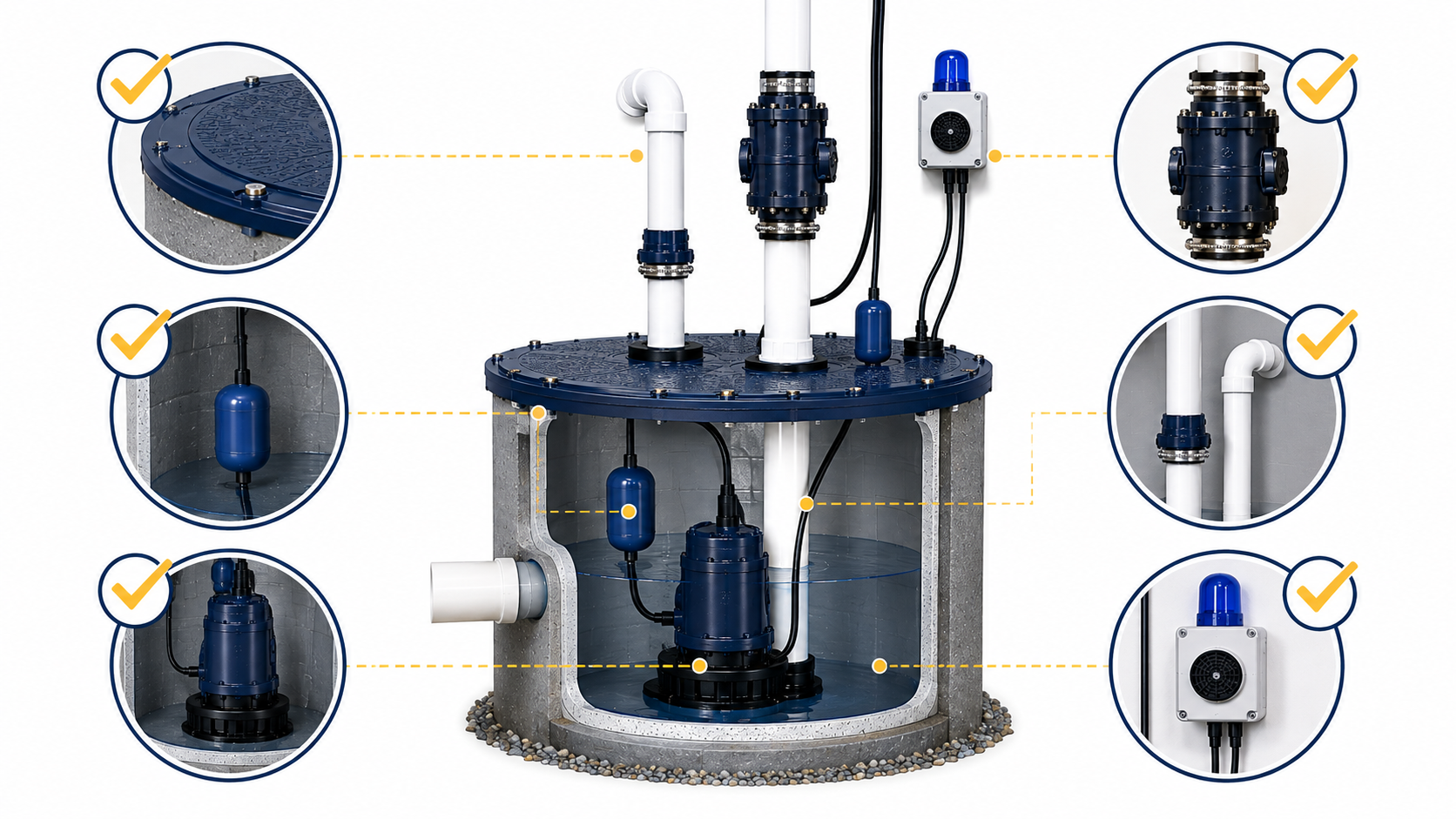
The appropriate maintenance scope depends on the actual equipment, installation and condition. These are potential inspection areas—not a promise that every visit uses the same checklist.
Current sewage-pump manufacturer guidance commonly emphasizes safe checks of system operation, unobstructed float or level-control movement, check-valve behavior, accessible piping and leakage, and abnormal noise or cycling. The installed manufacturer’s instructions remain the controlling maintenance reference for that equipment.
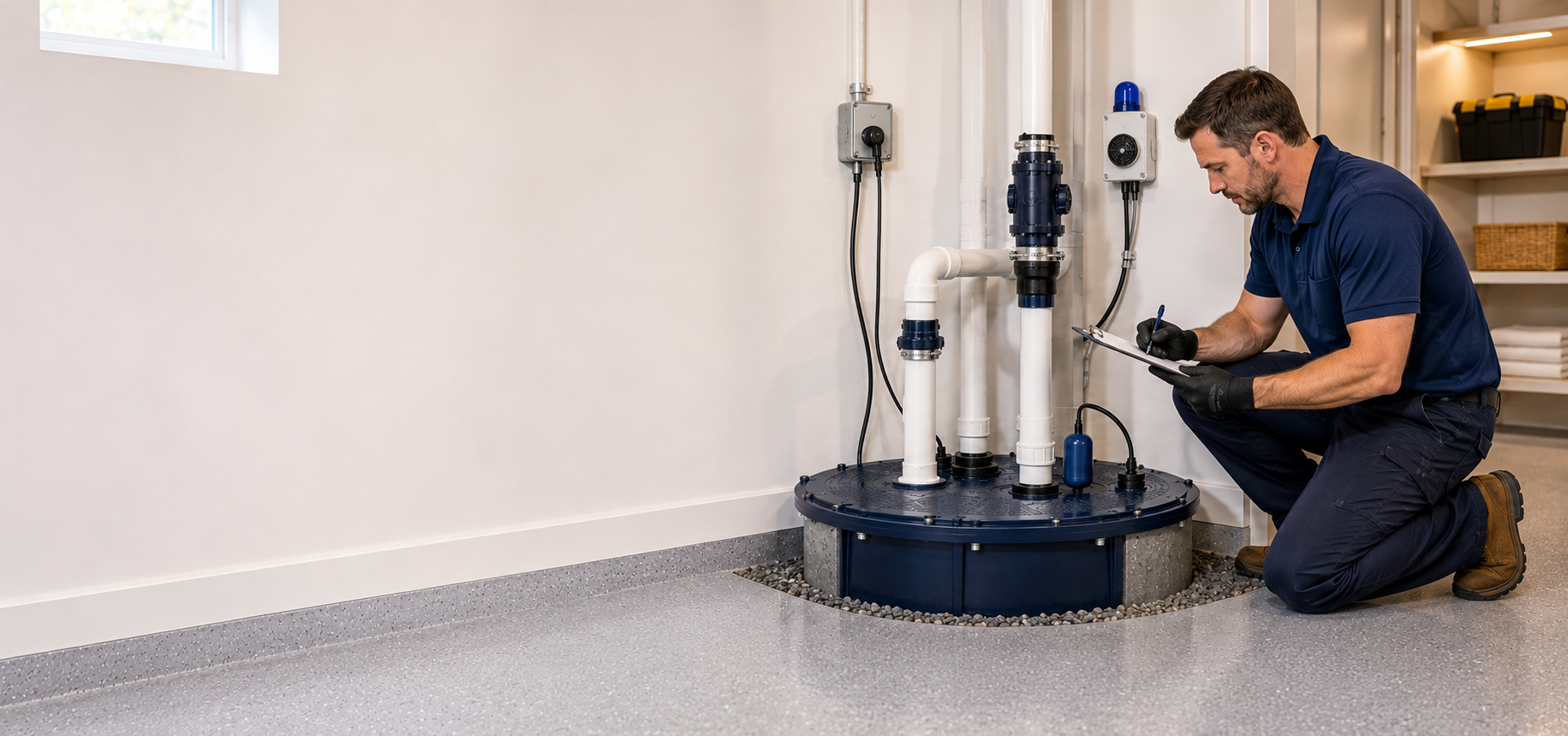
Observe whether the pump starts, runs and removes wastewater normally for the installed system.
Where present, accessible level controls or float components can be checked for normal movement and obvious concerns.
Review accessible basin, lid, penetrations and visible system condition as appropriate for the equipment.
Evaluate accessible check-valve behavior and signs that discharged wastewater may be falling back toward the basin.
Look for visible leakage, movement or abnormal conditions along accessible discharge connections.
Changes in cycle frequency, run time or sound can justify closer evaluation without proving one specific failure.
MAINTENANCE OR REPAIR?
Maintenance fits an operating system that needs inspection, condition review or preventive service. Repair fits a system that is already showing failure symptoms such as an active alarm, failure to pump, unusual cycling, high basin level or wastewater backup.
REALISTIC MAINTENANCE EXPECTATIONS
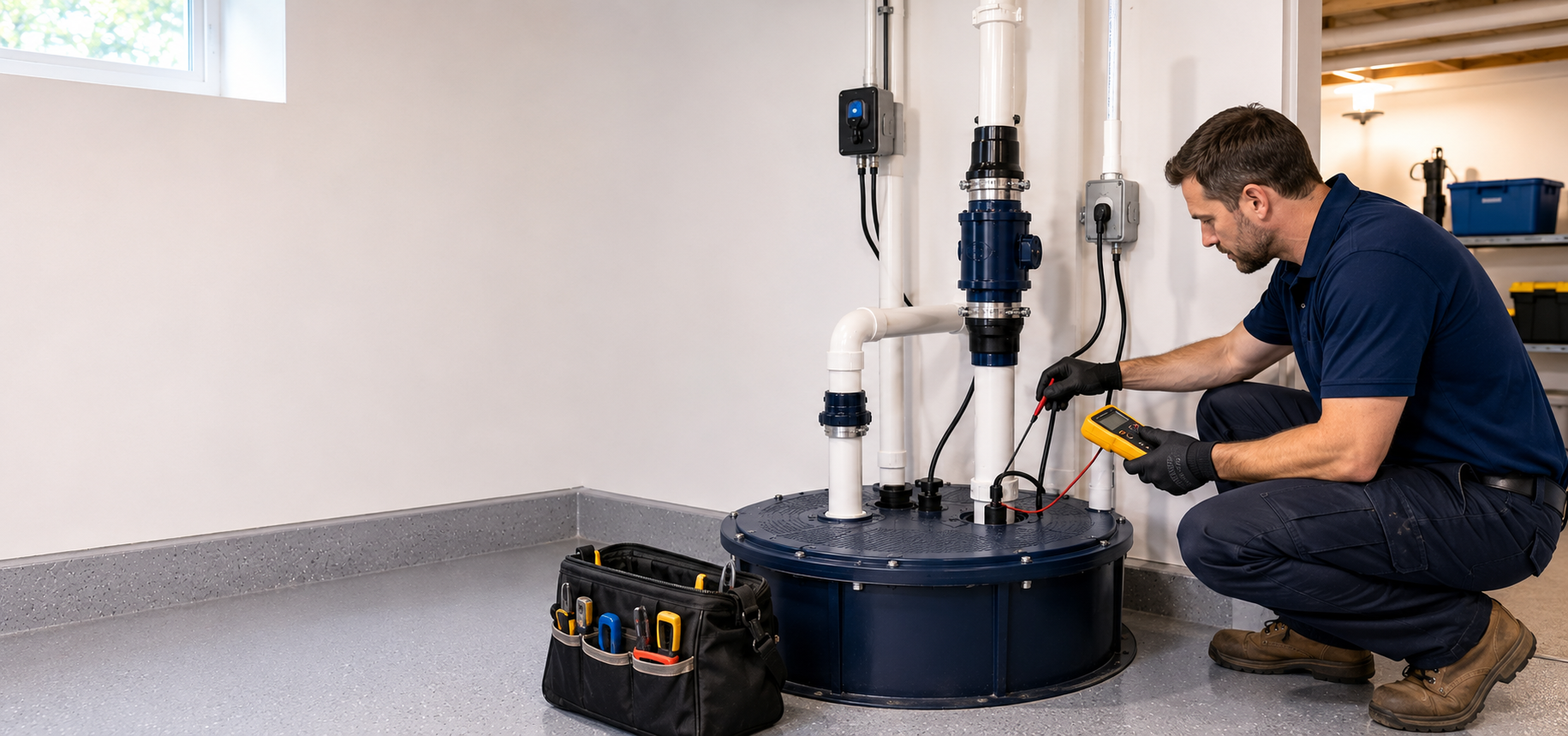
Preventive service may reveal unusual operation, leakage, wear, buildup, control concerns or service-access issues. Mechanical and electrical components can still fail later, so this page does not promise that maintenance eliminates backups, guarantees reliability or extends equipment life by a specific amount.
CHOOSE THE RIGHT SERVICE PATH
Best fit when the system is generally operating and preventive inspection or condition evaluation is desired.
Best fit when the pump is malfunctioning, an alarm is active, wastewater is not clearing or abnormal operation has developed.
May be considered when overall condition, repeated failures or repair practicality point toward replacement after evaluation.
CONDITION CHECKS
A maintenance visit can reveal changes worth monitoring or moving into repair. None of these observations alone proves a specific component has failed.
THE PUMP IS ONLY ONE PART
The wastewater path also depends on the check valve, discharge piping and plumbing connections. Problems elsewhere in that path can change system operation and may need repair rather than routine maintenance. This page keeps the explanation high level and does not provide DIY disassembly instructions.
MAKE SURE THE SERVICE MATCHES THE PROBLEM
If the known ejector system is the area showing trouble, move to the ejector repair path when active symptoms are present.
A larger shared sewer/main-drain problem may be more appropriate than ejector maintenance.
If one normal fixture drain is simply clogged and the ejector system is not involved, use ordinary drain cleaning.
HIGH-WATER WARNING
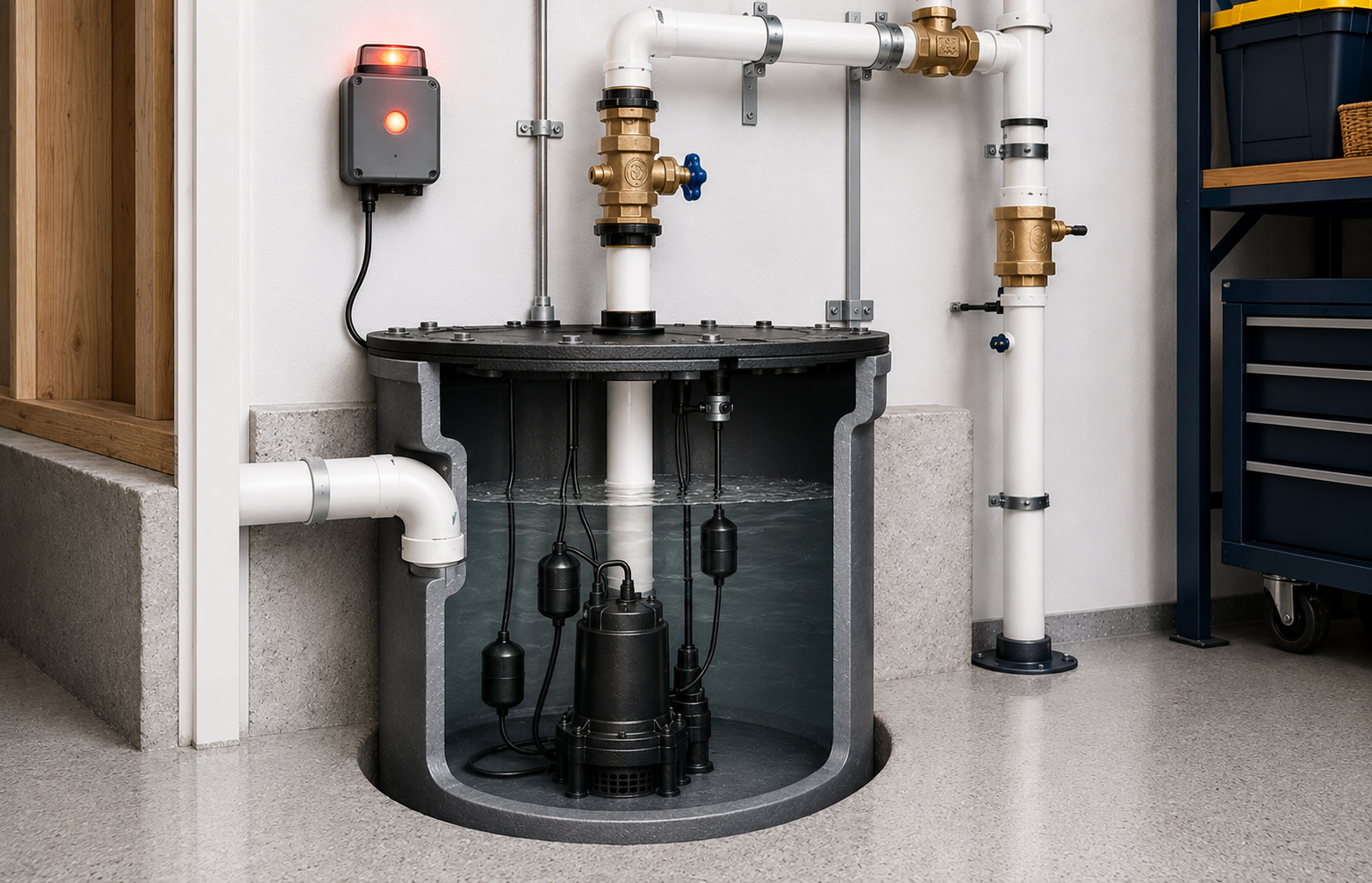
A high-water alarm is intended to warn that the basin has risen above its normal operating range. If the alarm is active, reduce wastewater use where appropriate and move to the repair/diagnosis path so the reason for the high level can be evaluated.
ACTIVE WASTEWATER BACKUP
If wastewater is actively entering occupied areas or creating an immediate sanitation/property concern, maintenance is not the primary service path. Stop using affected below-grade fixtures where appropriate, avoid contact with wastewater, and use the Emergency Plumbing route.
Do not reach into or enter a sewage basin, bypass controls, perform electrical troubleshooting, force pump components or modify discharge piping during an active backup. Sewage basins can contain hazardous gases, and electrical service belongs within the appropriate qualified scope.
BUSINESS & MANAGED PROPERTIES
For a business or light-commercial property where an ejector system is part of the broader plumbing infrastructure.
For property managers coordinating ejector maintenance alongside broader plumbing and water-treatment needs.
MAINTENANCE PROCESS
Start with how the system has been operating and whether any recent changes, alarms or backups have occurred.
Evaluate accessible pump, basin, control, valve and piping conditions appropriate to the installed system.
Identify visible or operating concerns without treating one observation as a complete diagnosis.
Move active problems to repair, replacement or another plumbing path when appropriate.
Perform the agreed maintenance work within the plumbing/service scope.
Confirm the system is operating appropriately at the end of the approved maintenance work.
NO ONE-SIZE-FITS-ALL INTERVAL
There is no universal maintenance interval that fits every sewage ejector system. Frequency can depend on the installed pump and controls, system usage, manufacturer guidance, prior service history and observed condition.
Some current manufacturer schedules call for periodic operational, float and check-valve checks, while other systems use different service intervals. Follow the manual for the installed equipment rather than applying one Water Fixers interval to every system.
Water Fixers does not claim that every ejector pump must be serviced every fixed number of months.
WHICH PAGE DO I NEED?
This page owns maintenance and inspection of an operating ejector system.
Use the repair page for active failure symptoms and diagnosis.
Use the installation owner for new or replacement systems.
Use the hub for broad education and installation/repair/maintenance routing.
Use the sewer/main-drain service page for shared drainage symptoms.
Use the emergency plumbing path for active wastewater entering occupied areas or creating immediate sanitation/property concern.
Use the master plumbing directory for a different service category.
Use the main Plumbing Services page when the issue is outside the ejector system, sewer/main drain or ordinary drain-cleaning paths.
CALIFORNIA’S CENTRAL COAST
Water Fixers provides ejector-pump inspection and plumbing service across supported Central Coast communities. Use the Service Areas page for regional navigation rather than turning this maintenance page into a long city list.

SEWAGE EJECTOR PUMP FAQ
EJECTOR PUMP MAINTENANCE
Tell Water Fixers where the system is located, what fixtures it serves, whether there have been past alarms or backups and approximately how long it has been since the system was inspected. That helps route preventive service without confusing maintenance with active repair.
CALL NOW! Se Habla Español!