
Whole-House Chlorine Filter & Chlorine Reduction
Whole-house chlorine filtration treats water near the point it enters the home, so chlorine reduction can apply to showers, tubs, sinks, laundry and other fixtures—not only one drinking-water faucet.
The right system depends on which disinfectant is actually present, the reduction claim you want, household flow demand, pressure and the maintenance plan. Chlorine and chloramine should not be treated as interchangeable targets.
Chlorine Has a Public-Health Job—Filtration Is About Your Household Goal
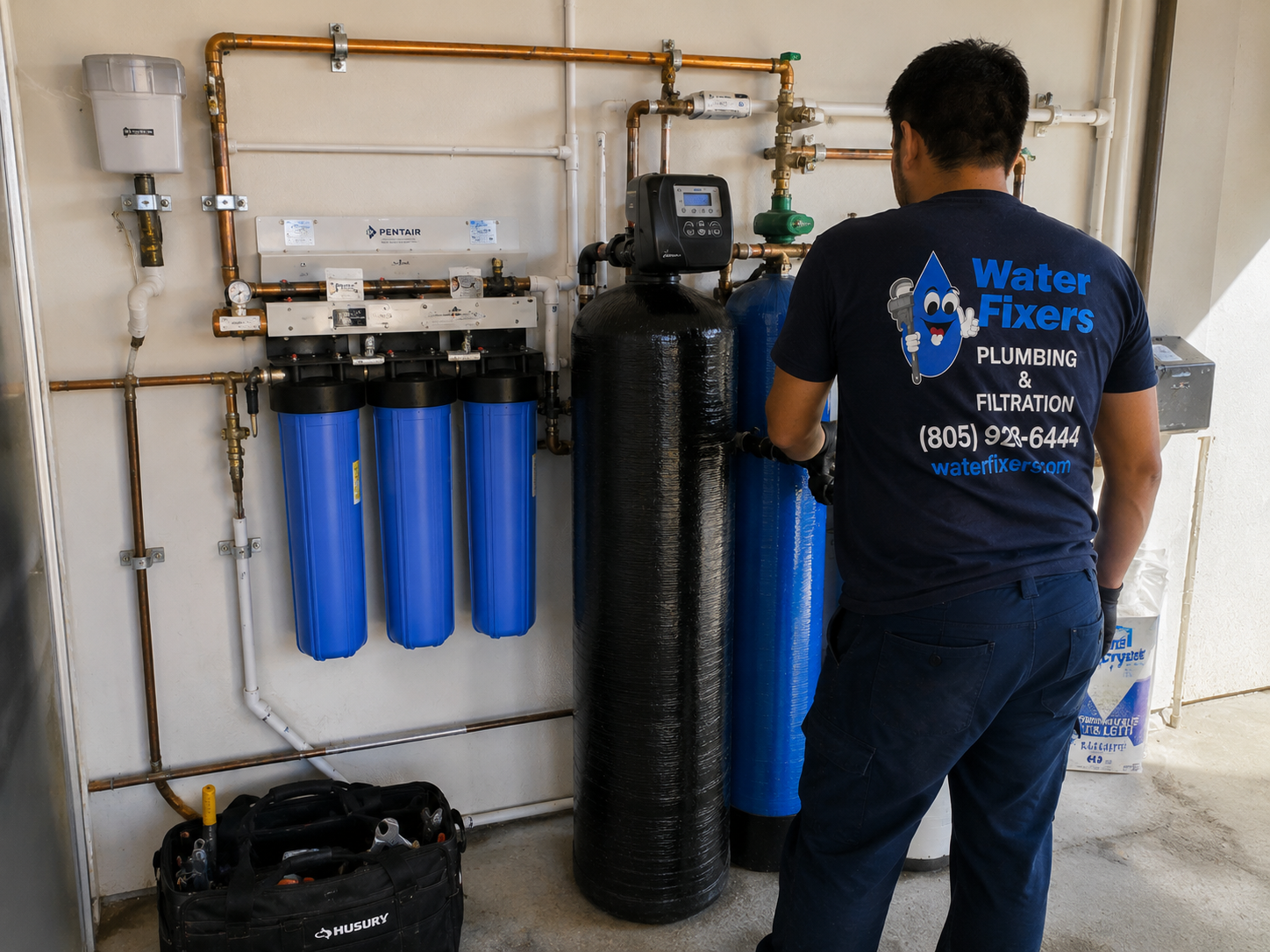
Public water systems use disinfectants such as chlorine or chloramine to control germs. CDC notes that the low disinfectant levels allowed in tap water are used to protect public health and are unlikely to make people sick.
Whole-house filtration is therefore usually a targeted treatment choice for concerns such as chlorine taste, odor or a household preference to reduce residual disinfectant after the water reaches the property. It should not be presented as a medical treatment for eczema, psoriasis or another health condition.
Whole-House Treatment Reaches Showers, Laundry and Everyday Fixtures
A point-of-entry filter treats incoming water before it is distributed through the home. That makes it relevant when the chlorine concern shows up across multiple fixtures—not only in drinking water at the kitchen sink.
If the goal is limited to drinking and cooking water, a point-of-use filter or reverse osmosis system may be more targeted. If hardness and scale are the main problem, a water softener belongs in the conversation instead.
Whole-House Filtration vs. Drinking-Water-Only Treatment
An under-sink filter or reverse osmosis system treats water at a specific faucet. It does not normally treat water used by the shower, bathtub, bathroom sink or washing machine.
A whole-house chlorine filter is installed on the incoming household water path so the selected treatment can apply broadly. The tradeoff is that whole-house equipment must be sized for the property’s real flow demand and maintained as a high-flow treatment system.
What Are You Trying to Fix?
Whole-House Chlorine Filtration
Best when chlorine taste, odor or a whole-home chlorine-reduction goal is the primary concern.
Water Softening
Best when hardness minerals, white scale, spotting and hard-water performance are the primary concern.
Reverse Osmosis
Best for additional treatment of drinking and cooking water at a dedicated faucet.
Water Testing
Best place to start when the disinfectant, water source or treatment target is not clear.
Chlorine Filtration and Water Softening Solve Different Problems
Water softening addresses hardness minerals such as calcium and magnesium. It is used for scale, spotting and hard-water performance.
Chlorine filtration uses media selected for a disinfectant-reduction goal. A home can have both hard water and an objectionable chlorine residual, which can justify separate treatment stages—but one technology should not be credited with doing the other’s job.
How Whole-House Chlorine Filtration Works
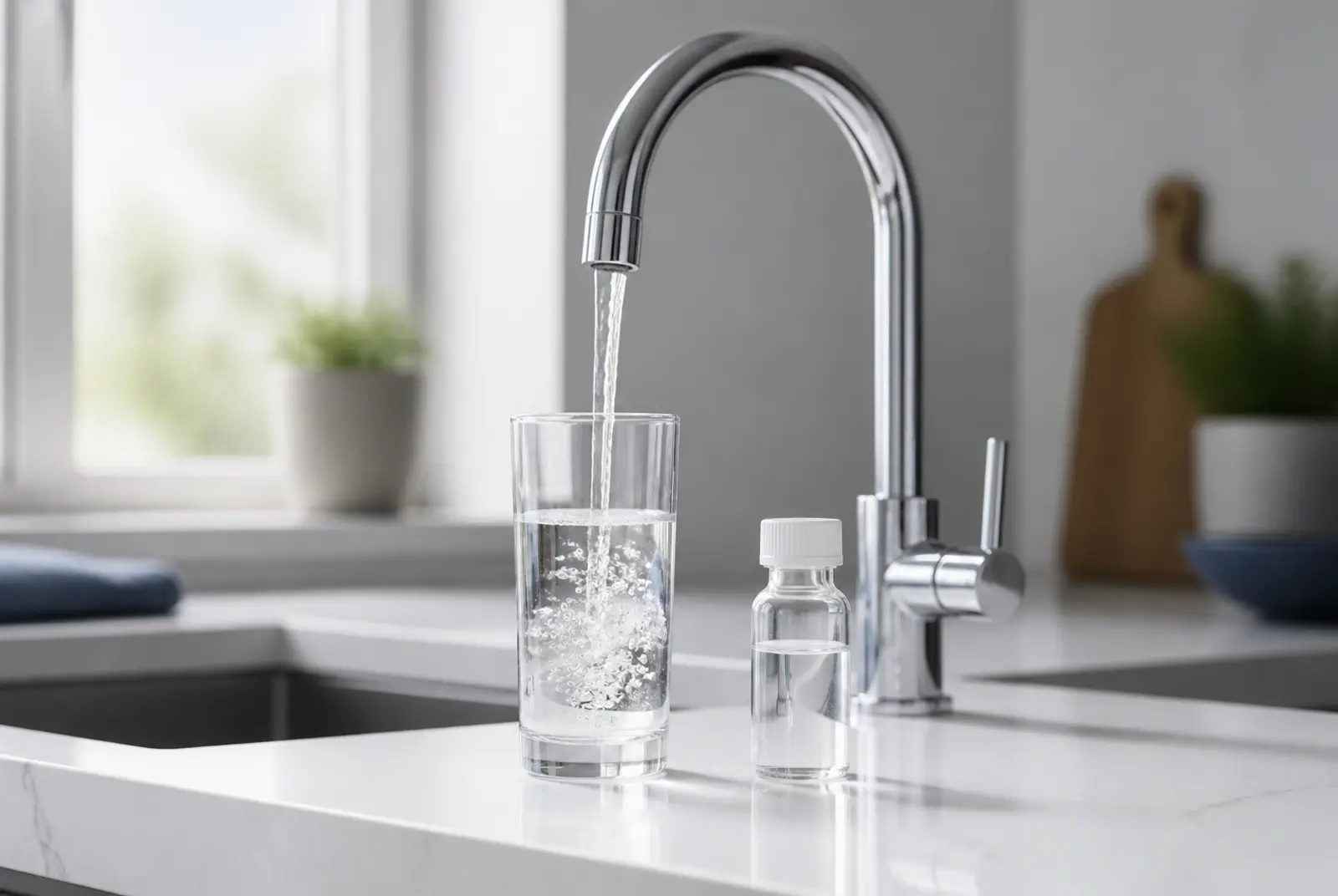
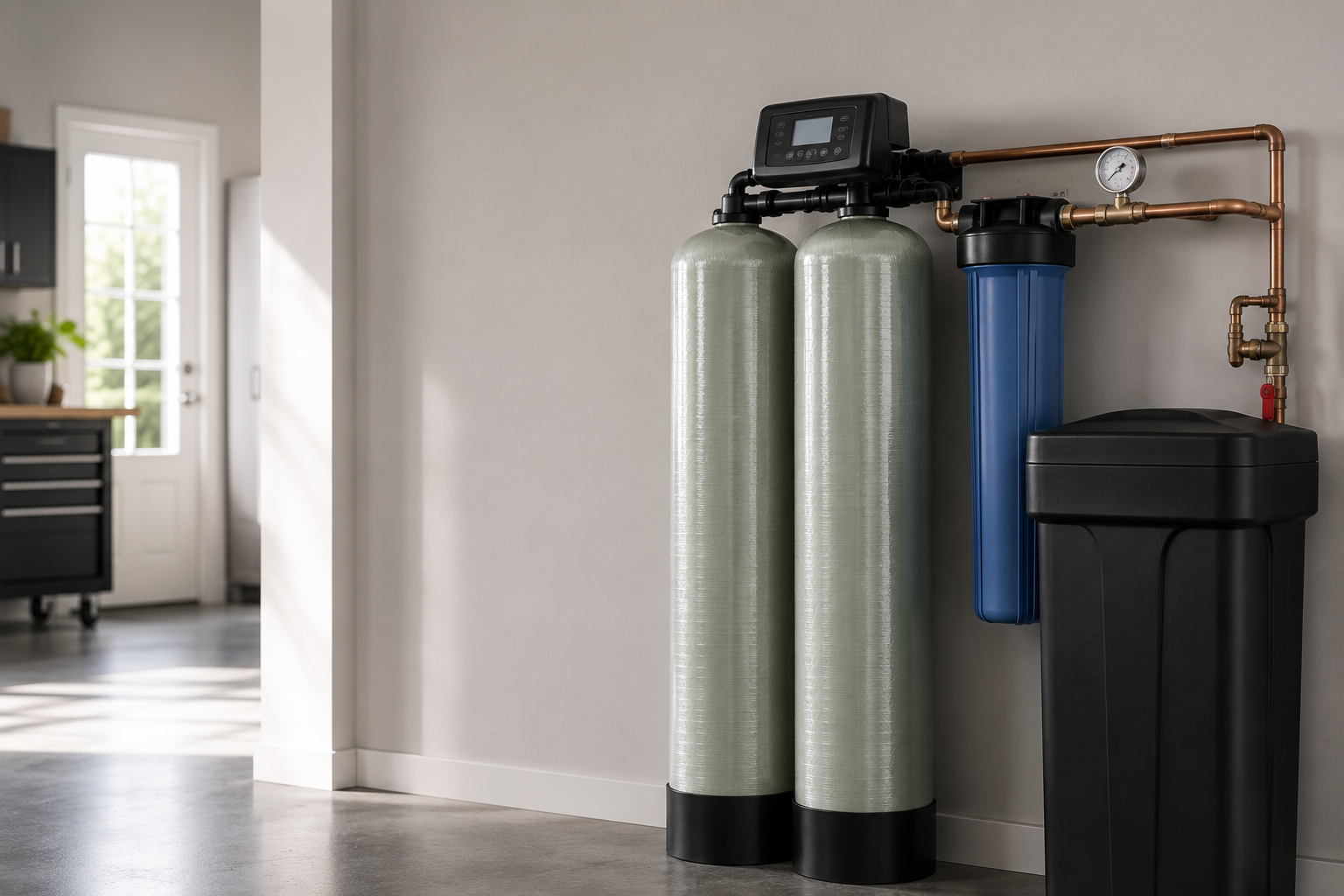
The filter is placed in the home’s incoming water path. For free-chlorine reduction, activated carbon is commonly used. If chloramine is the target, the media, contact time and verified reduction claim deserve separate attention; do not assume that a chlorine claim automatically covers chloramine.
NSF/ANSI 42 includes aesthetic reduction claims such as chlorine, taste/odor and, for products specifically tested for it, chloramine. The exact product claim and rated operating conditions matter. Learn more about carbon water filtration.
Chlorine vs. Chloramine: Verify the Disinfectant Before Choosing Media
CDC explains that public systems may use chlorine or chloramine and can switch disinfectants for operational reasons. Chloramine lasts longer in distribution piping, which is one reason utilities use it.
That difference matters at the house. Review your utility’s current water-quality information and the specific filter performance claim before choosing equipment. See the CDC overview of chlorine and chloramine and the EPA chloramine overview.
Why Homeowners Consider Whole-House Chlorine Filtration
- Chlorine taste and odor: Reduce an objectionable disinfectant taste or smell throughout the home.
- Whole-home coverage: Treat incoming water before it reaches showers, tubs, sinks and laundry.
- Centralized treatment: Use one point-of-entry treatment stage instead of relying on separate filters at many fixtures.
- Better treatment planning: Separate chlorine concerns from hardness, sediment and drinking-water goals so each technology has a clear job.
- Serviceable design: Plan bypass access, flow, pressure and future media or cartridge replacement before installation.
Filtration, Softening and Reverse Osmosis Can Be Separate Treatment Stages
Whole-house carbon filtration: targets chlorine or another verified filtration goal throughout the home.
Water softening: addresses hardness minerals that drive scale and spotting.
Reverse osmosis: can provide additional point-of-use treatment for drinking and cooking water.
The sequence and equipment should follow the actual water conditions, pressure, flow demand and maintenance requirements—not a one-size-fits-all package.
Whole-House Chlorine Filtration on California’s Central Coast
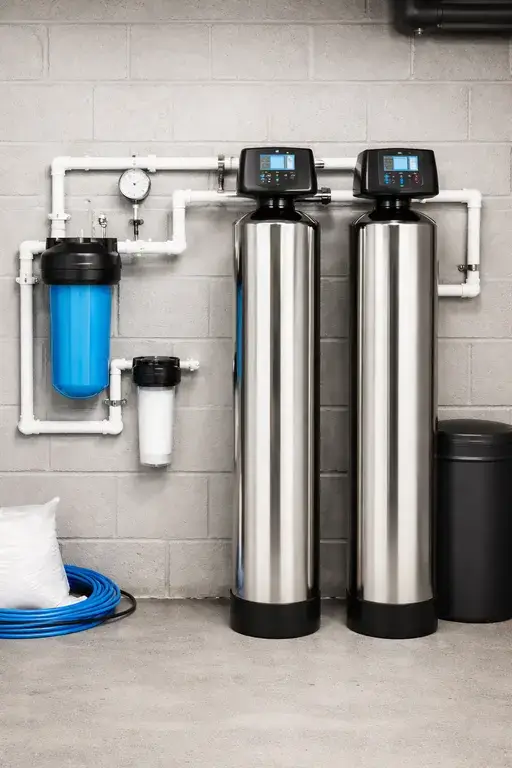
Water sources and disinfection practices differ across Central Coast water systems, and some utilities can change disinfectant practices over time. A treatment plan should therefore start with the actual property, current provider information and the household’s goal.
Water Fixers can help separate chlorine or chloramine concerns from hardness, sediment, drinking-water treatment and existing-system maintenance so the equipment is matched to the job.
Whole-House Chlorine Filter FAQs
Start With the Disinfectant, Flow Demand and Treatment Goal
Tell Water Fixers what you are noticing—chlorine taste or odor, a provider that uses chloramine, hard-water scale, sediment, drinking-water concerns or an existing system that needs service. We can help determine whether the right next step is testing, whole-house carbon filtration, softening, reverse osmosis or maintenance.