COMMERCIAL WATER FILTRATION • CALIFORNIA CENTRAL COAST
Quick answer: Commercial filtration should be selected from measured water conditions, peak flow, daily demand, pressure-loss limits, equipment protection needs and the required finished-water result. Water Fixers helps businesses evaluate sediment, carbon and other filtration stages without treating a commercial project like a larger residential filter.
Water Fixers Plumbing & Filtration • Santa Maria, CA • Serving California’s Central Coast • CA License #719792
START WITH THE FILTRATION JOB
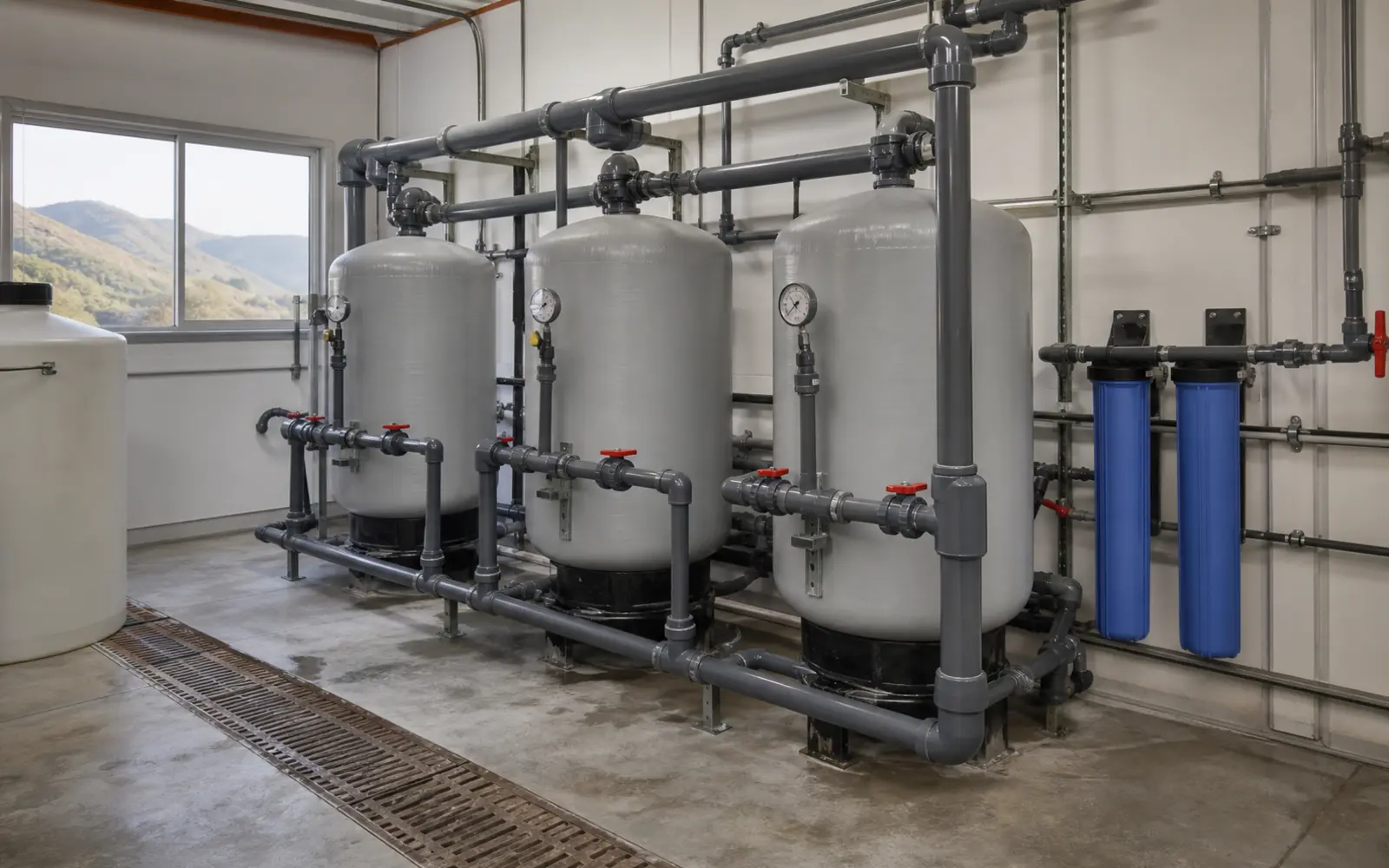
A commercial system should not accumulate filter stages simply because they are available. Each stage should have a defined reason to exist and a service plan that matches the site.
Use appropriate prefiltration when verified sand, silt, rust or other particulate is loading downstream equipment. Micron rating, dirt-holding capacity, flow and replacement or backwash frequency all matter.
Carbon may be considered for applicable chlorine, taste, odor or organic-compound concerns when the selected media and contact conditions fit the water. Chloramine and other targets require model/media-specific verification rather than a generic carbon promise.
Filtration may protect softeners, reverse-osmosis membranes, fixtures or process equipment when the feed-water condition calls for it. The downstream equipment determines what pretreatment must accomplish.
When filtration is part of a production process, higher-purity requirement or operating-critical treatment train, move into the industrial/process-water path instead of forcing the project into an ordinary building-filtration scope.
COMMERCIAL SIZING INPUTS
Commercial filtration sizing is not just a building-size question. The system has to handle the actual water and the actual operating demand without creating an impractical pressure drop or maintenance burden.
Source, current test data, visible particulate, disinfectant residual and any treatment already in place establish the starting condition.
Define what the treated water must accomplish: protect equipment, reduce a verified water-quality concern, support another treatment stage or meet a documented process requirement.
The filtration path must support the highest expected simultaneous demand without unacceptable pressure loss through clean or loading media.
Daily gallons, operating hours and whether demand is steady or intermittent affect cartridge life, backwash planning, media loading and service intervals.
Pipe size, available pressure, bypass layout, valves, drains and downstream equipment all influence the practical design.
Filter housings, media tanks, gauges, valves and service clearances should be reachable without turning routine maintenance into a major shutdown.
CARTRIDGE OR MEDIA FILTRATION?
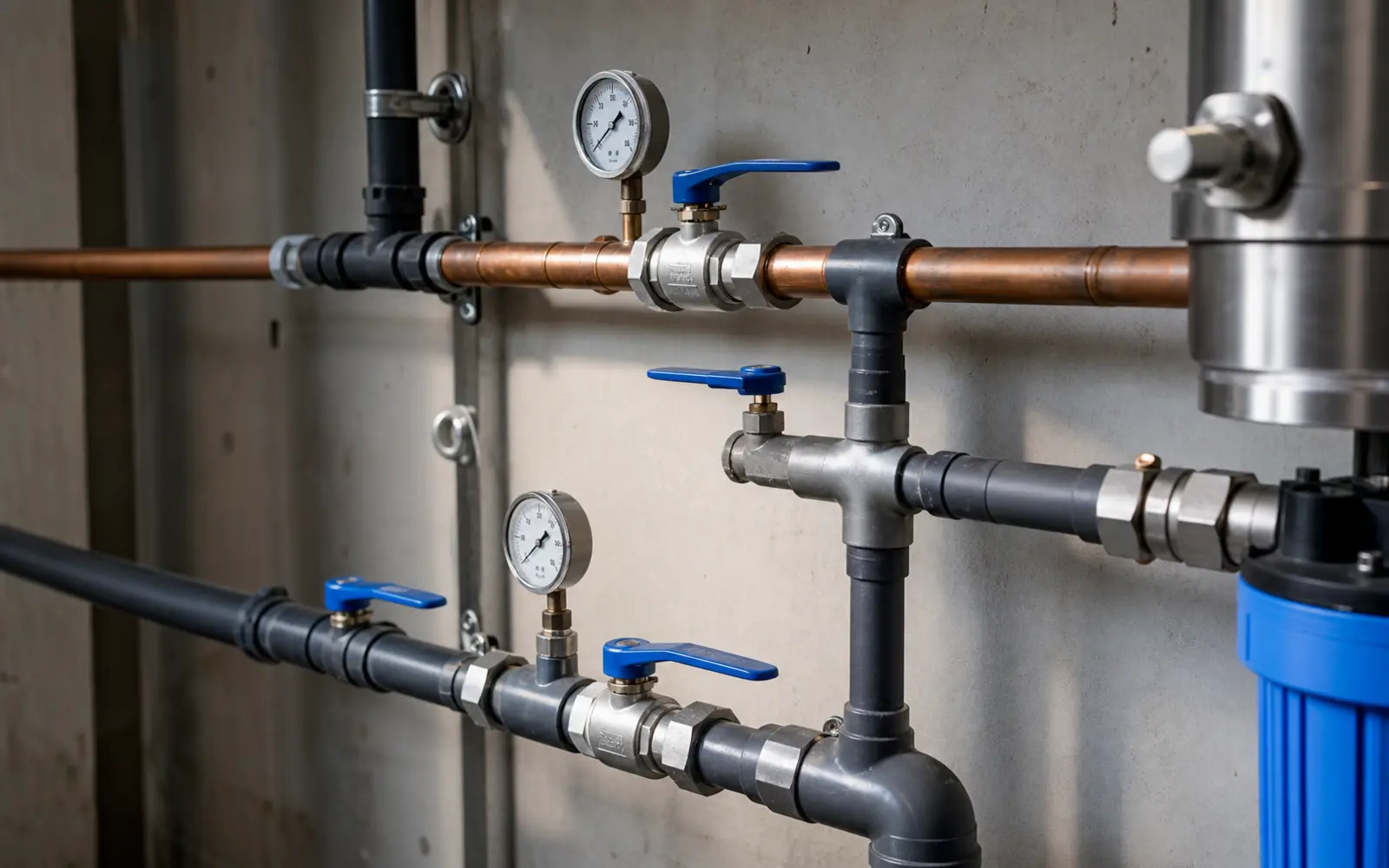
Cartridge housings can be practical when a replaceable element matches the contaminant, flow and service interval. Their operating cost and downtime depend heavily on how quickly the cartridges load.
Backwashing or serviceable media systems may make sense when the application needs a different dirt-loading, contact-time or maintenance approach. They also need appropriate controls, drains, backwash flow and service access.
Neither format is automatically better. The correct choice depends on feed water, treatment target, flow, pressure, space and how the site can realistically maintain the equipment.
TREATMENT TRAIN PLANNING
A multi-stage commercial system can be appropriate, but every stage adds pressure loss, maintenance and operating cost. Build the train from the required result backward rather than adding equipment without a verified purpose.
Sediment or other feed-water conditioning may be used when it protects the treatment stages that follow.
Carbon, cartridge or media filtration performs the specific filtration task only when the selected media is appropriate for the verified water condition.
Hardness control belongs with commercial softening. Dissolved-solids reduction or purified-water production belongs with commercial RO. Higher-purity polishing belongs in the process-water path.
Pressure, storage, isolation, drains, gauges and access must support normal operation and future maintenance.
TEST BEFORE YOU GUESS
Testing should answer the decision the project needs to make. If the concern is particulate loading, disinfectant, hardness, a specific contaminant, RO feed water or an existing system that is not performing, the testing scope should match that question.
Water Fixers can use current water information, onsite observations, equipment history and available test or lab results to help determine which treatment path deserves the next evaluation.
SERVICEABILITY BEFORE INSTALLATION
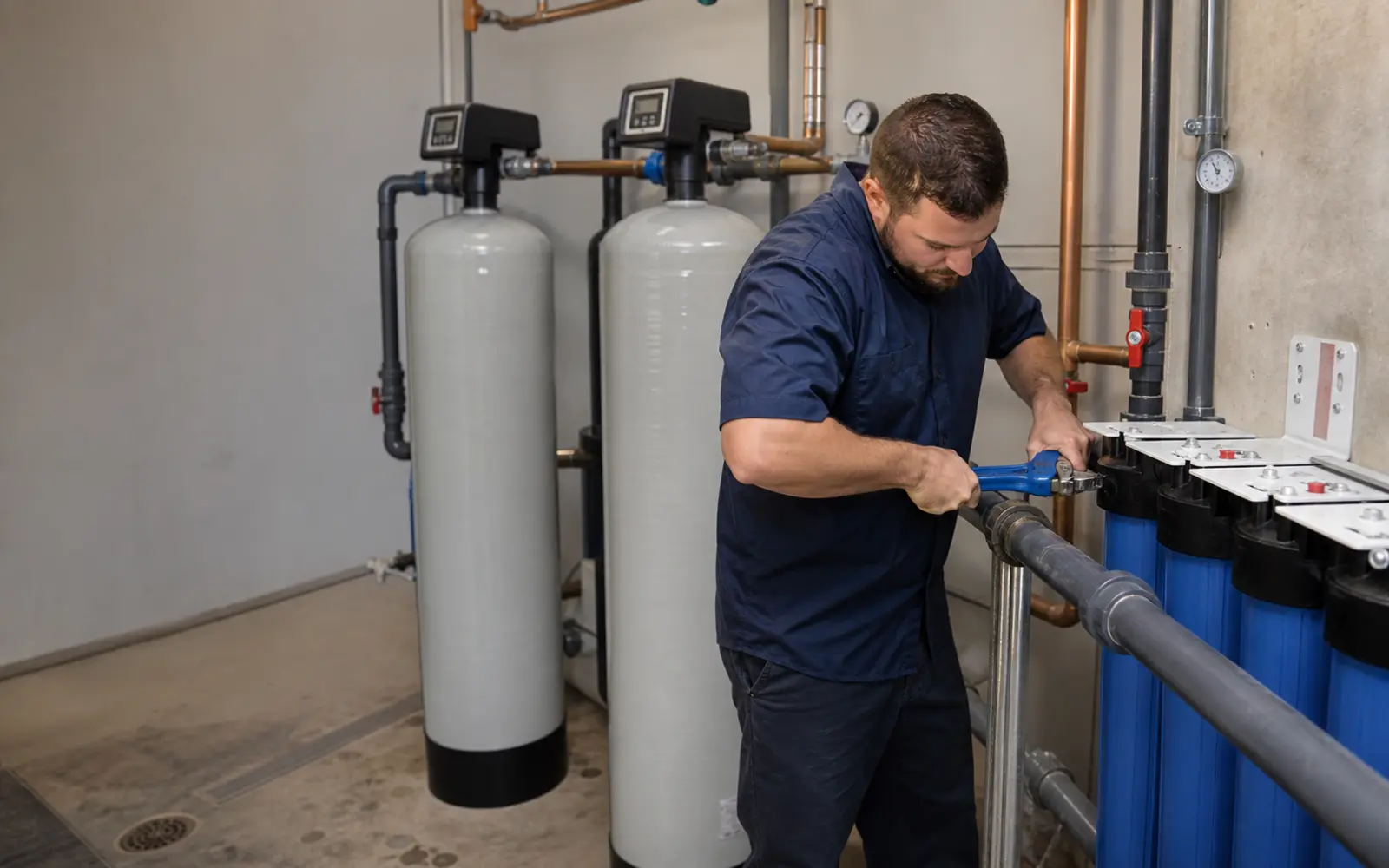
Good filtration planning includes future maintenance from the beginning. A technically appropriate filter can still be a poor commercial fit if the building cannot isolate it, drain it, open the housings, access the media or maintain acceptable service during routine work.
Provide practical isolation and bypass arrangements where the system design and operation call for them so service does not require unnecessary plumbing disruption.
Accessible pressure information can help show when a filter is loading or a performance change needs investigation. The exact instrumentation depends on the system.
Equipment that backwashes or discharges during service needs appropriate drainage and operating conditions. Drain requirements are equipment-specific.
Leave enough clearance to remove housings, cartridges, valves or media components safely and to perform ordinary maintenance without dismantling the surrounding installation.
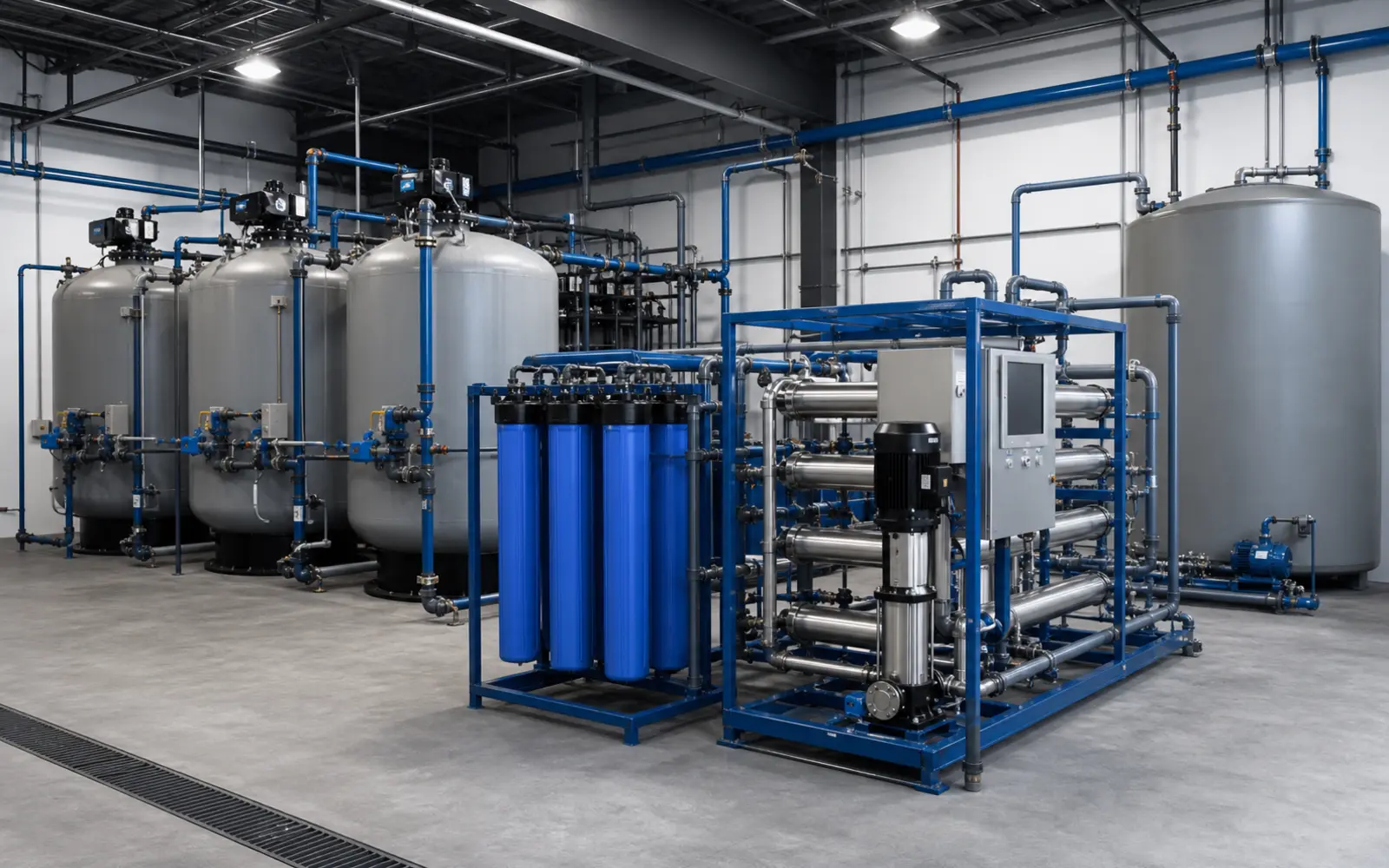
EXISTING SYSTEM REVIEW
If a commercial filter system is already installed, replacement should not be assumed. Useful starting information includes equipment photos, model numbers, filter or media type, current symptoms, recent service history, replacement intervals, available water tests, operating pressure and any known flow or production data.
Water Fixers can review whether the next step is maintenance, a plumbing correction, targeted component service, media/filter replacement, additional testing or a broader treatment redesign.
CHOOSE THE RIGHT COMMERCIAL PATH
Use this page when the primary job is filtration. If the underlying need is hardness, purified water, diagnostic testing, building plumbing or process-critical treatment, use the dedicated path instead.
Broad business-water planning for filtration, softening, RO and related treatment needs.
Hardness and scale control when measured conditions and demand support ion-exchange softening.
Purified-water and dissolved-solids reduction applications that require membrane treatment, storage and delivery planning.
Diagnostic testing and treatment planning when the water condition or treatment target is not sufficiently defined.
Higher-flow, higher-purity or operating-critical applications where treatment is tied directly to a process requirement.
Building-side piping, valves, fixtures, water heaters, leaks and other plumbing work that is separate from filtration itself.
COMMON COMMERCIAL FILTRATION QUESTIONS
These answers are starting points. Final equipment selection should follow the actual water data, project requirements and manufacturer specifications.
Commercial filtration can include sediment cartridges, larger cartridge housings, carbon media and other targeted filtration stages. The correct equipment depends on feed-water quality, the treatment target, flow, pressure, operating schedule and maintenance requirements.
No. Carbon should have a defined treatment purpose and the selected media must be appropriate for the verified water condition. A generic carbon stage should not be added simply because it is common.
Sizing should consider the water condition, treatment target, peak flow, daily volume, operating schedule, acceptable pressure loss, plumbing size, equipment specifications and service interval. Building square footage by itself is not enough.
Neither format is automatically better. Cartridge systems and serviceable or backwashing media systems have different loading, pressure, maintenance, drain and space requirements. The fit depends on the application.
Ordinary sediment and carbon filtration do not perform the same job as a water softener. If hardness and scale are the primary concern, use the commercial water-softener path and size it from measured hardness and demand.
RO is a membrane-treatment process with its own feed-water, pretreatment, production, recovery, storage, pressure and maintenance requirements. When dissolved-solids reduction or purified-water production is the goal, use the commercial RO path.
Yes. Start with equipment photos, model information, current symptoms, service history, available water tests and any operating data you have. Serviceability and the practical next step depend on the exact equipment and condition.
Useful information includes the property or facility location, water source, existing test results, treatment goal, peak flow or major simultaneous uses if known, daily volume or operating schedule, equipment photos and model numbers, available space and any current performance problem.
COMMERCIAL & INDUSTRIAL WATER PROJECT
Tell Water Fixers about the water source, treatment goal, existing equipment, operating demand and any test data you already have. We can help identify the practical next step and route the project to filtration, testing, softening, RO, plumbing or industrial treatment as appropriate.
Water Fixers Plumbing & Filtration • 2893 Industrial Pkwy, Santa Maria, CA 93455 • CA License #719792
CALL NOW! Se Habla Español!