
COMMERCIAL WATER SOFTENING • CALIFORNIA CENTRAL COAST
Quick answer: Commercial water softeners reduce calcium and magnesium hardness through ion exchange. The useful design inputs are measured hardness, peak flow, daily water use, regeneration requirements and how much interruption the facility can tolerate.
Water Fixers can evaluate existing equipment, test or confirm the water conditions, and plan commercial softening as part of the building’s broader plumbing and water-treatment system.
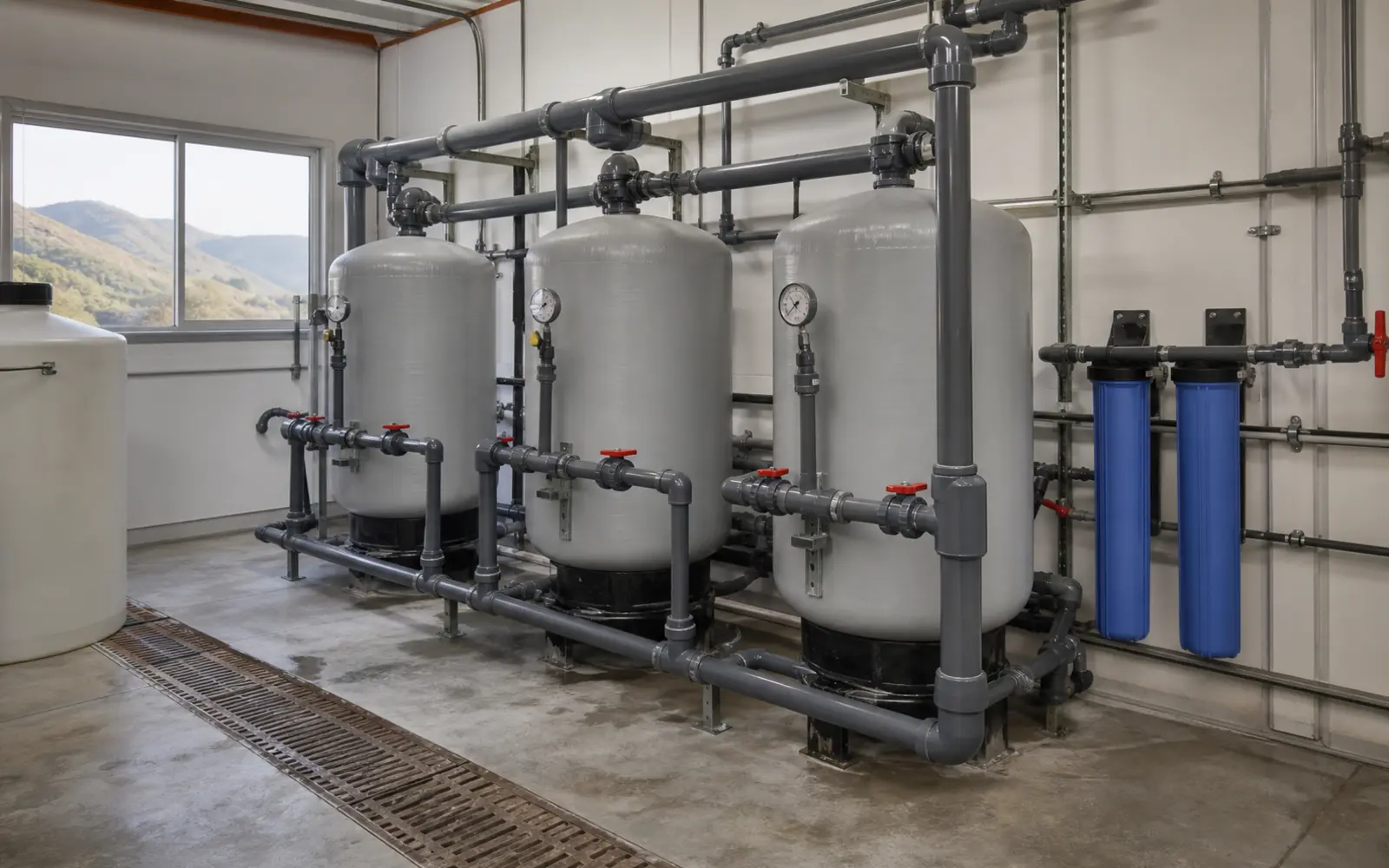
START WITH THE JOB THE WATER MUST DO
Hardness is caused primarily by dissolved calcium and magnesium. A softener is designed to reduce that hardness load. If the real concern is sediment, taste, odor, a specific contaminant, drinking-water purity or process-water quality, a different treatment step—or a combined treatment train—may be more appropriate.
When measured hardness is contributing to scale in piping, fixtures or water-using equipment, softening may be part of the solution.
Hard water can increase soap and detergent demand and leave mineral residue. The business impact depends on the actual water and operation.
Softening can be used ahead of selected water-treatment or water-using equipment when hardness control is part of the documented design.
COMMERCIAL SIZING INPUTS
Two systems can have similar headline “grain capacity” and behave very differently in a real facility. The system has to remove the hardness load between regenerations and pass the facility’s required service flow without unacceptable pressure loss or hardness breakthrough.
Use a current hardness result for the actual supply. Do not assume a citywide number or size a system from appearance alone.
Metered or documented usage is more useful than residential occupancy shortcuts for a commercial property.
The valve, tank and resin bed must be able to handle the flow that occurs during the facility’s busiest water-use periods.
Operating hours matter. A single tank cannot supply softened water while that tank is regenerating.
Pipe size, available pressure, bypass arrangement, drain routing and installation location affect the practical design.
If the operation cannot tolerate a hard-water window, redundancy or alternating equipment may need to be evaluated.
SERVICE CONTINUITY
A single commercial softener can be appropriate when regeneration can occur during a low-demand period and a temporary hard-water window is acceptable. Where softened water is required continuously, the design may use multiple tanks or an alternating arrangement so one unit can remain in service while another regenerates.
The correct configuration depends on actual demand, the selected control strategy, available space, plumbing and the consequences of interruption—not on a blanket “commercial means duplex” rule.
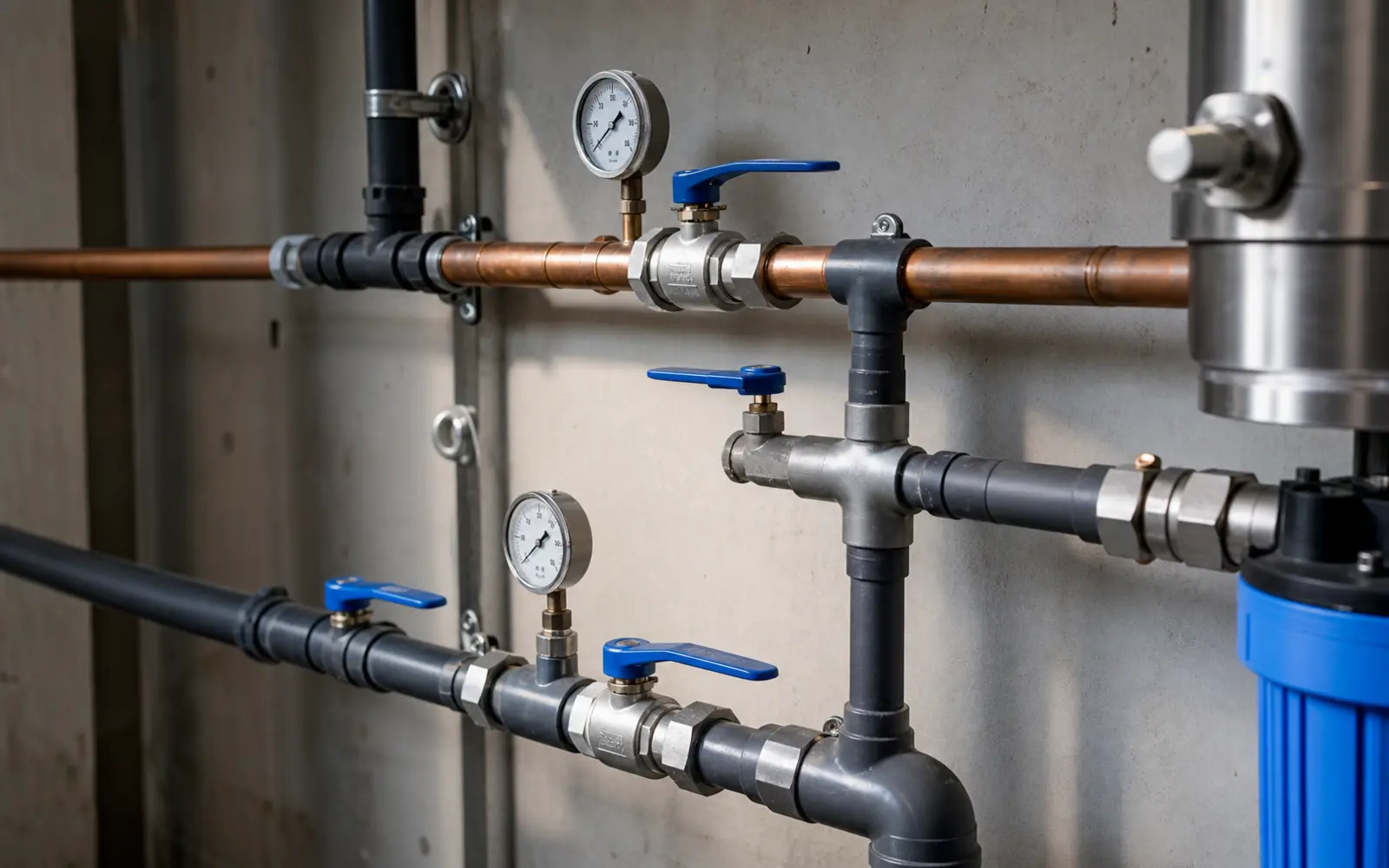
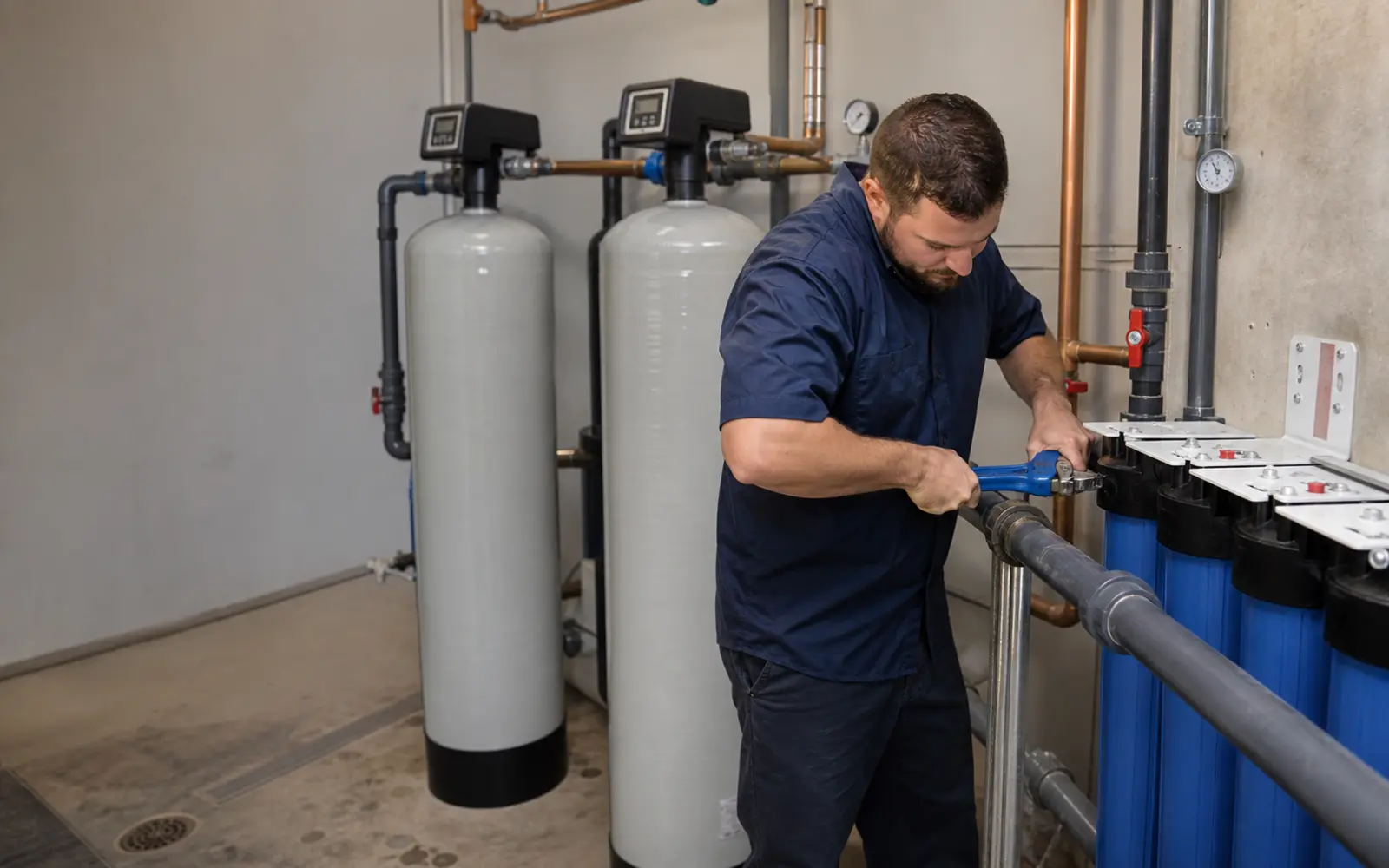
EXISTING COMMERCIAL SOFTENER
When an existing commercial softener is no longer delivering the expected water quality or flow, start with the equipment and the water rather than replacing it by age alone.
Confirm whether hardness is actually breaking through and whether the problem is constant or demand-related.
Check settings, metering, regeneration history and whether the control is matching current facility usage.
Inspect salt/brine operation, injector or draw behavior where applicable, drain flow and regeneration conditions.
Check bypass position, pressure, restrictions, accessible valves and surrounding plumbing before blaming the resin tank.
KEEP THE TREATMENT JOBS SEPARATE
Use testing when the hardness number is unknown or when the water concern may involve more than hardness.
Use filtration for appropriate sediment, taste/odor or other targeted treatment goals that are not solved by softening alone.
Use RO when the project requires membrane treatment for dissolved constituents or a defined purified-water use case.
Use the broader treatment hub when the correct treatment train is not yet clear or several treatment stages may interact.
WHERE HARDNESS CONTROL CAN MATTER
Hardness can contribute to scale in water heaters and other heated-water equipment. Water temperature, operating conditions and manufacturer guidance still matter.
Scale can show up at fixtures, valves and piping, but not every white deposit proves hardness is the only issue.
Where water is used heavily for washing or cleaning, hardness can affect soap performance and mineral residue. The value of softening should be tied to the actual operation.
For some membrane systems, hardness control is part of pretreatment. The full RO design should be based on feed-water chemistry and the membrane system requirements.
Property managers may need a clear route for equipment service, testing and multiple plumbing/water-treatment concerns without duplicating every service page.
If the project depends on defined process-water or higher-purity requirements, use the industrial/process-water path instead of stretching a softener page beyond its role.
BEFORE EQUIPMENT IS SELECTED
Hardness is the minimum starting point. Other water chemistry can affect whether pretreatment or a different treatment stage is needed.
Daily gallons and peak-demand periods help separate capacity needs from flow needs.
Business hours and required continuity determine whether regeneration timing or redundancy matters.
Photos, model numbers, tank sizes, valve information and current plumbing can save time when evaluating a repair, expansion or replacement.
Available floor space, pipe size, drain access, pressure and service clearance can change the practical equipment layout.
Define the outcome: hardness control, equipment protection, cleaning performance, pretreatment or another specific operational requirement.
RELATED COMMERCIAL SERVICES
Building-side plumbing, piping, fixtures, leaks, water heaters and related commercial plumbing service.
Broad treatment planning when testing, softening, filtration or RO may need to work together.
Dedicated filtration planning and service for business water-quality needs beyond hardness alone.
Process-oriented or higher-flow requirements that extend beyond ordinary commercial softening.
See documented Water Fixers field work and commercial context without fabricated client names or case studies.
CENTRAL COAST COMMERCIAL SERVICE
Water Fixers serves supported commercial properties across California’s Central Coast. This page remains the commercial softening owner; geographic navigation stays in the Service Areas structure rather than creating thin commercial city copies.
For a useful first conversation, include the property location, water source if known, current hardness result if available, approximate daily usage or meter data, peak-use concerns and photos/model information for existing equipment.
Commercial plumbing, pressure, hot water and treatment equipment can affect one another. Route the issue by the actual condition instead of assuming a treatment device is the cause.
DIRECT ANSWERS
A conventional ion-exchange softener primarily reduces hardness ions such as calcium and magnesium. It is not a universal contaminant-removal system and should not be used as a substitute for testing, filtration or reverse osmosis when those jobs are required.
Use measured hardness, daily water volume, peak flow demand, desired regeneration frequency, plumbing conditions and the facility’s tolerance for interruption. Capacity and service flow both have to fit the application.
No. A single-tank system may fit when regeneration can occur during a low-demand period. Multiple or alternating tanks may be appropriate when softened-water continuity is important. The operating schedule and design requirements decide.
Yes, when hardness is contributing to scale. Because deposits can have more than one cause, confirm the water conditions before assuming every mineral-looking deposit is a hardness-only problem.
No. Softening, filtration and reverse osmosis perform different treatment jobs. Some projects combine them, but the order and equipment should be based on the feed water and the required result.
Yes. The useful evaluation includes the water before and after the unit, controls and metering, brine/regeneration behavior, valve and bypass condition, pressure/flow, surrounding plumbing and whether the current equipment still matches the facility demand.
Not by age alone. Condition, parts availability, resin performance, valve condition, capacity, current facility demand and repair cost all matter before deciding between service, repair, expansion or replacement.
Water Fixers serves supported communities across California’s Central Coast. Use the Service Areas page or contact Water Fixers with the property location and project details to confirm the correct service path.
Start with the property, the water, the operating demand and the treatment goal. Water Fixers can help determine whether the next step is testing, commercial softener service, a new softening design or a different water-treatment path.
Water Fixers Plumbing & Filtration • California Central Coast • CA License #719792
CALL NOW! Se Habla Español!