CENTRAL COAST WATER SOFTENER DIAGNOSIS + REPAIR
Water Softener Service & Repair on the Central Coast
Find the cause before replacing the system.
Quick answer: If hard water came back, salt use changed, the brine tank looks wrong, the unit is leaking, or regeneration is failing, start with diagnosis. Water Fixers checks the softener and the plumbing around it, then explains whether the practical next step is maintenance, a targeted repair, resin work, or replacement.
We service existing residential water softeners across Santa Barbara and San Luis Obispo counties. Exact availability depends on the property and equipment.
38+ Years on the Central Coast • California License #719792
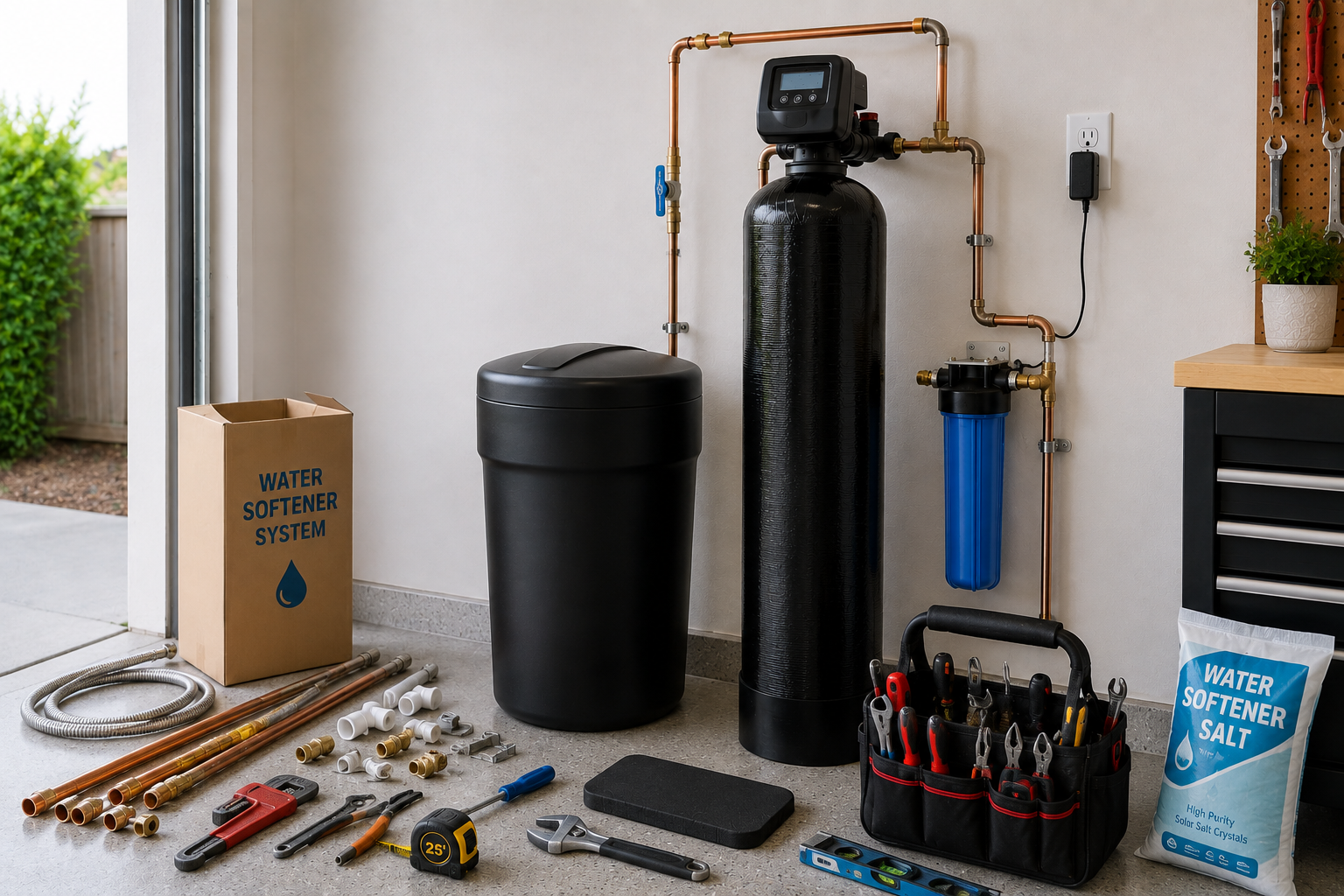
START WITH THE SYMPTOM
What is your water softener doing?
Similar symptoms can come from different causes. Choose the closest starting point, then diagnose the actual system instead of replacing parts by guesswork.
Hard Water Returned
Scale, spotting or poor soap performance came back after the system had been working. Check salt, bypass position, settings, regeneration, valve operation and resin performance before assuming the whole unit failed.
Salt or Brine Problem
No salt use, unusually fast salt use, bridging, or an unexpected brine level can point to a maintenance issue or a fault in the brine/regeneration cycle.
Leak, Valve or Error
Leaks, continuous draining, error codes, motor or valve problems, and incomplete regeneration deserve a service diagnosis before parts are selected.
Old or Repeated Failures
When repairs repeat, parts are difficult to obtain, or major valve and resin work stack up, compare the repair cost with a better long-term replacement path.
COMMON SERVICE CALLS
Signs your water softener needs attention
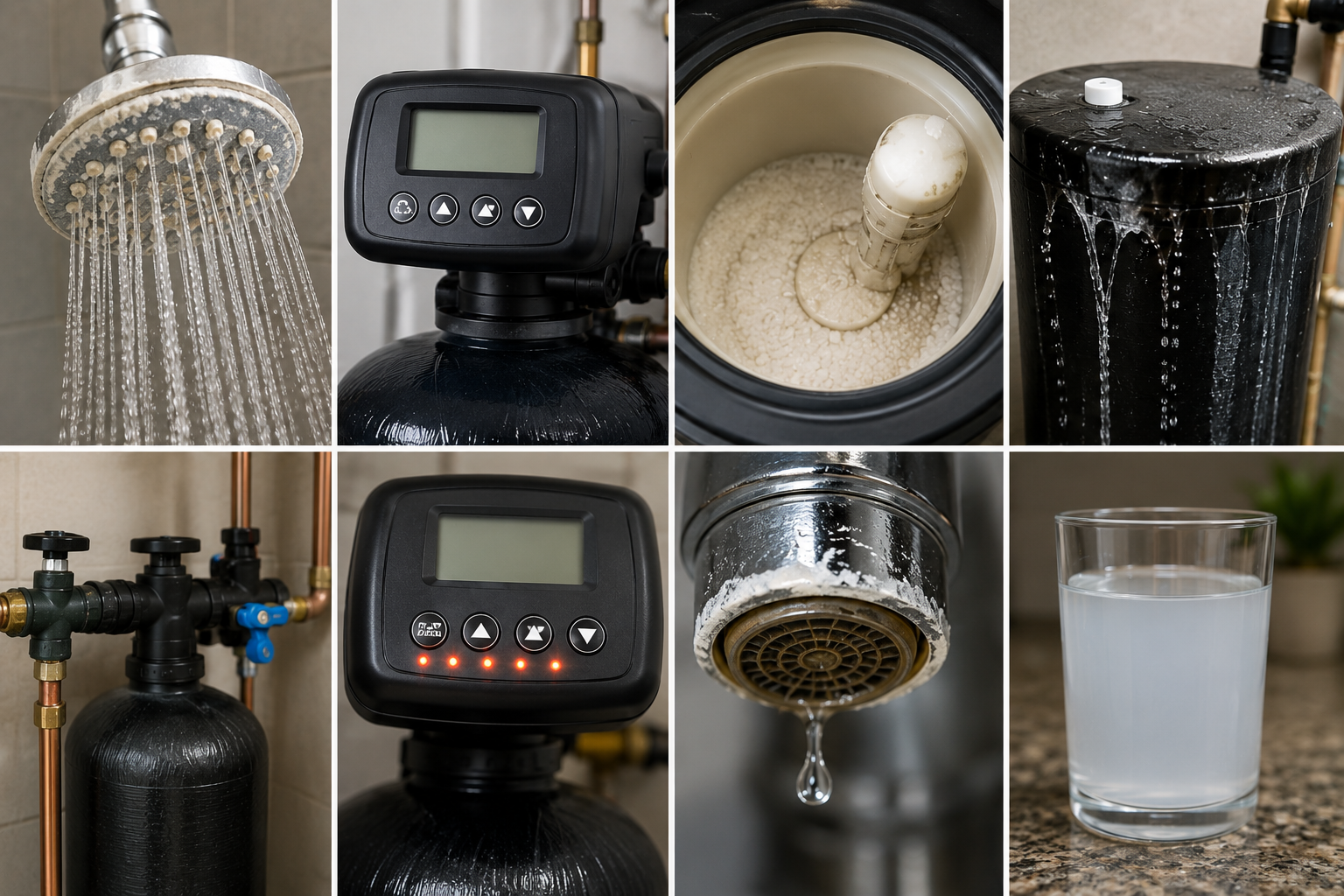
Call for service when you notice:
- Hard water, scale or spotting returning
- Softener not using salt—or using much more than usual
- Salt bridging or an unusual brine tank water level
- System not regenerating or not completing a cycle
- Unit running or draining continuously
- Leaks around the valve, tank, bypass or fittings
- Low water pressure after or through the softener
- Error codes, control problems or unusual noises
These symptoms do not identify a failed part by themselves. A complete cycle and plumbing check helps separate maintenance issues from repairable faults.
DIAGNOSIS BEFORE PARTS
What a real softener diagnosis should check
A repair decision is stronger when it follows the full water path and regeneration cycle. That reduces unnecessary part changes and helps explain why a symptom appeared.
1. Controls & Regeneration
Check settings, timing, error conditions, motor or valve movement, injector behavior and whether the unit actually completes the regeneration stages.
2. Salt & Brine System
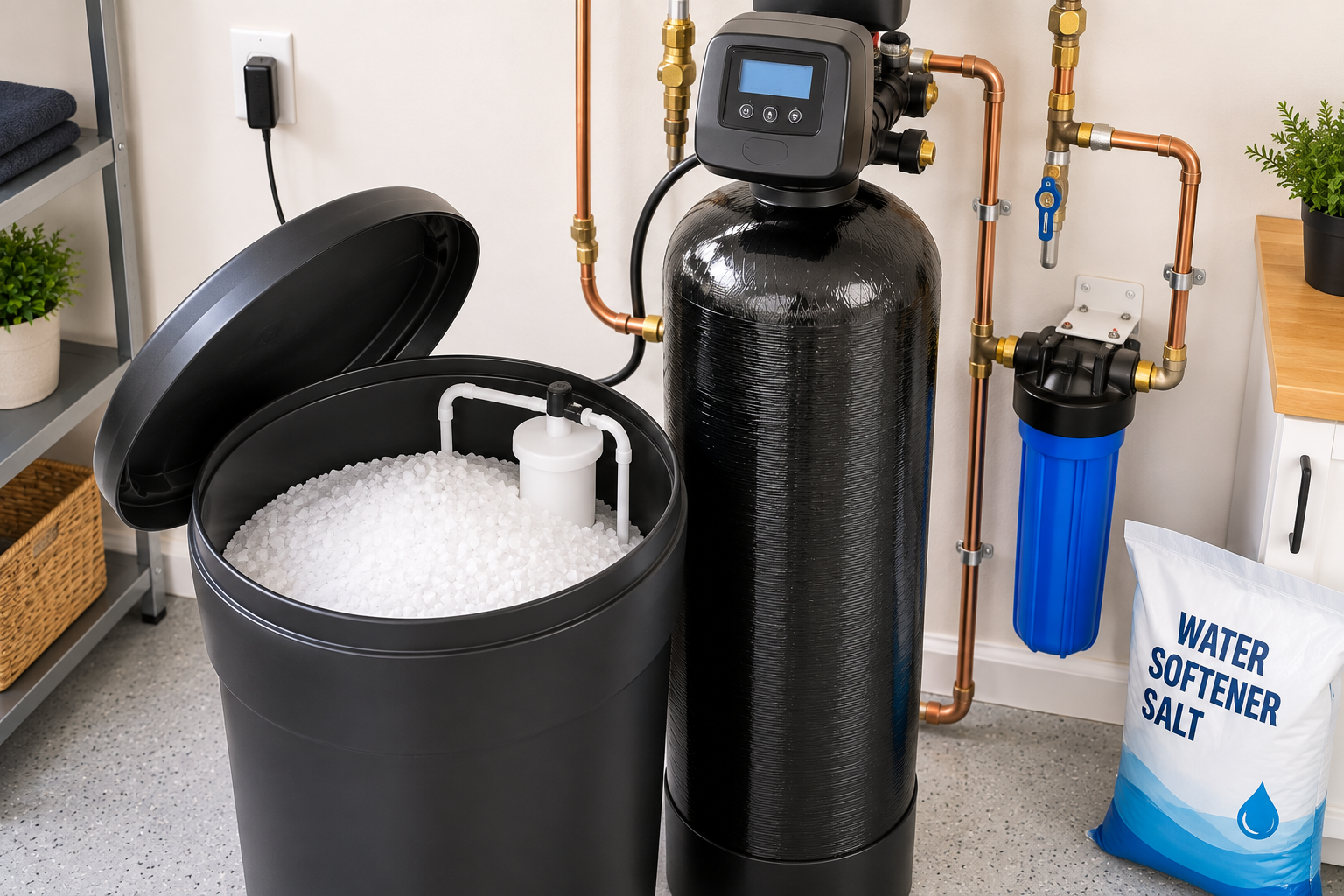
Check salt condition, bridging, brine draw, refill, float and brine-well operation, injector flow and drain behavior.
3. Resin & Softening Performance
Confirm whether the unit is actually exchanging hardness effectively and whether resin age, fouling, channeling or exhausted capacity may be contributing.
4. Plumbing Around the Softener
Verify bypass position, shutoffs, inlet/outlet orientation, pressure, restrictions, leaks and nearby treatment or water-heater context before blaming the softener.
REPAIR OR REPLACE?
Repair when it is practical. Replace when the numbers and condition point there.
Repair often makes sense when the tanks are sound, the failure is identifiable, parts are available, the valve and resin still have useful life, and the repair cost is reasonable.
Replacement becomes more practical when core parts are unavailable, the system has repeated failures, a leak or tank condition is unsafe, resin and valve work are both substantial, the equipment no longer fits household demand, or the repair cost approaches a better long-term solution.
Age matters, but age alone should not make the decision.
Good service question: “What failed, what else is still healthy, are the parts available, and what is the realistic repair cost?”
SERVICEABLE PARTS
A water softener is a system—not one replaceable box
The practical repair path depends on the exact model, what failed, and whether the surrounding parts remain serviceable. Water Fixers can evaluate the whole system before recommending a repair or replacement.
Valve, Motor & Control
A control head can involve motors, gears, pistons, seals/spacers, circuit boards, meters or other model-specific parts. Exact repairability depends on the model and failure.
Injector, Brine & Drain
Restricted injector flow, brine draw problems, float issues, a drain restriction or a failed brine component can interrupt regeneration without meaning the tanks must be replaced.
Resin & Media Performance
Resin work can make sense when the pressure tank and valve are still serviceable but the resin is no longer delivering the expected softening performance.
Bypass, Fittings & Pressure
Sometimes the apparent softener symptom is partly a plumbing problem: bypass position, restrictions, valves, fittings or pressure can change what the homeowner sees at fixtures.
OLDER & RETAIL SYSTEMS
Brand-specific repair routes
Brand is useful for identifying parts and documentation, but the model number, symptom, condition and parts availability are what determine the practical repair path.
GE Water Softener Repair
GE softeners with hard water, salt-use, brine, valve, control, leak or regeneration symptoms can be evaluated by exact model and fault—not by brand label alone.
Kenmore / Sears Water Softener Repair
Older Kenmore and Sears systems may still be serviceable depending on the model, valve condition, parts path, resin condition and repair economics.
CHOOSE THE RIGHT NEXT PATH
Need a different water-softener service?
This page owns fault diagnosis and repair. The related pages below handle routine maintenance, product comparison, broader service routing and water testing so each question has one clear destination.
Routine Maintenance
Salt, settings, brine tank condition, regeneration schedule and performance checks belong on the maintenance path.
Compare New Softeners
If replacement is the practical outcome, compare the current Water Fixers models and keep detailed product selection on the softener hub.
Local Softener Service
Need testing, sizing, installation, maintenance or city-specific service routing? Use the main Water Softener Services page and its location paths.
Not Sure It Is the Softener?
Hardness symptoms can overlap with sediment, taste, odor, pressure, filtration and plumbing conditions. Testing can help confirm the actual treatment need.
CENTRAL COAST SERVICE CONTEXT
One team for the softener and the plumbing around it
Water Fixers is based in Santa Maria and serves communities across Santa Barbara and San Luis Obispo counties. Softener symptoms can overlap with pressure, bypass valves, drains, water heaters, filtration and other water-quality concerns, so the installation around the equipment matters too.
For city-specific service availability and local routing, use the Water Softener Services page or the main Service Areas page.

Water Fixers Repairs Many Water Softener Brands
Hard water returned, salt use changed, the brine tank looks wrong, or the softener is leaking or not regenerating? Water Fixers can evaluate many existing water-softener brands across California’s Central Coast—even when the system was installed by someone else.
We diagnose the controls, valve, brine system, resin performance and surrounding plumbing before recommending repair, maintenance or replacement.
DIRECT ANSWERS
Water Softener Service & Repair FAQs
Get a real diagnosis before replacing the system.
Hard water returned? Salt stopped moving? Brine tank level looks wrong? The softener is leaking, draining, or not regenerating? Tell Water Fixers what changed and what equipment you have.
Water Fixers Plumbing & Filtration • 805-928-6444 • California License #719792