
REVERSE OSMOSIS • PROFESSIONAL INSTALLATION
Reverse Osmosis Installation on California's Central Coast
Professional Under-Sink RO Installation Planned for Serviceability
Water Fixers installs residential reverse osmosis drinking-water systems with the plumbing details planned before the equipment is mounted: cold-water feed, dedicated faucet, drain connection, storage tank, RO-rated tubing, startup checks and future filter-service access.
If a refrigerator or icemaker will also receive RO water, that route is evaluated as part of the installation rather than assumed to work for every layout.
New RO systems • replacement installations • dedicated faucets • optional refrigerator/ice lines when the layout supports them • License #719792
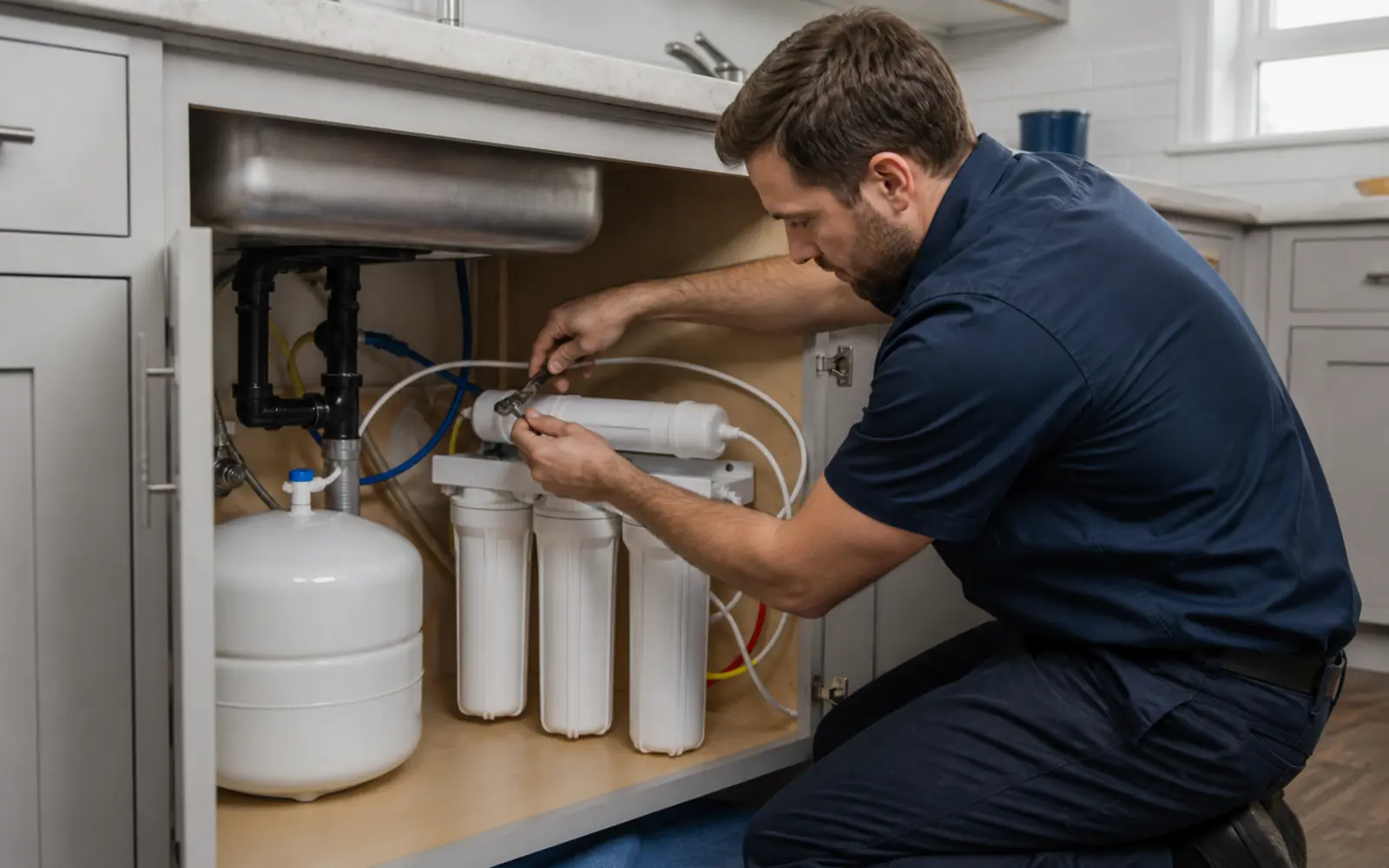
A Good RO Installation Is More Than Mounting Filters
The selected RO system has to fit the cabinet, connect correctly to the cold-water supply and drain, leave practical room for the storage tank and future filter changes, and deliver water through a properly placed faucet. Water Fixers plans those details before installation so the finished system can be isolated, inspected and serviced later.
Choose the Right Installation Path
Installing a New RO System
Starting from scratch? Compare the seven Water Fixers RO systems first, then plan the faucet, tank, feed, drain, tubing and service clearances around the exact system selected.
Replacing an Existing RO
An existing faucet hole, tank or tubing route may be reusable, but compatibility and condition should be checked instead of assumed. The replacement plan starts with the installed plumbing and available space.
Not Sure Which RO to Choose?
Use the RO comparison page for CPS, SPS, EPS and UPS models. Stage count is an arrangement—not a quality ranking—and the final choice should fit the water, pressure, cabinet space and ownership plan.
Not Sure RO Is the Right Treatment?
If a specific contaminant, private-well concern, unusual taste/odor or changing source condition is driving the purchase, appropriate water testing can help define the treatment goal before equipment is selected.
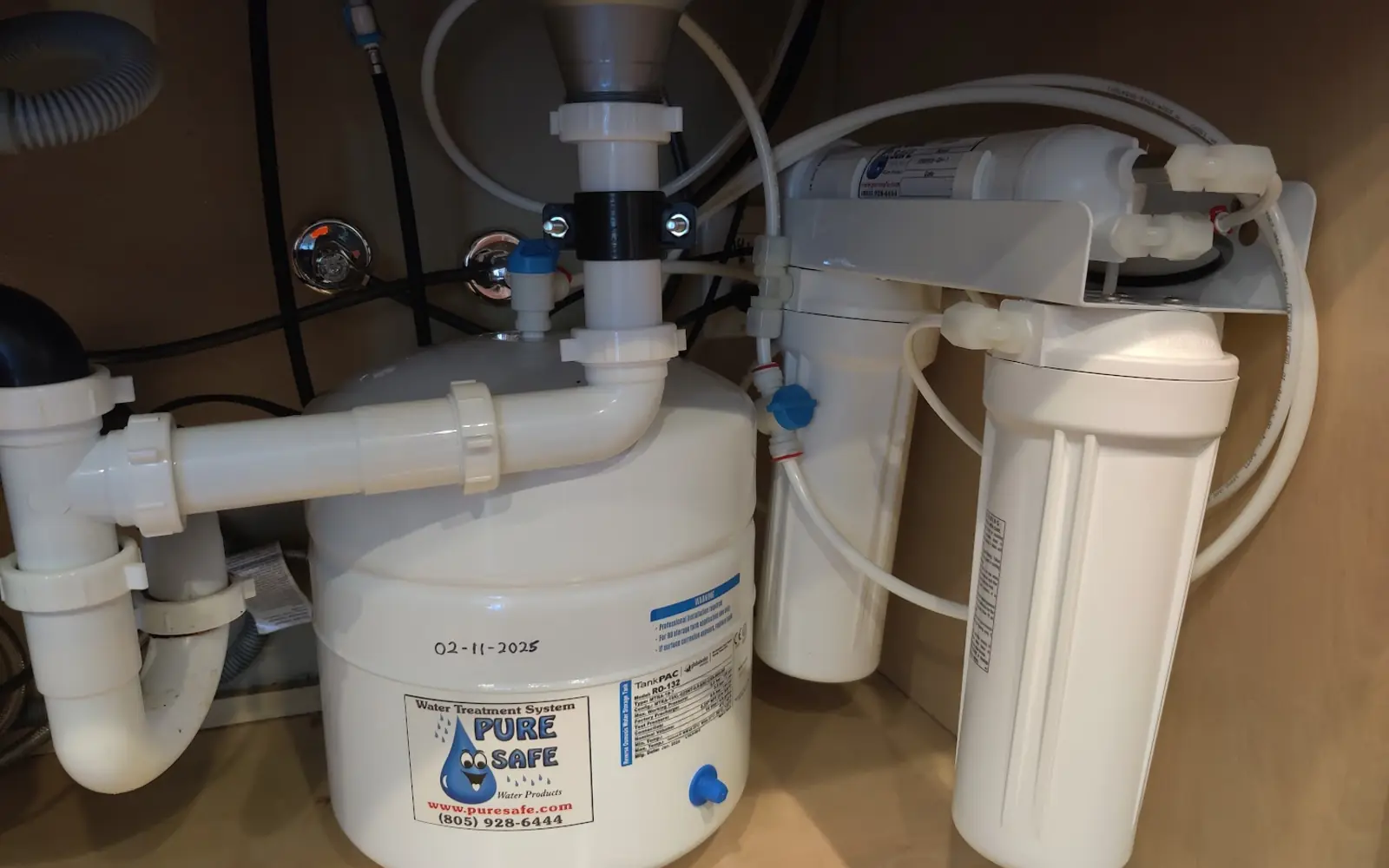
PRE-INSTALLATION CHECK
What Water Fixers Checks Before Installing Your RO System
Before installing anything, Water Fixers reviews the cabinet and surrounding plumbing: available service clearance, the cold-water feed and accessible shutoff, incoming pressure, drain location, faucet placement, storage-tank space, tubing routes and any treatment already installed upstream.
If RO water will also serve a refrigerator or icemaker, the route, distance, pressure and appliance requirements are checked before that line is added. Countertop or sink material, faucet mounting location and any drain/air-gap details that apply to the selected setup are also part of the planning conversation.
What a Professional Under-Sink RO Installation Should Account For
The equipment matters, but so does the plumbing around it. The installation should keep shutoffs reachable, tubing protected, filters removable, the tank stable and the drain connection accessible for future inspection.
Feed Water, Pressure & Shutoff
Confirm a usable cold-water connection, an accessible shutoff and feed pressure appropriate for the exact RO equipment. Pressure-related accessories are equipment- and property-specific rather than automatic.
Faucet, Drain & Storage Tank
Plan a secure dedicated faucet, an appropriate drain connection for the selected system and tank placement that does not block valves, cabinet hardware or future service.
Tubing, Service Access & Startup
Route RO-rated tubing cleanly, leave room to remove cartridges, flush/start the system according to the supplied equipment instructions, then check connections, tank/faucet behavior and visible leak points after repressurizing.
INSTALLATION PROCESS
From System Selection to the First Glass of RO Water
Water Fixers plans installation around the exact system and the cabinet it will live in, with the goal of clean plumbing now and practical access later.
1. Define the goal. Confirm why RO is being installed and whether testing is needed first.
2. Choose the system. Compare the seven Water Fixers RO models by documented configuration and service path.
3. Plan the space. Confirm faucet, feed, drain, tank, tubing, pressure and service clearance.
4. Install the plumbing and equipment. Make the selected system connections without crowding future service points.
5. Start and check the system. Flush/start per equipment instructions and inspect the repressurized system for leaks and normal basic operation.
6. Explain ownership. Identify shutoffs, filters, the membrane/service path and what to watch before the first maintenance visit.

Compare the RO System Before You Install It
CPS
CPS-3T and CPS-5T. Three- and five-stage CPS arrangements. Compare the actual cartridge package, available space and long-term service plan on the dedicated model/comparison pages.
SPS
SPS-3T and SPS-5T. Three- and five-stage SPS arrangements with the current SPS cartridge package. Confirm the supplied components before installation.
EPS
EPS-3T and EPS-5T. Three- and five-stage EPS arrangements. Use the model pages for the exact current component package and installation details.
UPS
UPS-5T. Five-stage UPS listing with a UV component; confirm the supplied equipment and any electrical requirement before installation. Ordinary RO should not be presented as a universal bacteriological-safety solution.
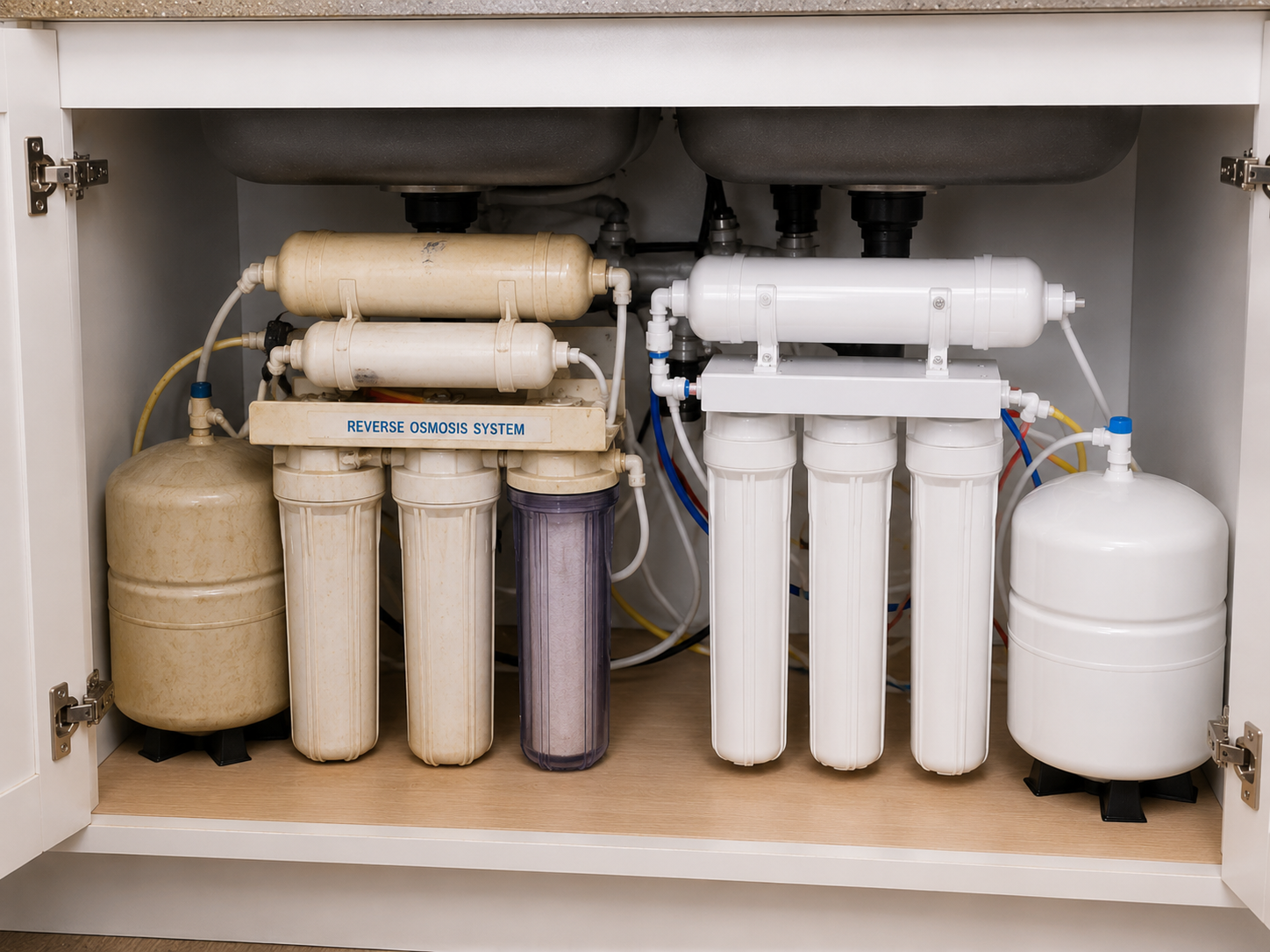
NEW INSTALLATION VS REPLACEMENT
Replacing an Old RO Is Not Always a Straight Swap
Existing holes, tubing, faucets, drain connections and tanks can sometimes be reused, but condition and compatibility should be inspected instead of assumed. Water Fixers checks the old equipment, cabinet, faucet, feed valve, drain connection, tank and tubing route before deciding what should remain.
If an older RO has several failures or questionable housings, tubing, tank condition or parts availability, compare repair versus replacement before building the new installation around worn components.
LOCAL INSTALLATION SERVICE
RO Installation Across Water Fixers Service Areas
Water Fixers is based in Santa Maria and provides residential under-sink RO installation across supported Central Coast communities. This page owns installation planning; city RO pages keep location-specific water context, and the Service Areas page is the best place to confirm current coverage.
Santa Maria Local RO
Use the dedicated Santa Maria RO page for Santa Maria-specific source-water context, local service and installation considerations.
Central Coast Service Areas
Use the main Service Areas page to confirm current Water Fixers coverage and reach the appropriate regional or city service page.
Not Sure You Are in Range?
Contact Water Fixers with the property location if you are unsure whether the installation is inside the current service area.
PLUMBING + WATER TREATMENT
Why Plumbing Expertise Matters for RO Installation
An under-sink RO system connects to the home’s potable cold-water plumbing and to a drain path, so feed valves, pressure, faucet mounting, tubing routing, drain configuration and leak prevention are installation issues—not just product-box details.
If a specific water-quality concern is driving the installation, appropriate testing may be useful before equipment is selected. After installation, Water Fixers also has dedicated owners for maintenance, routine filter replacement, membrane evaluation and system repair so ownership does not end at startup.
AFTER INSTALLATION
Plan the RO Ownership Path Before the System Goes In
A serviceable installation makes future work easier. Know where routine cartridges, the membrane, sanitation/maintenance and troubleshooting will be handled before the cabinet is packed with equipment.
Routine Maintenance
Overall system upkeep, sanitation when appropriate, tank/faucet checks and service-history review.
Filter Replacement
Routine prefilter/post-filter cartridge service matched to the installed configuration.
Membrane Evaluation
Membrane-specific troubleshooting and replacement when system performance indicates it is needed.
Service & Repair
Leaks, tank problems, no water, low production, noise or other failures belong on the repair path.
Water Fixers Services Many Reverse Osmosis Brands
Water Fixers services many existing under-sink reverse osmosis systems across California’s Central Coast, including equipment we did not originally install. We troubleshoot leaks, low flow, no-water conditions, tank and pressure problems, filters, membranes, faucets and other performance issues.
The exact model and symptom guide the diagnosis so parts and service are matched to the system actually installed.
Reverse Osmosis Installation FAQs
Direct answers to the questions homeowners commonly ask before installing or replacing an under-sink reverse osmosis system.
It typically includes reviewing the installation space, planning the cold-water feed, drain connection, dedicated faucet, storage tank, tubing and service clearance; installing the selected system; starting/flushing it according to the supplied equipment instructions; checking the repressurized system for visible leaks and normal basic operation; and showing the homeowner the system shutoff and ownership basics.
Cost depends on the exact RO system and the plumbing at the property, including faucet requirements, countertop/sink conditions, cabinet space, feed and drain connections, tank placement, optional refrigerator routing and whether older equipment is being removed. Water Fixers can quote the actual scope instead of using a one-size-fits-all price.
Installation time varies with cabinet access, faucet mounting, the existing plumbing, drain arrangement, refrigerator routing and whether old equipment must be removed. The practical estimate comes after the installation conditions and selected equipment are known.
Often, but not automatically. Route length, pressure, appliance requirements, tubing path and the selected RO configuration should be reviewed before a refrigerator or icemaker line is added.
Not for every installation. Testing becomes important when a specific contaminant concern, private-well question, changing source condition or unclear taste/odor issue is driving the treatment decision. The selected treatment should match the actual concern.
Yes. They perform different jobs: a softener addresses hardness through the home, while under-sink RO is point-of-use treatment for drinking and cooking water. Existing treatment still matters when planning feed-water conditions and maintenance.
Sometimes. Existing parts should be inspected for condition, compatibility and serviceability before they are reused. An old opening or tubing route by itself does not prove a new system will be a direct swap.
Many traditional tank-style under-sink RO systems do not require electricity, while pumps, UV components and some specialty equipment can. Confirm the electrical requirement for the exact system being installed.
Maintenance depends on the installed system and water conditions. It can include routine prefilter/post-filter replacement, sanitation when appropriate, tank and faucet checks, tubing/fitting inspection and performance-based membrane evaluation.
Water Fixers is based in Santa Maria and provides residential RO installation across supported Central Coast service areas. Use the Service Areas page or contact Water Fixers to confirm current coverage for a specific property.
Ready to Plan Your Reverse Osmosis Installation?
Tell Water Fixers whether you are planning a first-time RO installation, replacing older equipment or still comparing systems. We can review the installation space, selected equipment, faucet/tank layout and ownership path before the work is finalized.
Water Fixers Plumbing & Filtration • Santa Maria, California • Serving the Central Coast • License #719792