










Reverse Osmosis Membrane Replacement & Evaluation
Replace the Membrane When the Evidence Says So — Not Just Because It Is Old
A slow faucet, an older membrane, or one handheld TDS reading does not automatically mean the RO membrane is bad. Water Fixers checks the system around the membrane—prefilters, feed pressure, tank behavior, production and treated-water performance—before recommending replacement.
Existing RO systems are welcome, even if Water Fixers did not install them.
Santa Maria-based • Central Coast service • Existing RO systems welcome • Performance-based evaluation • Compatible membrane confirmed • License #719792
How Do You Know an RO Membrane Is Actually Bad?
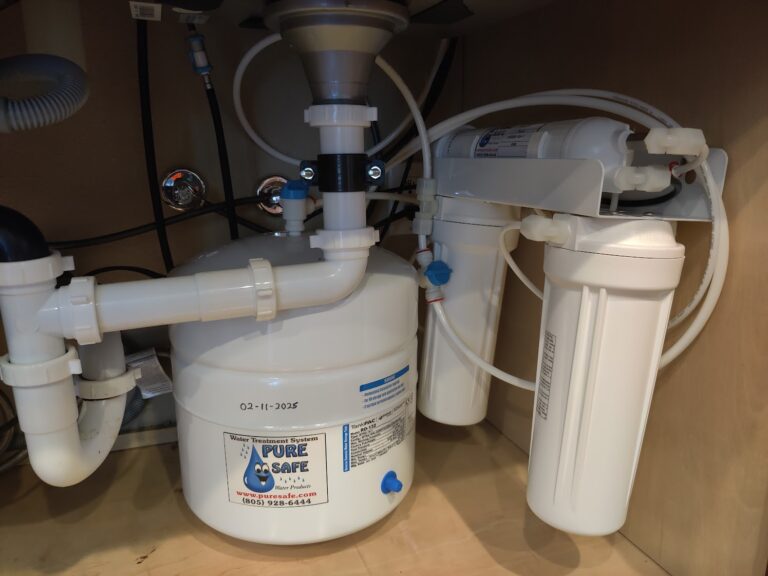
Membrane replacement makes sense when performance remains poor after the easier causes have been ruled out. That means confirming the prefilters are serviceable, feed pressure is adequate, the storage tank and valves are behaving normally, and the system is configured correctly. Then production and feed-versus-treated water performance can be evaluated under reasonable operating conditions.
Age is useful history. It is not a diagnosis by itself.
Signs That Justify Membrane Evaluation
Performance Stayed Poor After Filter Service
If fresh, correct prefilters do not restore normal production or treated-water performance, the membrane becomes a more reasonable suspect.
Low Production Persists
Production that stays low after feed pressure, tank behavior, valves and tubing restrictions are checked can point toward membrane condition.
Treated-Water Performance Declined
A meaningful change in feed-versus-treated performance can support membrane replacement when the system is otherwise operating under proper conditions.
Membrane History Is Unknown
Unknown age or service history is a reason to identify the installed membrane, review service history and evaluate performance—not a reason to replace it automatically.
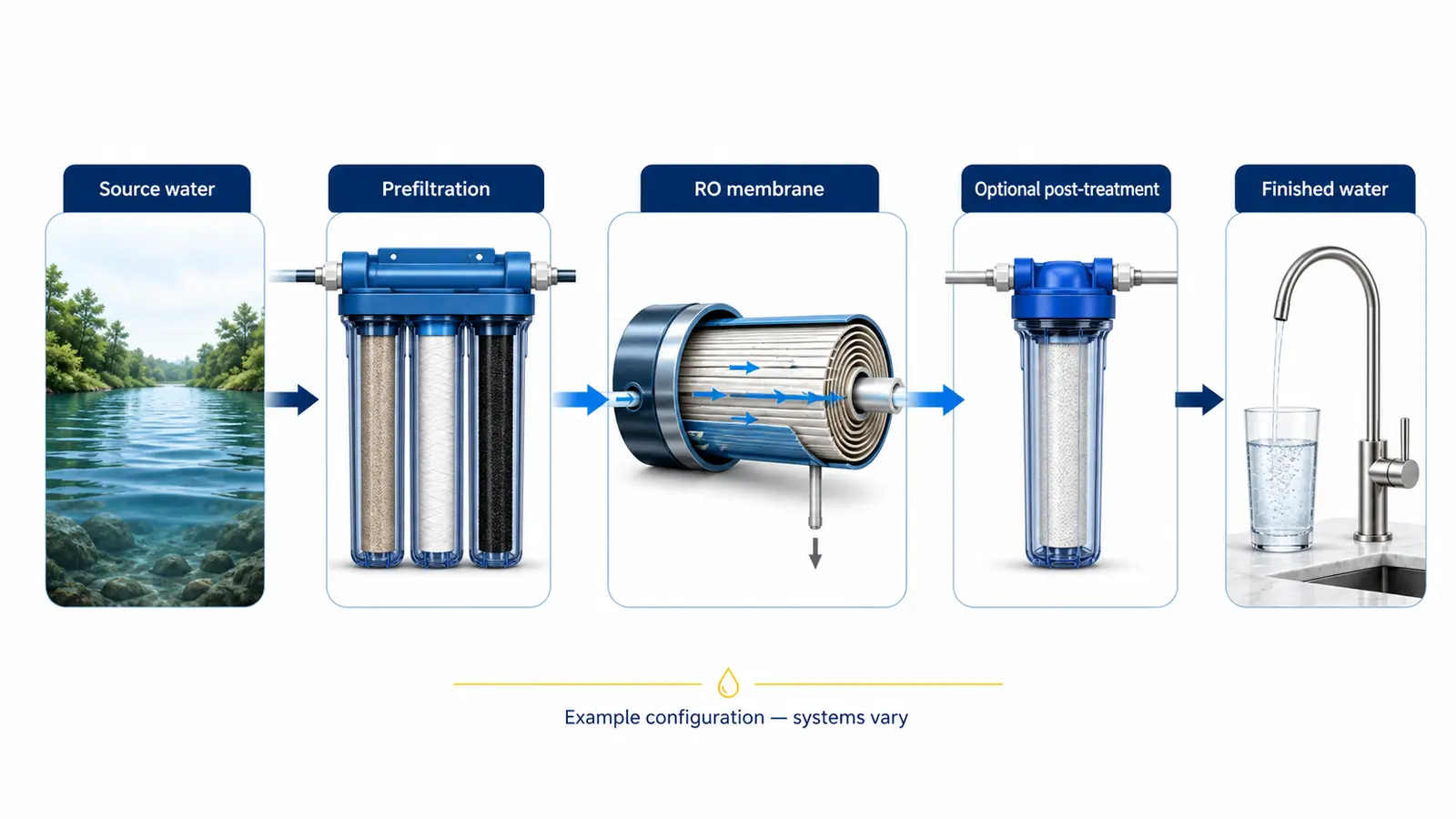
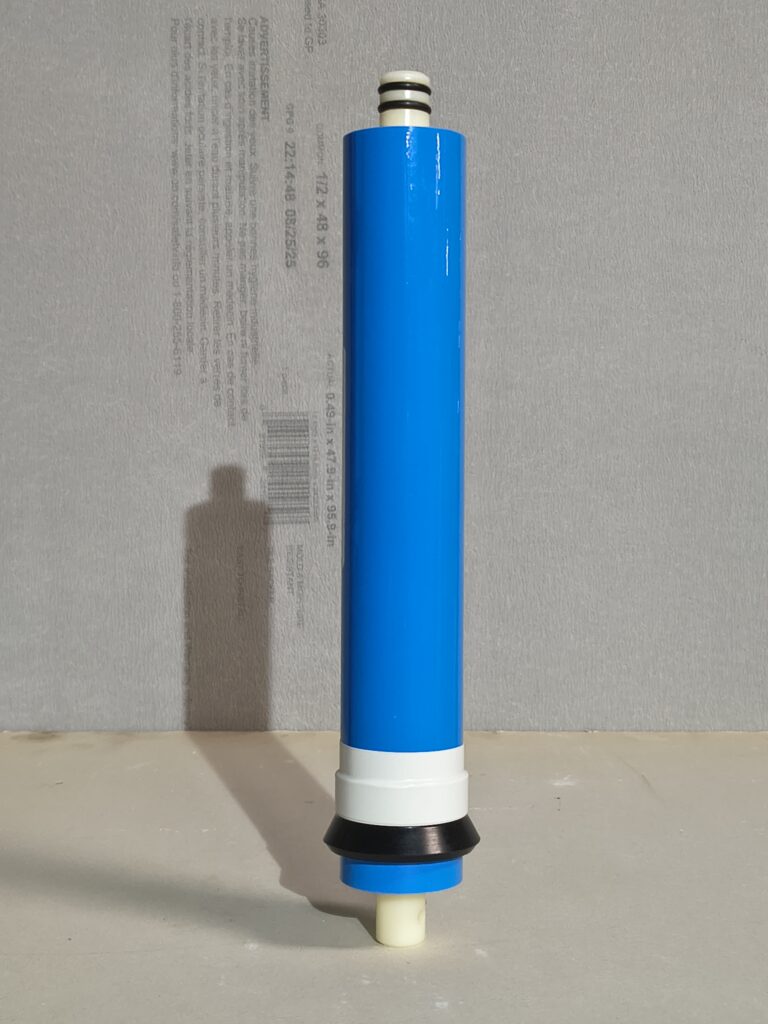
RO filters and the RO membrane do different jobs. Sediment and carbon cartridges are recurring service items that protect the system and, in many designs, help protect the membrane. The membrane is the separation stage and follows a performance-based replacement path.
Routine Filters Are Not the Same Thing as the RO Membrane
Replacing overdue prefilters may restore flow or protect membrane performance without changing the membrane at all. A membrane should be evaluated after the upstream filters and operating conditions are known. Installing a new membrane behind neglected or incorrect prefilters can shorten its useful life and fail to solve the real problem.
Need only the cartridges changed? Use RO filter replacement. Want to understand the stages? See the RO filters & membranes guide.
How Water Fixers Checks RO Membrane Performance
A useful membrane evaluation looks at the system as a whole. The goal is to avoid replacing the membrane when feed pressure, water temperature, filters, tank condition or a restriction is actually responsible for the change in performance.
1. Confirm Pressure & Prefilters
Feed pressure and the installed prefilter sequence are checked first because low pressure or loaded filters can reduce production and distort membrane performance.
2. Check Production & Tank Behavior
Production, usable flow, storage-tank behavior, valves and obvious tubing restrictions are reviewed so delivery problems are not confused with membrane failure.
3. Compare Feed & Treated Water
Feed and treated water can be compared under reasonable operating conditions. A single reading is interpreted alongside feed pressure, water temperature, prefilter condition, system design and production—not used as a stand-alone diagnosis.
A Slow RO Faucet Can Have Several Causes
Low feed pressure, restricted prefilters, a low storage-tank air charge, a partly closed valve, tubing or flow-control restrictions, cold feed water and membrane condition can all reduce output. That overlap is why Water Fixers checks the system before recommending a membrane.
If low flow is your main symptom, start with the RO low-flow troubleshooting page or RO service & repair. If the filters are due, use filter replacement.
What Can Mimic a Bad RO Membrane?
Loaded or Incorrect Filters
Restricted or mismatched prefilters can reduce membrane feed and create the same slow-production complaint.
Low Feed Pressure
RO production depends on pressure across the membrane. Low feed pressure can make a healthy membrane look weak.
Storage-Tank Problems
A tank with incorrect air charge or internal problems can reduce faucet delivery even when membrane production is acceptable.
Valves, Tubing & Flow Control
A partly closed valve, kinked tubing, wrong flow restrictor or other setup problem can limit output and should be ruled out first.
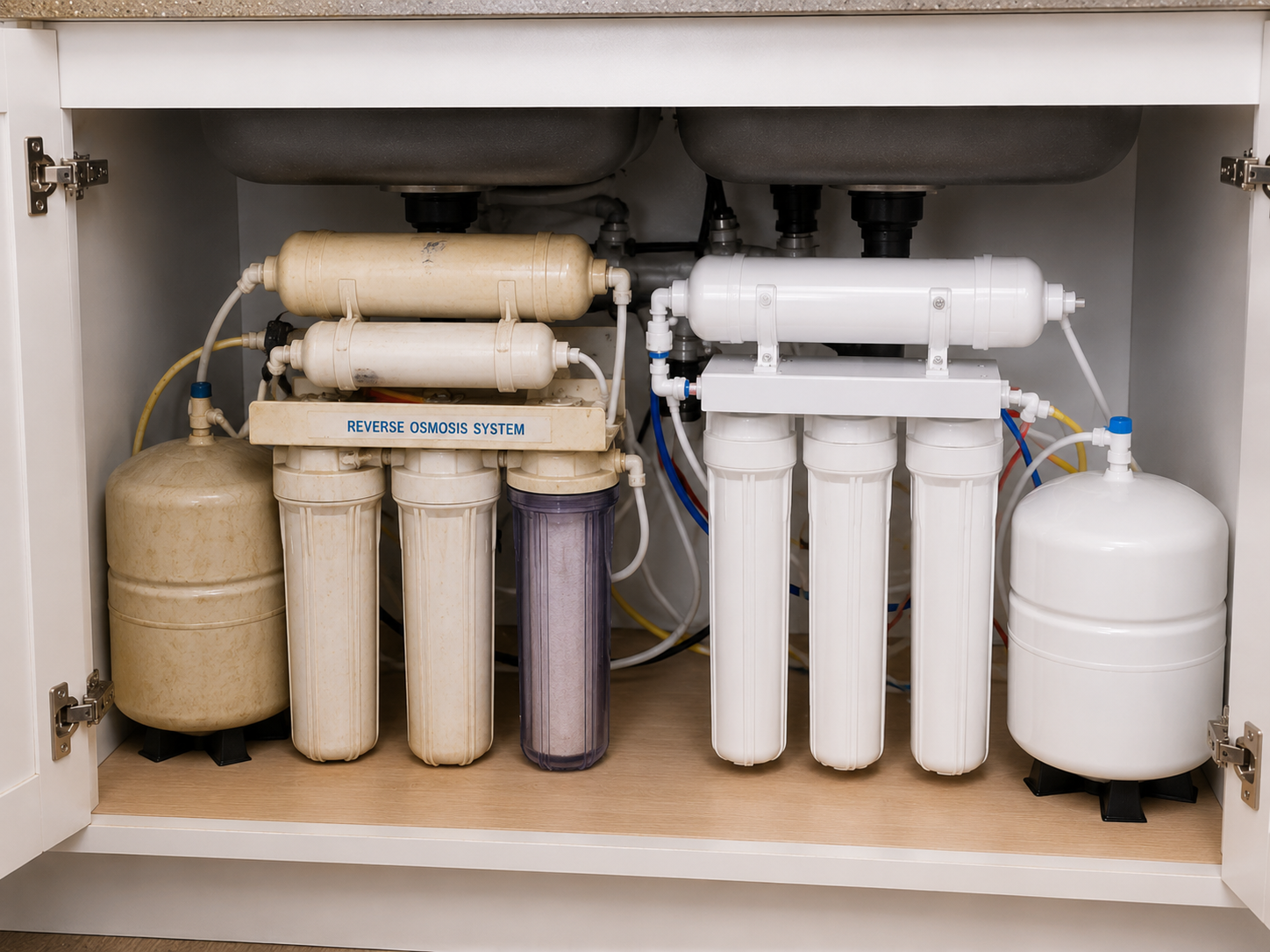
A membrane can be the right repair when the rest of the RO system is sound and a compatible membrane is available. But a new membrane is not always the smartest investment in an old system with brittle housings, repeated leaks, an aging tank, obsolete parts or several simultaneous failures.
Sometimes the Membrane Is the Fix. Sometimes the System Needs More.
Replace the membrane when performance has genuinely declined under proper conditions, the compatible membrane is confirmed, and the rest of the system is serviceable.
Repair another component when pressure, tank, valve, tubing, housing or filter problems explain the symptom better.
Consider system replacement when multiple components are failing, parts are obsolete or unsupported, leaks are recurring, or the total repair path approaches the value of a supported new system.
Membrane Evaluation, Filter Change, or Repair?
These services overlap in symptoms but not in purpose. Choose the route that best matches what is actually happening under the sink.
RO Membrane Evaluation
Best when filters and operating conditions have been checked but production or treated-water performance still points toward the membrane.
RO Filter Replacement
Use when the recurring prefilters or post-filters are due, the service history is unknown, or routine cartridge service has not been completed.
RO Service & Repair
Use for active leaks, no water, tank problems, constant running, damaged housings, faucet issues or failures that need broader diagnosis.
Reverse Osmosis Membrane Evaluation Across Santa Maria and the Central Coast
Water Fixers is based in Santa Maria and evaluates and replaces residential reverse osmosis membranes throughout supported Central Coast service areas. Existing systems are welcome. The first step is identifying the installed system and determining whether the membrane is actually the failed component.
For Santa Maria-specific RO information, use the dedicated Santa Maria reverse osmosis page. For the complete RO service family, return to the Reverse Osmosis hub.
Reverse Osmosis Membrane Replacement FAQs
Direct answers about bad RO membranes, filters versus membranes, low flow, performance testing, repair and whole-system replacement.
Find Out Whether Your RO Membrane Actually Needs Replacing
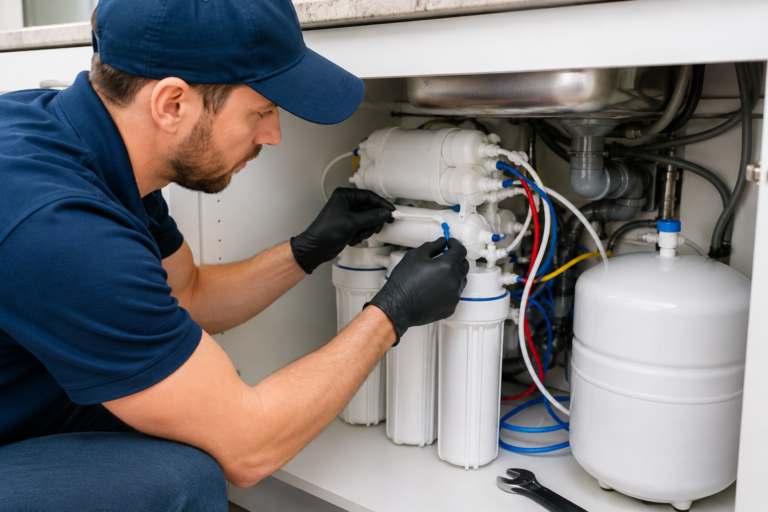
Water Fixers can identify the system, check the conditions that affect membrane performance, confirm a compatible replacement when needed, install it, flush the system and re-check operation. If the membrane is not the real problem, we will route the system to the more appropriate filter, repair or replacement path.
Water Fixers Plumbing & Filtration • Santa Maria, California • Central Coast service • License #719792