











Pumps & Pressure Systems
Pump and pressure system diagnosis, repairs and service to keep water moving reliably through your home.
Plumbing Services
Local plumbing repairs, fixture updates and water line service to keep your home running smoothly every day.
Leak Detection
Help locating hidden leaks and unexplained water use, with clear guidance on the next steps for your home.
Drains & Sewer
Drain cleaning and sewer camera inspections to find the cause of stubborn clogs, slow drains and backups.
Gas Line Services
Gas line installation, repairs and appliance connections, with careful attention to your home’s plumbing needs.
Water Heater Services
Tank and tankless water heater repairs, replacement and maintenance to keep hot water ready for daily use.
Slow flow at an RO drinking-water faucet can come from restricted filters, low feed-water pressure, storage-tank pressure or condition, membrane production, a partly closed valve, kinked tubing, faucet restriction, or more than one issue at the same time.
The useful first step is to notice how the flow behaves—strong then fading, weak all the time, or slow to recover—then trace the water path instead of replacing parts blindly.

Quick answer: low flow does not identify one failed component. A faucet that starts strong and quickly fades can point toward stored-water delivery or tank behavior, while consistently weak flow can involve feed pressure, filters, membrane production, tubing, valves or the faucet itself. Slow recovery after the tank is emptied points more toward how quickly the system is producing water.
If the cause is not obvious or the symptom persists, use RO Service & Repair for diagnosis. If the only known issue is overdue cartridges, use RO Filter Replacement.
The faucet may be delivering stored water at first and then losing usable pressure or volume. Tank air charge, tank condition, tank valve, tubing and faucet delivery deserve attention.
Consistently weak flow can involve restricted filters, low incoming pressure, limited membrane production, a partly closed valve, kinked tubing or a restricted faucet. The full flow path should be checked.
Loaded prefilters are a common possibility when flow has slowly worsened and service is overdue, but filter replacement should follow the actual installed cartridges and service history.
A partly closed feed or tank valve, pinched tubing, a seating issue, trapped air or another service-related restriction may be involved. Do not keep opening housings or fittings under pressure to chase the symptom.
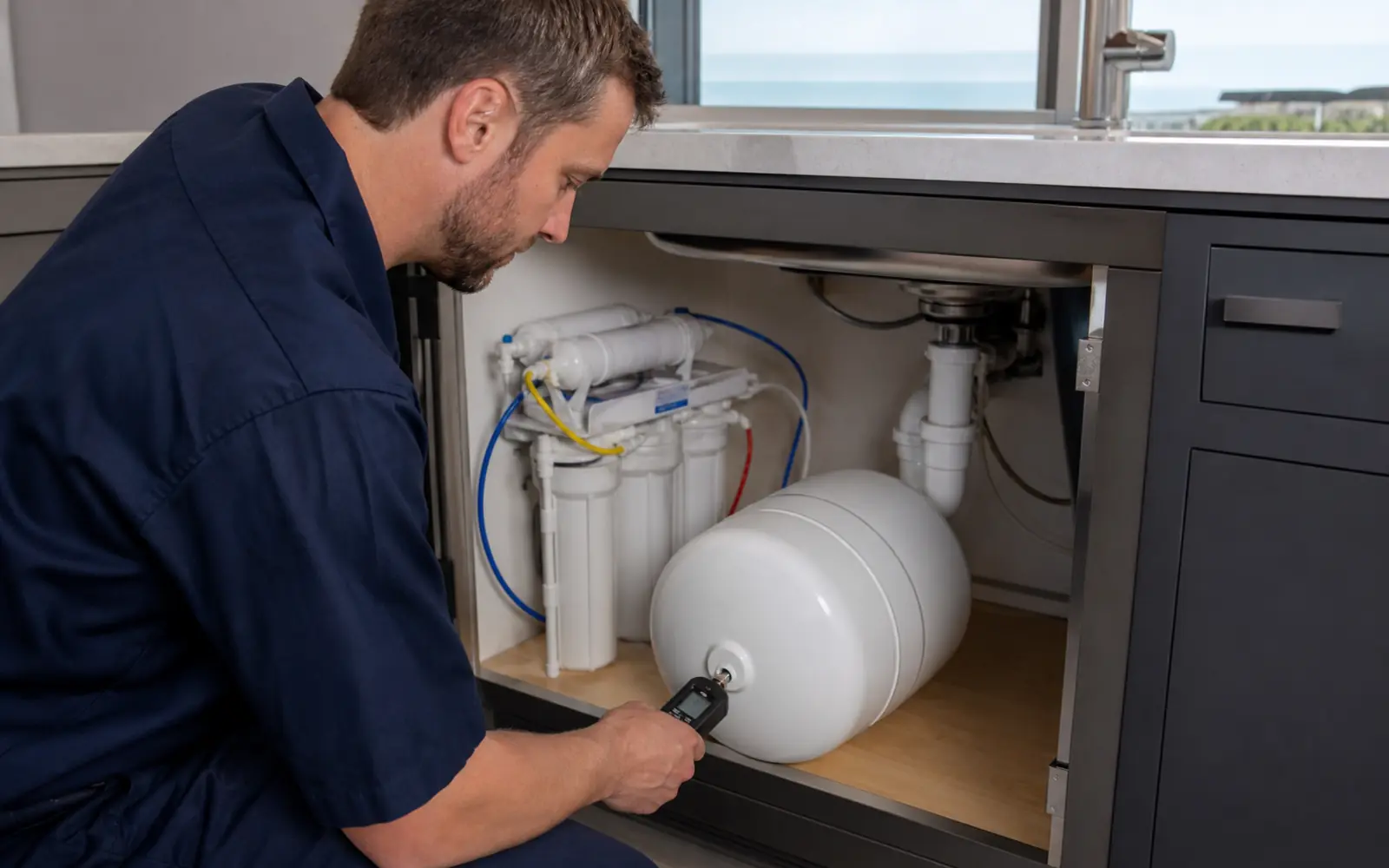
A strong initial stream followed by a quick fade often feels like a membrane problem, but the storage tank and delivery side can create the same symptom. Tank pressure is meaningful only when it is checked under the correct conditions.
The RO tank stores treated water under air pressure so the faucet can deliver useful flow. If the tank has an incorrect air charge, limited usable volume, an internal problem, a closed valve, restricted tube or faucet restriction, faucet flow can fall off even when the membrane is producing water.
Do not add air to a full storage tank or use household water pressure as the tank-pressure setting. Tank precharge is checked with the water side empty and should follow the system manufacturer’s guidance. For a tank-specific symptom, use RO Tank Not Filling; for complete diagnosis, use RO Service & Repair.
These observations can make a service visit faster without opening pressurized housings or guessing at tank settings.
Check that the RO feed-water valve and storage-tank valve are fully open. If other cold-water fixtures are also weak, the issue may be broader than the RO system.
Inspect visible tubing without disconnecting it. Note bends, pinches, drips or a faucet that is mechanically restricted. Do not open filter housings or disconnect pressurized fittings just to troubleshoot flow.
Note whether flow starts strong then fades, stays weak from the start, or recovers very slowly after use. Also check when the filters were last serviced. Those clues help separate delivery, filtration and production problems.
RO production depends on adequate feed pressure and an unrestricted path through the prefilters. A loaded sediment or carbon stage can starve the membrane, while a tank or faucet problem can make a healthy membrane look weak at the sink.
If the filters are due, use RO Filter Replacement. If fresh, correct prefilters do not restore production and operating conditions are appropriate, then RO Membrane Replacement becomes a more relevant evaluation path.

RO membranes need pressure to produce treated water. Low incoming pressure can reduce production and make recovery slow even when the membrane itself is not the primary problem.
Sediment and carbon filters can load with use and restrict the water reaching the membrane. The correct cartridge and interval depend on the installed system, source water and service history.
An incorrect tank air charge, limited usable tank volume, tank valve issue or internal tank problem can reduce faucet delivery even if RO production is acceptable.
A partly closed valve, kinked tube, restricted fitting or faucet problem can limit delivery. These issues can mimic filter, tank or membrane trouble, so they should be ruled out in sequence.
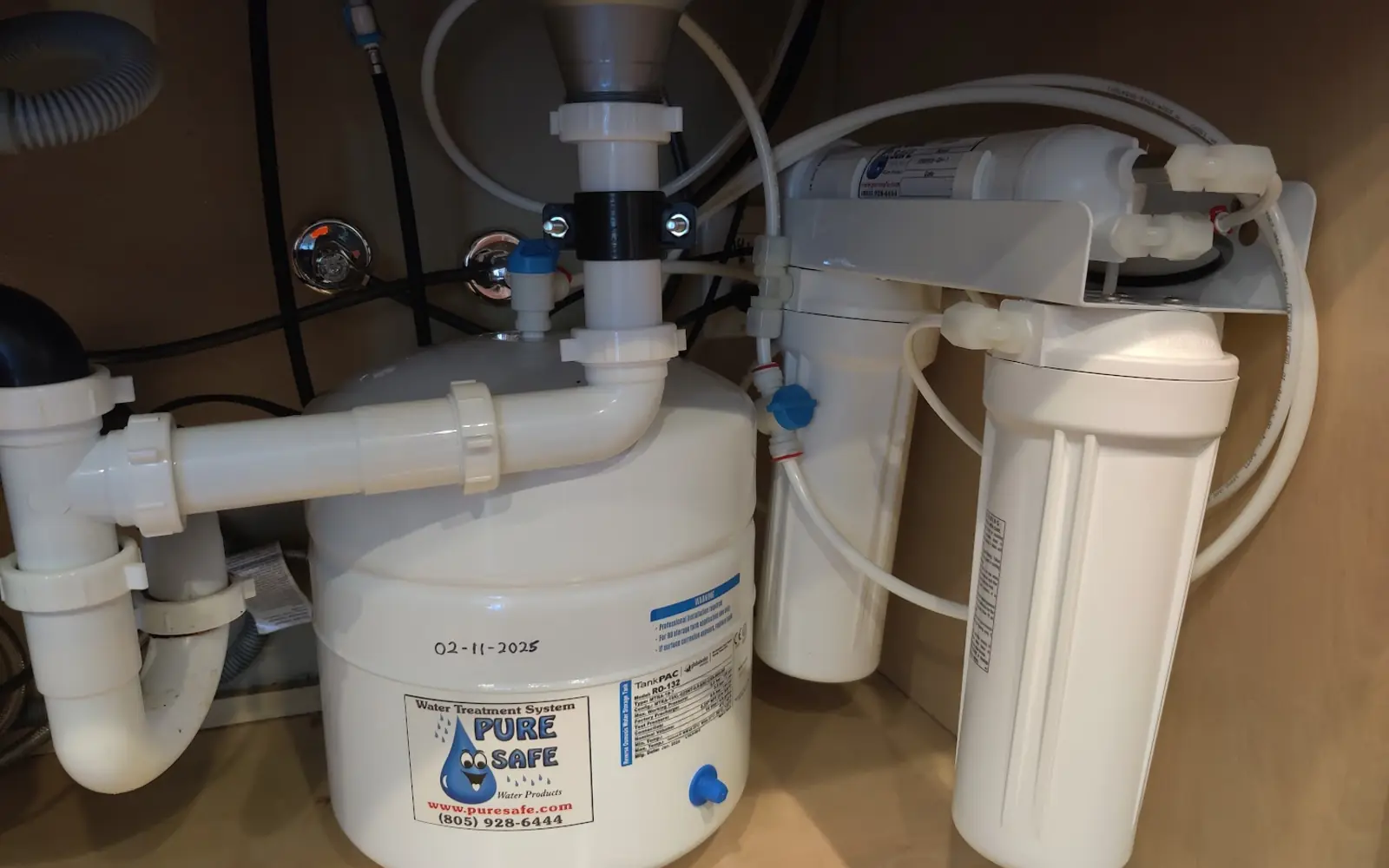
Two different problems can feel identical at the faucet: the RO may be making treated water too slowly, or it may be making water but not delivering the stored water correctly. Separating those paths prevents unnecessary part replacement.
Production checks focus on feed pressure, prefilters, membrane output and system operating conditions. Delivery checks focus on usable tank volume, tank precharge, tank valve, tubing and faucet flow. A complete diagnosis follows both paths before deciding what actually needs service.
Use the flow pattern and service history to choose the next step. Persistent or unclear low flow belongs with RO Service & Repair; a known overdue cartridge need belongs with Filter Replacement; and a generally working system with an uncertain service history may be better suited to Maintenance.
Use Service & Repair when low flow persists, the cause is unclear, several components may be involved, the system has another failure, or the symptom needs hands-on diagnosis.
Use Filter Replacement when the system is otherwise behaving normally and the known need is routine cartridge service. Overdue filters can restrict flow, but they are not the only possible cause.
Use Maintenance when the RO is generally working but service history is overdue or uncertain and the system needs broader inspection, filter planning, sanitation when appropriate, tank/pressure review and leak checks.
Low flow by itself does not mean an RO system should be replaced. But if slow production appears alongside repeated leaks, brittle parts, an aging tank, unavailable components, membrane concerns or several overdue repairs, the condition of the whole system matters.
If the question is whether the existing system is still worth restoring, use RO Repair vs Replace. If the immediate issue is diagnosing the low-flow failure, start with RO Service & Repair.
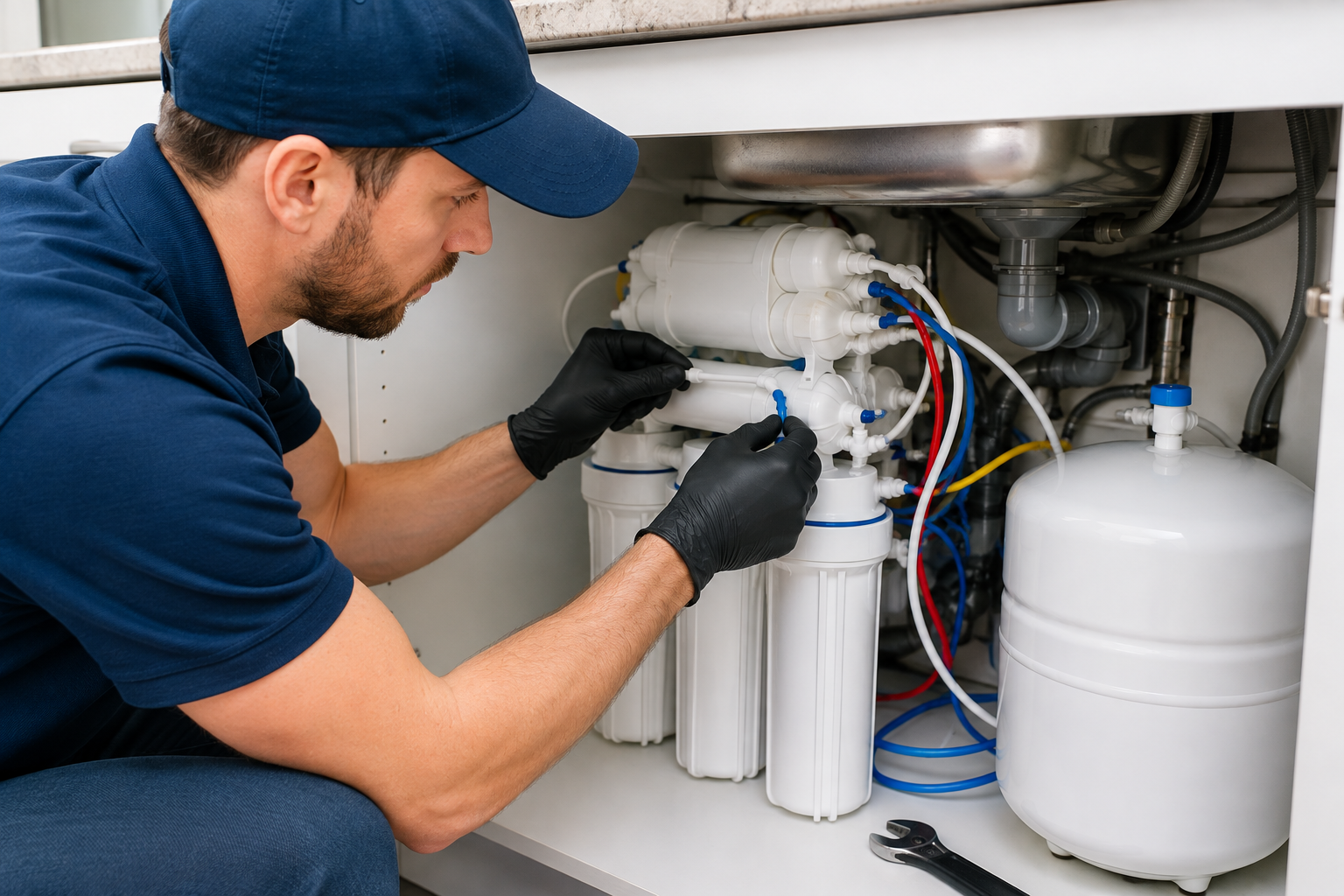
Direct answers about slow RO faucet flow, tank delivery, filter restrictions, feed pressure, membrane concerns, recovery time and when the symptom belongs on the repair path.
Water Fixers can follow the system from feed water through filters, membrane, storage tank, tubing and faucet to determine whether the problem is production, storage or delivery. This symptom page is here to help you understand the possibilities; the hands-on diagnosis belongs on RO Service & Repair.