











Why Is My Reverse Osmosis Tank Not Filling?
Tank Problems Can Start Upstream of the Tank
An RO storage tank that stays light, takes unusually long to recover, delivers very little usable water, or seems full but empties almost immediately can involve feed-water pressure, restricted filters, membrane production, tank precharge or condition, valves, tubing, faucet delivery, or more than one issue at the same time.
Santa Maria-based – Central Coast RO support – Existing systems welcome – Tank and production diagnosis – License #719792
What Does an RO Tank Not Filling Usually Mean?
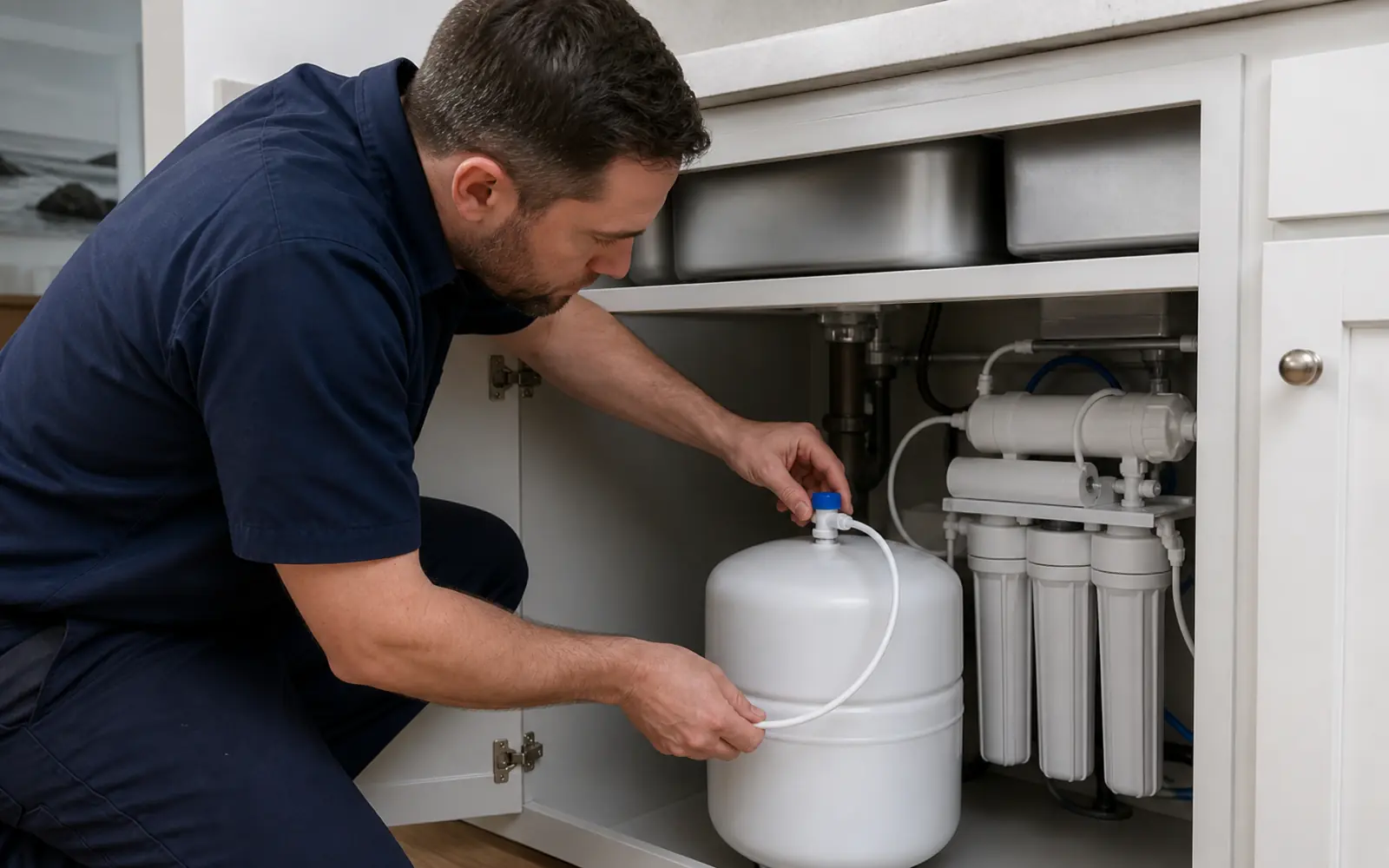
Quick answer: the storage tank may be the problem, but it may also be receiving too little treated water from upstream. The useful first split is production versus storage and delivery: is the RO failing to make enough water, or is water being produced but not stored or delivered correctly?
Four Tank Symptoms That Point in Different Directions
Tank Stays Light and Never Seems to Recover
If the tank remains light after adequate recovery time, the RO may not be producing enough water. Feed-water availability, pressure, prefilters, membrane production, drain behavior and shutoff/check-valve operation can all matter.
Tank Feels Heavy but the Faucet Runs Out Quickly
A heavy tank with little usable faucet water points more toward delivery. Tank precharge, tank condition, the tank valve, tubing or the faucet can keep stored water from being delivered normally.
Tank Refills, but Recovery Takes Much Longer Than It Used To
Slow recovery can come from restricted prefilters, low feed pressure, membrane production or system operating conditions. That overlaps with the low-flow symptom family and should be checked in sequence.
The Problem Started After Service or a Valve Was Moved
A partly closed feed or tank valve, pinched tubing, a connection issue or another service-related restriction may interrupt filling or delivery. Avoid repeatedly opening housings or adjusting unfamiliar valves under pressure.
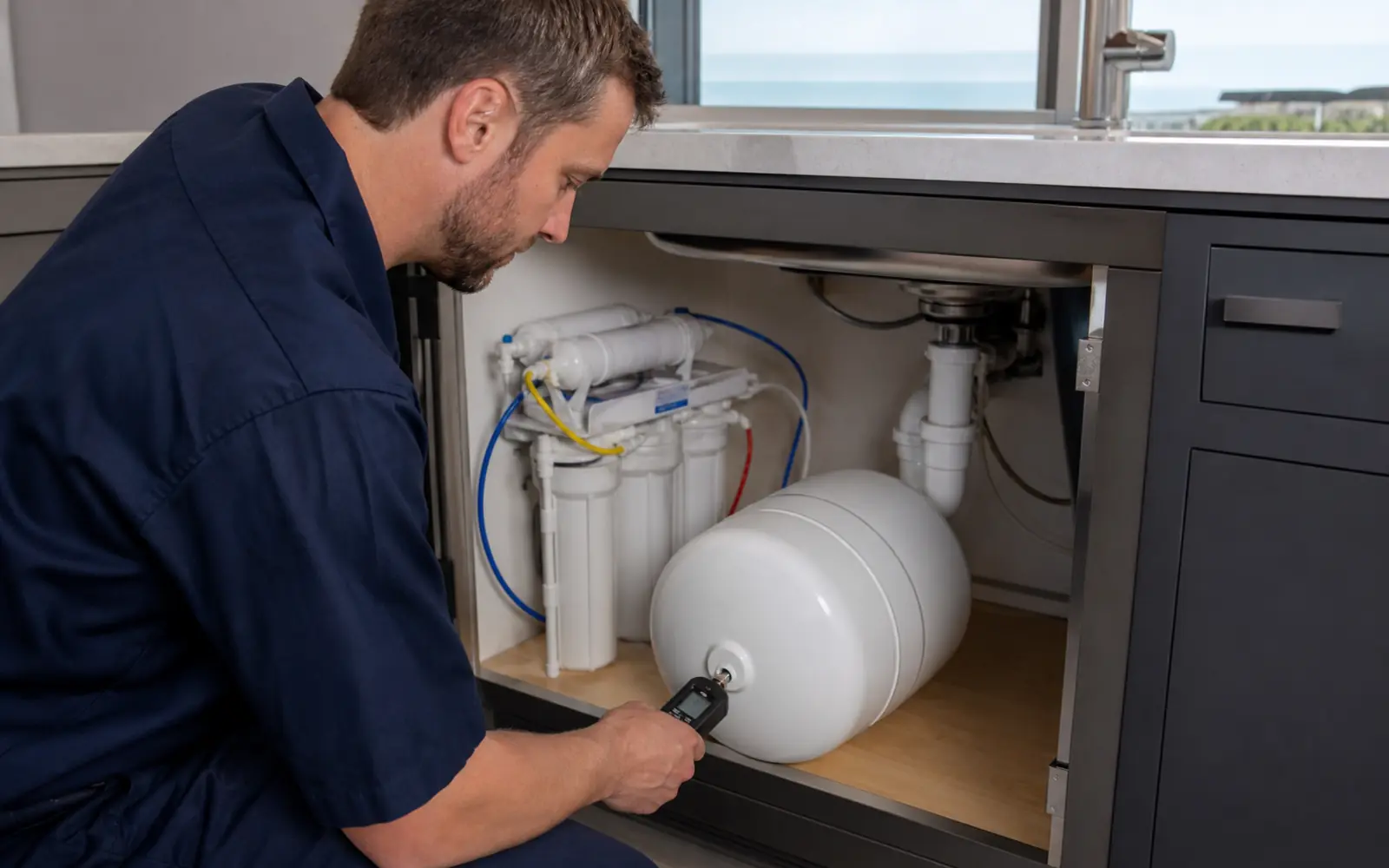
A storage tank can contain water and still deliver very little if the air charge, tank condition, valve, tubing or faucet side is not working correctly. Tank pressure only means something when it is checked under the correct conditions.
Tank Feels Full but Delivers Very Little? Check Usable Delivery
The RO tank stores treated water against an air charge so the faucet can deliver useful flow. Too much or too little precharge, an internal tank problem, a partly closed tank valve or a delivery restriction can reduce usable volume even when the RO is producing water.
Do not add air to a tank that still contains water. Tank precharge is meaningful only with the water side emptied and should be checked against the instructions for the specific tank or RO system. If you are not sure how to isolate and empty the tank safely, leave the adjustment to service.
Safe Checks Before You Start Replacing RO Parts
These observations can help separate a production problem from a storage or delivery problem without opening pressurized housings, disconnecting tubing or guessing at tank settings.
1. Confirm the Feed and Tank Valves Are Open
Confirm that the RO feed-water valve and the valve on top of the storage tank are open. If the home also has unusually weak cold-water pressure, the issue may extend beyond the RO system.
2. Look at the Tank and Visible Tubing Without Disconnecting It
Look for kinked tubing, moisture or an obvious restriction. If it can be done without straining yourself or pulling on tubing, the tank’s weight can provide a clue: a persistently light tank suggests limited production or feed water, while a heavy tank with little faucet delivery points more toward storage or delivery.
3. Check Service History and Allow Time for Recovery
Check when the prefilters were last serviced, then allow adequate time for the system to recover after stored water is used. Do not keep opening housings, disconnecting tubing or adding air to the tank while trying to force a faster refill.
Check Feed Pressure, Filters and Production Before Blaming the Tank
If the tank stays light, the tank itself is only one possibility. Feed-water pressure, loaded prefilters and membrane production can reduce the amount of treated water reaching storage.
If routine cartridges are due, use RO Filter Replacement. If correct, fresh prefilters are in place but treated-water production remains poor under appropriate operating conditions, RO Membrane Replacement becomes a more relevant evaluation path.

Common Causes of an RO Tank Not Filling
Feed-Water or Pressure Problem
A closed feed valve, unavailable feed water or inadequate incoming pressure can prevent the RO from producing enough treated water to refill storage normally.
Restricted or Overdue Prefilters
Loaded sediment or carbon prefilters can starve the membrane and stretch recovery time. The correct cartridge and service interval depend on the installed system, source water and service history.
Slow Membrane Production or Shutoff Behavior
A pressure-starved, fouled or worn membrane can produce too slowly. Automatic shutoff or check-valve behavior can also interfere with a normal fill cycle on systems that use those components.
Tank Precharge, Tank Valve or Delivery Restriction
Incorrect tank air charge, an internal tank problem, a closed tank valve, restricted tubing or faucet-side restriction can reduce usable stored water even if production is acceptable.
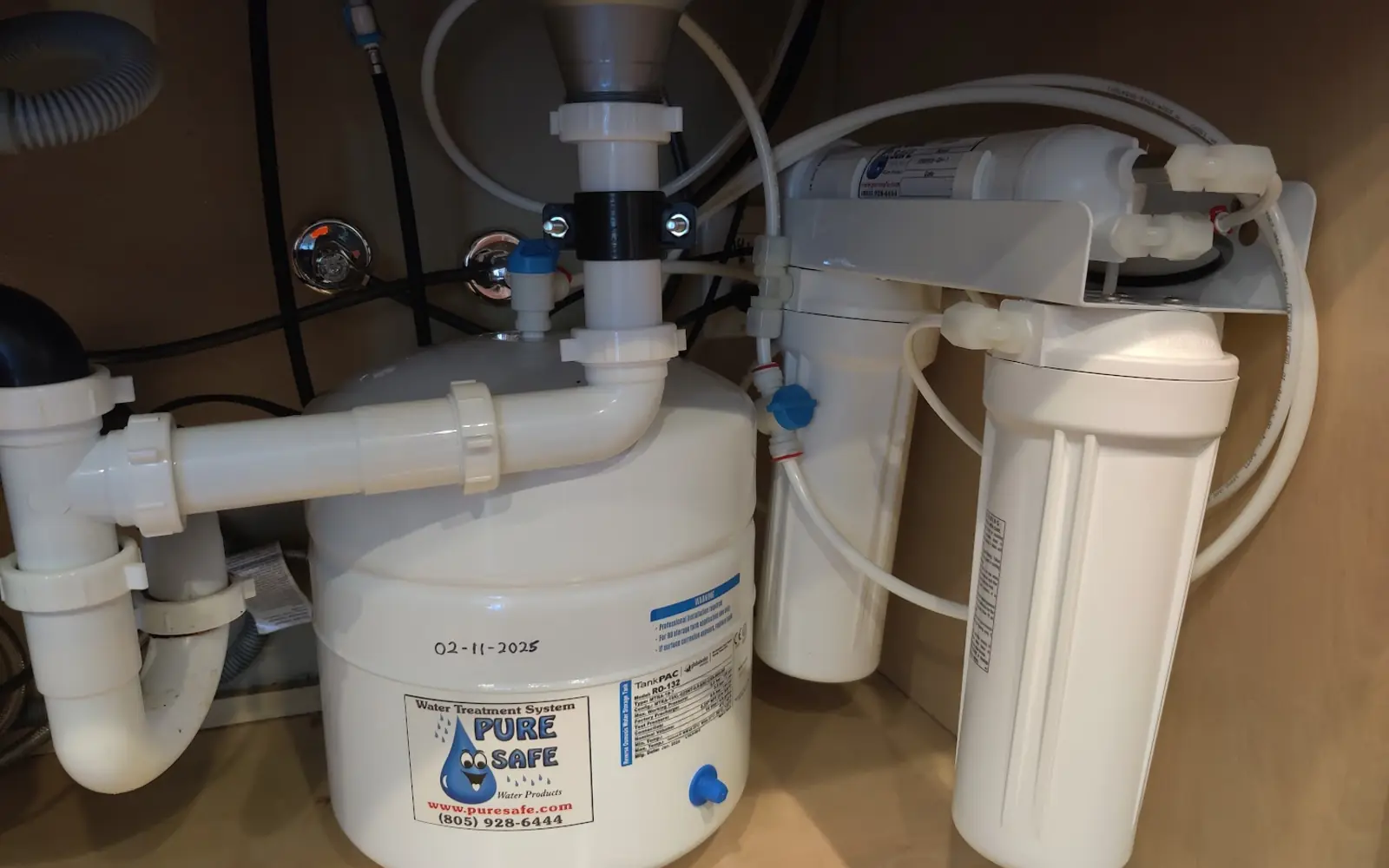
Two different problems can look like an empty RO tank: the system may not be making enough treated water, or it may be making water but not storing or delivering it correctly. Separating those paths prevents unnecessary tank or membrane replacement.
Is the RO Not Making Water - or Is the Tank Not Delivering It?
Production checks focus on feed-water availability, incoming pressure, prefilter condition, membrane output, drain behavior and automatic-shutoff/check-valve operation where applicable. Storage and delivery checks focus on tank precharge with the water side empty, tank condition, the tank valve, tubing and faucet delivery.
Tank Diagnosis, Filter Service, or Maintenance?
This page owns the narrow symptom of an RO storage tank that will not fill or provide expected usable volume. It explains likely cause categories and safe observations, then hands the actual service work to the page that owns that intent.
RO Service & Repair
Use Service & Repair when the tank does not recover, the cause is unclear, production and delivery both need testing, several components may be involved, or the system needs hands-on diagnosis.
RO Filter Replacement
Use Filter Replacement when the RO is otherwise behaving normally and the known need is routine cartridge service. Restricted prefilters can slow tank recovery, but filters are not the only possible cause.
RO Maintenance
Use Maintenance when the system is generally working but service history is overdue or uncertain and the RO needs a broader review of filters, sanitation when appropriate, leaks, tank behavior, pressure and overall condition.
An Older RO With Tank Trouble May Need a Bigger Decision
A tank problem by itself does not mean the entire RO system should be replaced. But an aging tank combined with repeated leaks, brittle tubing, unavailable parts, membrane concerns or several overdue repairs can make the condition of the whole system the more useful question.
If the decision is whether the existing RO is still worth restoring, use RO Repair vs Replace. If the immediate issue is diagnosing why the tank is not filling or delivering, start with RO Service & Repair.
Reverse Osmosis Tank Not Filling FAQs
Direct answers about RO storage-tank recovery, production, tank pressure, filters, membrane output, valves, tubing and when the symptom belongs on the repair path.
An RO tank may stay empty or recover slowly because feed water is unavailable, incoming pressure is low, prefilters are restricted, membrane production is limited, shutoff or check-valve behavior is abnormal, the tank valve or tubing is restricted, or the tank itself has a pressure or internal problem.
A persistently light tank suggests that little treated water is reaching storage. Feed-water availability, pressure, filter restriction and membrane production are common parts of the diagnostic path, but the exact cause should be verified before replacing parts.
Yes. Loaded prefilters can restrict the feed water reaching the membrane and slow production. Filter condition is one part of the tank-not-filling diagnosis, not proof that filters are the only problem.
Yes. Reverse osmosis production depends on adequate pressure across the membrane. Low incoming pressure can reduce production and extend tank recovery even when the membrane itself is not the primary failure.
Limited membrane production can slow tank recovery, but low pressure, restricted prefilters, cold feed water and other operating conditions can create similar symptoms. Those should be checked before assuming the membrane is bad.
Yes. A tank can contain water but have poor usable delivery because of incorrect precharge, internal tank condition, a partly closed tank valve, tubing restriction or faucet-side problem.
Do not add air while the tank contains water. Tank precharge should be checked only after the water side is emptied and according to the specific tank or RO-system instructions. An incorrect adjustment can reduce usable volume or prevent normal delivery.
There is no universal refill time. Recovery depends on the system and membrane, feed pressure, water temperature, filter condition, source-water conditions and how much stored water was used. A meaningful slowdown from that system’s normal recovery pattern is more useful than a generic hour estimate.
On systems that use those components, abnormal automatic-shutoff or check-valve behavior can interfere with normal production and the fill cycle. These components are best evaluated as part of the complete system rather than replaced by guesswork.
Use RO Service & Repair when the tank does not recover after normal use, the tank feels heavy but will not deliver, the cause is unclear, the system has other symptoms, or feed pressure, filters, membrane production, valves and tank behavior need hands-on testing.
Still Waiting for Your RO Tank to Fill?
Water Fixers can follow the system from feed water through filters and membrane production into the storage tank, then through the tank valve, tubing and faucet. The goal is to separate production trouble from storage or delivery trouble before parts are replaced.
Water Fixers Plumbing & Filtration – Santa Maria, California – Central Coast service – License #719792