DIAGNOSIS • REPAIR • WASTEWATER SYSTEMS
Sewage ejector pump repair should begin by identifying what is actually failing. Water Fixers evaluates the existing ejector system, accessible controls, basin, check valve, discharge plumbing and related drainage conditions before recommending repair, replacement or a different plumbing path.
California Plumbing License #719792 • Central Coast • Se Habla Español
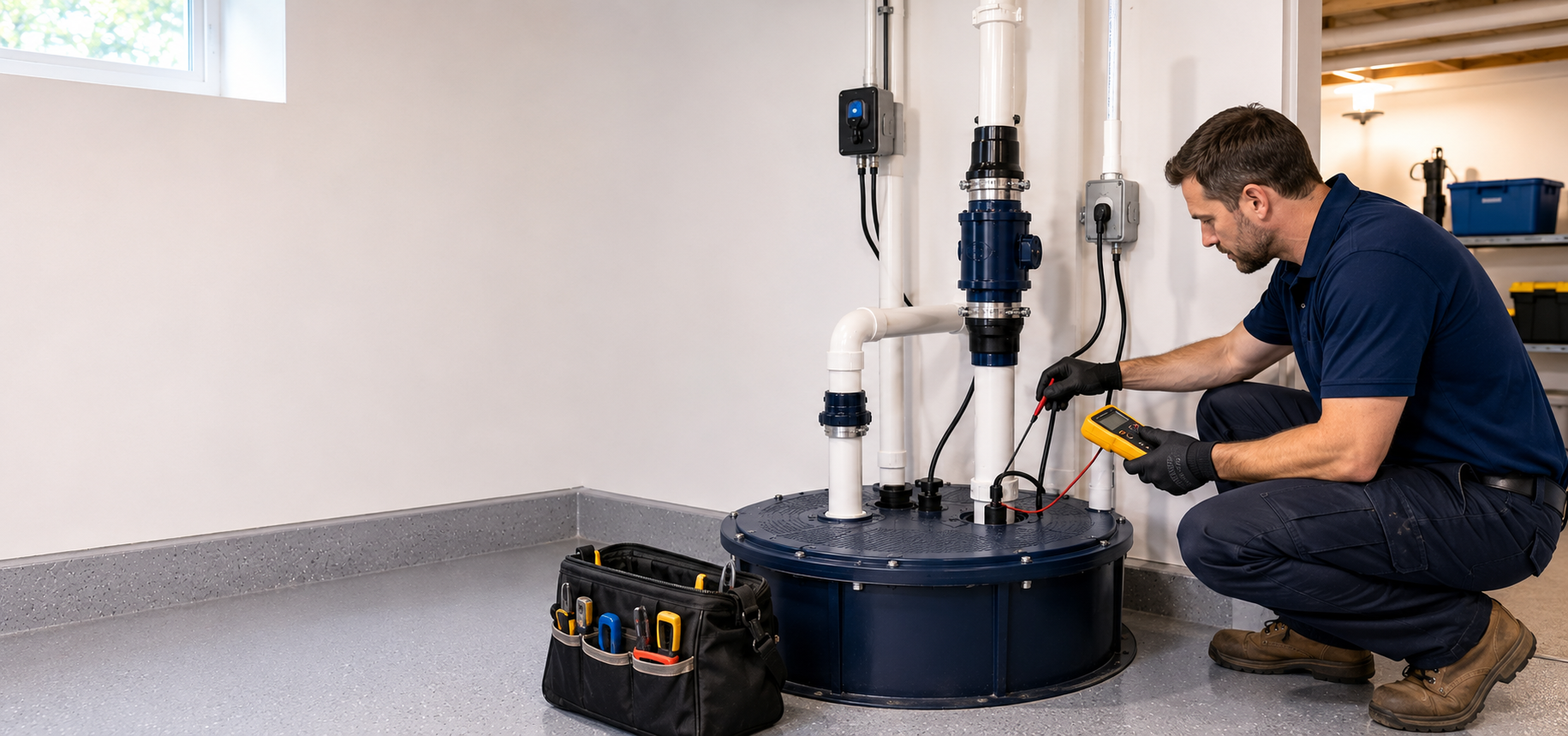
START WITH THE SYMPTOM
Symptoms help choose the next service path, but they do not prove which component has failed.
Several different components or conditions can produce this symptom. Diagnosis should determine what is actually preventing normal operation.
The pump, discharge path, check valve or a broader drainage condition may be involved.
Frequent or unusual cycling should be evaluated rather than tied to one assumed failure.
If wastewater is entering occupied areas or creating an immediate sanitation/property concern, use the emergency plumbing path.
A larger shared drain or sewer problem may be a better fit than ejector-pump repair.
An operating system that needs inspection or preventive care belongs on the maintenance path.
When condition or serviceability makes repair impractical, replacement installation may be the next path after evaluation.
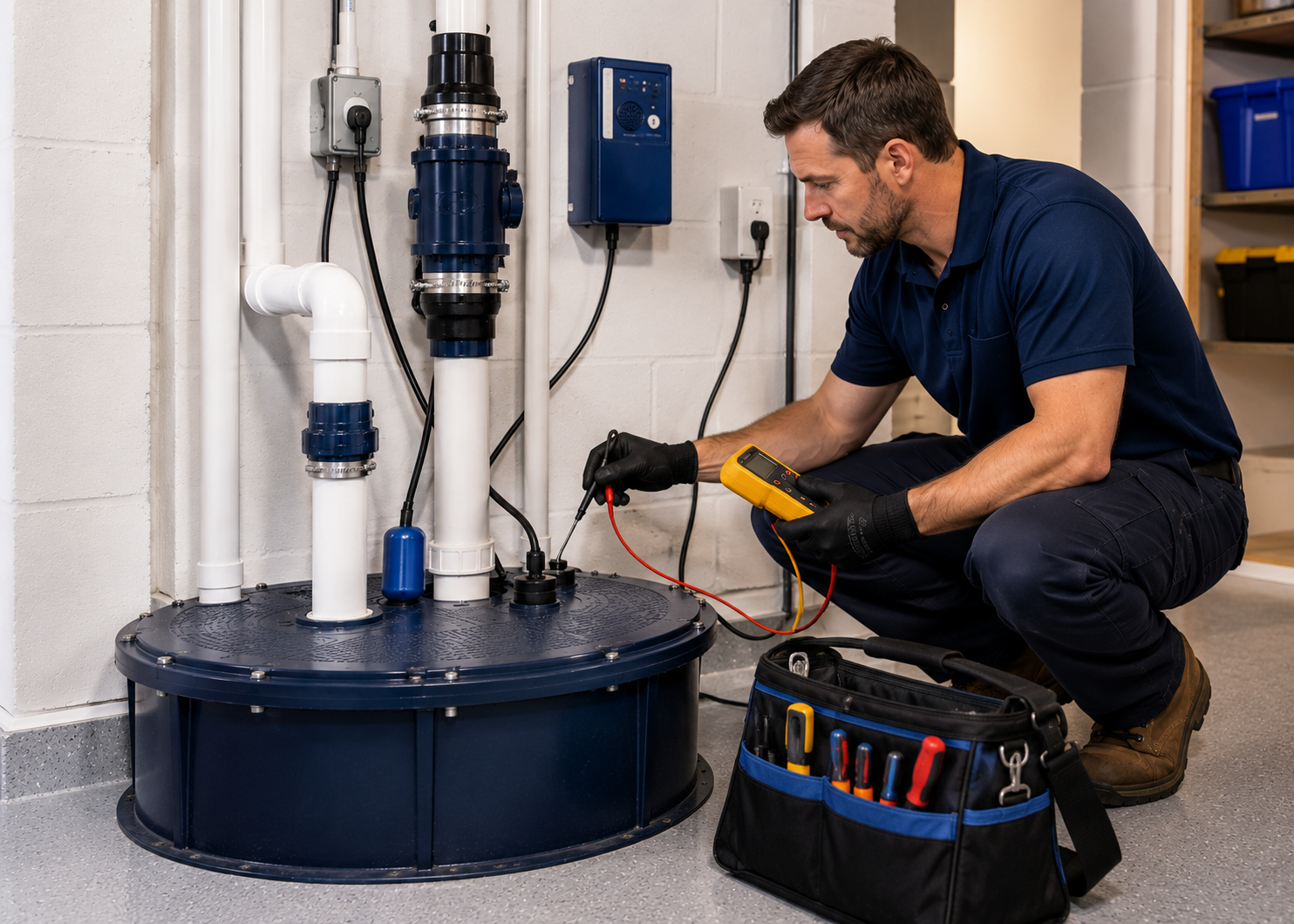
DON’T REPLACE THE PUMP BASED ON ONE SYMPTOM
Diagnosis may need to consider whether the pump activates, whether wastewater leaves the basin, whether the discharge path is restricted, whether the check valve is operating appropriately, and whether float or other activation components are involved where present.
A lower-level backup can also come from another drainage condition, so the goal is to identify the actual problem before parts are replaced.
REPAIR STARTS WITH THE RIGHT PROBLEM
The same visible symptom can come from different parts of the wastewater path. Use the affected fixtures and system behavior to choose the correct evaluation—not a guess at the failed part.
Below-grade fixtures or the known ejector system are specifically affected.
One ordinary sink, tub or other fixture drain is slow or clogged while the ejector system otherwise appears normal.
Several fixtures across the property are backing up together or symptoms extend beyond the ejector-served area.
COMMON REPAIR SIGNALS
An alarm, backup, unusual cycling or pump that does not appear to start can justify service. None of these symptoms proves one specific failure.
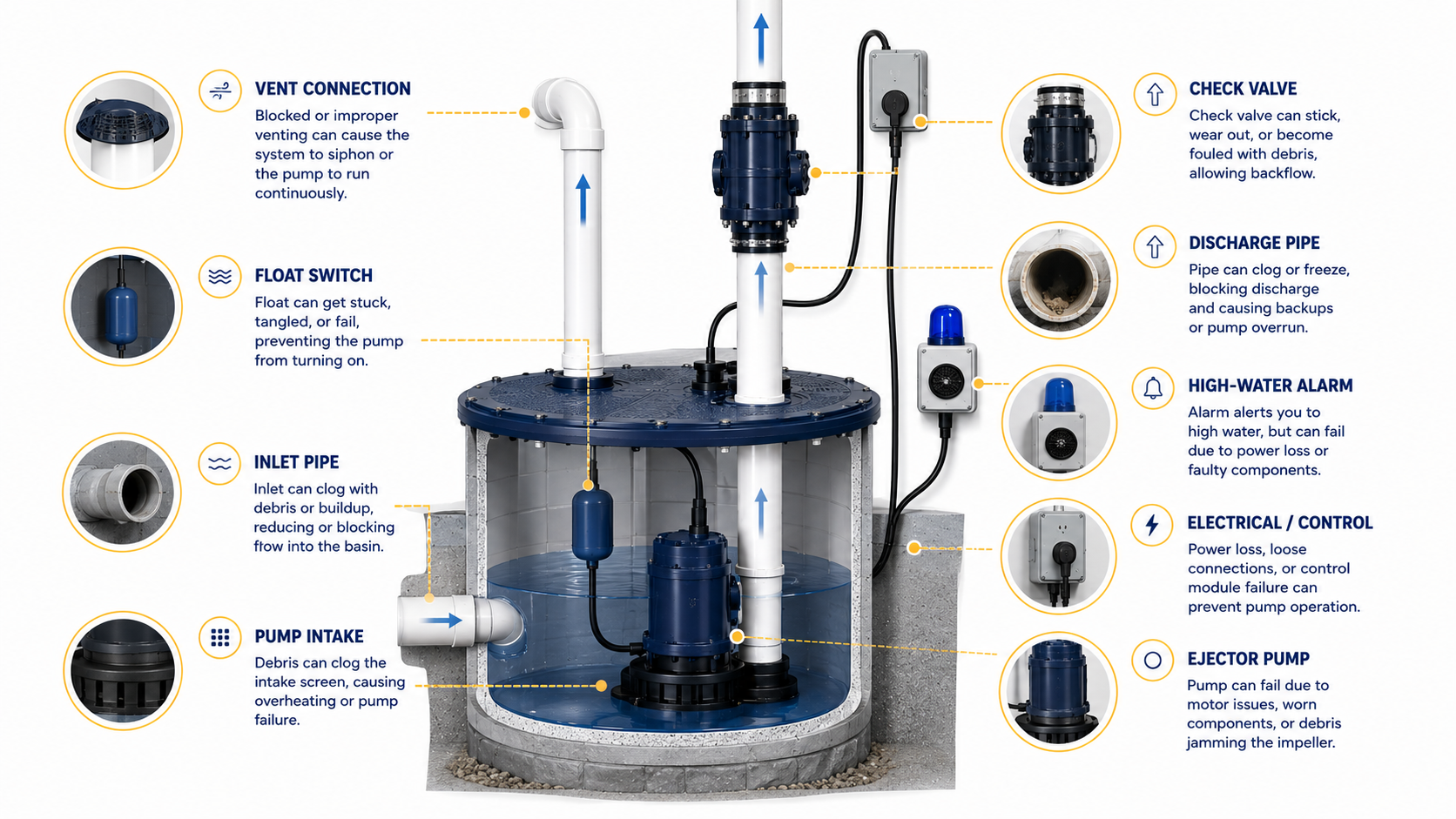
WHAT MAY NEED EVALUATION
Water Fixers can evaluate the plumbing-side ejector system and related wastewater path without assuming one component has failed from symptoms alone.
Whether the pump starts and moves wastewater normally when the system calls for it.
Where present, the activation sequence may need evaluation rather than assuming the motor is at fault.
Accessible basin and connection conditions can help show how the system is behaving.
Backflow through a malfunctioning check valve can affect cycling and effective discharge.
Restriction or another discharge condition can resemble a pump-performance problem.
A branch or main-drain problem can create similar backup symptoms and may require a different service page.
POWER MATTERS, BUT SCOPE MATTERS TOO
The ejector pump requires electrical power, but this page does not claim Water Fixers performs new circuits, breaker work, wiring repair, outlet installation or electrical troubleshooting outside verified plumbing/service scope. If diagnosis points to the building electrical supply, appropriately qualified electrical service may also be required.
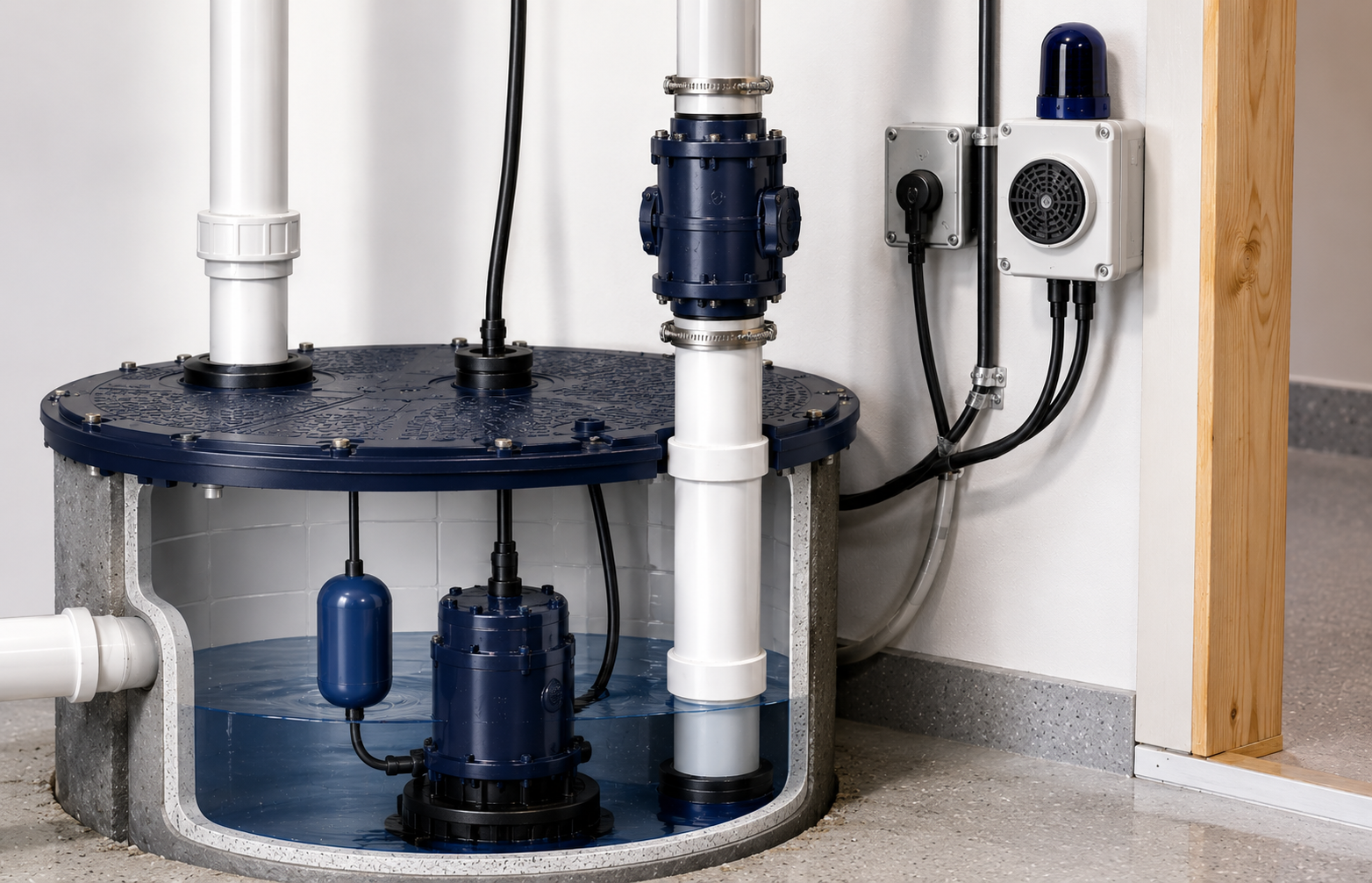
THE PUMP IS ONLY PART OF THE WASTEWATER PATH
Wastewater has to move from the basin through the discharge piping and into the building drainage system. A problem in the check valve, discharge path or connection can create symptoms that look like pump failure even when the pump itself is not the only issue.
This is why repair should focus on the operating sequence and the full accessible wastewater path rather than one part in isolation.
REPAIR OR REPLACE?
There is no universal age cutoff and replacement should not be assumed from one symptom. The decision should follow the actual diagnosis, condition and serviceability of the system.
Depending on the actual failed component, system condition, accessibility and whether the problem is isolated, repair may be the appropriate next step.
Repeated failures, poor overall condition, obsolete or unserviceable equipment, or impractical repair may point to replacement after evaluation.
MAKE SURE IT IS ACTUALLY THE EJECTOR SYSTEM
If the problem is concentrated around fixtures served by a known ejector system, ejector-pump diagnosis is the appropriate path.
If multiple fixtures across the property are backing up, the larger shared drain or sewer route may need evaluation.
If one normal fixture drain is slow and the ejector system otherwise appears normal, ordinary drain cleaning may be the better fit.
AFTER REPAIR
Once the active problem has been corrected, future inspection and maintenance may help monitor pump operation, buildup, check-valve condition, unusual cycling, leakage and general serviceability. Maintenance cannot prevent every future failure, but it is a different service path from active diagnosis and repair.

ACTIVE WASTEWATER BACKUP
If wastewater is actively overflowing or entering occupied areas, stop using fixtures that feed the affected system where appropriate, avoid contact with wastewater, and use the Emergency Plumbing path. Do not reach into the basin, bypass controls, perform electrical work, force the pump, or disassemble wastewater piping during an active backup.
BUSINESS & MANAGED PROPERTIES
For a business or light-commercial property where an ejector system is part of the plumbing infrastructure, use the commercial plumbing pathway as needed.
Property managers can route broader plumbing and water-treatment needs through the dedicated managed-property service page.
REPAIR PROCESS
Which fixtures are affected, whether an alarm is active and how the system is behaving.
Separate an ejector-system issue from a localized drain or larger sewer/main-drain problem.
Evaluate the plumbing-side system and operating sequence that can explain the symptom.
Recommend repair, replacement or another service based on actual condition rather than assumption.
Perform the agreed plumbing-side repair or route the project appropriately.
Confirm the approved work restored the intended wastewater movement and system behavior.
WHICH PAGE DO I NEED?
Use the broad hub for how the system works and how installation, repair and maintenance fit together.
This page owns active diagnosis and repair of an existing ejector system.
Use the dedicated installation page for new or replacement installation planning.
Use the maintenance page for inspection and preventive service rather than active repair.
Use the sewer/main-drain service path for shared drainage symptoms.
Use ordinary drain cleaning when one fixture drain is the isolated issue.
Use the master plumbing directory or general repair/installation page for unrelated plumbing needs.
For non-ejector plumbing work, use the main Plumbing Services page.
CALIFORNIA’S CENTRAL COAST
Water Fixers provides plumbing service across supported Central Coast communities. For ejector-pump problems, tell us which fixtures are affected, whether an alarm is active and whether the pump can be heard operating so the request can be routed appropriately.

SEWAGE EJECTOR PUMP FAQ
SEWAGE EJECTOR PUMP REPAIR
Tell Water Fixers which fixtures are affected, whether an alarm is active, whether the pump can be heard operating and whether wastewater is contained. That information helps route the diagnosis without assuming the pump itself has failed.
CALL NOW! Se Habla Español!