BELOW-GRADE PLUMBING • WASTEWATER • EJECTOR SYSTEMS
Sewage ejector pumps move wastewater from lower-level fixtures when gravity alone cannot reach the building drain or sewer. Water Fixers can evaluate the system and help determine whether the right next step is installation, repair, preventive maintenance, sewer/main-drain service or ordinary drain cleaning.
California License #719792 • Central Coast • Se Habla Español
START WITH THE SITUATION
Choose the situation that matches what is happening now. New or replacement systems, active failures and preventive inspection each have a different service path.
For new below-grade plumbing, planned replacement, or a system that needs a new installation approach.
For alarms, pump failure, unusual cycling, odors, leakage, or a lower-level backup that may involve the ejector system.
For preventive checks, condition evaluation, alarm testing, and maintenance planning while the system is still operating.
HOW THE SYSTEM WORKS
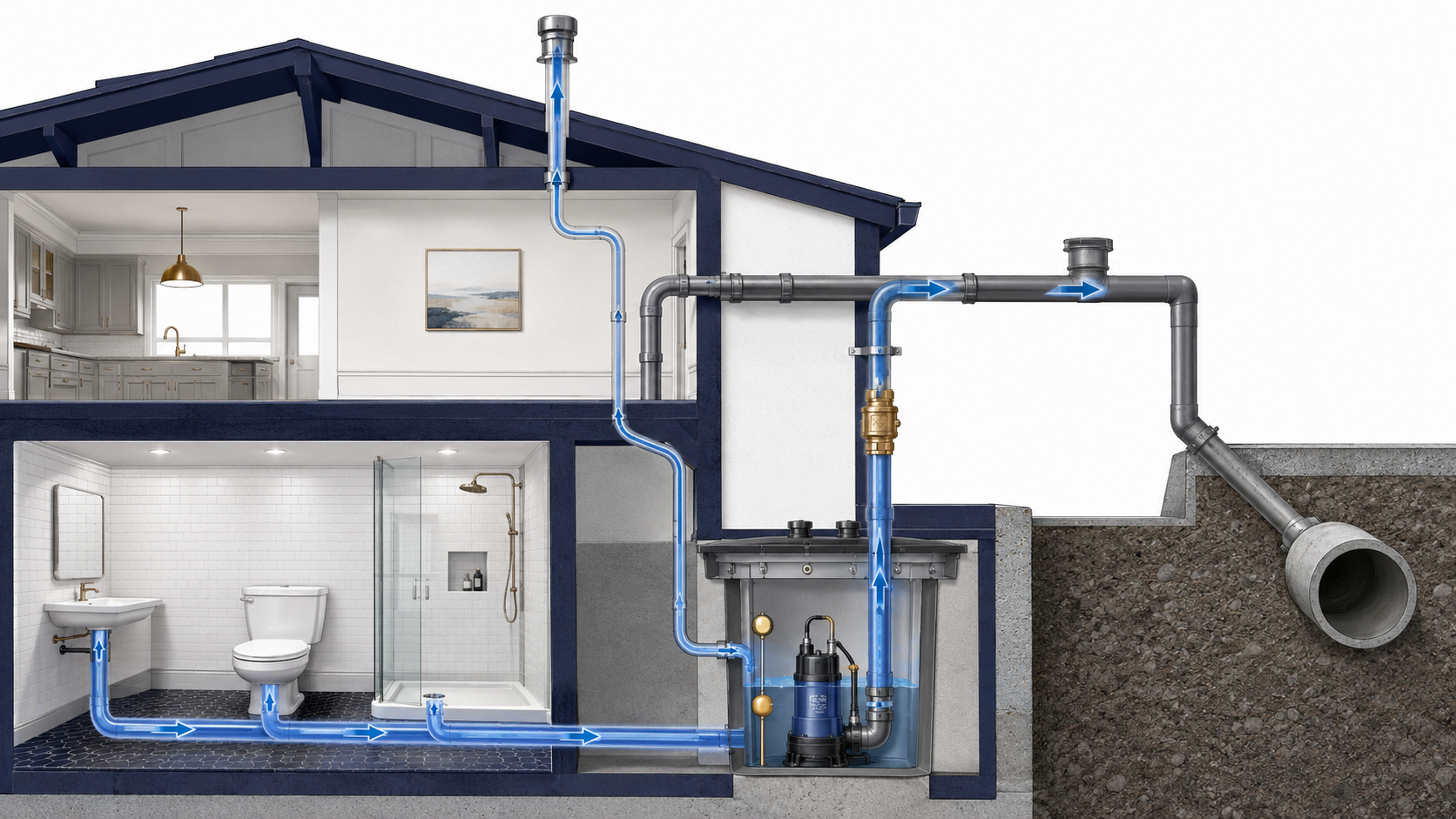
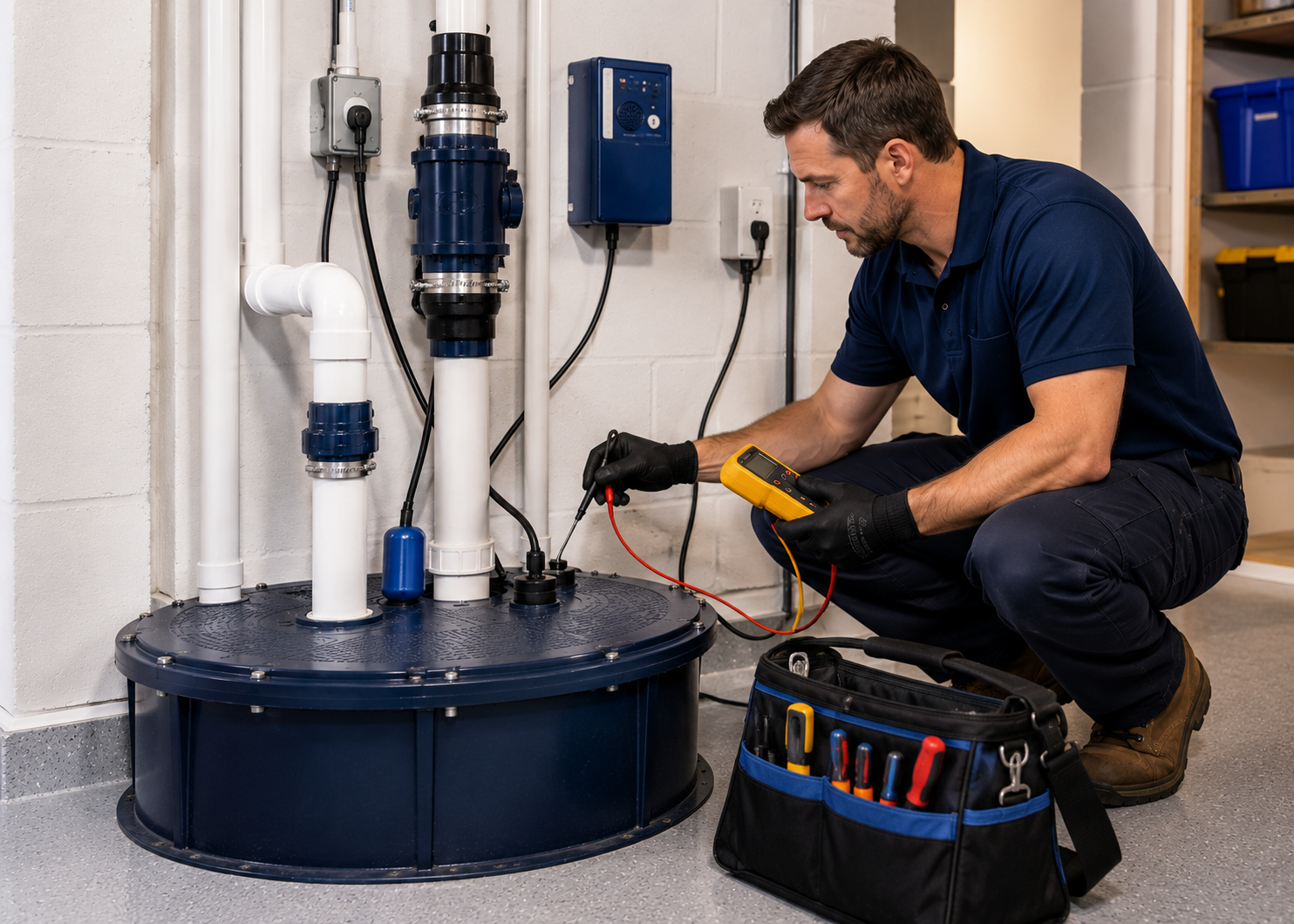
A sewage ejector system collects wastewater from fixtures that sit too low to reach the building drainage system by gravity. Wastewater enters a sealed basin, the pump lifts it through discharge piping, and normal gravity drainage resumes after the discharge reaches the proper elevation.
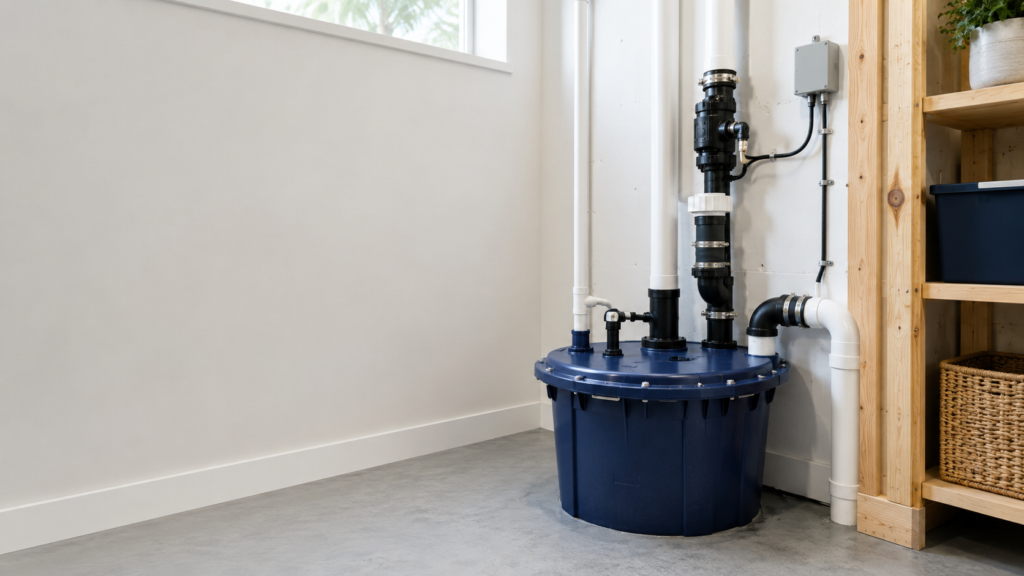
The pump is only one part of the system. Depending on the installation, the basin, level control, check valve, discharge piping, venting, alarm and accessible connections can all matter to reliable operation.
GRAVITY OR PUMPED DRAINAGE?
Which fixtures are affected and whether a sewage ejector system is actually part of the plumbing are important clues before choosing a service path.
GRAVITY DRAINAGE
Wastewater can flow downhill through ordinary building drainage piping without a pump.
EJECTOR SYSTEM
Below-grade fixture wastewater enters a basin and must be pumped upward before it can continue through the building drainage system.
BELOW-GRADE PLUMBING
They may be used for lower-level bathrooms, laundry areas, utility fixtures, converted spaces, or other plumbing located below the elevation needed for gravity drainage.
Not every basement needs an ejector pump. The plumbing elevation and existing drainage path determine whether pumped wastewater service is needed.
EJECTOR VS SUMP
A sewage ejector pump handles wastewater from plumbing fixtures. A sump pump typically handles groundwater or drainage water rather than sewage. This page does not claim sump-pump service.
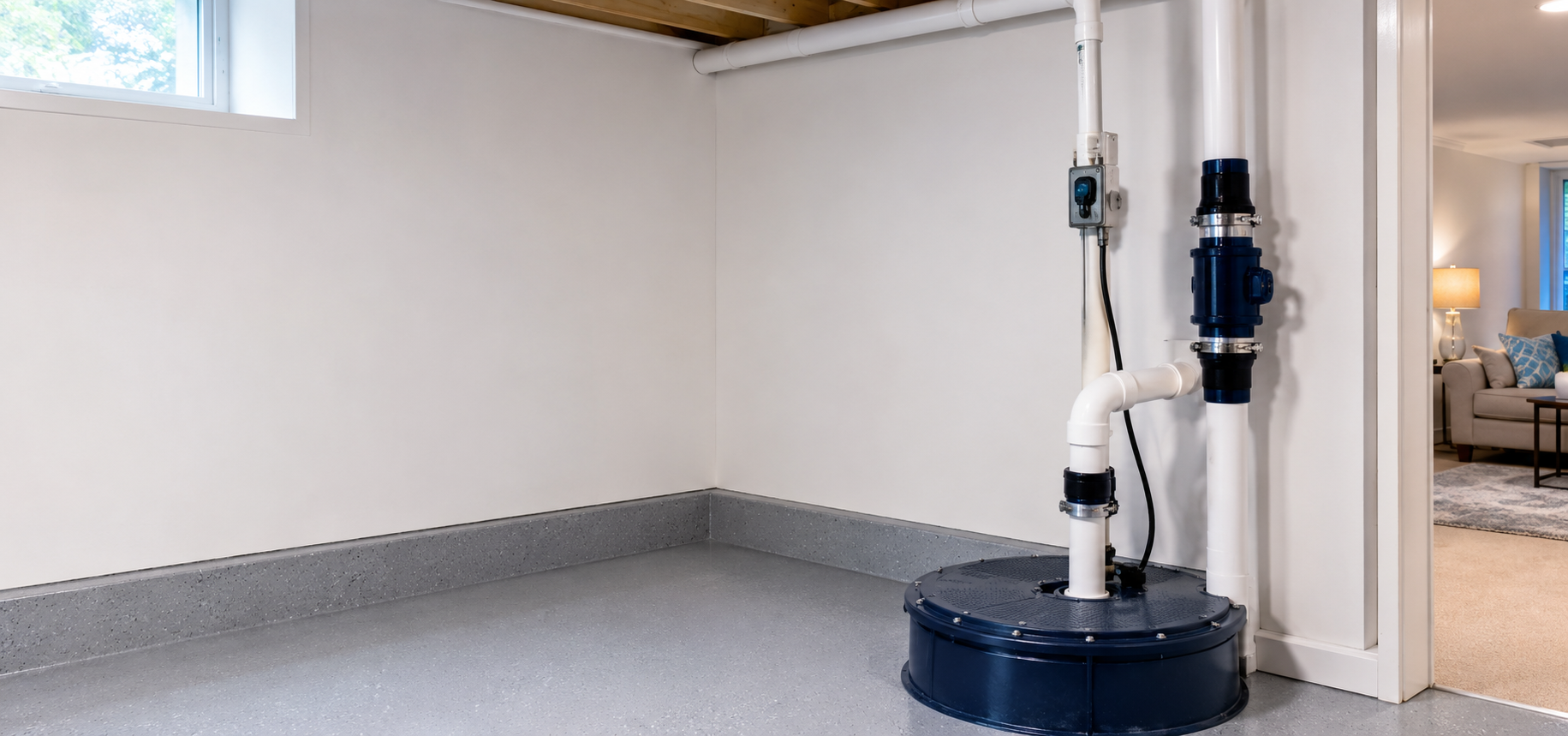
INSTALLATION & REPLACEMENT
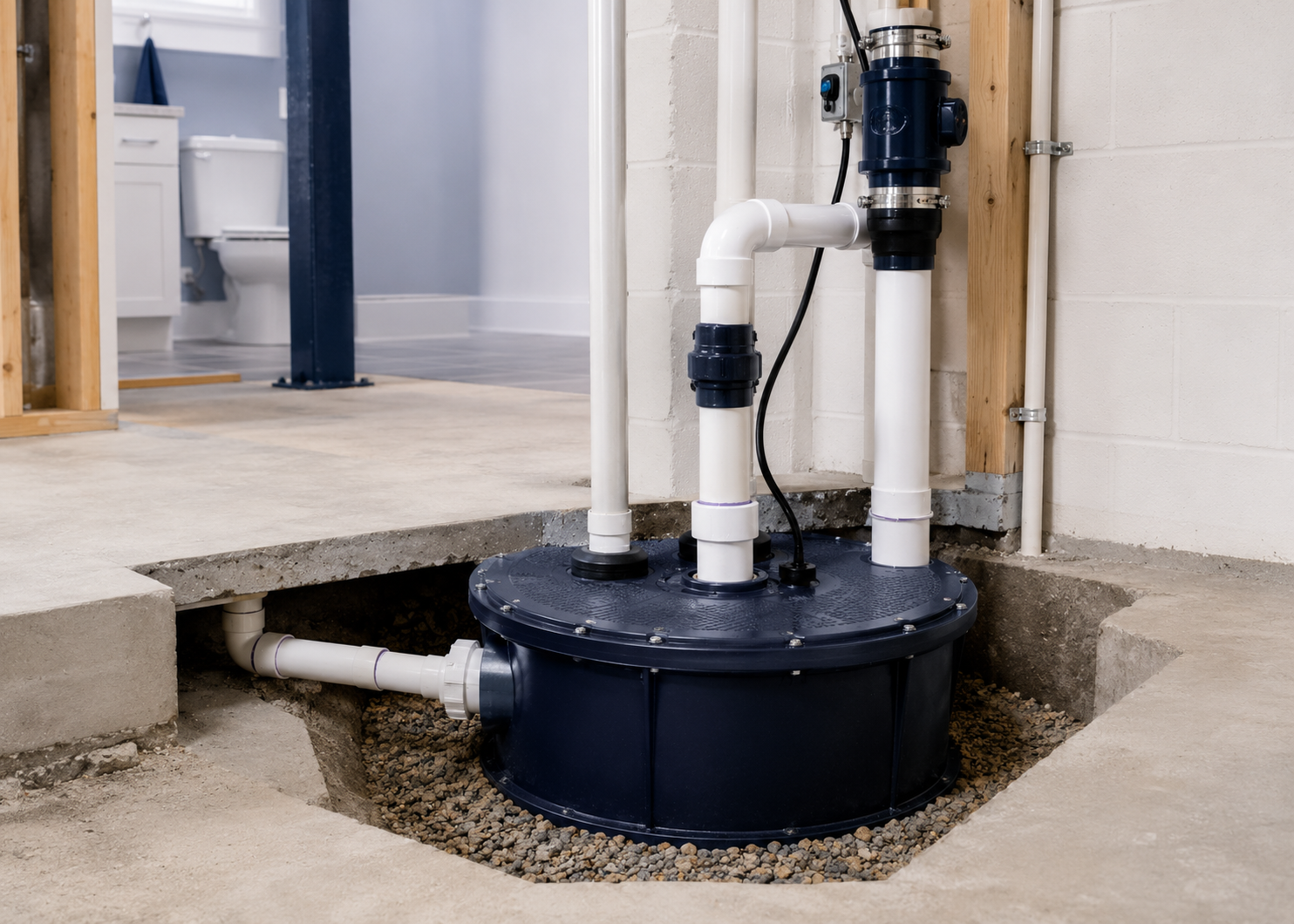
A sewage ejector installation is more than a pump. Planning can involve fixture elevation, basin construction, pump capacity, solids handling, pressure-rated discharge piping, an accessible check or backwater valve and shutoff valve, venting, controls, alarms and future service access.
The 2025 California Plumbing Code addresses sewage ejectors and pumps in Chapter 7, including pump/discharge requirements, discharge-line valves, watertight sumps and receiving tanks, and alarm provisions for public-use occupancies. Exact design, permitting and inspection requirements depend on the property, application and authority having jurisdiction.
ACTIVE PROBLEM
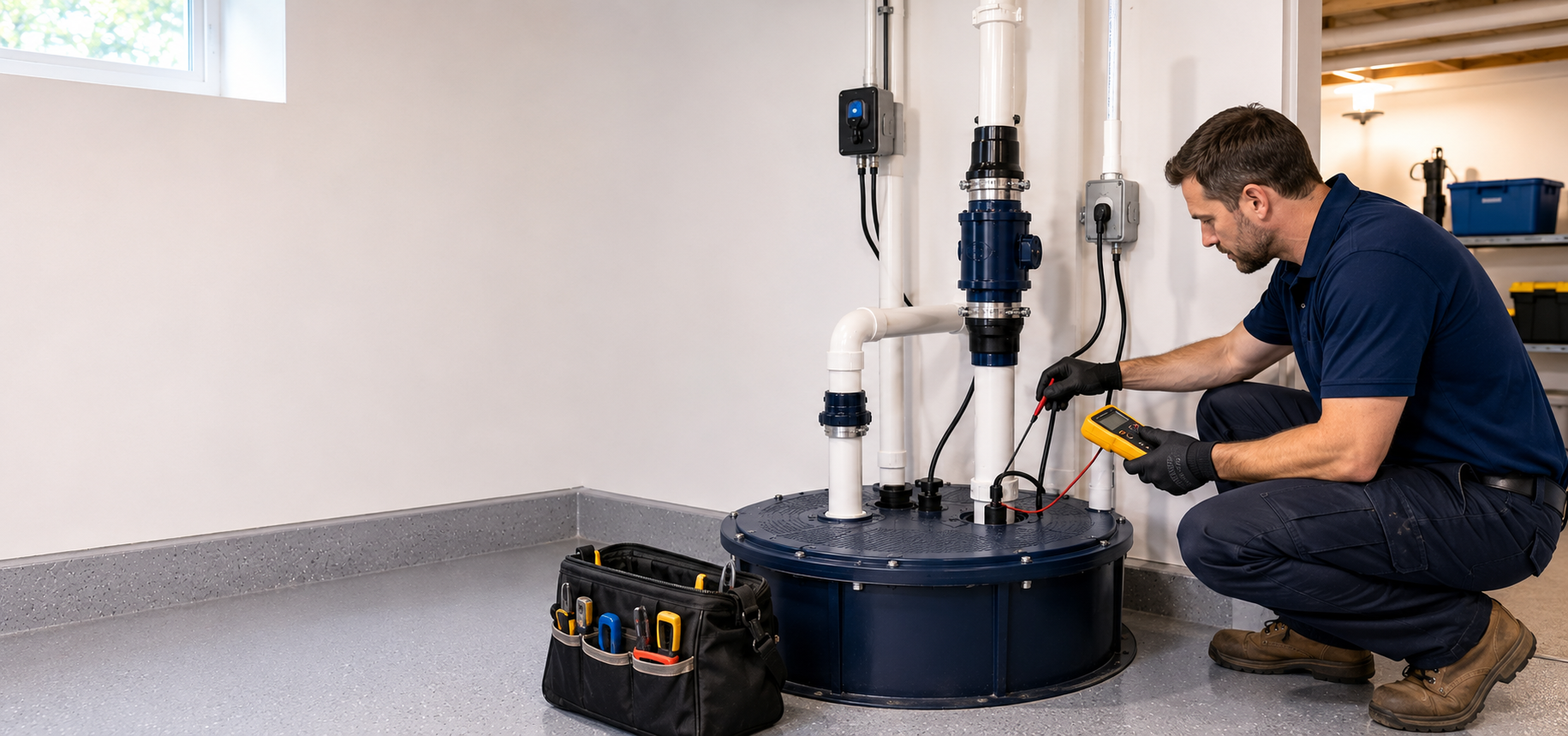
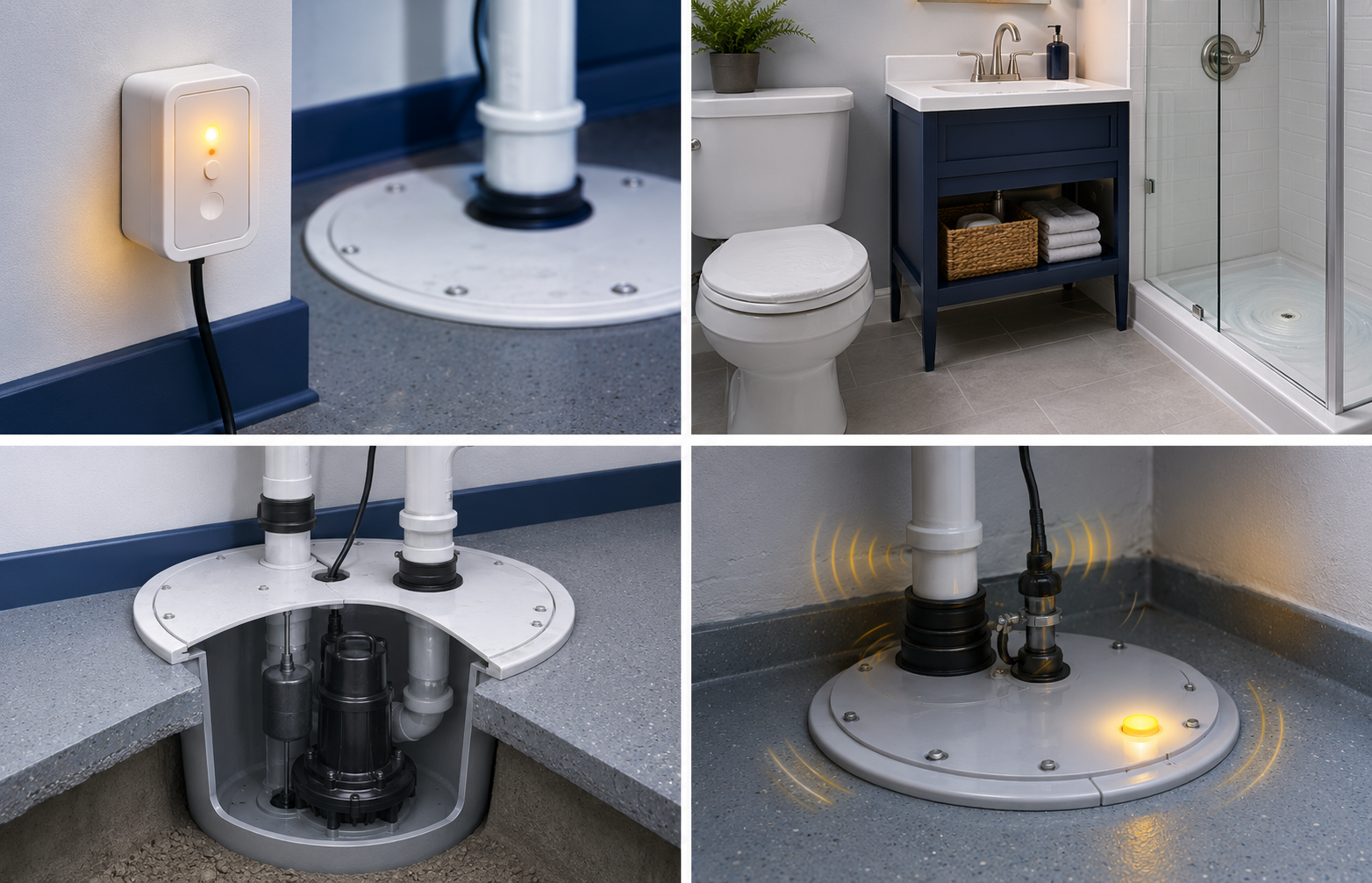
A high-water alarm, pump that will not start, slow basin drawdown, unusual cycling, odor or lower-level backup can have more than one cause. Start with diagnosis of the pump, controls, basin, check valve, discharge path and related drainage conditions before assuming the pump itself has failed.
PREVENTIVE SERVICE
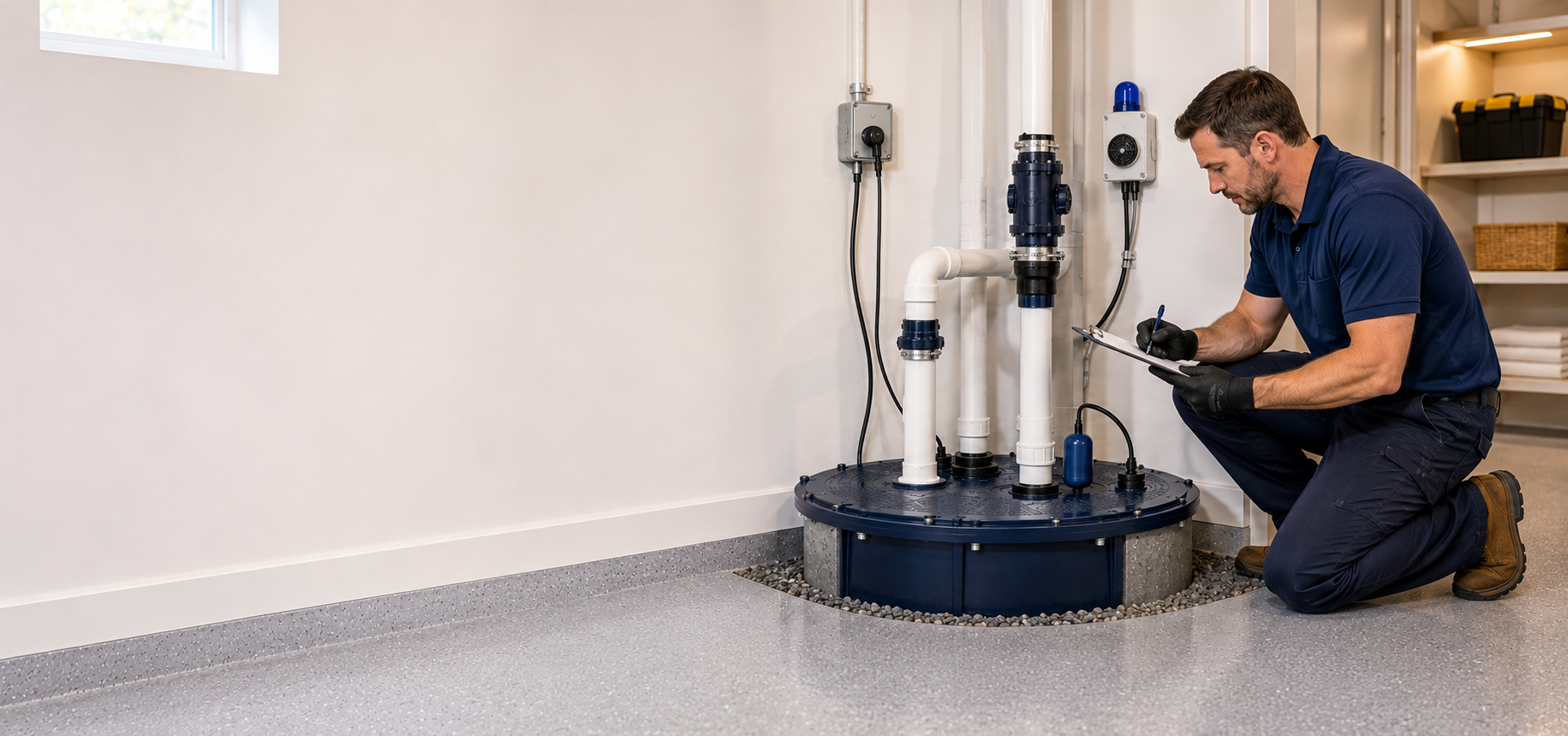
Preventive inspection is different from active repair. When a system is operating, maintenance can focus on pump operation, controls, alarm function, check-valve behavior, visible piping, basin condition and service access based on the actual equipment and manufacturer guidance. There is no single maintenance interval that fits every system.
CHOOSE THE RIGHT DRAINAGE PATH
Similar backup symptoms can come from different parts of the wastewater path. Which fixtures are affected, whether they depend on an ejector system, and whether the problem is localized or shared help determine the best starting point.
If the basin, pump, alarm or ejector discharge path is the clear area of concern, stay in the ejector-pump service family.
A shared building drain or main sewer problem may be more likely than a pump-specific issue.
If one fixture or branch drain is clogged and no ejector-system problem is indicated, ordinary drain cleaning may fit better.
WASTEWATER BACKUP
If wastewater is actively entering occupied areas, overflowing fixtures or creating an immediate sanitation or property concern, reduce or stop use of fixtures feeding the affected system where practical and use the Emergency Plumbing path. Avoid contact with wastewater and do not reach into the basin, bypass controls or attempt electrical work during an active backup.
REPAIR OR REPLACE?
Repair may make sense when the failed component is identifiable and the system remains serviceable. Replacement may make more sense when the pump has failed, repeated problems continue, parts or controls are no longer practical to service, or the existing equipment no longer fits the application. Age can be one factor, but age alone does not diagnose the system.
BUSINESS & MANAGED PROPERTIES
Commercial and managed properties may use sewage ejector systems where wastewater must be lifted to the building drainage system. Service planning should account for the actual fixture load, system configuration, downtime consequences and access rather than treating every property like a residential installation.
For business properties where an ejector system is part of broader commercial plumbing needs.
For property managers coordinating recurring plumbing, wastewater and service-routing needs.
HOW SERVICE STARTS
Start with the lower-level fixtures, alarm or basin symptoms.
Separate pumped drainage from ordinary gravity-drain problems.
Choose installation, repair or preventive maintenance based on the actual condition and goal.
Evaluate the system based on the actual installation and symptoms.
Perform the agreed service within the appropriate plumbing scope.
Confirm the system operates appropriately after the approved work.
WHICH PAGE DO I NEED?
New below-grade plumbing or planned system replacement.
Alarm, abnormal cycling, pump operation or backup indicates active diagnosis is needed.
The ejector is operating and you want condition/maintenance evaluation.
A larger shared drain or main sewer problem may need the regional sewer/main-drain path.
A localized branch or fixture drain may be the better fit.
If the problem is not the ejector system or drainage path, use broader plumbing repair.
CALIFORNIA CENTRAL COAST
Water Fixers serves supported homes, businesses and managed properties across California’s Central Coast. Choose a location below for the local sewage-ejector page, or use Service Areas for broader regional navigation.
More local sewage-ejector service: Atascadero · Buellton · Grover Beach · Guadalupe · Los Alamos · Morro Bay · Nipomo · Orcutt · Pismo Beach · San Luis Obispo · Santa Maria · Santa Ynez · Solvang · Templeton · Vandenberg Village.
Open the location list to reach the exact local sewage ejector pump page for the property.
RELATED PLUMBING HELP
If several fixtures across the building are backing up, the shared sewer or main-drain path may need evaluation. If one ordinary fixture drain is slow and the ejector system otherwise appears normal, Drain Cleaning may be the better fit. For unrelated plumbing needs, start with Plumbing Services.

Service by location
Choose your city for local plumbing and water-treatment information.
Not sure which area applies? Browse all service areas →
SEWAGE EJECTOR PUMP FAQ
EJECTOR PUMP SERVICE
Tell Water Fixers which fixtures are affected, whether an alarm is active, whether the pump can be heard operating and whether wastewater is contained. We can help identify whether installation, repair, maintenance, sewer/main-drain service, ordinary drain cleaning or another plumbing service is the best next step.
CALL NOW! Se Habla Español!