NIPOMO • SEWAGE EJECTOR PUMPS
For a Nipomo project, the key distinction is whether you are planning new lower-level plumbing, replacing an existing ejector system, or diagnosing equipment that used to work and now does not.
California contractor license #719792 • Serving the Central Coast from Santa Maria • Se Habla Español
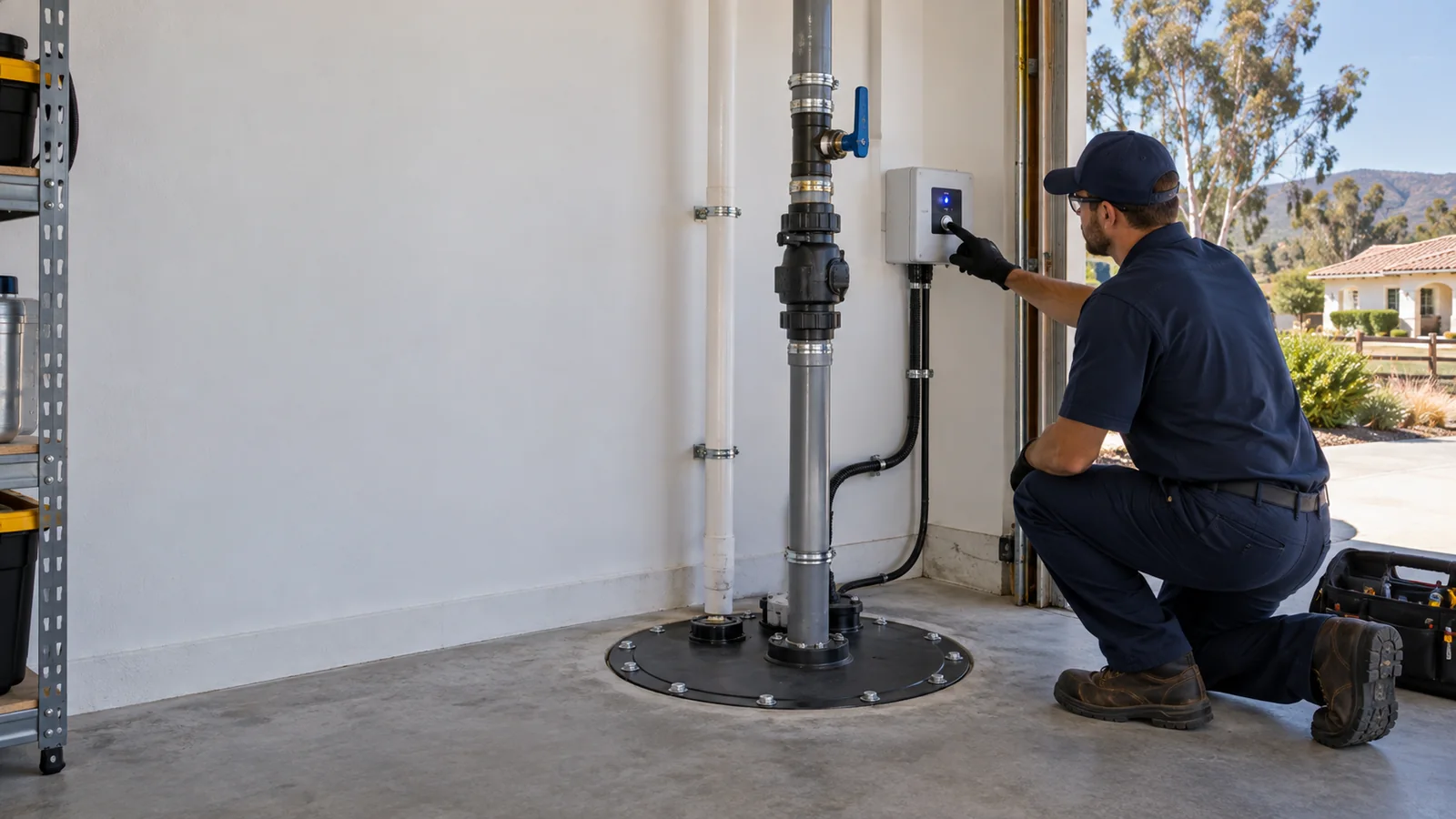
INSTALL • REPAIR • MAINTAIN
A Nipomo property may need a planned installation, a diagnosis of active symptoms or preventive service on an operating system; those are intentionally separate paths.
New or replacement work in Nipomo should match the wastewater lift requirement and account for the basin, controls, discharge route, check valve, venting, alarm and service clearance.
If the Nipomo system used to work and now alarms, cycles oddly or backs up, the repair path should identify the failed function before parts are chosen.
Maintenance in Nipomo is best suited to a system that is currently operating without an active backup, alarm or abnormal cycle and needs condition-oriented inspection.
HOW THE SYSTEM WORKS
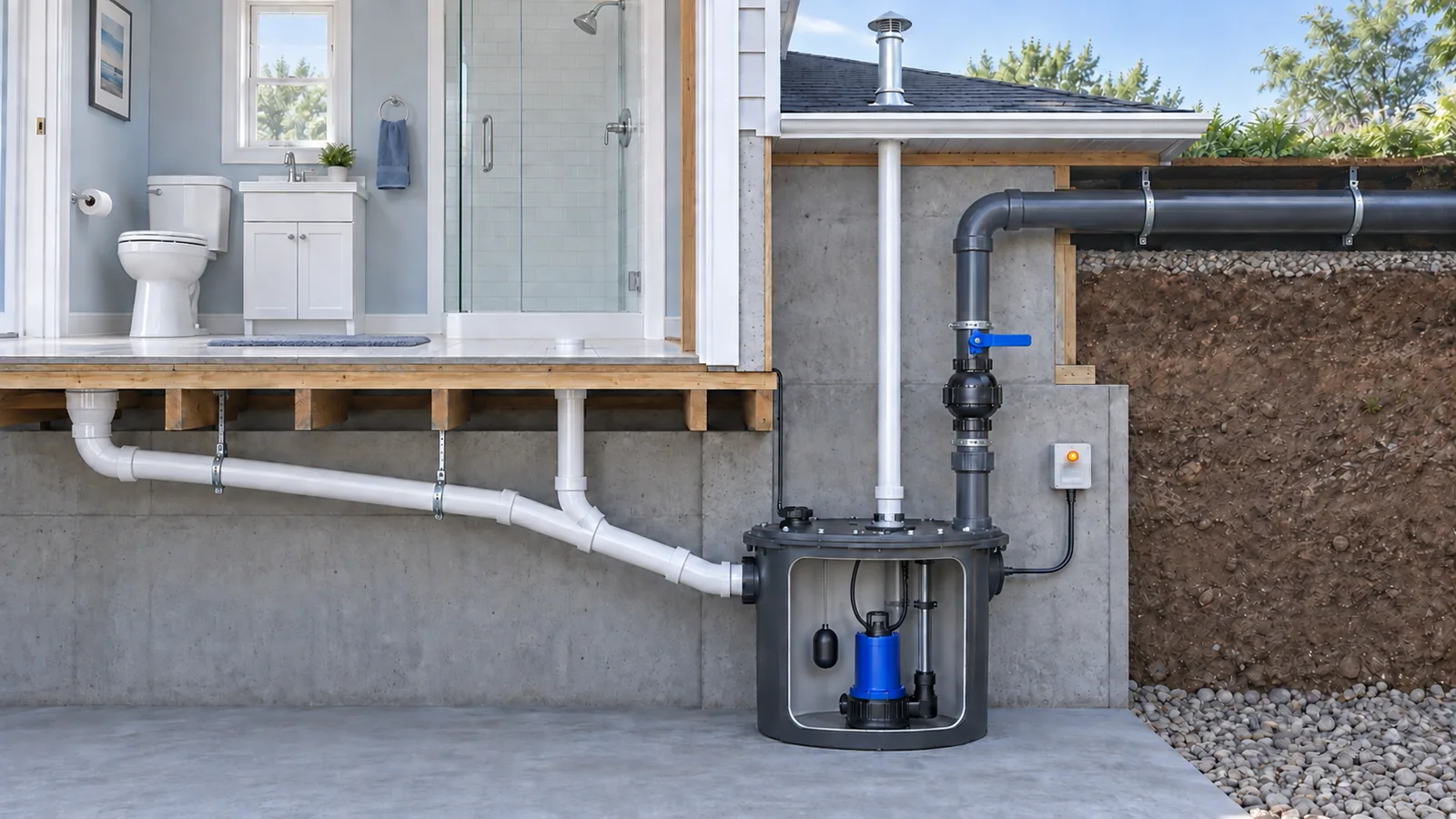
When elevation prevents gravity drainage at a Nipomo property, the ejector system receives wastewater in a sealed basin and raises it through the discharge line until the normal drainage path can continue.
Controls, check valve, venting, alarm, discharge fittings and the basin itself all influence whether a Nipomo ejector system clears normally and remains serviceable.
A USEFUL DIAGNOSTIC DISTINCTION
A new lower-level bathroom needs elevation and system planning. An existing system that has become unreliable needs diagnosis. A replacement should still account for the basin, controls, discharge, venting, alarm and service access rather than swapping a pump blindly.
START WITH WHAT THE SYSTEM IS DOING
A Nipomo service decision should follow the system behavior: warning, no cycle, repeated cycling and backup each point to a different inspection starting point.
An intermittent warning in Nipomo still deserves attention because repeating high-water conditions can precede a more disruptive backup.
If the Nipomo basin level rises without the normal pump cycle, Water Fixers can evaluate the plumbing-side system and its accessible controls before recommending parts.
Short cycling in Nipomo can involve the control range, basin inflow, check-valve backflow, discharge conditions or the pump itself.
At a Nipomo property, a backup limited to selected lower-level fixtures is different from several unrelated fixtures slowing or backing up together.
THE PUMP IS ONLY ONE COMPONENT
For Nipomo, control movement and check-valve or discharge behavior can change how the pump appears to operate, so those components belong in the same diagnostic picture.
That broader view helps a Nipomo service call avoid replacing a pump when the actual problem is control, flow or discharge behavior.
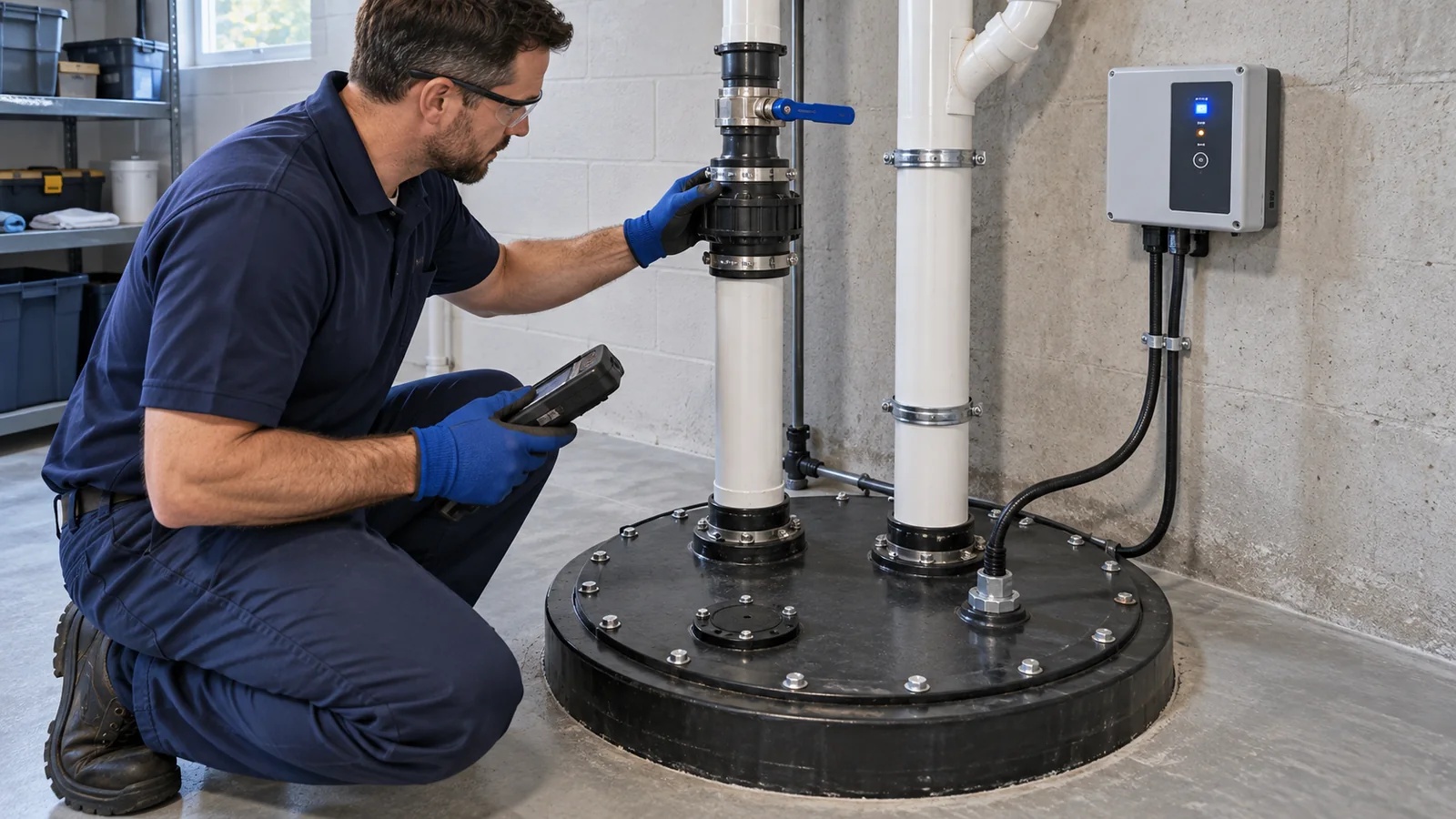
PREVENTIVE SERVICE
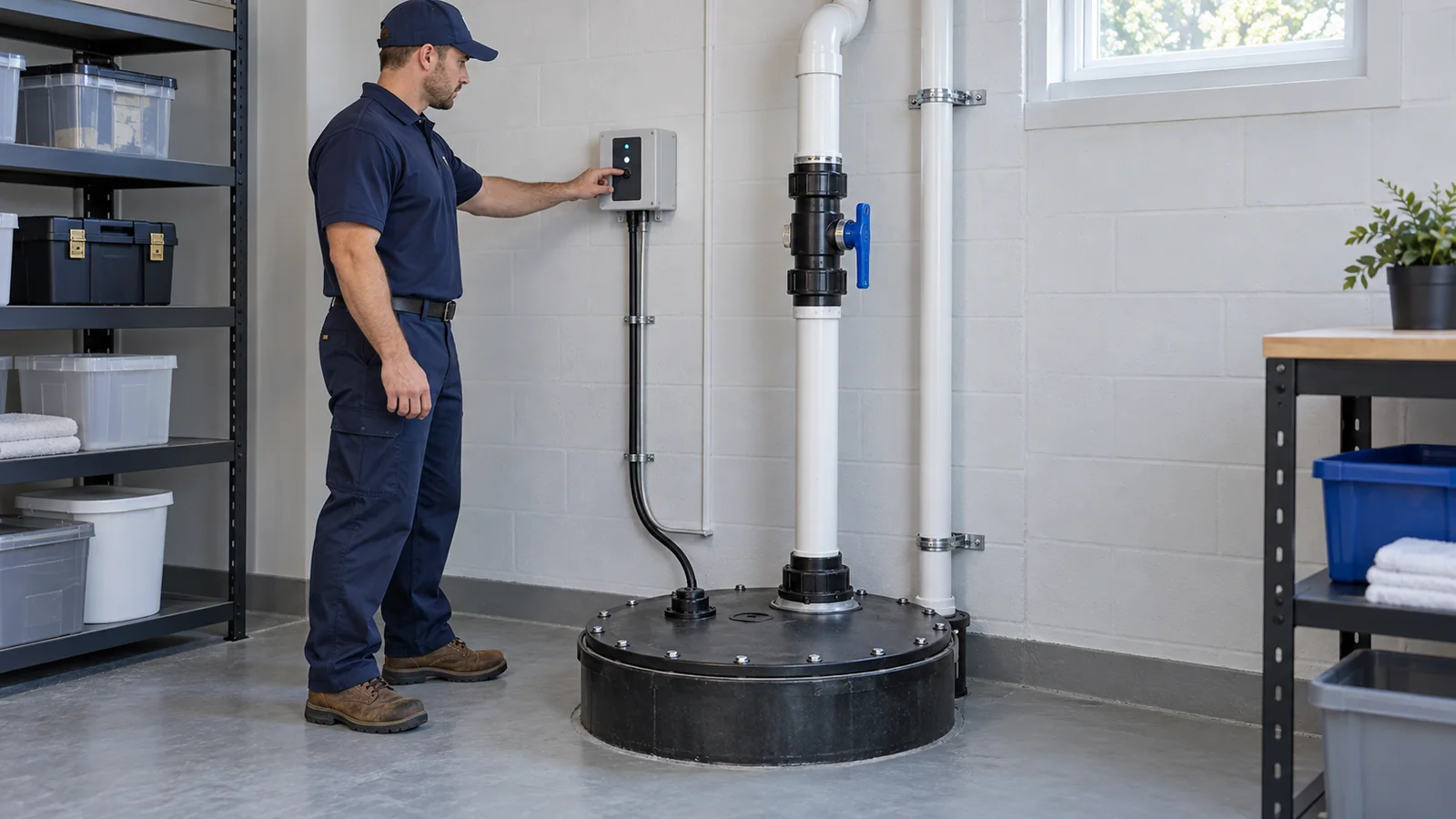
In Nipomo, routine ejector maintenance can focus on accessible operating behavior, control and alarm function, visible piping and whether the system can be serviced reasonably in the future.
Choose repair instead of maintenance in Nipomo when there is a present no-run condition, high-water warning, abnormal cycle, leak or wastewater backup.
EJECTOR • DRAIN • SEWER • URGENT BACKUP
The best Nipomo starting point comes from scope: only pumped fixtures, one ordinary drain, multiple unrelated fixtures, or an active wastewater overflow.
Begin with the ejector system in Nipomo when the alarm, basin or fixtures known to feed that basin are the clear center of the problem.
Choose Drain Cleaning for a localized gravity-drain restriction that does not track with the pumped fixtures. Use the main Water Fixers drain-cleaning service for that symptom instead of assuming the ejector pump is involved.
Choose the broader sewer/main-drain path in Nipomo when the problem is not limited to the basin and the fixtures it serves.
Active sewage overflow in Nipomo calls for conservative handling: limit wastewater input, avoid contaminated water and use the emergency plumbing path.
LOCAL WATER FIXERS NAVIGATION
For Nipomo, use this page for sewage ejector service and the links below for broader plumbing or nearby communities; Water Fixers remains based in Santa Maria.
Public sewer service and a building ejector system are not the same thing. Nipomo Community Services District says it operates two sewer systems—the Town Division and Blacklake Division—within defined service boundaries. That utility-side system is separate from customer-owned ejector equipment at a property. If symptoms extend beyond the fixtures known to feed the ejector basin, broaden the diagnosis instead of assuming the pump is responsible. View NCSD service information.
The broad Nipomo page is the better starting point when you know you need plumbing help but not whether the ejector system is involved.
For nearby service outside Nipomo, the Five Cities page is the compact regional navigation point.
If the property is elsewhere on the Central Coast rather than in Nipomo, start with the Water Fixers service-area directory.
COMMON QUESTIONS
Direct answers for Nipomo property owners deciding whether the problem is the ejector system, a drain, the building sewer or an urgent wastewater backup.
It can, depending on the property and project scope. San Luis Obispo County Planning & Building has a residential mechanical/electrical/plumbing permit workflow for unincorporated County projects. Confirm the exact address and scope before permit-dependent installation or replacement work. Water Fixers also provides a Plumbing Permits guide.
NIPOMO • SEWAGE EJECTOR PUMPS
For the Nipomo property, tell Water Fixers which fixtures feed the system, what the pump or alarm is doing and whether wastewater is actively backing up. Those details help us choose the appropriate service path.
CALL NOW! Se Habla Español!