










Reverse Osmosis Filter Replacement
Replace the Correct Cartridges—and Check the System Before It Goes Back Under Pressure
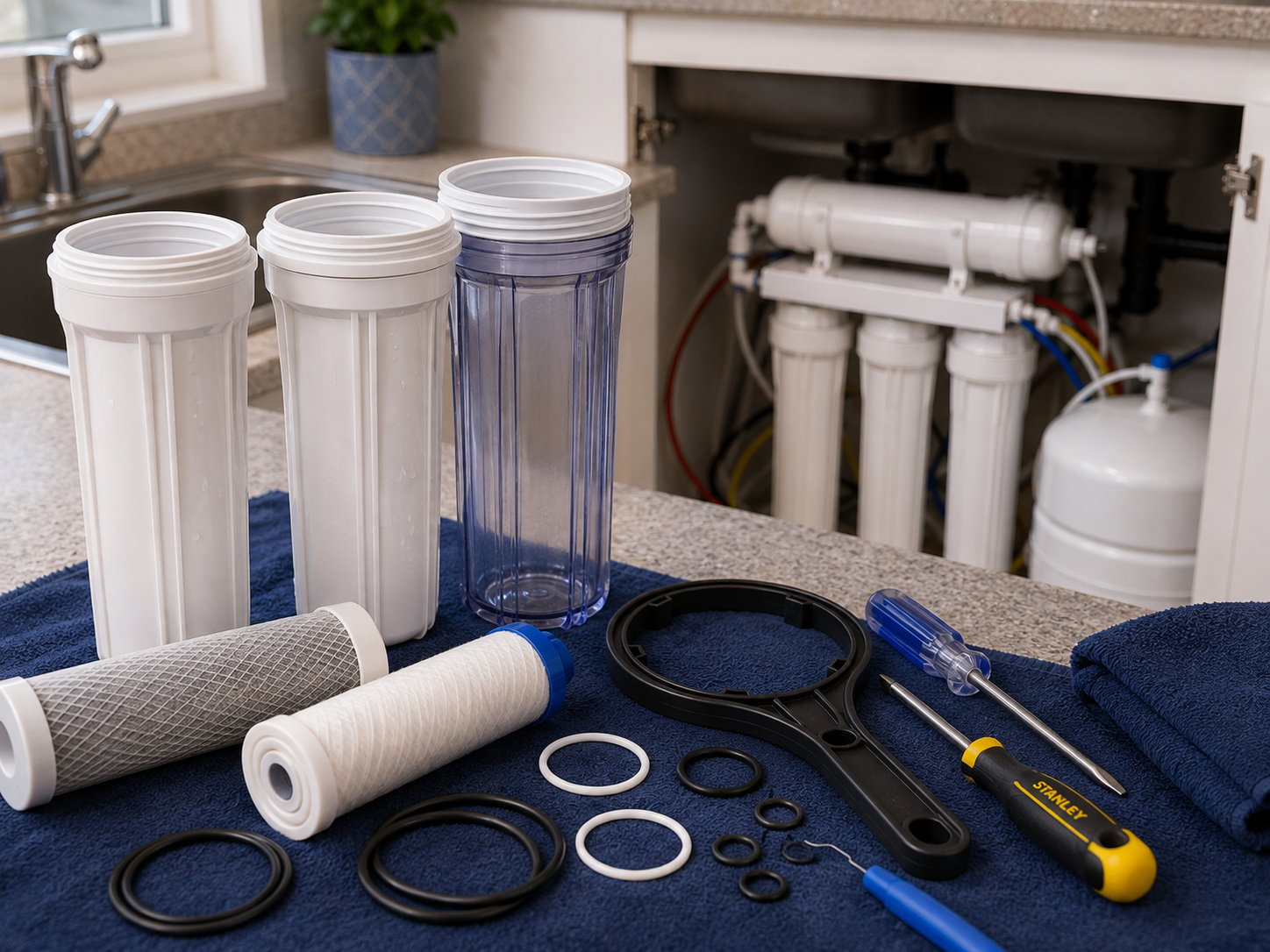
RO filters are system-specific service parts, not universal cartridges. Water Fixers identifies the installed layout, matches the correct sediment, carbon, inline or specialty filters, inspects housings and seals, replaces the due cartridges, flushes the system and checks for leaks after repressurizing.
Existing RO systems are welcome—even if Water Fixers did not install them.
When Filter Replacement Is the Right Next Step
Routine cartridge service is appropriate when the RO system is otherwise serviceable and the installed filters are due, restricted, unknown, or contributing to taste or flow changes. These clues help route the job correctly.
Taste or Odor Changed
A depleted carbon or post-carbon stage can contribute to returning taste or odor, but taste alone does not identify a contaminant.
Flow Has Slowed
Loaded prefilters can reduce feed to the membrane, but tank pressure, valves, tubing and membrane condition can also reduce faucet flow.
Filters Are Due or Unknown
If the service date is overdue or unknown, identify the system and cartridge sequence before ordering replacements.
Maintenance History Is Unknown
An inherited or neglected RO may need more than cartridges if sanitation, tank condition or other service history is unclear.
The System Sat Unused
Extended inactivity can change the service plan. Filters, flushing and sanitation may need to be considered together.
You Want Routine Preventive Care
Use full maintenance when you want the broader system checked beyond the cartridges alone.
What Gets Replaced—and What Does Not Automatically Get Replaced
Routine filter service normally concerns the cartridges installed before or after the membrane: sediment, carbon, combination, inline or specialty stages. The RO membrane follows a different, performance-based service path. A membrane should not be replaced automatically just because routine filters are due.
Match the actual installed cartridge sequence
Housing size, cartridge format, stage order and specialty filters vary by system. Water Fixers confirms the equipment and replacement parts before service instead of choosing by appearance alone.

The RO Stages Do Different Jobs
Sediment Prefilter
Helps capture particles such as sand, rust and fine sediment before later treatment stages.
Carbon Prefilter
Helps address chlorine, taste and odor compounds where the installed system is designed for carbon treatment, and may help protect downstream components.
Combination / Dual-Purpose Filter
Combines particle and carbon treatment in systems designed around a combination cartridge. The exact media and format are system-specific.
RO Membrane
The primary dissolved-solids separation stage. It is evaluated separately from routine prefilters and postfilters.
Inline / Post-Carbon Filter
A polishing stage used on many RO systems between stored water and the drinking-water faucet.
Specialty Finishing Stage
Some systems add alkaline or other finishing cartridges. Compatibility and replacement timing depend on the exact installed configuration.
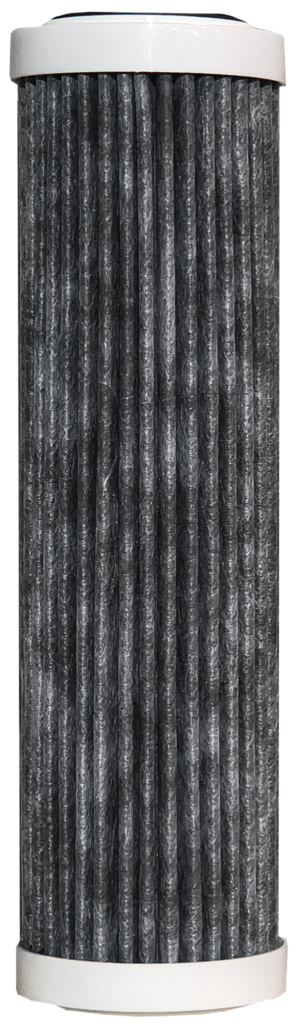
Do Not Order RO Filters by Stage Count Alone
Two three-stage or five-stage RO systems can use different housing sizes, cartridge formats, media and stage order. Before replacement, confirm the exact system or installed layout, the cartridge identifiers when available, and any specialty stage. This avoids forcing the wrong part into a housing or unintentionally changing the treatment sequence.
What a Professional RO Filter Replacement Visit Includes
A cartridge change means opening water-holding equipment and then returning it to pressure. The service should protect the system around the filter—not just install a new cartridge.
A typical replacement visit can include
• Identify the installed system and due cartridges
• Shut down and depressurize the RO safely
• Inspect housings, caps, O-rings, tubing and fittings
• Replace the correct routine cartridges
• Clean sealing surfaces and seat O-rings correctly
• Flush new cartridges as appropriate for the system
• Restore pressure and inspect for leaks
• Check faucet delivery and obvious operating problems
• Record the service date and next-step recommendations
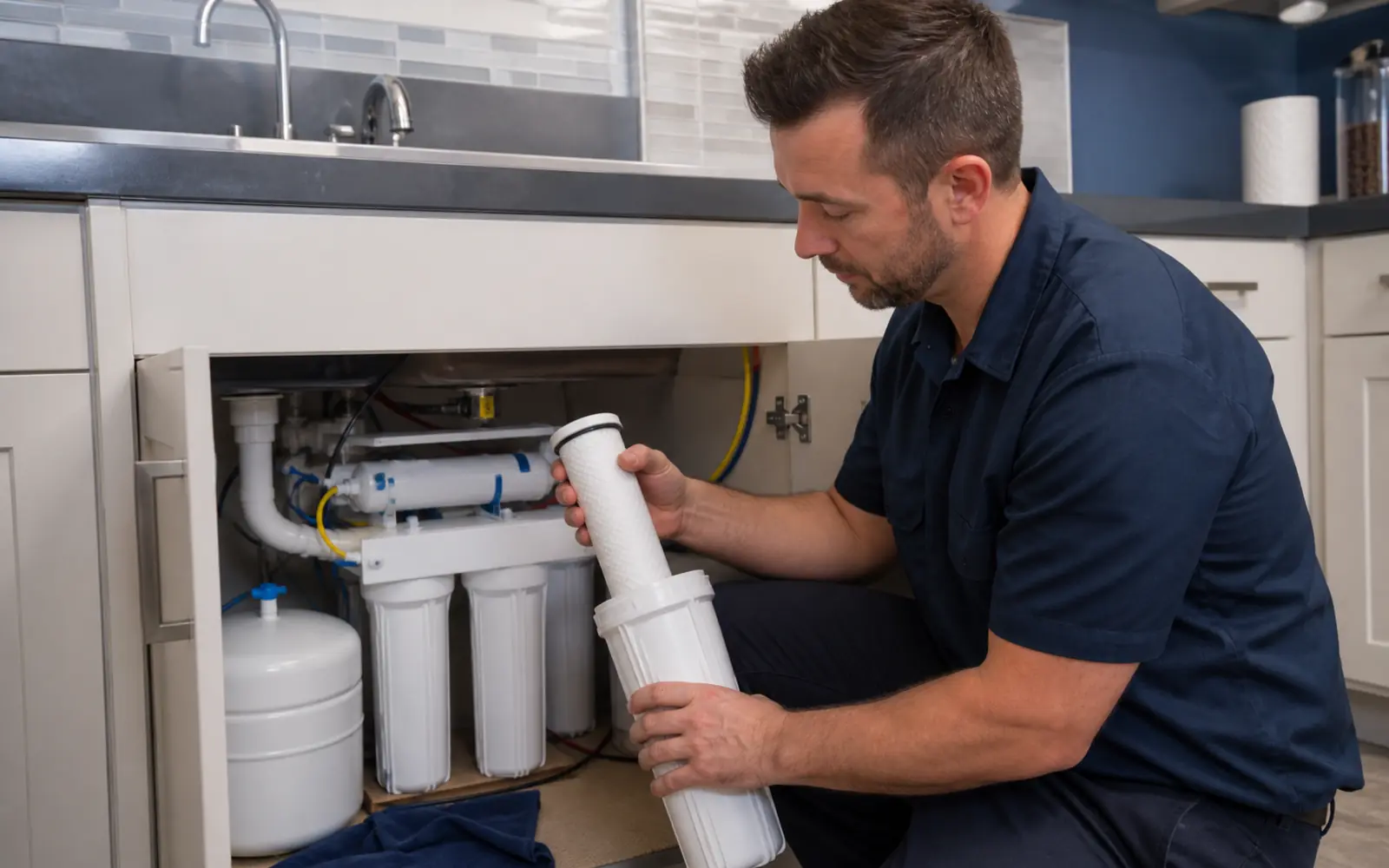
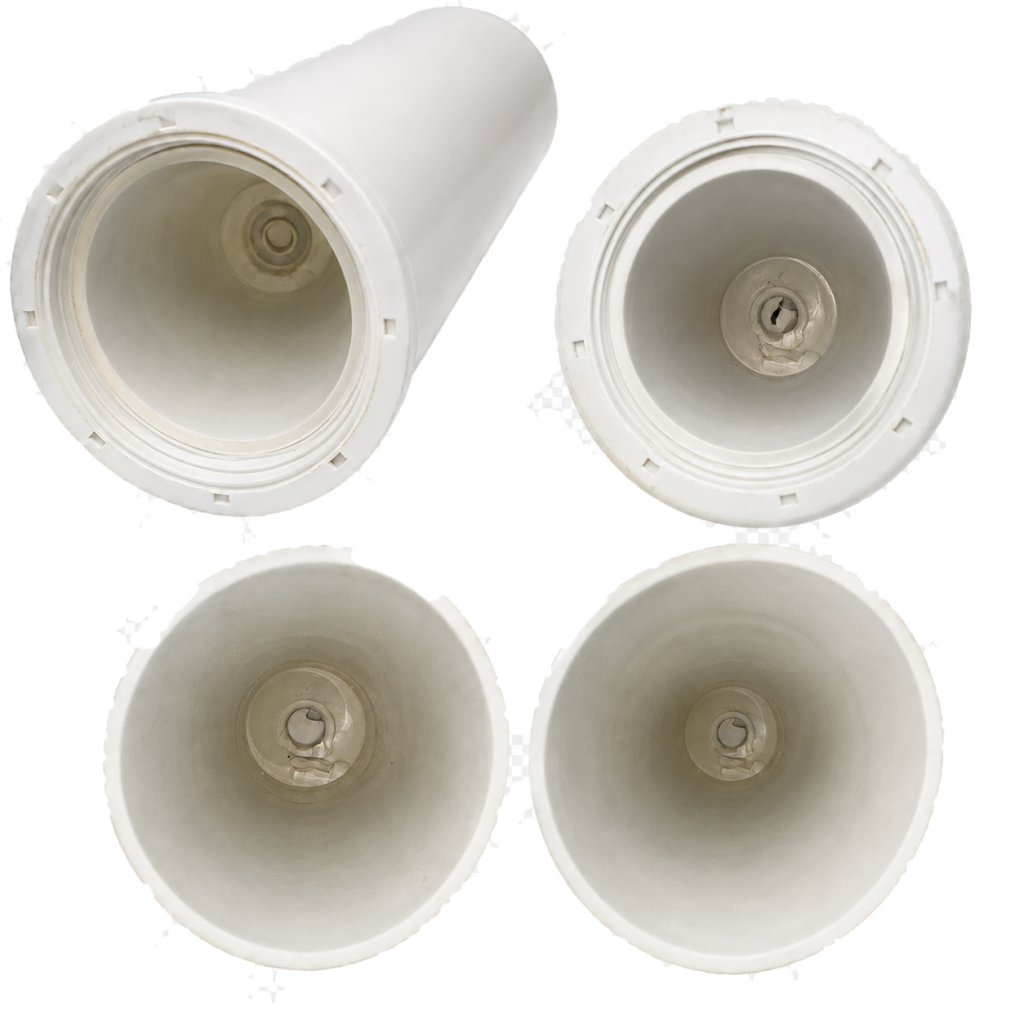
Cracked Housing, Damaged Threads or a Leak? Stop Treating It as a Filter-Only Job
A filter change can expose brittle housings, damaged caps or threads, pinched O-rings, or components that no longer seat correctly. Do not keep tightening a housing that will not seal normally. Shut off the RO supply and address the housing or leak before the system is left pressurized.
Filter Replacement, Maintenance, Membrane Service or Repair?
Filter replacement is for due routine cartridges on an otherwise serviceable RO. Maintenance is the broader inspection and upkeep path when overall history or condition needs review. Membrane replacement is based on membrane performance and operating conditions. Service & repair is for leaks, tank problems, persistent low flow, valve/tubing issues or other failures.
Why Water Fixers for RO Filter Replacement?
Plumbing + Water Treatment Experience
RO service involves both treatment components and pressurized plumbing connections. Water Fixers evaluates the cartridges and the system around them.
System-Specific Parts Matching
We identify the installed arrangement instead of assuming every sediment, carbon, inline or specialty cartridge is interchangeable.
Leak Check Before the Job Is Finished
Housings, O-rings, tubing and fittings are checked as the system returns to pressure so a routine filter change does not leave an avoidable leak behind.
Choose the RO Service That Matches the Job
Filters & Membranes Guide — understand the stage types.
RO Maintenance — broader routine system care.
Membrane Replacement — membrane-specific evaluation.
RO Sanitizing — sanitation when appropriate to the system and service history.
RO Service & Repair — leaks, no-water, tank, valve, tubing and other failures.
Compare RO Systems — replacement-system selection when the existing unit is no longer economical to support.
RO Filter Replacement From Santa Maria Across the Central Coast
Water Fixers is based in Santa Maria and provides reverse osmosis filter replacement throughout its Central Coast service area. If the RO was installed by another company or the maintenance history is unknown, bring the model information if available—or schedule an inspection so the cartridges can be identified before replacement.
RO Filter Replacement Questions
There is no single interval for every RO system. Many residential systems use recurring cartridge service, but timing depends on the installed filters, source-water conditions, water use, pressure, cartridge capacity and manufacturer guidance. Use the actual system and service history rather than a universal calendar.
No. Routine prefilters and postfilters are serviced separately from the RO membrane. Membrane replacement should be based on verified system performance and operating conditions rather than automatically bundled with every filter change.
Yes. Existing systems are welcome. The first step is identifying the system, installed stage sequence and compatible cartridges.
It is usually better to confirm the exact system and cartridge requirements first, especially when the equipment is older, modified or the service history is unknown.
They may if restricted prefilters are the cause, but slow flow can also involve feed pressure, storage-tank pressure, valves, tubing restrictions or membrane performance. Persistent low flow belongs on the diagnostic path.
Sanitation is a separate maintenance step that may be appropriate based on the system, manufacturer procedure, service history, extended inactivity or the work being performed. It is not a substitute for replacing exhausted filters or repairing a leak.
Shut off the RO water supply and do not keep tightening a damaged housing. Cracked plastic, damaged threads or an O-ring that will not seat correctly should be addressed before the system remains pressurized.
Choose filter replacement when the routine cartridges are due and the system is otherwise operating normally. Choose maintenance when the system history is unclear or you want broader inspection, sanitation planning and system checks. Use service and repair for active failures or leaks.
Replace the Right RO Filters—and Leave the System Leak-Checked
Schedule Water Fixers to identify the installed RO, replace the due cartridges, inspect the housings and seals, flush the system and check it after repressurizing. If the problem goes beyond routine filters, we will route the next step to maintenance, membrane evaluation or repair.