
SYSTEM SELECTION • WHOLE-HOME TREATMENT
Whole-house filtration treats water near the point it enters the home, but sediment filters, carbon treatment, water softeners, private-well treatment and drinking-water reverse osmosis do different jobs. Water Fixers helps Central Coast homeowners compare the treatment goal, water source, flow, pressure, plumbing fit and maintenance before equipment is selected.
38+ years serving California’s Central Coast • CA License #719792 • Se Habla Español
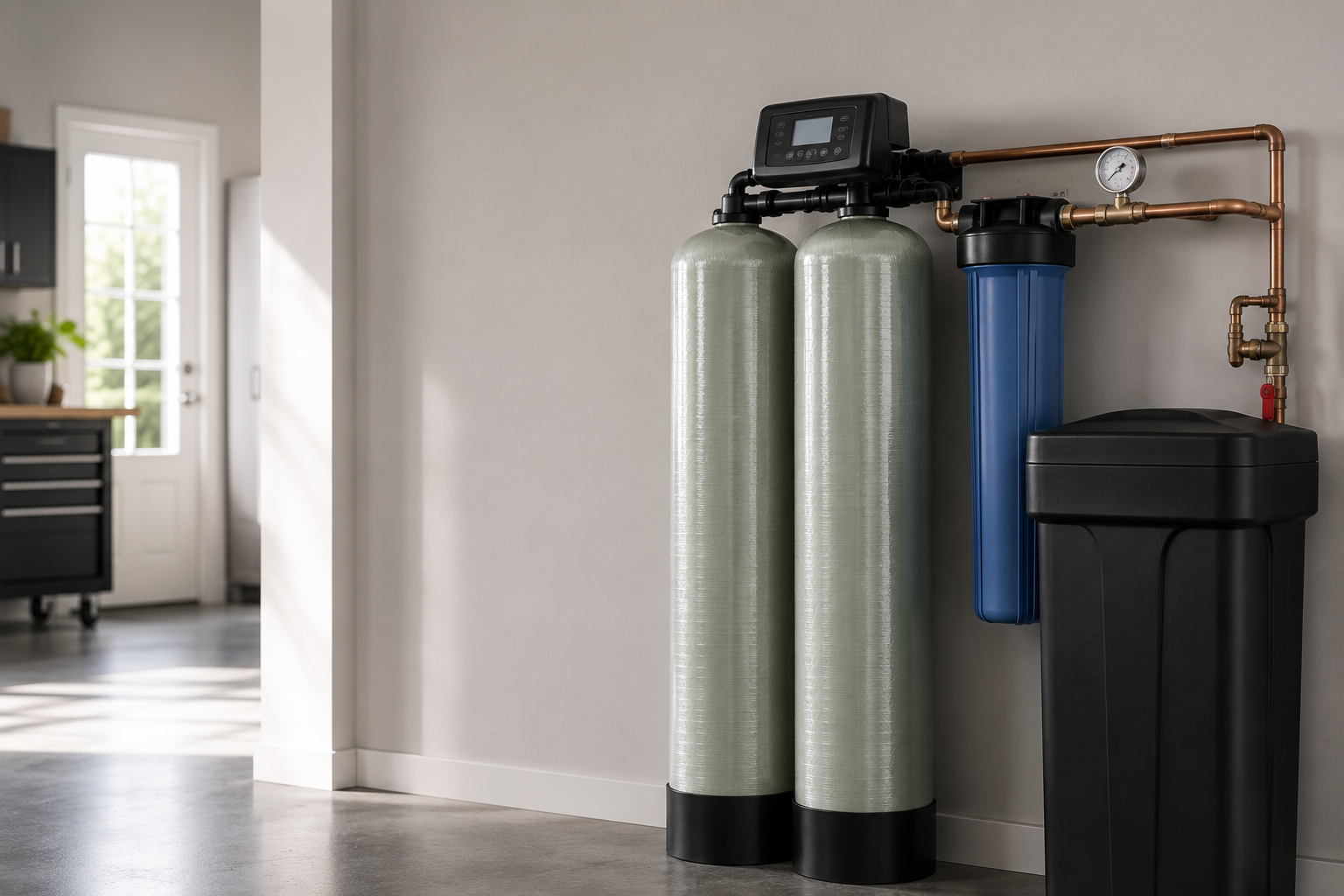
COMPARE BY PROBLEM
There is no single “best” whole-house filter for every home. Start with what you want changed in the water, then compare equipment designed for that job. Symptoms can guide the conversation, but they do not prove water chemistry.
A sediment stage is designed to intercept particulate matter. Filter type, micron rating, housing size and loading rate should match the water conditions and household flow.
Activated carbon is commonly used for taste and odor concerns, including chlorine-related complaints on treated water. Check the specific system claim and maintenance requirements.
A water softener addresses hardness through ion exchange. It is whole-home treatment, but it is not the same treatment job as sediment or carbon filtration.
Sediment, odor, staining and changing well conditions can require different treatment methods. Well-water equipment should follow the actual source conditions and appropriate testing.
Pressure drop, recurring taste or odor, clogged cartridges, exhausted media or bypass issues may call for service before replacement.
When symptoms overlap or the decision depends on a specific constituent, start with water testing instead of buying equipment by appearance alone.
COMPARE THE SYSTEM—NOT JUST THE TANK
A useful comparison goes beyond equipment size or appearance. The system should match the treatment target and still deliver practical flow, pressure, service access and maintenance for the home.
Ask: What is this specific system designed or certified to reduce?
Different filter technologies have different capabilities. Check the manufacturer’s performance data and certification for the actual reduction claim instead of assuming every “whole-house filter” treats the same substances.
Ask: Can the system handle household peak demand without creating an unnecessary pressure complaint?
Incoming pressure, pipe size, cartridge condition, media bed design, valve size and household demand all matter. A larger-looking tank is not automatically a better fit.
Ask: What will need to be changed, cleaned, regenerated or serviced?
Cartridges, media, softener salt and other service items have different schedules. Maintenance depends on the system, water conditions, household use and manufacturer requirements.
Ask: Can the equipment be isolated, bypassed and maintained without turning routine service into a plumbing problem?
Plan for shutoffs, bypass access, pipe routing, drain requirements where applicable, clearance for cartridges or tanks and a location that can be serviced later.
Commercial property? Use Commercial Water Filtration for commercial flow, usage and treatment requirements rather than using a residential system page as the design basis.
Whole-house filtration is point-of-entry treatment: it is installed near the building’s incoming water path so treated water can serve multiple fixtures. A water softener focuses on hardness. Reverse osmosis is commonly used as point-of-use treatment for dedicated drinking and cooking water.
A home can use more than one treatment stage when the water conditions and goals justify it, but combining equipment does not make every stage necessary. Start with the actual treatment job and verify each system’s purpose.
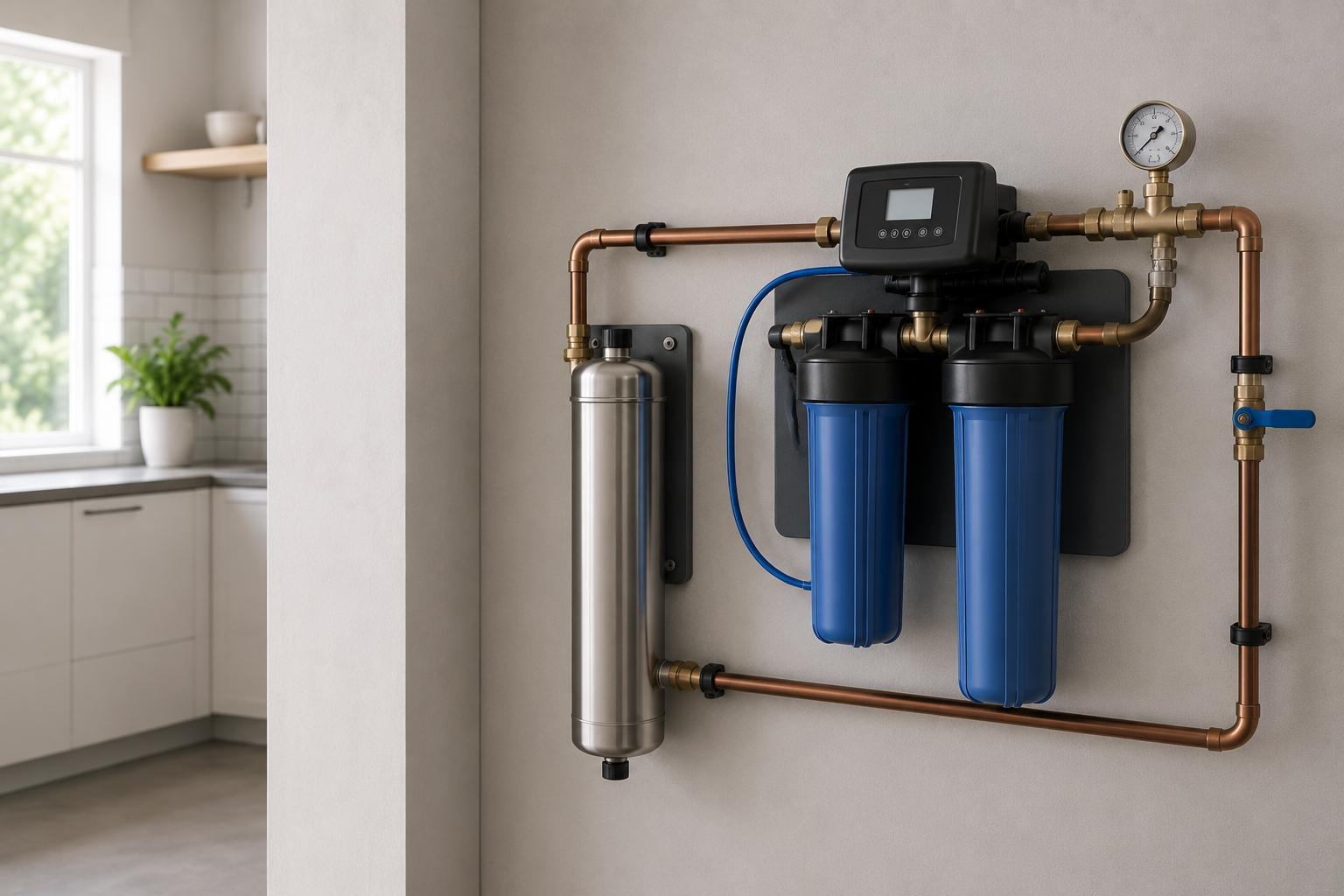
ALREADY HAVE WHOLE-HOUSE FILTRATION?
If the system used to perform well and now has low flow, recurring sediment, taste or odor returning, or overdue maintenance, check the installed system first. Cartridge condition, media life, bypass position, valves, pressure and the original system sizing can all change the next step.
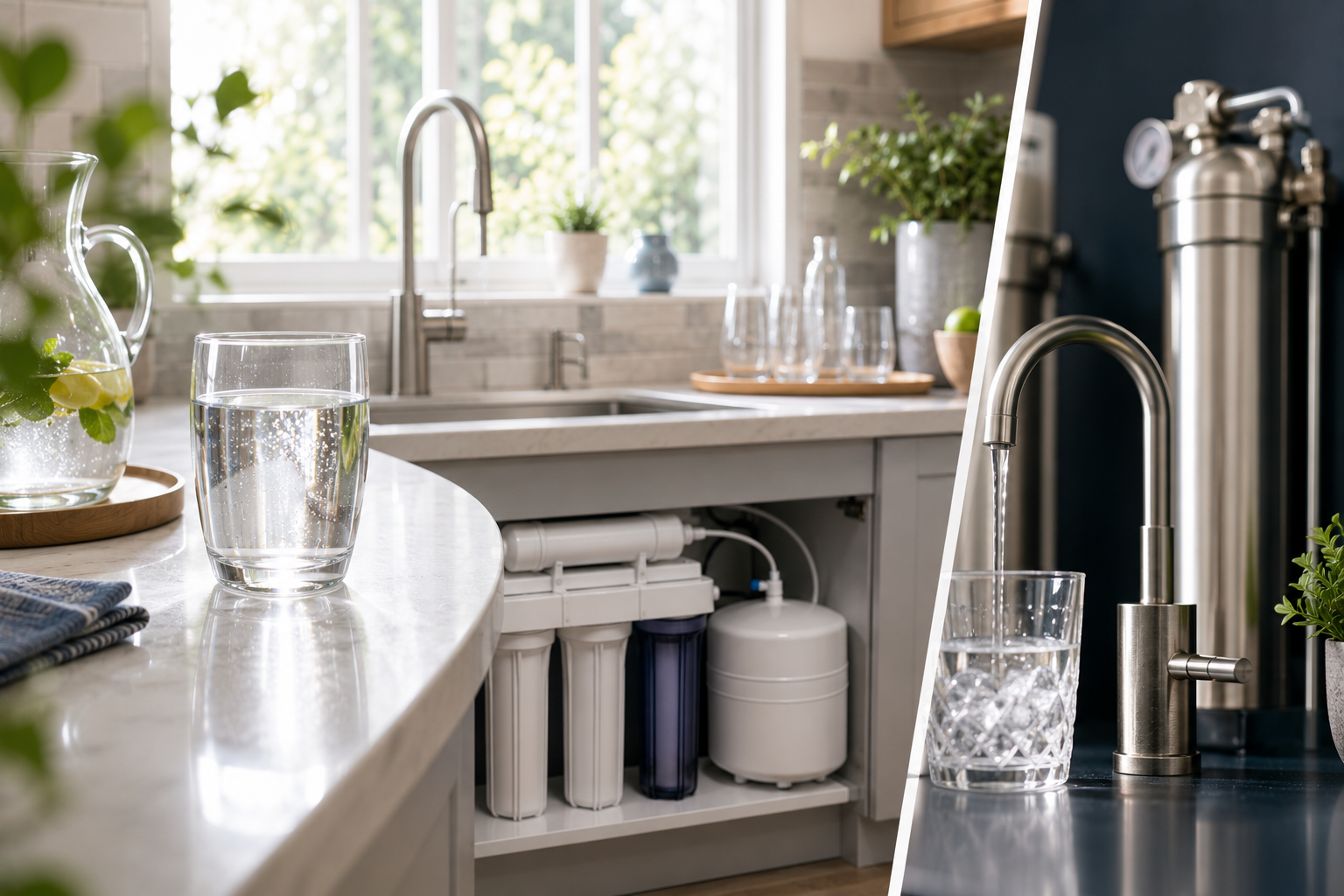
Point-of-entry and point-of-use systems solve different problems. If the goal is only drinking and cooking water at one sink, a dedicated reverse osmosis system may be more targeted than treating every gallon entering the home.
A PRACTICAL SELECTION SEQUENCE
Use this sequence to rule out the wrong category before comparing brands, tank sizes or equipment packages.
STEP 1
Start with the source water and the problem: sediment, chlorine taste or odor, staining, hardness, an existing system problem, or something that still needs testing.
STEP 2
Choose filtration, carbon, softening, RO or well-water treatment based on the job. Do not assume one category substitutes for another.
STEP 3
Check household flow, incoming pressure, pipe size, equipment valve size, space, bypass access and service clearance.
STEP 4
Know the cartridge, media or service requirements before installation. A system that cannot be maintained easily is not a good long-term fit.
Specific contaminant concern? Check the system’s actual reduction claim and use testing when the treatment decision depends on knowing what is present. Water appearance, taste and odor alone cannot identify many constituents.
WHOLE-HOUSE FILTRATION BY LOCATION
Choose your community for a local whole-house filtration page. Each location page stays focused on local service context while this page remains the system-comparison guide.
RELATED HELP & PROOF
If you are still deciding what category fits, use the broader service hub. If you are ready to verify Water Fixers’ work, review customer feedback and previous projects.
Installation, service, maintenance and whole-home treatment planning for city water, wells and existing systems.
See real Water Fixers plumbing, softener, reverse osmosis and filtration work from Central Coast projects.
Read customer feedback before scheduling filtration, plumbing or water-treatment service.
WHOLE-HOUSE SYSTEM QUESTIONS
A whole-house, or point-of-entry, system treats water near the point it enters the home so the treatment can serve multiple fixtures. What it actually reduces depends on the filtration technology and the specific system’s performance claims.
There is no single best system for every property. The right category depends on the water source, the problem you want to solve, the specific reduction claim, household flow and pressure, plumbing fit, maintenance requirements and budget.
Not necessarily. Sediment and carbon filters do not perform the same job as a water softener. If hardness and mineral scale are the main concern, use the water-softener treatment path or a combined plan when both jobs are justified.
No. Sediment filtration is aimed at particulate matter such as sand, grit or visible solids. Activated carbon is commonly used for taste and odor concerns and can be used for specific certified reduction claims. System labels and performance data matter.
Any treatment equipment can introduce resistance to flow. Pressure complaints can be related to clogged cartridges, undersized components, valve restrictions, pipe size, incoming pressure or overdue maintenance, so system sizing and diagnosis matter.
There is no universal replacement interval. Cartridge or media life depends on the filter type, water conditions, household usage, system sizing and the manufacturer’s service requirements. Faster-than-expected clogging is a reason to investigate the cause rather than only changing filters more often.
Not automatically. Whole-house filtration and reverse osmosis serve different treatment goals. If the goal is dedicated drinking and cooking water at one faucet, point-of-use RO may be the more targeted option.
Testing is especially useful when the property uses a private well, symptoms overlap, the concern is invisible, or the treatment decision depends on a specific constituent. The treatment system should be selected for the actual problem rather than from appearance alone.
Tell Water Fixers your water source, what you want to improve, whether the concern affects the whole home, and whether treatment equipment is already installed. We can help narrow the system category, plumbing fit and next step before equipment is selected.
CALL NOW! Se Habla Español!