WATER TESTING • WATER QUALITY DIAGNOSIS • CENTRAL COAST
White scale, staining, sediment, unusual taste or odor, drinking-water questions and private-well concerns can point in very different directions. Water Fixers starts with the water source, the symptom and the decision you need to make, then uses appropriate testing and inspection to determine the useful next step.
Test the water before you guess at the treatment. The right answer may be a plumbing repair, no treatment at all, maintenance on existing equipment, softening, filtration, reverse osmosis, well-water treatment or laboratory testing.
38+ years serving the Central Coast • Plumbing + filtration expertise • California License #719792
START WITH WHAT THE WATER IS DOING
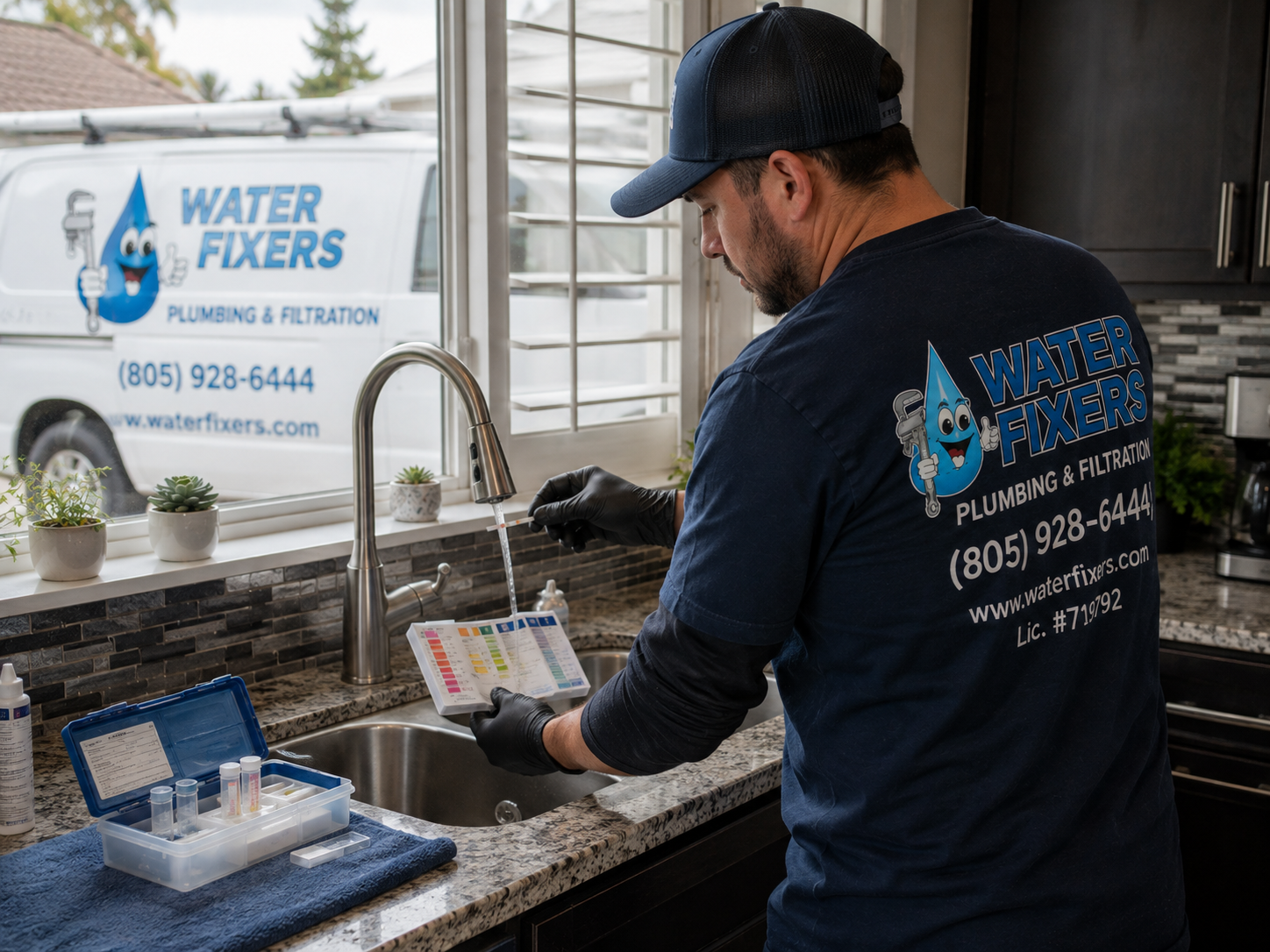
A visible clue can narrow the investigation, but it cannot identify every cause. Some important water-quality concerns have no dependable taste, odor or color at all. Start with the condition you notice, then choose the measurement or laboratory analysis that can actually answer the question.
SCALE + SPOTTING
These are common hardness clues. A hardness measurement helps quantify the mineral load before a softener is selected.
TASTE + ODOR
First identify whether the issue is hot water, cold water or both and whether the source is municipal water or a private well. Odor alone is not a diagnosis.
STAINING + SEDIMENT
Staining and particles can involve source water, plumbing, corrosion, sediment or existing treatment. Identify the material and where it enters before choosing a filter.
PRIVATE WELL
Private wells need property-specific testing. Nearby wells and regional groundwater records provide context, but they do not establish what is in your well.
FIELD TESTING + LABORATORY TESTING
Health-related contaminants, bacteria, metals, specific chemicals and other analytes may require proper sample collection and laboratory methods. A basic field test does not prove that every possible contaminant is absent.
WATER SOURCE MATTERS
MUNICIPAL WATER
Public suppliers monitor the regulated public supply and publish water-quality information. That is useful background, but conditions at an individual property can also be affected by service lines, plumbing, water heaters and treatment equipment after the water enters the building.
PRIVATE WELL
A private well is property-specific. Testing priorities depend on the well, surrounding conditions, treatment history, changes in water quality and the question being investigated.
ONE FIXTURE / HOT ONLY
A taste, odor, color or sediment complaint that appears only at one faucet or only on hot water may belong on a fixture, piping or water-heater diagnostic path instead of a whole-house treatment path.
THE WATER FIXERS PROCESS
The point of testing is not to create a longer list of equipment. It is to narrow the problem until the next step is justified by the water, the plumbing and the goal.
STEP 1
Tell us what changed: scale, odor, taste, staining, sediment, cloudy water, a drinking-water concern or another issue.
STEP 2
Municipal water, private well, hot-water-only issue, one fixture or whole property? The location of the symptom matters.
STEP 3
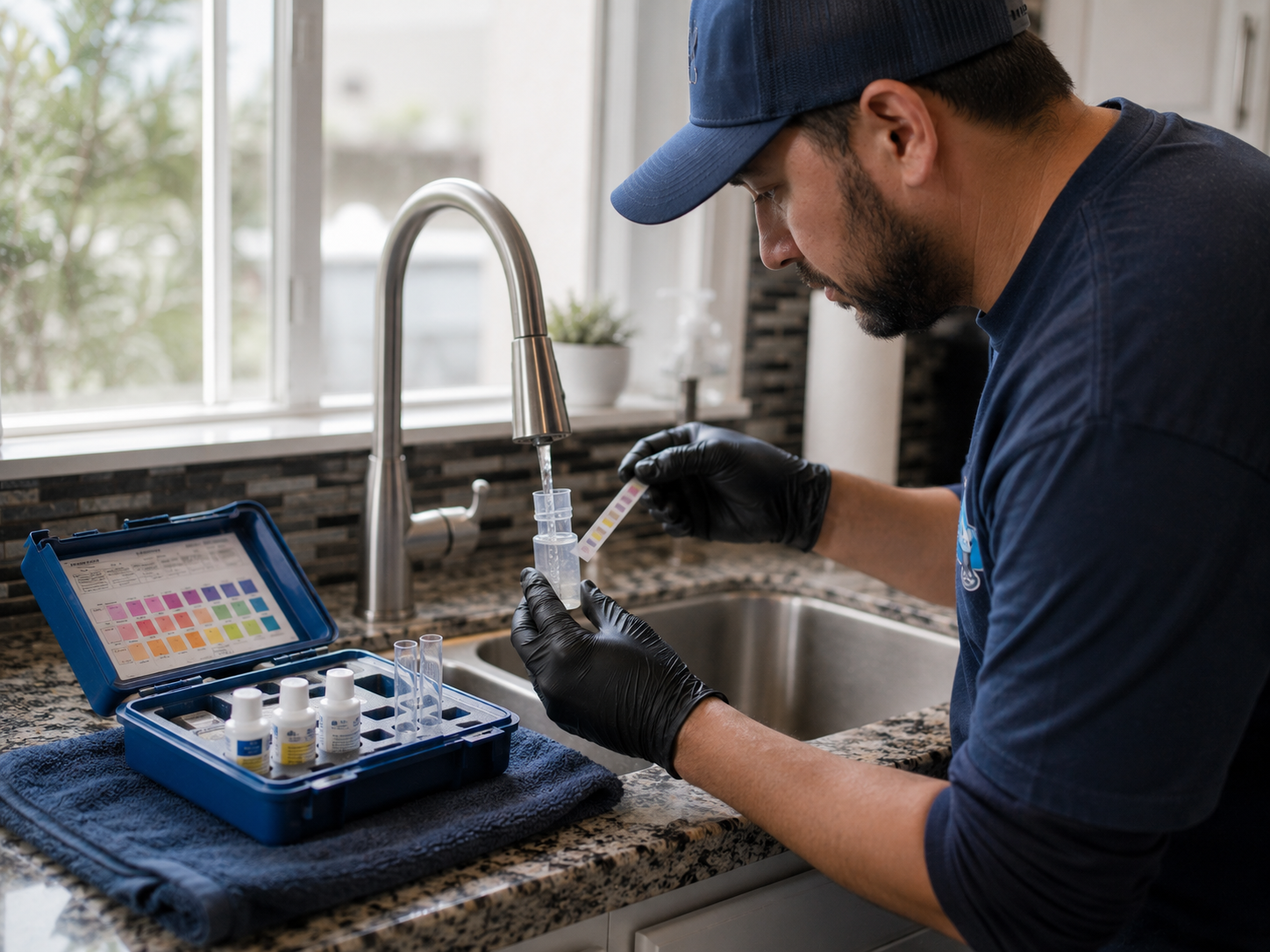
Use field measurements, inspection, public-water information or laboratory analysis according to the actual question.
STEP 4
The next step may be no treatment, plumbing service, equipment maintenance, softening, filtration, RO, well-water treatment or additional testing.
TEST FIRST • THEN CHOOSE THE TREATMENT
A water softener, whole-house filter and reverse-osmosis system do different jobs. Testing should narrow the problem before an equipment page takes over.
HARDNESS
Ion-exchange softening is the primary whole-home treatment path when measured hardness and the household goal support it. A softener is not a universal taste, odor or sediment filter.
WHOLE-HOUSE
Whole-house filtration can address selected sediment, taste, odor, disinfectant or media-specific goals when the identified water conditions support the chosen treatment.
DRINKING WATER
Point-of-use RO may fit when the goal is treated water for drinking, cooking, ice or coffee and the selected system is appropriate for the feed-water conditions.
PRIVATE WELL
Well-water treatment should follow property-specific testing, water chemistry, pressure/flow and household goals rather than copying a municipal-water package.
PRIVATE-WELL TESTING LANE
EPA currently recommends testing a private well annually for total coliform bacteria, nitrate, total dissolved solids and pH, with additional testing when local risks, well work or changes in taste, odor, color or other conditions warrant it. California’s GAMA program also recommends annual domestic-well water-quality testing and explains when laboratory analysis is useful for measuring contaminant concentrations.
For a health-related or regulatory question, use the appropriate certified laboratory and follow local or state public-health guidance. Water Fixers can help connect the result to the plumbing or treatment decision without pretending an on-site screening replaces the laboratory.
COMMERCIAL WATER TESTING
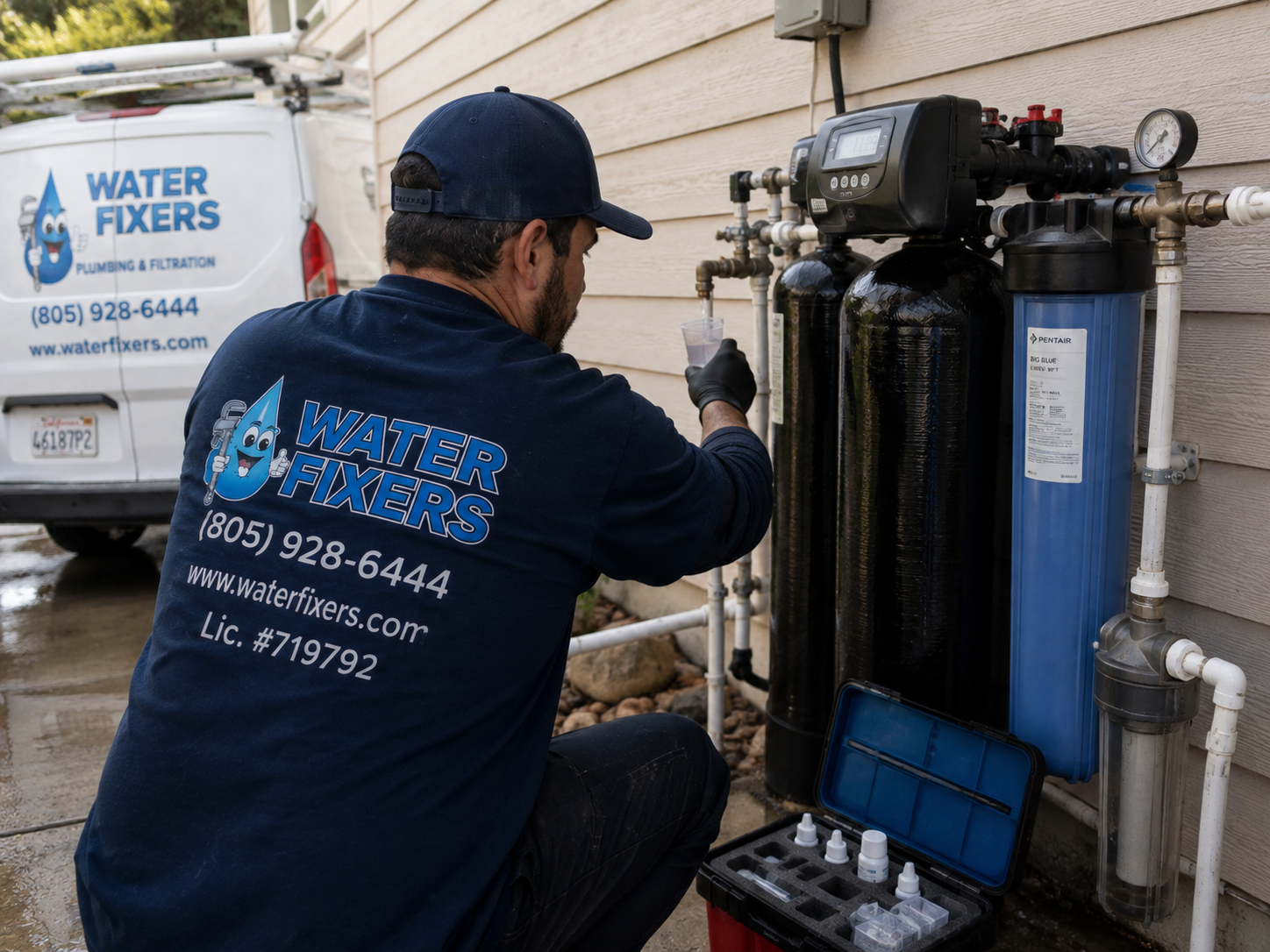
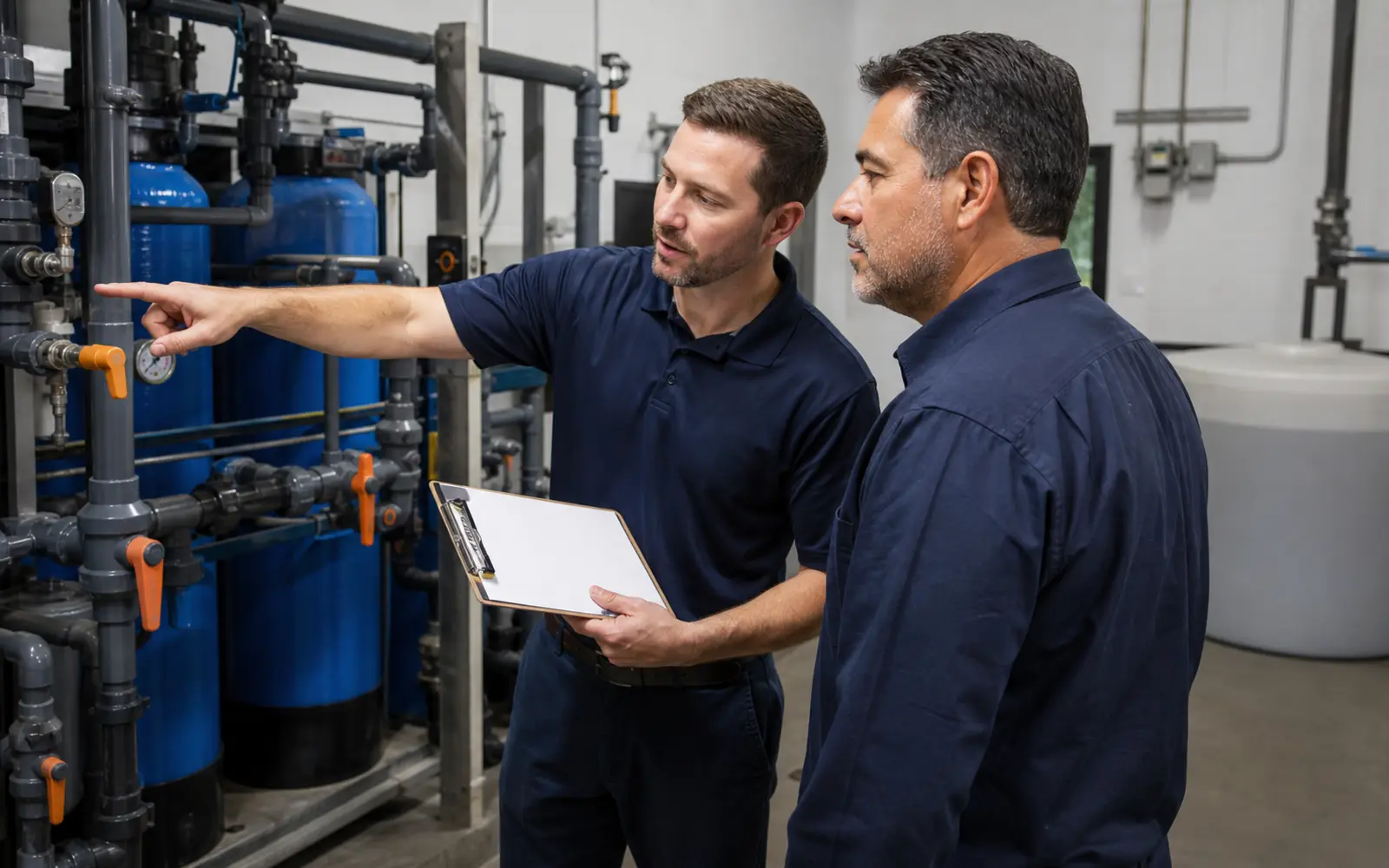
Commercial water-quality decisions should connect test findings with the water source, plumbing conditions, existing equipment, peak demand and the water quality the business or process actually requires. The dedicated commercial page handles that B2B planning so this residential service hub stays focused.
For process or higher-purity applications, the required finished-water specification should drive the testing and treatment train rather than a residential symptom checklist.
WATER TESTING BY LOCATION
Use the regional service pages for local water-source context and nearby service routing. For a property-specific water-quality decision, the actual water at that address still needs to drive the test and treatment plan.
Santa Maria Valley — Santa Maria, Orcutt, Guadalupe and nearby communities.
Five Cities & Coast — Arroyo Grande, Grover Beach, Pismo Beach, Avila Beach and nearby communities.
San Luis Obispo Area — San Luis Obispo, Los Osos, Morro Bay and nearby communities.
Santa Ynez Valley — Santa Ynez, Solvang, Buellton, Los Alamos and nearby communities.
North SLO County — Paso Robles, Atascadero, Templeton and nearby communities.
Lompoc Area — Lompoc, Vandenberg Village and nearby communities.
MAKE THE VISIT MORE USEFUL
1
Tell us what you see, smell, taste or are trying to improve and when the issue began. Photos of staining or existing equipment can also help.
2
Let us know whether the property uses municipal water, a private well or another source, and whether the issue is hot water, cold water, one fixture or the whole property.
3
Note any softener, whole-house filter, reverse-osmosis system, UV equipment or other treatment already installed, including brand/model when known.
WATER TESTING QUESTIONS
TEST • DIAGNOSE • CHOOSE THE NEXT STEP
Tell Water Fixers what you are seeing, tasting, smelling or trying to improve. We can help determine the useful testing path and whether the next step belongs in plumbing, maintenance, filtration, softening, reverse osmosis, well-water treatment or a laboratory.
Water Fixers Plumbing & Filtration • Santa Maria, California • Serving the Central Coast • License #719792
CALL NOW! Se Habla Español!