
WATER QUALITY KNOWLEDGE CENTER
What Is Hard Water?
White scale, spots and poor soap performance may be consistent with hard water, but testing is the dependable way to measure hardness and plan treatment.
Hardness is primarily dissolved calcium and magnesium. The visible clues are useful, but they do not tell you the exact hardness level—or prove that hardness is the only thing affecting the water.
Water Fixers Plumbing & Filtration • California Central Coast • CA License #719792
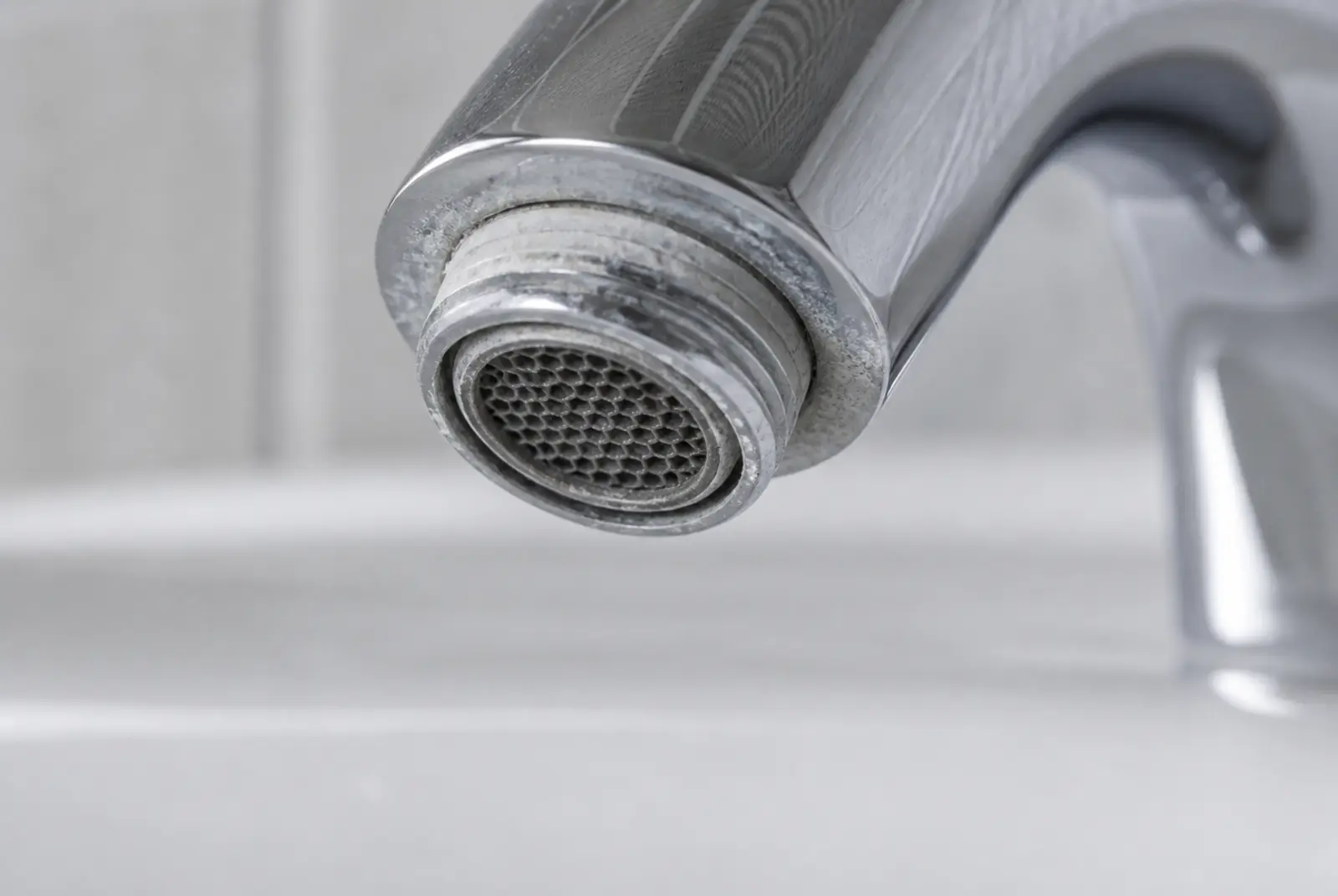

TIPS FROM HARLEY • TIP #3 • BETTER WATER
Those White Spots Keep Coming Back for a Reason
Harley says: If I leave spots on the glass, I get blamed. If your water does it, apparently that is chemistry.
White scale and spotting can be consistent with hard water, but Harley is not diagnosing your water from across the bathroom. Use the spots as a clue, then measure the water before choosing treatment.
CLUES ARE NOT A MEASUREMENT
What You May Notice—and What It Cannot Prove
Hard-water symptoms are useful reasons to investigate. They are not a substitute for measuring the water.
POSSIBLE CLUE
White Scale or Spots
Mineral deposits on fixtures, glass or heating surfaces may be consistent with hardness.
POSSIBLE CLUE
Soap Performance
Soap may lather poorly or leave residue, but products and cleaning conditions also matter.
IMPORTANT
Clear-Looking Water
Water can be hard while looking completely clear. Appearance alone cannot measure dissolved hardness.
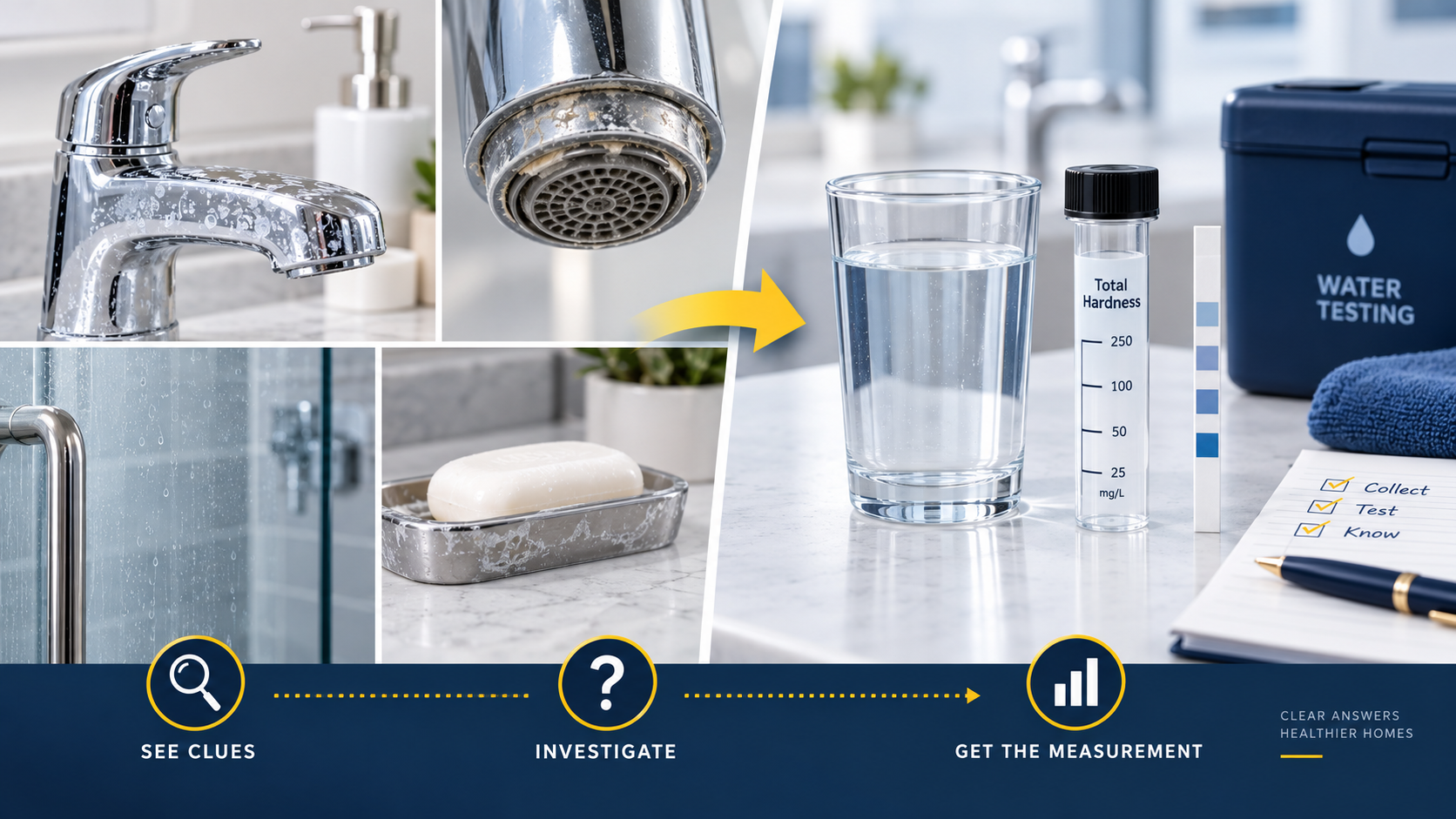
Best next step: treat spotting as a clue, then use a properly performed hardness test to quantify the water.
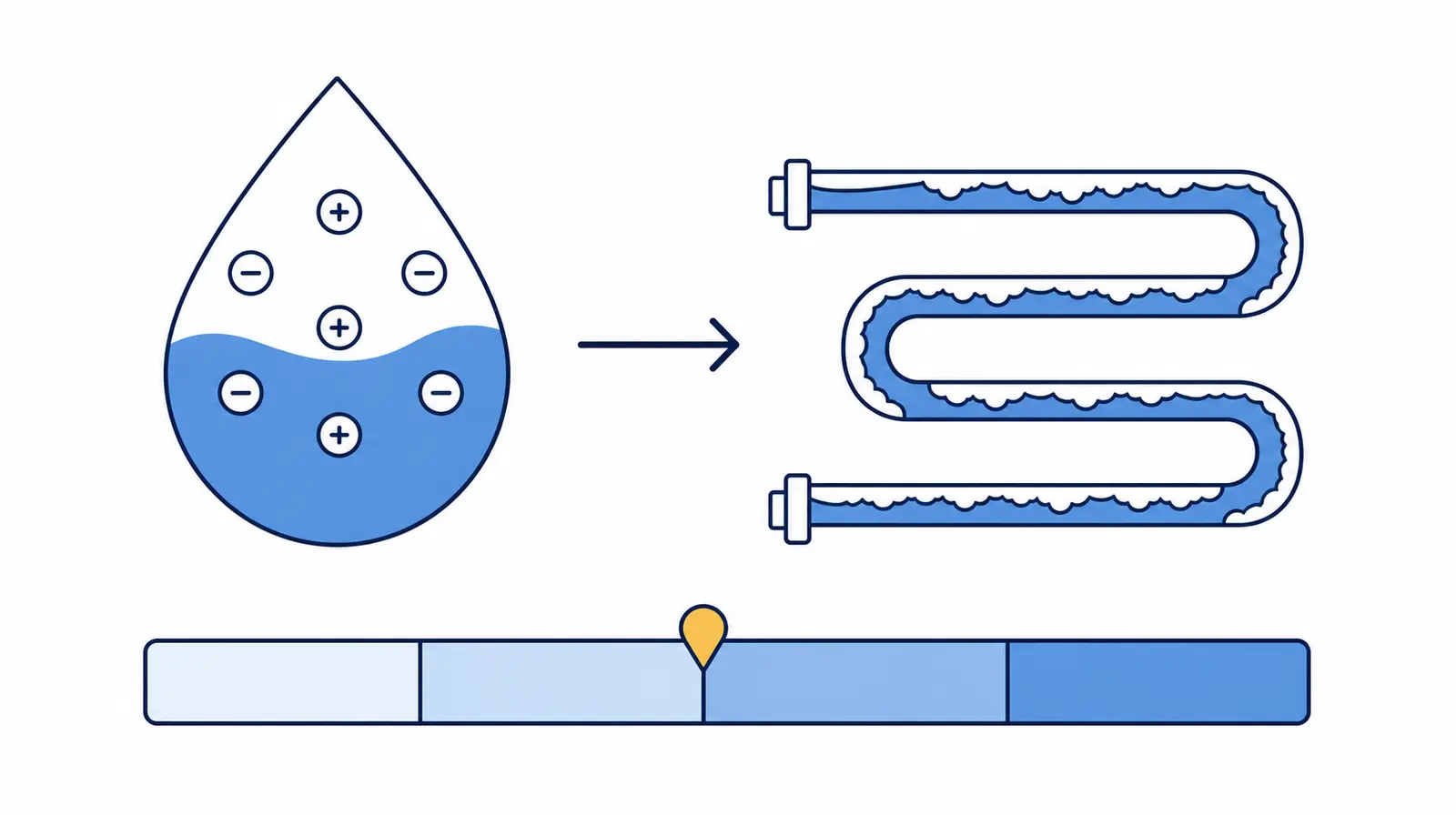
CALCIUM + MAGNESIUM
What Hard Water Is—and Where It Can Come From
Hardness is primarily the amount of dissolved calcium and magnesium in water. Water can pick up these minerals as it moves through soil and rock.
Hardness can occur in groundwater and public water supplies, and the level can differ by source. It is generally treated as an aesthetic and equipment concern rather than as a regulated health contaminant.
MEASURE BEFORE YOU SIZE EQUIPMENT
What Testing Can Tell You
A laboratory or properly performed field test can report hardness, commonly as milligrams per liter as calcium carbonate (mg/L as CaCO₃) or grains per gallon (gpg). Test the water source and the location the proposed treatment would actually serve.
Symptoms are clues, not a water test. Scale and spotting do not identify the exact hardness level and do not rule out silica, corrosion products or other dissolved solids.
START HERE
1. Identify the Source
Municipal supply, private well, shared system or another source? Source context changes what background information matters.
TEST
2. Measure Hardness
Quantify hardness at the point the treatment would serve instead of sizing equipment from visible scale alone.
PLAN
3. Match the Goal
Whole-house scale control, drinking-water mineral reduction and other water-quality goals may require different treatment paths.
HOUSEHOLD + EQUIPMENT EFFECTS
Why Hard Water Can Matter
Hard water is usually a performance, cleaning and equipment issue rather than a reason to panic. The effect depends on the hardness level, water use, temperature and equipment in the home.
AROUND THE HOME
Cleaning & Spotting
Hardness can affect spotting, soap performance, residue and the amount of effort needed to keep fixtures and glass looking clean.
PLUMBING
Plumbing & Equipment
Scale can accumulate on fixtures, water-heater surfaces and appliances, which may affect efficiency, flow and service needs over time.
TREATMENT AFTER TESTING
Match the Technology to the Measured Water
Ion-exchange water softening is the primary household technology associated with reducing calcium and magnesium hardness throughout a home. System size, regeneration settings and plumbing scope should match measured hardness and actual water use.
Reverse osmosis may reduce dissolved minerals at a single drinking-water faucet, but it is not the same as whole-house softening.
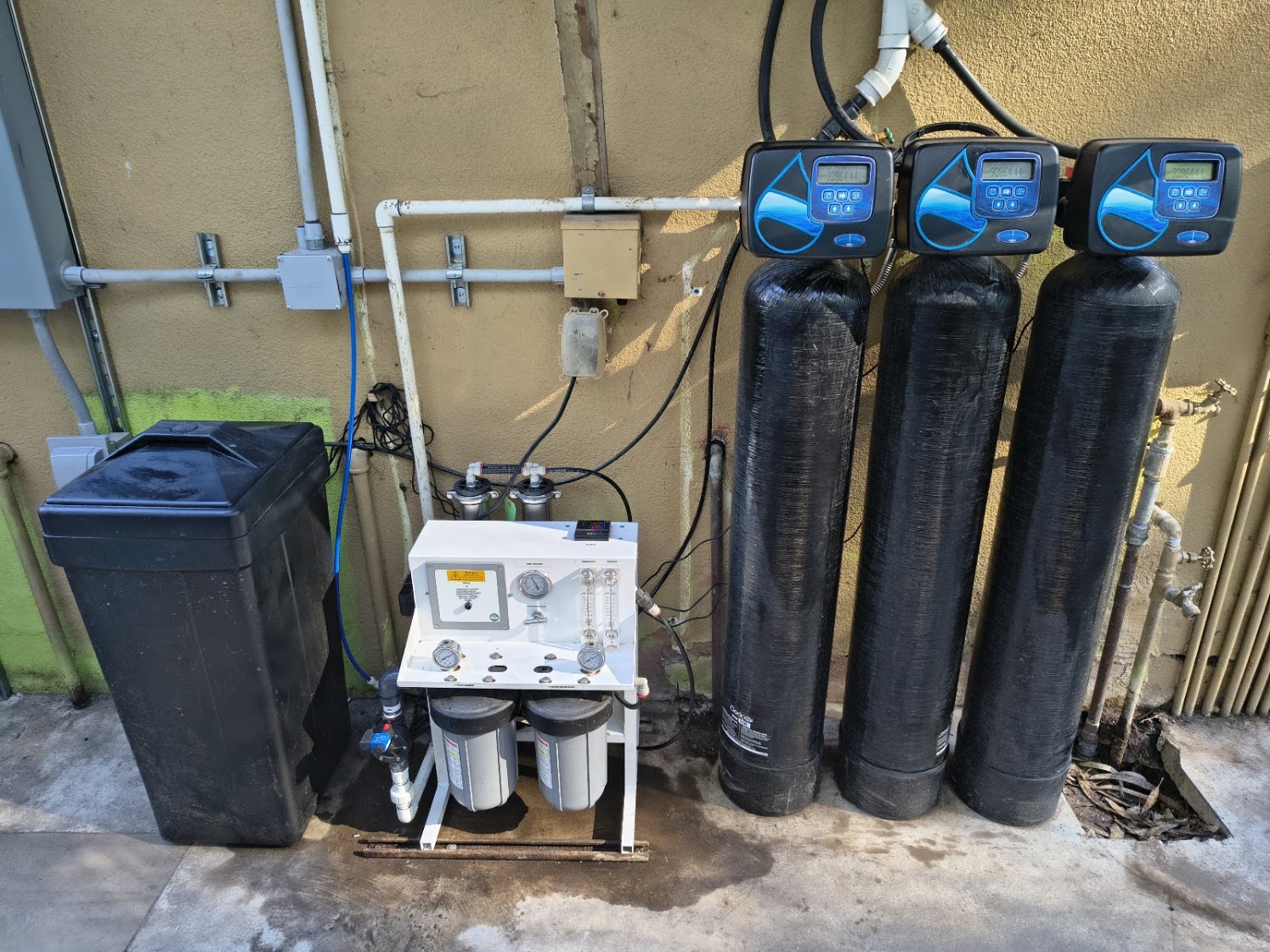
Real Water Fixers treatment equipment. The correct configuration depends on the tested water and the treatment goal.
AVOID THE WRONG TOOL
What Does Not Remove Hardness
Sediment filters, ordinary carbon cartridges and ultraviolet disinfection do not soften water. A standard under-sink reverse osmosis system can reduce dissolved minerals at one drinking tap, but it is not a whole-house hardness treatment.
NOT A SOFTENER
Sediment Filtration
Useful for particles when properly selected. It does not remove dissolved calcium and magnesium hardness.
NOT A SOFTENER
Carbon Filtration
Useful for identified taste, odor or disinfectant concerns. Ordinary carbon does not soften hard water.
NOT A SOFTENER
UV Treatment
UV is a microbiological treatment tool when properly applied. It does not remove dissolved hardness minerals.
WHERE TO GO NEXT
Related Water Fixers Guidance
Use the next page that matches the job you are trying to do. This hard-water guide owns the educational “what is hard water?” question; service and local-treatment pages handle commercial next steps.
DIAGNOSIS
Water Testing
Measure the water before choosing treatment.
LOCAL SERVICE
Hard Water Solutions
Move from confirmed hardness to a practical local treatment plan.
TREATMENT
Water Softener Service
Explore whole-house softening service, equipment and ongoing support.
COMPARE
Iron in Water
Compare orange/brown staining and iron-related clues with hardness spotting.
OFFICIAL WATER-QUALITY RESOURCES
Further Reading From USGS and EPA
For additional background, Water Fixers points readers to primary public resources rather than treating marketing language as a substitute for water-quality information.
FREQUENTLY ASKED QUESTIONS
Hard Water FAQs
Is hard water unsafe to drink?
Hardness is generally treated as an aesthetic and equipment concern. A complete water test may still be appropriate when the question involves other drinking-water constituents.
Will a sediment filter remove hardness?
No. Dissolved calcium and magnesium pass through ordinary sediment filtration.
Can spotting prove my water is hard?
No. Spotting is a useful clue, but testing is needed to measure hardness and to consider other dissolved constituents.
Is reverse osmosis the same as a water softener?
No. Under-sink RO is generally a point-of-use drinking-water treatment. Whole-house ion-exchange softening is the primary household treatment associated with hardness reduction.
TEST FIRST • THEN CHOOSE THE TREATMENT
Make the Next Decision From Evidence
Water Fixers can help you measure hardness, understand what the result means for the property and decide whether testing, softening, maintenance or another water-quality path makes sense.
Water Fixers Plumbing & Filtration • Santa Maria, CA • California License #719792

🐾 MORE TIPS FROM HARLEY
Harley Has Finished Investigating the Spots—for Now
Browse more practical plumbing and water tips from Water Fixers’ Shop Dog & Chief Morale Officer. Harley supplies the personality; the Water Fixers team checks the technical advice.