
MAINTAIN THE SYSTEM YOU ALREADY OWN
Water Softener Maintenance & Preventive Service
Salt, brine, settings, regeneration, valves and resin all affect performance.
Quick answer: maintenance should verify that the softener is making brine, completing regeneration, sending water through the correct flow path and still removing hardness effectively—before replacement is discussed.
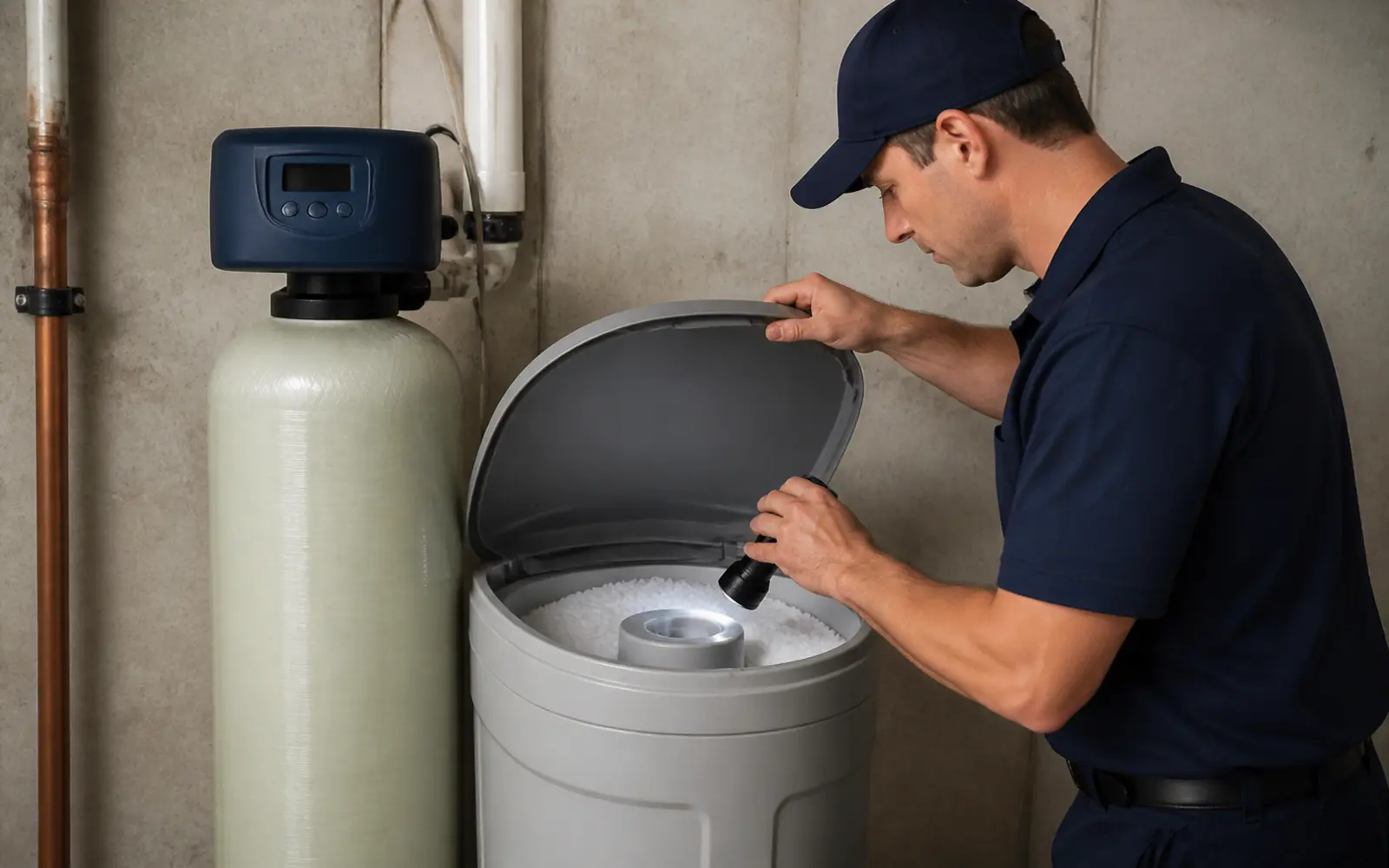
MAINTENANCE CHECKLIST
What should be checked?
Salt & brine
- Salt level and bridging
- Brine draw and refill
- Float and brine well
- Water level and cleanliness
Controls & cycle
- Time and hardness settings
- Capacity and reserve
- Cycle advancement
- Drain flow and completion
Valve & plumbing
- Bypass position
- Leaks and fittings
- Injector and seals
- Pressure and flow restrictions
Resin & results
- Hardness before and after
- Resin capacity and age
- Fouling or degradation signs
- Demand vs. system size
CALL WHEN PERFORMANCE CHANGES
Symptoms that deserve an inspection
Hard water or scale returned
Spotting, scale, soap changes or dry-feeling water after the system previously worked.
Salt use looks wrong
Salt never drops, disappears too quickly, bridges, mushes or sits above an unusual water level.
Cycle, leak or flow problem
The unit runs continuously, will not regenerate, leaks, drains between cycles, shows errors or reduces pressure.
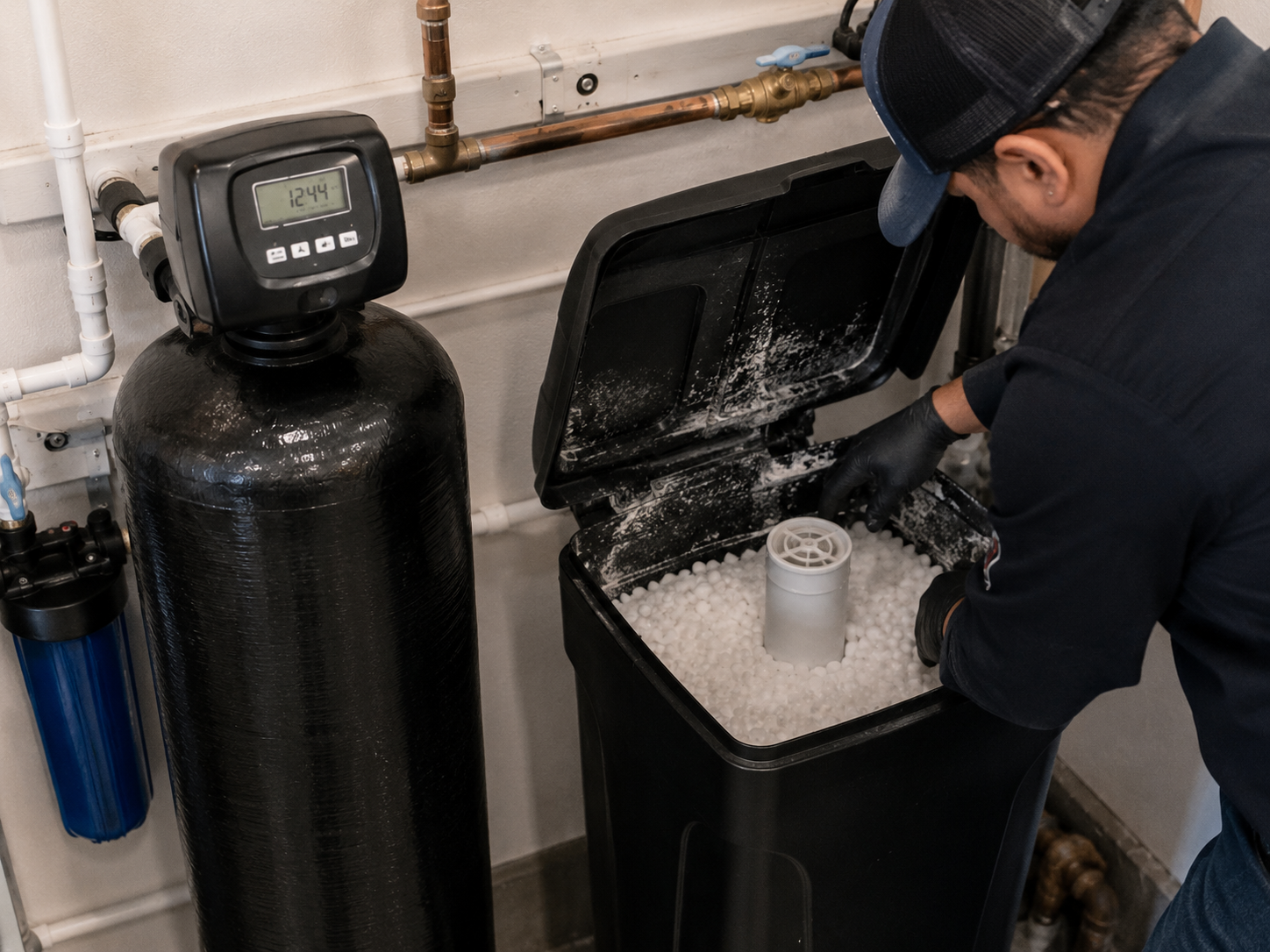
Maintenance frequency depends on the system
A fixed annual interval is not the only trigger. Hardness, household demand, salt use, equipment type, system age and past service all affect the practical schedule.
Do not wait for a calendar date if hard water returns, salt use changes, the brine tank behaves differently, the valve leaks or the unit stops completing regeneration.
DIAGNOSIS BEFORE REPLACEMENT
What a technician should evaluate
- Confirm the symptom: test hardness and review what changed.
- Check the flow path: verify bypass, inlet/outlet and plumbing condition.
- Watch regeneration: confirm controls, valve movement, brine draw, refill and drain.
- Evaluate serviceability: consider parts, valve, tanks, resin and repair cost.
- Explain the next step: maintenance, repair, resin work or replacement only when justified.
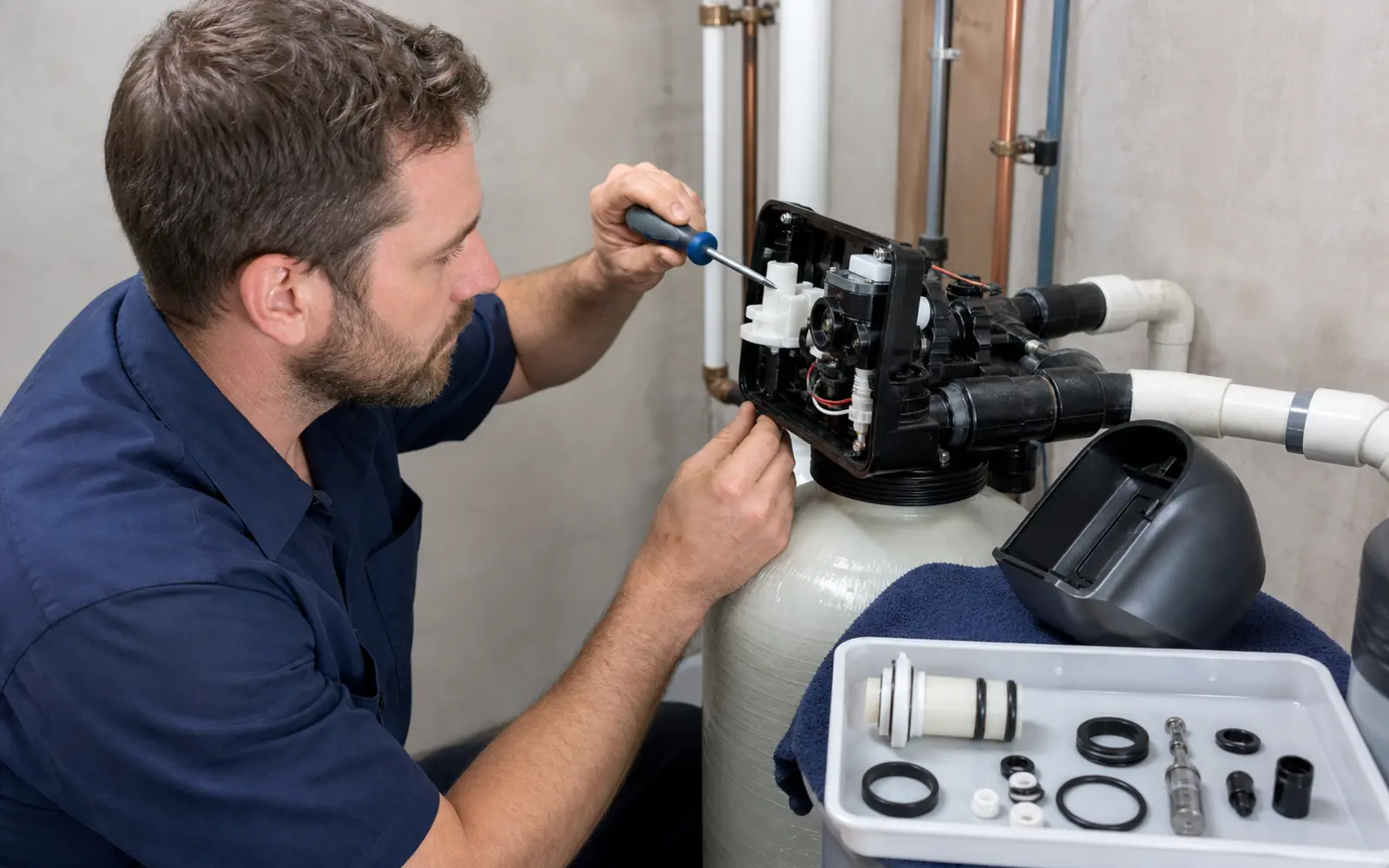
OLDER AND RETAIL SYSTEMS
Brand-specific repair routes
A brand name alone does not determine whether repair makes sense. Start with the symptom, model, condition and realistic parts path.
GE water softeners
Diagnosis for salt, brine, valve, control, leak and regeneration symptoms.
Kenmore / Sears softeners
Diagnosis for older cabinet systems with hard water, salt, brine, motor, valve, leak and cycle issues.
DIRECT ANSWERS
Water softener maintenance FAQs
There is no single interval for every system. Equipment type, hardness, salt use, household demand, water conditions and performance history all matter. Schedule an inspection when performance or salt use changes.
A maintenance visit can include salt and brine condition, settings, regeneration behavior, injector and drain operation, valve and bypass checks, leak inspection, resin performance and water-hardness verification.
Possible causes include a salt bridge, brine draw problem, injector restriction, float or drain issue, valve problem, controls or a system that is not regenerating. Diagnosis should confirm the cause.
Sometimes. Correcting salt bridging, settings, brine draw, bypass position or regeneration problems can restore performance when the tanks, valve and resin remain serviceable.
Consider condition, age, parts availability, resin and valve health, repeated failures and repair cost. A diagnosis-first decision is more useful than replacing a working system by default.
Related softener pages
Maintain the system before assuming it is finished
Water Fixers can inspect the current softener, test performance and explain whether maintenance, a targeted repair, resin work or replacement makes practical sense.
Water Fixers Plumbing & Filtration • 805-928-6444 • 2893 Industrial Pkwy, Santa Maria, CA 93455 • California License #719792