




WATER SOFTENER SERVICEABILITY GUIDE
Water Softener Parts & Repairability
Can the exact unit be identified, repaired and put back into reliable service?
Water softeners are repairable only when the actual failure can be diagnosed and the correct model-specific parts, labor and testing path still make sense. The brand name alone does not answer that question.
This guide explains what to record, which assemblies commonly matter, how to verify a parts path and when parts availability still does not make a repair practical.
Water Fixers Plumbing & Filtration • California License #719792
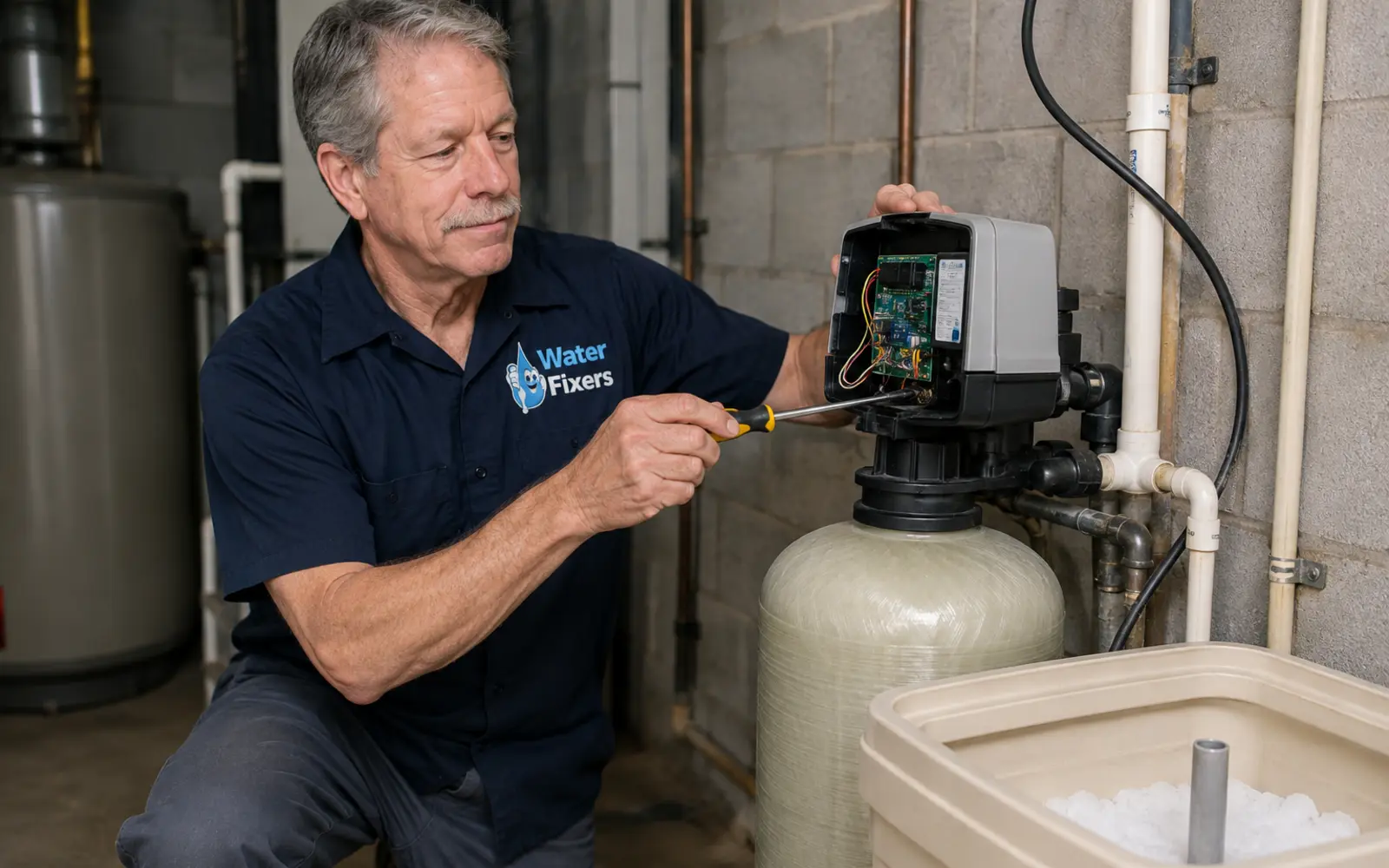
Start with the exact model. Similar-looking valves, motors, boards and seals are not automatically interchangeable.
QUICK ANSWER
Five Things That Make a Water Softener Practically Repairable
A part being sold somewhere is only one piece of repairability. A useful repair needs all five pieces below to line up.
Exact identification
The full model, serial or SKU can be matched to the correct manual, parts list and warranty.
Known failure
The symptom can be traced to a specific assembly instead of replacing parts by guesswork.
Parts path
The correct service part is still obtainable from a manufacturer, distributor or verified service channel.
Sound foundation
The tanks, valve body, plumbing connections and overall condition are still worth keeping.
Sensible economics
Parts, labor and any resin or secondary work restore enough useful life to justify the repair.
WHAT ACTUALLY GETS SERVICED?
Common Water Softener Assemblies That Affect Repairability
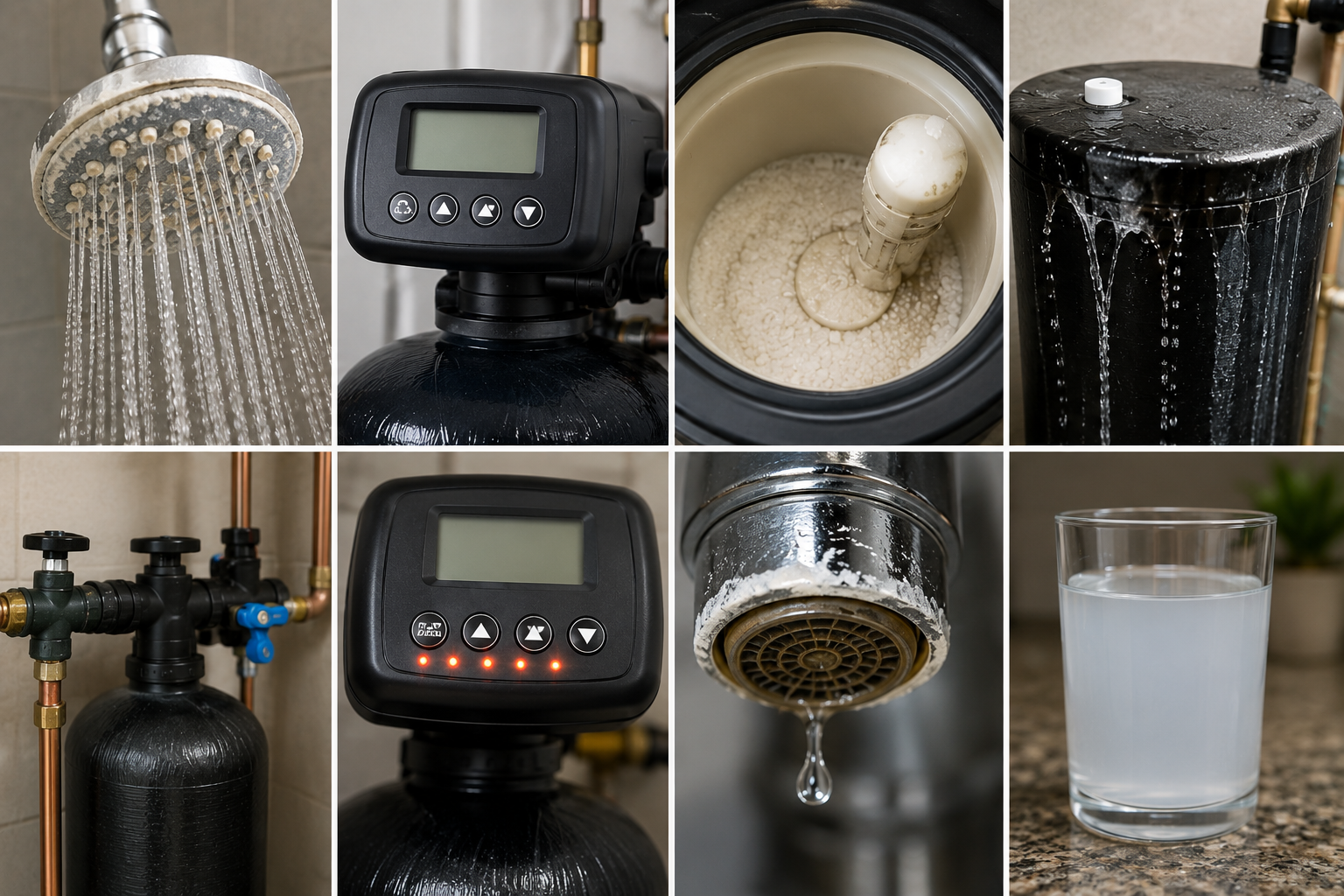
Different designs use different names and layouts, but these are common service areas. Diagnosis should identify the failed assembly before a homeowner buys a part.
Control & drive
Timer or control board, motor/drive, sensors and wiring can affect whether the unit starts and completes regeneration.
Valve & seals
Piston/rotor, seals, spacers and valve-body components control flow through service and regeneration stages.
Injector & brine draw
Injector/nozzle, venturi and related passages help create suction and move brine through the regeneration cycle.
Brine system
Float, brine valve, tubing, refill controls and the salt/brine tank can cause high water, no brine draw or salt-use problems.
Bypass & connections
Bypass valves, adapters, clips, O-rings and inlet/outlet fittings matter when water leaks, bypasses treatment or restricts flow.
Resin & tanks
Resin condition, distributor/riser components and pressure/brine tank integrity can determine whether major repair work is still worthwhile.
MODEL-SPECIFIC FIRST
Record the Label Before You Order Anything
The model and serial/SKU label are the bridge between a symptom and a real parts diagram. A brand name such as GE, Rheem, Morton or WaterBoss is not specific enough by itself.
- Full model number — not just the product family.
- Serial number or date code — some manufacturers revise parts within a model family.
- Control valve or platform — when visible in the manual or on the equipment.
- Photo of the display/error — before resetting it.
- Current manual and parts diagram — for the exact equipment.
- Purchase date and written warranty — if warranty coverage may apply.
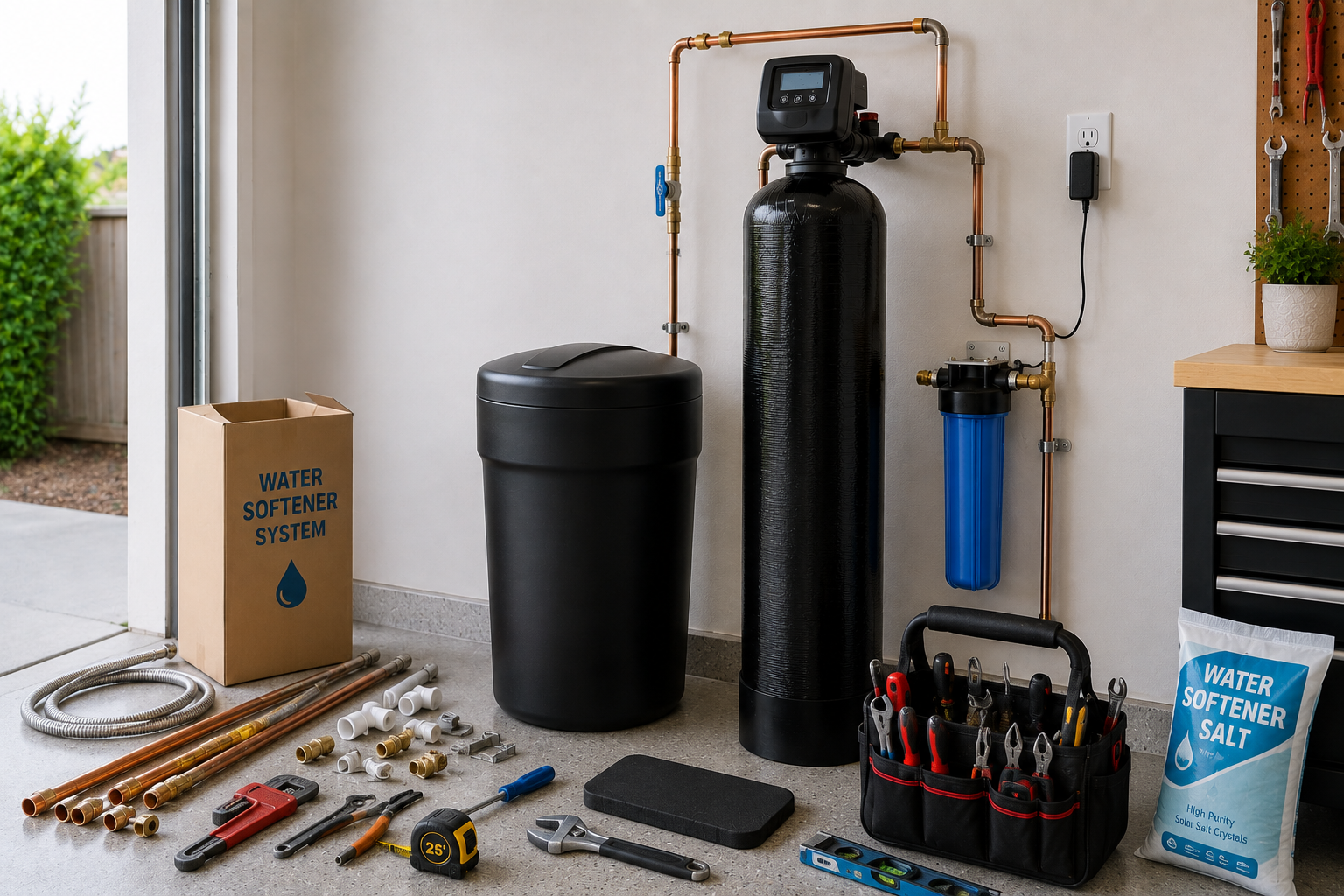
A photo of the whole installation can also reveal the bypass, drain, connections and service clearance that affect repair work.
PARTS ARE NOT THE WHOLE REPAIR
A Replacement Part Only Helps When the Diagnosis and Service Path Are Correct
A manufacturer may publish a part number and still leave important questions: Is that the failed part? Is the installed revision compatible? Will the rest of the unit remain worth keeping? Who will install and test it?
1. Identify
Confirm the exact unit and the assembly responsible for the symptom.
2. Source
Verify the exact service part, revision and current availability.
3. Install
Replace the component correctly without creating a new leak, flow or programming problem.
4. Prove the repair
Run the necessary cycle, check brine/drain/flow behavior and confirm soft-water performance.
That is why “parts available” and “economically repairable” are related—but not identical—questions.
CURRENT MANUFACTURER EXAMPLES
What a Real Parts Path Can Look Like
These examples show why exact-model research matters. They do not mean every model remains supported forever or that every listed part makes a repair worthwhile. Always verify the current model-specific documentation.
Rheem
Rheem currently provides model-specific manuals, troubleshooting resources and a Parts & Accessories route for its water softeners.
WaterBoss
WaterBoss publishes a parts-and-service page with service assemblies and says replacement parts are available through its technical support team; manuals and serial information are used to match parts.
Morton
Current Morton manuals include exploded parts diagrams, part numbers and instructions to provide the exact model and serial number when ordering repair parts.
DO NOT CONFUSE WARRANTY WITH REPAIRABILITY
Warranty and Repairability Overlap, but They Are Not the Same Thing
Warranty Coverage
A warranty may cover certain parts for a stated period, but the controlling document can include exclusions, registration requirements, maintenance conditions, freight rules or different coverage periods for electronics, tanks and labor.
Always use the written warranty for the exact model and purchase date.
Practical Serviceability
Serviceability asks a different question: after diagnosis, can the right part be obtained and installed locally at a cost that restores a dependable system? A warranty can help with cost, but it does not automatically answer that question.
WHEN PARTS RESEARCH IS FINISHED
The Next Question Is Whether the Repair Still Makes Sense
This page stops at parts and serviceability. The final repair-versus-replacement decision also needs tank condition, resin performance, repeat failures, sizing and total repair cost. That broader decision belongs in the dedicated guide.
CHOOSE THE RIGHT NEXT PAGE
Parts Research Is One Step in the Water Softener Service Path
Existing system stopped working
Use the central Water Softener Service & Repair page for symptom-first diagnosis.
Routine care or performance drift
Use Water Softener Maintenance for salt, settings, brine condition and preventive service.
GE water softener
Use the dedicated GE repair page for GE-specific troubleshooting and repair guidance.
Kenmore / Sears water softener
Use the dedicated Kenmore/Sears repair page for older cabinet-system troubleshooting.
Need a replacement system
Compare the current five Water Fixers systems in the product hub instead of duplicating specs here.
Not sure whether Water Fixers serves the property
Use the service-area hub or contact the office with the address and equipment.

Water Fixers Repairs Many Water Softener Brands
Hard water returned, salt use changed, the brine tank looks wrong, or the softener is leaking or not regenerating? Water Fixers can evaluate many existing water-softener brands across California’s Central Coast—even when the system was installed by someone else.
We diagnose the controls, valve, brine system, resin performance and surrounding plumbing before recommending repair, maintenance or replacement.
DIRECT ANSWERS
Water Softener Parts & Repairability FAQs
Have the Model Number? Start With the Exact Equipment.
Send Water Fixers the model/serial or SKU, a photo of the unit, the symptom and the service address. We can help determine whether the next step is maintenance, diagnosis, a model-specific repair or replacement planning.
Water Fixers Plumbing & Filtration • 2893 Industrial Pkwy, Santa Maria, CA 93455 • License #719792