HomeWater Quality
CENTRAL COAST • WATER QUALITY

What Is My Water Telling Me?

Use symptoms as a starting question—not a diagnosis. Learn what may be worth testing, what treatment can and cannot do, and where private-well context matters.
Clear tap water filling a glass beside a water-sample bottle.

Start with what you notice — or what you cannot notice

The homepage offers a quick symptom chooser. This hub goes deeper: it explains possible areas to investigate, shows where symptoms stop being useful, and moves you toward testing and an appropriate treatment conversation.

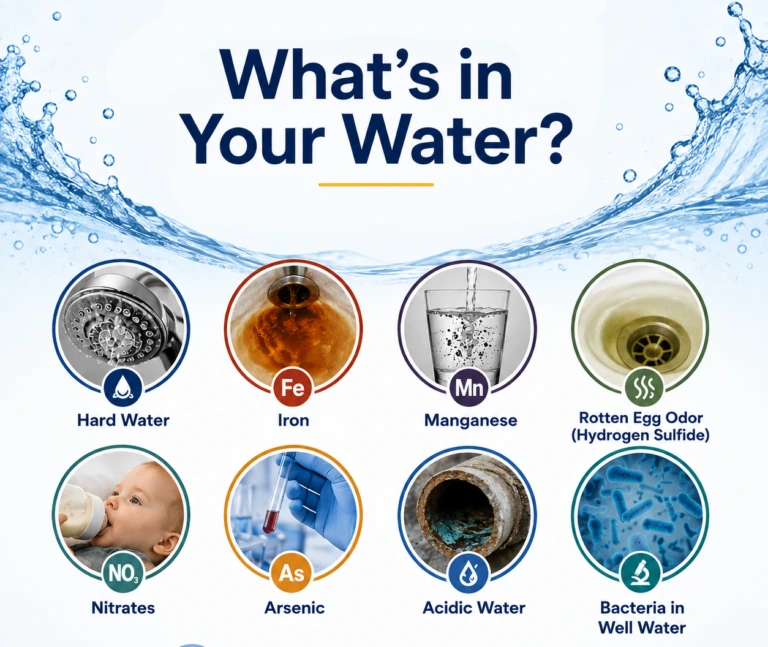
White scale or spotting

May be consistent with dissolved hardness minerals. Testing measures the level.

Orange or brown staining

May be consistent with iron, corrosion or sediment. Color is not proof.

Black or dark staining

May involve manganese or another deposit. Test before selecting media.

Rotten-egg odor

May involve hydrogen sulfide, sulfur bacteria, plumbing or a water heater.

Blue-green staining

May point toward copper corrosion or low pH, but needs water and plumbing tests.

Sediment or grit

May come from a well, plumbing work or distribution conditions.

Invisible drinking-water concern

Nitrate and arsenic require laboratory testing; clear water is not a result.

Private-well sanitation

Bacteria testing and well condition—not appearance—guide the response.

Testing turns clues into usable information

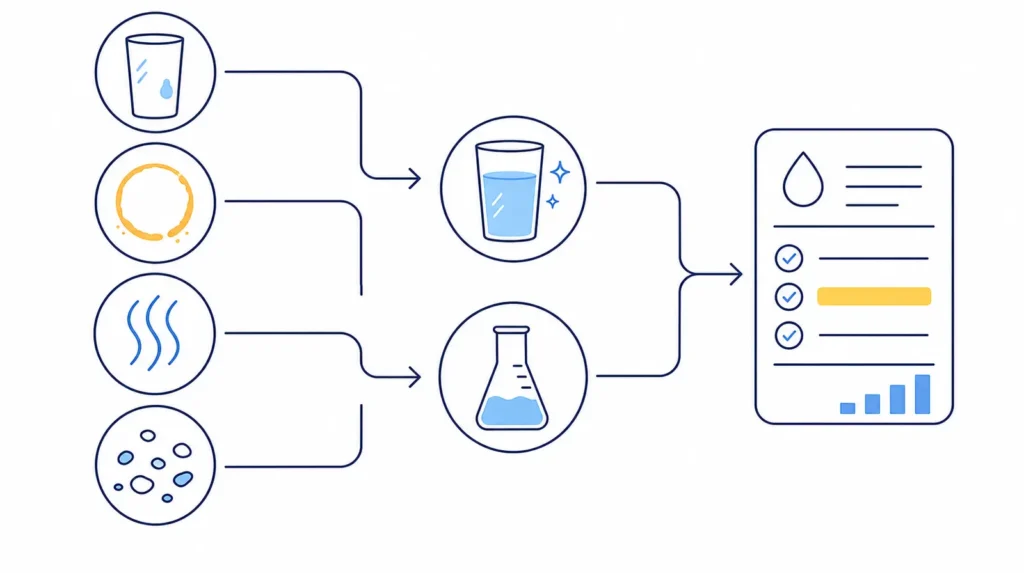
Visible water signs and invisible concerns both lead to laboratory testing.

For a visible or sensory concern

Document where it occurs, compare hot and cold water where relevant, and test the parameters connected to the symptom.

For an invisible concern

Use a certified laboratory. Do not rely on taste, odor, a neighbor’s result or regional monitoring.

From test result to treatment

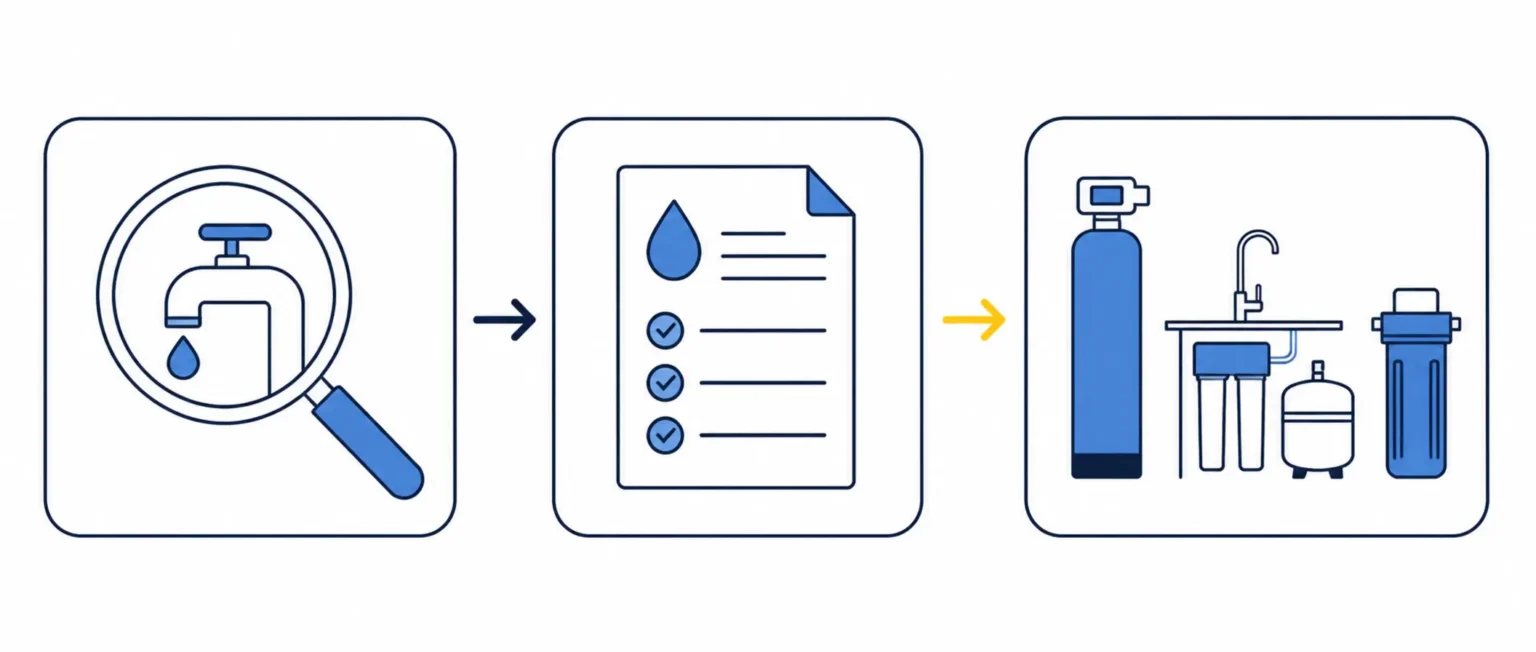
Three-step path from noticing a water concern to testing and matching treatment.

Notice

Test

Match treatment

Different goals require different technologies. Water softening addresses hardness; whole-house filtration can address selected particles or media-specific concerns; reverse osmosis is generally a point-of-use drinking-water technology whose verified reductions depend on the exact system.
No universal filter exists. Treatment should match the measured constituent, concentration, flow, water chemistry and verified equipment capability.

Explore the complete contaminant library

Eight distinct guides explain sources, symptoms, testing, treatment choices and limitations.

Official starting points

EPA: Protect Your Home’s Water

Use this guide for private-well testing frequency, certified laboratories and symptom-based testing questions.

California GAMA: Domestic Well Testing

Review California guidance for testing a domestic well and interpreting laboratory results.

Common questions

No. Symptoms can suggest useful tests, but only appropriate testing can identify and quantify a constituent.

EPA and California guidance recommend regular testing, including annual core parameters and additional tests based on local conditions.

No. Nitrate, arsenic and bacteria can be present without a dependable visible sign.

Make the next decision from evidence

Water Fixers can help you test, understand and treat your water without guessing from a stain, taste or odor alone.

CALL NOW! Se Habla Español!