
WATER QUALITY KNOWLEDGE CENTER
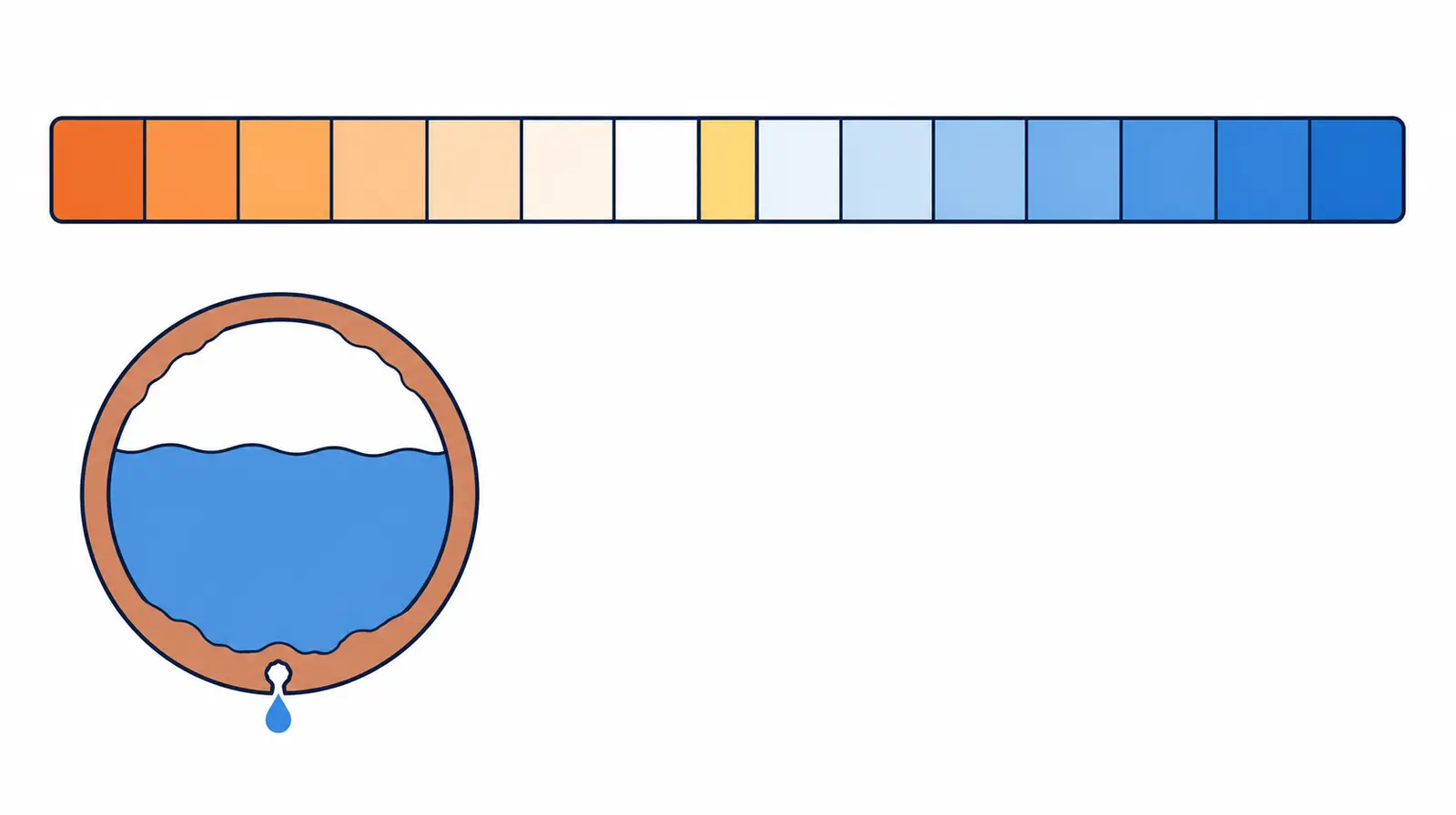
Water with a pH below 7 is acidic, but pH alone does not tell you whether the water is corrosive. EPA lists 6.5–8.5 as a secondary drinking-water guideline, while alkalinity, dissolved gases, mineral balance, temperature and plumbing materials can all change corrosion behavior. Blue-green staining, metallic taste, pinhole leaks or premature fixture wear are reasons to test—not proof by themselves.
Water Fixers Plumbing & Filtration • California Central Coast • CA License #719792 • Se Habla Español
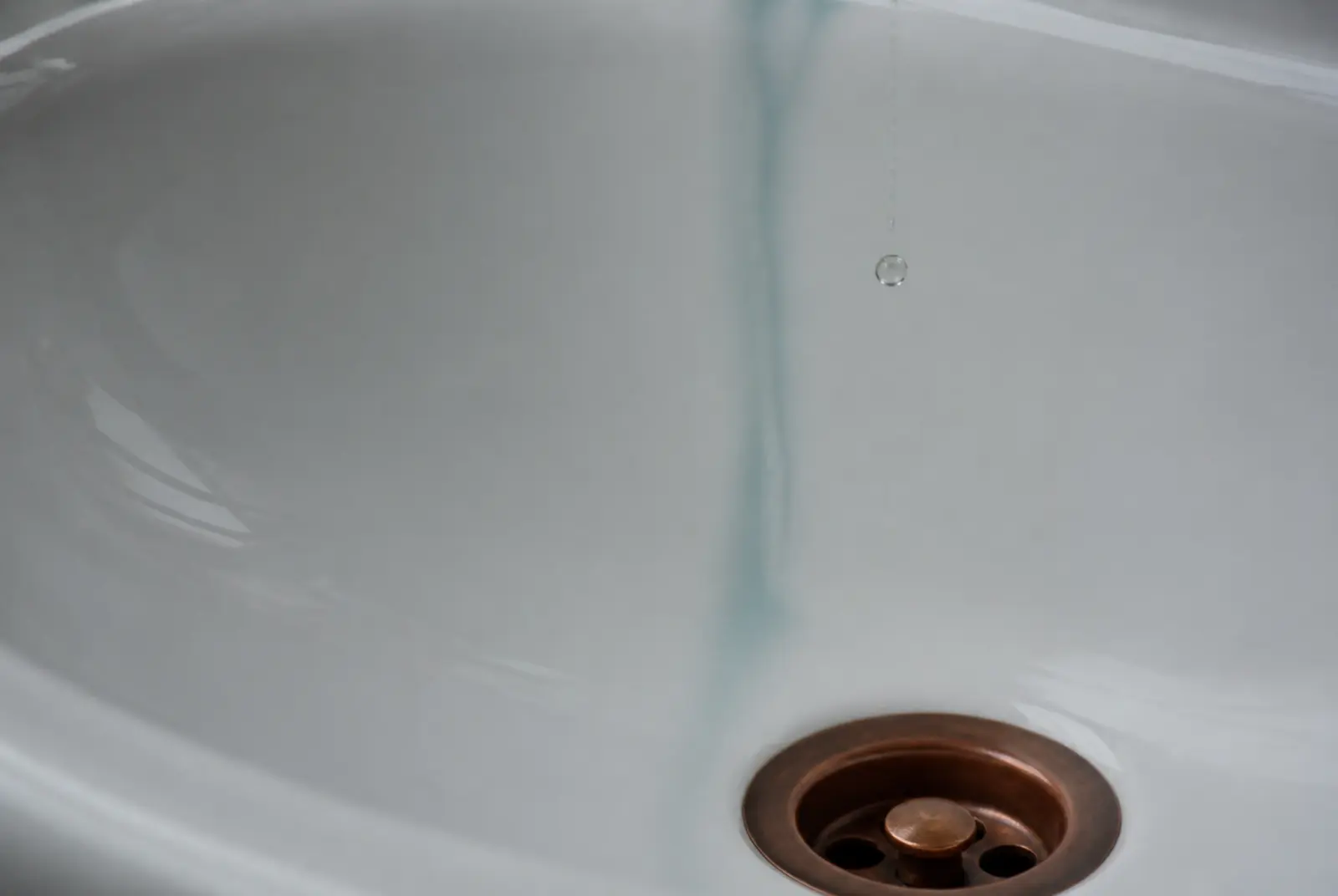
CLUES ARE NOT A WATER TEST
The pattern can help decide what to test and where to sample. A stain, taste or leak should not be used to diagnose low pH or source-water corrosivity by appearance alone.
POSSIBLE CLUE
Blue-green staining can be consistent with copper corrosion, especially around fixtures or drains. It does not prove the incoming water has low pH or show where the copper entered the water.
POSSIBLE CLUE
Metallic taste, recurring small leaks or premature wear can occur with corrosive conditions, but plumbing age, water chemistry, electrical grounding and other factors can contribute.
IMPORTANT LIMIT
Corrosion potential cannot be read from color alone. Water may look clear while still interacting aggressively with copper, brass, galvanized steel or other plumbing materials.
Helpful diagnostic: compare more than one fixture, compare hot and cold water, and note whether the problem is whole-home or limited to one branch. If a private well is involved, compare raw water before treatment with a representative indoor sample when the test plan calls for it.
pH • ALKALINITY • PLUMBING
pH describes acidity or basicity: values below 7 are acidic and values above 7 are basic. EPA places pH 6.5–8.5 in its secondary drinking-water standards. Corrosivity is broader. Low pH can increase metal solubility and corrosion, but alkalinity, hardness, chloride, dissolved gases, temperature, flow and plumbing materials also affect what happens inside a home. That is why treatment should be chosen from measured water chemistry and the plumbing pattern—not from pH alone.
TEST BEFORE YOU SIZE TREATMENT
A useful test plan measures the water closely enough to separate source-water chemistry from a plumbing problem. pH should be measured appropriately because exposure to air and temperature changes can affect it. Alkalinity shows how strongly the water resists pH change, while hardness and other ions help explain treatment behavior. When corrosion is suspected, copper, lead or other metals may also belong in the test plan depending on the plumbing.
START HERE
Municipal water, private well, shared system or another source? Note whether the issue is whole-home, one fixture, one branch, hot-only, cold-only or intermittent.
MEASURE
Measure pH and alkalinity, then add hardness and other corrosion-related parameters as the situation requires. If plumbing metals are a concern, use the sampling method the laboratory or water professional specifies.
INTERPRET
Compare the water source and the affected plumbing pattern before choosing equipment. A whole-home source-water problem and a localized plumbing-corrosion problem do not automatically call for the same fix.
CORROSION + PLUMBING EFFECTS
EPA treats pH as a secondary drinking-water parameter rather than a primary health-based contaminant limit. The practical concern is that corrosive water can damage plumbing and can dissolve metals from materials it contacts. If a home has lead-containing components or copper plumbing, the water chemistry and the plumbing both matter.
PLUMBING
Corrosive conditions can contribute to deterioration of copper and other metal components, pinhole leaks, blue-green deposits and metallic taste. The visible stain is a clue to investigate, not a substitute for testing.
EQUIPMENT
Water chemistry can affect fixtures, valves, heaters and treatment components. Correcting the source-water chemistry may protect equipment, but existing damaged plumbing may still need repair or replacement.
TREATMENT AFTER TESTING
Calcite or blended neutralizing media: water passes through a mineral bed that dissolves gradually and raises pH. The process can add hardness, so downstream softening may sometimes be considered after the pH correction—not before it.
Controlled chemical feed: soda ash or another properly designed feed system can raise pH where media treatment is not the right fit. Feed systems require correct sizing, calibration, solution maintenance and verification after treatment.
The design should account for pH, alkalinity, flow, hardness, treatment goals and maintenance—not just a single pH number.
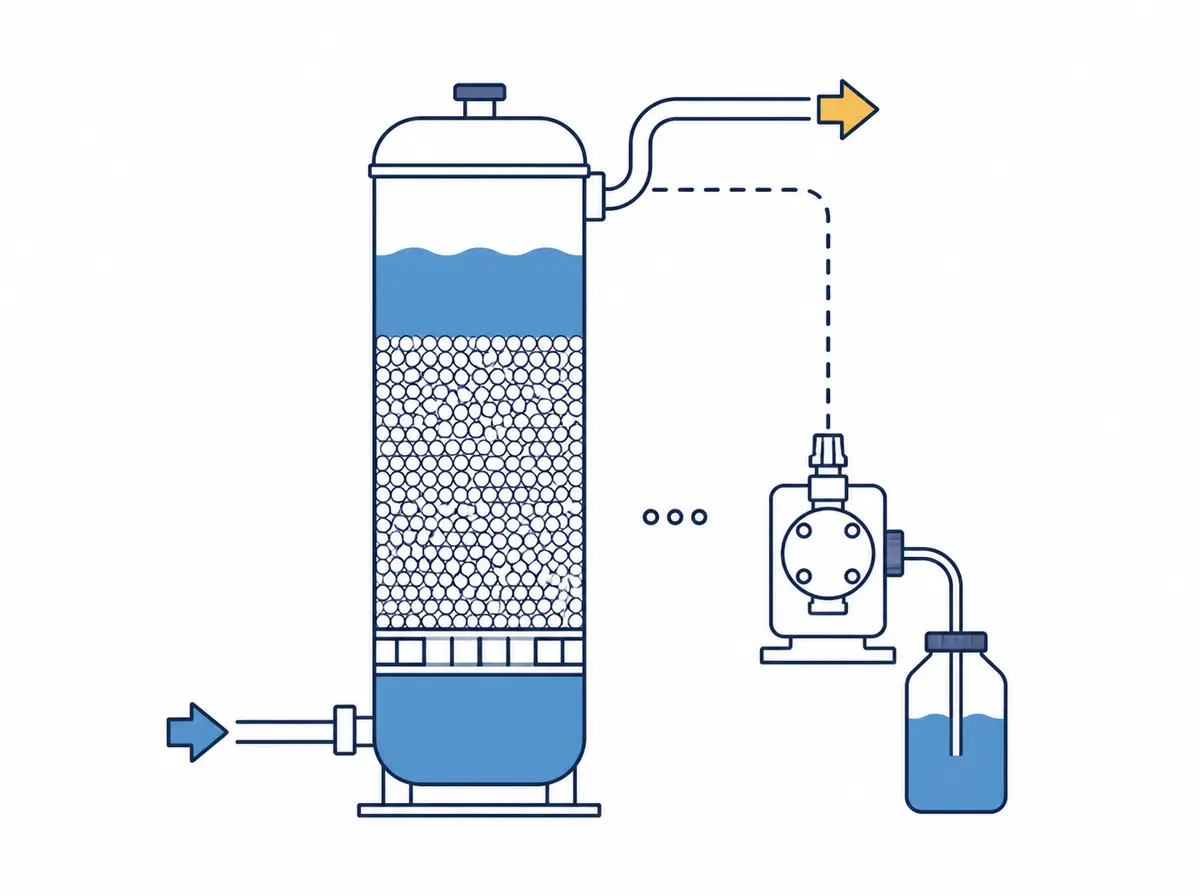
When the goal is to protect plumbing throughout the home, treatment is normally evaluated at the point of entry. A small drinking-water device at one sink does not protect the piping upstream of it.
AVOID THE WRONG TOOL
Several common water-treatment devices solve different problems. They should not be treated as substitutes for pH correction when the source water itself needs neutralization.
LIMITATION
A softener is designed primarily to reduce hardness ions. It is not an acid neutralizer. If neutralization adds hardness, a softener may be considered after the neutralizer when the tested water and household goals justify it.
LIMITATION
Sediment filters, carbon filters and UV systems each address different treatment goals. None should be expected to raise low source-water pH unless the system specifically includes neutralizing chemistry.
LIMITATION
Under-sink RO can be useful for specific drinking-water goals, but it does not protect the rest of the home from source-water corrosion. RO product water can also have low alkalinity, so pH should be interpreted in the context of the system and the intended use.
WHERE TO GO NEXT
Use the next page that matches what you are trying to confirm or repair. If you do not yet know whether the issue is source water or plumbing, start with testing.
DIAGNOSIS
Measure pH, alkalinity and the supporting chemistry before choosing neutralization equipment.
PRIVATE WELL
Use a well-specific strategy when low pH begins in groundwater or the private-well system.
PLUMBING DAMAGE
Have damaged or repeatedly leaking piping evaluated even after the water chemistry is corrected.
ACTIVE LEAKS
Use leak detection when corrosion concerns have become an active or hidden plumbing leak.
OFFICIAL WATER-QUALITY RESOURCES
EPA explains the 6.5–8.5 secondary pH guideline and notes corrosion as a low-pH effect. USGS explains that pH influences metal solubility and that low-pH water can corrode or dissolve metals. EPA also recommends annual pH testing for private wells.
FREQUENTLY ASKED QUESTIONS
A pH below 7 is acidic by definition. EPA lists 6.5–8.5 as a secondary drinking-water guideline for public water. A result below 7 does not by itself prove that a home has damaging corrosion; alkalinity and the rest of the water chemistry matter too.
Low pH itself is generally handled as a secondary water-quality and corrosion issue rather than a primary health-based contaminant standard. The concern is that corrosive water can dissolve metals from plumbing. If the plumbing may contain lead, copper or other metals, the appropriate water and metals testing matters.
No. Blue-green staining can be consistent with copper corrosion, but it does not measure pH or identify whether the cause is source-water chemistry, a localized plumbing condition or another factor.
pH describes the current acid-base condition. Alkalinity describes the water’s buffering capacity—how strongly it resists pH change. Two samples with a similar pH can behave differently during treatment because their alkalinity and mineral chemistry are different.
A conventional ion-exchange softener is not a pH neutralizer. In some homes a neutralizer may add hardness, and a softener may then be placed downstream if the measured hardness and household goals justify it.
Water passes through calcium-carbonate media that dissolves gradually and raises pH. Because the media dissolves into the water, it can increase hardness and must be replenished as it is consumed. The system must be sized for the actual water chemistry and household flow.
No. An under-sink RO system treats water at one drinking-water point and does not protect upstream household plumbing. If the incoming source water is corrosive, point-of-entry treatment is usually the relevant evaluation.
EPA recommends that private wells be tested annually for pH along with total coliform bacteria, nitrate and total dissolved solids, and tested sooner after well repairs or noticeable changes in water quality.
TEST FIRST • THEN CHOOSE THE TREATMENT
Water Fixers can help you test the water, separate a source-water chemistry problem from plumbing damage, and choose a neutralization or plumbing strategy that fits the property instead of guessing from stains or a single pH strip.
Water Fixers Plumbing & Filtration • Santa Maria, CA • California License #719792 • 805-928-6444
CALL NOW! Se Habla Español!