
WATER QUALITY KNOWLEDGE CENTER • INVISIBLE CONTAMINANT
Fast answer: You cannot confirm arsenic by sight, taste or smell. A laboratory result from the individual water source is the dependable starting point, and treatment must be selected for the measured concentration, water chemistry and exact device performance claim.
For California public water systems, the arsenic maximum contaminant level (MCL) is 10 micrograms per liter (10 µg/L, or 0.010 mg/L). Private domestic wells are not regulated the same way, but California guidance recommends comparing well results with drinking-water standards and taking action when a result is high.
Testing-first guidance • Plumbing + water-treatment expertise • CA License #719792
START WITH THE LAB RESULT
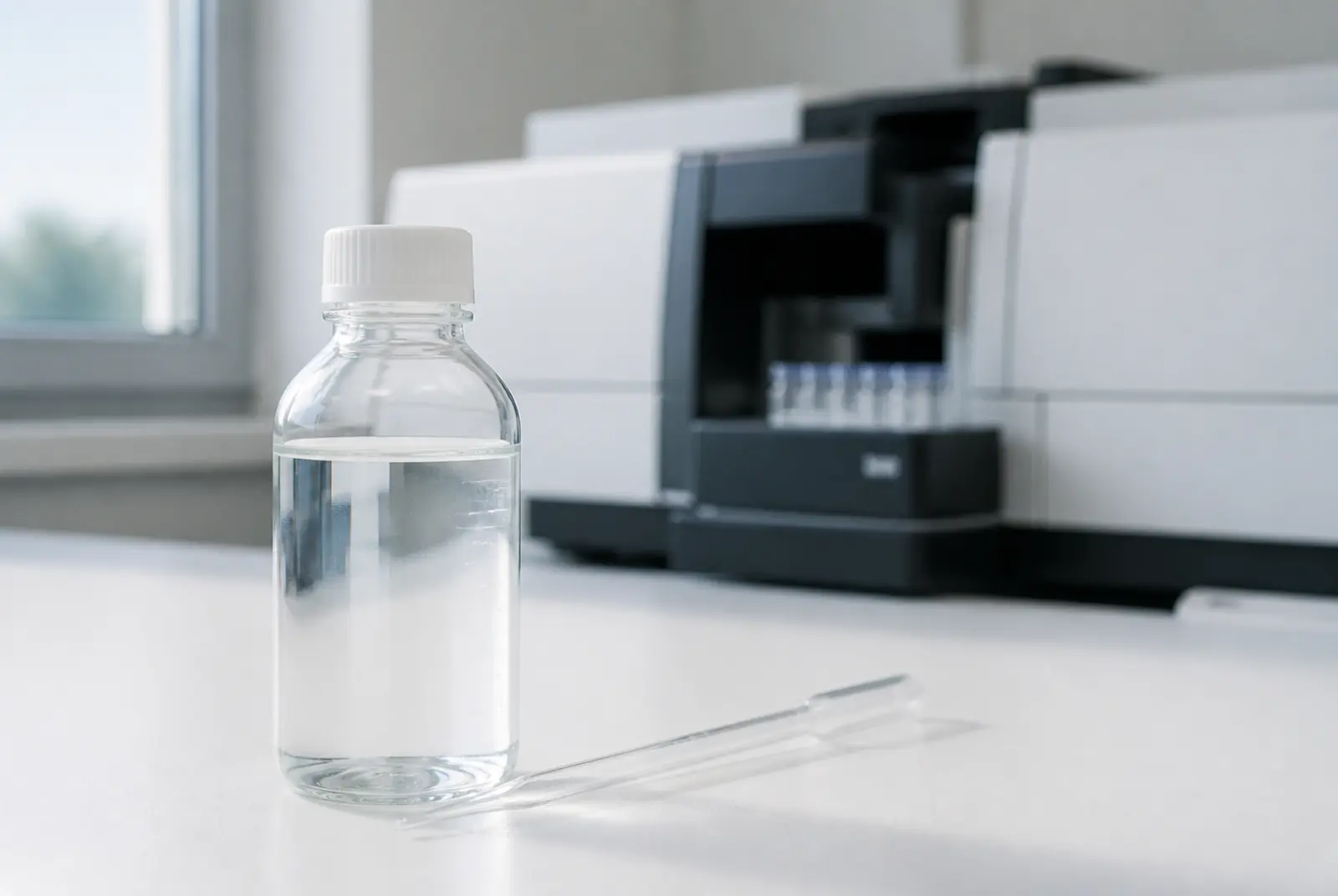
The number matters more than appearance. Use the concentration from a qualified laboratory, confirm the units, and compare it with the appropriate drinking-water benchmark.
A detectable result tells you arsenic was measured at that sample point. The concentration, units and laboratory reporting limit determine what the result means—not the fact that the water looks clear.
California and federal public-water standards set the arsenic MCL at 10 µg/L (0.010 mg/L). A private well is not regulated as a public system, but the benchmark is useful when interpreting a household result.
California GAMA recommends that a private-well owner not consume water with a result above a primary MCL until appropriate action is taken and to contact local Environmental Health for advice.
WHERE ARSENIC CAN COME FROM
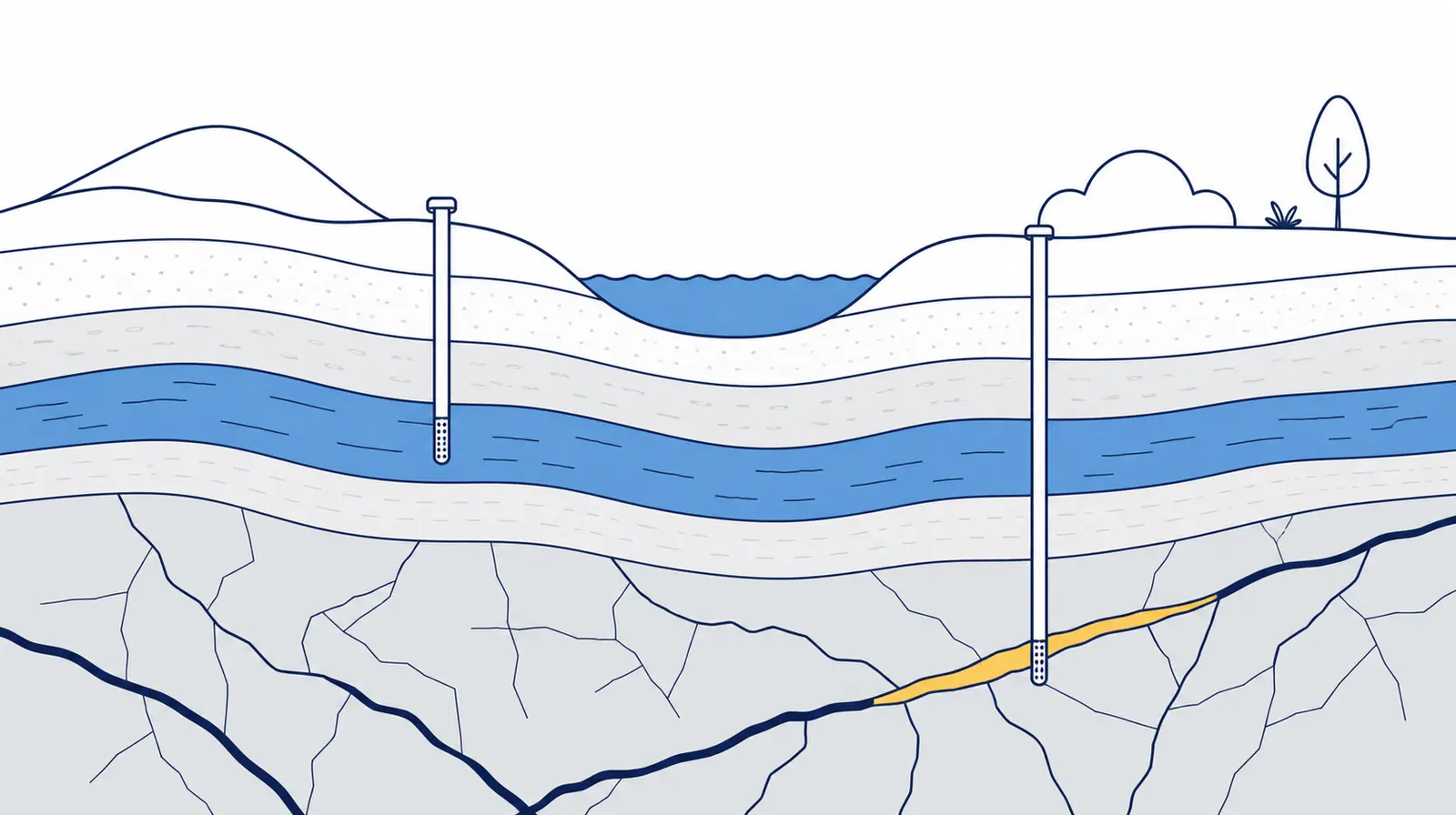
Arsenic occurs naturally in some rocks and soils and can move into groundwater under certain geochemical conditions. Agricultural or industrial activities can also contribute in some settings.
A nearby detection does not diagnose your well. Wells can differ by depth, construction, aquifer zone and chemistry. Regional groundwater maps can help identify what may be worth testing, but they do not replace a sample from the water you actually use.
TESTING BEFORE TREATMENT
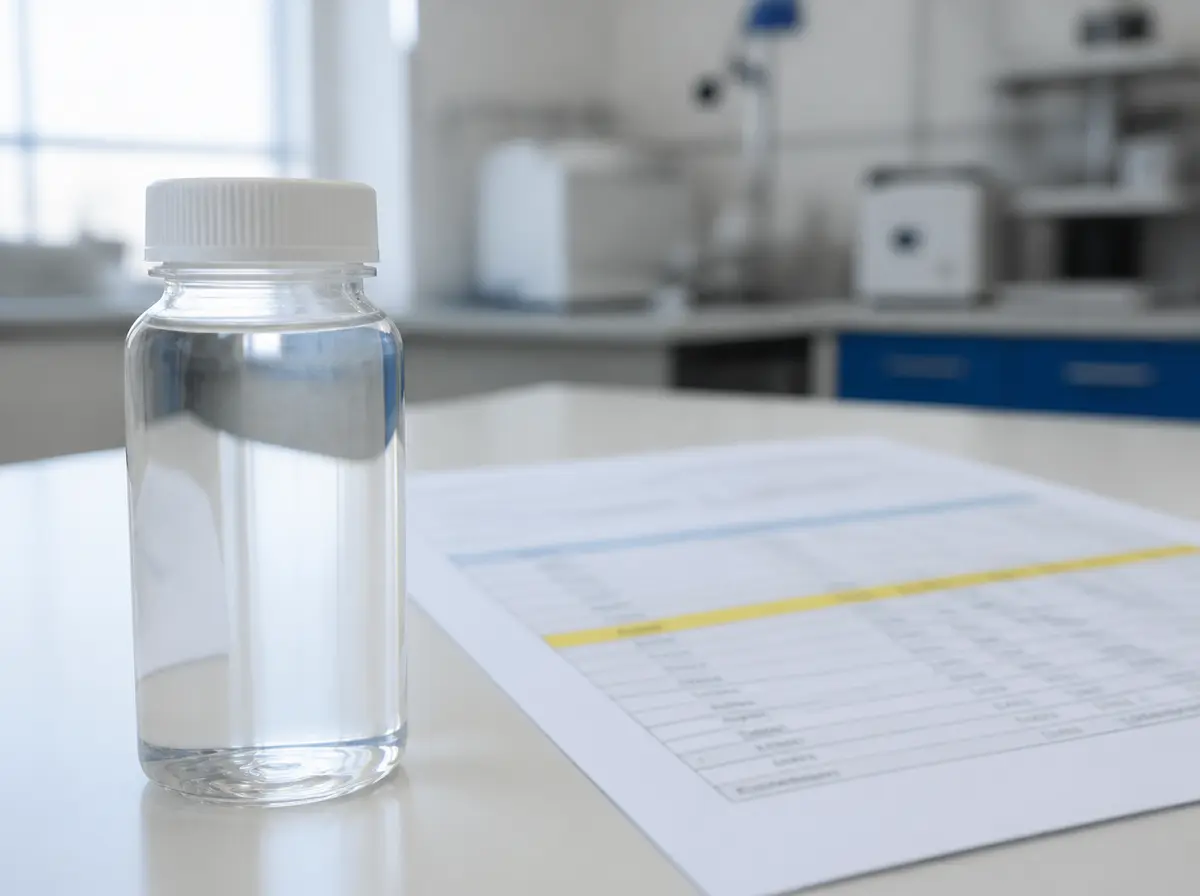
For a specific arsenic concern, use a qualified laboratory and follow the laboratory or local authority sampling instructions. Keep the report with the units, sample location and date.
When treatment is being designed, the arsenic concentration may not be the only useful number. pH, competing constituents and arsenic form can affect treatment performance and media life. Some treatment claims apply specifically to pentavalent arsenic, so the device documentation and the water chemistry both matter.
After treatment is installed or changed, verify performance with post-treatment testing. A filter, membrane or media bed is not proof that the finished water meets the intended goal.
WHY ARSENIC IS TREATED DIFFERENTLY
Arsenic is odorless and tasteless and does not have a dependable visible signature. Stains, cloudiness and taste are not arsenic tests.
Arsenic is regulated because long-term exposure above drinking-water standards can increase health risk. This page is for water-quality decisions, not personal medical diagnosis.
Private domestic wells are not monitored like public water systems. Well owners need appropriate testing, interpretation and follow-up when a contaminant is found.
TREATMENT FOLLOWS THE RESULT
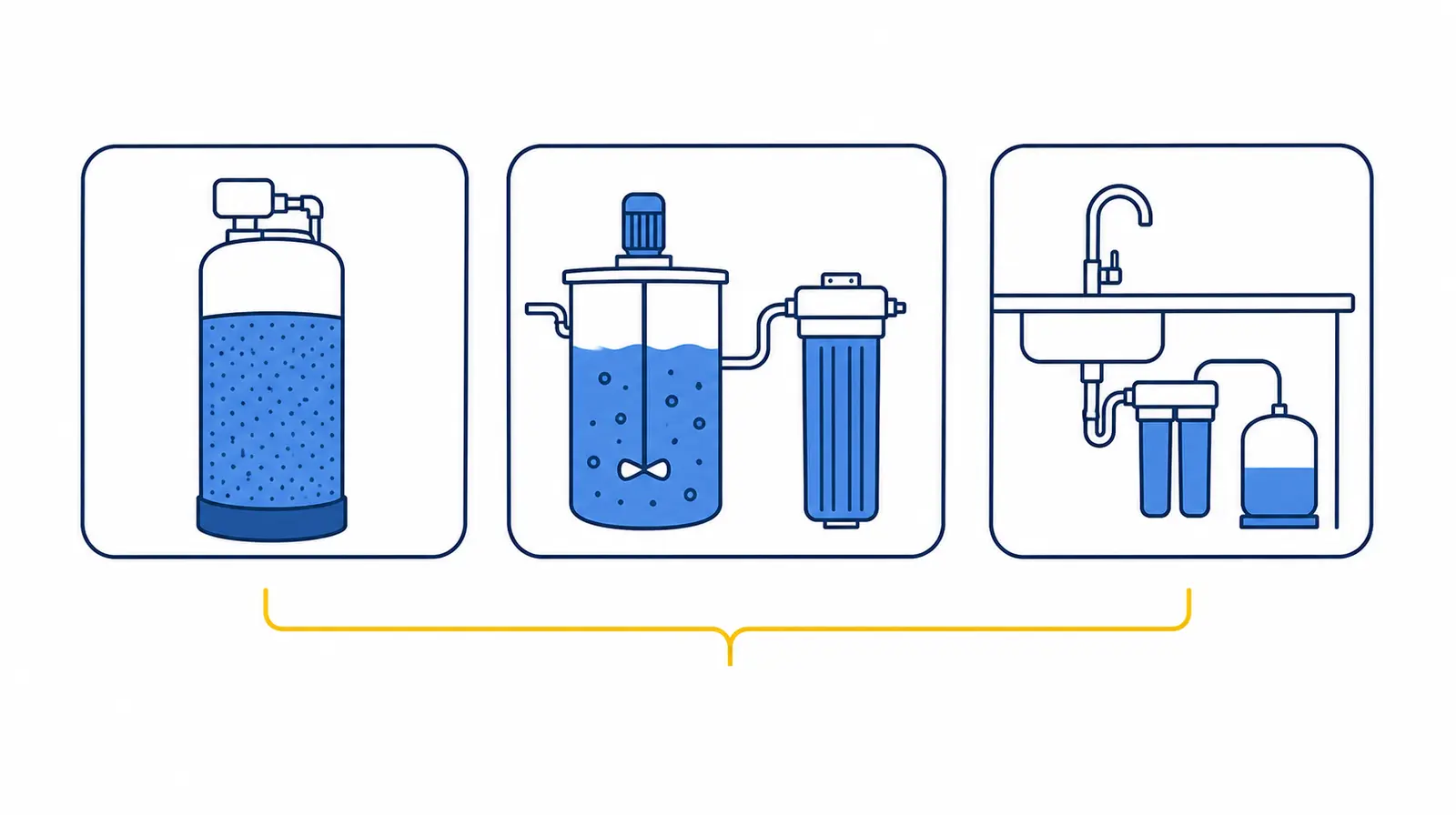
There is no responsible “arsenic filter” recommendation without a result, a treatment goal and the exact product performance information. The right category depends on whether the goal is drinking and cooking water at one faucet or treatment at the point where water enters the home.
Adsorptive media can be used for arsenic reduction, but capacity depends on the media, pH, arsenic valence and competing constituents. Reverse osmosis can also carry arsenic-reduction claims, but arsenic reduction under NSF/ANSI 58 is an optional performance claim—not something to assume from the words “reverse osmosis.”
Some designs may require pretreatment or oxidation depending on arsenic form and the selected technology. The treatment plan should also account for flow, cartridge or media life, concentrate or residual handling, maintenance and a post-treatment verification test.
WHAT NOT TO ASSUME
Do not assume this. Check the exact model certification and contaminant-reduction claim. NSF/ANSI 58 includes optional arsenic-reduction claims, including pentavalent arsenic.
A conventional household softener is designed primarily for hardness. It should not be treated as a universal arsenic-removal device unless the exact system has a verified arsenic claim for the conditions.
Ordinary sediment and taste-and-odor carbon filters are not dependable arsenic treatment unless the exact media or device carries an appropriate arsenic-reduction rating.
Boiling is not a treatment for dissolved arsenic or other chemical contaminants. Use appropriate treatment or an alternate safe water source based on qualified guidance.
FROM RESULT TO A PRACTICAL PLAN
Verify the concentration, units, sample point and laboratory report. If a high result is unexpected, follow qualified guidance on confirmation testing rather than guessing from a single number.
Decide whether the immediate goal is safe drinking and cooking water at one point or a broader point-of-entry treatment objective. The goal changes the design.
Use a technology with an appropriate arsenic-reduction claim for the water chemistry, arsenic form, concentration, flow and household use—not merely a familiar filter category.
Retest the treated water, follow replacement or media schedules, and monitor performance. Treatment performance can decline as membranes, cartridges or media age.
RELATED WATER FIXERS GUIDANCE
Start here for sampling strategy, laboratory testing and deciding what chemistry needs to be measured before treatment.
Use the private-well hub when arsenic is one part of a broader source-water, pressure, plumbing or existing-treatment question.
Arsenic and nitrate are both commonly invisible concerns, but they are different contaminants with different treatment and monitoring requirements.
OFFICIAL & CERTIFICATION RESOURCES
These resources support the testing, benchmark and treatment-limit language used on this page.
California drinking-water arsenic standard and regulatory background.
Private-well testing, result interpretation and actions when a result exceeds a primary drinking-water standard.
Explains adsorptive media and why pH, contaminant form and water chemistry affect arsenic-removal performance.
Explains that arsenic reduction is an optional contaminant-reduction claim for reverse-osmosis systems.
FREQUENTLY ASKED QUESTIONS
Direct answers to the questions homeowners usually have after seeing arsenic on a water test—or before deciding what to test.
Water Fixers can help you start with appropriate testing, understand what the result means for a treatment decision, and choose an equipment path that matches the actual water—not a guess from clear appearance or a nearby well.
Water Fixers Plumbing & Filtration • 805-928-6444 • CA License #719792 • Se Habla Español
CALL NOW! Se Habla Español!