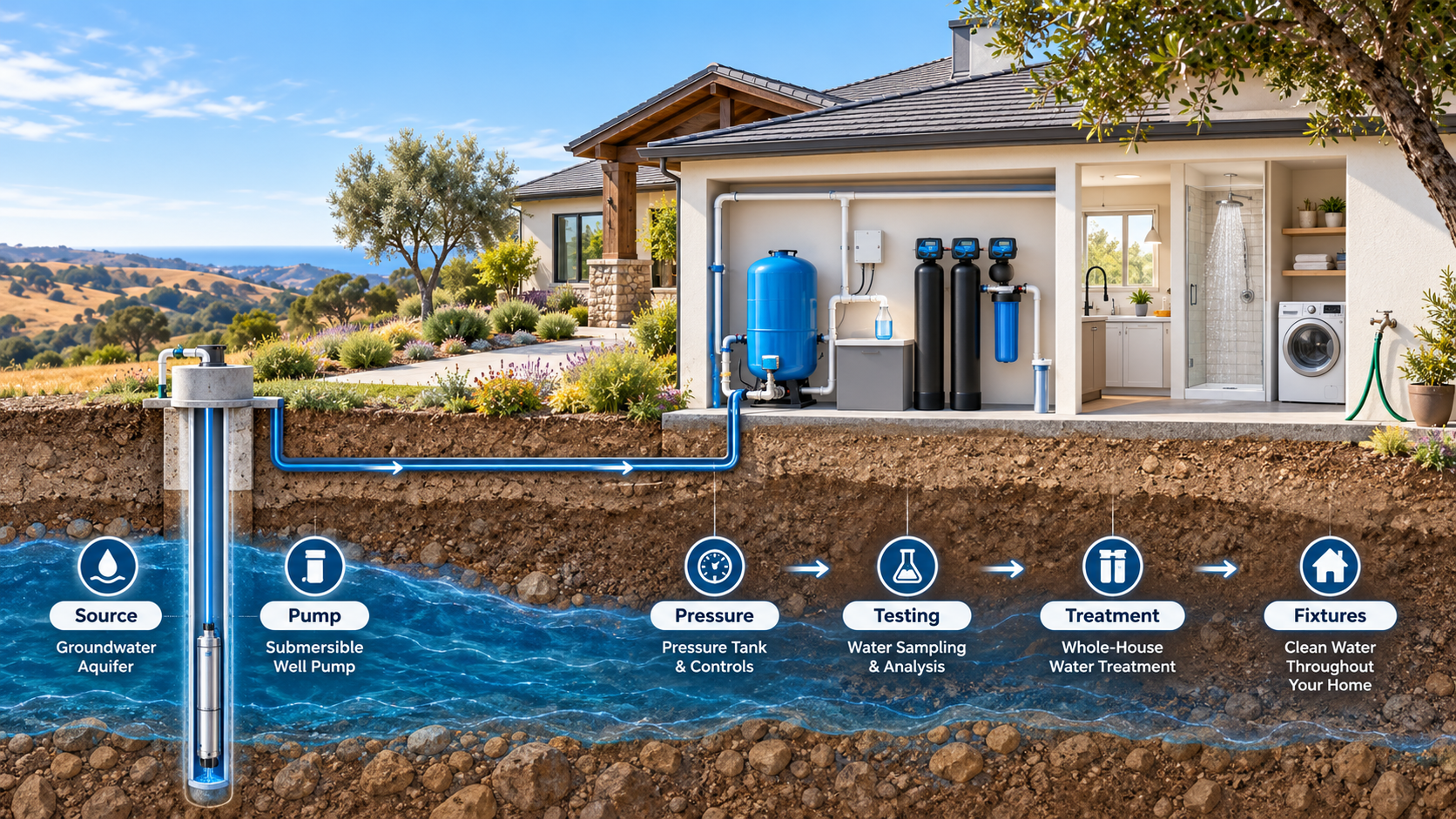
A private well can involve the water source, pressure system, household plumbing, water chemistry and treatment equipment. Start with the question you have now, then follow the right Water Fixers guide or service path.
38+ Years on the Central Coast • Plumbing + Filtration • California License #719792
Use the problem—not a guess about the equipment—to choose where to begin. Each path below has a different job.
Odor, staining, sediment, scale, pressure changes or another well-water symptom? Start by narrowing the problem.
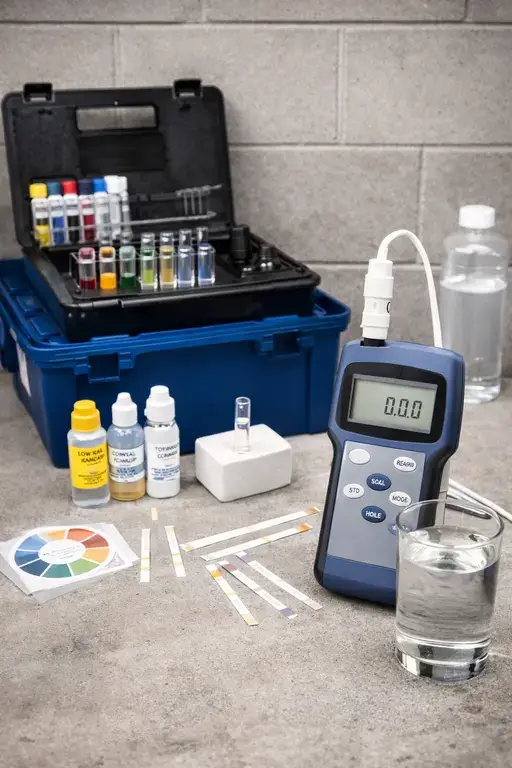
Testing separates clues from measured conditions and gives treatment decisions a reliable starting point.
Connect the measured chemistry, flow and household goal to the right treatment category before buying equipment.
See what sediment filtration, oxidation media, carbon, neutralizers, UV and point-of-use RO are designed to do.
One property, several connected systems. The well source, pressure system, household plumbing and treatment equipment can affect one another, but they are not the same problem.
The well itself is only one part of what the household experiences. Water has to reach the property, move through pressure and plumbing components, and then meet the home’s water-quality and treatment goals.
That is why the first question is not “Which filter should I buy?” It is “What part of the system is actually causing the concern?”
Water source
What enters the home and what the well-specific test shows.
Pressure + plumbing
How water is delivered through valves, piping and pressure components.
Water quality + treatment
What the measured conditions and household goals actually require.
Pressure loss, sediment, staining, odor and aging treatment equipment can overlap. Separate the problem first so the next step fits the cause.
Taste, odor, staining, scale, sediment or a drinking-water concern should be investigated and tested before equipment is selected.
Low flow can involve loaded filters, restricted valves, plumbing, pressure equipment or a well/pump issue. Start with the symptom router.
An older filter, softener or RO system may need service, troubleshooting or a reassessment before anything new is installed.
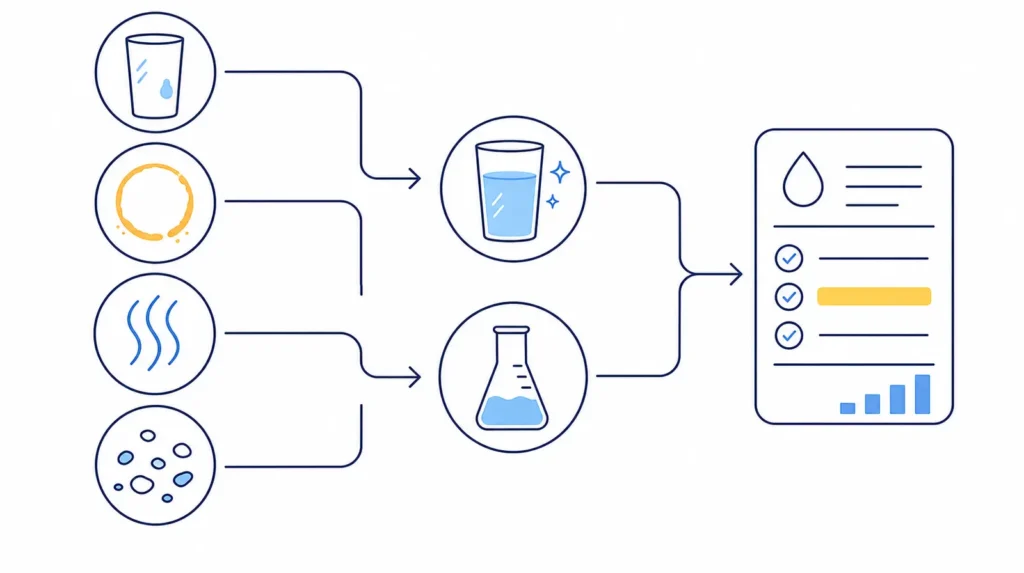
Appearance, taste, odor, staining and sediment can help decide what to investigate, but they do not confirm a contaminant or concentration. Some important private-well concerns—including nitrate, arsenic and bacteria—may have no dependable visible warning.
Symptoms are clues, not a diagnosis. Use appropriate testing when the question depends on what is actually present in the water.
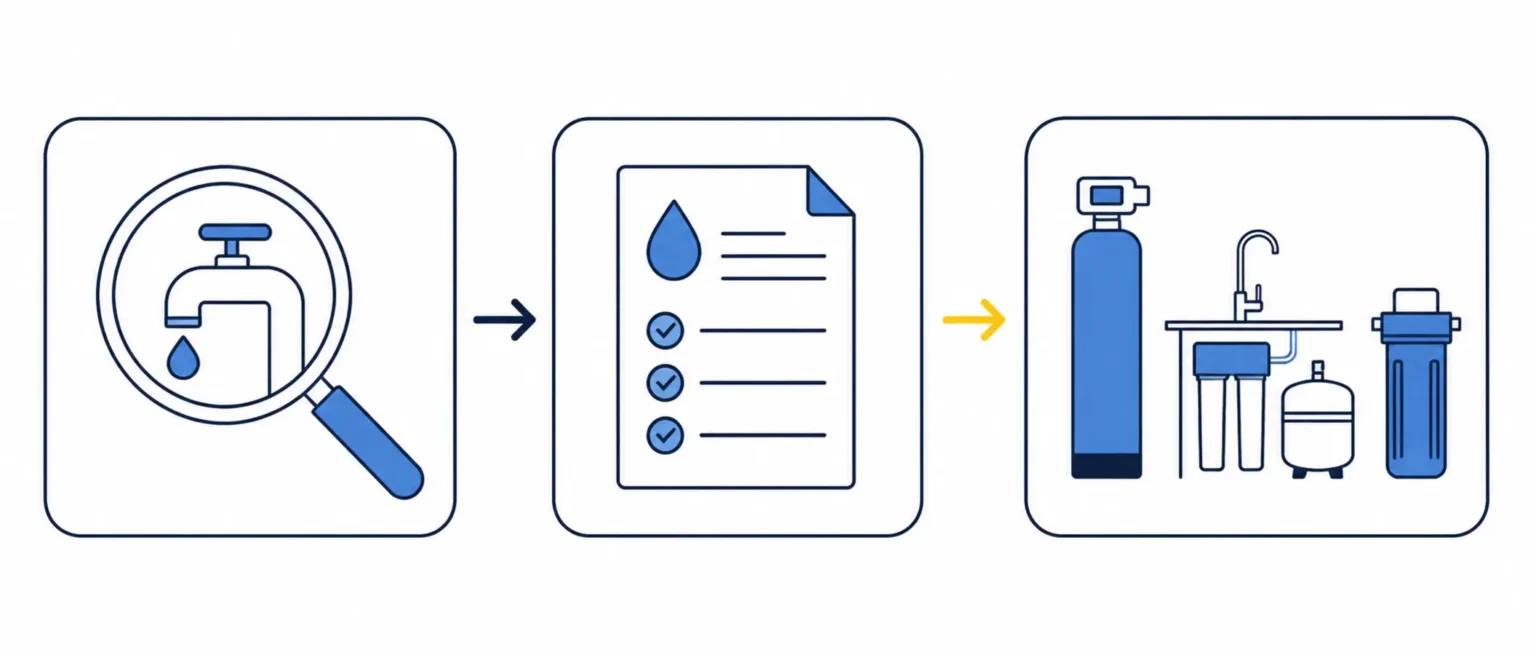
Document the concern, test the relevant conditions, then match the treatment category to the result and household goal. That keeps symptoms from being mistaken for a diagnosis.
These are starting points, not diagnoses. The dedicated guides keep iron, manganese, nitrate, arsenic, bacteria and other concerns separate where the chemistry and treatment decisions differ.
White scale and spotting can be consistent with hardness. Testing measures the actual level.
Staining may involve iron, manganese, corrosion or sediment. Use the separate guides rather than guessing from color.
Hot-water-only odor and hot-plus-cold odor can follow different paths. Odor alone does not prove the cause.
Particles may come from the source, plumbing or equipment. Filtration should follow the cause and particle type.
The broad treatment question belongs on the treatment-planning page: water source + measured chemistry + flow + household goal → appropriate treatment category.
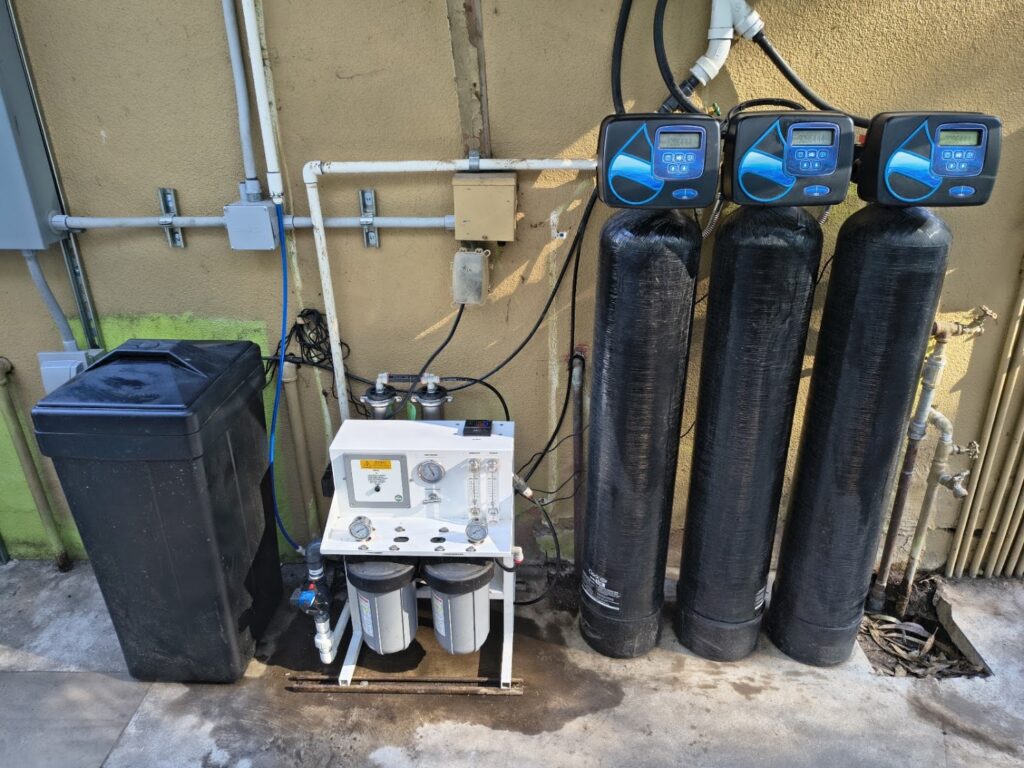
Sediment filtration, oxidation media, carbon, neutralization, softening, UV and reverse osmosis do different jobs. A private-well plan may use one technology or several in a deliberate sequence.

Related paths: Water softeners where hardness supports softening • Reverse osmosis for appropriate drinking-water goals.
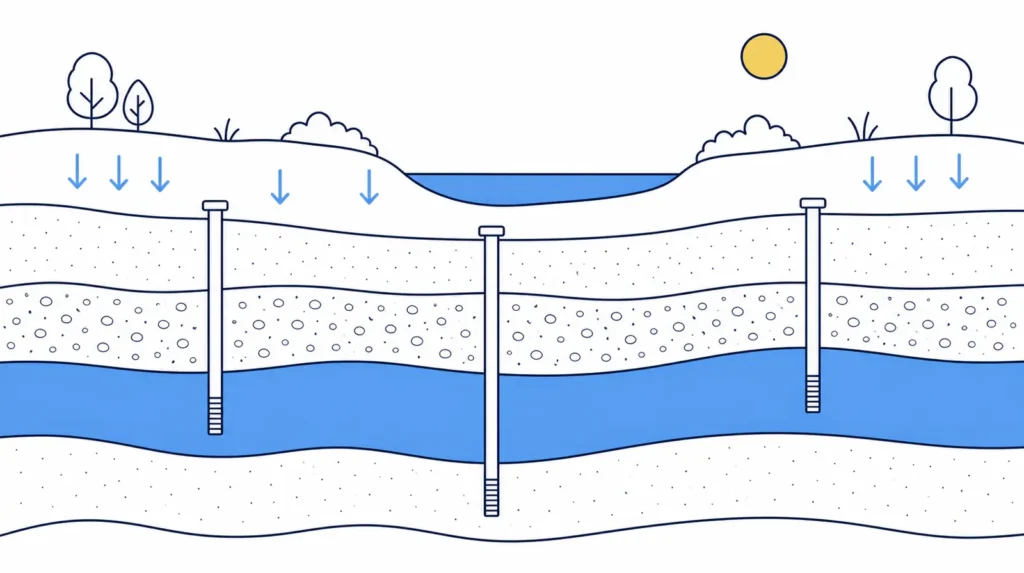
Groundwater conditions can vary by location, well depth, well construction and changing conditions. Regional monitoring can help identify questions worth testing, but it cannot tell you what is in a specific private well.
Only a result from the property’s own water can answer that question for that property.
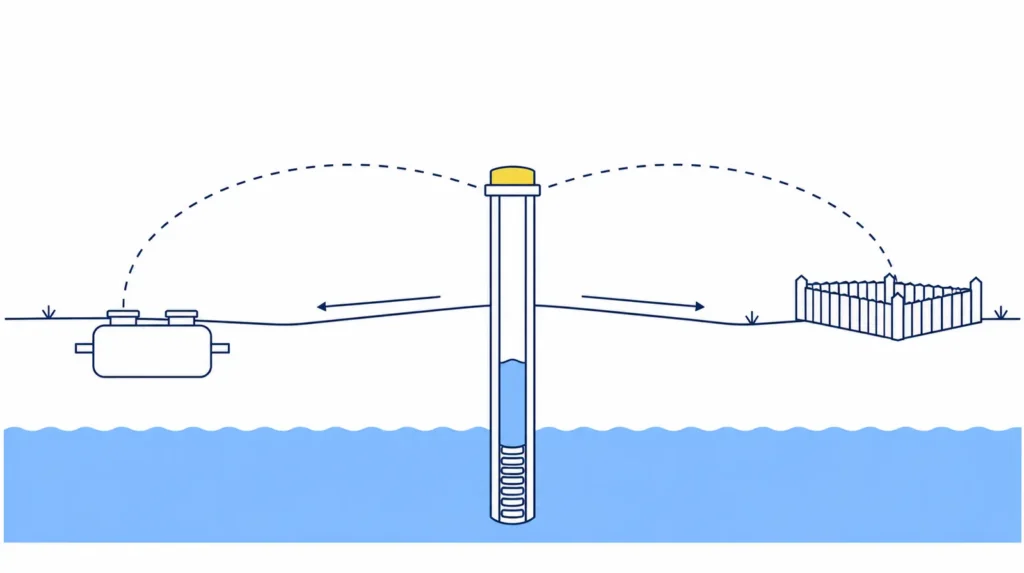
Bacteria and other private-well concerns can require attention to the source, sample collection, disinfection, pretreatment and retesting—not simply installing a filter. Water Fixers should not imply that one device universally solves a source-water problem.
Maintenance timing depends on the installed equipment, manufacturer requirements, water quality, usage, pressure and flow—not one universal calendar interval.
Cartridge replacement, pressure-drop questions, recurring sediment and existing-system troubleshooting.
Maintenance and service for an existing softener when performance, salt use, regeneration or condition needs attention.
Service the installed RO system based on its cartridges, water, use and actual performance rather than a blanket interval.
Short answers here; the linked pages carry the deeper testing, treatment and equipment guidance.
Not when the question depends on what is actually present. Testing first reduces the risk of buying equipment that does not address the measured condition.
No. Appearance cannot rule out concerns such as nitrate, arsenic or bacteria. Appropriate laboratory testing is what answers those questions.
It depends on the goal and the test result. Whole-house and point-of-use treatment solve different jobs and may be used separately or together.
No. Nearby wells and regional records provide context only. Well depth, construction, location and groundwater conditions can differ from property to property.
A symptom can help narrow what to investigate, but it does not prove a contaminant, concentration or cause. Testing and system evaluation are used where appropriate.
Low pressure can involve clogged treatment equipment, restricted valves, plumbing restrictions, pressure-system components, or source/well/pump issues. Start with the well-water problem router so the correct scope can be identified.
You do not need to diagnose the water or know the equipment name before you call. Tell us what you are noticing, whether the property uses a private well, and whether you already have test results or treatment equipment.
Water Fixers Plumbing & Filtration • Santa Maria, CA • California License #719792
CALL NOW! Se Habla Español!