PRIVATE WELL • POINT-OF-USE DRINKING WATER

Reverse Osmosis Drinking Water for Private-Well Homes

If your home uses a private well and you want treated drinking and cooking water at one kitchen faucet, reverse osmosis may be worth considering. The right plan starts with the water you actually have, then checks whether pretreatment, pressure, plumbing and the selected RO system are a good fit.

Private wells • Under-sink RO • Existing systems welcome • License #719792
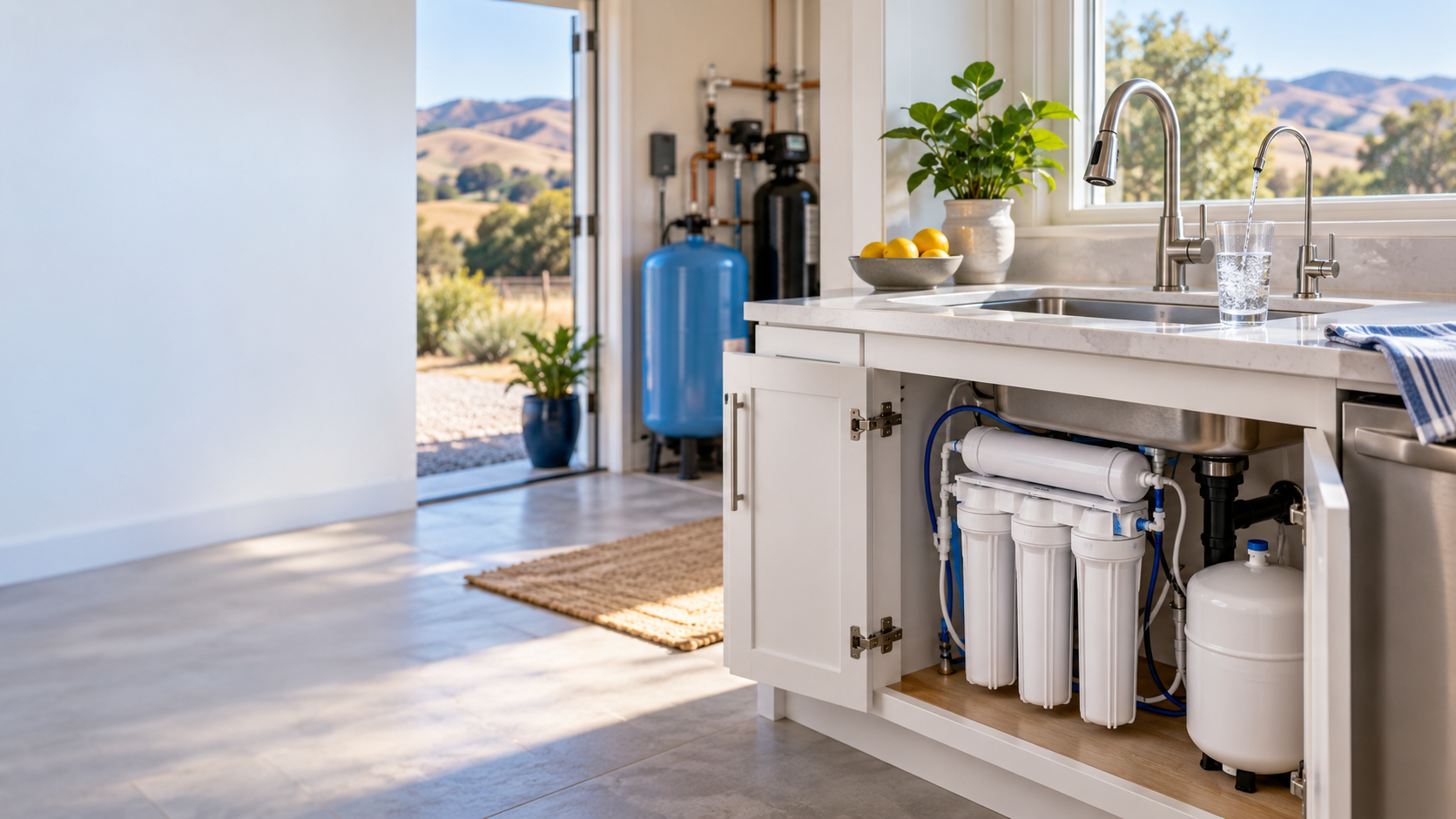
Private-well drinking-water reverse osmosis system
QUICK ANSWER

Where Does RO Fit in a Private-Well Home?

Use RO when the goal is dedicated drinking and cooking water and the source-water conditions support the selected system. Whole-house problems still need their own diagnosis and treatment path.

One Faucet, Not the Whole House

RO is point-of-use treatment for drinking and cooking water at a dedicated faucet. It does not replace whole-house treatment when the concern affects the entire plumbing system.

Test When the Goal Is Unclear

Taste, odor, staining or appearance cannot identify a contaminant. If a specific water-quality concern is driving the decision, start with appropriate testing.

Pretreatment May Matter

Sediment, hardness, iron, manganese, pH, bacteria or other source-water conditions can affect system selection, protection and service needs. The correct pretreatment depends on measured conditions.

Equipment Ratings Still Matter

RO performance depends on the selected equipment, feed-water conditions, pressure, installation and maintenance. Stage count alone is not a performance rating.
SEE THE WHOLE WATER PATH

RO Is One Part of the Well-to-Faucet System

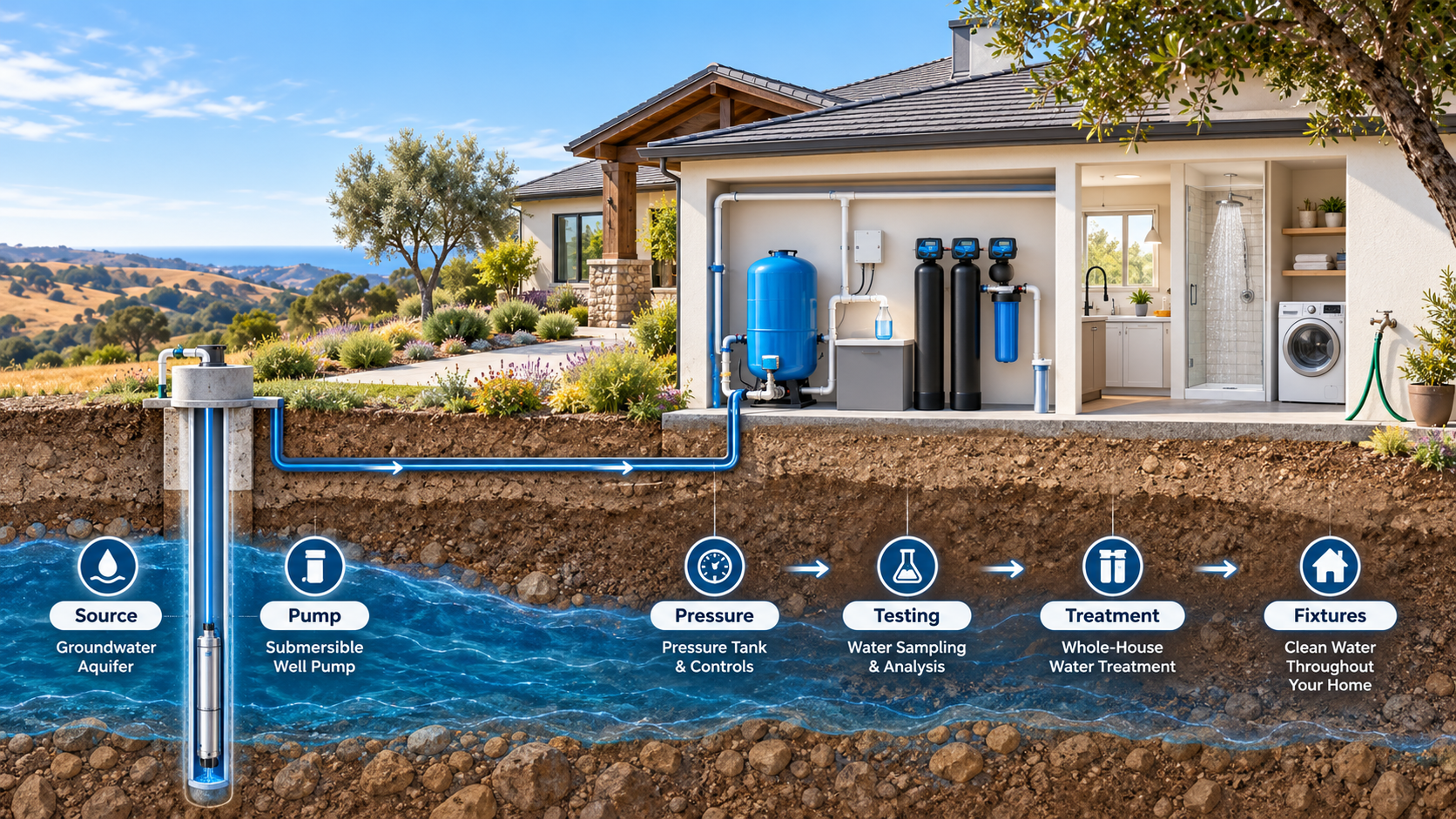
A private well, pressure equipment, whole-house treatment and an under-sink RO system do different jobs. Looking at the whole path prevents a point-of-use system from being asked to solve a source, pressure or whole-house problem.
Diagram of a private well water system from well to home
START WITH THE WATER

Know What Is Reaching the RO System

Private-well water can change over time, and nearby wells do not necessarily have the same chemistry. When a specific contaminant or safety concern is driving the decision, testing is the first step—not guessing from taste, odor or appearance.

CDC recommends testing private-well water at least once each year for total coliform bacteria, nitrates, total dissolved solids and pH, with additional testing based on local conditions. California’s State Water Board also recommends annual domestic-well water-quality testing.
  • Clarify whether the concern is aesthetic, operational or health-related.
  • Use appropriate field or laboratory testing for the question being asked.
  • Do not assume clear-looking water is safe.
  • Use the result to decide whether RO, pretreatment, another technology or no treatment change is appropriate.
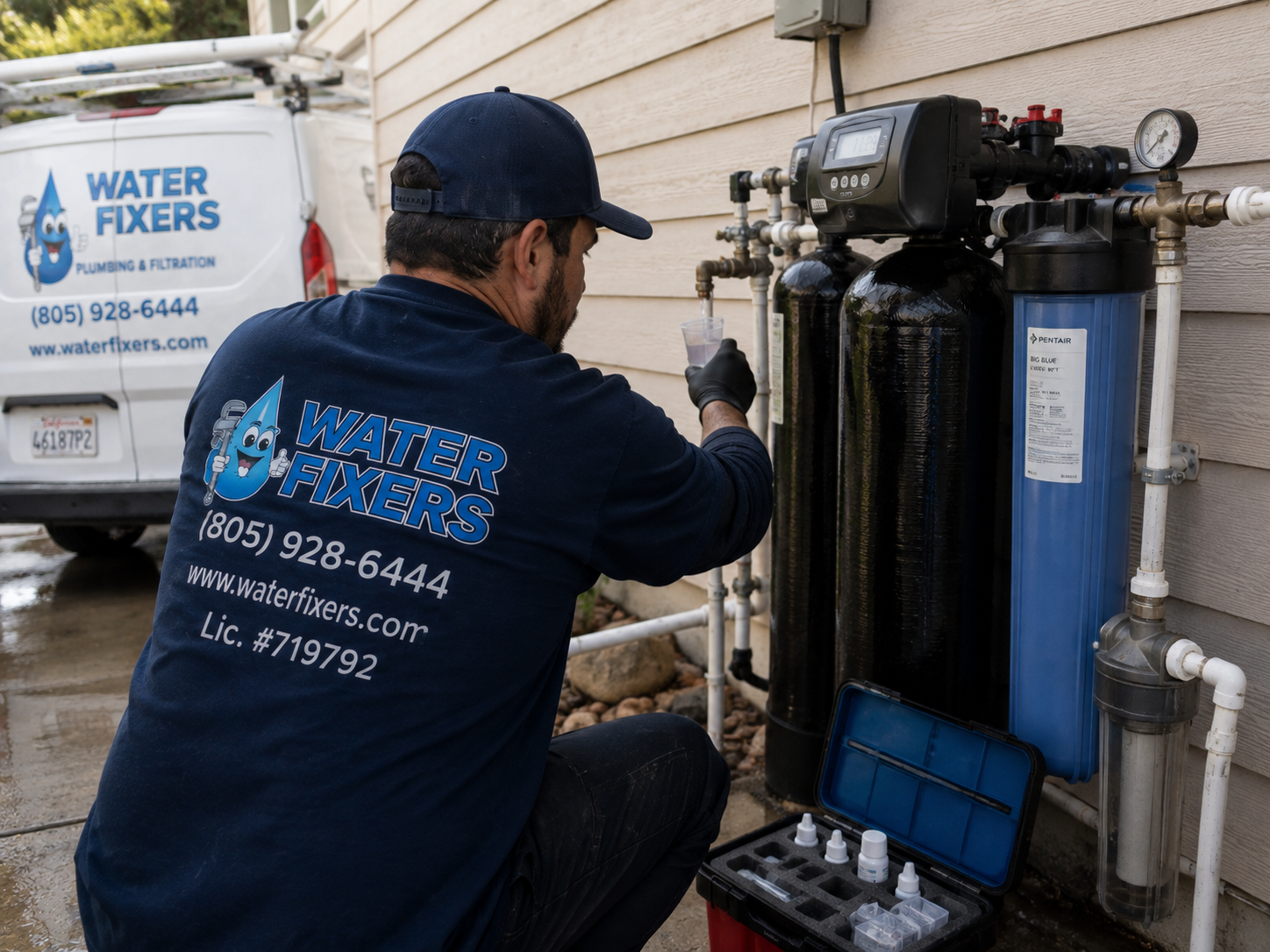
Water Fixers technician testing water at a Central Coast home filtration system
IS RO THE RIGHT NEXT STEP?

Match the Drinking-Water Goal to the Source Conditions

The same RO system is not automatically appropriate for every private well. The question is whether the water, plumbing, pressure and equipment specifications work together.

Good Fit: Dedicated Drinking Water

You want a separate kitchen faucet for drinking, cooking, coffee, ice or other point-of-use needs and the selected system is compatible with the source water.

Check First: Sediment & Fouling

Heavy sediment or other loading can shorten prefilter life or interfere with equipment. The upstream problem may need to be addressed first.

Check First: Hardness & Scale

Hard water is a whole-house issue. Depending on the equipment and water chemistry, hardness may also affect RO scaling and maintenance planning.

Check First: Bacteria / Safety Concerns

Do not rely on an under-sink RO system alone to answer a suspected or confirmed microbiological problem. Some RO systems may be rated to reduce specific microorganisms, but private-well safety still depends on testing, the exact equipment rating, correction of source problems when present, appropriate treatment or disinfection, and follow-up testing.
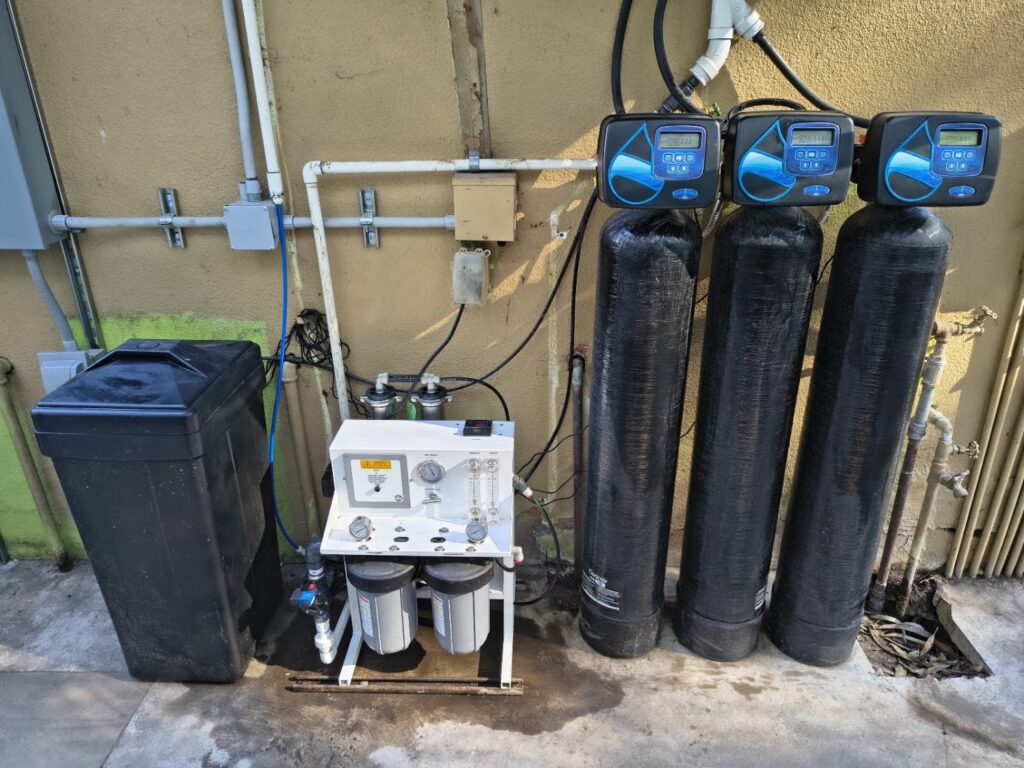
Whole-house water treatment equipment installed with bypass plumbing
PRETREATMENT

Sometimes the RO Needs Help Upstream

Whole-house treatment and point-of-use RO can work together, but they solve different problems. If testing shows conditions that can load, foul, scale or otherwise interfere with an RO system, the upstream treatment plan should be handled deliberately.

Examples can include sediment control, hardness treatment, pH correction, oxidation/filtration, or appropriately designed disinfection. The correct sequence depends on the actual chemistry, flow, equipment ratings and maintenance requirements.
BEFORE INSTALLATION

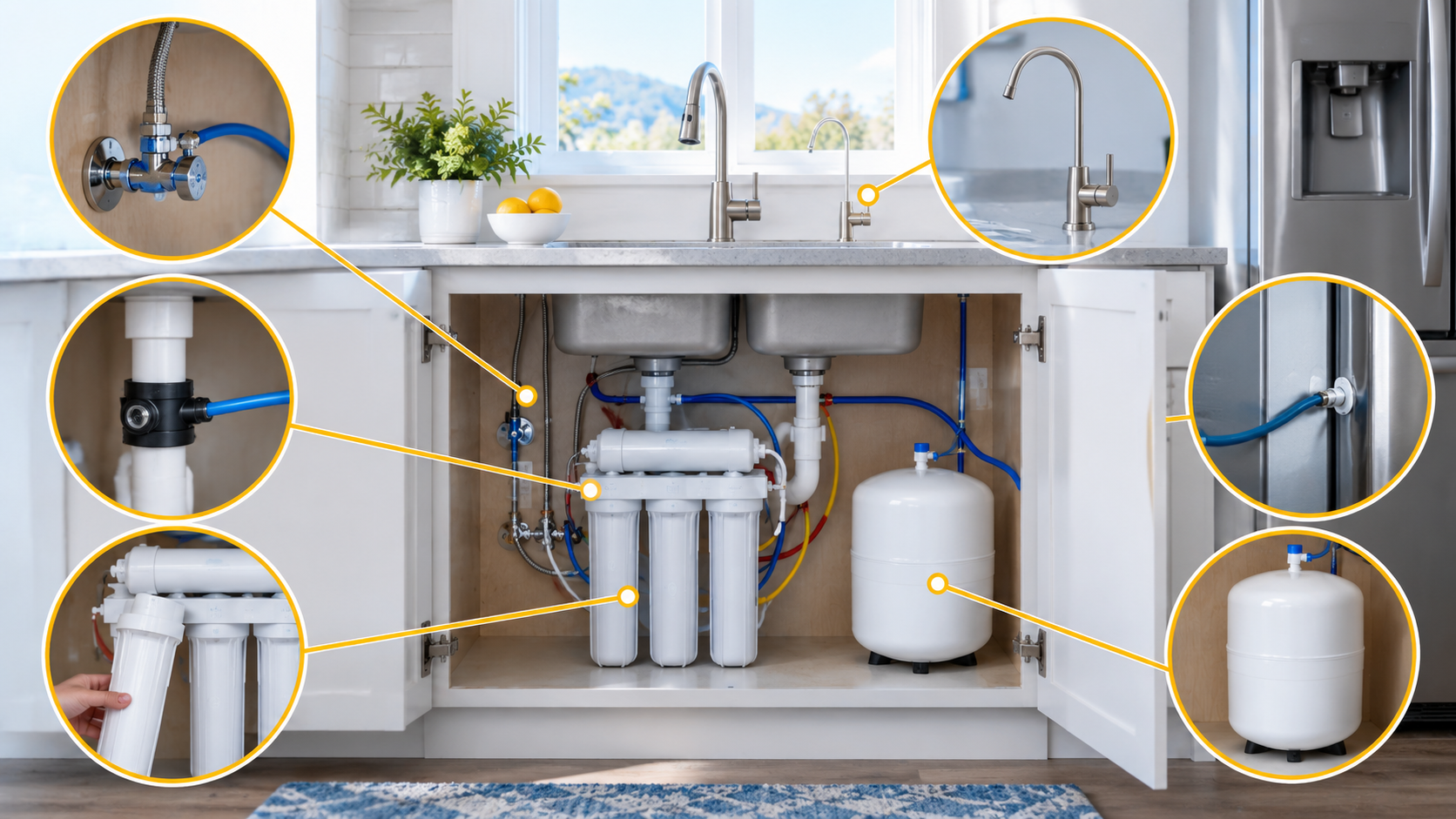
Make Sure the Kitchen and Plumbing Can Support the System

A private-well RO decision is not only about water chemistry. The cabinet, faucet location, cold-water feed, drain, storage tank, tubing route, service clearance and incoming pressure all matter.

Feed Water & Pressure

Confirm the selected RO system can operate under the actual feed-water pressure and source conditions.

Faucet & Drain

Plan a dedicated drinking-water faucet and a correct drain connection without compromising the sink plumbing.

Tank & Service Space

Leave room for the storage tank, filter changes, shutoffs, tubing and future maintenance.

Refrigerator / Icemaker

If RO water will serve another appliance, confirm distance, pressure and appliance requirements before adding the line.
HOW RO WORKS

Point-of-Use Treatment at the Kitchen Sink

A typical under-sink system sends feed water through prefiltration, the RO membrane and any specified post-treatment before storing treated water for the dedicated faucet. Concentrate water goes to the drain.

Configurations vary. The number and order of stages do not, by themselves, tell you how well a system will perform on a particular private well.
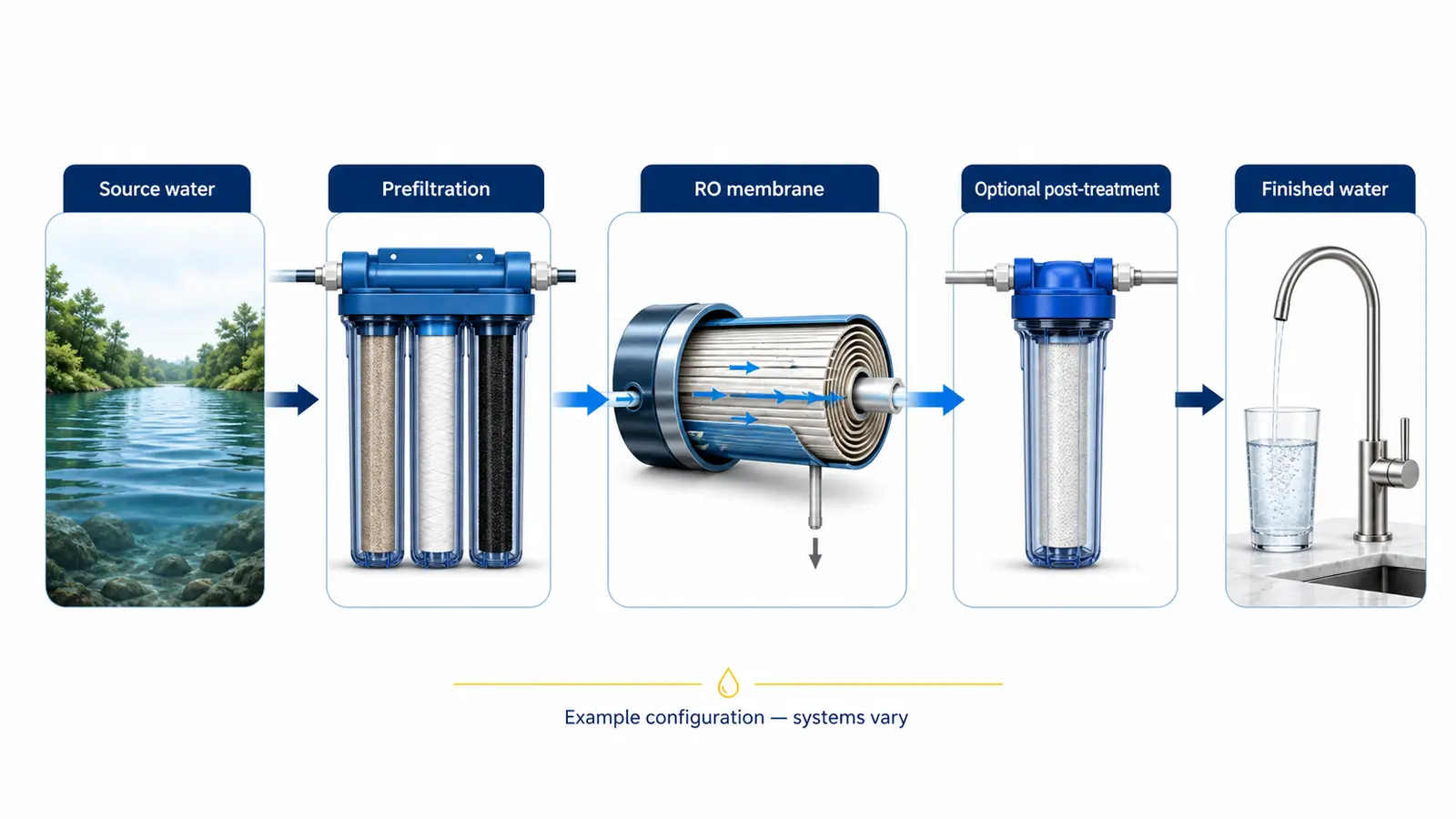
Reverse osmosis process from source water through prefiltration, membrane, optional post-treatment and finished water
IMPORTANT LIMITS

What an Under-Sink RO System Does Not Replace

Keeping the treatment roles separate prevents overpromising and helps each part of the water system do the job it was designed to do.

RO Does Not Soften the Whole House

If hardness is causing scale throughout the plumbing and fixtures, use the water-softener path. RO at one faucet does not address whole-house hardness.

RO Does Not Replace Source Correction

A well construction, source intrusion or other source-side problem may need correction by the appropriate well, pump, drilling or other specialist before treatment equipment is considered.

RO Is Not a Universal Disinfection Plan

For bacteria or other microbiological concerns, start with appropriate testing and the condition of the well itself. If contamination is suspected or confirmed, follow health-department guidance, correct the source where possible, use treatment or disinfection designed for the problem, and retest before relying on the water for drinking. Any RO reduction claim should be verified for the exact system.
PROFESSIONAL INSTALLATION

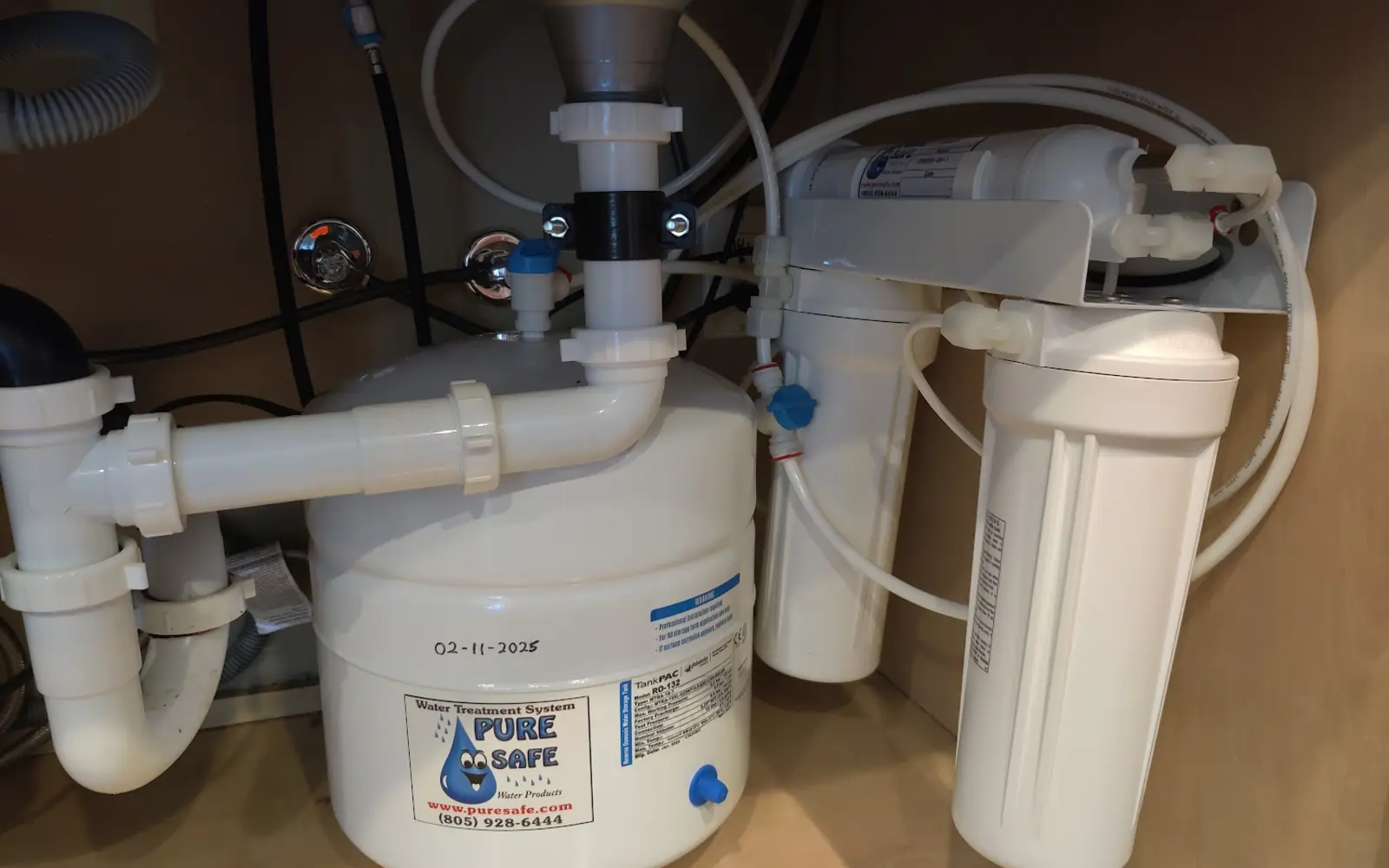
The Plumbing Around the RO Matters

A good installation leaves shutoffs reachable, tubing organized, the drain connection correct and enough room for future filter service. The storage tank and faucet should be planned around the actual kitchen—not squeezed into whatever space is left.

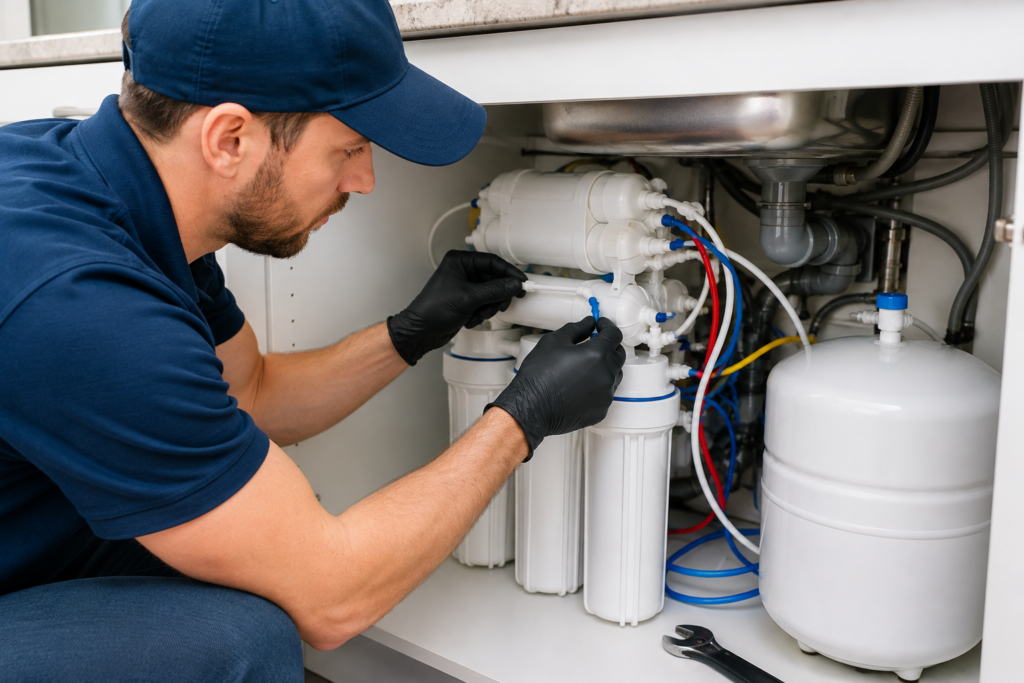
Water Fixers installs residential RO systems and can also evaluate whether an existing system is a practical candidate for continued service.
ALREADY HAVE AN RO?

Service the Installed System, Not a Generic Schedule

Filter life, membrane condition, tank behavior and sanitation needs depend on the installed system, source water, use and performance. A private-well RO may also need reevaluation if the source water changes.
  • Slow flow or low usable volume
  • Leaks, drips or damaged housings
  • Tank not filling or weak faucet delivery
  • Taste or odor changes
  • Unknown filter history after buying a home
  • Source-water changes that may affect the treatment plan
PRIVATE WELL + RO FAQ

Reverse Osmosis Questions for Private-Well Homes

Answers to common questions about using under-sink reverse osmosis with private-well water.

Often, yes—but suitability depends on the source-water conditions, feed pressure, pretreatment needs and the selected equipment. If a particular water-quality concern is driving the decision, test first and verify that the exact system is rated for that goal.
No. Do not assume an under-sink RO system resolves every private-well safety concern. If contamination is suspected or confirmed, use appropriate testing, follow health-department guidance, correct source problems where possible, use treatment designed for the specific issue and retest. Verify any RO reduction claim for the exact system.
CDC recommends at least annual testing for total coliform bacteria, nitrates, total dissolved solids and pH, plus additional testing based on local conditions and potential contamination sources. California also recommends annual domestic-well water-quality testing.
Not automatically. Hardness is mainly a whole-house treatment question. Whether upstream softening helps a particular RO system depends on measured water chemistry, the RO equipment specifications and the overall treatment plan.
Sediment can load prefilters and interfere with equipment. The right response depends on the amount and type of sediment, flow and where the material is entering the system. A whole-house sediment strategy may be appropriate before the under-sink RO.
Some reverse-osmosis systems are rated to reduce selected dissolved constituents, but a generic “RO” label is not enough. Test the water, identify the constituent and concentration, and verify the exact system documentation or applicable certification for the reduction claim.
Water Fixers can evaluate and service many existing RO systems once the equipment and condition are identified. Parts availability, compatibility and system condition determine what can practically be maintained or repaired.
There is no single schedule for every private-well RO system. Follow the installed equipment requirements and consider source-water quality, usage, pressure and flow, cartridge loading and actual system performance.

Want Better Drinking Water From Your Private Well?

Start with the water and the drinking-water goal. Water Fixers can help with testing, treatment planning, under-sink RO installation and service across Santa Maria and California’s Central Coast.

Water Fixers Plumbing & Filtration • Santa Maria, California • License #719792 • 805-928-6444

CALL NOW! Se Habla Español!