Private-well filtration systems can include sediment cartridges, media tanks, carbon, neutralization, softening, UV and other stages. Each has different service needs, and those needs can change with water quality, household use, flow, pressure and the manufacturer’s requirements.
This guide helps homeowners understand what to inspect, what changes matter, and when service or retesting may be appropriate. Water Fixers can service existing filtration equipment and help separate routine maintenance from a new water-quality or plumbing problem.
38+ Years on the Central Coast • Plumbing + Filtration • California License #719792
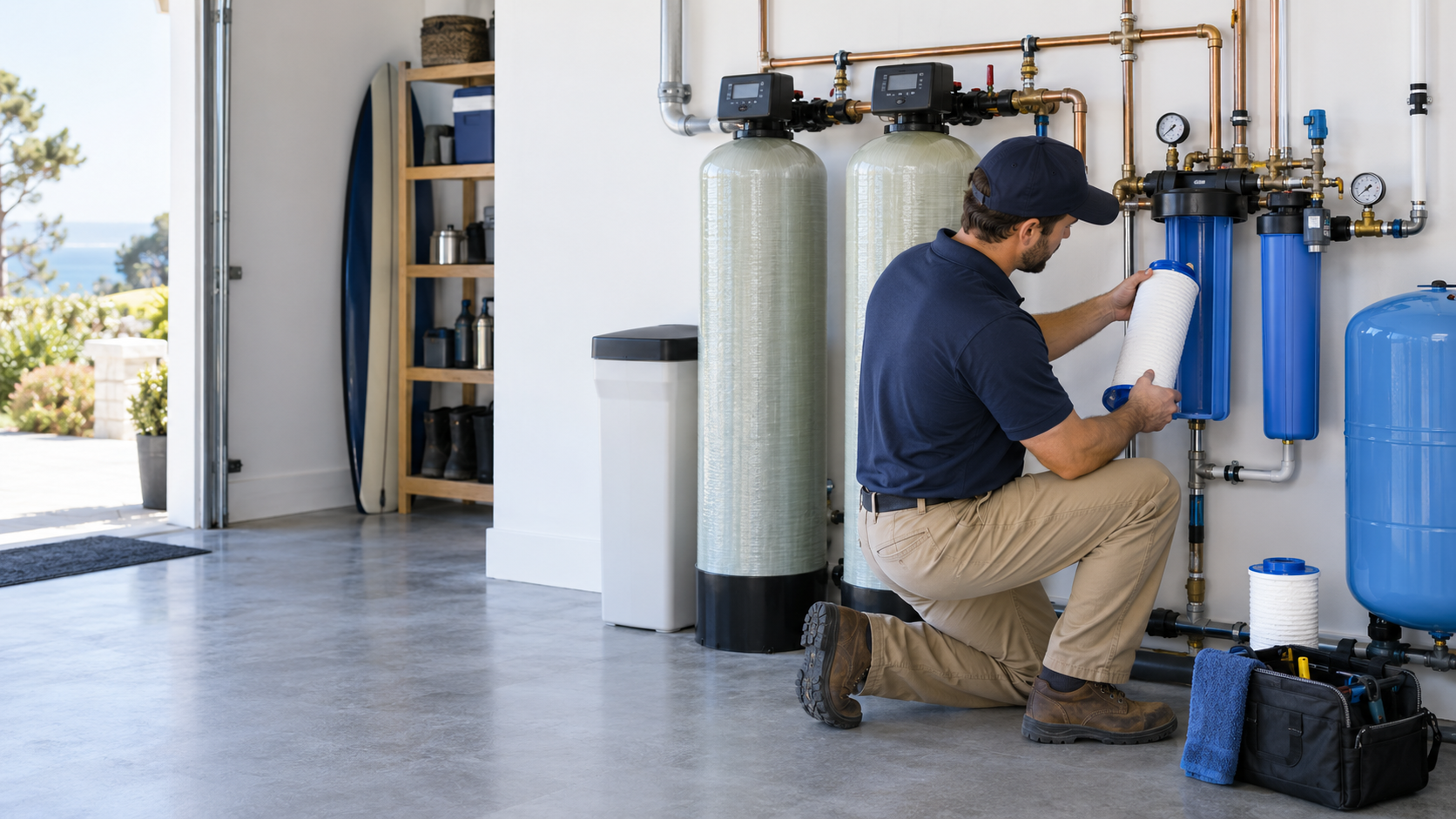
Maintenance is easier to plan when you start with the equipment and the symptom instead of assuming every filter or treatment tank is due on the same schedule.
A loaded cartridge, restricted valve, fouled stage or other treatment restriction can increase pressure drop. Diagnose the restriction before replacing unrelated equipment.
Returning symptoms can mean maintenance is needed, but they can also reflect changing source water or a different problem. Symptoms guide the investigation; they do not diagnose the water.
Backwash settings, valves, injectors, drains and treatment media should be maintained according to the specific equipment, measured water and service history.
UV performance depends on correct flow, clear pretreated water, lamp output, sleeve condition and the equipment manufacturer’s service requirements.
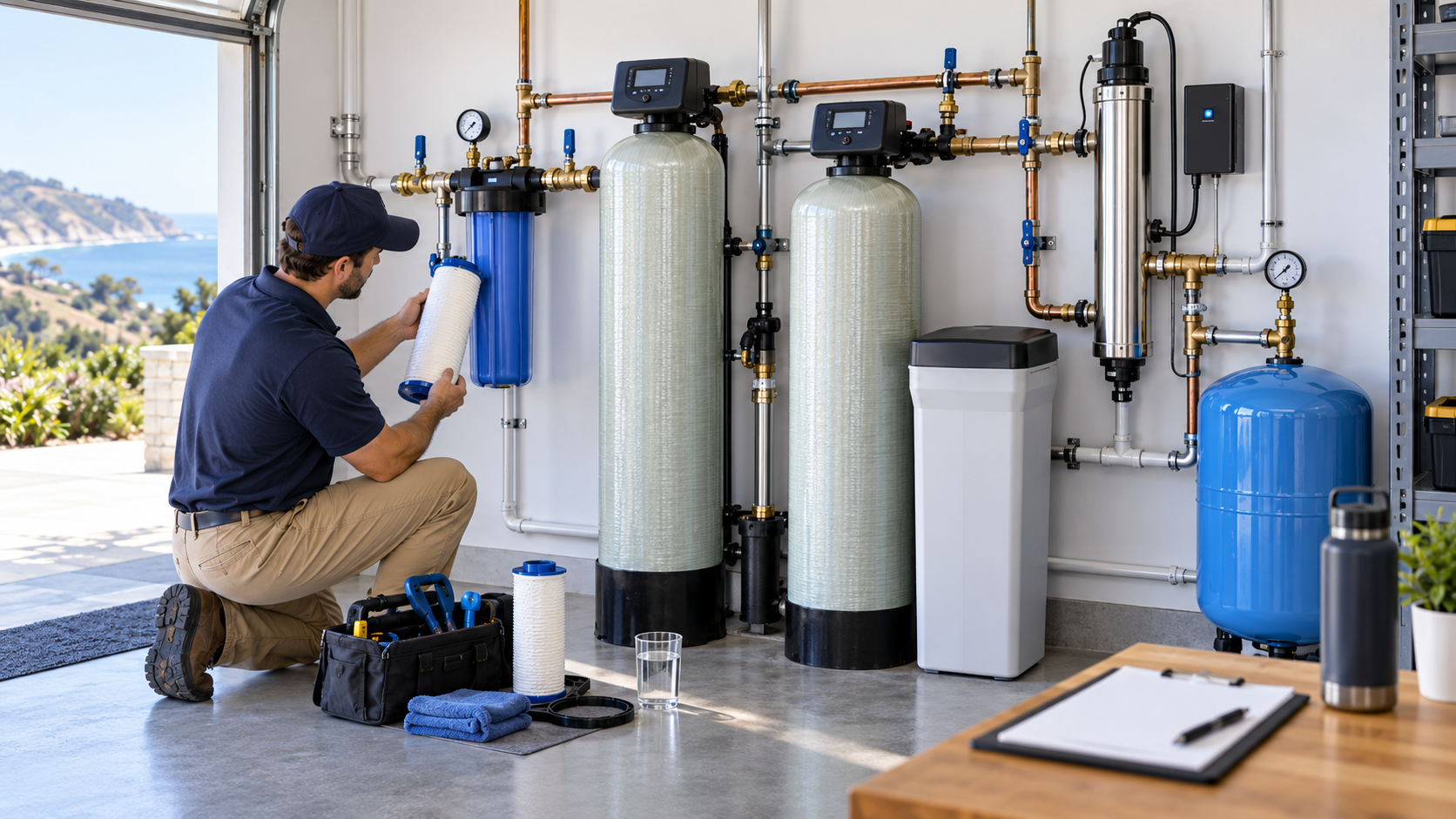
Maintenance is a system check, not just a cartridge swap. Look at cartridge loading, pressure and flow, valves and bypasses, media equipment, UV components where installed, visible leaks, drains, service access, and whether the water itself has changed. The right maintenance plan depends on the actual equipment and conditions.
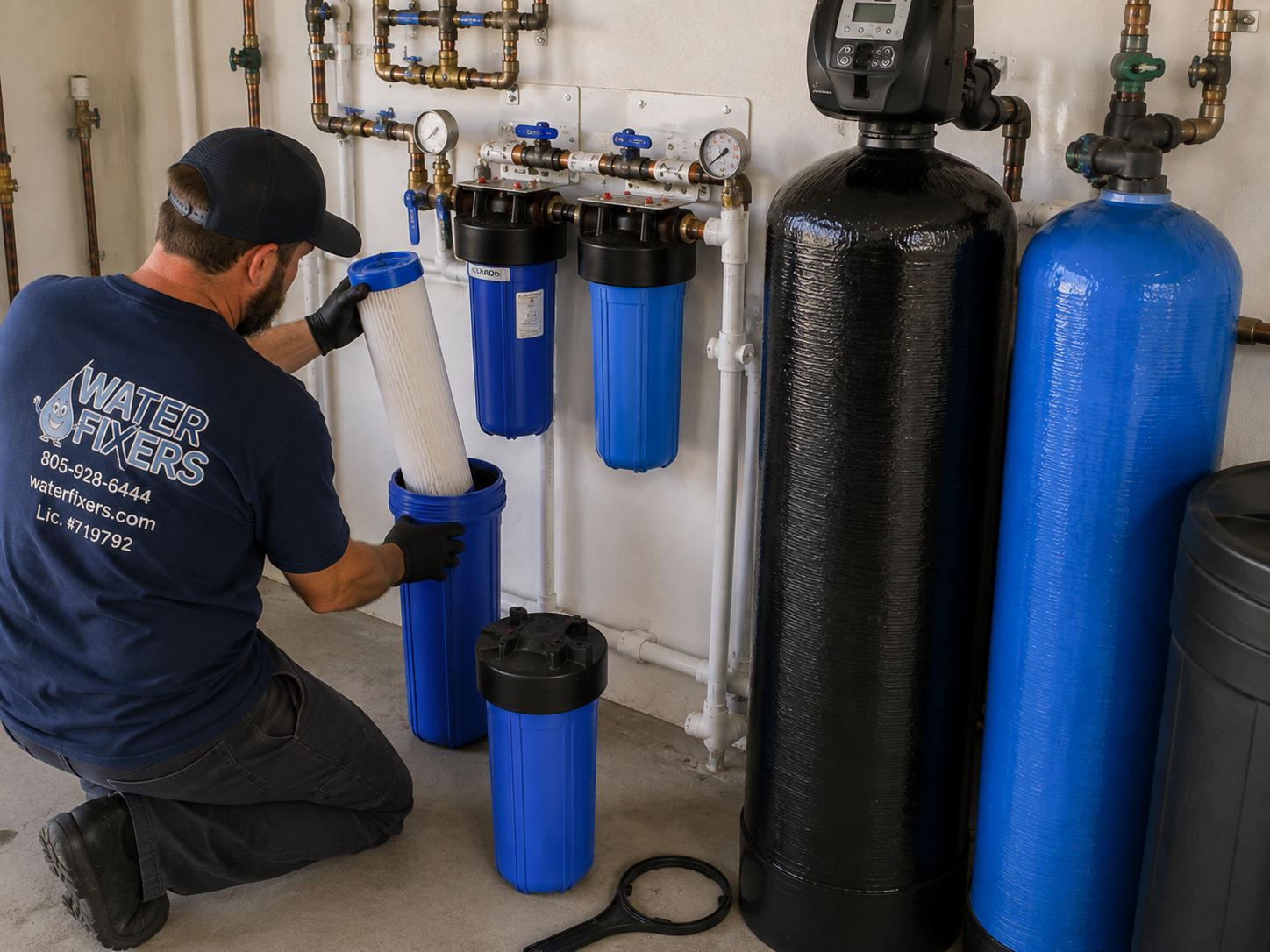
Two private-well homes can have different cartridge loading, media demands and service needs even when the equipment looks similar. Well conditions, sediment load, household use, flow, pressure and treatment goals all affect maintenance.
Instead of publishing a blanket interval, document the equipment model, manufacturer instructions, pressure behavior, recent water changes and previous service. That creates a maintenance plan that can be adjusted when conditions change.
Equipment-specific
Use the manufacturer’s requirements for the exact cartridge, media, valve, UV unit or treatment stage installed.
Condition-specific
Water quality, loading, pressure drop, household demand and visible equipment condition can change the service need.
History-specific
Service records and previous test results make it easier to spot changes instead of treating every visit like a new system.
None of these signals identifies the cause by itself. They are reasons to inspect the equipment, compare current performance with normal operation, and test the water when the question is about water quality rather than mechanics.
A new or gradual pressure drop can point toward cartridge loading, a restricted valve, media fouling, a service configuration issue or another plumbing/pressure cause.
Odor, staining, sediment or taste returning after a period of acceptable performance can justify checking service history and treatment performance—and retesting when the source water may have changed.
If the cartridge type, media age, valve programming, lamp history or previous test results are unknown, an inspection can establish a useful baseline before components are replaced.
Sediment cartridges can protect downstream media, membranes, UV sleeves and fixtures by intercepting selected particles. As a cartridge loads, pressure drop can increase and household flow can fall.
Replacement timing depends on the cartridge design, sediment load, water quality, household use, pressure/flow behavior and the manufacturer’s requirements. A cartridge that lasts much longer at one well may load quickly at another.
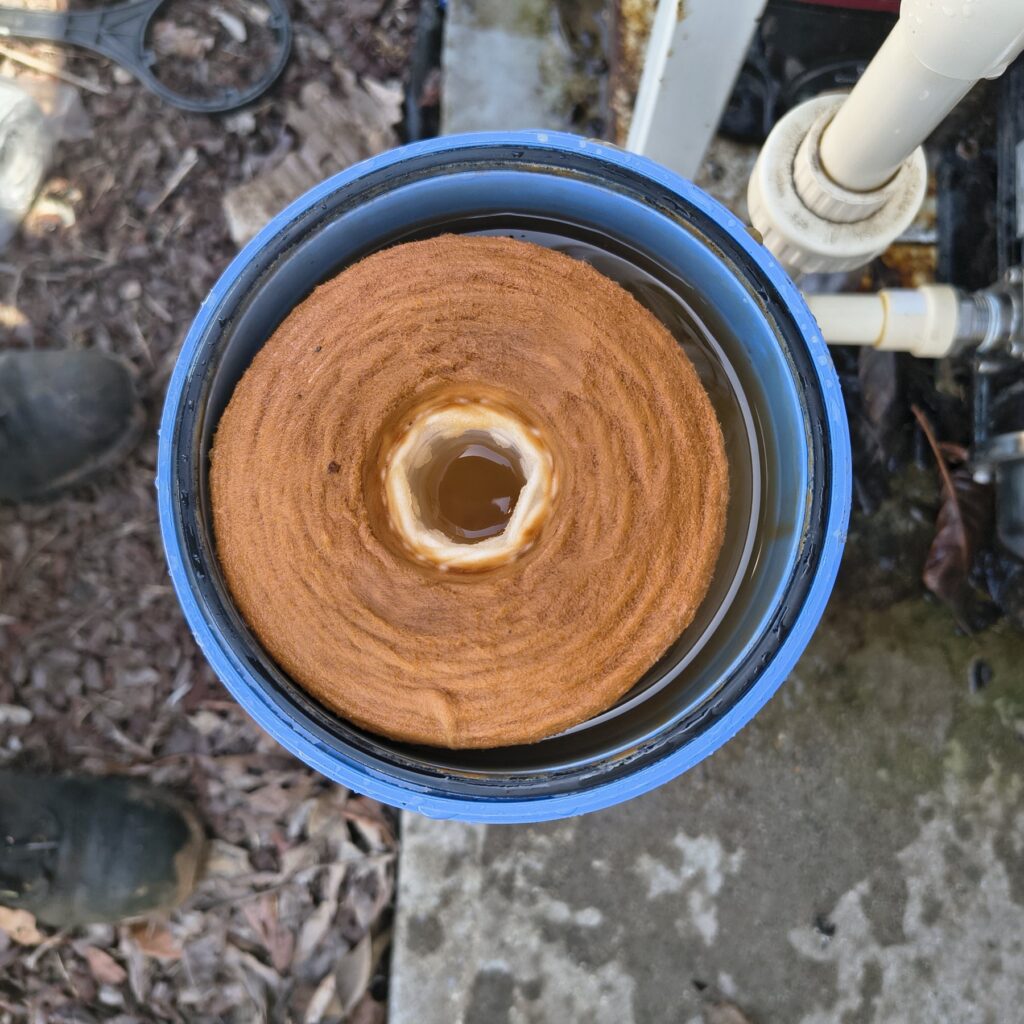
Useful clues: compare pressure before and after the filtration stage where gauges are available, note whether flow recovers after correct service, inspect for leaks or bypass-position problems, and record what the removed cartridge looked like. Appearance is useful service information—but it does not prove whether the water is safe.
Whole-house media tanks may be used for oxidation/filtration, carbon, neutralization, softening or other treatment jobs. Maintenance can involve control-valve inspection, backwash or regeneration settings, injectors, drain flow, brine or chemical feed components where present, and the condition or remaining capacity of the treatment media.
There is no universal media-life number that applies to every private well. Water chemistry, loading, flow, backwash performance, equipment design and manufacturer specifications all matter.
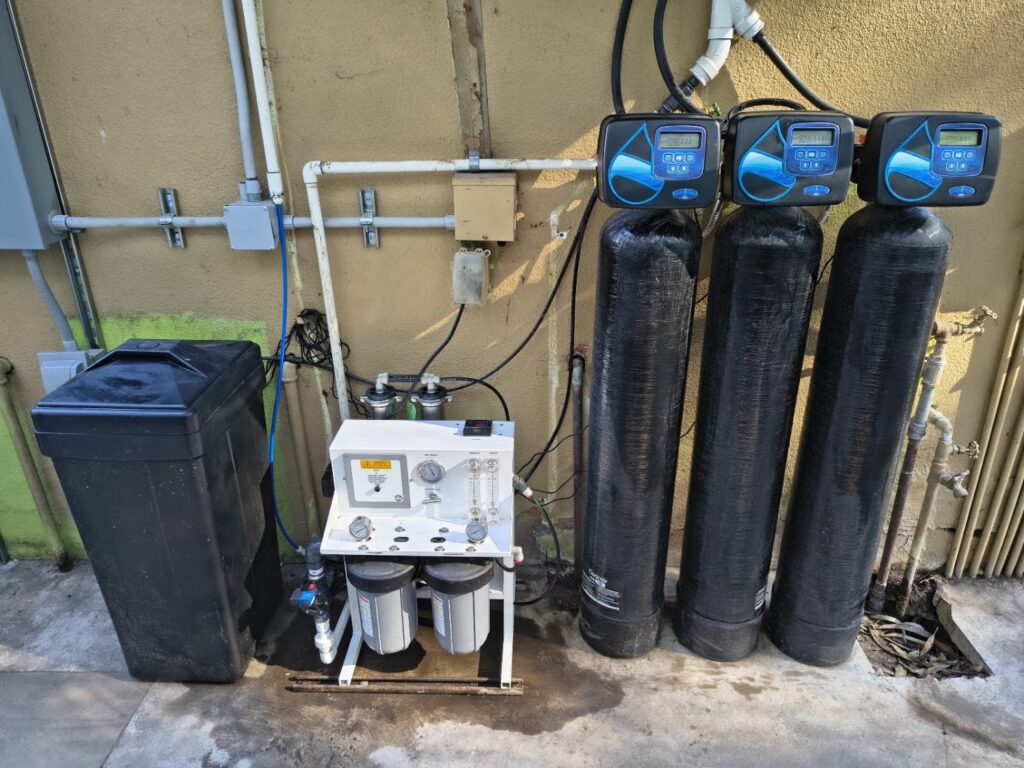
Use the equipment category to determine what should be inspected or serviced. Not every private-well system contains every stage below.
Check cartridge loading, housing seals, leaks, pressure drop, bypass position and whether the installed cartridge matches the treatment job and equipment specification.
Review valve operation, programmed settings, drain flow, injectors or feed components where applicable, media condition and whether the system is still matched to the measured water.
Follow the UV manufacturer’s lamp, sleeve and monitoring requirements. Clear pretreated water, correct flow and reliable power are part of UV performance.
Inspect accessible valves and bypasses, gauges, drains, visible plumbing, leaks and service clearances. A mechanical or plumbing issue can mimic a treatment problem.
Before replacing media, changing programming or bypassing a treatment stage, identify what the equipment is designed to do and what protects the equipment downstream. For a system with unclear history, testing and an equipment inspection can establish a better baseline.
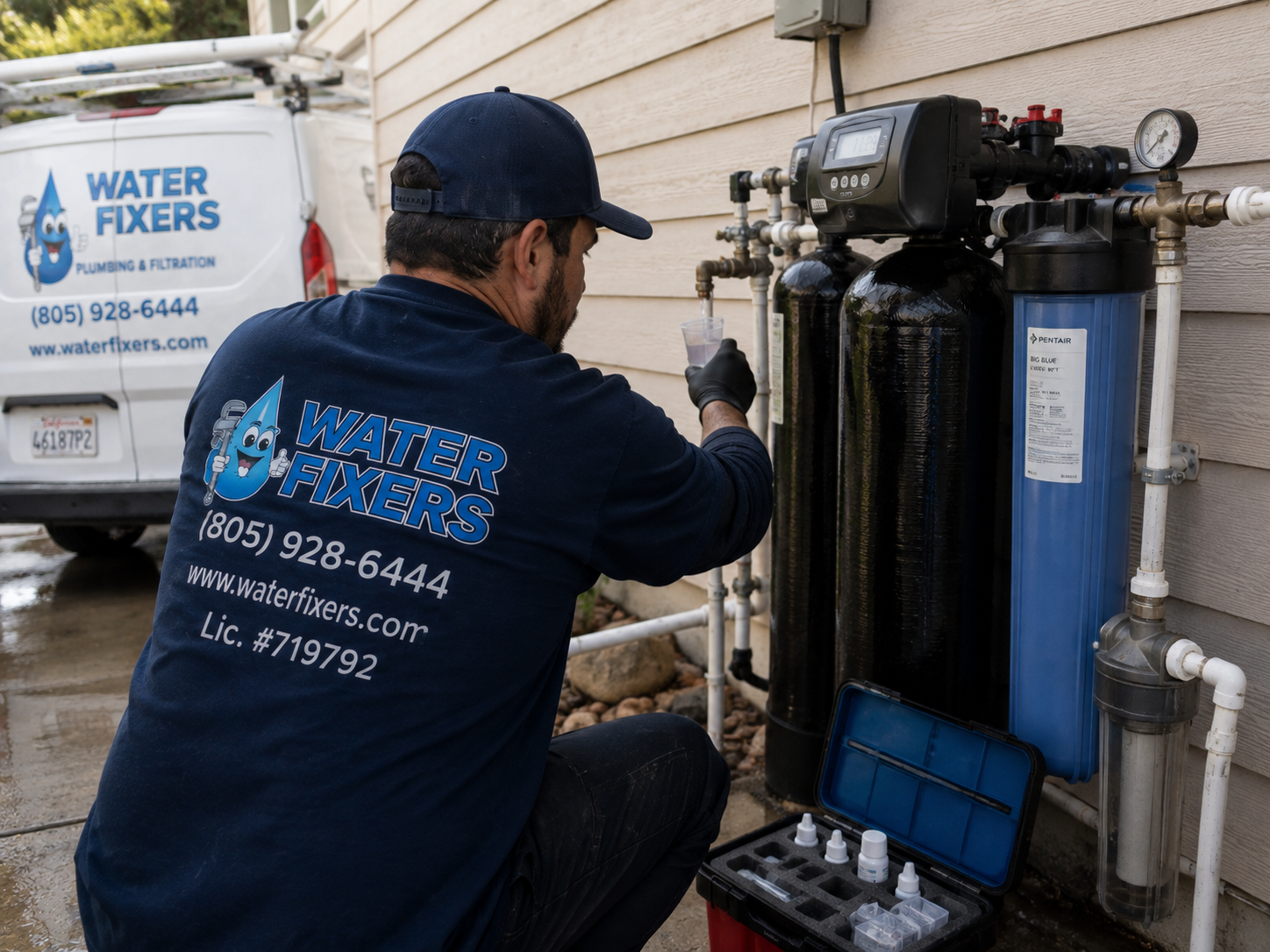
Private-well conditions can change over time, and treatment selected from older test results may need to be reevaluated when the source changes, a new symptom appears, the well system is repaired or modified, or treatment performance changes.
Retesting should match the question. CDC recommends testing private-well water at least once each year for total coliform bacteria, nitrates, total dissolved solids and pH, with additional testing based on local risks. Changes in taste, color or smell, or work on the well system, are also reasons to consider new testing. Health-related concerns should use appropriate laboratory methods.
Testing-first rule: clear-looking water does not prove safety, and returning odor, staining or sediment does not identify the cause by itself.
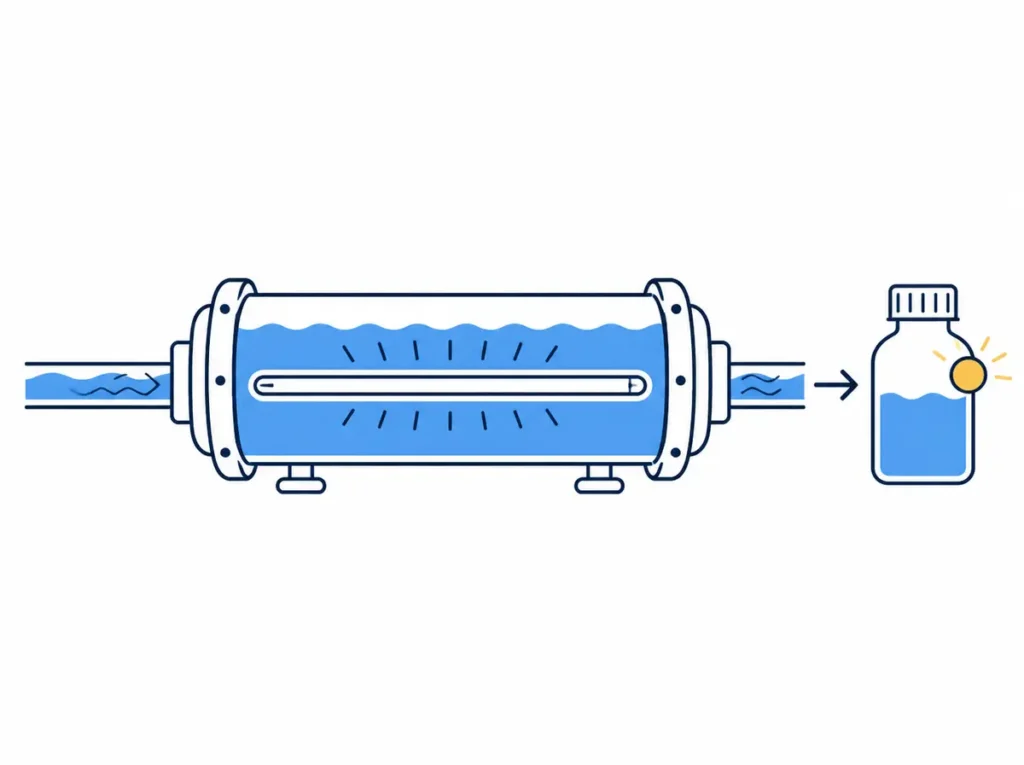
Where UV is part of a bacteriological treatment plan, performance depends on the complete installation: adequate pretreatment, operation within the unit’s rated flow conditions, lamp output, sleeve cleanliness, monitoring components and reliable power.
Follow the requirements for the exact UV unit installed. If bacteria or another microbiological concern prompted the system, source correction, appropriate disinfection and retesting remain separate parts of the safety plan; replacing a lamp alone does not verify water safety.
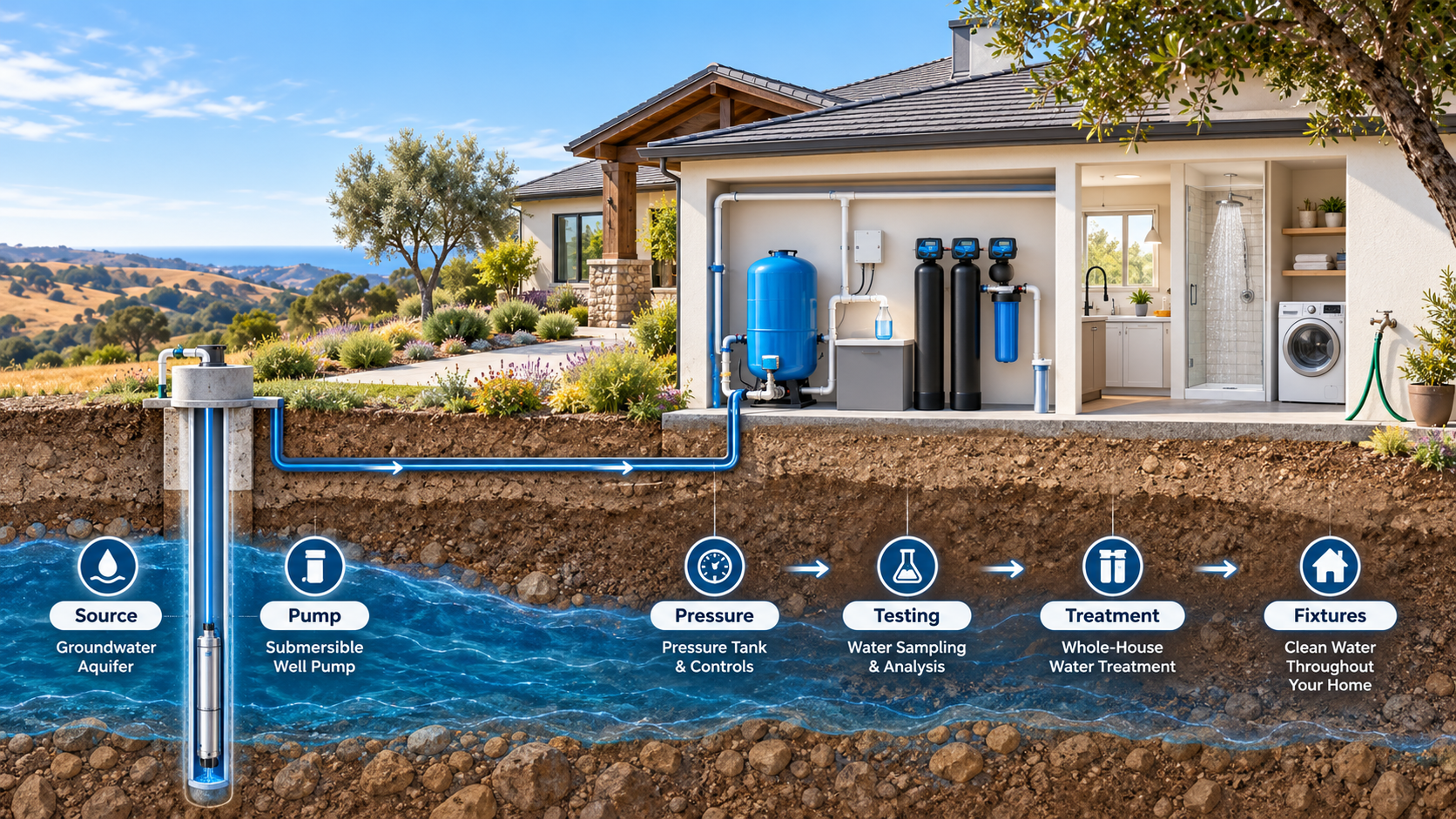
Keep the equipment model, cartridge or media type, manufacturer instructions, service dates, pressure or flow observations, valve/programming notes, test results and any changes in taste, odor, staining or sediment.
A service history helps distinguish normal recurring maintenance from a new source-water, plumbing or equipment problem. It also reduces the chance of installing the wrong cartridge or changing a treatment setting without knowing why it was configured that way.
Maintenance can uncover a simple cartridge issue, a new water-quality concern, or evidence that the existing equipment is no longer matched to the job. Use the focused page that fits the next question.
For cartridge replacement, existing-system inspection and practical filtration service on equipment already installed in the home.
For understanding sediment, carbon, oxidation media, neutralization, UV and other equipment categories after testing.
For changing water conditions, returning symptoms, unclear treatment goals or questions that cannot be answered from equipment inspection alone.
If the well-water treatment train includes ion-exchange softening, use the dedicated softener maintenance page for salt, brine, regeneration, valve and resin-related service.
If the home also uses under-sink reverse osmosis for drinking water, its cartridges, membrane, tank and sanitizing needs follow a separate RO service path.
If testing or returning symptoms show that the water conditions changed, revisit the treatment strategy before simply replacing the same media or cartridge again.
Maintenance depends on the installed equipment and the conditions at the property. These answers explain the most common service, testing, pressure and equipment-routing questions without imposing one universal maintenance calendar.
Tell Water Fixers what equipment is installed, what has changed, when it was last serviced if known, and whether you are seeing pressure loss, sediment, odor, staining or another water-quality change. We can inspect the existing filtration path, replace appropriate cartridges, and help determine whether the next step is maintenance, testing or treatment reevaluation.
Water Fixers Plumbing & Filtration • Santa Maria, CA • Central Coast service • California License #719792
CALL NOW! Se Habla Español!