







WHOLE-HOUSE FILTRATION SERVICE
Whole House Filter Replacement
Replace the correct cartridge, protect flow and pressure, and find out when recurring filter problems point to something more than a routine change.
Water Fixers services existing whole-house filtration systems across California’s Central Coast. We identify the installed equipment before selecting replacement filters or recommending a different treatment path.
38+ Years on the Central Coast • California License #719792
THE QUICK ANSWER
There Is No One Replacement Interval for Every Whole-House Filter
A whole-house filter should be serviced according to the actual cartridge or media, the manufacturer’s requirements, household water use, source-water conditions and what the system is doing to flow and pressure. A date on the calendar is useful only when it matches the equipment.
If the system is clogging much sooner than expected, pressure is dropping, or the original water problem is returning, replacing the same filter again may not solve the underlying cause.
KNOW WHAT YOU HAVE BEFORE YOU ORDER
“Whole-House Filter” Can Mean Very Different Equipment
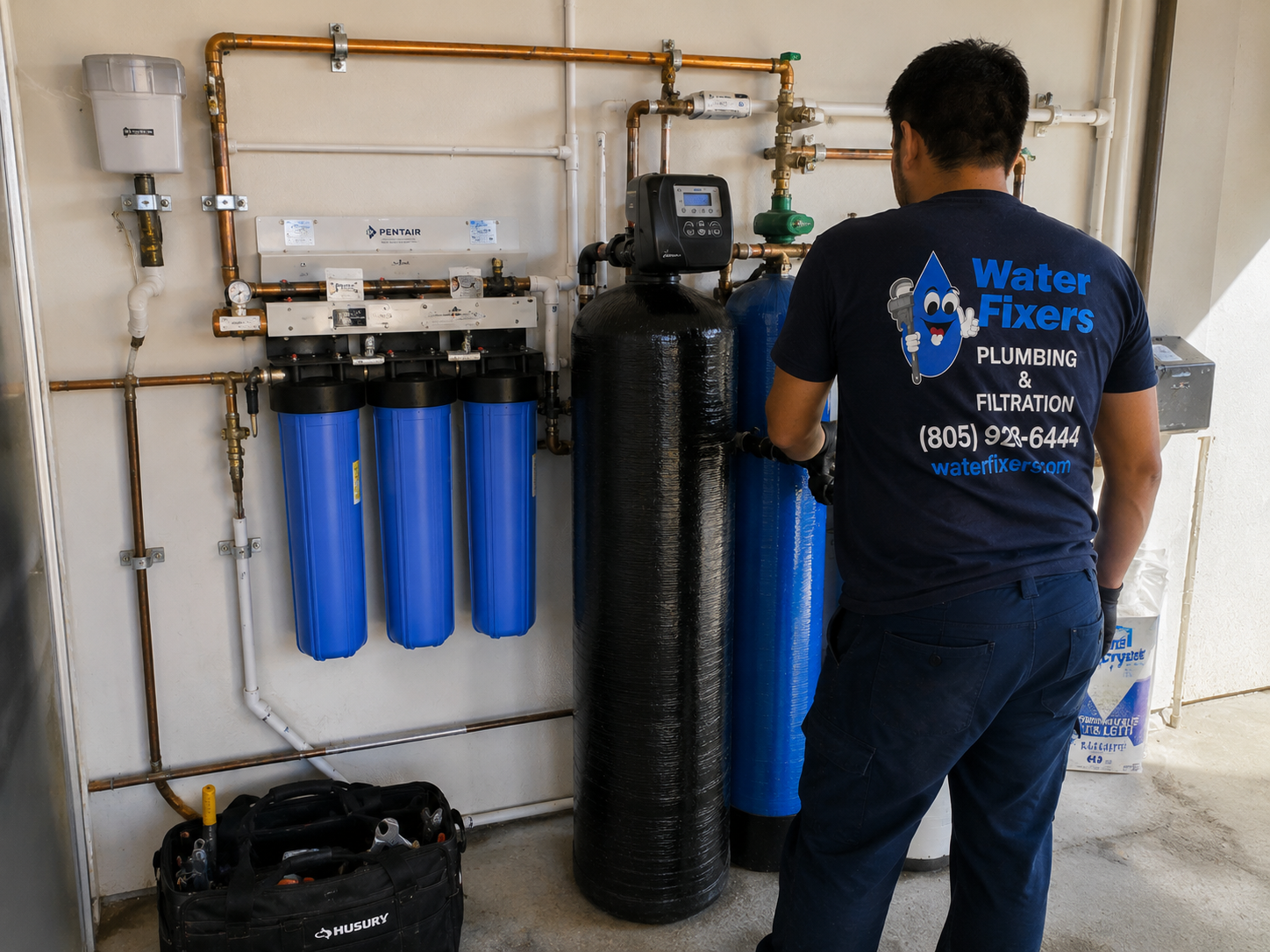
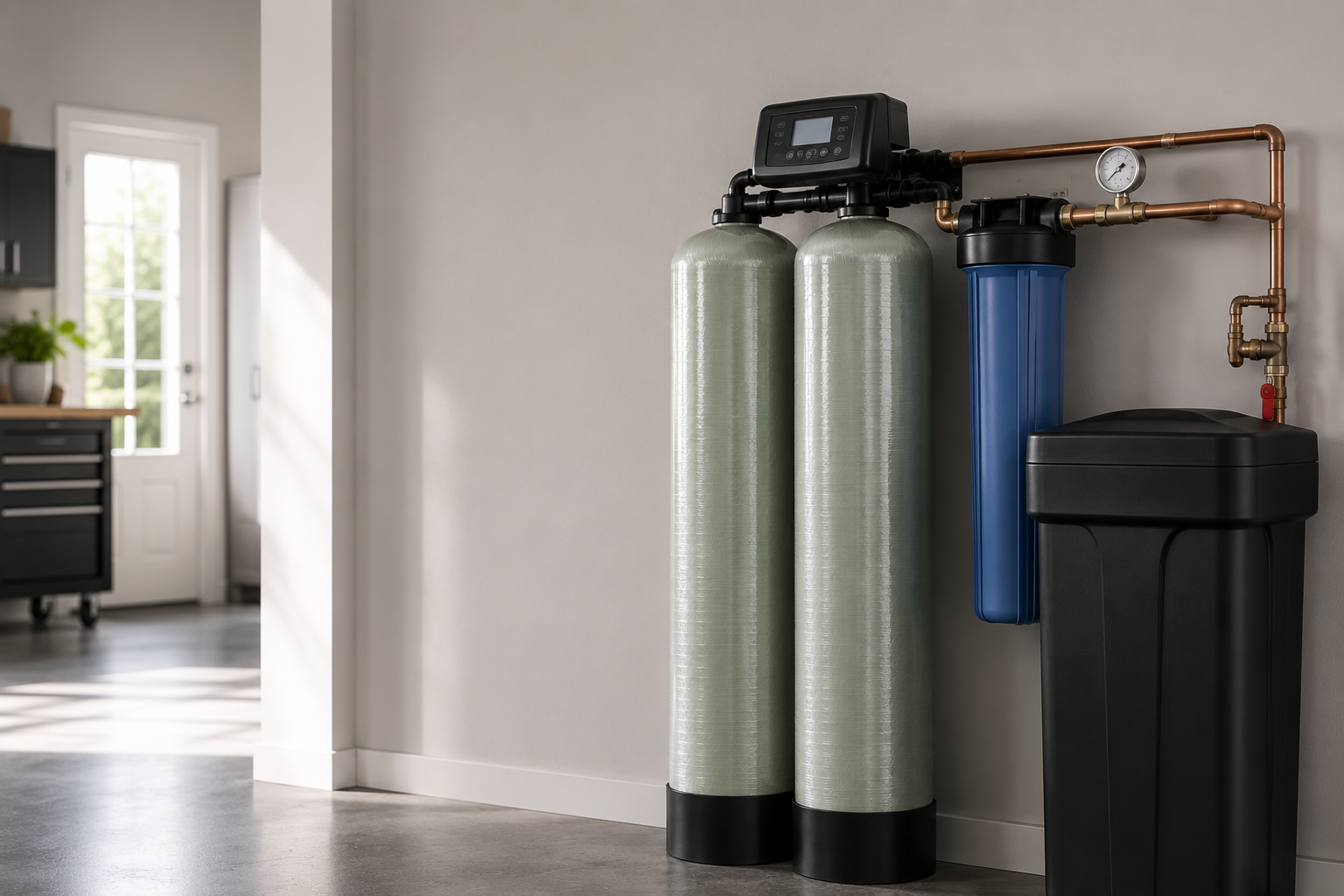
Cartridge housings, carbon systems and media tanks can all be part of a whole-house treatment train, but they do not use the same replacement parts or maintenance process. The first step is identifying the actual system.
Sediment Cartridges
Mechanical cartridges trap particles. As loading increases, flow can fall and pressure loss across the housing can increase. The correct micron rating and cartridge dimensions matter.
Carbon Cartridges
Carbon cartridges are commonly used for specific taste, odor or disinfectant-reduction goals. Exhaustion is not always visible, so the product service cycle and actual treatment goal matter.
Specialty Cartridges
Some housings use specialty cartridges for a defined water-quality task. Replacement must match the installed system and the claim the cartridge is intended to support.
Media Tanks
Backwashing or media-based tanks are not serviced like drop-in cartridges. Media condition, control settings, backwash performance and the original treatment job should be evaluated separately.
SERVICE CLUES
Signs the Filter or System Needs Attention
- Pressure or flow drops after the treatment equipment.
- Sediment returns after a period of normal filtration.
- Taste or odor returns when a carbon stage was installed for that specific goal.
- A gauge or differential-pressure reading changes on systems equipped for that monitoring.
- The documented manufacturer service point has been reached.
- The filter loads unusually fast compared with the system’s normal pattern.
These are service clues, not proof that one particular cartridge has failed. Pressure, valves, sizing, media condition, plumbing restrictions and changing source water can produce similar complaints.
COMPATIBILITY MATTERS
A Cartridge That “Fits” Is Not Automatically the Correct Replacement
Whole-house replacement filters are not universally interchangeable. Before service, identify the system manufacturer and model where available, housing size, cartridge dimensions, filter type, micron or media specification, flow requirements and any product-specific replacement designation.
NSF notes that even a cartridge that looks similar can allow bypass if dimensions or fit are wrong. When a treatment claim matters, the replacement should also preserve the equipment’s intended performance rather than being selected by appearance alone.
Photograph the Equipment
Photograph model labels, housing labels, control heads, gauges and the installed cartridge sequence before ordering parts.
Check the Replacement Designation
Use the manufacturer’s specified replacement cartridge or a properly verified compatible option for the exact housing and treatment job.
Keep the Treatment Goal in View
Sediment, chlorine, hardness, well-water conditions and drinking-water goals need different treatment paths. Do not let a generic filter swap blur that distinction.
WHAT PROFESSIONAL FILTER SERVICE SHOULD ACCOMPLISH
More Than Removing One Cartridge and Installing Another
A useful service visit should protect the housing and plumbing as well as the replacement filter. The exact procedure depends on the equipment, but the service path should verify compatibility, safe isolation, sealing surfaces and post-service operation.
1. Identify
Confirm the housing, cartridge or media equipment and the service history before parts are selected.
2. Isolate
Use the installed shutoff/bypass arrangement and relieve system pressure as appropriate for the equipment before opening service points.
3. Replace & Inspect
Replace the correct due filter and inspect serviceable housings, seals, O-rings, valves, gauges and visible connections.
4. Restore & Check
Restore normal operating pressure, check for leaks and confirm the expected flow/pressure response after service.
5. Record
Document what was installed and use the equipment requirements plus actual water conditions to plan the next review.
WHEN THE COMPLAINT IS LOW PRESSURE
A New Filter Should Not Be Used to Guess at a Pressure Problem
A loaded cartridge can restrict flow, but pressure loss can also come from undersized equipment, a partially closed bypass or valve, plumbing restrictions, media condition, incoming pressure or multiple treatment stages in series.
If replacing a due cartridge does not restore expected flow, the next step is diagnosis—not repeatedly installing new filters.
WHEN FILTERS LOAD TOO FAST
Repeated Clogging Is Information
If a cartridge begins clogging much faster than the system’s established pattern, ask what changed. Possible factors include increased sediment load, construction or plumbing work, a changing private-well condition, undersized filtration, a filter selected too fine for the application, upstream treatment problems or a pressure/flow issue.
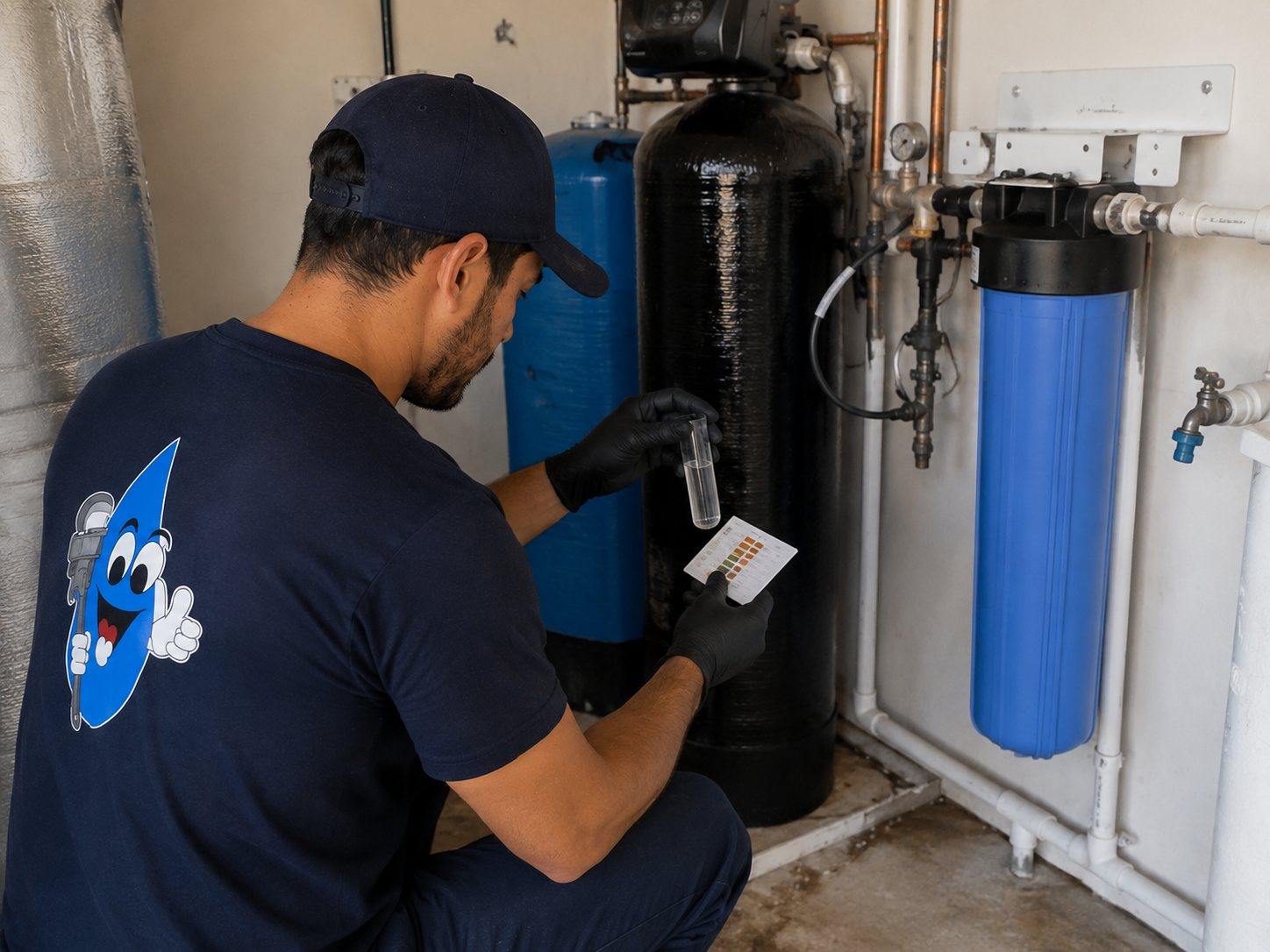
For private-well systems, use the dedicated well-water filtration maintenance path for the broader maintenance program. If the water itself has changed, testing can help separate an equipment-maintenance issue from a new treatment need.
USE THE RIGHT SERVICE PATH
Filter Replacement Is One Part of the Water-Treatment System
Use this page when the main job is servicing an existing whole-house filter. If the water problem or equipment decision is broader, move to the focused service instead of forcing every concern into a cartridge replacement.
Whole-House Filtration
For installation, upgrades and broader point-of-entry treatment planning.
System Selection
For comparing sediment, carbon, softening and other treatment categories when the existing system no longer fits the goal.
Hardness & Scale
If white scale and hardness are the main complaint, route to water softening instead of treating the problem as a generic filter change.
Drinking Water
If the goal is primarily drinking, cooking, coffee or ice, a point-of-use RO system may be more targeted than whole-home filtration.
Chlorine / Disinfectant Goal
Use the chlorine-filtration page when the treatment goal is specifically whole-home chlorine or chloramine reduction.
Private-Well Maintenance
For private-well cartridge, media, UV, pressure and changing-water maintenance considerations.
What to Have Ready Before You Schedule Filter Service
Useful information can make the first service visit more efficient: photos of the full system and labels, filter-housing count and size, any replacement part numbers, the approximate last service date, the water source, the main symptom, and whether pressure/flow changed suddenly or gradually.
If you inherited the system and do not know what cartridges are installed, do not guess from appearance. Water Fixers can help identify the equipment and determine the appropriate service path.
WHOLE-HOUSE FILTER REPLACEMENT FAQ
Common Questions About Whole-House Filter Service
Need a Whole-House Filter Replaced?
Tell Water Fixers what equipment is installed, what changed, and when the system was last serviced. We can help identify the correct replacement path and check whether the issue is routine maintenance or something broader.
Water Fixers Plumbing & Filtration • California’s Central Coast • License #719792