WHOLE-HOUSE FILTRATION • ACTIVATED CARBON
Activated carbon can be a useful choice for a defined chlorine, taste or odor goal. Water Fixers checks the water source, household flow and any existing equipment before recommending a whole-house system. Carbon has specific limits, so a concern about a named contaminant calls for appropriate testing and a product with a verified reduction claim.
38+ Years Serving the Central Coast • Plumbing + Filtration Expertise • California License #719792
START WITH THE TREATMENT GOAL
Carbon works by adsorption, so the right design depends on what you want to reduce, how much water the home uses and how long the water has meaningful contact with the media.
CHLORINE
Whole-house carbon is commonly used when chlorine reduction is the treatment goal. System size and media selection still need to fit the water chemistry and household flow.
TASTE / ODOR
Carbon can help with some taste and odor concerns. The source still matters: a hot-water-only odor or an odor from one fixture may need a plumbing or water-heater evaluation.
DOWNSTREAM PROTECTION
If the water carries visible sediment, particulate pretreatment may be appropriate before carbon so the carbon stage is not asked to do a sediment filter’s job.
NOT A UNIVERSAL FILTER
Carbon does not soften water or serve as a universal filter. Its performance depends on the selected media, the substance of concern, water conditions and the flow through the system.
WHOLE-HOUSE ACTIVATED CARBON
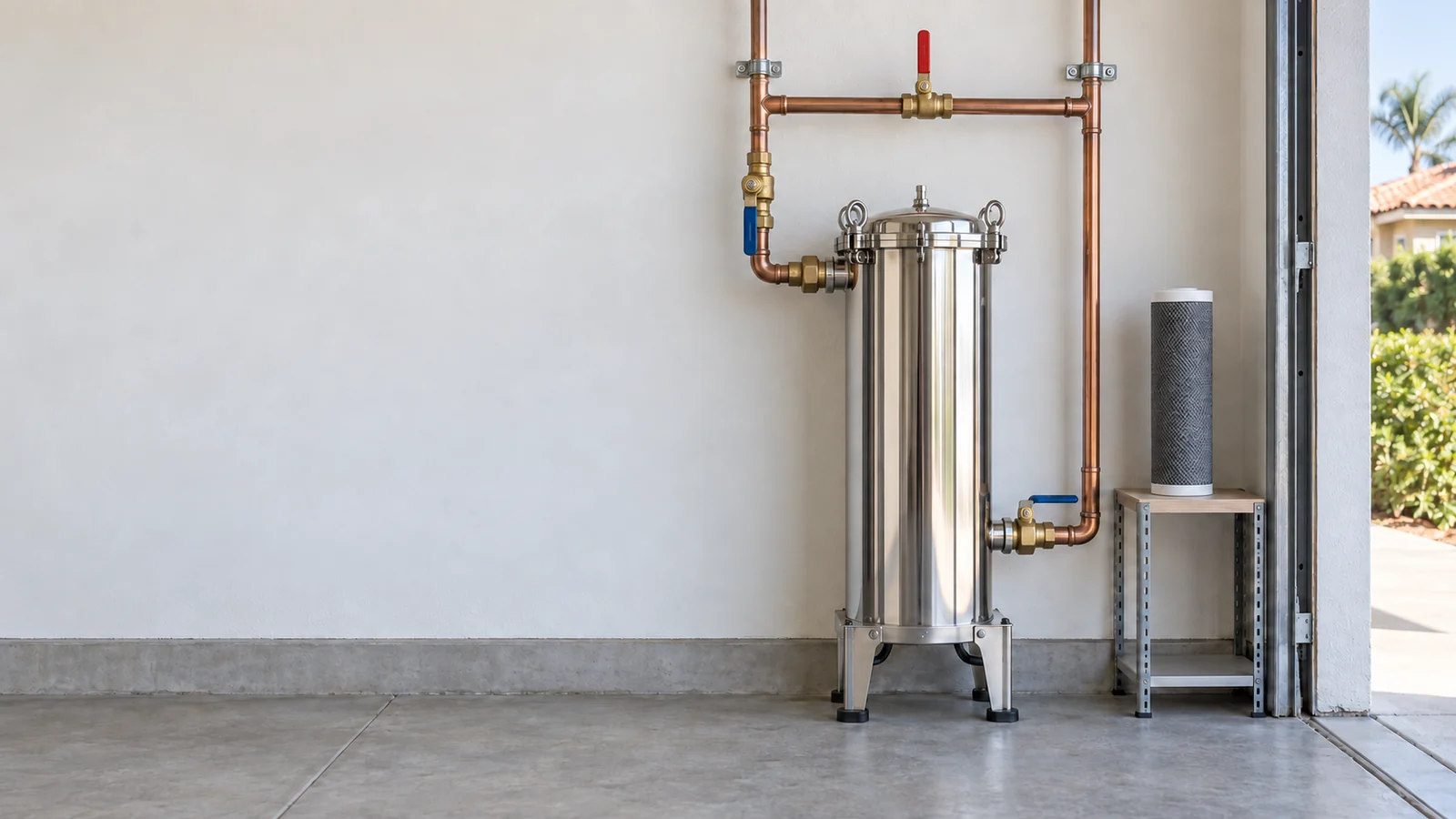
A whole-house carbon system treats water at the point of entry so the selected treatment goal applies across the home. Water Fixers considers source water, chlorine or odor goal, peak flow, media volume, plumbing layout and service access.
Why sizing matters: Carbon needs adequate media capacity and contact time. An undersized system can create poor treatment performance or excessive pressure loss when household demand rises.
Depending on the application, carbon treatment may use serviceable cartridges or a larger media-based system. The equipment should be selected around the water and flow requirements rather than chosen by tank appearance alone.
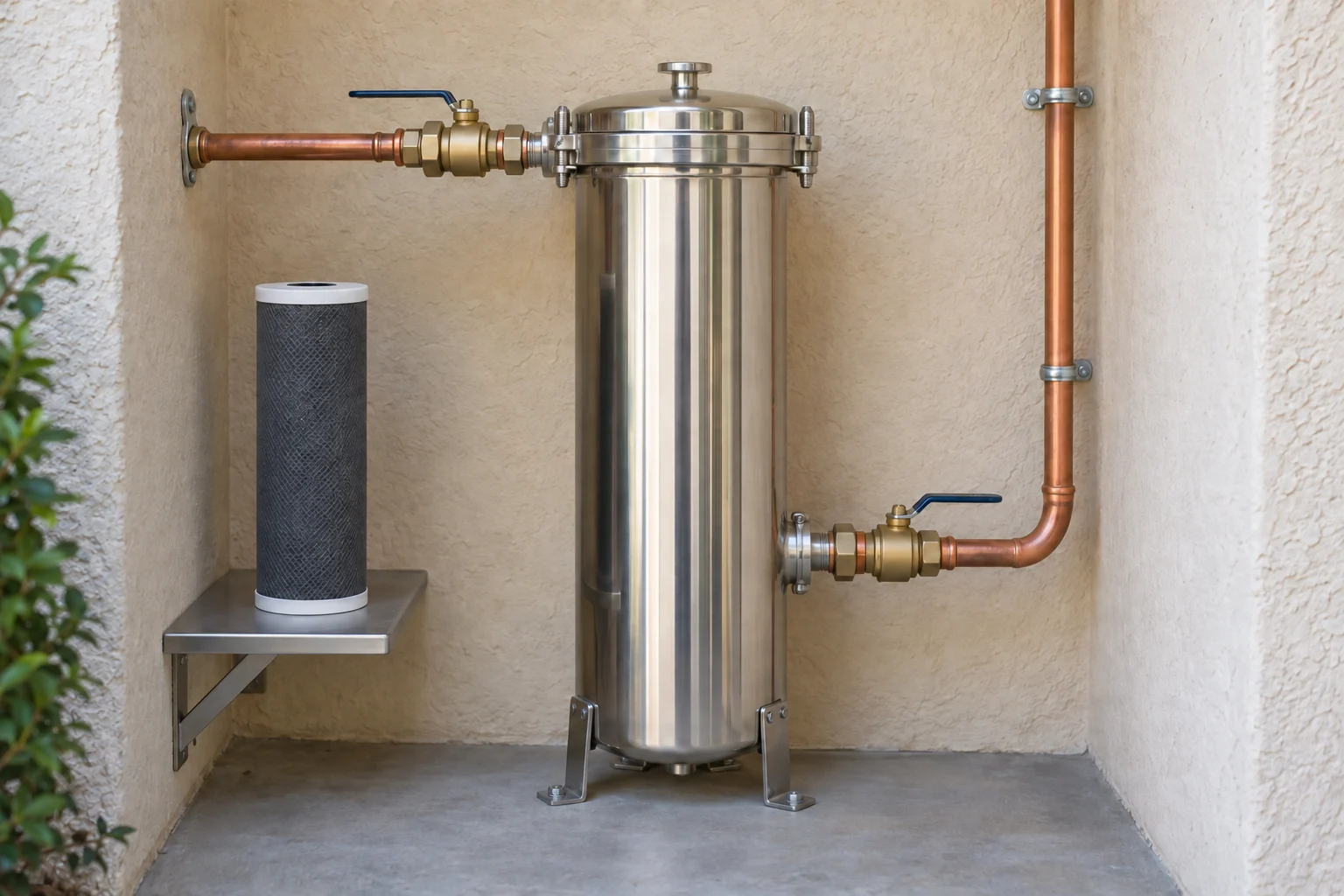
Important: Carbon filtration is not the same as water softening. A carbon tank and a softener tank may look similar from the outside, but they perform different jobs.
THE EQUIPMENT SHOULD MATCH THE APPLICATION
The useful carbon system is the one that can treat the intended water at the home’s real flow rate and can be maintained appropriately over time.
CARTRIDGE-BASED CARBON
High-flow carbon cartridges can fit some applications where the treatment goal, flow and replacement schedule are appropriate for cartridge filtration.
MEDIA-BASED CARBON
Larger media systems can provide greater carbon volume for whole-house treatment. Media type, tank sizing, plumbing configuration and service plan should fit the actual application.
CARBON CAPACITY IS NOT INFINITE
Carbon media eventually exhausts. The useful service interval depends on the system design, water use, incoming conditions and treatment load—not a universal calendar.
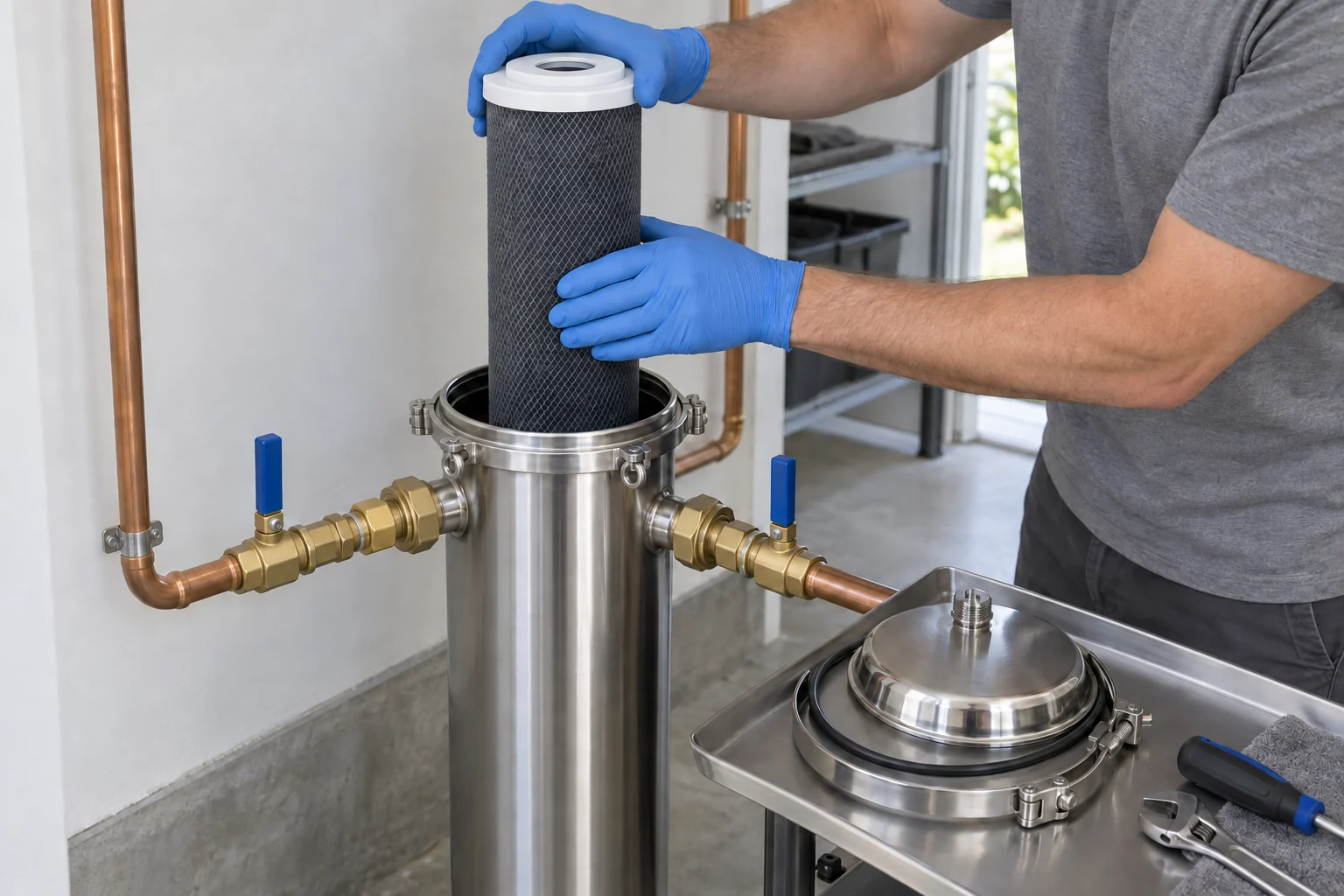
Cartridge systems require cartridge replacement. Media-tank systems require service appropriate to the media and equipment design. The maintenance method must match the system that is actually installed.
Water Fixers can inspect an existing whole-house carbon system, identify the equipment type and help determine whether the next step is cartridge replacement, media service, plumbing repair or a broader treatment review.
CARBON IS ONE TREATMENT TOOL
Carbon should solve a carbon-appropriate problem. If the water has multiple issues, the treatment train should put each technology in the job it is designed to perform.
VISIBLE PARTICLES
Sand, silt, rust and suspended material belong in the sediment-filtration path. Pretreatment may also help protect downstream carbon equipment.
HARDNESS / SCALE
Carbon does not soften water. When hardness is confirmed, use the water-softener path rather than expecting carbon media to control scale.
DRINKING WATER
Point-of-use reverse osmosis serves a different drinking-water treatment goal and should be selected around feed-water conditions and the specific concern.
PRIVATE WELL
Well-water odor or chemistry can require testing and treatment beyond carbon alone. Use the well-water path when the source is private or the condition is source-specific.
EXPLORE YOUR OPTIONS
Explore whole-house filtration for the broader picture. If the water concern is still unclear, start with testing. If you already have a carbon filter, we can inspect its condition and service history.
CARBON FILTRATION QUESTIONS
Answers about what carbon can do, how to maintain it and when another treatment approach may fit better.
Activated carbon is commonly used to reduce chlorine and many taste and odor compounds. Performance depends on the specific media, water chemistry, flow and treatment goal.
No. Carbon filtration and water softening perform different jobs. Hardness and scale require a hardness-treatment strategy when softening is appropriate.
There is no universal lifespan. Capacity depends on the amount and type of carbon, water use, incoming conditions and the treatment load.
It can when visible particulate is present. Sediment pretreatment may help keep particulate from loading downstream carbon equipment, but the treatment train should match the actual water.
No single carbon system should be treated as a universal safety solution. Specific health-related concerns may require testing and treatment designed for the identified contaminant.
MAKE CARBON DO THE JOB IT IS GOOD AT
Tell Water Fixers what you want to improve and what water source serves the property. We can evaluate the treatment goal, household flow and existing equipment, then build a serviceable carbon-filtration plan that fits the home.
Water Fixers Plumbing & Filtration • California License #719792
CALL NOW! Se Habla Español!