Tips From Harley & Zsa ZsaHelpful Tips for Home and WaterExplore Harley’s practical plumbing tips and Zsa Zsa’s advice for better water, hair care and shower time.
Protect the plumbing before grit, sand and suspended particles travel through the house
Visible grit, sand, rust-colored particles and suspended material call for the right kind of filtration—not a guess. Water Fixers evaluates the source, particle load, flow requirements and existing plumbing, then matches the home to a serviceable whole-house sediment filtration approach.
Sediment filtration is often a first-stage protection step. It is not a substitute for softening, carbon treatment, reverse osmosis or contaminant-specific treatment when those are the actual need.
38+ Years Serving the Central Coast • Plumbing + Filtration Expertise • California License #719792
START WITH WHAT THE WATER IS CARRYING
What Kind of Sediment Are You Actually Seeing?
Sediment is a physical-particle problem. The useful clues are what the particles look like, where they appear, whether they change over time and whether the home is on public water or a private well.
GRIT / SAND
Sand or visible grit
Coarse particles can point toward a source-water or well-related issue. The filtration method and micron range should fit the actual particle load without choking household flow.
Orange or brown material is not automatically ordinary sediment. Corrosion, iron or existing plumbing can create similar clues, so the source should be identified before equipment is selected.
Fine suspended material may need a different filtration approach than coarse sand. Filter selection should balance capture, pressure drop and maintenance frequency.
A properly selected sediment stage can help keep particulate from loading carbon filters, treatment valves, fixtures and other downstream equipment prematurely.
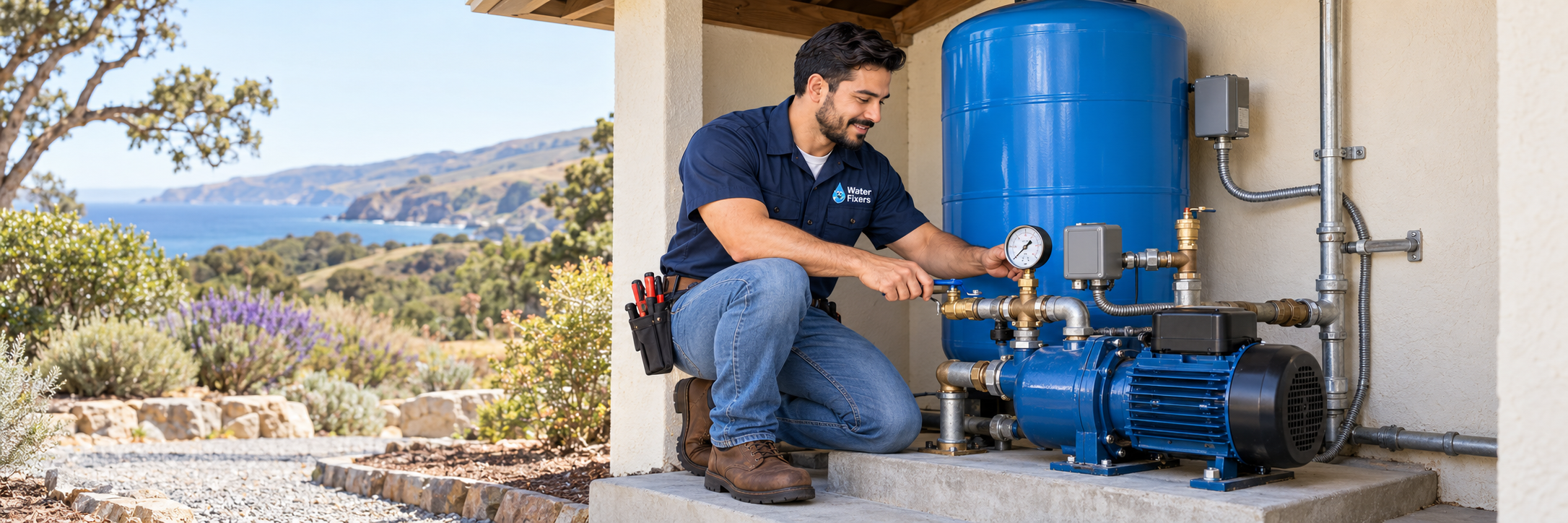
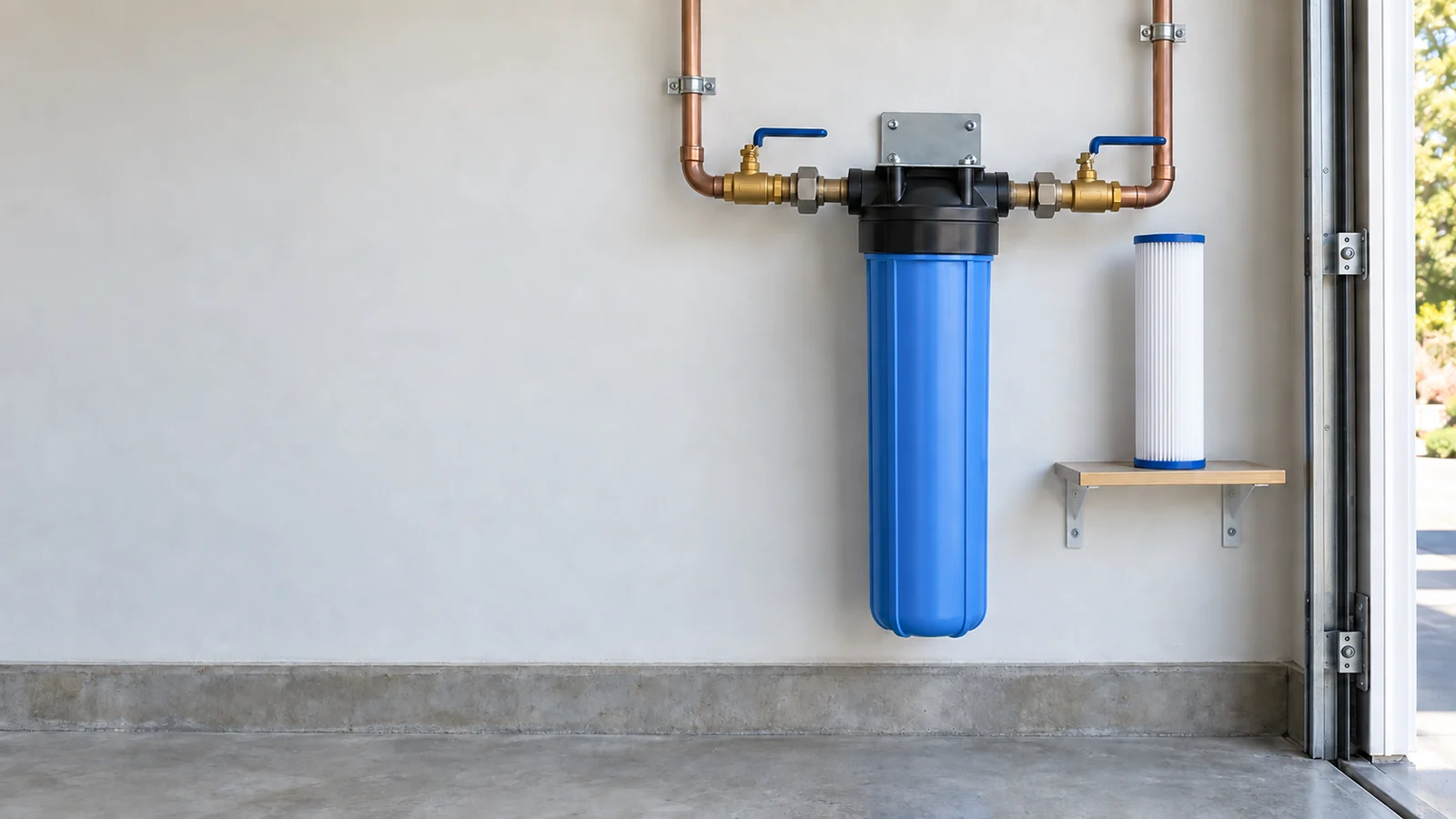
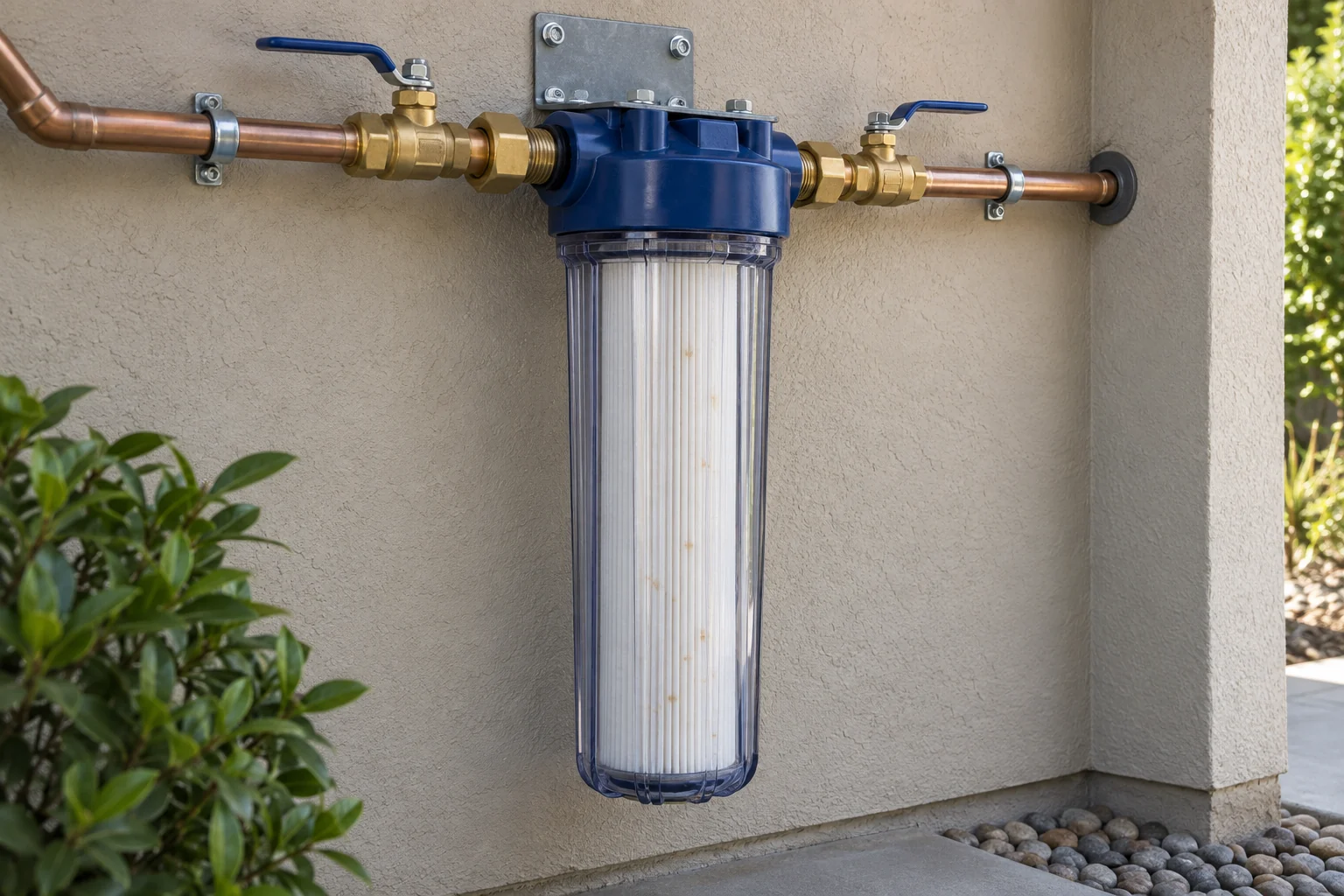
The filter belongs where it can protect the intended plumbing and still be serviced. Water Fixers considers incoming pressure, household demand, particle size, loading and the maintenance access available at the property.
Why sizing matters: A filter that is too restrictive can create unnecessary pressure loss. A filter that is too coarse may let the problem pass through. The useful system is one that captures the target particles while supporting the flow the home actually needs.
Sediment filtration may use serviceable cartridge housings or other point-of-entry equipment depending on the source and loading. The equipment choice should follow the water—not the other way around.
Important: Sediment filtration removes physical particles. It does not automatically remove hardness, dissolved minerals, chlorine, nitrate, arsenic, bacteria or every other water-quality concern.
THE RIGHT FILTER IS A FLOW + LOADING DECISION
Match the Sediment System to the Actual Job
Micron rating alone does not tell you whether a sediment system will work well in a particular home. Water Fixers looks at the water source, particle size, flow demand, pressure and how quickly the filter is likely to load.
CARTRIDGE FILTRATION
Serviceable whole-house cartridges
Serviceable cartridge housings can be a practical choice when the particle load and desired filtration level fit the cartridge and the home has suitable flow and maintenance access.
PRETREATMENT / HIGHER LOADING
When the water needs more than a basic cartridge
When sediment loading is heavier or source conditions are more demanding, the system may need a different pretreatment strategy rather than simply installing an increasingly fine cartridge.
Plan for Filter Changes Before the System Is Installed
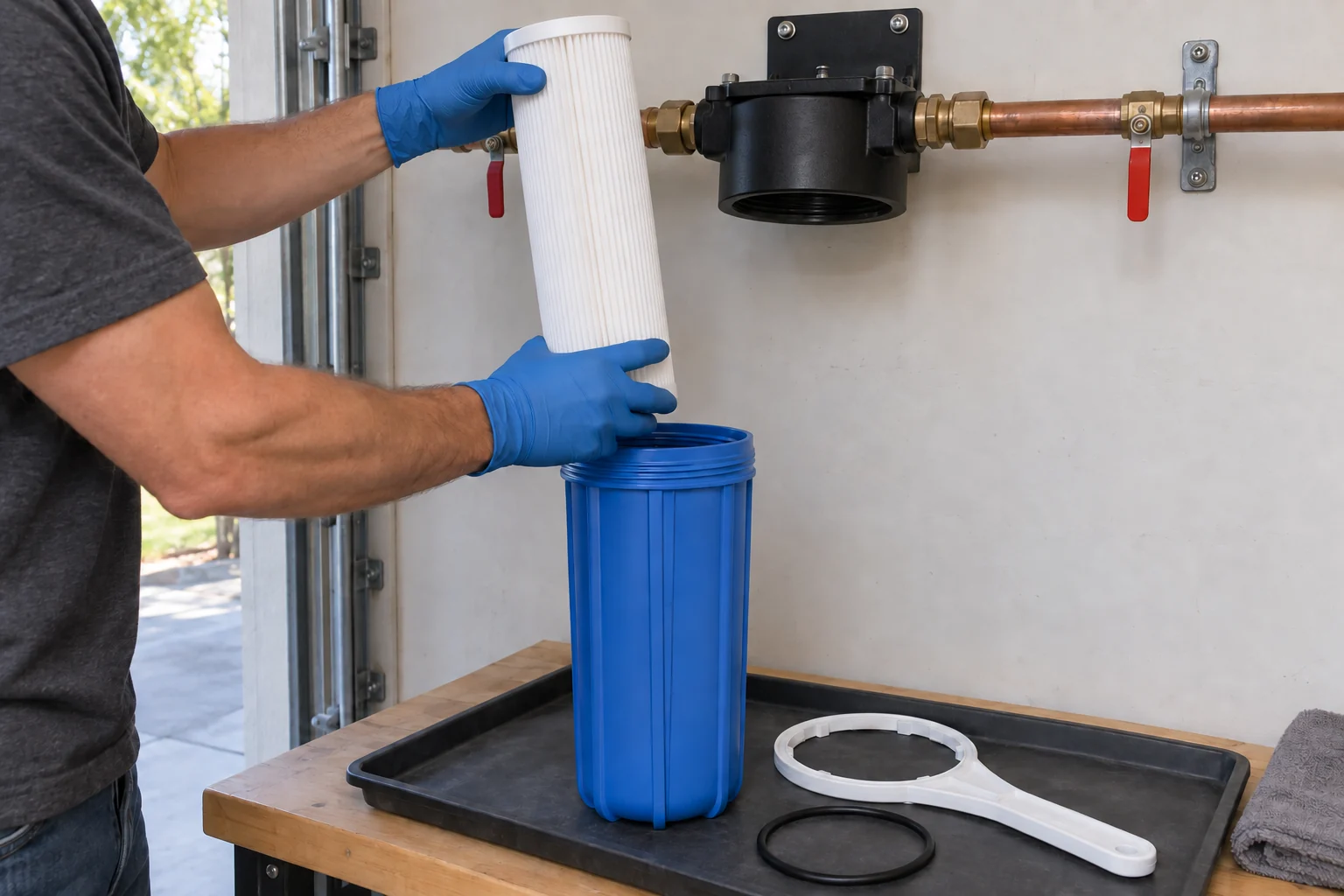
Every sediment filter eventually needs attention. The useful maintenance interval depends on water use, particle loading, filter size and the source—not a universal calendar.
Watch for: declining flow, visible loading, pressure changes across the filter or a recurring particle problem. A serviceable installation should provide safe access to isolate the system and replace or clean the filtration component as designed.
Water Fixers can inspect the existing filtration setup, replace appropriate filter components and help determine whether unusually fast loading points to a source-water or equipment problem that needs a different approach.
Know What Sediment Filtration Does—and What It Does Not Do
Once particulate is controlled, the next step depends on what else the water is doing. Do not stack equipment just because several treatment technologies exist.
CHLORINE / TASTE / ODOR
Carbon filtration
Activated-carbon filtration serves a different treatment goal than sediment filtration and may be used downstream when carbon treatment is appropriate.
Point-of-use reverse osmosis serves a different drinking-water goal and should be selected around feed-water conditions and the specific treatment objective.
Sediment Filtration Fits Inside a Larger Water-Treatment Plan
If the concern is still unclear, start with Water Testing. Explore Whole-House Filtration for other home-wide goals, or Filter Replacement if an existing system needs service.
It is designed to capture physical particles such as sand, silt, grit and other suspended material within the range the selected filter is designed to catch.
Yes, when the water conditions call for both. Removing particulate before downstream treatment can help protect other equipment, but the treatment train should be based on the actual water.
Visible particles can provide useful clues, but testing or inspection may be appropriate when the source of the material is unclear or when other water-quality concerns are present.
STOP LETTING PARTICLES TRAVEL THROUGH THE HOUSE
Get the Right Sediment Filtration Starting Point
Tell Water Fixers what you are seeing and where it shows up. We can evaluate the source, flow requirements and filtration goal, then build a serviceable sediment-filtration plan that fits the property.