
Low or uneven water pressure in a private-well home can come from more than one place: a loaded sediment filter, restricted valve, plumbing bottleneck, treatment equipment, pressure-tank behavior, source delivery or another well-side condition.
The useful first step is to identify where the symptom occurs and when it changes. Water Fixers can evaluate plumbing-side pressure, filtration restrictions, valves, pressure tanks and connected treatment equipment, then be clear when the next step belongs with a well, pump, drilling or electrical specialist.
38+ Years on the Central Coast • Plumbing + Filtration • California License #719792
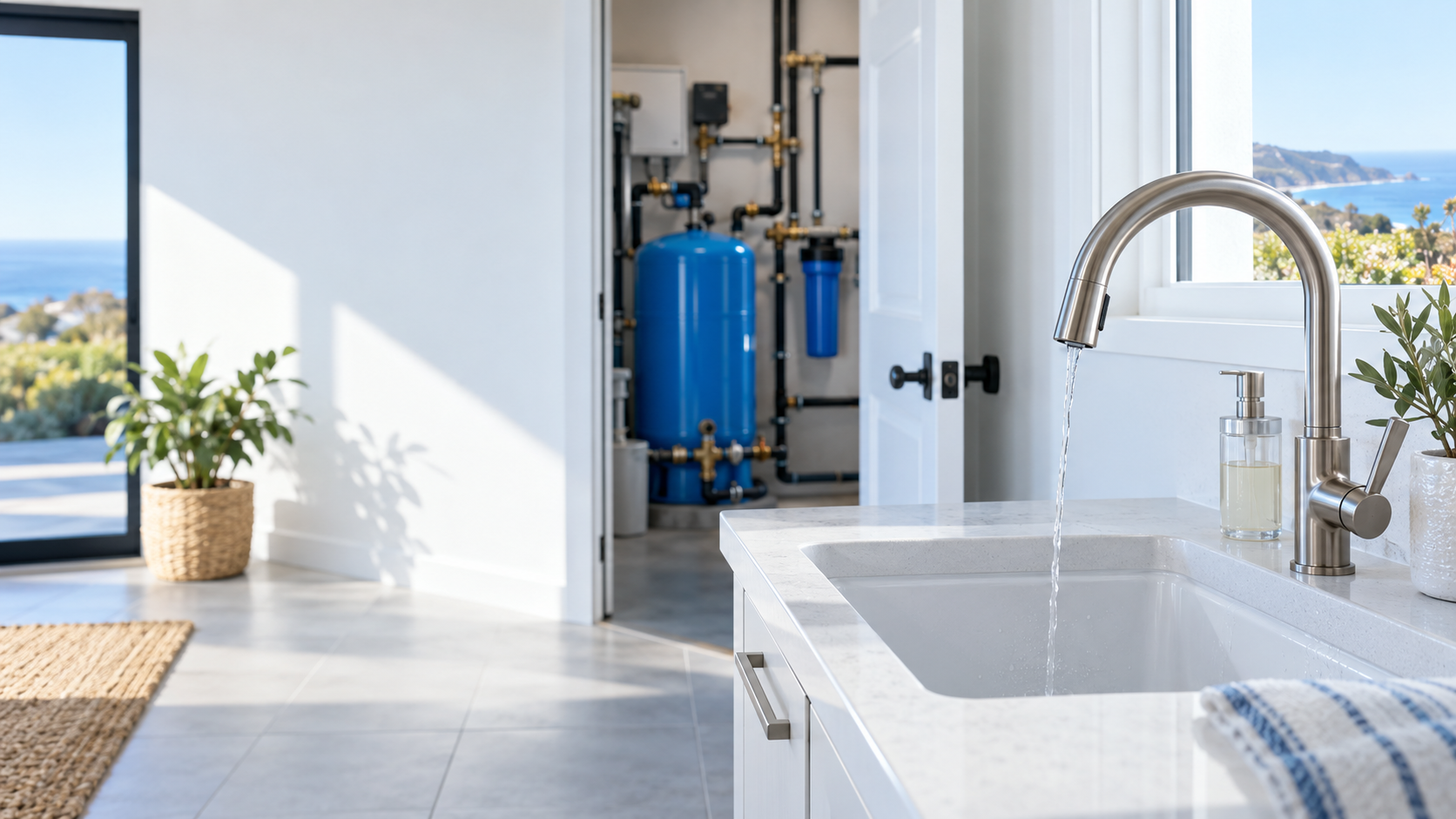
Pressure symptoms become much more useful when you separate one-fixture problems from whole-home problems and note whether the issue changes as more water is used.
A single weak fixture can point toward a local aerator, cartridge, shutoff, supply line or fixture restriction rather than the well or pressure system.
Whole-home low flow moves the investigation upstream toward main valves, filters, treatment equipment, pressure-system behavior, supply restrictions and source delivery.
A system that seems acceptable at low demand but falls off when several fixtures run may have a flow limitation, restriction, undersized stage or pressure/source issue.
Surging, rapid cycling or repeated pressure swings can involve pressure-system controls, tank behavior, valves, filters or source-side equipment. Diagnosis comes before replacement.
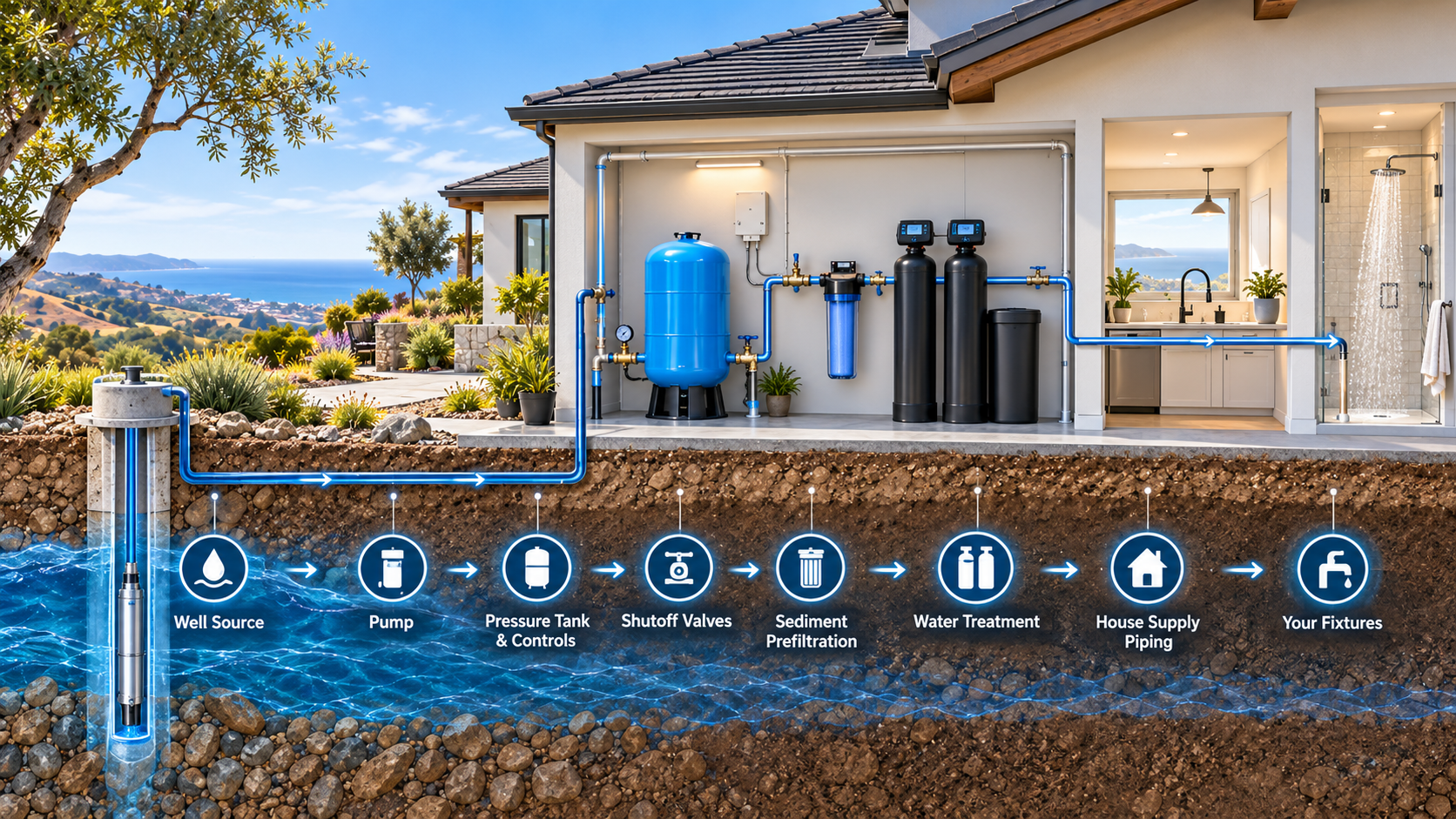
Low pressure at the fixture is the symptom; the restriction may be somewhere else. A private-well water path can include source delivery, pressure equipment, shutoff valves, sediment filtration, treatment stages, household piping and the fixture itself. The correct diagnosis narrows the problem before parts or equipment are changed.
A useful pressure diagnosis follows the same path the water follows. First determine whether the symptom is local to one fixture or shared by the home. Then check the plumbing and equipment that every affected fixture has in common.
This keeps a clogged faucet aerator from being mistaken for a well problem—and keeps a whole-home pressure issue from being treated as a fixture repair.
Fixture level
Aerators, cartridges, fixture stops and small supply lines can restrict one outlet.
House + treatment level
Main valves, sediment filters, media tanks, plumbing restrictions and existing equipment can affect multiple fixtures.
Pressure + source level
Pressure tanks, controls, source delivery and specialty pump conditions can affect the whole property and may require a specialist.
Before a service visit, note when pressure is weakest and what else is happening. These observations help separate a local restriction from a whole-system problem.
A sudden drop after filter service, plumbing work, valve operation or equipment changes can point toward a restriction or configuration issue that did not exist before.
Flow that slowly worsens can be consistent with filter loading, sediment buildup, scale, aging components or a changing source/pressure condition. The pattern alone does not identify which one.
If pressure falls mainly when showers, irrigation or appliances run together, the system may be reaching a restriction, equipment flow limit or source-delivery limit.
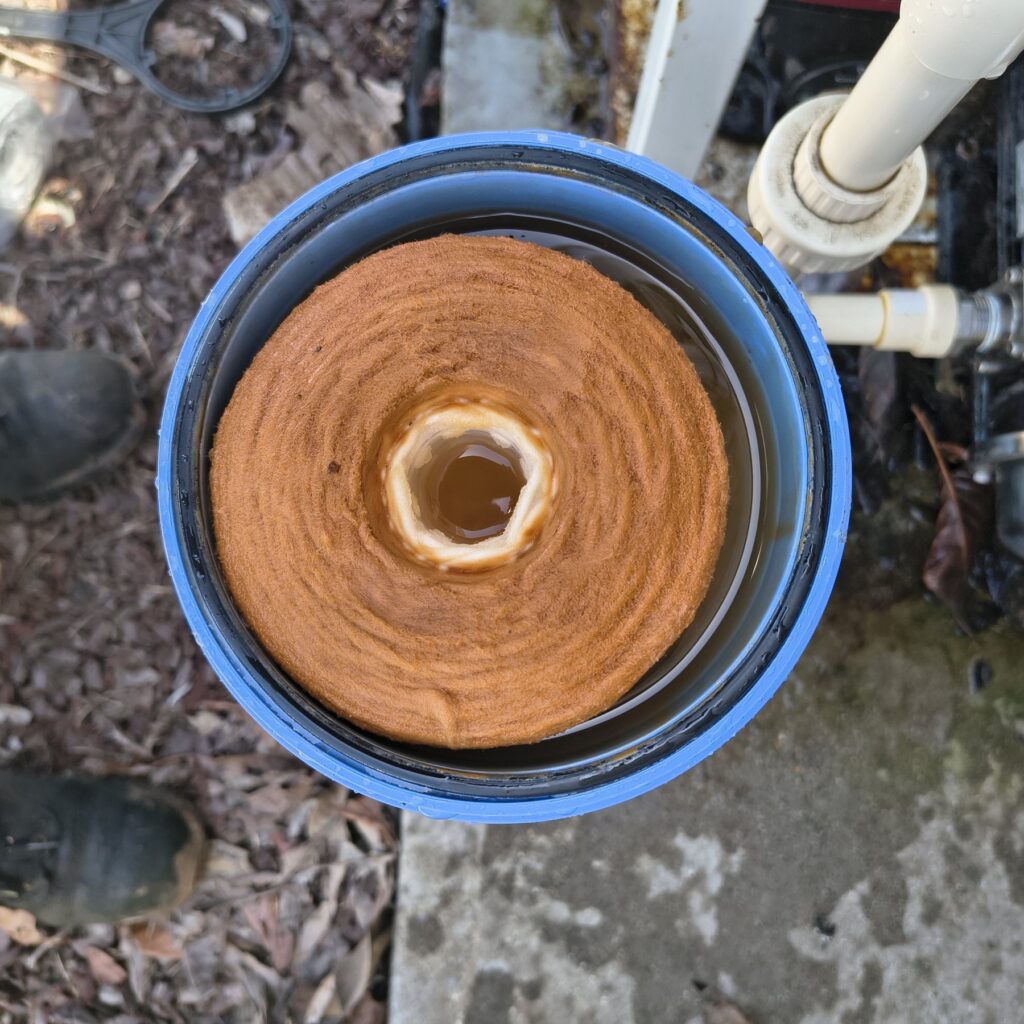
Sediment cartridges and treatment stages add resistance to the water path. When a cartridge becomes loaded, a valve is left partly closed or equipment is undersized for the household flow, the pressure available at fixtures can fall—especially when demand increases.
Do not use a universal filter-change interval. Service timing depends on the cartridge, water quality, usage, pressure drop and the equipment manufacturer’s requirements.
If pressure improved immediately after bypassing a treatment stage or replacing a loaded cartridge, that is useful diagnostic information—but bypassing equipment should not be treated as a permanent solution without understanding what the equipment is protecting or treating.
A private-well system commonly relies on pressure equipment to store water under pressure and control how source equipment responds to household demand. Symptoms such as rapid cycling, surging, pressure that repeatedly rises and falls, or a dramatic whole-home drop can justify pressure-system evaluation.
Water Fixers can evaluate plumbing-side pressure concerns, tanks, valves, filtration restrictions and treatment-system connections. Specialty pump repair, electrical work, drilling or well construction may require the appropriate specialist.
These are diagnostic categories—not conclusions. The location and timing of the symptom determine which ones deserve attention first.
Partly closed shutoffs, damaged valves, undersized sections, fixture restrictions or buildup inside plumbing can reduce available flow.
Sand, silt or a loaded cartridge can increase pressure drop through a treatment train. The particle source still needs to be understood.
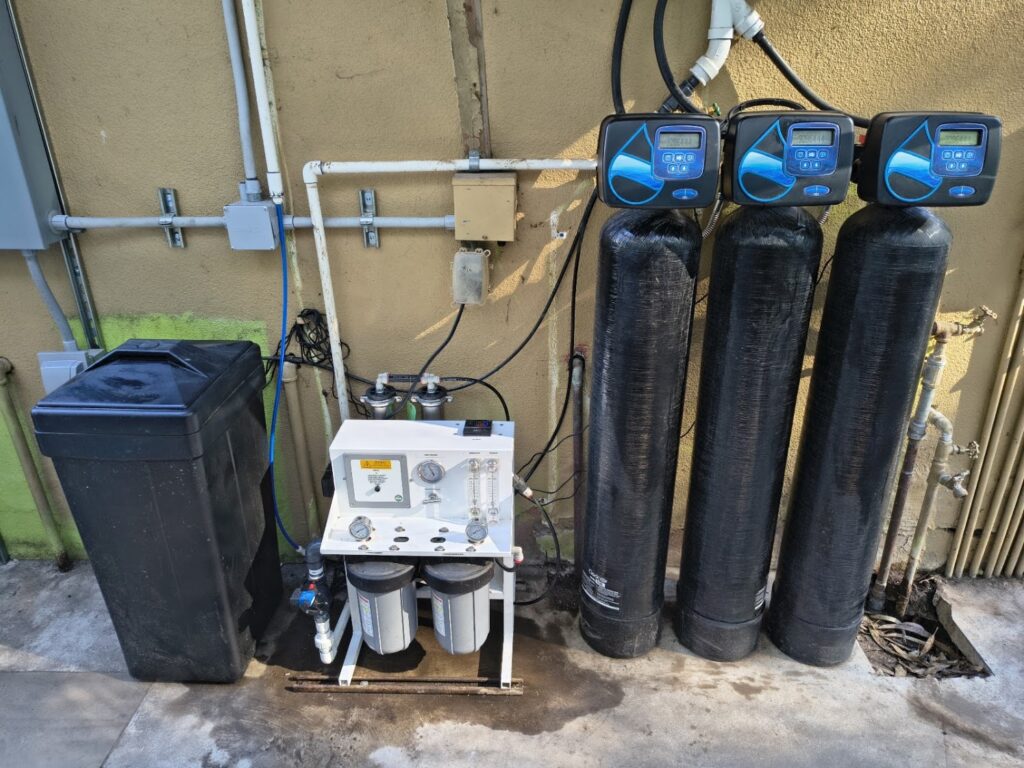
Media tanks, filters and other whole-house equipment need to be sized and maintained for the actual peak flow and water conditions.
Pressure-tank behavior, controls, source delivery, pump performance or another well-side condition may affect the whole home. Some of these require a specialist outside Water Fixers’ plumbing scope.
Hidden leaks: unexplained water loss can affect pressure and should be diagnosed. • Water quality: sediment, hardness and other measured conditions can affect equipment and plumbing. • Other well-water symptoms: staining, odor or cloudiness should follow the appropriate testing path rather than being diagnosed from appearance.
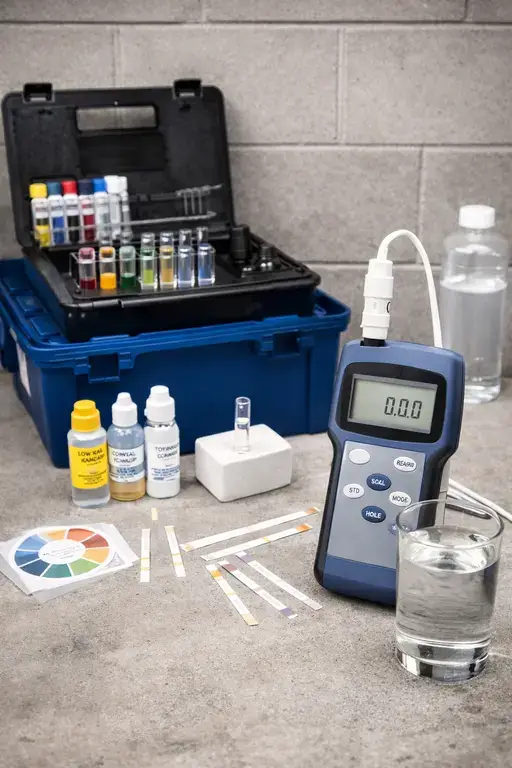
Low pressure is not automatically a water-quality problem, but private-well homes can have pressure and water-quality symptoms at the same time. Sediment can load filters or restrict small passages. Scale can affect fixtures and equipment. Existing treatment systems can also create pressure drop when they are loaded, restricted or incorrectly sized.
Testing helps separate the water-quality question from the plumbing/pressure question. It does not replace mechanical diagnosis.
Testing-first rule: sediment, staining, taste or odor may guide what to investigate, but they do not diagnose the water or prove what is causing the pressure loss.
Whole-property low pressure can sometimes involve source delivery, pump performance, well recovery or other conditions beyond household plumbing and filtration. Water Fixers should not be presented as a well driller, well constructor or electrical contractor.
When the symptom points beyond plumbing-side pressure, valves, tanks or treatment equipment, the correct next step may be a qualified well, pump, drilling or electrical specialist.
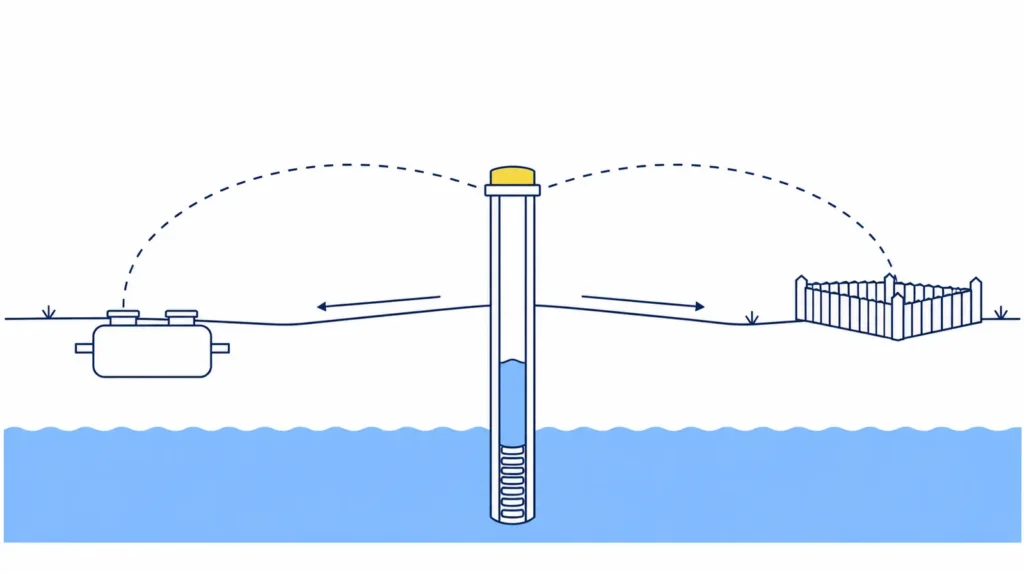
Water Fixers can evaluate: fixture and supply restrictions, shutoff valves, visible plumbing issues, pressure tanks, filtration pressure drop, treatment equipment connections and other plumbing-side causes.
A specialist may be needed for: well drilling or construction, down-well diagnostics, specialty pump work, electrical controls or source conditions outside the plumbing system.
The goal is to diagnose far enough to send the problem in the right direction—not replace equipment by guesswork.
Low-pressure diagnosis often uncovers a more specific problem. These pages take the customer to the correct next step without making this educational guide compete with the commercial service page.
For plumbing-side pressure problems, pressure tanks, valves, filtration restrictions and connected equipment.
For sediment cartridges, treatment equipment, pressure drop across filtration and equipment-selection questions after testing.
For sediment, hardness or other water-quality conditions that may be affecting equipment or overlapping with the pressure complaint.
These answers keep the page focused on diagnosis and the correct service handoff.
No. Low pressure can also come from a loaded filter, restricted valve, plumbing bottleneck, treatment equipment, pressure-tank behavior, a leak or another source-side condition. The pattern needs to be diagnosed first.
Yes. A loaded sediment cartridge or other restricted filtration stage can increase pressure drop and reduce flow, especially when several fixtures are running.
That usually moves the investigation toward the individual fixture, aerator, cartridge, shutoff or local supply line before the whole-home pressure system.
The system may be reaching a flow restriction or capacity limit. Filters, treatment equipment, plumbing size, pressure-system behavior and source delivery can all be part of the investigation.
Water Fixers evaluates plumbing-side pressure, valves, pressure tanks, filtration restrictions and water-treatment connections. Well drilling, electrical work or specialty pump repairs may require the appropriate specialist.
Not as a default solution. A PRV is used to reduce excessive incoming pressure. Private-well low-pressure problems should be diagnosed within the actual well/pressure/plumbing system before a device is selected.
Tell Water Fixers where the pressure drops, whether it affects one fixture or the whole house, whether it changes under demand, and what filtration or treatment equipment is installed. We can evaluate the plumbing-side causes and make the next handoff clear if the problem belongs with a well, pump or electrical specialist.
Water Fixers Plumbing & Filtration • Santa Maria, CA • Central Coast service • California License #719792
CALL NOW! Se Habla Español!