
GUADALUPE • SEWAGE EJECTOR PUMPS
When an ejector alarm is active at a Guadalupe property, continuing to add wastewater can turn a manageable service call into a backup. The next step is diagnosis, not repeated flushing or cycling.
California contractor license #719792 • Serving the Central Coast from Santa Maria • Se Habla Español
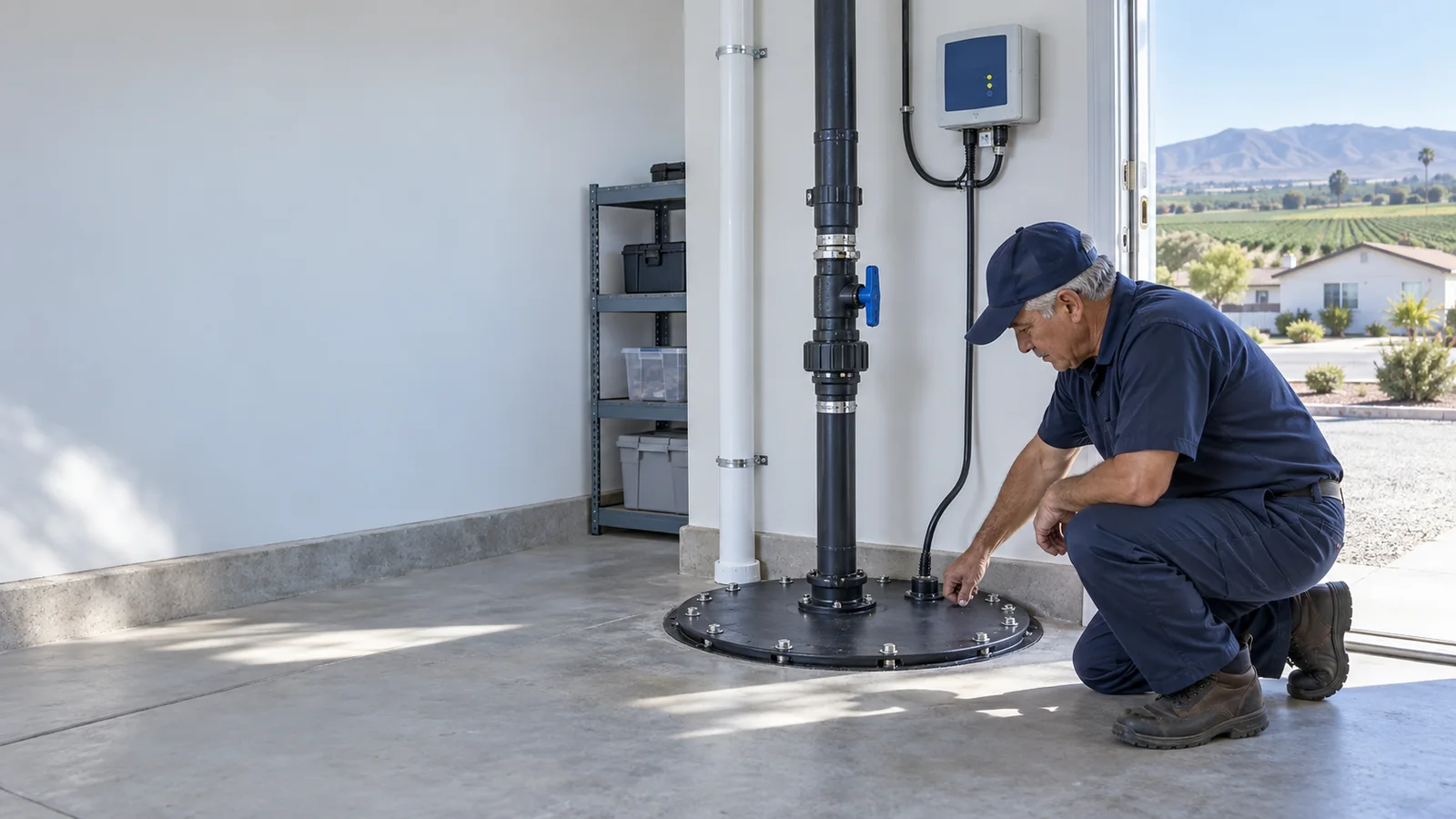
A USEFUL DIAGNOSTIC DISTINCTION
A high-water warning means the system needs attention, but it does not identify the failed component. The pump, float or controls, check valve, discharge path and broader drainage conditions can create overlapping symptoms.
START WITH WHAT THE SYSTEM IS DOING
For a Guadalupe ejector call, describe what changed before choosing a repair. The symptom pattern helps separate controls, pumping, discharge and drainage questions.
A warning at a Guadalupe ejector basin tells you the wastewater level is not clearing normally; it does not identify which component is responsible.
At a Guadalupe property, a pump that will not start deserves a system check that keeps controls, accessible power, basin conditions and the pump itself in view.
A change in sound or cycle length in Guadalupe is useful information for diagnosis, especially when paired with the basin level and fixture-use pattern.
For a Guadalupe backup, identify which fixtures are involved before choosing ejector repair, localized drain cleaning or sewer/main-drain service.
EJECTOR • DRAIN • SEWER • URGENT BACKUP
A Guadalupe backup can belong to the ejector, one branch drain, the shared building drain or an urgent overflow. The plumbing path changes with the fixture pattern.
If only the known pumped fixtures are affected at the Guadalupe property, begin with ejector diagnosis rather than a generic drain service.
An isolated sink, tub or other gravity-drain restriction in Guadalupe is usually a drain-cleaning question when it does not involve the ejector basin.
When multiple gravity and pumped fixtures react together in Guadalupe, a shared building-drain or sewer condition deserves broader evaluation.
If sewage is actively overflowing at a Guadalupe property, reduce fixture use, keep people away from contaminated water and use the local urgent-plumbing route.
THE PUMP IS ONLY ONE COMPONENT
A useful Guadalupe diagnosis looks at the pump together with the basin, controls, alarm, check valve, discharge piping and the fixture pattern that led to the call.
The goal for Guadalupe is to identify the function that is not working—collection, control, pumping, backflow prevention or discharge—before choosing a part.
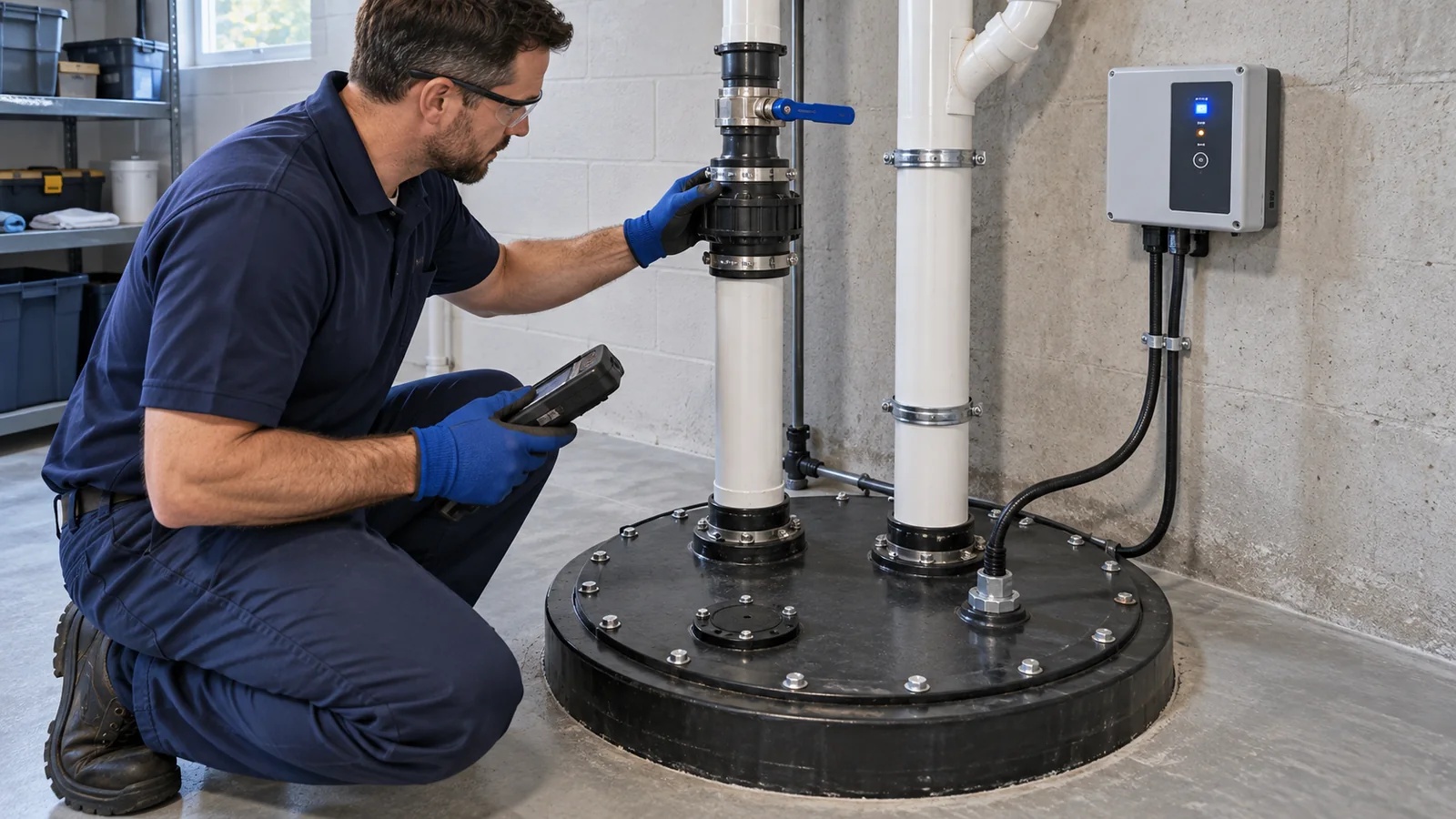
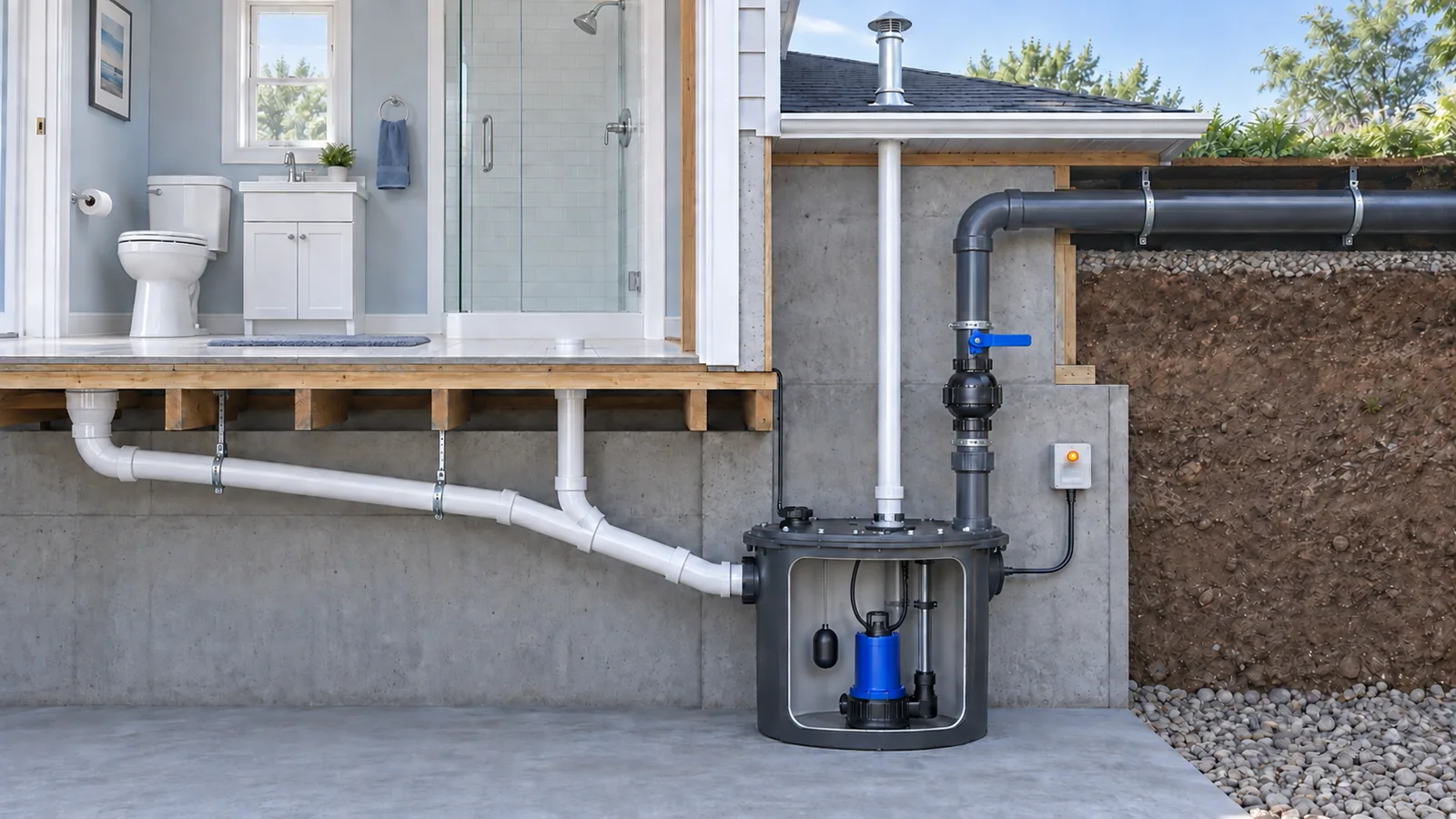
HOW THE SYSTEM WORKS
A Guadalupe building can have ordinary gravity drains and a separate pumped branch. Fixtures on the pumped branch feed a sealed basin, while other fixtures may flow directly toward the building drain.
That distinction matters in Guadalupe. The City of Guadalupe operates public wastewater collection and treatment, but that public system is downstream of the building-side plumbing and any ejector equipment. City wastewater service does not by itself identify whether a symptom comes from the ejector, a branch drain, the shared building drain or farther downstream.
INSTALL • REPAIR • MAINTAIN
Use the Guadalupe system condition to choose the next page: planned equipment work, active troubleshooting or routine inspection each has a different scope.
When a Guadalupe project needs a new ejector system or a material system change, planning starts with fixture load and elevation, then works through basin, pump, controls, discharge, venting, service access and current permit requirements. The City Building Department handles building permit applications; Water Fixers also provides a Central Coast plumbing-permit guide.
Repair service in Guadalupe begins with the behavior of the existing system—alarm, basin level, pump cycle, discharge response and affected fixtures—not a preselected replacement part.
An operating Guadalupe ejector system can be checked for accessible alarm and control function, visible valve and discharge condition, basin-area concerns and practical future service access.
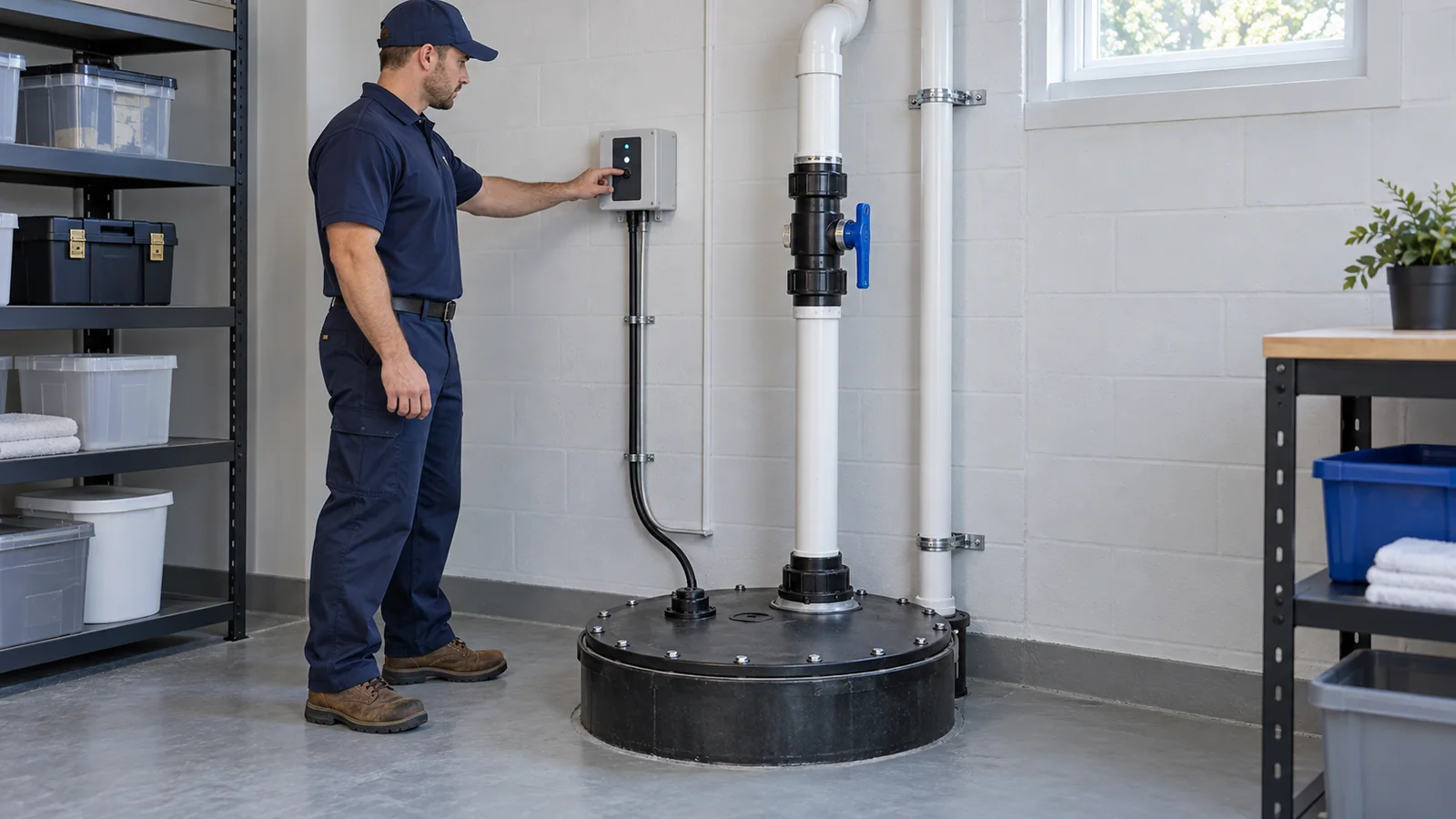
PREVENTIVE SERVICE
A preventive Guadalupe inspection can identify accessible condition or serviceability concerns around controls, alarm, valve, discharge and basin area before they become an active backup call.
Preventive work should not be used to downplay an active Guadalupe wastewater problem; alarm, overflow or abnormal operation belongs on the diagnosis path.
GUADALUPE WASTEWATER CONTEXT & LOCAL SERVICE
Guadalupe Public Works manages municipal wastewater infrastructure, while the sewage ejector basin, controls, pump, check valve, discharge and building drainage on a property are separate plumbing components. A city sewer connection is useful context, but it is not evidence that an alarm, slow fixture or backup is caused by the public system—or by the ejector. Start with the affected fixtures and system behavior, then route the problem to ejector service, drain cleaning, sewer/main-drain service or emergency plumbing as the pattern requires.
Choose the Guadalupe plumber page for a broader local plumbing need that does not belong specifically to ejector service.
The regional Santa Maria Valley page provides the location relationship around Guadalupe without duplicating this ejector-service detail.
For a location beyond Guadalupe and its regional page, use the complete Water Fixers service-area directory.
COMMON QUESTIONS
Direct answers for Guadalupe property owners deciding whether the problem is the ejector system, a drain, the building sewer or an urgent wastewater backup.
No. A Guadalupe property can connect to the municipal sewer and still use an ejector where fixtures cannot drain by gravity to the building drain. The city connection does not diagnose a pump, control, check-valve or private-drain problem.
GUADALUPE • SEWAGE EJECTOR PUMPS
For the Guadalupe property, tell Water Fixers which fixtures feed the system, what the pump or alarm is doing and whether wastewater is actively backing up. Those details help us choose the appropriate service path.
CALL NOW! Se Habla Español!