
REVERSE OSMOSIS • REPAIR OR REPLACE
A repair-or-replace decision is different from generic RO repair. Water Fixers looks at whether the existing system is still supportable, whether the current problem is isolated, what other components are coming due, and whether a supported replacement would make more sense over time. If you already know the system needs a repair, use RO Service & Repair.
Santa Maria-based • Central Coast RO support • Existing systems welcome • Repair-versus-replacement evaluation • License #719792
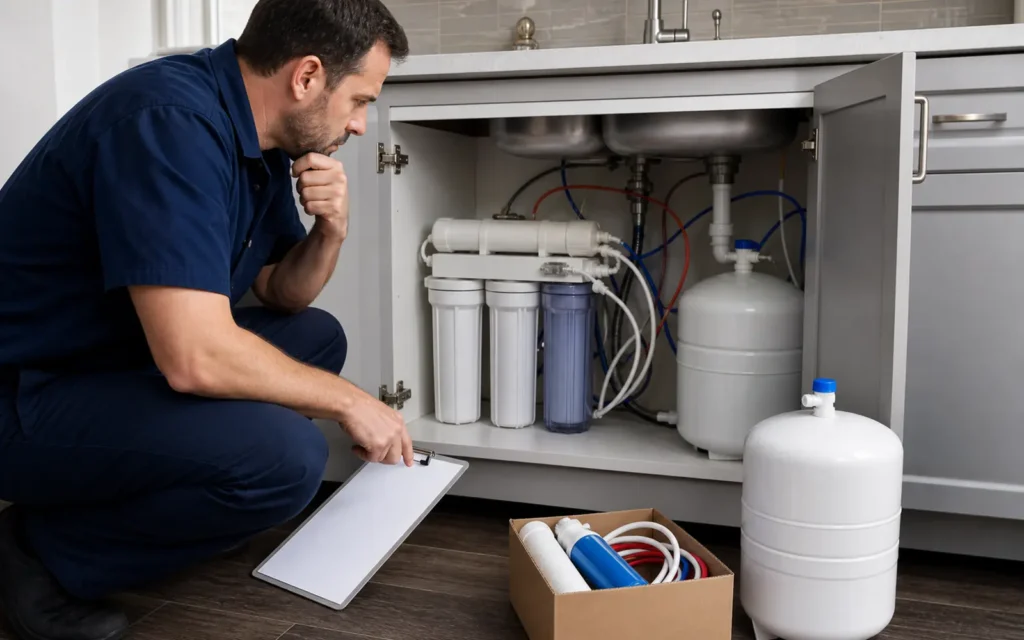
Quick answer: repair usually makes sense when the core assembly is sound, the problem is limited, compatible parts remain available, and the restored system will still be practical to service. Replacement becomes more attractive when cracked or brittle housings, several aging components, obsolete parts, repeated leaks, poor serviceability, or a mismatch with the household’s verified treatment needs begin to stack up. Age alone does not decide it.
Look first at the housings, bracket, tank, faucet, valves, tubing and connections. One worn service part is different from an assembly with multiple brittle or damaged components.
A repair is more useful when the system can still accept known compatible cartridges, seals, fittings, membrane parts and other service components. Uncertain or discontinued parts increase future ownership risk.
Count more than the single failed part. Due filters, a tired tank, membrane concerns, repeated leaks or neglected service may make the real job larger than the first symptom suggests.
A repaired system should still be practical to maintain afterward. Compare cabinet fit, filter access, supported replacement parts and whether the existing equipment still matches the homeowner’s actual drinking-water goal.
AGE IS ONLY ONE FACTOR
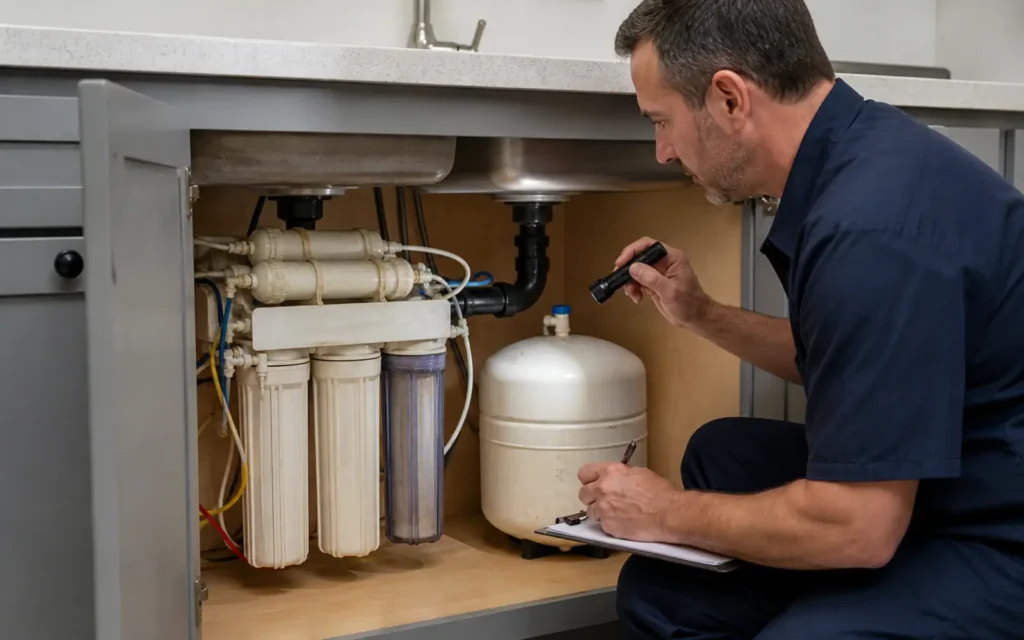
Older reverse osmosis systems do not automatically need replacement. A well-supported older unit with sound housings, available parts and one isolated problem may be worth repairing. A newer-looking system with cracked plastic, repeated leaks or an unsupported cartridge arrangement may not be.
Water Fixers compares the condition of the complete under-sink system instead of using a fixed age cutoff. The decision can include the tank, faucet, valves, tubing, filter bracket, housings, membrane path, leak history and whether the system can be serviced predictably going forward.
Already dealing with a failure? Start with RO Service & Repair. If the system is simply overdue for routine care, use RO Maintenance. If replacement is likely, compare the current RO systems.
The goal is not to force a replacement decision. A useful evaluation separates the symptom that brought you in from the other work the system may need now or soon.
Identify the installed system, reproduce the complaint when practical, and inspect the water path, housings, seals, tubing, valves, tank, faucet and service history before pricing a path forward.
Consider the failed part plus due filters, membrane condition when relevant, tank condition, sanitation needs, worn fittings and other near-term service. That produces a more realistic repair picture.
Compare the likely restored system with a supported replacement: parts availability, future filter access, cabinet fit, installation needs and the household’s actual treatment goal all matter.
WHEN REPAIR OFTEN MAKES SENSE
A targeted repair is often reasonable when the housings and main assembly are sound, the failed part is known, compatible replacement parts remain available, and the repair restores a system that is still straightforward to service.
Examples include due filters, a serviceable fitting or valve, faucet work, tank-pressure correction, tubing repair, an available tank, or a membrane issue that can be evaluated separately. Do not replace an entire RO system just because one component needs normal service.
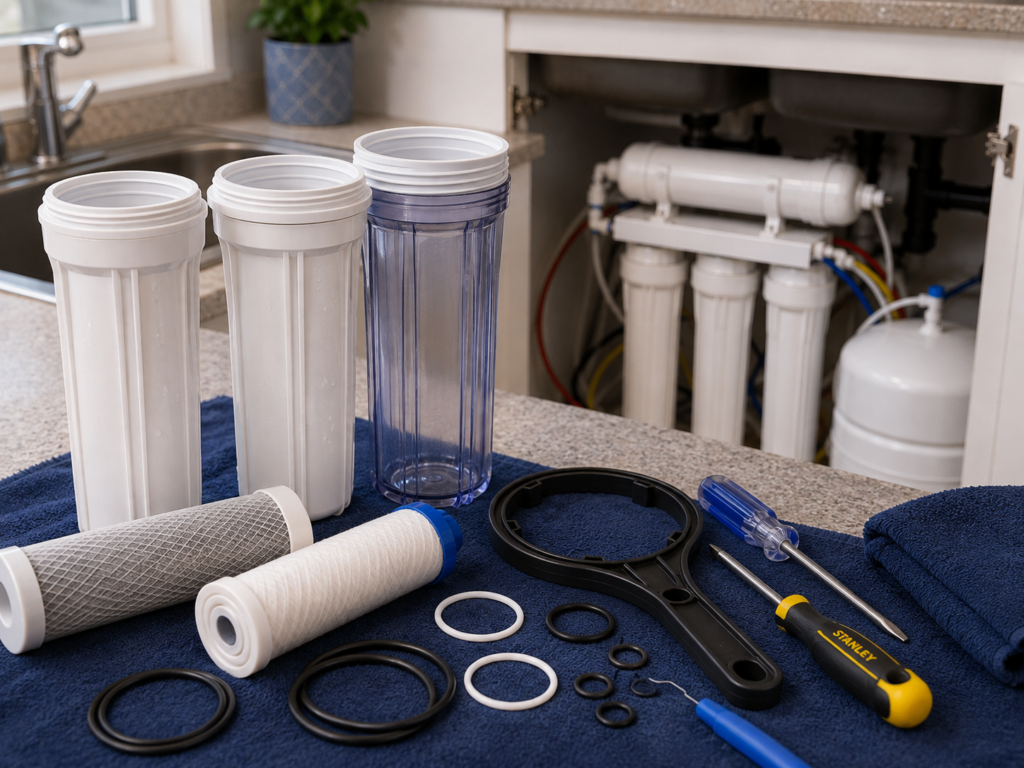
A visibly cracked, chipped, warped or thread-damaged housing is different from an O-ring or cartridge issue. Repeatedly tightening damaged plastic is not a sensible repair strategy.
If the tank, membrane, filters, several valves, tubing and other aging parts all need work at once, the combined restoration cost and future reliability deserve comparison with a supported new system.
Unknown proprietary parts, discontinued housings or hard-to-source cartridges can make a repair technically possible today but difficult to maintain later. Future serviceability belongs in the decision.
Repeated leaks, recurring sanitation concerns, widespread brittle tubing, poor cabinet access or an existing design that no longer fits the household’s verified treatment need can shift the balance toward replacement.
COMPARE THE WHOLE COST
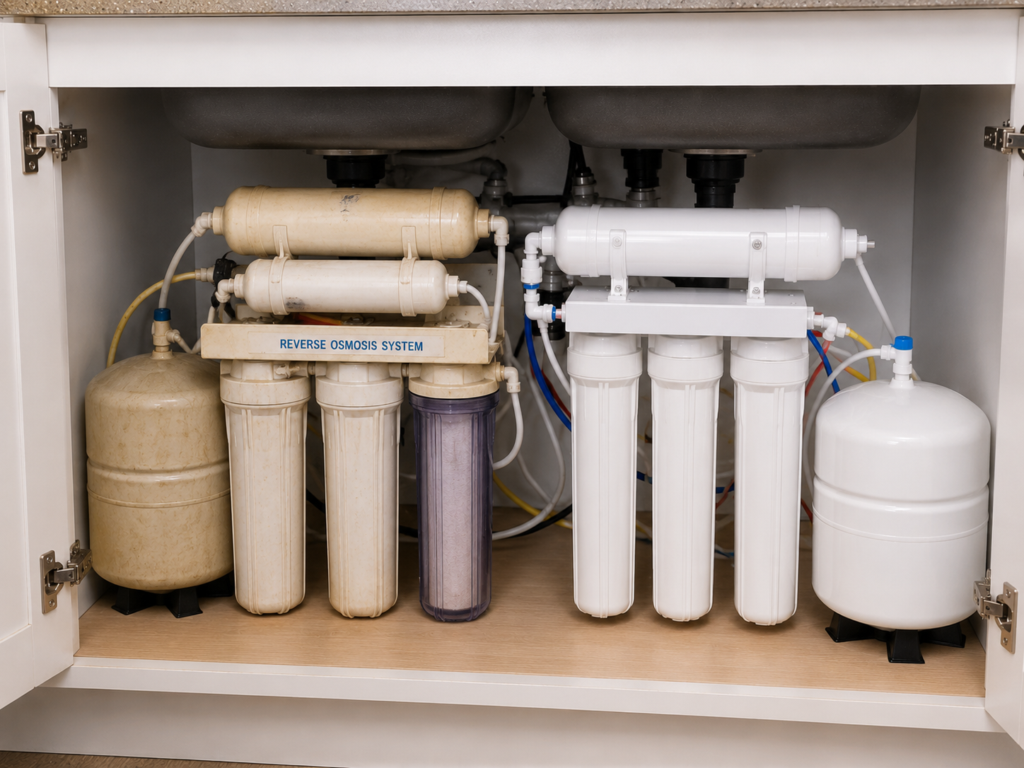
The lowest repair quote today is not automatically the lowest-cost ownership path. Compare the repair needed now, other components likely to be due soon, filter and parts availability, tank and housing condition, future service access, and whether the restored system will still be supported.
A modest isolated repair can be the sensible choice. Several overlapping repairs on an unknown or difficult-to-service unit may only postpone replacement. If replacement is selected, use the system comparison and installation pages to evaluate the next system instead of treating this decision guide as the shopping page.
CHOOSE THE RIGHT NEXT STEP
This page owns the repair-versus-replace decision. Generic repair, routine maintenance and replacement-system shopping remain on their dedicated pages so each search intent stays clear.
Use Service & Repair when there is an active leak, low flow, no water, tank problem, faucet problem, constant running or another failure that needs diagnosis and correction.
Use Maintenance when the system is generally working but is overdue for recurring service, inspection, sanitation when appropriate, pressure/tank checks or filter-plan review.
Use the Systems page when replacement is already the likely direction and you want to compare current CPS, SPS, EPS and UPS options before installation planning.
WHEN THE QUESTION IS WATER QUALITY
Taste, odor, scale, cloudiness or another symptom does not identify a contaminant and does not prove that the entire RO system should be replaced. If the replacement decision is being driven by a specific water-quality concern, define the treatment goal first and use appropriate testing when the answer depends on source-water chemistry or microbiology.
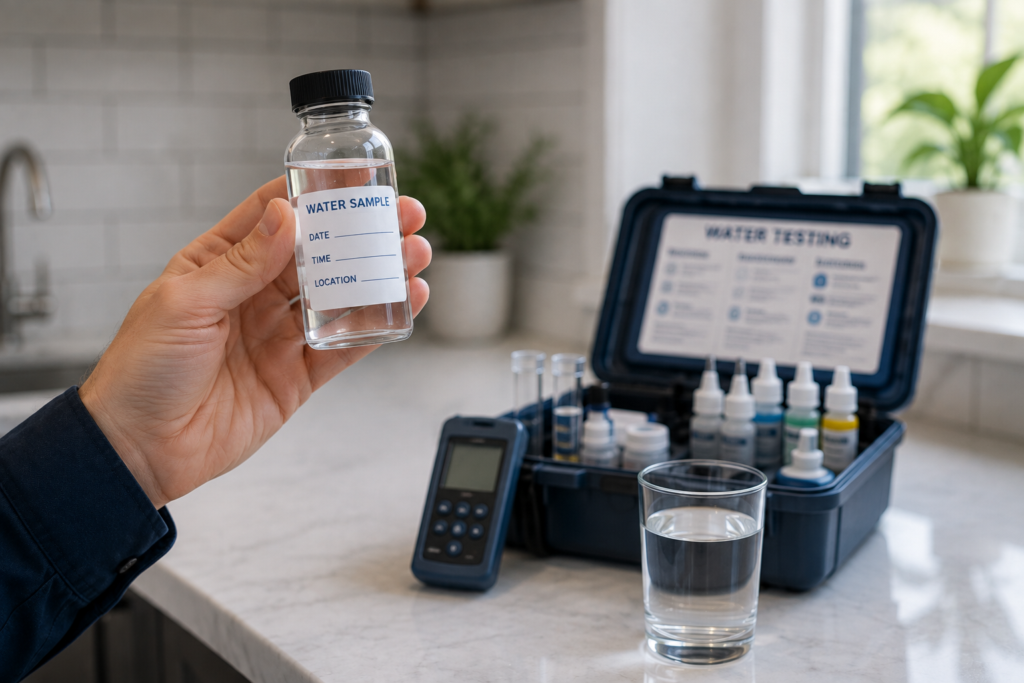
Use the Filters & Membranes Guide to understand component roles, and use Water Testing when the treatment choice depends on what is actually in the water.
Direct answers about when RO repair still makes sense, when replacement deserves consideration, how parts availability and total condition affect the decision, and which page to use next.
Water Fixers can inspect the existing RO and compare the practical paths without assuming every older system needs replacement. If the problem is repairable, the commercial repair path remains RO Service & Repair. If replacement makes more sense, we can then compare supported systems and installation conditions.
Water Fixers Plumbing & Filtration • Santa Maria, California • Central Coast service • License #719792
CALL NOW! Se Habla Español!