TANKLESS WATER HEATER INSTALLATION • CENTRAL COAST
New tankless system, replacement unit, or tank-to-tankless conversion: the equipment should be selected after the home is evaluated. Water Fixers plans around hot-water demand, temperature rise, fuel or power capacity, venting, condensate, piping, recirculation goals and future service access.
Serving Santa Maria and surrounding Central Coast communities. Final scope, permit requirements and equipment selection depend on the property and local jurisdiction.
PLAN THE SYSTEM BEFORE ORDERING THE UNIT
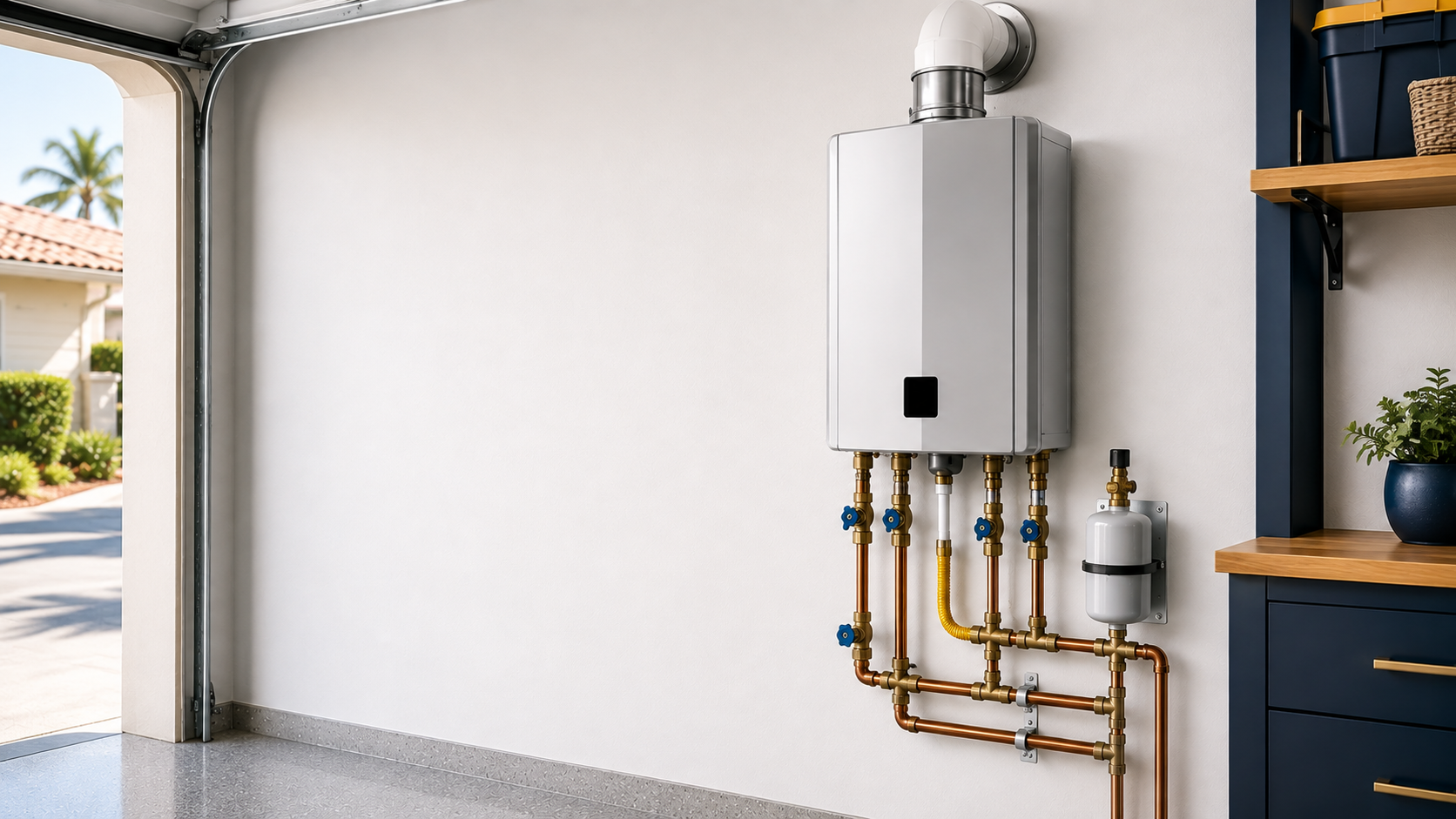
Tankless equipment is rated around flow and temperature rise. The installation also has to match the utility supply, manufacturer venting requirements, drainage needs and the way the home actually uses hot water.
1
2
3
4
TANK-TO-TANKLESS CONVERSION
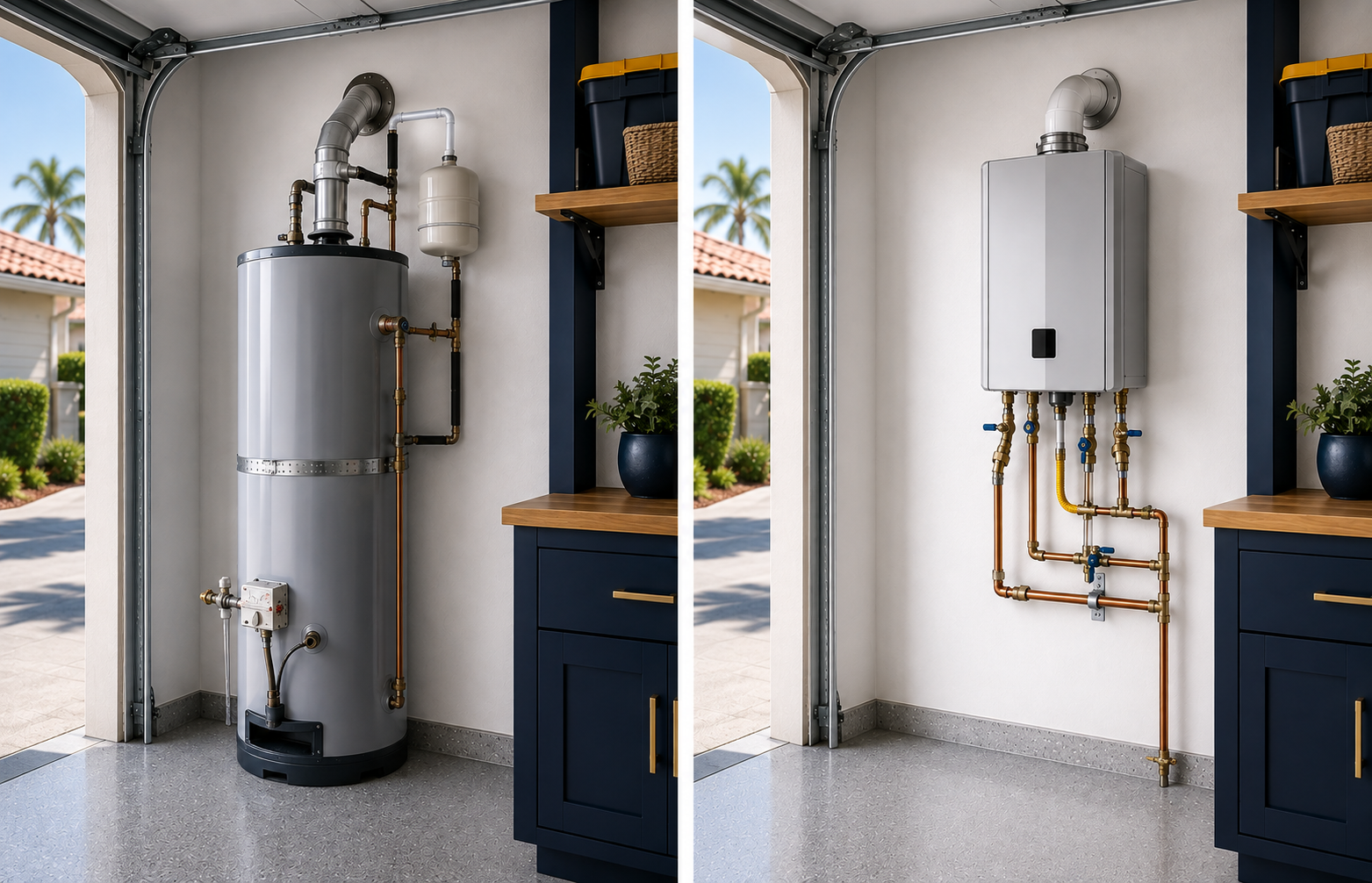
Removing a storage heater and hanging a tankless unit in its place can change the requirements for gas piping, venting, electrical power, condensate drainage, water connections and service access. Those conditions should be checked before equipment is purchased.
SIZING THAT MATCHES REAL USE
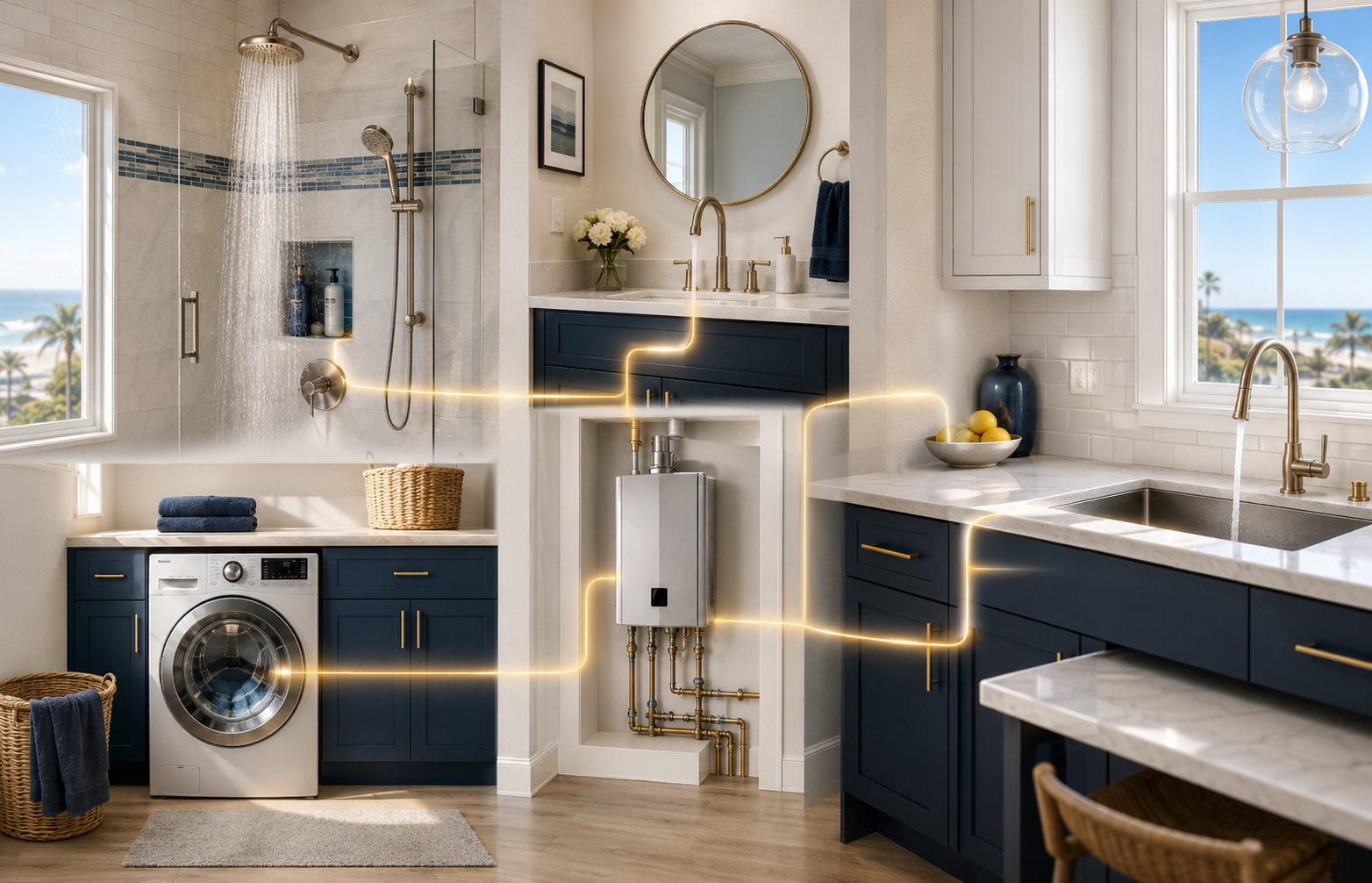
The U.S. Department of Energy sizing approach starts with two questions: how much hot water may be needed at once, and how many degrees the incoming water must be heated. That is why two similarly sized homes can need different equipment.
DEMAND
TEMPERATURE
USAGE
WHAT CHANGES THE INSTALLATION SCOPE
These items are not reasons to avoid tankless. They are the reasons to evaluate the property first so the quote and equipment selection reflect the real job.
GAS
VENTING
DRAINAGE
PLUMBING
POWER
COMFORT
REPLACING AN EXISTING TANKLESS UNIT
If an existing tankless unit is being replaced, Water Fixers reviews more than the wall opening. The current venting, gas or power supply, water piping, service valves, condensate path, maintenance history and installation location can all affect whether the next unit can use the same setup.
LIKE-FOR-LIKE
UPGRADE
DIAGNOSIS FIRST
PROTECT THE NEW SYSTEM
Tankless does not mean maintenance-free. Heat exchangers and waterways can collect mineral scale, and service intervals should follow the manufacturer’s instructions and actual water conditions.
Water Fixers can connect the installation plan with future flushing/descaling and, when water quality is relevant, with testing or treatment instead of treating those as unrelated problems later.
DAY ONE
ONGOING
RELATED WATER HEATER HELP
This installation page is for new equipment, planned replacement and tank-to-tankless conversion. Use the repair or maintenance pages when the system is already installed and the goal is diagnosis or routine service.
TANKLESS HUB
REPAIR
MAINTENANCE
ALL WATER HEATERS
Already have a water heater from another manufacturer? Water Fixers can diagnose and repair many conventional tank, tankless and heat-pump water-heater systems across California’s Central Coast—even when we did not install the equipment.
We start with the actual symptom, model and system condition, then explain the practical repair, maintenance or replacement path based on what we find.
COMMON QUESTIONS
Direct answers to the questions that should be resolved before equipment is selected and installed.
READY TO PLAN THE PROJECT
Tell Water Fixers whether you are replacing an existing tankless unit, converting from a storage tank, or planning a new installation. We can review the property and help define the next step before equipment is ordered.
Water Fixers Plumbing & Filtration
Santa Maria, California
CA License #719792
Se Habla Español
CALL NOW! Se Habla Español!