
TOILETS • WATER WASTE • FIXTURE REPAIR
Running Toilet Repair
A Toilet That Keeps Refilling Usually Means the Tank Is Not Holding or Controlling Water Correctly
Running toilet repair starts with identifying what the toilet is actually doing. Water Fixers evaluates tank components, fixture condition and surrounding plumbing to determine whether a targeted repair or broader fixture service makes sense.
START WITH THE SYMPTOM
What Is Your Toilet Doing?
A running toilet, a clogged toilet and a leaking shutoff valve are different problems. Start with the symptom you can actually see or hear, then use the correct service path.
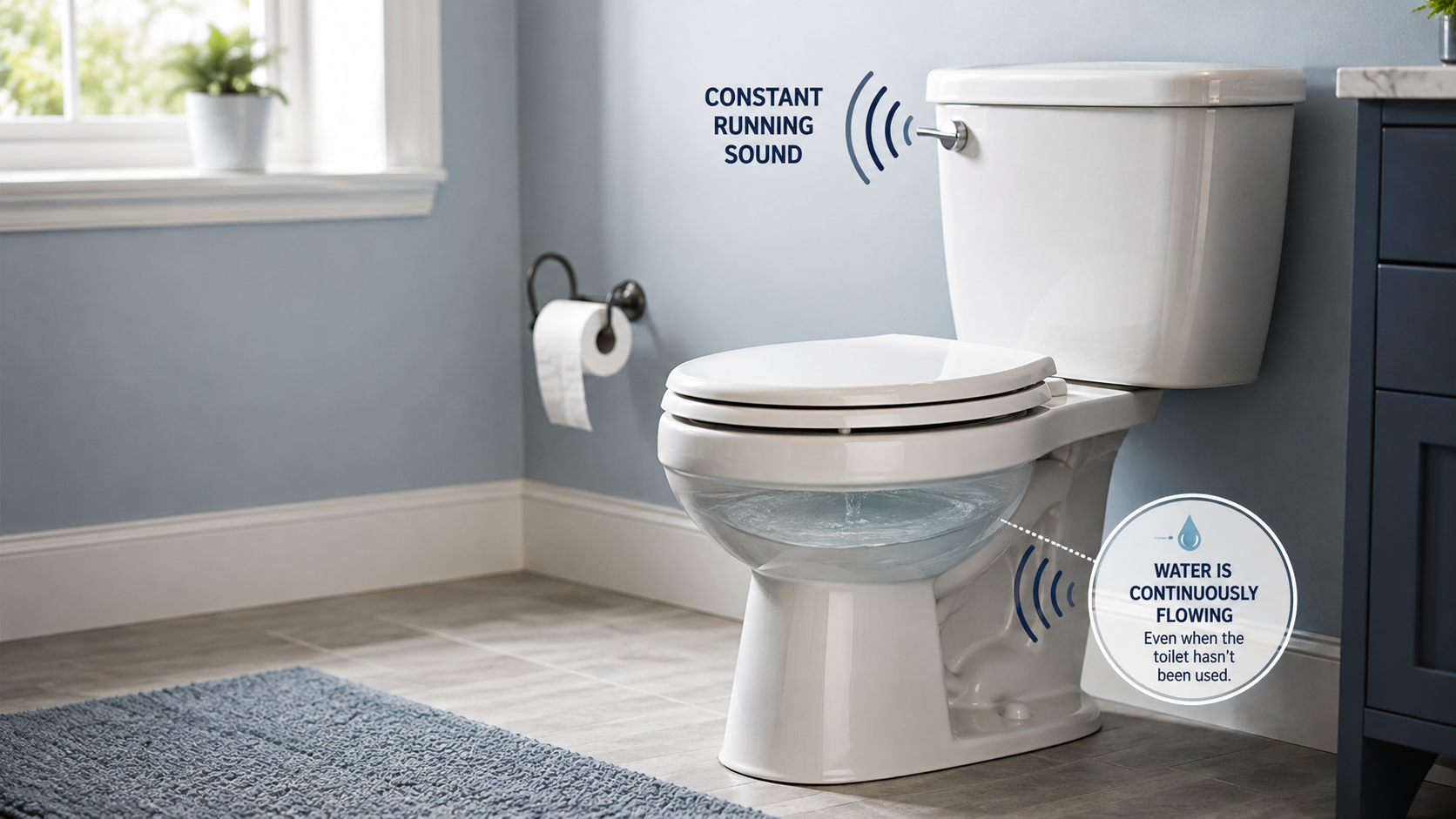
Toilet Runs Continuously
Water keeps moving or the fill cycle never seems to stop after a flush.
Toilet Turns On Every Few Minutes
Periodic refilling may mean tank water is slowly escaping and triggering another fill cycle.
Handle Needs to Be Jiggled
Handle, chain or flush components may not be returning to a proper resting position.
Shutoff Valve Is Leaking
If the angle stop or fixture shutoff is leaking, the valve itself may need service.
Toilet Will Not Drain
A clogged or backing-up toilet is a drainage problem, not the same as a running toilet.
Several Fixtures Are Backing Up
Multiple fixtures affected together may point to the shared main-drain or sewer path.
WHAT IS HAPPENING INSIDE THE TANK?
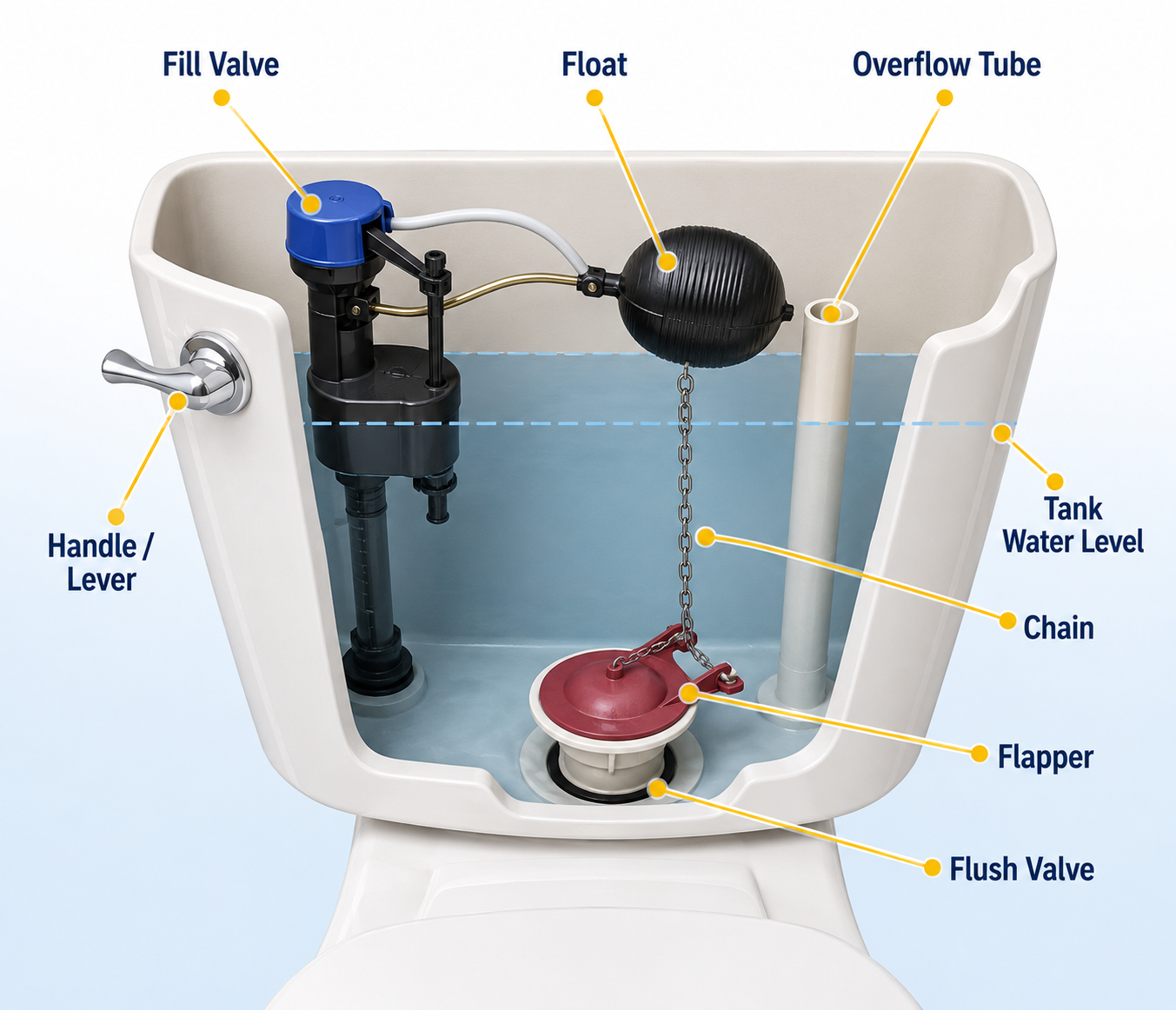
A Running Toilet Usually Starts With the Tank Not Holding or Controlling Water Properly
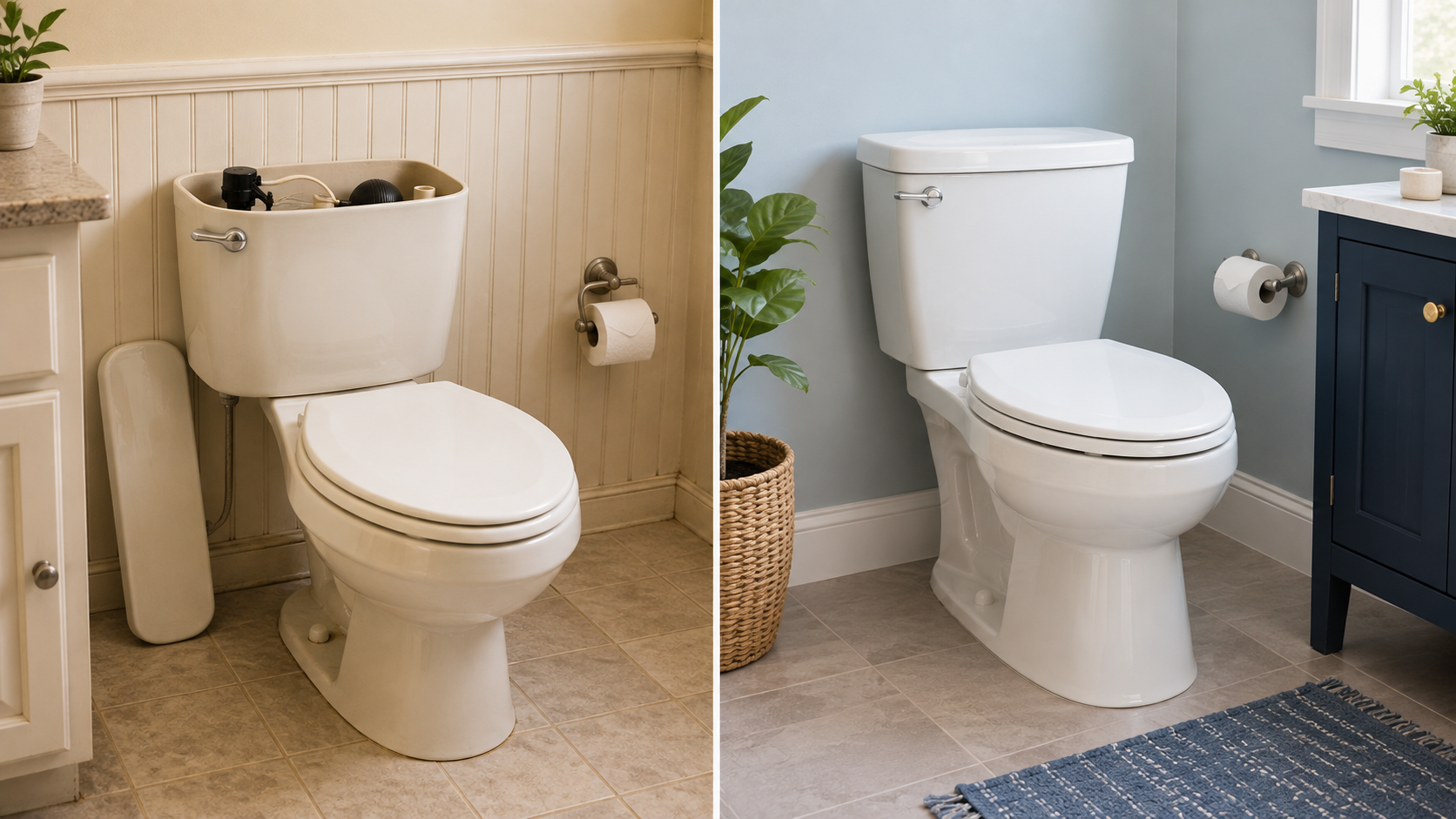
During a normal flush, tank water moves into the bowl, the tank refills, the fill mechanism stops at the correct level, and the flapper or flush-valve seal closes so water stays in the tank.
If water keeps escaping into the bowl—or if the fill mechanism does not shut off correctly—the toilet may continue running or refill on its own.
- Fill valve controls incoming refill water
- Float or water-level control helps stop refill at the correct level
- Flapper / seal helps hold tank water between flushes
- Overflow tube provides a controlled path if the tank water level rises too high
- Handle and chain must allow the sealing component to close correctly
COMMON QUESTION
Why Does My Toilet Turn On by Itself?
If water slowly escapes from the tank into the bowl, the water level can drop enough for the fill valve to turn on again—even when nobody flushed the toilet.
That pattern can point to tank-to-bowl leakage, but the exact failed component still needs to be identified before repair.
Listen for the pattern
- Continuous refill
- Short refill cycles every few minutes
- Hissing or trickling after the flush should be complete
- Quiet water loss that only shows up as repeated refill
A SIMPLE OBSERVATION
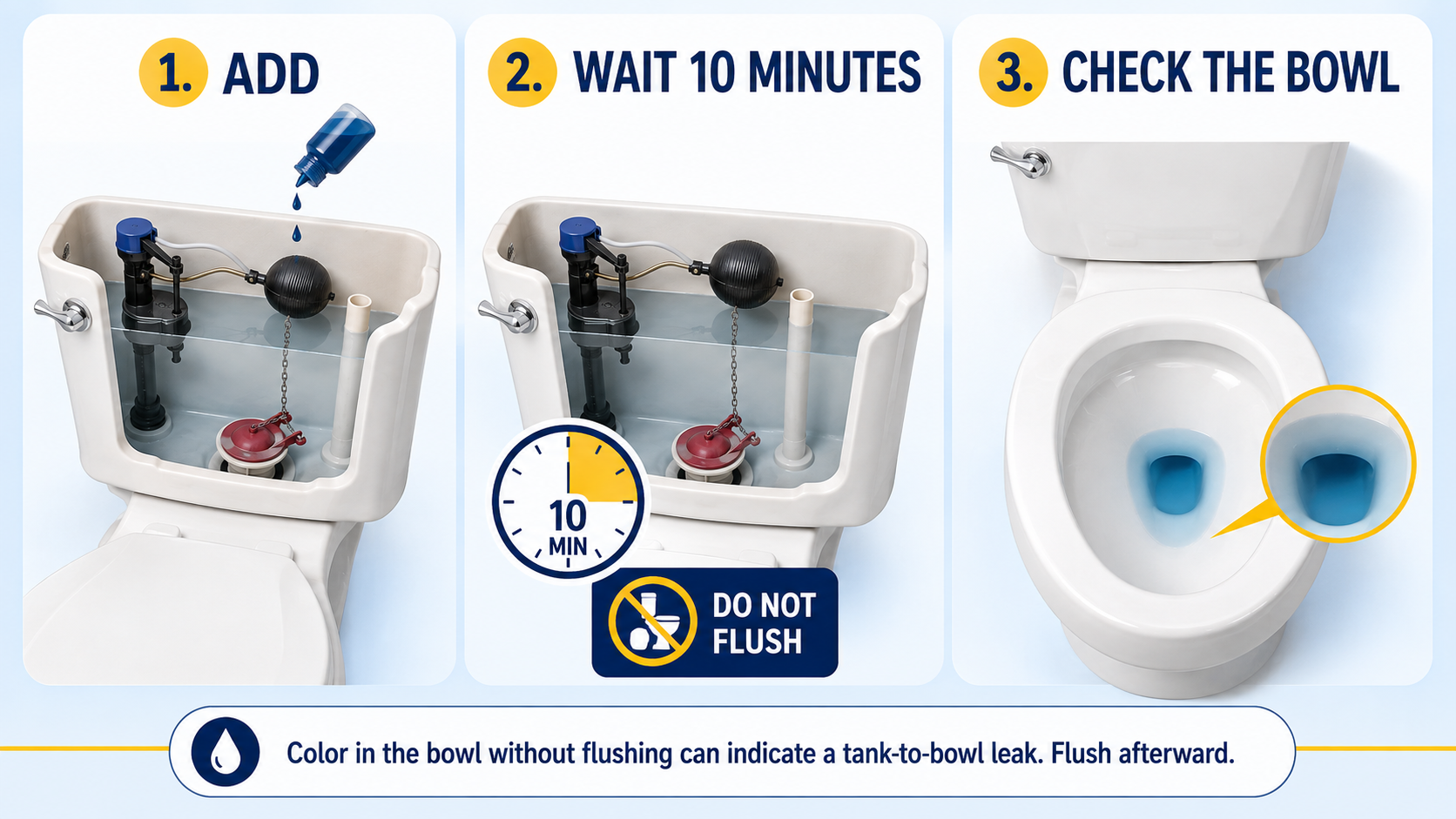
Can a Dye Test Show Tank-to-Bowl Leakage?
Yes. A simple dye test can show whether tank water is reaching the bowl without a flush. EPA WaterSense recommends placing a few drops of food coloring or a dye tablet in the tank, waiting about 10 minutes without flushing, and checking the bowl.
If color appears in the bowl, water is moving from the tank into the bowl. The test does not identify every possible failed part, so it should be treated as an observation rather than a complete diagnosis.
COMMON CAUSES
Common Reasons a Toilet Keeps Running
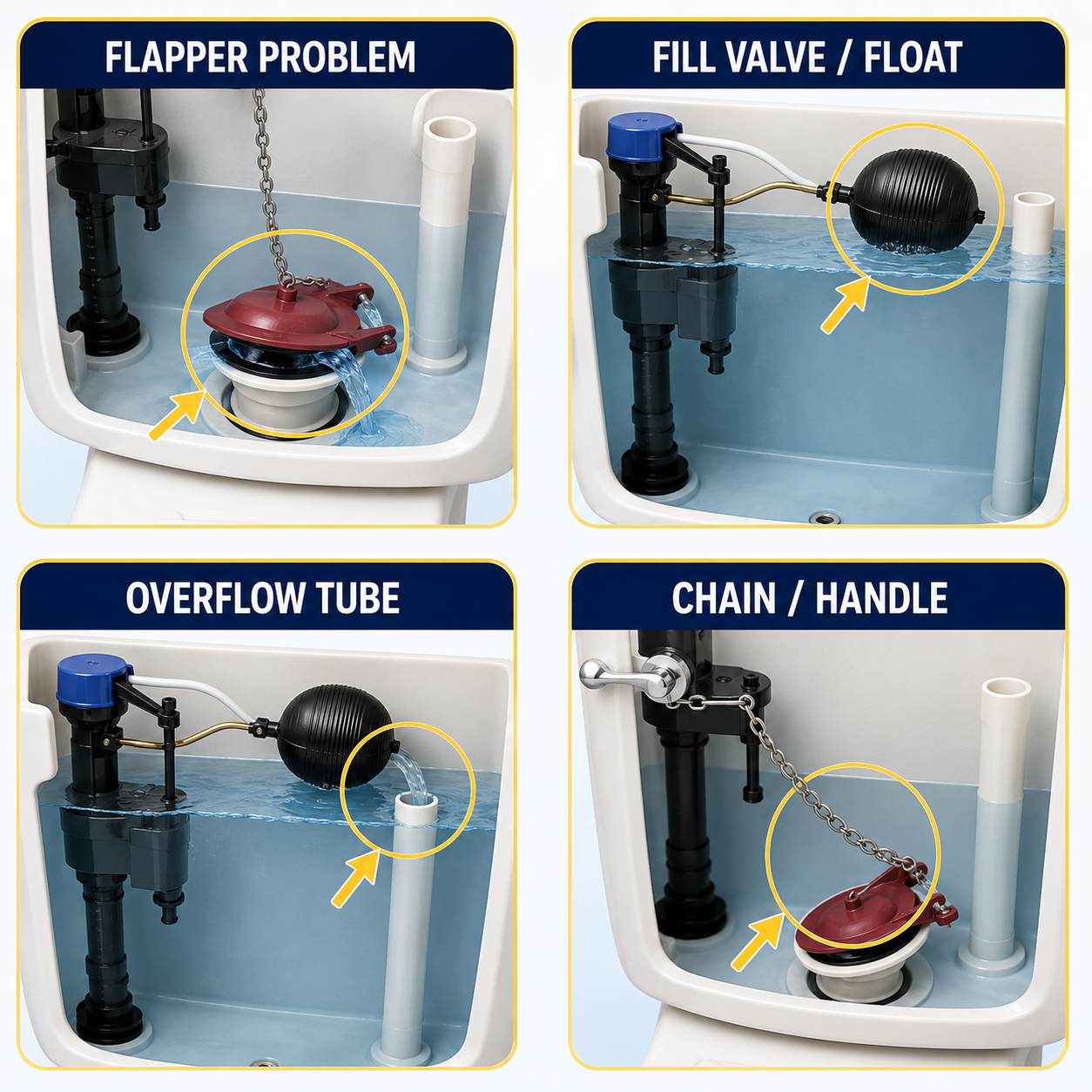
The symptom can suggest where to look, but it does not prove which component has failed. Depending on the toilet design, one or more of these areas may need evaluation.
- Worn or poorly sealing flapper / seal
- Fill valve that does not shut off correctly
- Float or water-level control set or operating incorrectly
- Chain / handle preventing the seal from closing
- Flush-valve or sealing-surface condition
- Multiple aging or worn tank components
REPAIR OR REPLACE?
Repair the Toilet—or Replace It?
Replacement is not automatically necessary just because a toilet is older. The right choice depends on fixture condition, repair history, performance and whether a targeted repair can restore normal operation.
Repair May Make Sense
- Toilet is otherwise in good condition
- Problem is isolated to serviceable tank or fixture components
- A targeted repair can restore normal operation
Replacement May Be Worth Discussing
- Several components are deteriorated
- Problems keep returning
- Fixture has other condition or performance concerns
- An upgrade was already planned
DIFFERENT SYMPTOM, DIFFERENT SERVICE
Running Toilet vs Clogged Toilet vs Main-Drain Backup
Toilet Keeps Refilling or Running
The tank is not holding or controlling water correctly. Start with running-toilet repair rather than a drain-service path.
Toilet Will Not Drain or Backs Up
Use the drain-cleaning path when the problem is an isolated toilet/fixture drainage issue.
Several Fixtures Back Up Together
Use Sewer & Main Drain Services when several fixtures are backing up and a shared drainage path may be involved.
FIXTURE SHUTOFF
What If the Toilet Shutoff Valve Is Leaking Instead?
If water is coming from the angle stop / fixture shutoff rather than from inside the toilet tank, the valve itself may need service. That is a shutoff-valve problem, not a running-toilet tank repair.
SOURCE UNCLEAR
What If Water Is Present but You Cannot Tell Where It Comes From?
When the source is not clearly the toilet, tank, shutoff or supply connection, locate the leak before assuming the fixture is responsible.
WATER WASTE
Why Fix a Running Toilet?
A running toilet can keep moving water from the tank into the bowl and trigger repeated refill cycles. That creates unnecessary water use even when the fixture is not being intentionally flushed.
The actual amount of water wasted depends on how quickly water is leaking and how often the fill valve cycles, so there is no single gallons-per-day estimate that fits every running toilet.
Known running toilet or unknown water loss?
If the toilet is visibly or audibly running, start with toilet repair. If the property is losing water but the source is not known, use the Leak Detection path instead.
KEEP THE TOILET AS THE PRIMARY PROBLEM
Water Pressure Is a Separate Question
High household pressure should not be assumed to be the normal cause of a running toilet. If multiple plumbing symptoms suggest a broader pressure problem, use the dedicated PRV page without turning this running-toilet page into a pressure page.
Broader fixture or plumbing problem?
For toilet replacement, other fixture problems or plumbing work beyond the toilet tank, use the appropriate parent service.
ACTIVE WATER LEAK?
Is Water Actively Spilling Onto the Floor?
An ordinary tank-to-bowl running condition is not automatically an emergency. If water is actively escaping outside the fixture, a connection has failed, the toilet cannot be isolated, or there is significant uncontrolled leakage, use the emergency plumbing path.
Do not force a stuck or corroded shutoff
If an appropriate fixture shutoff works safely, it may help limit water release. Do not force a damaged valve or work in an unsafe flooded area.
WHAT SERVICE LOOKS LIKE
A Practical Running Toilet Repair Process
1
Describe What the Toilet Is Doing
Continuous running, periodic refilling, hissing or visible leakage help define the starting symptom.
2
Inspect the Tank / Fixture Components
Evaluate the relevant tank parts, shutoff and nearby fixture connections.
3
Identify the Actual Source
Determine whether water is escaping tank-to-bowl, refill is not stopping, or another component is involved.
4
Determine Repair vs Replacement
Choose a targeted repair or discuss fixture replacement based on actual condition.
5
Complete the Approved Work
Repair or replace the agreed toilet / fixture components.
6
Refill, Flush and Verify Operation
Check that the toilet refills, shuts off and flushes normally after service.
USE THE RIGHT SERVICE
Where Should You Go Next?
Broader Fixture Problem
Faucets, toilets, sinks, fixture replacement and related connections belong under the fixture parent.
General Plumbing Repair
For valves, supply connections, pipes and broader plumbing work beyond the toilet itself.
Toilet Is Clogged
An isolated toilet drainage problem belongs under Drain Cleaning.
Several Fixtures Are Backing Up
A shared backup belongs under Sewer & Main Drain Services.
Shutoff Valve Is Leaking
Use Shutoff Valve Service when the fixture shutoff itself is leaking or will not isolate the toilet.
Leak Source Is Unclear
Use Leak Detection when water loss exists but the source is not known.
CENTRAL COAST SERVICE
Running Toilet Repair Across the Central Coast
Water Fixers provides fixture and plumbing service across supported Central Coast communities. Use the Service Areas hub for current regional and city navigation rather than a repeated city list on this page.
RUNNING TOILET FAQ
Direct Answers About Toilets That Keep Running
RUNNING TOILET REPAIR
Toilet Still Running After Every Flush?
Tell Water Fixers whether the toilet runs constantly, refills by itself, hisses, leaks at the shutoff, or is showing a different fixture problem. We can evaluate the actual cause and determine whether targeted toilet repair or broader fixture service makes sense.