



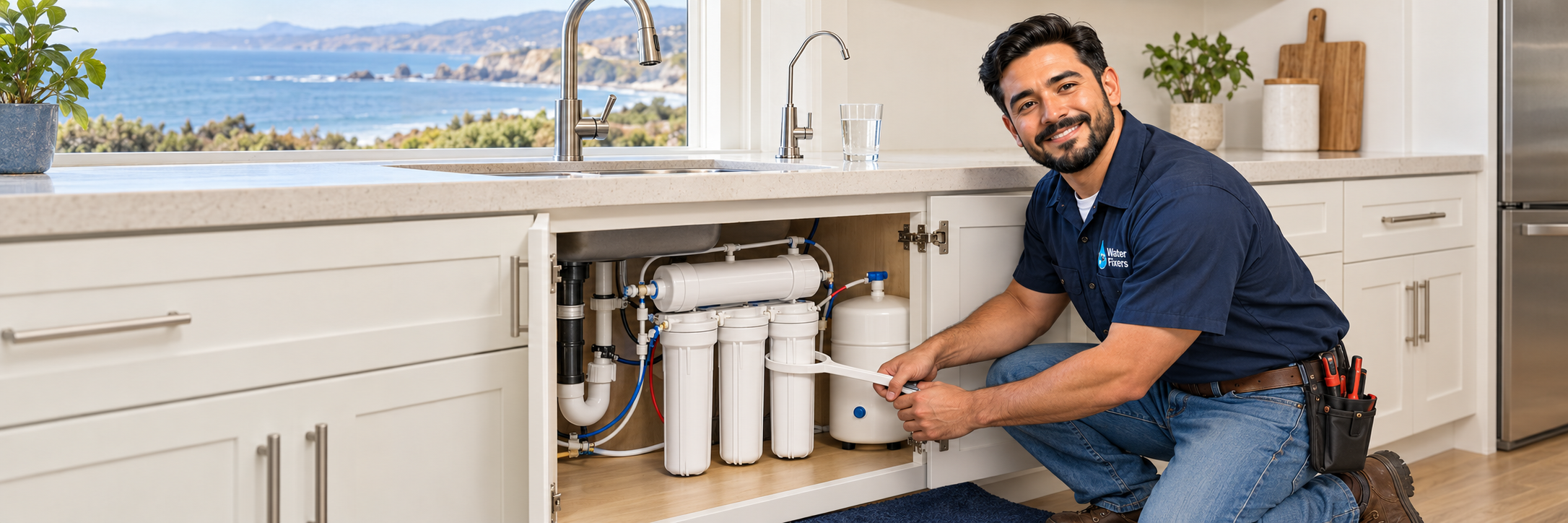

Beauty Tips From Zsa Zsa • A change in drinking-water taste
Why Does My Drinking Water Taste Different From Yesterday?
Yesterday’s water and today’s water seem different. Before choosing a filter, Zsa Zsa starts with a better question: which outlet changed, and what else changed along its water path?
Start with the water path, not a shopping list
Record what you already noticed: when the change began, which outlet was involved, whether it was hot or cold, and whether equipment was recently serviced or unused. You do not need repeated taste tests to make a useful service report. A description of the pattern is a starting point, not a diagnosis. [1], [2]
A change limited to one faucet or hot water can lead toward local plumbing or water-heater evaluation. A change at several cold-water outlets raises a different source or shared-path question. An RO-only change belongs with the installed RO system and its service history. [1], [2]

Give each outlet its own place in the report
One ordinary faucet
Name the room and whether you noticed the change in cold water, hot water or both. A single-outlet report keeps the fixture and its plumbing path in view. It is useful information, without being a diagnosis of the faucet itself. [1]
Only the RO faucet
Keep the RO system’s service date and any recent component changes with the symptom notes. A changed taste at that outlet can justify evaluating its treatment and plumbing path. It does not establish that a membrane is defective. [2]
Check current information from the actual supplier
For public water, identify the utility on the bill and check its current notices. Its annual water-quality report provides system context, but it does not establish the current condition of every faucet in the house. Report a sudden widespread change to the supplier rather than inferring a local treatment change from the weather. [3], [1]
Private-well water needs a property-specific testing path. Do not apply a nearby city report to a private well. Tell the testing professional about recent work, flooding, inactivity, or a change in existing treatment so the sample plan fits the concern. [3], [1]
Existing filters do not rule out an equipment issue
For an RO-only complaint, note the last filter service, long periods of nonuse, recent component changes, leaks, or altered flow. Those clues can support inspection, filter service, or sanitation evaluation; they do not prove that the membrane failed. [2]
Do not substitute a generic filter purchase for a diagnosis. Identify the substance or performance goal first, then verify the treatment claim for the exact product. Neither a familiar taste nor a filter-stage count establishes water safety. [4], [1]
Use the right next step
Follow any current supplier or public-health instructions for affected water. When safety is uncertain, ask the supplier or appropriate testing authority how to proceed before using the water for drinking or cooking. A service visit can inspect household equipment, while a laboratory question requires the appropriate sample and method. [3], [1]
Build a useful timeline without a tasting experiment
Use what you have already noticed
Write down when the change first became apparent, which outlet was involved and any recent service or period of nonuse. There is no need to keep sampling questionable water to make the description more precise. If safety is uncertain, get the supplier’s or appropriate testing authority’s guidance before using the affected water for drinking or cooking. [3], [1]
Keep service records beside the symptom notes
For treated water, have the installed equipment identity and last service information ready. Mention a changed filter, plumbing work, leak or altered flow as separate observations. That helps the professional decide what to inspect while keeping the explanation open; a recent service date alone does not identify a faulty part. [2]
Ask what the proposed test answers
A useful testing conversation identifies the concern and the scope of the result. Ask what is being measured, where the sample belongs and what remains outside that test. Likewise, a treatment recommendation should name the substance or performance goal and the exact product claim, rather than treating stage count or familiar taste as evidence that every concern is resolved. [3], [4]
Quick questions homeowners ask
Should I collect a sample before contacting a laboratory?
Ask the laboratory first. Use its supplied containers and collection, preservation and handling instructions so the sample is suitable for the selected analysis. [3]
Should I order new RO components before the cause is known?
Start with the installed system, service history and the affected-outlet pattern. Inspection may identify a service need, but taste alone does not identify which component to replace. [2]
- Water Testing Services | Central Coast CA | Water Fixers
- RO Water Tastes Bad or Smells? What to Check | Water Fixers
- EPA Home Water Testing Facts
- NSF Standards for Water Treatment Systems | NSF
Observations help focus an evaluation; the cause still needs checking. Use the actual equipment instructions and current supplier guidance.