

TIPS FROM HARLEY • TIP #2 • DRAINS & SEWERS
What Not to Flush Down the Toilet (and What Belongs There)
“Flushable” is doing a lot of work in that sentence. Harley’s second homeowner rule is simple: just because something disappears from the bowl does not mean the rest of the plumbing system wants it.
Harley says: I can make a puppy treat disappear too. That does not make it plumbing-approved.
Technical review: Victor, Water Fixers owner/plumber • California Central Coast • CA License #719792
HARLEY’S QUICK TAKE
The Short Version: Keep the Toilet’s Job Boring
A toilet is designed to move human waste and toilet paper into the drainage system. Wipes, paper towels, tissues and other personal-care items may clear the bowl but remain more intact farther downstream. The safest everyday habit is also the easiest one to remember: toilet paper and human waste go in the toilet; everything else goes in the trash unless your local wastewater authority specifically says otherwise.
1
Toilet Paper + Human Waste
2
“Flushable” Is Not the Whole Story
3
Do Not Keep Test-Flushing
4
Watch the Other Fixtures
THE EASY HOUSE RULE
What Should Go Down the Toilet?
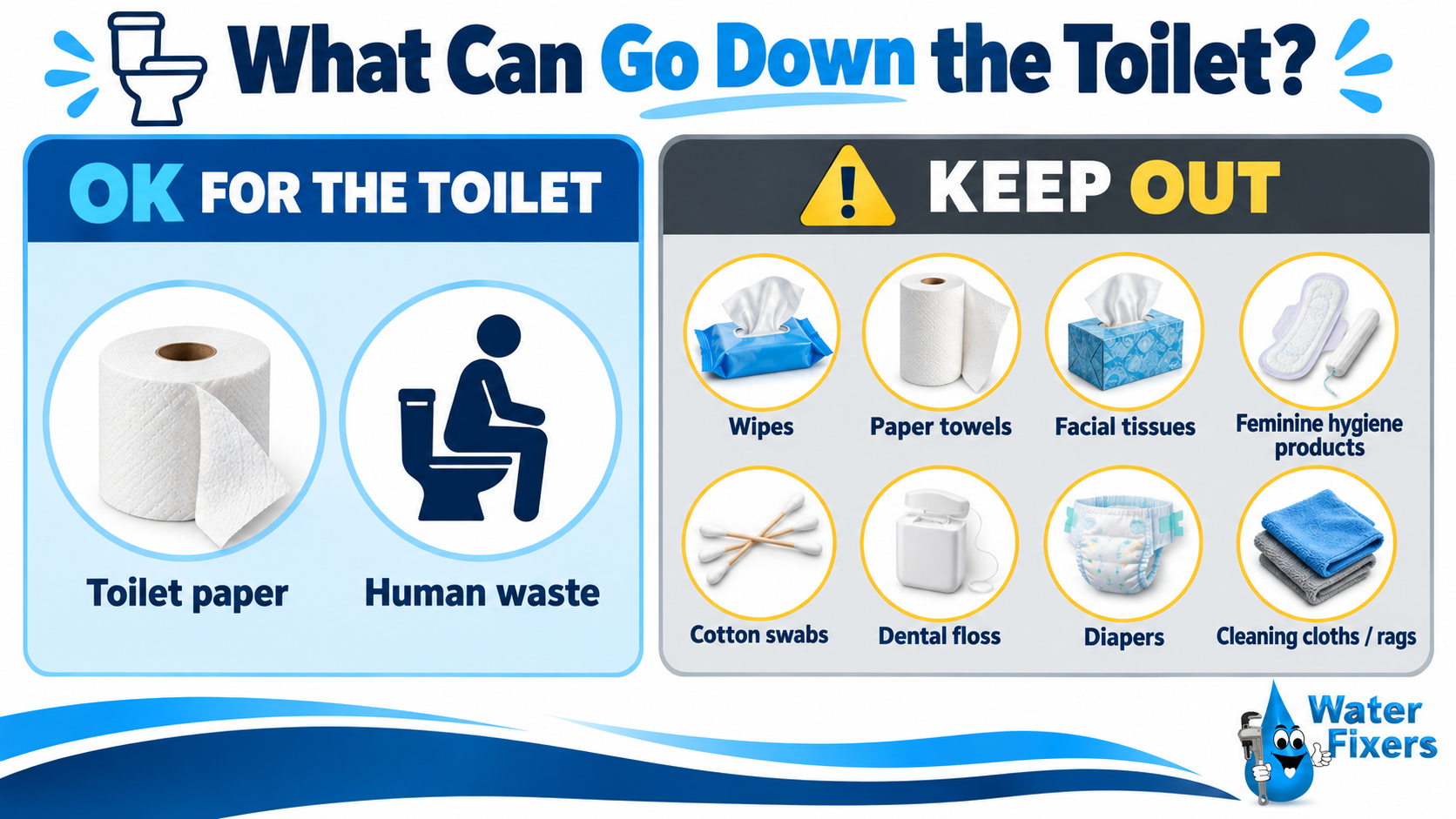
For an ordinary residential toilet, the conservative rule is intentionally short:
- Human waste
- Toilet paper
That is it. The trash can should handle the products that are designed to wipe, clean, absorb, wrap or stay strong while wet.
Harley’s version: If the list takes longer to read than “toilet paper and what came out of you,” somebody is probably overcomplicating the bathroom.
WHY WIPES ARE DIFFERENT
Getting Through the Toilet Is Only the First Few Feet of the Trip
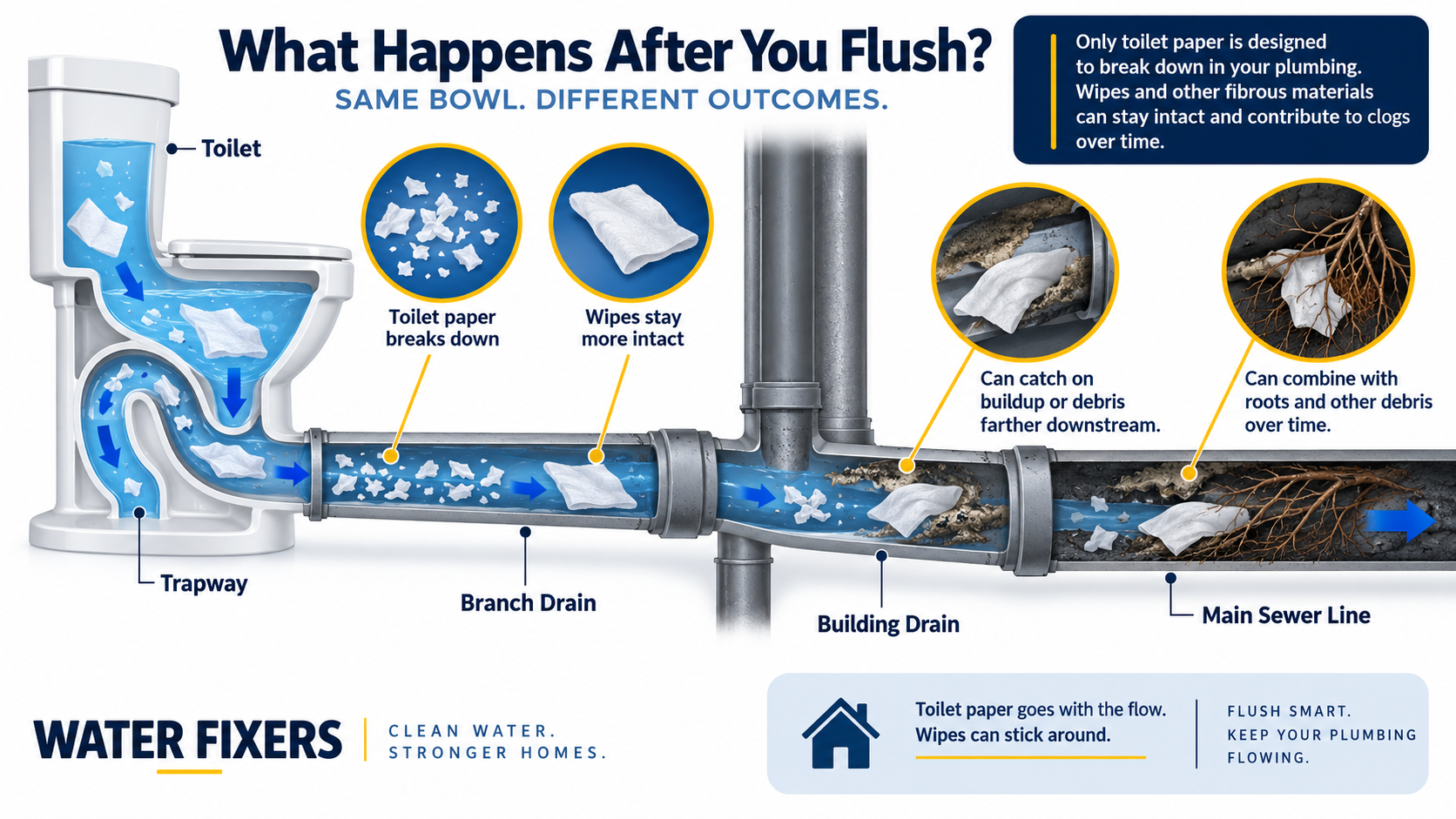
The toilet bowl is only the entrance. After the flush, material has to travel through the toilet trapway, branch piping, the building drain and eventually the sewer connection.
Toilet paper is designed to lose strength and disperse comparatively quickly in water. Many wipes are designed to stay useful while wet. That durability is convenient in your hand and much less helpful inside a drainage system.
A wipe does not guarantee an instant clog. The problem is that intact fibrous material can catch on buildup, rough surfaces or other debris and contribute to restrictions over time.
THE TRASH-CAN LIST
What Not to Flush Down the Toilet
These are common examples of products that belong in the trash rather than the toilet. The reason is not that every single item creates an immediate blockage; it is that these materials are not the same as toilet paper and can contribute to clogs, sewer problems or equipment trouble farther downstream.
Wet Wipes
Paper Towels & Facial Tissues
Feminine Hygiene Products
Diapers & Disposable Underwear
Cotton Swabs & Dental Floss
Rags, Cloths & Cleaning Products
BUT THE PACKAGE SAYS “FLUSHABLE”
Harley Has Reviewed the Marketing Department’s Argument
A “flushable” label does not tell you everything about how a product behaves through your home’s entire drainage system or farther into the wastewater system. Water Fixers’ practical homeowner recommendation is simple: put wipes in the trash.
That avoids asking your toilet, branch drain and sewer line to be the product-testing department.
Harley says: The bag of puppy treats also says “resealable.” I have concerns about the accuracy of labels in general.
ALREADY FLUSHED SOMETHING?
Do Not Panic—and Do Not Keep Flushing to See What Happens
One accidentally flushed wipe or other item does not automatically mean you now have a blockage. Pay attention to what the toilet and nearby fixtures do next.
Everything Is Draining Normally
The Toilet Is Slow or Rises High
Other Fixtures React Too
ONE TOILET VS. SEVERAL FIXTURES
The Pattern Helps Choose the Right Drain-Service Path
Water Fixers separates ordinary fixture/branch clogs from broader main-drain or sewer symptoms. The number of fixtures involved is one of the most useful clues.
LOCALIZED SYMPTOM
One Toilet or One Localized Drain
BROADER SYMPTOM
Several Fixtures Back Up Together
🐾 WHEN HARLEY SAYS: CALL THE HUMANS
Stop Guessing and Get Plumbing Help If…
- the toilet repeatedly clogs or drains slowly
- the bowl rises unusually high during a flush
- plunging does not resolve a localized blockage
- the toilet gurgles when another fixture drains
- several fixtures are slow or backing up at the same time
- wastewater is backing up into a tub, shower, floor drain or another fixture
- a problem clears and then quickly returns
For an active sewage backup or an overflowing condition that is threatening the property, stop adding wastewater to the affected drainage system and use the emergency-plumbing path.
HOW WATER FIXERS CAN HELP
Clear the Right Line Without Pretending Every Clog Is the Same Problem
When a toilet or drain problem needs professional help, Water Fixers starts with the symptoms: which fixtures are affected, whether the issue is recurring, whether the line clears and stays clear, and whether the pattern looks local or farther downstream.
START LOCAL
Drain Cleaning
WHEN IT IS BIGGER
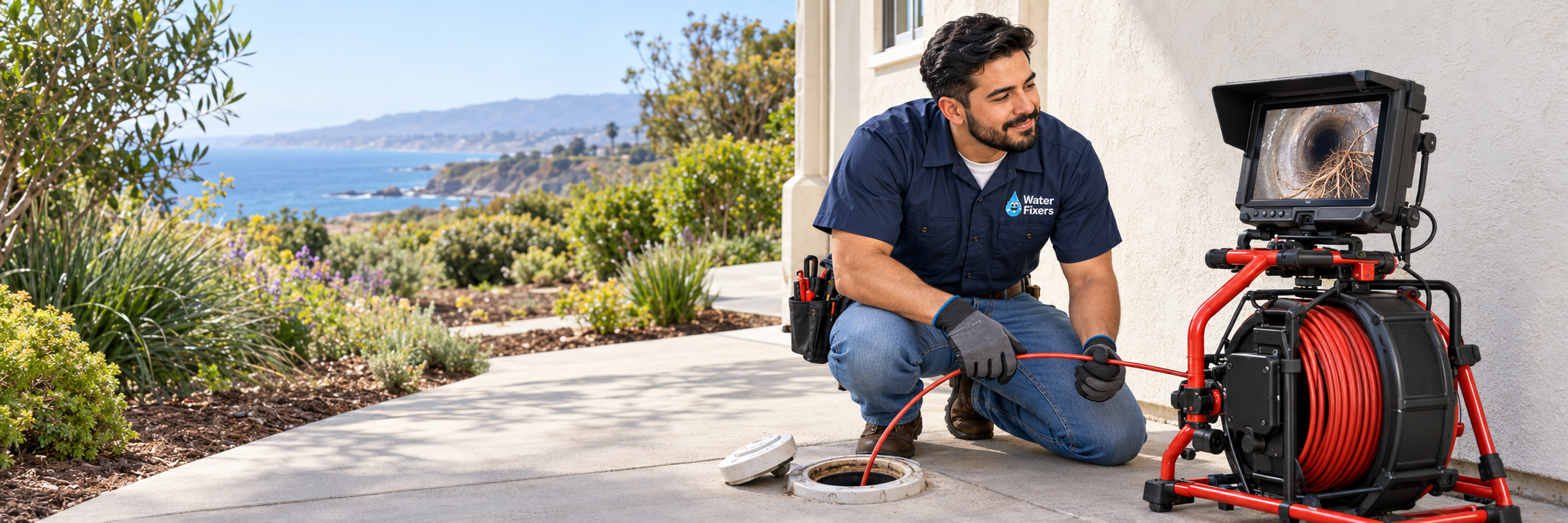
Sewer & Main Drain
NOT SURE?
Plumbing Services
QUICK QUESTIONS
A Few Straight Answers Before Harley Returns to Supervising
Can I flush a wipe if the package says flushable?
Water Fixers recommends putting wipes in the trash. A wipe can clear the toilet bowl while still remaining more intact than toilet paper farther through the drainage system.
Is facial tissue the same as toilet paper?
No. Facial tissue and paper towels are generally designed to stay stronger when wet. The toilet-paper rule is intentionally narrow.
Does one wipe automatically cause a clog?
No. One accidentally flushed item does not guarantee a blockage. The concern is that non-toilet-paper materials can contribute to restrictions, especially when they combine with other debris or existing buildup.
What if multiple fixtures start backing up?
That pattern is more concerning for a shared drain, main drain or sewer route than one isolated toilet. Use the Sewer & Main Drain Services path rather than treating it as a simple toilet clog.
DRAIN PROBLEM • RECURRING CLOG • SEVERAL FIXTURES INVOLVED?
Tell Water Fixers What the Plumbing Is Doing
You do not have to diagnose the line before you call. Tell us which fixtures are affected, whether the problem is recurring, and whether wastewater is actively backing up. We can help route the problem to the appropriate drain or sewer service.
Water Fixers Plumbing & Filtration • Santa Maria, CA • California License #719792
🐾 MORE TIPS FROM HARLEY
Harley Is Already Supervising the Next Lesson
See more practical plumbing and water tips from Water Fixers’ Shop Dog & Chief Morale Officer—with the important parts checked by the humans who actually use the tools.