










Tips From Harley • Kitchen drains under heavy use
Why Does My Kitchen Sink Back Up When I’m Cooking for a Crowd?
Your sink may seem fine on an ordinary night and still struggle when a holiday meal, party, or full house sends much more water and food-prep waste through the same drain. The extra use can expose an existing restriction that lighter use never revealed.
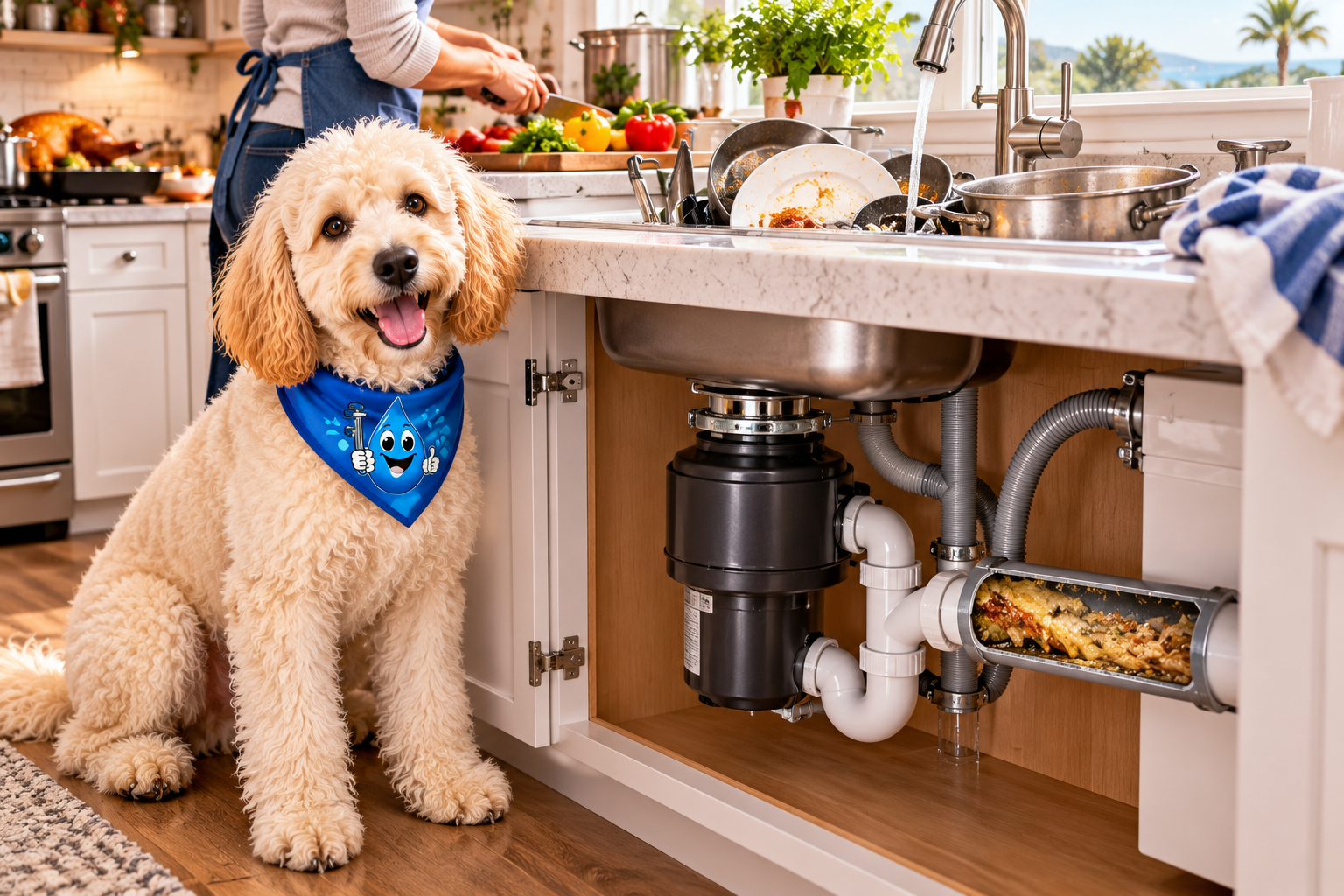
Why a sink can pass Tuesday dinner but fail during a holiday meal
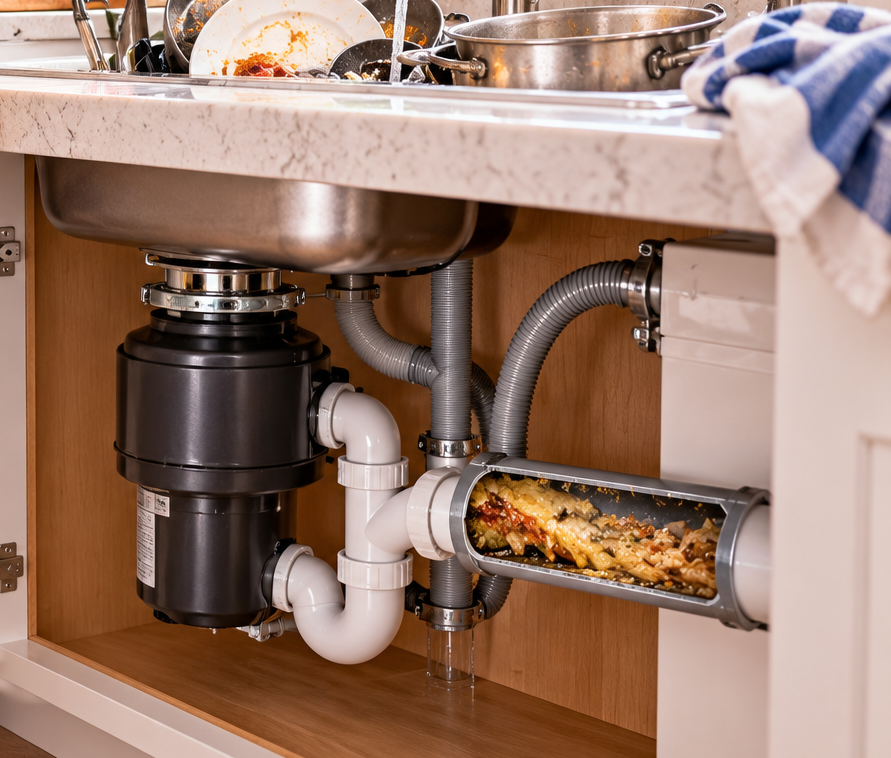
A partially restricted kitchen branch drain may still have enough open area to carry normal faucet use. During a larger meal, the same line may receive repeated sink discharge, disposal flow, rinse water, and dishwasher discharge over a short period. If water enters the drain faster than the restricted pipe can carry it away, the sink can slow, rise, or back up.
That pattern does not prove grease is the cause. It tells you the drain is having trouble carrying the load. The restriction could involve food debris, fats/oils/grease buildup, a localized disposal or trap issue, the dishwasher connection, or a problem farther downstream.
Four symptom patterns that point in different directions
The kitchen sink is simply draining slowly
If only the kitchen sink is affected and it drains poorly even during ordinary use, start with a localized drain-cleaning evaluation.
The sink backs up when the dishwasher drains
A dishwasher normally discharges into the kitchen drainage system, often through the disposal or a sink-tailpiece connection. A backup during that discharge can involve the kitchen drain path, disposal connection, drain hose routing, or an existing restriction.
The problem seems tied to the garbage disposal
A disposal can contribute food solids and wastewater to the same branch drain, but a noisy, jammed, leaking, or non-running disposal is not the same problem as a downstream drain restriction. Follow the disposal manufacturer’s safety instructions rather than improvising a repair.
Other fixtures react too
If other sinks, tubs, showers, or toilets gurgle or back up during the same event, the issue may extend beyond the kitchen branch. Use the Sewer & Main Drain path rather than treating each fixture as a separate clog.
How cooking, grease, dishwashing, and an existing restriction can overlap
Fats, oils, and grease can narrow a drain over time
The City of San Luis Obispo notes that fats, oils, and grease from residential kitchens can cool and accumulate inside sewer piping, restricting flow and contributing to backups. That does not mean every kitchen backup is a grease clog, but repeated greasy residue is one plausible contributor when a line is already losing capacity.
Food preparation increases solids and rinse water
Large meals generate more scraps, starches, sauces, pan residue, and rinse water. Scraping food and grease into the trash or appropriate organics stream before washing keeps more material out of the drain.
The dishwasher sends a concentrated discharge
Dishwashers pump wastewater into the kitchen drainage system over a short period. Whirlpool’s current guidance notes that hose routing, the sink/disposal connection, retained disposer knockout plugs after installation, and debris can all affect drainage.
A disposal does not make the downstream pipe larger
A working garbage disposal can grind food, but the ground material still has to move through the trap and branch drain. Heavy disposal use can add solids and water to a pipe that is already partly restricted.
What you can safely observe before calling
- Does the sink drain slowly all the time, or only during unusually heavy use?
- Does the water rise when the dishwasher pumps out?
- Does running the disposal change the water level, sound, or flow?
- Are both bowls of a double sink affected?
- Do any other fixtures gurgle, drain slowly, or back up at the same time?
- Does the problem return after the sink has been cleared before?
What not to do
Do not rely on a chemical drain cleaner as the diagnostic step. Poison Control notes that many drain cleaners contain strongly corrosive acids or bases that can cause serious burns. They also do not tell you whether the actual problem is a localized clog, a disposal/dishwasher connection issue, recurring buildup, or a larger shared-drain restriction.
Also avoid unsafe disposal troubleshooting. Follow the disposal manufacturer’s instructions and shut off power as directed before any approved service procedure.
When drain cleaning, sewer diagnosis, or hydro jetting makes sense
One isolated kitchen sink that is slow or backed up usually starts with Drain Cleaning. If the restriction keeps returning, the next step may involve broader evaluation of the line rather than repeating the same clearing indefinitely.
If several fixtures react together, start with Sewer & Main Drain Services. If diagnosis points to stubborn grease, sludge, or recurring interior buildup in suitable piping, Hydro Jetting may be considered—but it is a cleaning method, not a repair for damaged piping.
Questions homeowners ask
Why does my kitchen sink only back up when I cook a big meal?
Heavy use can send more water and waste into the drain in a short period. A partial restriction may pass ordinary flow but fail when the drainage load increases. The heavy meal exposes the problem; it does not automatically prove what caused it.
What does it mean if the sink backs up when the dishwasher drains?
The dishwasher discharge shares the kitchen drainage path. The issue can involve the dishwasher drain connection, disposal connection, hose routing, or a restriction farther downstream.
Does a garbage disposal prevent kitchen clogs?
No. A disposal grinds food, but the material and wastewater still have to travel through the kitchen branch drain. It does not eliminate grease buildup or increase the drain pipe’s capacity.
Should I use chemical drain cleaner before calling a plumber?
Water Fixers does not recommend using corrosive chemical drain cleaner as the diagnostic step. These products can be hazardous, and they do not identify where or why the drain is restricted.
When does a kitchen sink backup point to a bigger sewer problem?
If other fixtures gurgle or back up during the same event, or the problem keeps returning after localized clearing, a shared drain or sewer-line evaluation becomes more appropriate.