
BUELLTON, CA • LOCAL LEAK DETECTION
A Buellton water-bill increase can be the first sign that something changed, but the bill cannot tell you whether the cause is a toilet, irrigation, a fixture, equipment or concealed piping. Start with what is happening now.
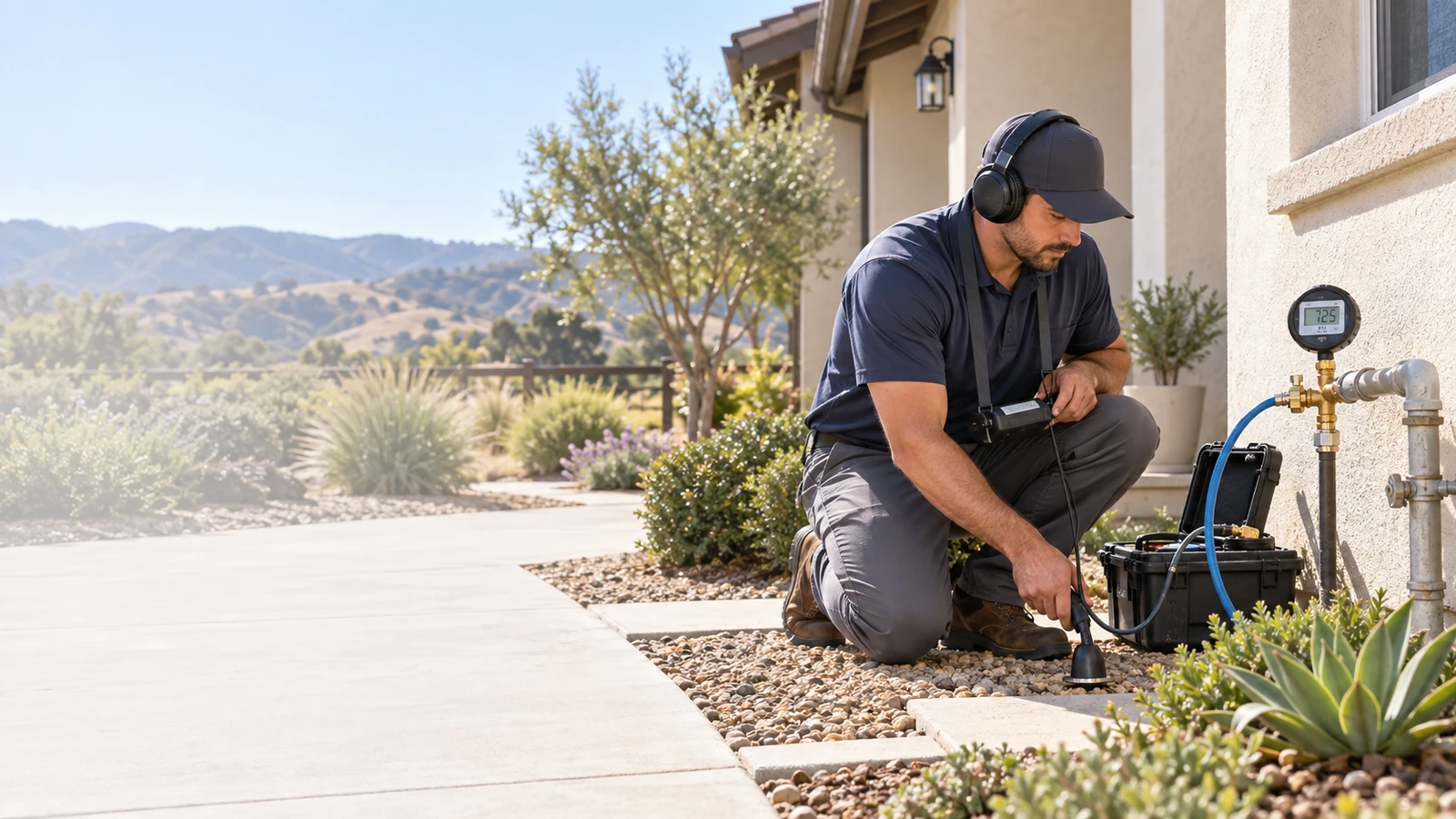
CHOOSE THE RIGHT STARTING POINT
Leak detection is for credible water loss or moisture when the source is still unknown. Once the failed component is visible—or water is actively escaping—the service path should change.
Control the water with a known safe shutoff when possible. Active spreading water belongs on the urgent plumbing path.
Unexplained water use, moisture, warm areas or water sounds with no confirmed source stay on the leak-detection path.
A dripping connector, valve, fixture or exposed pipe can usually move directly to a defined plumbing repair.
Moisture around a tank, tankless unit, pan, valve or hot-side connection may belong with water-heater diagnosis.
LOCAL DIAGNOSTIC STRATEGY
Compare current fixture behavior, outdoor water use, meter activity and moisture with the property’s normal baseline. If a running toilet or visible leak explains the change, the repair path is already clearer. Leak detection is most useful when water use remains credible but the source is still unknown.
A PRACTICAL LOCAL CHECK
Start with the local boundary: What changed in the billing period compared with normal use. In Buellton, treat that observation as a boundary for the first inspection, not as proof of a particular pipe failure. Write down what was normal before the change and what is different now.
Compare the second clue: Whether toilets, irrigation or new equipment could explain the difference. If that clue changes at the same time as the first one, the two observations may justify a more focused investigation. If they do not move together, keep both possibilities open instead of forcing them into one explanation.
Widen the scope only when the evidence requires it: Whether current meter activity continues after expected use stops. This is where the Buellton page stays intentionally different from a generic leak page: the goal is to follow the property pattern that is actually present rather than assuming every hidden-water symptom behaves the same way.
Use isolation carefully: Whether there are moisture, sound or pressure clues that were not present before. A useful diagnostic step should reduce uncertainty without creating a new repair. If a valve is unreliable, water is actively spreading, or the test would increase property risk, stop the routine diagnosis and use the appropriate repair or emergency path.
What this sequence does not prove: No. It shows water use changed over the billing period, but it does not identify the source. Current plumbing and water-use evidence should be checked. Yes. A meter observation is more useful after expected fixture, irrigation and equipment use is accounted for. Those limits matter because leak detection is most useful when it narrows the unknown part of the problem instead of turning one clue into a remote diagnosis.
MONITORING, SHUTOFF AND DIAGNOSIS ARE DIFFERENT JOBS
Use on-site diagnosis when credible water use or moisture remains unexplained and the failed component has not been identified.
Flume can report water-use patterns from a compatible meter setup. It helps show use; it does not shut the water off or identify the failed pipe.
Moen Flo is an inline monitoring and qualifying automatic-shutoff device. Protection and alerts still do not replace plumbing diagnosis.
A pressure regulator manages pressure. Pressure testing is a separate question from locating a hidden leak.
LOCAL SERVICE ROUTING
Use this page when the property is in Buellton and the water source still needs to be narrowed. For broader local plumbing questions, use the Buellton plumber page. For neighboring communities, use the Santa Ynez Valley page or the complete service-area directory.
WHEN THE SOURCE BECOMES CLEARER
Leak detection should not keep ownership after the problem is defined. Once the affected system is known, route the repair to the focused service that actually fixes it.
DIAGNOSIS FIRST
WHAT TO NOTICE BEFORE THE VISIT
You do not need to diagnose the pipe before calling. These observations help define the first boundary:
Useful after normal fixtures, irrigation, appliances and equipment are accounted for. It supports investigation but does not identify the source.
Record where it appears, when it changes and what water was being used at the time. The visible spot may be downstream from the source.
Note when the sound occurs and whether any known fixture or appliance is operating. Sound is a clue, not an exact location.
Pressure can be measured as a separate plumbing condition. A pressure symptom does not prove where a leak is or what caused it.
COMMON QUESTIONS
No. It shows water use changed over the billing period, but it does not identify the source. Current plumbing and water-use evidence should be checked.
A clearly running toilet may explain much or all of the increase and belongs on the toilet-repair path rather than concealed leak detection.
Yes. A meter observation is more useful after expected fixture, irrigation and equipment use is accounted for.
No. The purpose of diagnosis is to narrow the source so the repair can be chosen from evidence rather than from the bill alone.
Use the Buellton emergency-plumbing path and a known safe shutoff if available. Active damage takes priority over routine water-use investigation.
LEAK DETECTION IN BUELLTON
Share where the symptom appears, what was using water when you noticed it, whether water is still moving, and what stayed normal. Those details give the diagnostic visit a useful starting point.
CALL NOW! Se Habla Español!