
WATER LINE REPAIR & REPLACEMENT • TEMPLETON
Water Fixers helps Templeton homeowners with suspected or confirmed buried residential water-service-line problems. For addresses served by Templeton Community Services District (TCSD), start by separating the District water system and service connection from the private plumbing being evaluated. If a property uses a private well, say so before diagnosis because pump and pressure-tank problems follow a different path. The failed line still needs to be narrowed before repair or replacement is planned.
38+ Years on the Central Coast • California License #719792 • Se Habla Español
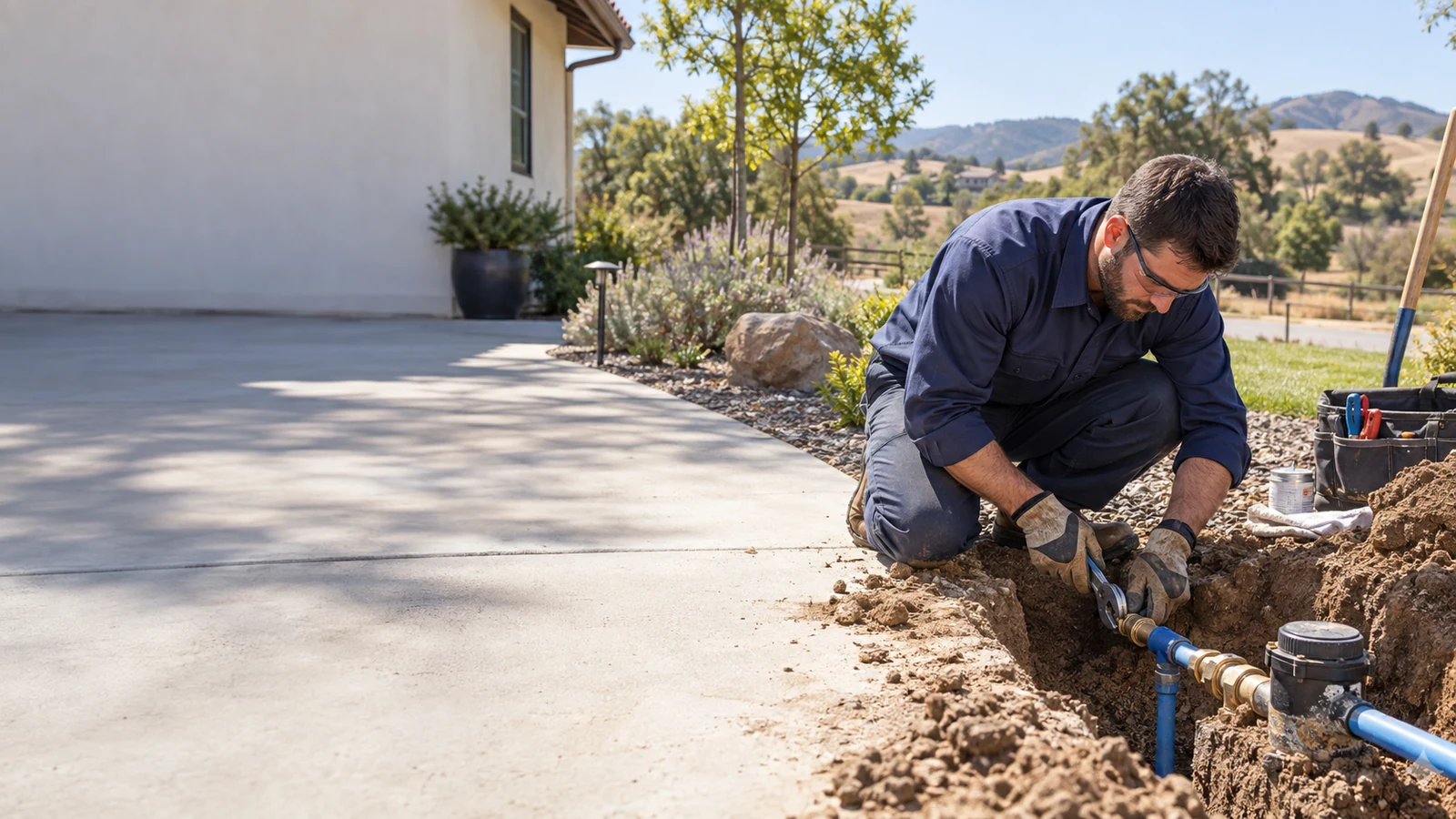
TEMPLETON WATER-SYSTEM CONTEXT
Templeton Community Services District operates the local public water system and currently reports about 52 miles of water lines, 12 active wells with four on standby, four storage tanks and roughly 3,000 connections. Its published service-connection standard shows the water meter and a customer-side shutoff valve at the connection. Those facts help frame the public-system/service-connection layout; they do not identify which pipe is leaking or assign responsibility for a specific failure without site verification.
Leaks or failures at fixtures and smaller interior supply branches belong with general plumbing service rather than buried water-line replacement.
A confirmed or reasonably narrowed buried line serving the property is the focus of this page. Verify the actual service configuration rather than assuming every Templeton address is identical.
Repeated failures across multiple interior sections may justify repiping evaluation rather than treating each failure as a buried service-line problem.
CLUES WORTH INVESTIGATING
If expected water use is off and a TCSD-served property still shows meter activity, further investigation may be worthwhile. Wet ground or a pressure change can add context, but those clues do not identify the failed pipe. Rule out known irrigation or fixture use where practical and note whether the symptom affects one fixture or the whole property before choosing a repair path.
Unexpected meter movement or water use can justify leak investigation when normal fixtures and irrigation do not explain it.
Water can move through soil or along an existing trench before surfacing, so the wettest spot is evidence that still needs location confirmation before excavation.
Pressure or flow changes have several possible causes and should be narrowed before assuming a broken service line.
When the affected buried line and location are already reasonably established, repair or replacement planning can begin directly.
A repeated failure history can change the repair-versus-replacement decision, especially when future access would be disruptive.
Accessible deterioration can help define the scope, but the surrounding pipe and actual line route still matter.
If water cannot be safely controlled or property damage is increasing, start with Templeton emergency plumbing. Do not cut into pressurized piping or force an unfamiliar/stuck service or meter valve as a homeowner emergency test.
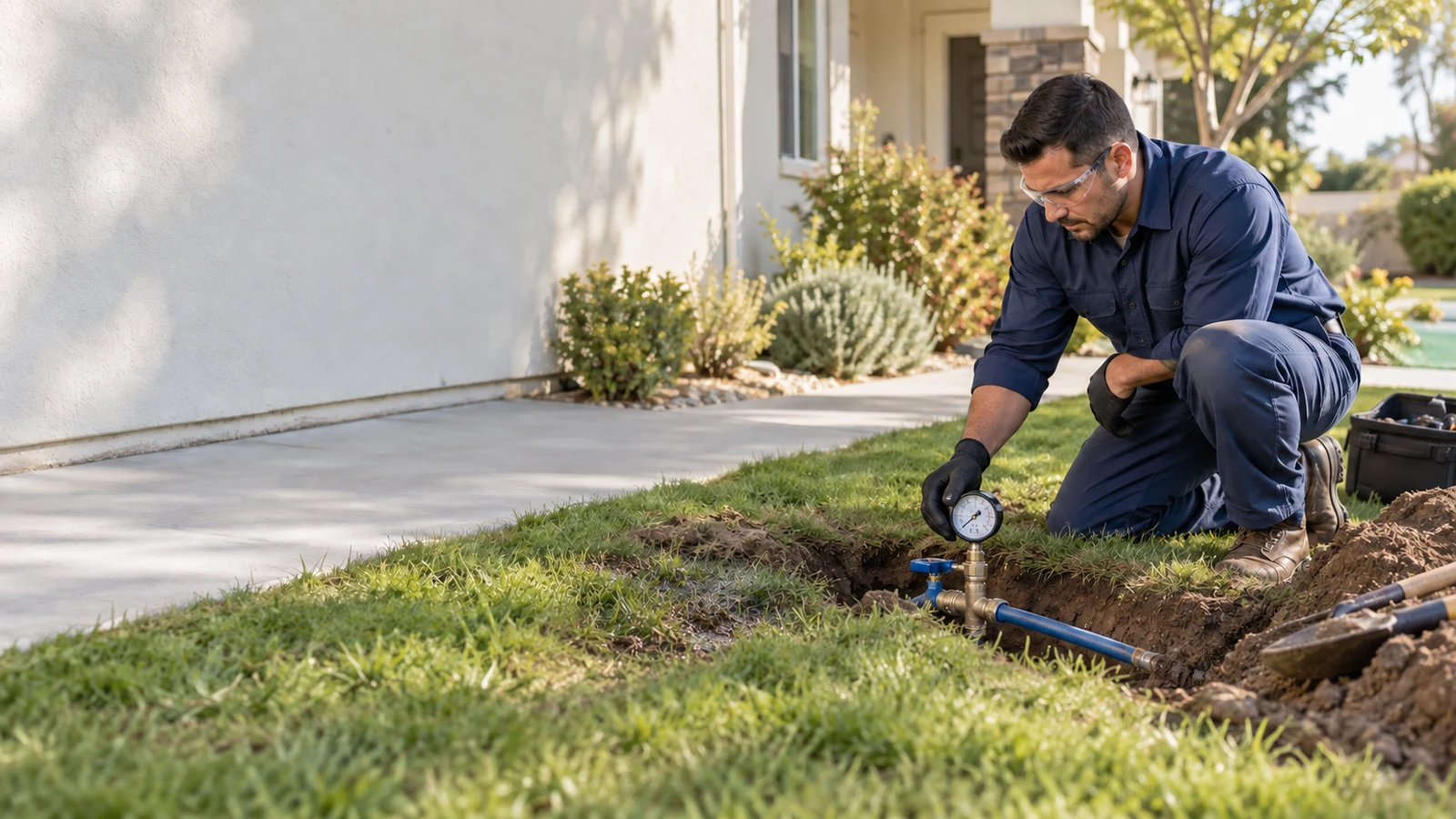
LEAK DETECTION BEFORE EXCAVATION
Water-line repair makes sense after the affected line or likely failure area is reasonably established. If meter activity, moisture or wet soil is present but the source is still uncertain, Templeton leak detection is the better first step. TCSD public-system information can help frame the service connection, but it does not replace diagnosis of irrigation, fixtures, interior piping, valves or the buried residential line.
REPAIR OR REPLACEMENT
A focused repair can make sense when the failed area can be reached and the surrounding line remains worth keeping. Replacement can be considered when failures recur, a longer section is compromised, or repeated future access would be impractical. The decision should use failure history, exposed pipe condition, affected length, shutoff/pressure conditions and the actual route at the property—not assumptions about Templeton lot type, service-run length, water source or pipe material.
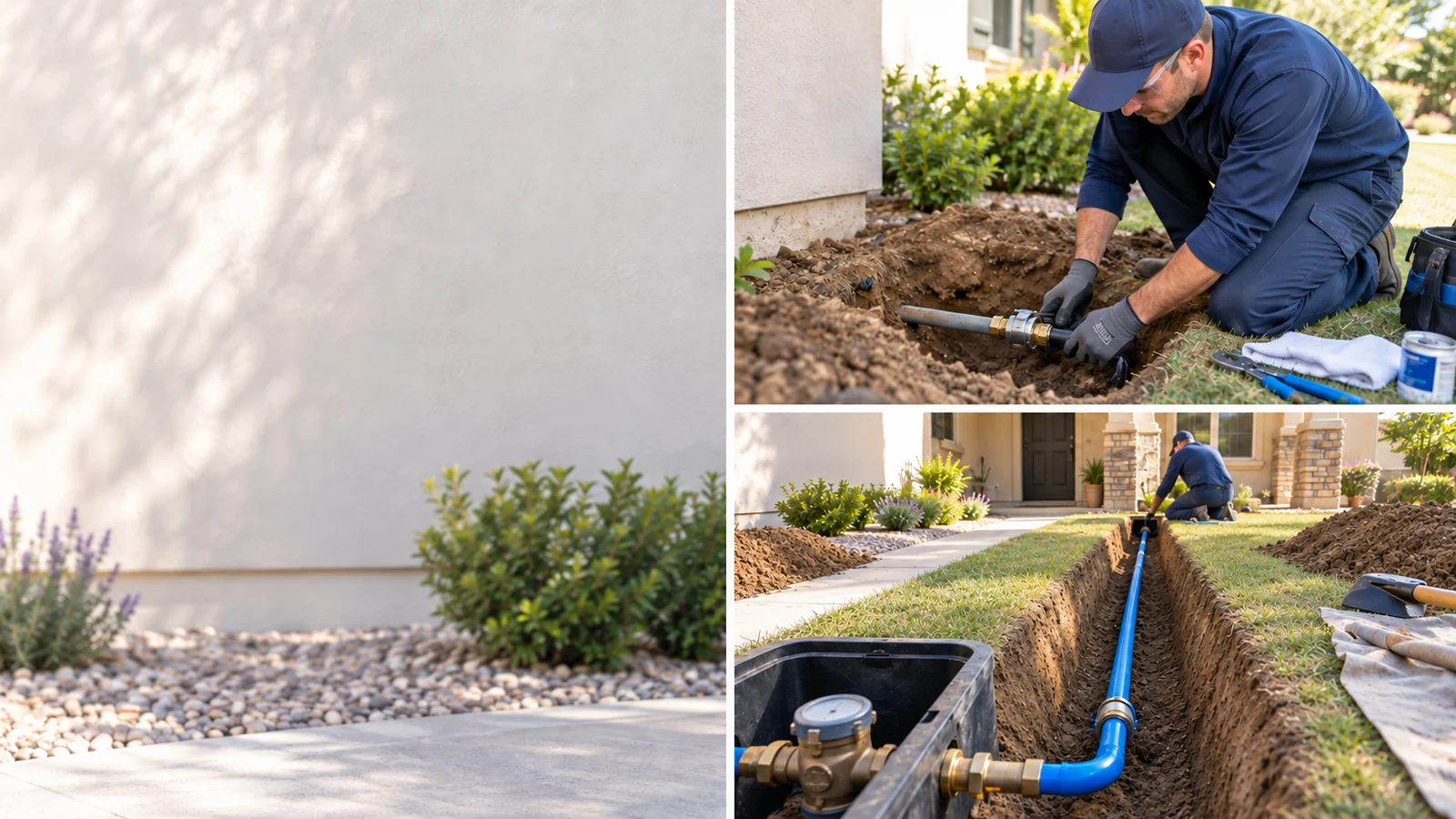
TEMPLETON ACCESS PLANNING
Once the buried line problem is narrowed, access should follow the confirmed route and the conditions actually present at the property. Landscaping, paving, walls, grade changes or other finished areas matter only when they intersect the line. Water can move through soil or along a previous trench before surfacing, so the wettest visible spot is evidence rather than a reliable excavation location by itself.
PRESSURE, SHUTOFFS & WATER-LINE WORK
A pressure problem, unreliable property-side shutoff or smart leak-protection goal can intersect with water-line work, but each needs its own check. Measure pressure before treating it as the cause of a buried-line problem. On TCSD-served properties, the District’s published standard places the water meter and a customer-side shutoff at the service connection; do not force unfamiliar meter/service equipment when isolation is uncertain.
PRESSURE REGULATOR / PRV
Pressure changes can involve a PRV, partially closed valve, treatment equipment, restrictions or a hidden leak. Test the pressure pattern separately before choosing a buried-line repair.
MAIN SHUTOFF / ISOLATION
A leaking, stuck or inaccessible property-side shutoff can affect safe service planning. Use the dedicated Templeton shutoff-valve page for manual shutoff work. TCSD’s service-connection standard distinguishes a customer-side shutoff at the meter/service connection, so the actual control point should be identified before anyone assumes which valve should be operated.
WHERE SHOULD I START?
Use the most specific confirmed condition rather than guessing which pipe failed.
Start with Templeton leak detection so the likely source can be narrowed before excavation or replacement is discussed.
Stay on the water-line repair and replacement path and request an evaluation of the affected run, access and repair-versus-replacement scope.
RELATED PLUMBING & LEAK-PROTECTION SERVICES
Keep hidden-source water, active emergencies, repeated interior piping failures, pressure regulation and leak-protection technology on their dedicated service pages. That prevents a buried-line page from becoming a catch-all for unrelated plumbing problems.
TCSD SERVICE-CONNECTION CONTEXT
TCSD lists public-system operations such as repairing line breaks, installing new services and reading meters. Its service-connection standard shows the water meter and a customer-side shutoff installed by the water purveyor. Water Fixers uses those published details only to understand the service layout for TCSD-served properties. They do not, by themselves, establish the ownership, exact location or cause of a particular leak. If the source or responsibility is unclear at the meter/service connection, verify it with TCSD and on-site diagnosis before repair planning.
WHAT TO EXPECT
The goal is to narrow the affected line before excavation, then choose the smallest scope that still solves the actual problem and leaves the repaired plumbing serviceable.
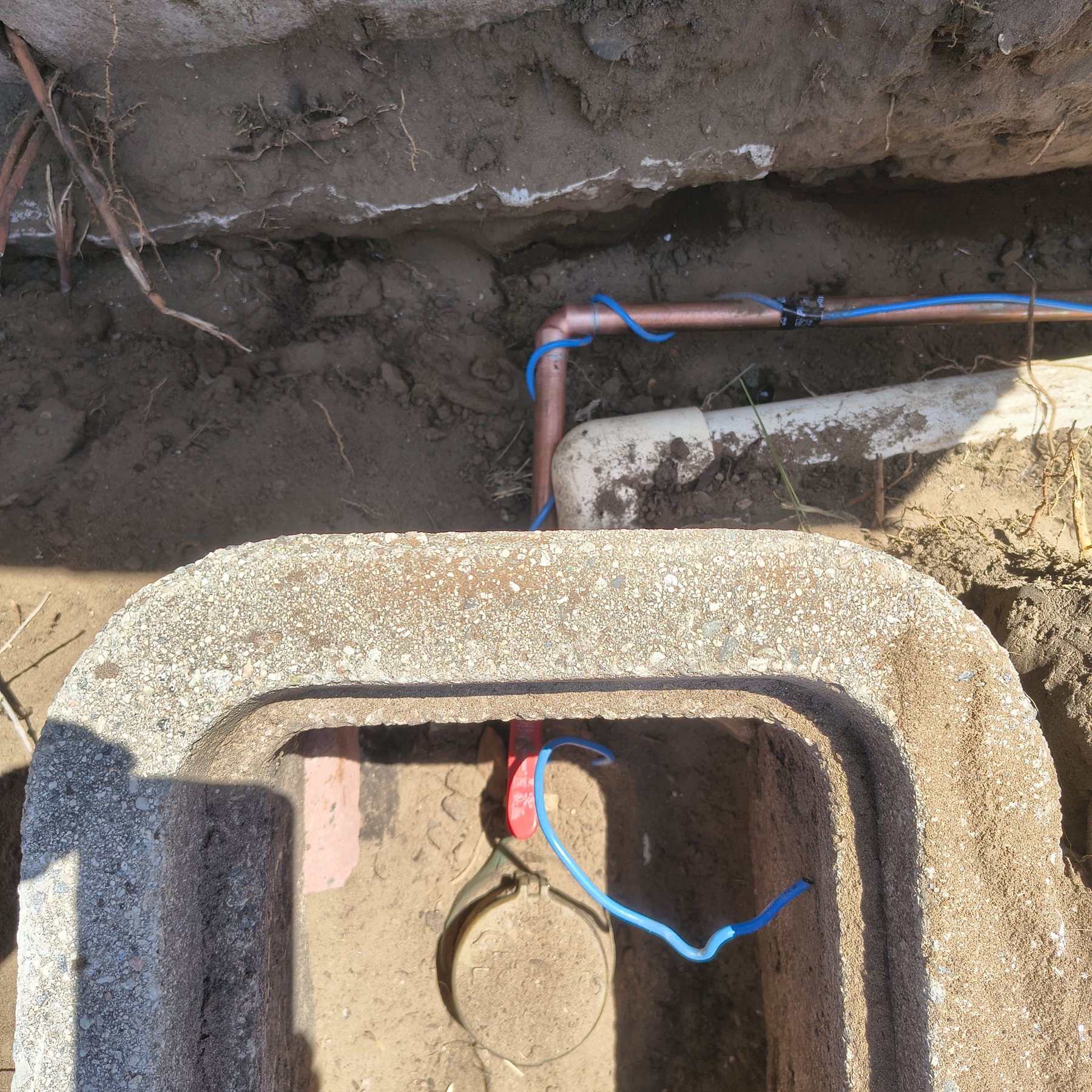
The generated service images on this page are educational. For documented Water Fixers field work involving underground water lines, meter boxes, shutoffs and pressure-control plumbing, use the Previous Jobs gallery.
WATER-LINE FAQ
Direct answers about buried residential water-service lines, diagnosis, repair, replacement, TCSD service connections and private-well separation when applicable.
Tell Water Fixers what changed, whether the water is controlled, what the meter or pressure is doing, whether the property is TCSD-served or uses another verified source, and anything you know about the buried service route or prior repairs. You do not need to diagnose the pipe yourself before requesting service.
Water Fixers Plumbing & Filtration • Serving Templeton and North County from 2893 Industrial Pkwy, Santa Maria, CA 93455 • License #719792
CALL NOW! Se Habla Español!